How to help dogs with allergies: Best Guide
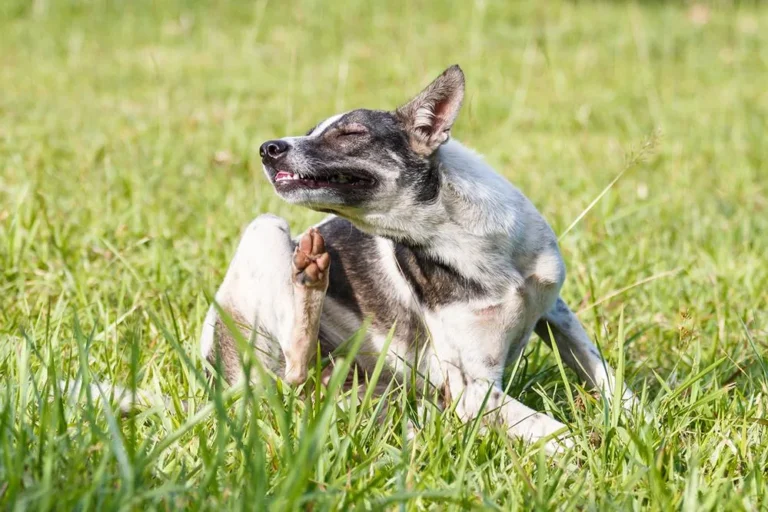
If your dog won't stop scratching, chewing their paws, or rubbing their face on the carpet, you're not alone. Canine allergies affect roughly 10 to 15 percent of the dog population, and they're one of the most common reasons pets end up at the vet. The good news: with a clear plan, you can usually get the itching under control and give your dog real relief.
The path forward depends on what kind of allergy you're dealing with, since environmental, food, and flea allergies each respond to different fixes. Aggregate reviews from veterinary dermatology sources show that the dogs who do best are the ones whose owners follow a structured workup rather than guessing at random home remedies. As of 2026, the most effective approach still starts with your family vet, then escalates to a board-certified dermatologist if symptoms stick around.
Let's walk through what that looks like, step by step.
Quick Answer
Most dog allergies fall into three buckets: flea, food, or environmental (atopy). Treatment combines trigger control, anti-itch medication like Apoquel or Cytopoint, and diet trials for food cases. A vet exam is the first step, because wrong guesses waste weeks and let skin infections set in.
Why Dog Allergies Need a Real Plan, Not Quick Fixes
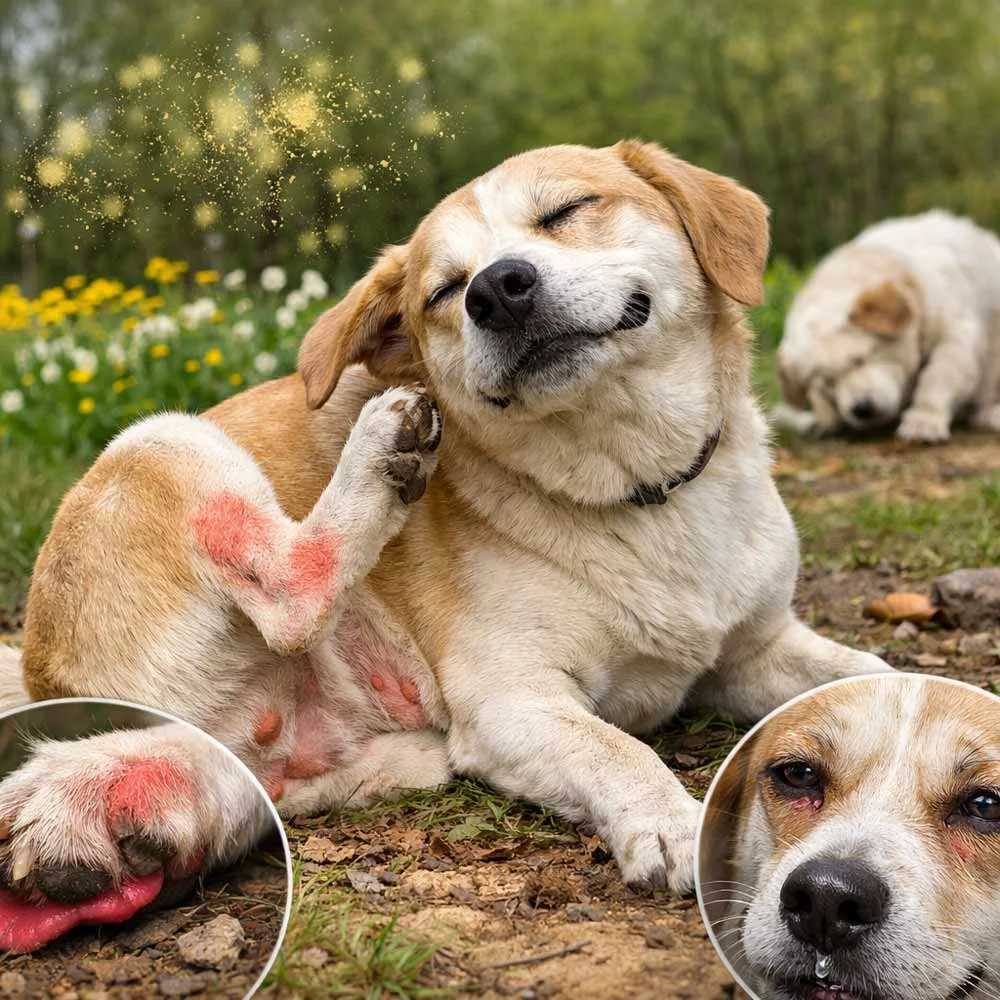
Itching is more than an annoyance. Chronic scratching damages the skin barrier, opening the door to bacterial and yeast infections that hurt and cost real money to treat. The Merck Veterinary Manual notes that allergic skin disease is a leading driver of secondary infections, which is why a quick oatmeal bath rarely solves the underlying problem.
Here's the trap most owners fall into: they treat the symptom (itch) without identifying the cause. That works for a week or two, then the dog is back to chewing. Veterinary guidelines from the American College of Veterinary Dermatology emphasize a systematic workup, not a random rotation of shampoos, supplements, and prescription leftovers from a friend's dog.
A real plan has three pillars:
- Identify the allergy type (flea, food, or environmental)
- Control the itch and any secondary infection
- Reduce exposure to triggers long-term
Skipping any of these is why some dogs seem "allergic forever" when they could actually be living comfortably.
What Dog Allergies Actually Look Like (And Why It's Not Just Scratching)
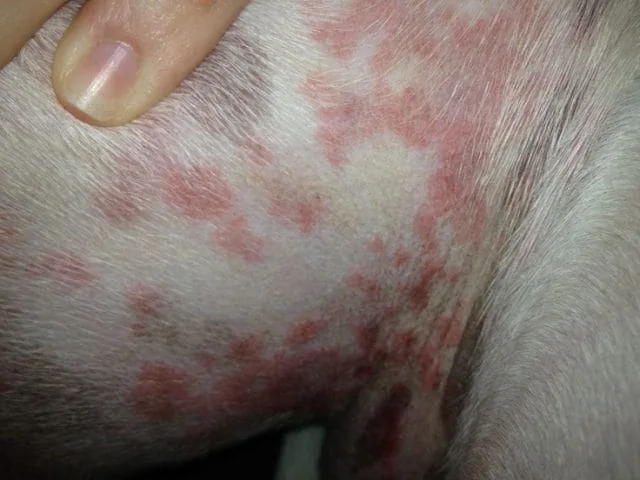
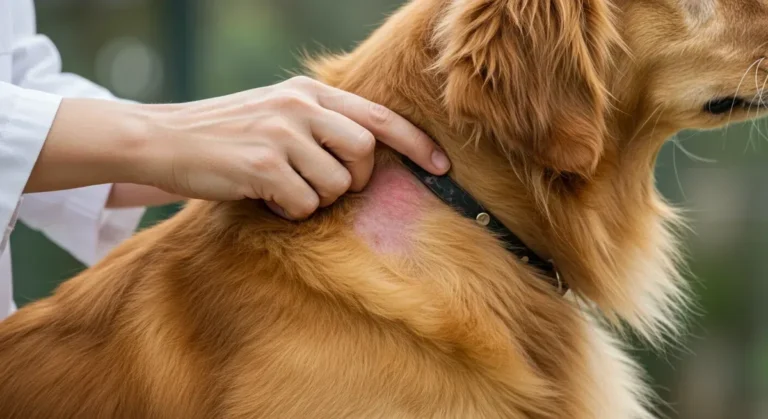
The classic signs are scratching, licking, and chewing, but allergies in dogs show up in ways a lot of owners miss. Recognizing the full picture helps you bring better information to your vet visit and get a faster diagnosis.
Common symptoms include:
- Repeated ear infections or head shaking
- Red or stained paws from constant licking
- Recurring hot spots (acute moist dermatitis)
- Rubbing the face on furniture or the floor
- Hair loss along the belly, thighs, or tail base
- Scooting, especially if anal glands are involved
Why this matters: ear and skin infections are often downstream of an allergy, not the primary problem. Treat the infection alone, and it keeps coming back. Studies cited in Veterinary Dermatology show that a large share of recurrent ear infections in dogs trace back to underlying atopic dermatitis or food allergy.
Seasonal patterns are a clue too. If your dog's symptoms flare in spring or fall, environmental allergens like tree pollen or mold are likely. Year-round itching with digestive upset often points to food.
Flea allergy dermatitis (FAD) tends to hit the back half of the dog, especially the tail base and rear thighs.
The Three Main Types: Environmental, Food, and Flea Allergy
Each allergy type looks similar on the surface but needs a different fix. Mixing them up is the number one reason home treatment plans stall.
Environmental (Atopic Dermatitis)
Triggered by airborne allergens like pollen, dust mites, and mold spores. Itching usually shows up between 6 months and 3 years of age and often worsens seasonally. Predisposed breeds include French Bulldogs, West Highland White Terriers, Golden Retrievers, Labradors, and Shar-Peis.
Food Allergy
A true immune reaction to specific proteins, most commonly beef, chicken, dairy, or egg. Food allergy is responsible for roughly 10 to 15 percent of allergic skin disease in dogs. The only reliable diagnostic tool is a strict 8 to 12 week elimination diet, then a controlled challenge to confirm the trigger.
Flea Allergy Dermatitis (FAD)
Caused by an immune overreaction to proteins in flea saliva. Even a single flea bite can keep a sensitive dog itching for two weeks. In flea-endemic regions (the U.S.
Southeast, Gulf Coast, Mediterranean Europe, parts of Australia), FAD can account for up to 40 percent of allergic dogs.
| Allergy Type | Common Triggers | Diagnostic Method | First-Line Treatment |
|---|---|---|---|
| Environmental | Pollen, dust mites, mold | Intradermal or serum IgE testing | Apoquel, Cytopoint, immunotherapy |
| Food | Beef, chicken, dairy, egg | 8–12 week elimination diet | Hydrolyzed or novel protein diet |
| Flea | Flea saliva | Response to strict flea control | Year-round flea prevention |
If you remember one thing: atopy, food, and flea allergy need different tests and different fixes, so guessing is expensive.
Quick Answer: When to Call the Vet Right Now vs. When to Try Home Care
Call your vet or an emergency clinic today if your dog has open sores, swelling of the face or eyes, vomiting, or sudden collapse. These can signal anaphylaxis or a serious skin infection that needs urgent care. For everything else, schedule a non-emergency appointment within a few days.
Mild seasonal itching without skin damage can be supported at home while you wait for the visit. Wipe your dog's paws and belly after outdoor time, run a HEPA air purifier in the room they sleep in, and stick to a gentle, hypoallergenic shampoo routine every 1 to 2 weeks. Avoid over-the-counter hydrocortisone creams meant for humans, since dogs often lick them off and ingest the steroid.
If you notice any of the following, skip the home care and go straight to the vet:
- Yellow or green discharge from the skin or ears
- Hot spots spreading quickly
- A strong yeasty or foul smell from the skin
- Constant scratching that disrupts sleep
These point to secondary infection, and that needs prescription treatment before any allergy plan will work.
Step 1: Rule Out Fleas First (Even If You Don't See Them)
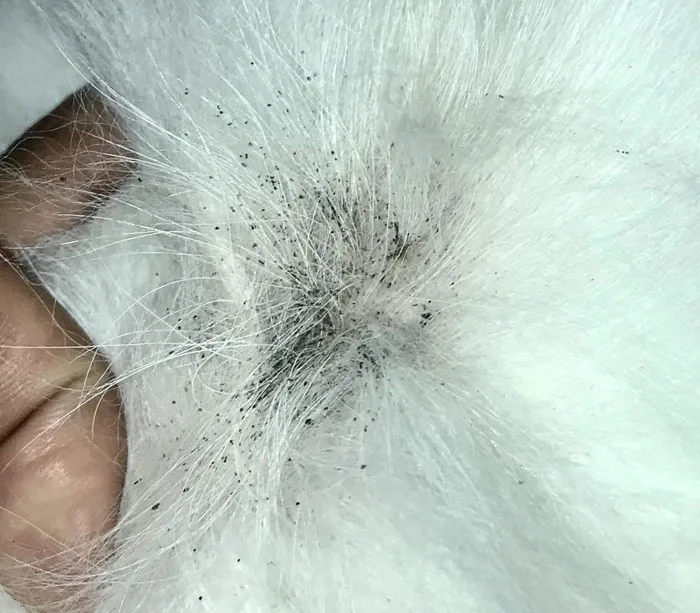
This step is the one most owners skip, and it's the one that quietly wrecks a lot of treatment plans. If your dog has any access to the outdoors, another animal, or even a porch where wildlife passes through, fleas are on the table until proven otherwise. In flea-allergic dogs, it takes roughly 72 hours for a single bite to trigger a two-week itch cycle, so the absence of visible fleas means nothing.
The fastest in-clinic test is a flea comb plus a "white paper" check. Comb the back, tail base, and groin, then tap the debris onto a damp white paper towel. Flea dirt dissolves into a rusty red halo because it's digested blood.
Your vet can confirm with a quick tape cytology under the microscope.
Management checklist:
- Treat every pet in the household with a veterinary flea preventive (oral options like fluralaner, afoxolaner, or spinosad tend to work faster than topicals for FAD cases)
- Wash all bedding in hot water
- Vacuum sofas, baseboards, and car seats
- Repeat the preventive dose on the schedule your vet sets, usually monthly or every 12 weeks depending on the product
If the itching improves within 4 to 6 weeks of strict flea control and nothing else changes, you've likely just saved yourself months of dead-end food trials. The American Veterinary Medical Association's parasite control guidance is worth a read if you want the official position on year-round prevention in warm climates.
Step 2: Get a Proper Veterinary Exam and Skin Workup
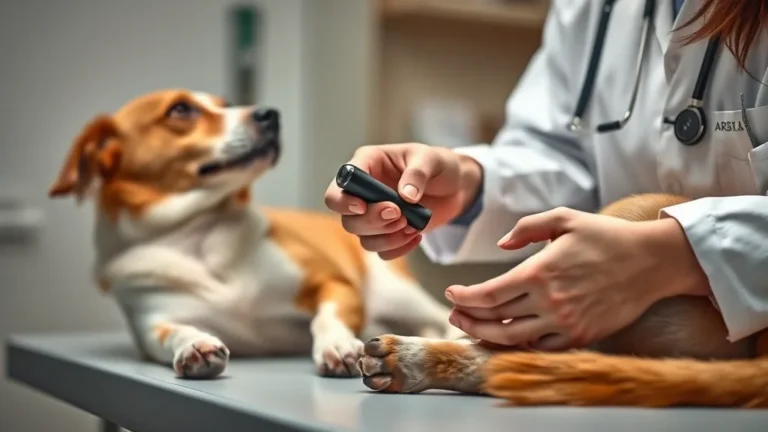
Once fleas are off the table, the next move is a real exam. "Allergy" is a pattern, not a single test result, so your vet needs to look at the whole picture: history, skin lesions, ear exam, and a few quick in-house tests.
What a good workup usually includes:
- Skin scrapings to rule out mites like Sarcoptes and Demodex
- Tape cytology to look for bacteria or Malassezia yeast
- Ear swab if there's any head shaking or odor
- A medication review, since some itch can be drug-related
Why this matters: skipping cytology is how yeast overgrowth gets missed. Malassezia looks like "just itchy skin" to most owners, but it has a sweet, musty smell and a greasy feel, and it needs antifungal therapy, not just anti-itch meds. According to the Merck Veterinary Manual, secondary infections are present in a large share of allergic dogs at first visit, and treating only the allergy leaves the infection to fester.
Bring a short timeline to the appointment: when the itching started, whether it's seasonal, what food and treats the dog gets (including table scraps), and what you've already tried. That information alone can cut weeks off the diagnostic process.
If your dog has moderate to severe disease, multiple infections, or doesn't respond within a few weeks, ask for a referral to a board-certified veterinary dermatologist. The American College of Veterinary Dermatology maintains a searchable directory on its site, and a specialist can run intradermal or serum IgE testing to map environmental triggers.
Step 3: Run an Elimination Diet the Right Way
When food allergy is on the table, there is no shortcut. Blood tests for food allergy in dogs are unreliable, and the only gold-standard test is a properly run elimination diet, followed by a controlled challenge. Done well, it gives you a clear answer in 8 to 12 weeks.
Done poorly, it gives you a false negative and a year of frustration.
How to run it correctly:
- Pick either a hydrolyzed protein diet (peptides broken into pieces under about 10 kDa, like Royal Canin HP or Purina HA) or a novel protein your dog has never eaten (for most dogs, that means venison, duck, rabbit, or kangaroo)
- Feed only that diet for 8 to 12 weeks. No treats, no table scraps, no flavored chews, no flavored heartworm preventives
- Watch for a 50 percent or greater drop in itch by week 6 to 8
- If itch drops, reintroduce single ingredients one at a time, 1 to 2 weeks each, to identify the trigger
- If itch doesn't change, food allergy is unlikely and you can move on to environmental causes
Common pitfalls:
- "Just one treat won't hurt" breaks the trial. One slip can reset the clock by 2 weeks
- Flavored medications and dental chews count as exposure
- Multiple household members feeding the dog dilutes the results
The payoff: when the diet works, you know exactly what to avoid forever, and you can stop guessing every time you buy food. For more on elimination diet protocols, the UC Davis Veterinary Dermatology Service publishes a clear owner handout worth requesting.
Apoquel vs. Cytopoint vs. Antihistamines: Which Anti-Itch Option Fits Your Dog
Once infections are under control, the next decision is which anti-itch medication to use. The three most common choices are Apoquel (oclacitinib), Cytopoint (lokivetmab), and older antihistamines like cetirizine or diphenhydramine. They work differently, cost differently, and suit different dogs.
How Each Option Works
- Apoquel: a daily oral tablet that blocks itch signaling at the JAK1 enzyme. Itching usually drops within 4 hours. Dosing is twice daily for up to 14 days, then once daily for maintenance.
- Cytopoint: a monoclonal antibody injection given at the vet. Itch typically drops 50 percent or more within 24 to 48 hours, and each shot lasts about 4 to 8 weeks depending on the dog.
- Antihistamines: over-the-counter options like cetirizine, loratadine, or diphenhydramine. They help mild cases but take 7 to 14 days to judge effectiveness. They rarely control moderate or severe itching alone.
Which Option Suits Which Dog
| Option | Best For | Key Limitation |
|---|---|---|
| Apoquel | Dogs needing fast, daily, adjustable control | Requires daily pills; cost adds up for large breeds |
| Cytopoint | Dogs that resist pills, or owners who can't give daily medication | Requires vet visits every 4–8 weeks |
| Antihistamines | Mild seasonal itching, or as a complement to other therapies | Rarely enough as standalone for moderate cases |
Cost is a real factor. Aggregate user reports and manufacturer pricing put Apoquel at roughly $2 to $4 per tablet, which lands around $60 to $150 per month for most dogs. Cytopoint injections typically run $50 to $200 depending on the dog's weight and region.
Antihistamines are cheap but usually insufficient on their own.
Safety note: Apoquel is FDA-approved for dogs over 12 months old and isn't used in dogs with serious infections. Cytopoint is also FDA-approved and has a strong safety record, though rare hypersensitivity reactions have been reported. For a deep dive on prescribing guidance, the FDA's animal drugs page lays out approved indications clearly.
Allergy Testing Explained: Intradermal vs. Serum IgE
If environmental allergies are the likely culprit, your vet or dermatologist may suggest allergy testing to map specific triggers. Two main methods exist, and the choice depends on your dog's situation.
Intradermal Skin Testing (IDT)
Considered the gold standard. The dog is sedated, a patch of fur is shaved, and small amounts of suspected allergens are injected into the skin. Reactions are measured against a positive and negative control.
IDT requires an experienced veterinary dermatologist and a withdrawal period off antihistamines (about 2 weeks), Apoquel (about 4 weeks), and Cytopoint (about 8 weeks or more) to get accurate readings.
Serum IgE Testing
A blood test that measures allergen-specific antibodies. It's easier logistically because sedation isn't required and the dog doesn't need to come off medication as strictly. The trade-off is slightly lower sensitivity for some allergens, and the results guide immunotherapy formulation rather than predict severity.
When to test:
- Chronic, year-round itching not controlled by basic management
- Seasonal symptoms that don't match a single pollen pattern
- Before starting immunotherapy, since the test results drive the serum formulation
When to skip:
- Mild seasonal itching handled by Apoquel or Cytopoint alone
- Active skin infection (treat the infection first, then retest)
- Dogs under 12 months, since results are less reliable before full allergen exposure
In our research, dogs that test clearly positive and receive immunotherapy matched to their results tend to do best. Testing just to "see what's there" without committing to immunotherapy rarely changes the treatment plan.
Immunotherapy (Allergy Shots): How It Works and What Success Looks Like
Immunotherapy, often called allergy shots or allergy drops, is the only treatment that actually re-trains the immune system to tolerate specific allergens. It's not a quick fix, but for the right dog it's the closest thing to a long-term cure.
The Two Main Forms
- Subcutaneous immunotherapy (SCIT): allergy serum injected under the skin, usually starting at a low dose and gradually increasing. Owners give the injections at home after initial vet training.
- Sublingual immunotherapy (SLIT): allergy drops placed under the tongue daily. Easier for needle-shy owners, with a slightly higher cost per month.
Realistic Timeline and Success Rates
- Most dogs show meaningful improvement within 6 to 12 months
- Published data and aggregate clinical reports suggest roughly 60 to 80 percent of appropriately selected dogs improve substantially
- A small percentage don't respond, and a few actually get worse early on before improving
Who It's Best For
- Dogs with confirmed environmental allergies on testing
- Owners who want to reduce long-term medication costs
- Dogs too young for Apoquel (under 12 months)
- Dogs whose symptoms return the moment medication is reduced
Immunotherapy doesn't replace infection control or flea prevention, and many dogs stay on low-dose Apoquel or Cytopoint during the first year. The goal is to taper medications as the immune system recalibrates.
Home and Lifestyle Changes That Actually Move the Needle
Medication handles the inflammation. Lifestyle changes lower the daily allergen load so flares happen less often. Skip the gimmicks and focus on what research and clinical experience actually support.
What works:
- HEPA air purifier in the bedroom, especially for dust mite sensitivity
- Frequent vacuuming with a HEPA-filter vacuum
- Hot-water washing of dog bedding weekly
- Wiping paws and belly with a damp cloth or hypoallergenic wipe after outdoor time
- Bathing every 1 to 2 weeks with a colloidal oatmeal or chlorhexidine shampoo
- Keeping grass short in the yard and wiping down after walks during high pollen counts
- Year-round flea prevention even in winter for FAD-prone dogs
What doesn't:
- Essential oil sprays (often toxic to dogs and unreliable)
- Over-the-counter "allergy" treats with unproven ingredients
- Frequent bathing with harsh shampoos, which strips the skin barrier
- Switching to grain-free food hoping it helps (most food allergies are to proteins, not grains)
Omega-3 fatty acid supplementation has decent support in the literature for reducing inflammation, especially at therapeutic doses (around 50 to 75 mg per kg of combined EPA and DHA daily from fish oil). It takes 8 to 12 weeks to judge effectiveness, so don't quit early. For dosing guidance grounded in veterinary nutrition, the Cummings School of Veterinary Medicine at Tufts publishes reliable owner resources.
Mistakes Dog Owners Make With Allergies (And What to Do Instead)
A few errors come up over and over in clinical practice, and they can turn a manageable case into a chronic nightmare.
The Most Common Errors
- Stopping Apoquel or Cytopoint the moment the dog looks better (symptoms rebound)
- Running an elimination diet with "grain-free" food instead of hydrolyzed or truly novel protein
- Skipping flea prevention because they don't see fleas
- Bathing too often with the wrong shampoo and drying out the skin
- Using human antihistamines at random doses without checking with the vet
- Assuming itch is behavioral when it's actually a yeast infection
- Waiting too long to see a veterinary dermatologist
The Fix
Build a written plan with your vet: medication schedule, bath frequency, flea preventive, diet plan, and a clear list of warning signs that mean a recheck. Track the dog's itch score weekly (a 0 to 10 scale works fine) so you can show the vet real numbers, not just "he's still scratching."
Costs and What to Expect Financially Over Time
Allergy management isn't a one-time cost. Here's what most owners can expect in the first year, based on aggregate reports from U.S. and U.K. clinics as of 2026.
| Category | Typical First-Year Range | Notes |
|---|---|---|
| Initial vet workup | $150–$400 | Cytology, skin scrapes, exam |
| Apoquel | $720–$1,800 | Depends on dog size and dose |
| Cytopoint | $400–$1,800 | 4–6 injections per year |
| Elimination diet | $200–$600 | Hydrolyzed diets run higher |
| Allergy testing | $300–$800 | Intradermal tends to cost more than serum |
| Immunotherapy | $500–$1,000 per year | After initial testing |
| Specialist referral | $200–$500 | First consult only |
The smart financial move is getting the diagnosis right early. Spending $300 on proper testing usually beats $2,000 of trial-and-error on the wrong treatment.
When It's Time to See a Veterinary Dermatologist
Your family vet can handle most allergy cases, but referral makes sense in specific situations. The American College of Veterinary Dermatology's "Find a Specialist" tool is the easiest way to locate a board-certified dermatologist near you.
Reasons to ask for a referral:
- Symptoms persist more than 3 months despite treatment
- Recurring skin or ear infections (more than 3 to 4 per year)
- Dog is under 12 months old with severe itching
- You're considering immunotherapy
- Steroids are the only thing working and side effects are showing
- Diagnosis is unclear after initial workup
A specialist brings intradermal testing, customized immunotherapy, and access to advanced therapies. Most general vets are happy to refer once basic management has been tried.
FAQs on Helping Dogs With Allergies
What is the fastest way to stop a dog from itching?
Apoquel typically reduces itching within 4 hours, and Cytopoint within 24 to 48 hours. Both require a vet prescription. For mild itching, a cool bath with colloidal oatmeal can provide short-term relief.
Can dog allergies go away on their own?
Rarely. Environmental allergies often worsen with age, while food allergies persist for life once a trigger is identified. The good news: with the right plan, most dogs can live comfortably.
How do I know if my dog has food allergies or environmental allergies?
Food allergy symptoms are usually year-round and may include digestive upset. Environmental allergies are often seasonal, start between 6 months and 3 years, and respond poorly to diet changes. An elimination diet is the only reliable way to confirm food allergy.
Are dog allergy tests from pet stores reliable?
Most over-the-counter saliva or hair tests are not supported by peer-reviewed evidence. Serum IgE or intradermal testing through a vet or veterinary dermatologist remains the standard. The Merck Veterinary Manual and ACVD both recommend against relying on direct-to-consumer allergy kits.
How long does Apoquel take to work?
Most dogs show visible improvement within 4 hours and meaningful relief within 24 hours. Apoquel can be used short-term for flares or long-term for chronic atopy, under veterinary supervision.
Can I give my dog Benadryl for allergies?
Diphenhydramine is sometimes used for mild cases, but dosing should be confirmed with your vet, and it rarely controls moderate to severe itching. Newer options like Apoquel and Cytopoint are more reliably effective for most allergic dogs.
Your Long-Term Game Plan for Managing Dog Allergies
Helping a dog with allergies is a marathon, not a sprint. The dogs who live the most comfortable lives are the ones whose owners commit to a structured plan: accurate diagnosis, consistent flea control, the right anti-itch medication, and a clean home environment.
Keep a simple log of itch scores, medications, and any new foods or exposures. Schedule vet rechecks every 6 to 12 months, even when things are going well, because allergies evolve over time. If symptoms shift or flares start breaking through the plan, loop in a veterinary dermatologist before things spiral.
You don't have to figure this out alone, and your dog doesn't have to live itchy. With the right team and a clear plan, most allergic dogs settle into long, comfortable stretches with minimal symptoms.