How do they test dogs for allergies: Easy guide
If your dog won't stop scratching, licking their paws, or getting ear infections every few weeks, you've probably wondered how vets figure out what's actually causing it. Knowing how they test dogs for allergies matters because the wrong test leads to wasted money and a dog who's still miserable.
Most general-practice vets follow a stepwise process: rule out parasites, rule out infections, then decide between a food elimination trial or environmental testing. Intradermal skin testing (done by a veterinary dermatologist) remains the gold standard for environmental allergies, while elimination diets are the gold standard for food. Direct-to-consumer saliva and hair tests have no scientific backing, according to the American College of Veterinary Dermatology, and most vets don't recommend them.
Quick Answer
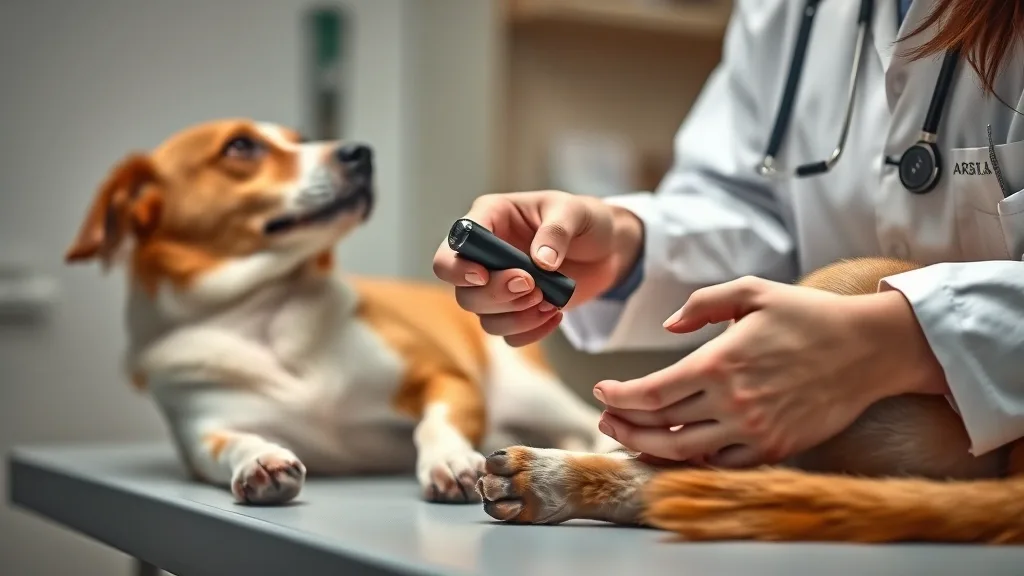
Vets test dogs for allergies in three main ways. For food allergies, they run an 8 to 12 week elimination diet trial using a novel or hydrolyzed protein. For environmental allergies, they either do intradermal skin testing (the gold standard) or a serum IgE blood test.
Direct-to-consumer saliva and hair tests are not scientifically reliable and most vets won't use them.
What a Dog Allergy Test Can and Can't Tell You
Here's the thing most owners don't realize until they're deep into the process: an allergy test is not a diagnosis. It's one piece of a much bigger puzzle.
A positive result on a blood or skin panel only tells you your dog's immune system reacted to that allergen in that test. It doesn't prove that allergen is causing the symptoms you see at home. False positives are common, especially in blood tests, which is why vets interpret results alongside the dog's history and clinical signs.
On the flip side, a negative result doesn't always mean "no allergy." Some dogs have localized skin reactions that blood tests miss. Seasonal symptoms might be quiet at the moment blood is drawn, so the panel shows nothing even though the dog clearly suffers in spring.
The other big misconception: there's no single test that covers both food and environmental allergies accurately. That's why vets split the work. Food allergies get an elimination trial.
Environmental allergies get skin or blood testing.
Timing matters more than most owners expect. If you test during a flare, results are more reliable. If you test when the dog is on steroids or Apoquel, results may be suppressed and worthless.
Vets typically want a dog off antihistamines and steroids for 7 to 14 days before intradermal testing.
A test result is a clue, not a verdict. How the vet uses it is where the real value sits.
Signs Your Dog Actually Needs Allergy Testing
Not every itchy dog needs allergy testing. Some have simple fixes. But certain patterns almost always push a vet toward a full workup.
Watch for these red flags:
- Constant scratching, licking, or chewing at paws, belly, or groin
- Recurring ear infections (more than 2 to 3 per year)
- Hot spots that keep coming back
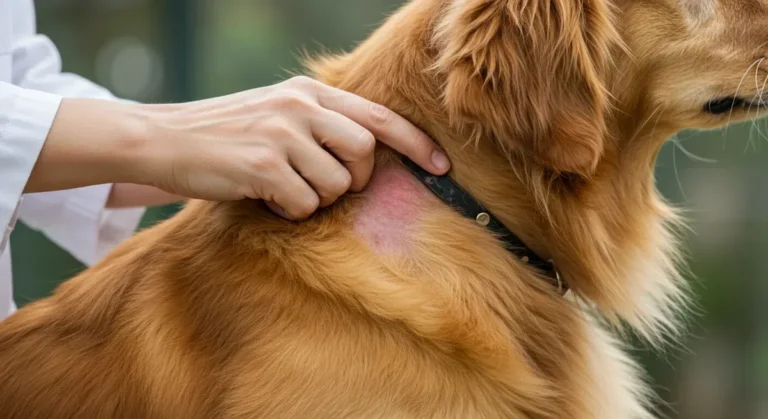
- Chronic skin redness or darkening, especially in the groin or armpits
- Year-round symptoms, or strong seasonal flares tied to spring, summer, or fall
- Gastrointestinal signs (vomiting, soft stool, gas) that pair with skin issues, suggesting food involvement
If your dog shows one or two of these mildly, your vet might start with flea control and a diet change first. If the pattern is chronic or escalating, that's when allergy testing enters the conversation.
Age matters too. Allergies rarely show up before 6 months. Most atopic dogs start showing symptoms between 1 and 3 years old.
Testing before 12 months can produce unreliable results because the immune system hasn't fully matured.
Breed also plays a role. Breeds like French Bulldogs, Westies, Shar-Peis, Golden Retrievers, and Labrador Retrievers have higher rates of atopic dermatitis. If your dog is one of these breeds and starts itching young, testing is worth considering earlier rather than later.
Why Vets Don't Jump Straight to a Blood Test
This is where a lot of owners get frustrated. They want answers fast. They've heard about allergy blood tests, sometimes even ordered one online, and they bring it to the vet expecting a treatment plan.
Then the vet wants to start from scratch.
Blood tests (serum IgE panels) measure antibodies in the blood that react to specific allergens. Sounds simple. In practice, they're noisy.
Studies published in peer-reviewed veterinary dermatology literature show that serum tests produce false positives in 20 to 40 percent of cases for environmental allergens. They miss allergens the dog actually reacts to. And they often flag foods the dog has never eaten as "positive."
Intradermal skin testing, where tiny amounts of allergen are injected into the skin and watched for a reaction, is considered more accurate for environmental allergens. But it requires sedation, a shaved patch, and a skilled veterinary dermatologist. It's not something every general practice vet does.
Vets start with cheaper, simpler steps first because they often resolve the problem without testing at all.
| Test Type | Best For | Accuracy | Practical Issues |
|---|---|---|---|
| Elimination diet | Food allergies | Gold standard | 8 to 12 weeks, strict compliance |
| Intradermal skin test | Environmental allergies | Gold standard | Requires sedation and dermatologist |
| Serum IgE blood test | Environmental allergies | Moderate | False positives common, costly |
| Saliva or hair tests (DTC) | Nothing reliable | Poor | Not endorsed by dermatology specialists |
The takeaway: vets don't skip blood tests because they're stingy. They skip them because the cheaper steps often solve the problem, and when testing is needed, the order matters.
The First Thing Every Vet Rules Out: Fleas and Infections
Before any allergy testing happens, your vet is going to address two things that mimic or amplify allergies: fleas and skin infections.
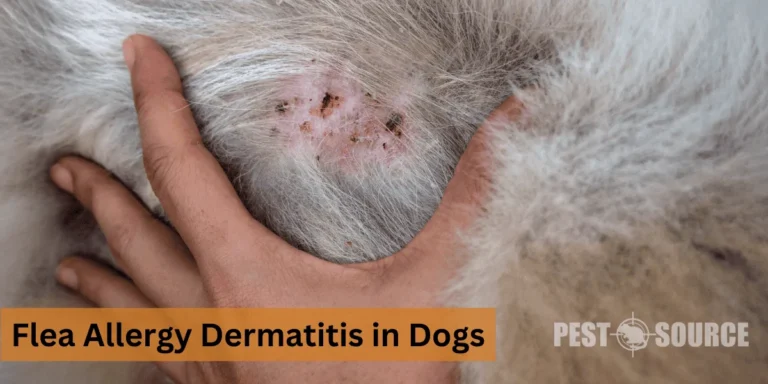
Flea allergy dermatitis (FAD)
Even a single flea bite can set off a severe allergic reaction in sensitive dogs. The most common allergy in dogs isn't environmental or food. It's flea saliva.
Vets almost always run a strict flea control trial for 8 to 12 weeks before going further with allergy workup. That means every animal in the household on a veterinary-grade flea preventative. Not a grocery store brand.
Not "I don't see fleas so we don't need it." You'd be surprised how often this single step resolves the itch entirely.
If your dog is still scratching after a solid flea control trial, the vet moves on.
Secondary infections
Allergic skin is damaged skin. Bacteria (usually Staphylococcus) and yeast (Malassezia) love to grow on inflamed, moist skin. Vets will often do skin cytology, a quick tape or swab test, to check for these.
If infections are present, antibiotics or antifungals come first.
You can't interpret an allergy test on infected skin. The immune system is already activated, and results get distorted. Treating infections clears the noise so any later testing actually reflects the allergy, not the secondary mess.
This is also why your dog might leave the vet with antibiotics, antifungals, or both before any allergy work begins. It's not a stalling tactic. It's the right sequence.
How Food Allergies Are Tested: The Elimination Diet
Food allergies don't show up reliably on blood or skin tests. That's why vets don't bother testing for them with a panel. Instead, they run an elimination diet trial.
The concept is simple. You feed the dog a strict diet of ingredients they've never eaten before, or a hydrolyzed protein diet where the protein is broken down too small for the immune system to recognize. Then you wait.
If symptoms improve over 8 to 12 weeks, food is part of the problem.

What counts as a "novel" protein
A novel protein is one your dog has never been exposed to. For most dogs, that means unusual options like kangaroo, rabbit, duck, venison, or alligator. Your vet picks based on the dog's diet history.
The catch: many "limited ingredient" over-the-counter foods aren't truly limited. Cross-contamination during manufacturing is common. That's why prescription hydrolyzed diets (like Hill's z/d or Royal Canin HP) are usually safer.
They're processed in controlled facilities and the proteins are pre-digested.
The hard part: compliance
This is where most elimination diets fail. No treats. No table scraps.
No flavored medications unless swapped. No other pets' food. No sneaking a piece of cheese.
Most families break the trial without realizing it. One dropped cookie, one bite of chicken, and you're back to week one. Some dogs need the full 12 weeks.
Others show improvement in 4 to 6. Don't give up early.
The rechallenge step
After symptoms clear, you reintroduce old foods one at a time. Chicken this week. Beef next week.
Wheat the week after. If itching returns within days of adding a specific ingredient, you've found a trigger.
This step is non-negotiable. Skipping it means you can't tell which ingredient was the problem. The dog goes back on the elimination diet for life, blind to what actually caused the issue.
How Environmental Allergies Are Tested: Intradermal Skin Testing
Once food is ruled out and flea control is solid, environmental allergies (atopic dermatitis) become the focus. The gold standard test here is intradermal skin testing.
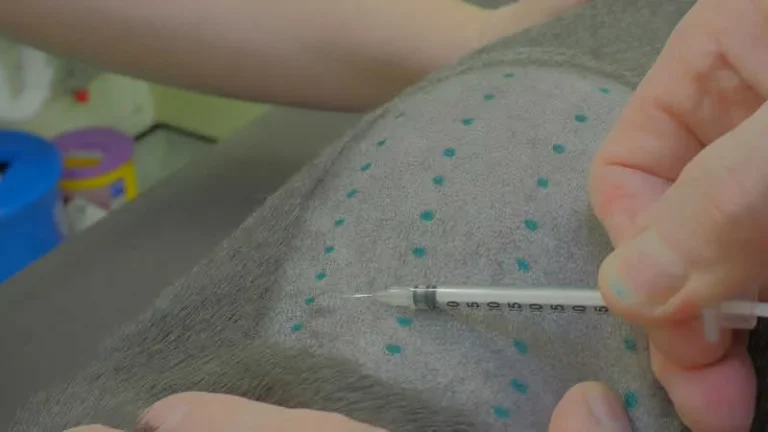
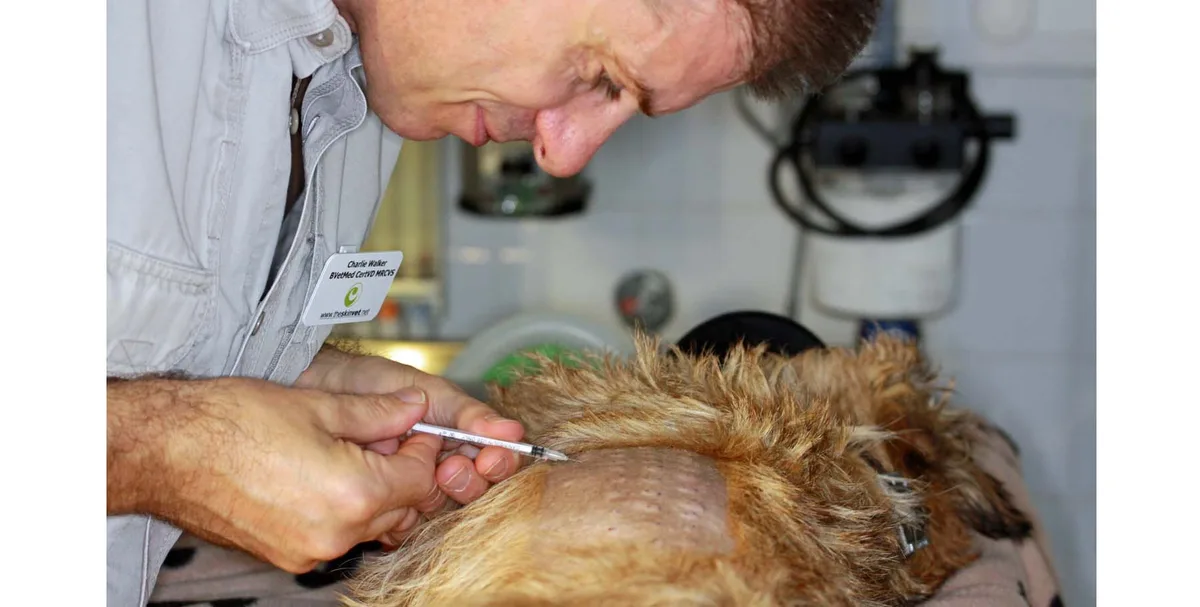
It works like this. The dog is sedated. A patch on the side or chest is shaved.
Tiny amounts of common allergens (grasses, trees, molds, dust mites, fleas, weeds) are injected into the skin in a grid pattern. After 15 to 20 minutes, the vet reads the reactions. A raised, red wheal means a positive response.
Why intradermal beats blood for this
Skin testing reads the actual tissue response. Blood tests read circulating antibodies. The two don't always agree, and skin testing generally correlates better with what the dog is actually reacting to in the real world.
That's why veterinary dermatologists consider IDST the gold standard for environmental allergens. Studies in the Veterinary Dermatology journal show IDST has higher sensitivity than serum tests for grass, tree, and dust mite allergens.
The logistics
IDST requires a veterinary dermatologist. Most general practice vets don't do it. Expect a specialist referral.
Dogs usually need to be off steroids for at least 4 weeks, off antihistamines for 7 to 14 days, and off Apoquel or Cytopoint for several weeks before testing. Your vet will give exact washout instructions.
The cost runs $200 to $500 in most US markets as of 2026, depending on region and clinic. That includes the exam, sedation, allergens, and reading. Blood tests are often cheaper, but less accurate.
What happens after a positive IDST
Once the vet knows what the dog reacts to, the next step is usually allergen-specific immunotherapy. That's a custom serum made from the positive allergens. It's given as subcutaneous injections (allergy shots) or sublingual drops.
About 60 to 80 percent of dogs improve with immunotherapy over 6 to 12 months. It's not a cure. It's a management tool.
Most dogs stay on shots long-term, with doses spaced out over time.
How Serum Blood Allergy Tests Work (And When They Make Sense)
Serum IgE blood tests are the alternative to skin testing. A blood sample is sent to a lab. The lab measures IgE antibodies against a panel of allergens, usually 40 to 80 of them.
Results come back in 1 to 2 weeks.
Blood tests are useful in specific situations:
- A dog can't be safely sedated
- A dog is on medications that can't be washed out
- No veterinary dermatologist is nearby
- The dog has widespread skin infections that make skin testing unreliable
In these cases, a serum test is better than nothing. But vets don't treat the results as gospel. They use them as a starting point, then monitor clinical response to any treatment changes.
The two main lab methods are RAST (radioallergosorbent test) and ELISA (enzyme-linked immunosorbent assay). Both measure similar things. Neither is dramatically more accurate than the other.
Your vet picks based on which lab they trust.
False positives are the main weakness. A dog might test positive for ragweed but never show symptoms during ragweed season. That doesn't mean ragweed is harmless.
It means the immune system flagged it without causing clinical disease. Interpretation matters.
Direct-to-Consumer Dog Allergy Tests: Why Most Vets Don't Trust Them
Walk into a pet store or scroll Instagram and you'll see at-home dog allergy tests. Saliva-based. Hair-based.
Fur-based. They promise results from a cheek swab or a few tufts of fur mailed in a bag.
Most veterinary dermatologists don't recommend them. The science isn't there.
These tests often claim to detect "food sensitivities" or "environmental intolerances." The methods aren't validated in peer-reviewed literature. Results vary wildly between tests on the same dog. The American Veterinary Medical Association has noted that direct-to-consumer pet tests of this type lack consistent standards.
The danger isn't just wasted money. It's false reassurance. A dog tests "negative" for chicken, so the owner keeps feeding it, while the real trigger goes unidentified.
Or the test flags ten "sensitivities" the dog doesn't actually have, and the owner puts them on a needlessly restrictive diet.
If you want real answers, work with your vet. Save the at-home tests for novelty, not diagnosis.
Allergy Shots vs. Allergy Drops: What Happens After Testing
Once testing identifies triggers, immunotherapy is the long-term play for environmental allergies. Two delivery methods exist.
Subcutaneous immunotherapy (allergy shots) is the older, more studied option. Owners give injections at home, starting daily or every few days, then tapering to weekly or monthly. Most dogs tolerate it well.
The downside: needles.
Sublingual immunotherapy (allergy drops) is newer. Drops go under the tongue daily. No needles.
Easier for needle-shy owners. The research base is smaller but growing, with studies in Veterinary Dermatology showing comparable efficacy for many dogs.
| Method | Frequency | Cost Range/Month | Best For |
|---|---|---|---|
| Allergy shots | Weekly to monthly | $40 to $80 | Dogs with severe, multi-allergen profiles |
| Allergy drops | Daily | $60 to $120 | Needle-averse owners, multi-dog households |
Neither works overnight. Expect 6 to 12 months before you see the full benefit. Some dogs respond in 4 months.
Others need a year. Stopping immunotherapy usually leads to relapse within 6 to 12 months in about 30 to 40 percent of dogs, so this is typically a years-long commitment.
What Allergy Testing Actually Costs in 2025
Costs vary widely by region and clinic, but here are realistic US ranges for 2025.
| Test or Service | Typical Cost |
|---|---|
| Initial vet exam and consultation | $75 to $150 |
| Skin cytology (infection check) | $40 to $90 |
| Serum IgE blood panel | $150 to $350 |
| Intradermal skin testing (with sedation) | $200 to $500 |
| Elimination diet food (per month) | $40 to $90 |
| Custom immunotherapy serum (per month) | $40 to $120 |
These are out-of-pocket estimates without pet insurance. Some plans cover allergy diagnostics, others exclude them. Call your insurer before assuming coverage.
How Long the Whole Allergy Testing Process Takes
From first vet visit to confirmed diagnosis, expect 2 to 6 months.
Elimination diets take 8 to 12 weeks alone. Blood tests take 1 to 2 weeks for results. Intradermal testing happens in a single appointment, but referral wait times can add weeks.
Immunotherapy takes another 6 to 12 months to show full benefit.
Plan for the long game. There are no shortcuts that actually work.
Common Mistakes Owners Make During Allergy Testing
Treating before testing. Starting Apoquel or steroids before testing masks results. Wait, or talk to your vet about washout timing.
Breaking the elimination diet. One bite of the wrong food resets the clock. Whole household compliance is essential.
Trusting direct-to-consumer tests. Saliva and hair tests lack validation. They lead to wrong conclusions more often than right ones.
Stopping immunotherapy too early. Improvement takes months. Quitting at week 8 because "it's not working" wastes the work already done.
Skipping flea control. Even indoor dogs need it. Flea allergy is the most common canine allergy and the easiest to miss.
Questions to Ask Your Vet Before Any Allergy Test
- Is my dog a good candidate for skin or blood testing right now?
- Should we do an elimination diet first, or test environmental allergens first?
- What medications does my dog need to stop, and for how long?
- Will the test results change our treatment plan?
- What's the expected timeline from testing to improvement?
- Is a veterinary dermatologist referral worth it for our case?
These six questions cut to the heart of what testing will and won't do for your specific dog.
The Bottom Line on Dog Allergy Testing
Dog allergy testing isn't one test. It's a structured process that walks through flea control, infection treatment, food trials, then environmental testing. The order matters.
The compliance matters. The interpretation matters most of all.
If your dog is scratching year-round, get to a vet. Start with the basics. Be patient.
And skip the at-home tests unless you just want data for fun.
Frequently Asked Questions
How accurate are dog allergy blood tests?
Serum IgE blood tests produce false positives in roughly 20 to 40 percent of cases for environmental allergens, according to peer-reviewed veterinary dermatology research. They're useful as one piece of the puzzle but not as a standalone diagnosis.
Can a dog be tested for food allergies with a blood test?
No reliable blood test exists for food allergies in dogs. The gold standard is an 8 to 12 week elimination diet followed by a controlled rechallenge. Blood panels for food are often inaccurate.
How much does intradermal skin testing cost for dogs?
In the US as of 2025, intradermal skin testing typically runs $200 to $500. That includes the dermatologist exam, sedation, allergens, and the 15 to 20 minute reading.
How long does a dog elimination diet take?
A proper elimination diet takes 8 to 12 weeks of strict feeding, followed by a rechallenge phase to identify the specific trigger. Going shorter risks missing delayed food reactions.
At what age can dogs be tested for allergies?
Most vets recommend waiting until at least 12 months old. The immune system is still maturing before then, and test reliability improves significantly after the first year.
Do at-home dog allergy tests actually work?
Most veterinary dermatologists don't recommend saliva or hair-based at-home tests. The methods aren't validated in peer-reviewed literature, and results vary too much between tests on the same dog to be clinically useful.