How to treat dog skin allergies at home: The Ultimate Guide
If your dog won't stop scratching, biting at their paws, or rubbing their face on the carpet, you're not alone. Skin issues are one of the most common reasons dogs end up at the vet, and most cases of mild to moderate itching can be managed at home once you know what you're dealing with. Learning how to treat dog skin allergies at home starts with identifying the trigger, then matching the right remedies to the right cause.
The trick is that "dog allergy" actually covers three very different conditions (flea, food, and environmental), and each one responds to a different home treatment. Standard guidance from the American Veterinary Medical Association recommends ruling out fleas first, then running an elimination diet before assuming environmental allergens. As of 2026, vets still report that flea allergy dermatitis is the single most under-diagnosed cause of chronic itching in dogs, even in indoor pets.
Quick Answer
Bathe your dog with an oatmeal or chlorhexidine shampoo once a week to calm the skin. Run an 8 to 12 week elimination diet to test for food allergies. Use a vet-approved antihistamine like cetirizine at 1 mg per kilogram once daily.
Add an omega-3 supplement with EPA and DHA. Apply a flea preventative every month. Call your vet if the skin breaks open, swells, or smells infected.
What Dog Skin Allergies Actually Look Like (and Why They Happen)
Dog skin allergies are an immune system overreaction to something harmless, like flea saliva, a food protein, or a pollen. The immune system misreads these triggers as threats and floods the skin with histamine and inflammatory cells.
The most common symptoms include:
- Constant scratching, licking, or chewing at the paws, belly, or ears
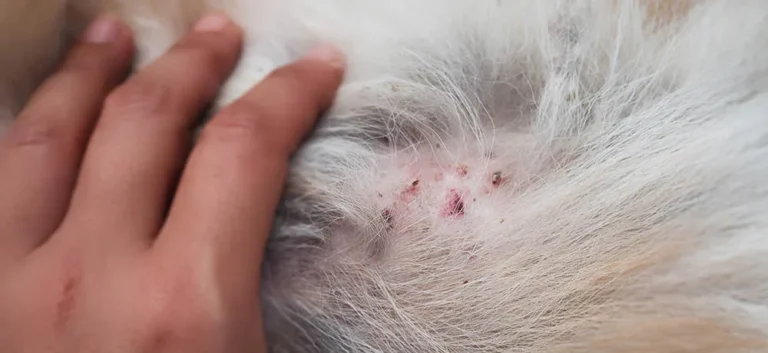
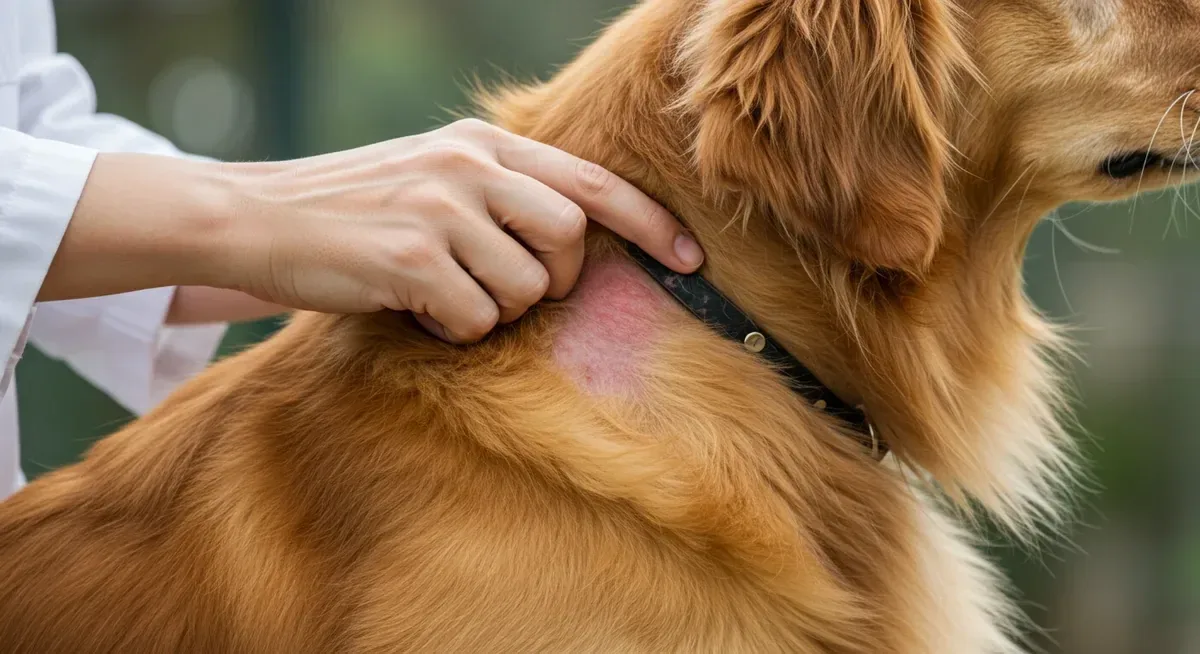
- Red, inflamed skin, especially in skin folds, armpits, and groin
- Hair loss in patches or a thinning coat
- Recurring ear infections or head shaking
- Hot spots (raw, moist, oozing patches that appear fast)
- A yeasty or sweet smell from the skin or ears
Here's the thing: the look of the rash rarely tells you the cause. A dog with flea allergy and a dog with a chicken allergy can show identical red bellies. That's why figuring out the trigger matters more than treating the rash itself.
Treating the wrong thing wastes weeks and can let a secondary infection take hold.
Three systems in your dog's body drive the reaction:
- The skin barrier. A healthy barrier holds moisture in and keeps allergens out. Weak barriers let pollen and bacteria penetrate and trigger inflammation.
- The immune response. Mast cells release histamine, which causes the itch-scratch cycle.
- The microbiome. Yeast and bacteria living on the skin multiply fast when the barrier breaks down, which is why allergies so often lead to secondary infections.
Genetics load the gun, but the environment pulls the trigger. Breeds like French Bulldogs, Westies, Boxers, and Retrievers carry a higher genetic risk for atopic dermatitis. Even so, a dog with no family history can develop allergies if exposed to a new trigger or fed a low-quality diet that weakens the skin barrier.
Flea, Food, or Environment? How to Tell What's Triggering the Itch
This is the step most home treatment guides skip, and it's the reason so many dog owners feel like nothing works. If you treat for food allergies when the real cause is fleas, you'll burn three months on a diet trial and your dog will still be miserable. Match the symptom pattern to the trigger first.
| Trigger | Most Common Locations | Seasonal? | Key Clue |
|---|---|---|---|
| Flea allergy dermatitis | Lower back, tail base, hind legs | Worse in warm months | Scabs or "flea dirt" near the tail |
| Food allergy | Ears, paws, rear, face | Year-round, non-seasonal | Same level of itch every month |
| Environmental (atopy) | Belly, paws, armpits, face | Seasonal (spring/fall) | Itch improves indoors, flares outside |
Is it fleas?
Fleas are the first thing to rule out, because flea allergy dermatitis (FAD) accounts for roughly 40% of itchy-dog cases seen by general vets. A dog with FAD can react to a single flea bite, and the itch often shows up 12 to 48 hours after the bite.
The classic sign is hair loss and scabbing right at the base of the tail and on the lower back. Run a flea comb through the coat and look for tiny black specks ("flea dirt") that turn red-brown when placed on a wet paper towel. That red color means digested blood, which confirms fleas are feeding even if you don't see the fleas themselves.
Is it food?
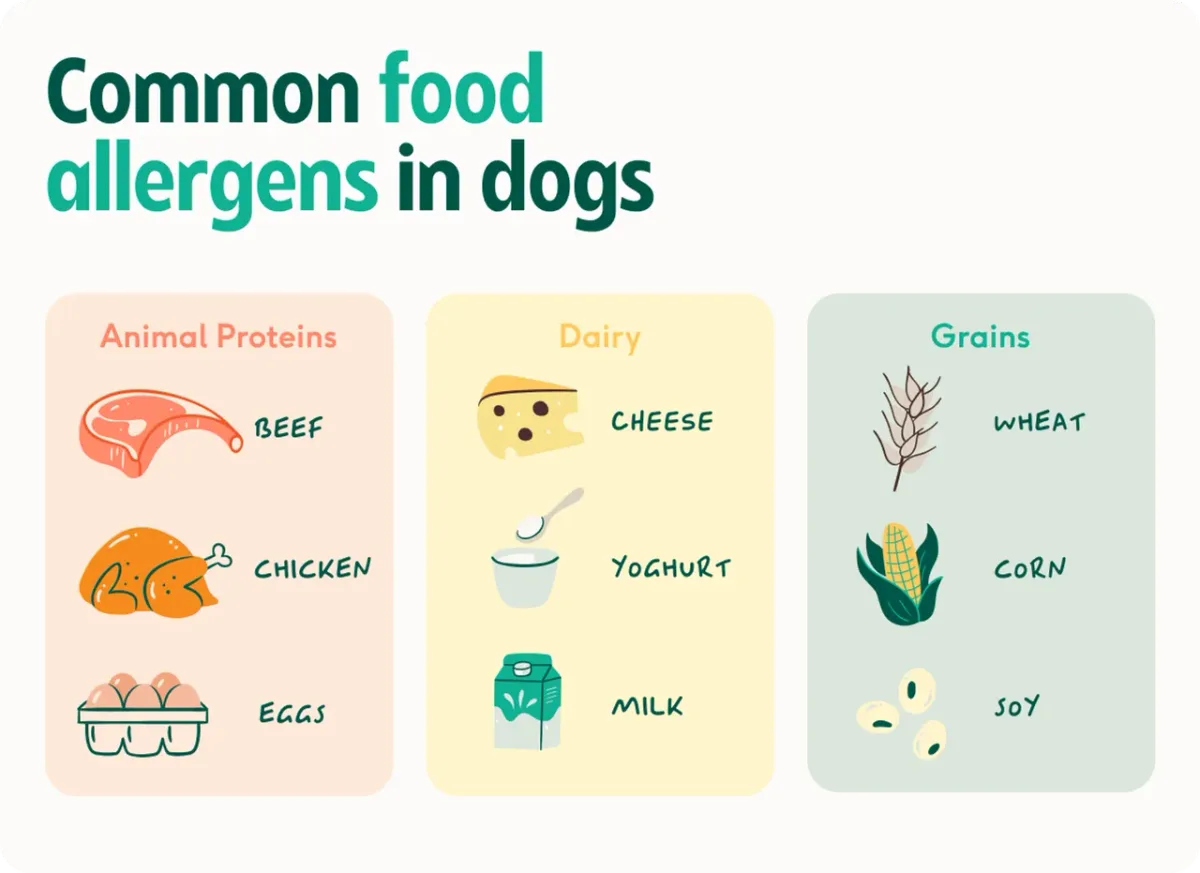
Food allergies in dogs are almost always to a protein source, not a grain. The big offenders are chicken, beef, dairy, and eggs, because these are the most common proteins in commercial dog food. The itch from a food allergy is non-seasonal.
Your dog itches the same amount in January as in July.
Two symptoms that point strongly to food allergy:
- Recurrent ear infections (yeast or bacterial) that return even after treatment
- Frequent bowel issues, like soft stool or extra gas, alongside the itch
You can't confirm a food allergy with a blood test. The only reliable diagnostic tool is an 8 to 12 week elimination diet trial under veterinary guidance. We'll cover that exact protocol in the step-by-step section below.
Is it environmental?
Environmental allergies (called atopic dermatitis) are reactions to airborne particles like tree pollen, grass pollen, dust mites, or mold spores. They typically show up between ages 1 and 3 and follow a seasonal pattern, flaring in spring or fall and calming in winter.
The giveaway is where the dog itches most. Atopy dogs obsess over their paws (you'll see saliva staining, a reddish-brown tint on white fur), their armpits, their groin, and the sides of their face. Wipe your dog's paws with a damp cloth after walks and you'll often remove allergens before they cause a flare.
A quick home clue: if the itching drops sharply when your dog stays at a friend's house for a few days with no other changes, the trigger is almost certainly environmental.
When Home Treatment Is Safe, and When You Need a Vet Now
Most mild allergy flares are fine to manage at home. The rule is simple: if the skin is intact (no open sores, no pus, no swelling), home treatment is a reasonable starting point. The moment the skin breaks, swells, or smells off, you're past the home-care window and into a situation that needs prescription help.
Home treatment is appropriate when:
- The dog is itchy but the skin looks normal or just slightly pink
- There's mild dandruff or flaking, no hair loss beyond normal shedding
- The dog is eating, drinking, and behaving normally
- No vomiting, diarrhea, or facial swelling
- It's a known recurring seasonal flare in an already-diagnosed dog
See a vet right away if you see:
- Hot spots. Raw, oozing, painful patches that spread fast. These often need antibiotics and steroid injections.
- Open wounds or bleeding. Dogs scratch through the skin within hours when the itch is severe. Open wounds invite infection.
- Facial swelling or hives. This points to an acute allergic reaction (bee sting, vaccine reaction, new food) and can escalate fast.
- Ear infections. A strong smell, head shaking, or a black/brown waxy discharge means the ears need prescription drops.
- Skin that smells yeasty or sweet. Yeast overgrowth won't clear with shampoo alone.
- Lethargy, vomiting, or appetite loss. Allergies don't cause systemic illness, so something else is going on.
A common mistake is waiting too long "to see if it gets better." Allergies almost never self-resolve in dogs, and the longer you wait, the more secondary infection sets in. Early vet intervention consistently reduces the total medication a dog needs over the following year.
Step-by-Step: How to Treat Dog Skin Allergies at Home
Once you've matched the symptoms to a likely trigger, you can build a real treatment plan. The order matters: stop the itch cycle first, fix the skin barrier second, then remove the trigger if you can find it.
Step 1. Get fleas under control (always first)
Even if you don't see fleas, treat for them. Use a vet-recommended monthly preventative like a topical fipronil product or an oral isoxazoline (such as fluralaner or sarolaner). Skip over-the-counter flea shampoos alone.
They kill the fleas on the dog at that moment but do nothing for the eggs and larvae in your house.
Wash all bedding in hot water (60°C / 140°F minimum). Vacuum thoroughly, then throw the bag away. Roughly 95% of the flea life cycle lives in the environment, so skipping this step means reinfestation in 2 to 3 weeks.
Step 2. Bathe the dog correctly
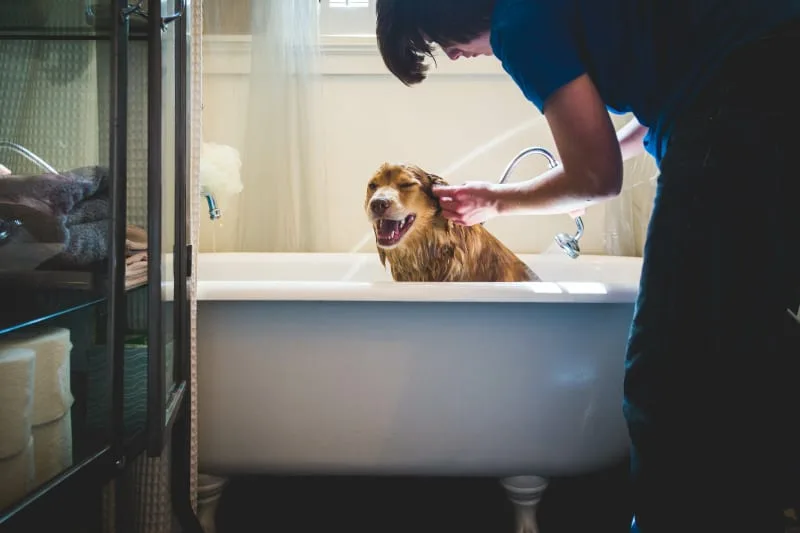
Bathing is the single most effective home treatment for itchy skin, but it has to be done right. Over-bathing strips oils and makes things worse. Under-bathing lets allergens build up.
Use lukewarm water (not hot, since hot water inflames itchy skin). Wet the coat fully, then massage in an oatmeal-based or chlorhexidine shampoo. Let it sit for 10 minutes before rinsing.
That contact time is what kills yeast and bacteria on the skin.
For most allergic dogs:
- Mild flare: bath every 1 to 2 weeks with an oatmeal shampoo
- Moderate flare: bath every 3 to 5 days with a 2% chlorhexidine shampoo for 2 to 3 weeks, then back to oatmeal
- Yeasty dog: bath twice a week with a chlorhexidine-miconazole combo shampoo
Always rinse thoroughly. Soap residue is a common hidden trigger for contact dermatitis.
Step 3. Soothe with rinses and topical sprays
After the bath, you can layer in a few home remedies that actually have reasonable evidence behind them:
- Colloidal oatmeal leave-on conditioner. Locks in moisture and calms inflammation. Safe for daily use.
- Diluted apple cider vinegar spray. Mix 1 part apple cider vinegar with 4 parts water in a spray bottle. Mist on itchy spots (avoid open wounds, since vinegar stings raw skin). The acidity helps restore the skin's natural pH.
- Coconut oil topically. A thin layer on dry patches can help, but use sparingly. Dogs will lick it off, and too much adds unnecessary fat to the diet.
- Aloe vera gel (pure, food-grade). Apply to small irritated areas. Avoid commercial aloe products with added alcohol or lidocaine, which are toxic to dogs if licked.
Avoid tea tree oil, eucalyptus oil, and any "essential oil blend" marketed for pets unless specifically formulated and diluted by a veterinary dermatologist. These are among the most common causes of toxic contact reactions in dogs.
Step 4. Use an antihistamine the right way
Antihistamines can take the edge off mild itching but rarely stop it on their own. They work best as part of a multi-pronged plan, not as a solo fix.
The three antihistamines vets most often recommend for dogs:
| Antihistamine | Typical Dose | Notes |
|---|---|---|
| Cetirizine (Zyrtec) | 1 mg per kg, once daily | Least sedating; good first choice |
| Loratadine (Claritin) | 0.5 mg per kg, once daily | Safe, mild effect |
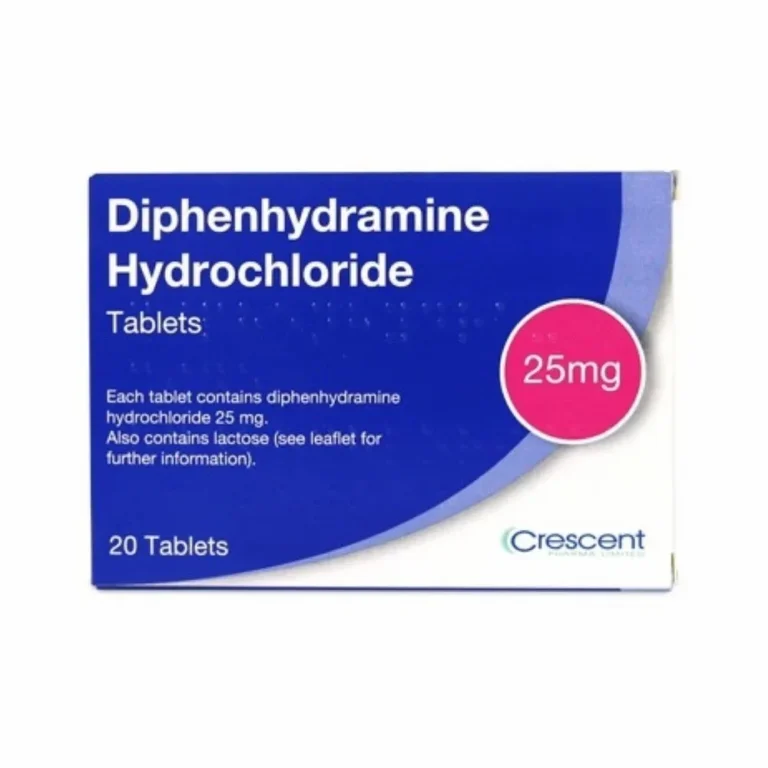
| Diphenhydramine (Benadryl) | 2 to 4 mg per kg, every 8 to 12 hours | More sedating; check formula has no xylitol |
Important: never give your dog a "Benadryl-D," any product with pseudoephedrine, or any antihistamine combined with a decongestant. Xylitol, a sweetener in many liquid medications, is toxic to dogs even in small amounts.
If you don't see meaningful improvement after 7 to 10 days at the right dose, antihistamines alone aren't going to cut it. Talk to your vet about prescription options like Apoquel (oral) or Cytopoint (injectable).
Step 5. Add omega-3 fatty acids
Omega-3s don't work overnight, but they rebuild the skin barrier from the inside out. Look for a fish oil supplement that lists the EPA and DHA content on the label, not just "fish oil." Aim for a combined dose of 50 to 75 mg per kg of body weight per day.
Most dogs show meaningful skin improvement after 6 to 8 weeks of daily supplementation. The benefits stack with other treatments, so this works well alongside bathing and diet changes.
Step 6. Run an elimination diet (if you suspect food allergy)
If the itch is year-round and your dog has ear issues or soft stool alongside the skin problems, food allergy is a real possibility. The only way to test it is with an elimination trial.
- Pick a novel protein your dog has never eaten (venison, rabbit, duck, kangaroo) or use a hydrolyzed protein prescription diet.
- Feed only this food, plus the treats that match it, for 8 to 12 weeks.
- No table scraps. No flavored medications. No rawhides.
- Watch for a 50% or greater reduction in itch by week 6 to 8.
- If the itch drops, reintroduce old foods one at a time to confirm the trigger.
A failed trial usually means cross-contamination, not a non-food cause. Even a single bite of old food can reset the immune response.
Common Mistakes That Make Dog Skin Allergies Worse
Most owners aren't doing anything wrong on purpose, but a few common habits quietly make the itch worse. Spotting these early saves your dog weeks of discomfort.
Mistake 1: Bathing too often
More baths feel like the right answer, but daily or every-other-day bathing strips the natural oils that protect the skin. Dry skin itches more, and the scratch cycle restarts. Twice a week is the practical ceiling for most dogs, even during a flare.
Mistake 2: Using human cortisone cream
Hydrocortisone cream meant for humans feels like a quick fix, but dogs lick it off. Ingested steroids over time thin the skin and suppress the immune system. If you need a steroid cream, ask your vet for a pet-formulated option with safe dosing.
Mistake 3: Stopping flea prevention in winter
Flea eggs survive indoors year-round. Skipping monthly prevention in cold months just lets the population rebound in spring. Consistency beats intensity here.
Mistake 4: Treating the symptom, not the trigger
Baths and antihistamines manage the itch. They do nothing for the underlying flea, food, or pollen problem. If you stop treatment and the itch returns, the trigger is still there.
Medicated Shampoos vs. Oatmeal Baths: Which to Use When
Both work, but they do different jobs. Picking the right one depends on what's actually happening on the skin.
| Shampoo Type | Best For | Active Ingredients | Frequency |
|---|---|---|---|
| Colloidal oatmeal | Mild, seasonal itching; maintenance | Avenanthramides, lipids | 1 to 2 times per week |
| Chlorhexidine (2%) | Bacterial overgrowth, hot spots | Chlorhexidine gluconate | Every 3 to 5 days during flare |
| Chlorhexidine + miconazole | Yeast infections, yeasty smell | Chlorhexidine, miconazole | Twice weekly for 3 weeks |
| Pramoxine | Numbing severe itch | Pramoxine hydrochloride | As directed, short term |
If your dog's skin looks pink and itchy but clean, start with oatmeal. If there's odor, greasiness, or brown wax in the ears, switch to chlorhexidine. Oatmeal shampoo and medicated shampoo can rotate within the same week.
Home Remedies vs. Apoquel and Cytopoint: Honest Pros and Cons
Home remedies are safe, affordable, and effective for mild cases. They're not enough for moderate to severe allergies, and that's not a failure on your part. Some dogs need pharmaceutical help to break the itch cycle.
Apoquel (oclacitinib) is a daily oral tablet that blocks the itch signal at the cellular level. Most dogs feel relief within 4 hours, with full effect by day 3. It works on most allergy types but requires daily dosing and routine bloodwork to monitor for immune suppression.
Cytopoint is an injectable given at the vet every 4 to 8 weeks. It neutralizes a specific itch-triggering protein (interleukin-31). It's a good fit for dogs that won't take pills, and it has fewer systemic side effects than oral steroids.
| Option | Pros | Cons |
|---|---|---|
| Home remedies | Low cost, no side effects, builds healthy skin | Slow results, limited to mild cases |
| Antihistamines | Cheap, easy to find | Effective in only 20 to 30% of dogs |
| Apoquel | Fast, works on most allergens | Daily dosing, requires bloodwork |
| Cytopoint | Long-lasting, minimal systemic exposure | Vet visit every 4 to 8 weeks |
| Steroids (prednisone) | Cheap, very effective short-term | Thirst, hunger, long-term organ damage |
Steroids still have a place for short rescue courses, but they aren't a long-term solution. Most dermatologists now reserve them for acute flares only.
How Long Until You See Results (Real Timelines by Allergy Type)
Expectations matter more than anything else in home treatment. Most owners give up too early and switch plans before the previous one had time to work.
- Flea allergy dermatitis: 2 to 4 weeks after starting full flea control. The dog should be dramatically less itchy by week 3.
- Food allergy: 6 to 8 weeks into a strict elimination diet. Some dogs show partial improvement at week 4.
- Environmental (atopy): 1 to 2 weeks for bathing and antihistamines. Full barrier repair with omega-3s takes 6 to 8 weeks.
- Secondary bacterial infection: 1 to 2 weeks after starting vet-prescribed antibiotics. Don't skip the full course.
If you've hit week 3 with no change at all, the diagnosis is probably wrong. Recheck the symptom pattern and consider a vet visit for skin cytology or a referral to a veterinary dermatologist.
Red-Flag Symptoms That Mean Stop Home Treatment and Call the Vet
The line between home care and emergency is sharper than most owners realize. These symptoms mean the itch has crossed into something home treatment can't fix.
- Sudden facial swelling, hives, or collapse. Acute allergic reactions can progress to anaphylaxis in minutes.
- Hot spots spreading rapidly. A quarter-sized sore can become palm-sized in 24 hours without antibiotics.
- Skin that turns black, thick, or leathery. Chronic inflammation (hyperpigmentation and lichenification) signals long-standing disease that needs prescription-strength management.
- Severe odor from skin or ears. A sweet or yeasty smell means Malassezia overgrowth, which only resolves with antifungal medication.
- Weight loss, vomiting, or chronic diarrhea alongside skin signs. Food allergy may be one part of a larger gastrointestinal issue.
If your dog matches any of these, you've hit the limit of safe home care. Stop the home remedies, document what's been tried, and book the vet visit.
Building a Long-Term Plan to Prevent Flare-Ups
Home treatment is really about long-term management. Once the current flare is under control, the goal is to keep the next one from happening.
A solid prevention plan includes monthly flea prevention all year, an omega-3 supplement as a daily staple, regular baths (every 2 to 4 weeks during allergy season), and a high-quality diet with a single, identifiable protein source. For dogs with confirmed seasonal atopy, start the prevention routine 4 to 6 weeks before the typical flare window.
Track your dog's itch score monthly using a simple 0 to 10 scale. 0 means no scratching. 10 means nonstop scratching that interrupts sleep. Anything above 5 for more than a week means the prevention plan needs adjustment. The American College of Veterinary Dermatology recommends this kind of ongoing tracking as part of long-term allergy management.
Dogs with environmental allergies often need lifelong support, but the support gets easier. Most owners settle into a 15-minute weekly routine that keeps flares rare and mild. That's the real win, not a cure, but a calm, comfortable dog year-round.
Frequently Asked Questions
How long does it take for dog skin allergies to clear up with home treatment?
Most dogs show meaningful improvement within 7 to 14 days if the trigger is correctly identified and the treatment plan covers bathing, flea control, and skin support. Food allergy trials take longer, usually 6 to 8 weeks before you'll see the full effect.
Can I use Benadryl for my dog's skin allergies?
Yes, plain diphenhydramine (Benadryl) is generally safe at 2 to 4 mg per kg every 8 to 12 hours, but you must use a formula without xylitol or decongestants. It works for mild itching only, and many dogs don't respond at all. Expect sedation, not full relief.
What can I put on my dog's itchy skin at home?
Plain colloidal oatmeal paste, diluted apple cider vinegar spray (1:4 with water), pure aloe vera gel, and veterinary-grade moisturizing sprays are all safe options. Avoid tea tree oil, hydrocortisone cream meant for humans, and any product with zinc oxide, since these are toxic to dogs.
Are oatmeal baths actually good for dog allergies?
Yes, oatmeal baths are one of the most evidence-backed home treatments. Colloidal oatmeal contains avenanthramides, which reduce inflammation and itching. Use lukewarm water and let the shampoo sit for 10 minutes for full benefit.
When should I stop home treatment and go to the vet?
Stop home treatment and call your vet if the skin breaks open, develops a foul or sweet smell, swells, or if your dog develops facial swelling, vomiting, or recurring ear infections. These are signs of secondary infection or an acute allergic reaction that needs prescription medication.
Can coconut oil really help a dog with skin allergies?
Coconut oil can soothe small dry patches when applied thinly to intact skin, but dogs usually lick it off before it absorbs. A better internal use is a measured teaspoon in food for medium dogs, though it adds significant calories. It won't replace proper treatment for moderate to severe allergies.
How do I know if my dog's allergies are yeast or bacterial?
Yeast infections smell sweet or musty and produce greasy, dark brown ear wax or skin discoloration. Bacterial infections smell foul and often have pus, crusting, or hot spots. Both can look similar, but a vet can confirm with skin cytology in about 10 minutes.
Are grain-free diets better for allergic dogs?
Grain-free diets don't help unless your specific dog is allergic to a grain (rare). Most food allergies are to proteins like chicken or beef. Switching to grain-free without changing the protein source usually changes nothing.
Focus on the protein, not the grain.
Should I try allergy shots (immunotherapy) for my dog?
Allergen-specific immunotherapy is a strong option for dogs with confirmed environmental allergies that don't respond to home care. It works in roughly 60 to 80% of cases after 6 to 12 months. A veterinary dermatologist designs the serum based on intradermal or serum allergy testing.
How often should I bathe an allergic dog?
Most allergic dogs do well with a bath every 1 to 2 weeks during a flare, then every 2 to 4 weeks for maintenance. Over-bathing dries the skin. Under-bathing lets allergens build up.
Adjust based on smell, itch score, and how the coat looks between baths.