How much benadryl to give a dog for allergies: Easy guide
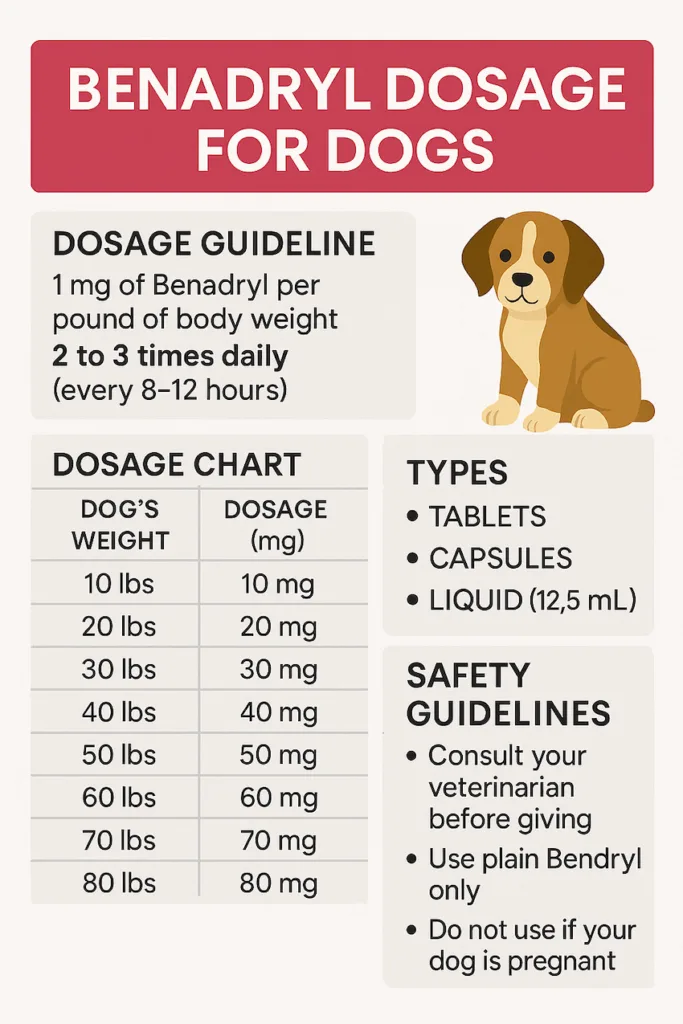
The standard veterinary dose for Benadryl in dogs is 1 mg per pound of body weight, given by mouth every 8 to 12 hours. This guideline holds for plain diphenhydramine products, not the Benadryl versions that include decongestants or pain relievers. Always confirm your dog's current weight before dosing.
The reason dosing precision matters so much is that diphenhydramine has a narrow safety margin in dogs. Aggregate pharmacology sources and the Merck Veterinary Manual place the safe range between 2 and 4 mg per kilogram, roughly 1 mg per pound. As of 2026, the guidance has not shifted, but more clinicians now flag that even small calculation errors can produce sedation, agitation, or worse.
Let's walk through what that actually looks like in practice.
Quick Answer
The widely accepted Benadryl dose for dogs is 1 mg per pound (2 mg per kg) of body weight, given by mouth every 8 to 12 hours. Use only plain diphenhydramine, never combination products with pseudoephedrine or acetaminophen. Always call your vet before giving Benadryl to confirm it is safe for your specific dog.
Why Benadryl Dosing in Dogs Is a Serious Decision
Benadryl (diphenhydramine) is one of the most familiar over-the-counter medications in any household medicine cabinet. Because it sits on the shelf next to the dog treats, plenty of owners reach for it the moment their dog starts scratching, sneezing, or breaking out in hives. That accessibility is part of why dosing errors are common, and why the question "how much Benadryl to give a dog for allergies" deserves more than a one-line answer.
The drug itself is a first-generation antihistamine. It blocks H1 receptors and reduces the histamine-driven itching, swelling, and redness that show up during allergic reactions. According to the Merck Veterinary Manual, diphenhydramine is one of several antihistamines used off-label in dogs for mild allergic conditions.
"Off-label" is the key phrase here. Diphenhydramine is FDA-approved for humans, not for dogs. Vets prescribe it based on clinical experience and published dosing ranges, but no veterinary-specific FDA approval exists for this use.
Why does that matter to you? Because off-label dosing means there is no manufacturer-guaranteed "dog-safe" label on the bottle. The dose you're giving is based on veterinary judgment, your dog's weight, and any other conditions or medications that might change the picture.
Get any of those wrong and the same drug that helps one dog can land another in the emergency clinic.
How Diphenhydramine Works in Dogs
When a dog encounters an allergen, whether it's pollen, a flea bite, or a vaccine component, the immune system releases histamine. Histamine binds to H1 receptors in the skin, airways, and blood vessels. That binding is what creates the itching, the swelling, the runny eyes, and the hives.
Diphenhydramine is an H1 receptor antagonist. It parks itself on those receptors and blocks histamine from latching on. The histamine is still there, but it can't trigger the reaction.
This is why diphenhydramine works best when given early, before histamine levels build up.
A few traits of diphenhydramine are worth knowing:
- Onset of action is around 30 to 60 minutes after oral dosing.
- Duration of effect runs about 6 to 8 hours in most dogs.
- It crosses the blood-brain barrier, which is why sedation is the most common side effect.
- It also has anticholinergic effects, meaning it can dry out mucous membranes and slow certain smooth muscle activity.
Two practical points follow. First, because the drug wears off in roughly 8 hours, dosing more than three times a day usually isn't useful and can push a dog toward overdose. Second, the sedative effect isn't guaranteed.
Some dogs get drowsy, others get paradoxically hyper or agitated. That variability is one reason vets often prefer second-generation antihistamines for chronic allergy management.
Before You Dose: Safety Conditions That Change Everything
Before pulling a tablet out of the wrapper, run through this quick checklist. Any "yes" here means a vet call before dosing.
| Condition or situation | Why it changes the answer |
|---|---|
| Dog weighs under 10 pounds | Tablet splitting gets risky and dosing errors get large fast |
| Puppy under 12 weeks old | Liver and kidney systems are still immature, dose tolerance is unclear |
| Pregnant or nursing dog | Diphenhydramine crosses into milk and can affect puppies |
| Known heart disease | Anticholinergic effects can stress cardiac function |
| Glaucoma | Anticholinergic activity can raise intraocular pressure |
| Urinary retention or prostate issues | Diphenhydramine can worsen obstruction |
| Already on other sedatives or opioids | Combined sedation can become dangerous |
| Herding breed (Collie, Aussie, Sheltie) | MDR1 gene mutation alters drug processing |
That last row matters more than most owners realize. The MDR1 gene mutation, common in herding breeds, makes dogs more sensitive to several drugs, including some antihistamines. Veterinary pharmacology research has documented that affected dogs can show exaggerated reactions at standard doses.
If your dog is a herding breed or a mix with herding background, ask your vet to confirm whether MDR1 testing is worth it before giving Benadryl.
Standard Benadryl Dose for Dogs by Weight
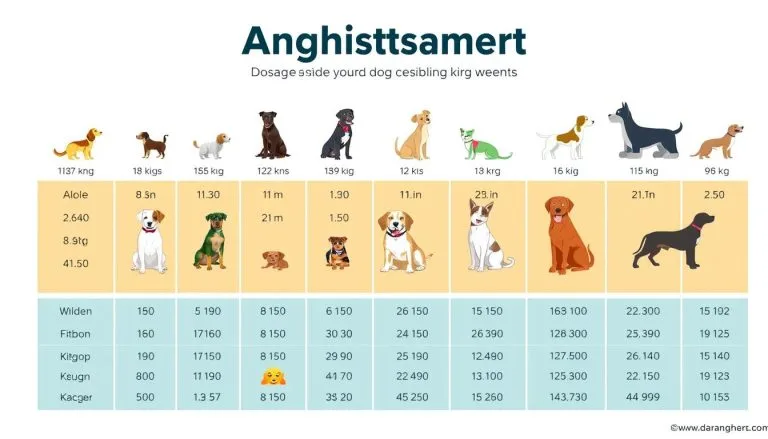
The core guideline, supported by the Merck Veterinary Manual and standard veterinary pharmacology references like Plumb's Veterinary Drug Handbook, is straightforward: 1 mg of diphenhydramine per pound of body weight, by mouth, every 8 to 12 hours.
To translate that into something practical at the kitchen counter, here's how it maps to the most common formulation, the 25 mg adult tablet.
| Dog weight | Dose (mg) | 25 mg tablets | Frequency |
|---|---|---|---|
| 5 lbs | 5 mg | 1/5 of a tablet | Every 8 to 12 hours |
| 10 lbs | 10 mg | 2/5 of a tablet | Every 8 to 12 hours |
| 15 lbs | 15 mg | 3/5 of a tablet | Every 8 to 12 hours |
| 25 lbs | 25 mg | 1 tablet | Every 8 to 12 hours |
| 50 lbs | 50 mg | 2 tablets | Every 8 to 12 hours |
| 75 lbs | 75 mg | 3 tablets | Every 8 to 12 hours |
| 100 lbs | 100 mg | 4 tablets | Every 8 to 12 hours |
Two practical notes. First, splitting a 25 mg tablet into fifths is genuinely hard to do accurately. A pill cutter isn't precise enough for that.
For dogs under about 20 pounds, the liquid children's formulation of diphenhydramine (12.5 mg per 5 mL) is usually easier to dose, and we'll get to that next.
Second, the table reflects the standard ceiling. Most sources cap a single dose at roughly 50 mg for a medium or large dog. Going above that without veterinary direction is not recommended.
Aggregate reviews from veterinary pharmacists suggest that even at the right dose, anything beyond 3 doses in 24 hours crosses into toxicity territory for sensitive dogs.
If your dog sits between weight brackets, round down rather than up. Slightly under-dosing is far safer than slightly over-dosing, and you can always give a second smaller dose after a few hours if symptoms continue.
Choosing the Right Benadryl Formulation (Tablet, Chewable, or Liquid)
The dose only helps if the product you're holding is actually diphenhydramine. Several medications share the Benadryl brand name, and some carry ingredients that are toxic to dogs. Reading the active ingredient panel takes about ten seconds and prevents the kind of mistake that lands a dog at the emergency vet.
Here's the quick breakdown of what to look for:
| Formulation | Strength | Best for | Watch out for |
|---|---|---|---|
| Standard Benadryl tablet | 25 mg | Medium to large dogs | Hard to split accurately for small dogs |
| Benadryl Allergy Ultratab | 25 mg | Same as above | Same split accuracy issue |
| Benadryl Children's Liquid | 12.5 mg / 5 mL | Small dogs and puppies | Some versions contain alcohol or xylitol |
| Benadryl-D or Benadryl Allergy Plus Congestion | varies | Never for dogs | Contains pseudoephedrine, toxic to dogs |
| Benadryl Extra Strength | 500 mg acetaminophen combo | Never for dogs | Acetaminophen is toxic to dogs |
Two ingredients deserve special warning. Pseudoephedrine and phenylephrine, common in decongestant versions of Benadryl, cause dangerous cardiovascular effects in dogs. Acetaminophen, paired with diphenhydramine in some "PM" or "extra strength" products, damages the liver and red blood cells.
If you see anything other than diphenhydramine on the label, put the box back.
For liquid Benadryl, check the inactive ingredients. Some formulations use ethanol as a solvent, which can cause problems for small dogs at higher doses. Others use xylitol as a sweetener, and xylitol is rapidly toxic to dogs even in tiny amounts.
The American Veterinary Medical Association and the ASPCA Animal Poison Control Center both flag xylitol as a serious risk. Stick with the dye-free, sugar-free children's liquid that lists only diphenhydramine as the active ingredient.
How to Administer Benadryl Safely Step by Step
Giving diphenhydramine to a dog isn't complicated, but doing it cleanly does take a few steps. Here's the sequence our research team recommends.
- Weigh your dog. Use a bathroom scale if needed. Weigh yourself, then weigh yourself holding the dog, and subtract. Guessing weight is the most common cause of dose errors.
- Calculate the dose. Take the dog's weight in pounds and use that as the mg number. A 12-pound dog gets 12 mg. A 30-pound dog gets 30 mg.
- Choose the form. Liquid for small dogs, tablets for medium and large dogs, as covered above.
- Verify the product. Confirm only diphenhydramine is listed. Reject anything with added decongestants, pain relievers, or xylitol.
- Administer with food if possible. Diphenhydramine can cause mild stomach upset on an empty stomach. Hiding a tablet in a small treat works for most dogs.
- Time it correctly. Wait at least 8 hours before giving another dose. Don't preemptively dose before symptoms appear unless your vet has specifically told you to.
- Watch for 30 to 60 minutes. That's the onset window. If symptoms don't improve or if anything looks off, call the vet.
- Log it. Write down the time, dose, and how the dog reacted. That record matters if symptoms return or a vet visit becomes needed.
One more practical point. Diphenhydramine can be given with or without food, but giving it with a small snack reduces the chance of vomiting. For dogs that spit out tablets, a pill pocket, a smear of peanut butter (xylitol-free), or a piece of soft cheese usually does the trick.
Signs of Benadryl Overdose in Dogs
The 1 mg per pound guideline keeps most dogs in a safe range, but overdose does happen. It usually happens when a small dog gets a full adult tablet, when doses are repeated too close together, or when a combination product gets used by mistake.
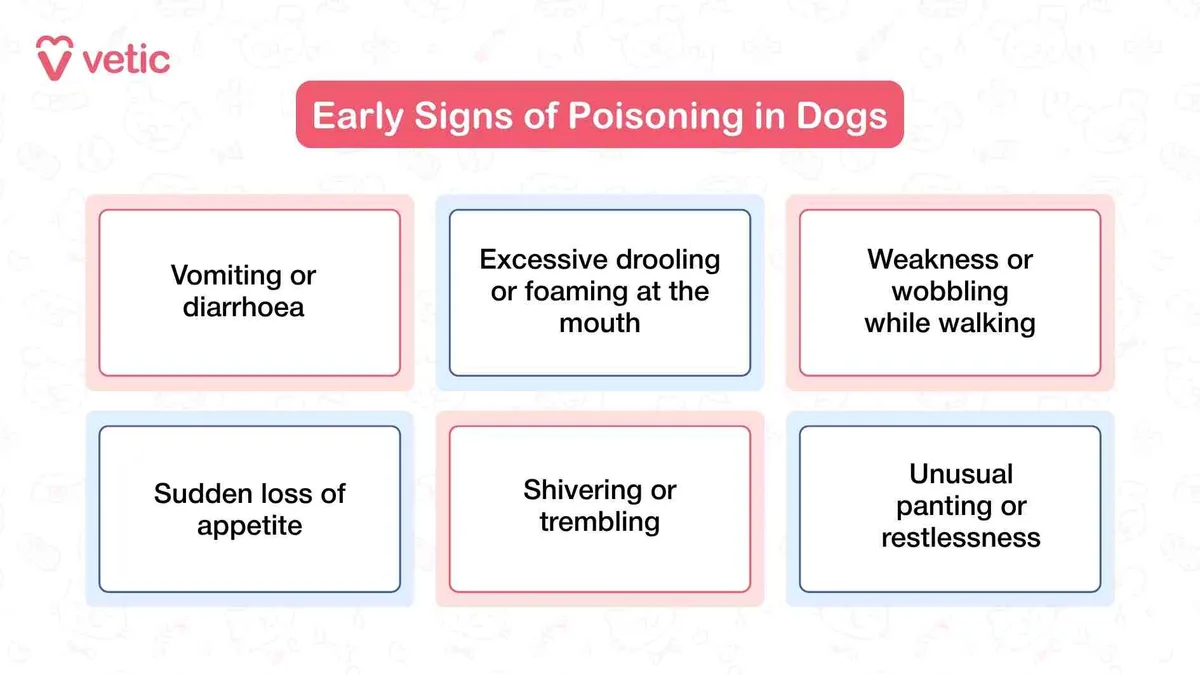
Early signs of overdose include:
- Extreme sedation or, conversely, agitation and restlessness
- Dilated pupils
- Dry mouth and rapid breathing
- Rapid heart rate
- Vomiting
- Tremors or muscle twitching
Severe overdose symptoms escalate quickly:
- Seizures
- Collapse
- Loss of consciousness
- Dangerously elevated body temperature
- Cardiovascular collapse
The Merck Veterinary Manual notes that antihistamine overdose in dogs can produce anticholinergic toxicity, which is the cluster of symptoms driven by blocking acetylcholine. That includes the dilated pupils, the dry mouth, the heart rate spike, and the agitation.
If you suspect your dog has had too much diphenhydramine, don't wait for symptoms to develop. Call the ASPCA Animal Poison Control Center at 888-426-4435 or your nearest emergency veterinary clinic right away. Treatment is most effective when started early.
Benadryl Side Effects and Adverse Reactions to Watch For
Even at a correct dose, diphenhydramine causes side effects in some dogs. Most are mild and resolve as the drug wears off, but a few require a vet's attention.
Common, expected side effects:
- Drowsiness or sedation (most common)
- Dry mouth
- Mild urinary retention
- Decreased appetite
- Slight digestive upset
Less common but more concerning:
- Hyperactivity or agitation (paradoxical reaction)
- Rapid or irregular heartbeat
- Tremors
- Vomiting that doesn't stop
- Difficulty breathing
The paradoxical reaction, where a dog gets wired instead of sleepy, happens in roughly 5 to 10 percent of dogs in clinical reports. It's not dangerous on its own, but it can mask signs of a worsening allergic reaction. If your dog is bouncing off the walls instead of settling down after a dose, watch the actual allergy symptoms more carefully than the behavior.
Long-term daily use adds another consideration. Per Plumb's Veterinary Drug Handbook, chronic diphenhydramine use can lead to tolerance, where the same dose produces less effect over time. It can also contribute to urinary issues, especially in neutered males.
If your dog needs daily allergy relief for more than a few days, a vet visit to discuss alternatives is the better move.
Benadryl for Dogs vs. Other Antihistamines (Zyrtec, Claritin, Apoquel, Cytopoint)
Benadryl isn't the only option for canine allergies, and for many dogs it isn't even the best one. Here's how the main alternatives stack up.
| Medication | Type | Prescription needed | Best for | Notes |
|---|---|---|---|---|
| Diphenhydramine (Benadryl) | 1st-gen antihistamine | No | Mild, acute reactions | Sedating, short-acting |
| Cetirizine (Zyrtec) | 2nd-gen antihistamine | No | Long-term daily allergy management | Less sedating, once-daily |
| Loratadine (Claritin) | 2nd-gen antihistamine | No | Seasonal environmental allergies | Avoid Claritin-D (contains pseudoephedrine) |
| Hydroxyzine | 1st-gen antihistamine | Yes | Anxiety-driven or stress-related itching | Strong sedative effect |
| Oclacitinib (Apoquel) | JAK inhibitor | Yes | Moderate to severe allergic dermatitis | Fast-acting, daily tablet |
| Lokivetmab (Cytopoint) | Monoclonal antibody injection | Yes | Chronic atopic dermatitis | Lasts 4 to 8 weeks per shot |
The second-generation antihistamines (cetirizine, loratadine) tend to cause less sedation because they don't cross the blood-brain barrier as readily. For chronic allergy management, many vets prefer them. Dosing for Zyrtec in dogs typically runs around 1 mg per kilogram once daily.
Apoquel and Cytopoint represent a different category. They don't block histamine at all. Apoquel targets the JAK-STAT pathway that drives itch signaling.
Cytopoint is an injectable antibody that neutralizes a specific itch-triggering protein. Both require a prescription and a veterinary diagnosis, but for dogs with serious atopic dermatitis, they tend to outperform antihistamines by a wide margin.
The honest summary is this. Diphenhydramine is a useful, cheap, fast-acting option for mild or occasional allergic reactions. For chronic skin allergies or severe itching, a vet-supervised alternative will almost always work better.

Dogs Who Should Never Take Benadryl
A few dogs simply shouldn't get diphenhydramine, even at the standard dose. Skip it entirely and call your vet if any of the following apply:
- Puppies under 12 weeks of age. Their liver and kidney pathways are still maturing.
- Pregnant or nursing dogs. The drug passes into milk and crosses the placenta.
- Dogs with known glaucoma. Anticholinergic effects raise intraocular pressure.
- Dogs with severe cardiovascular disease. The drug's cardiac effects can destabilize them.
- Dogs currently on certain sedatives, opioids, or tricyclic antidepressants. Combined sedation or anticholinergic load can become dangerous.
If your dog takes any other medication, check with your vet or a veterinary pharmacist before adding diphenhydramine. Drug interactions are one of the most common causes of "unexpected" Benadryl reactions.
Drug Interactions and MDR1 Sensitivity (Collies, Shepherds, and More)
The MDR1 gene mutation is the hidden variable in canine medication dosing. Dogs with two copies of the mutation process several drugs, including certain antihistamines and anti-parasitics, much more slowly. Toxicity can show up at doses that would be perfectly safe in other dogs.
Herding breeds carry the mutation most often:
- Collies (Rough and Smooth)
- Australian Shepherds
- Shetland Sheepdogs
- Border Collies
- Old English Sheepdogs
- Some German Shepherds and mixed-heritage dogs
If your dog falls in this group or might carry any of these breeds in their ancestry, talk to your vet about MDR1 testing before giving Benadryl routinely. Testing is a simple cheek swab and clears up the question permanently. For an emergency single dose, the standard 1 mg per pound guideline is usually tolerated, but chronic use warrants the test.
Beyond MDR1, the standard drug interactions to keep in mind are CNS depressants. Combining diphenhydramine with trazodone, gabapentin, opioids, or alcohol-based medications stacks sedation. Combining it with other anticholinergic drugs (like certain incontinence meds) stacks dry mouth, urinary retention, and tachycardia.
When Benadryl Is the Right Choice and When It's Not
Benadryl is a good fit when:
- A dog has a sudden, mild allergic reaction with clear trigger (bee sting, vaccine, new food)
- Symptoms are limited to itching, mild hives, or localized swelling
- The dog is otherwise healthy with no contraindications
- A vet has been consulted or the dog has safely taken it before
Benadryl is the wrong fit when:
- The dog is struggling to breathe, has facial swelling, or shows signs of anaphylaxis. That's an emergency, not an OTC moment.
- The dog has chronic, recurring skin allergies. Antihistamines alone usually don't cut it.
- The dog is under 12 weeks, pregnant, or has a known contraindication.
- The product in your hand isn't plain diphenhydramine.
For anaphylactic-type reactions (sudden vomiting, collapse, swelling around the throat), the drug of choice is injectable epinephrine from a veterinary clinic. Benadryl won't reverse anaphylaxis, and waiting to see if it works costs precious minutes.
Common Mistakes Dog Owners Make With Benadryl
We've covered most of these elsewhere, but it helps to pull them into one checklist:
- Using combination products. "Benadryl-D" and similar versions contain pseudoephedrine, which is toxic to dogs.
- Guessing the weight. Even a 5-pound guess in the wrong direction can be a 25 percent overdose for a small dog.
- Splitting tablets too precisely. Quartering a 25 mg tablet is fine. Fifthing it for a 5-pound dog isn't.
- Dosing too often. Twice or three times a day is the ceiling. More is toxicity territory.
- Treating anaphylaxis with Benadryl. It doesn't work for severe allergic reactions. Get to a vet.
- Assuming "natural" or "herbal" allergy products work the same way. They generally don't, and some interact poorly with diphenhydramine.
- Skipping the vet because symptoms improved. If a dog needed Benadryl, the underlying trigger deserves investigation.
Final Verdict: A Safe, Responsible Approach to Giving Benadryl
The short version: 1 mg per pound of body weight, every 8 to 12 hours, using a product that contains only diphenhydramine. That's the standard, vet-supported guideline that has held up in pharmacology references for decades.
The longer version is more honest. Benadryl is a useful tool for mild, short-lived allergic reactions in healthy dogs. It's not a substitute for veterinary diagnosis, and it's not the right answer for chronic skin allergies or any severe reaction.
Check the product, check the weight, check the contraindications, and keep your vet's number handy.
When in doubt, the call to make isn't to the medicine cabinet. It's to the clinic.
Frequently Asked Questions
How long does it take for Benadryl to work in dogs?
Most dogs start showing effects within 30 to 60 minutes after oral dosing. Peak effect usually arrives around the two-hour mark. If no improvement shows up by then, the dose may have been too low or the underlying problem may not be histamine-driven.
Can I give my dog Benadryl every day?
Short-term daily use for a few days is generally acceptable for healthy adult dogs. Long-term daily use should happen under veterinary supervision, because tolerance, urinary issues, and hidden side effects can creep in over weeks and months.
Is children's Benadryl liquid safe for dogs?
Yes, as long as it contains only diphenhydramine and no xylitol, alcohol, or added decongestants. The dye-free, sugar-free children's formulation is the usual pick. Standard strength is 12.5 mg per 5 mL.
What if I accidentally gave my dog too much Benadryl?
Watch closely for sedation, agitation, dilated pupils, or rapid heart rate. Call the ASPCA Animal Poison Control Center at 888-426-4435 or your nearest emergency vet right away. Don't wait for severe symptoms to appear.
Can puppies take Benadryl?
Puppies under 12 weeks should not be given Benadryl without explicit vet approval. For puppies over 12 weeks, the standard 1 mg per pound guideline applies, but a vet call is still the safest first step.
Does Benadryl help with dog anxiety?
Sometimes, mainly through sedation. Diphenhydramine is occasionally used off-label for mild travel anxiety or storm-related stress. For real anxiety issues, vets typically reach for trazodone, gabapentin, or behavioral work, not antihistamines.
Can Benadryl be used for vaccine reactions in dogs?
Yes, this is one of the most common and well-supported off-label uses. Vets often pre-treat dogs known to react to vaccines with a dose of diphenhydramine 10 to 20 minutes before the appointment. It won't stop every reaction, but it reliably reduces the histamine-driven swelling and itching that can follow a booster.
What happens if Benadryl doesn't help my dog's allergies?
That's useful information, and it usually points in one of two directions. The first possibility is that the problem isn't histamine-based. Food allergies, contact dermatitis, mange, and bacterial skin infections all mimic allergic itching but don't respond to antihistamines.
The second possibility is that the allergy is severe enough to need a different drug class entirely, like Apoquel or Cytopoint. Either way, persistent symptoms after a correct dose of Benadryl mean a vet visit is overdue.
Where can I confirm the safe Benadryl dose for my dog?
The most trusted references are the Merck Veterinary Manual, Plumb's Veterinary Drug Handbook, and your own veterinarian. The Merck Manual is freely available online at merckvetmanual.com and gives dosing ranges backed by clinical pharmacology. Your vet can tailor those numbers to your dog's specific health history, which no online chart can do.
Is diphenhydramine the same as Benadryl?
Yes. Diphenhydramine is the generic name. Benadryl is the most common brand, but plenty of store-brand and generic versions contain the exact same active ingredient at the same strength.
Choosing the generic version is usually cheaper with no real difference in effect.
Can I use Benadryl cream on my dog's skin?
Topical Benadryl cream is generally considered low-risk for dogs, but it rarely helps either. Most itchy spots are reached better by an oral dose that works from the inside. If the dog licks the cream off, ingestion becomes a concern.
For localized hot spots, a vet-recommended topical is usually a better choice than an OTC cream.
How does Benadryl compare to Apoquel for dog allergies?
Apopquel is a stronger, more targeted option for dogs with moderate to severe allergic dermatitis. It works on the JAK-STAT pathway that drives itch, rather than blocking histamine. Apoquel is prescription-only, more expensive, and faster-acting for sustained relief.
Benadryl is cheaper and available OTC, but works best for short-term, mild cases. For dogs who scratch year-round, Apoquel typically outperforms diphenhydramine significantly.
When should I seek emergency vet care for an allergic reaction in my dog?
A vet visit is the right call any time symptoms go beyond mild itching or localized hives. Difficulty breathing, sudden facial swelling, collapse, repeated vomiting, or pale gums all signal an emergency. The same applies when Benadryl simply isn't working after a correct dose, when symptoms keep coming back over days, or when a dog is under 12 weeks old.
How should Benadryl be stored in a household with dogs?
Store diphenhydramine in its original packaging, ideally in a closed cabinet the dog can't access. The bitter taste usually deters chewing, but flavored children's liquids are a different story, and a determined medium-sized dog can chew through a blister pack. If you suspect your dog has gotten into a bottle, treat it as a potential overdose and call poison control immediately.
Is it worth discussing Benadryl with my vet during a routine visit?
If your dog has seasonal allergies or a known vaccine reaction history, the conversation is worth having at a wellness visit. Ask your vet to confirm the right dose for your dog's current weight, flag any contraindications based on breed or existing medications, and clarify when they'd rather see the dog in person versus trying Benadryl at home. Having that plan in writing turns an emergency moment into a quick yes-or-no decision.