How can i tell if my dog has allergies
Your dog won't stop scratching. The carpet looks like a fur tumbleweed exploded, and every walk ends with paw-licking you can hear across the room. You're starting to wonder, how can i tell if my dog has allergies, or is this just normal dog behavior?
Here's the honest answer: allergies in dogs show up through specific symptom patterns, not any single behavior. Roughly 10-20% of dogs deal with some form of allergic skin disease, per the American College of Veterinary Dermatology. The trick is learning which signs point to allergies, which point to something else, and when to stop Googling and call the vet.
Let's walk through it.
Quick Answer
You can tell if your dog has allergies by spotting recurring itching, red or inflamed skin, ear infections, and paw-licking. Symptoms usually start between 6 months and 3 years of age. Allergies fall into four main types: food, flea, environmental, and contact.
A vet confirms the diagnosis through skin testing, blood work, or an elimination diet trial.
What Dog Allergies Actually Look Like
Dogs don't get watery eyes and sneeze like we do. Their allergies show up on the skin, in the ears, and through their gut. That's why so many owners miss it for months.
The scratching seems like a phase. The ear infection looks like dirty ears. The upset stomach seems like something they ate.
An allergic reaction is basically your dog's immune system overreacting to something harmless. Tree pollen. A protein in beef.
Saliva from a flea bite. The body treats it like a threat and launches an inflammatory response. That inflammation is what causes all the symptoms you'll see.
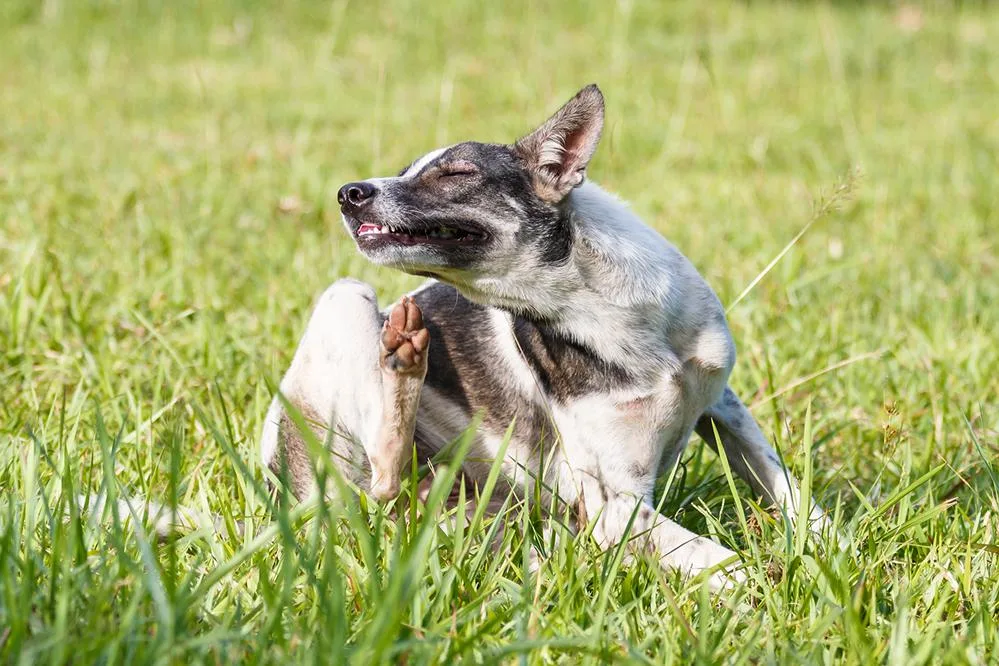
The most common allergy symptom isn't sneezing. It's itching. Veterinary dermatologists call it pruritus, and it's the #1 reason allergic dogs end up at the vet.
If your dog is scratching, licking, chewing, or rubbing more than usual, that's the first clue something's off.
A few things that make canine allergies different from human allergies:
- Dogs scratch, lick, and chew instead of getting stuffy noses.
- Symptoms are chronic. They come and go but rarely disappear entirely without treatment.
- Allergies are progressive. Untreated, they usually get worse, not better.
- Secondary infections are common. Constant scratching damages the skin barrier, letting bacteria and yeast move in.
The Four Main Types of Dog Allergies (And Why It Matters)
Not all dog allergies are the same. The treatment for flea allergy dermatitis looks nothing like the treatment for a food allergy. Knowing the type helps you and your vet target the real cause instead of guessing.
| Allergy Type | Common Trigger | Typical Symptom Pattern | Diagnostic Method |
|---|---|---|---|
| Flea Allergy Dermatitis (FAD) | Flea saliva (one bite can trigger it) | Intense itching at the tail base, lower back, hind legs | Response to strict flea control |
| Environmental (Atopic Dermatitis) | Pollen, dust mites, mold, grass | Seasonal or year-round itching, paws, ears, belly | Intradermal skin test or serum IgE blood test |
| Food Allergy | Beef, chicken, dairy, wheat, eggs, soy | Itching + digestive issues (vomiting, diarrhea, gas) | 8-12 week elimination diet trial |
| Contact Allergy | Shampoo, cleaning products, plants, bedding materials | Localized redness where skin touched the substance | Avoidance trial, patch testing |
Most allergic dogs react to more than one type. A dog with environmental allergies often has a flea allergy brewing underneath. That's why vets always rule out fleas first.
It's the cheapest, easiest diagnosis to confirm or eliminate.
Symptom Clusters: Skin, Ears, Digestive, and Respiratory
Allergy symptoms tend to cluster in four body systems. Looking at the pattern across systems tells you whether you're dealing with allergies or something else.
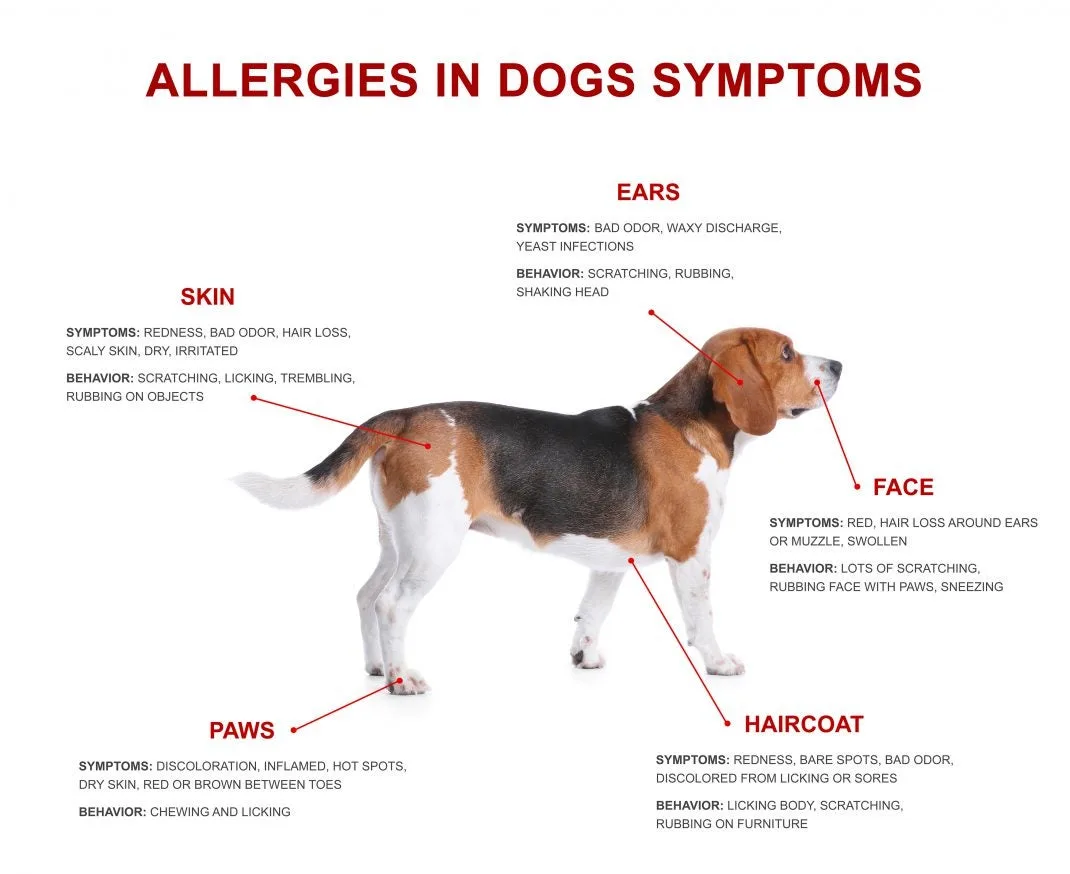
Skin symptoms are the most obvious. Redness, hot spots, hives, scabs, dry or flaky patches, hair loss from chewing, and that distinctive "musty" odor from a yeast overgrowth. Dogs with skin allergies often develop a thickened, darker skin in chronic spots, especially the groin and armpits.
Ear symptoms are the sneakiest. Chronic ear infections are a massive red flag for underlying allergies, especially food allergies. If your dog has had more than two ear infections in a year, allergies should be on your vet's radar.
The ears get red, smelly, waxy, and your dog shakes their head or tilts it to one side.
Digestive symptoms point more toward food allergies. Vomiting, diarrhea, frequent gas, and softer-than-normal stools. That said, many food-allergic dogs show only skin symptoms with no gut issues at all.
The absence of digestive signs doesn't rule out food.
Respiratory symptoms are the rarest in dogs. Sneezing, reverse sneezing, watery eyes, and a runny nose do happen, but they're far less common than skin and ear signs. When they show up, environmental allergens are usually the culprit.
The biggest clue something is allergic, not infectious? It comes and goes. Allergies flare up and calm down.
Infections tend to be steadily worsening without treatment.
Most Common Dog Allergy Symptoms by Body Area
Where your dog itches tells you a lot. Vets and dermatologists use body location as a diagnostic tool. Here's the breakdown.
| Body Area | What You'll See | Most Likely Allergy Type |
|---|---|---|
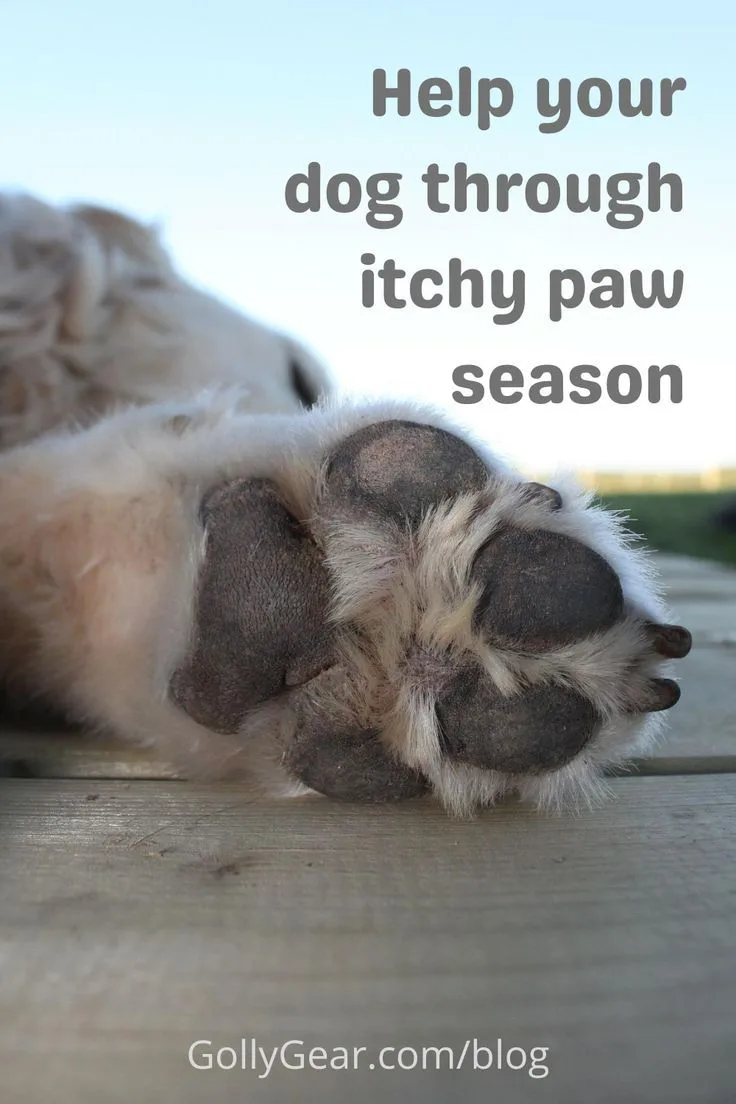
| Paws (chewing, licking) | Redness between toes, brown saliva staining on light fur | Environmental (atopic) |
| Ears (recurrent infections) | Head shaking, scratching at ears, waxy discharge | Food or environmental |
| Belly, groin, armpits | Red rash, hair loss, "elephant skin" thickening | Environmental, sometimes food |
| Muzzle, around eyes | Redness, rubbing face on carpet, watery discharge | Environmental |
| Tail base, lower back, hind legs | "Scooting," intense chewing at rump | Flea allergy dermatitis |
| Full body | Widespread itching, hives, swelling | Acute allergic reaction (vet ASAP) |
A useful trick: take a quick photo of any rash, hot spot, or inflamed skin when you notice it. Photos help your vet spot patterns you might miss in the moment, especially if symptoms come and go.
The Breed Connection: Dogs More Prone to Allergies
Some breeds carry a much higher genetic risk. If your dog is on this list, allergies are more common, not guaranteed, but worth watching for early.
Breeds with the highest atopic dermatitis rates include Labrador Retrievers, Golden Retrievers, French Bulldogs, English Bulldogs, German Shepherds, Boxers, West Highland White Terriers, Shar-Peis, Cocker Spaniels, and Bichon Frises. Purebreds tend to show higher rates than mixed breeds, though any dog can develop allergies.
Genetics loads the gun, but environment usually pulls the trigger. A predisposed dog raised in a high-allergen home may never develop symptoms. The same dog in a different environment might flare up early.
That's why even within the same litter, allergy severity varies.
A common myth: "hypoallergenic" breeds don't get allergies. They do. No breed is allergy-proof.
The "hypoallergenic" label refers to less shedding and dander, not fewer allergic reactions. If you adopted a Poodle hoping to avoid skin issues, you might still deal with them.
How Vets Diagnose Dog Allergies (Testing and Elimination Diets)
Diagnosis isn't a single test. It's a process of elimination. Vets work through the likely causes one at a time before settling on a treatment plan.
Step 1: Rule Out Fleas First
A flea combing and visual check is the cheapest diagnostic step. If you see flea dirt (tiny black specks that turn red on a wet paper towel), flea allergy dermatitis is the top suspect. Strict flea control for 8-12 weeks is both diagnostic and therapeutic.
If symptoms improve, you've found your answer.
Step 2: Trial an Elimination Diet for Suspected Food Allergy
If fleas aren't the cause, food allergy is next on the list to rule out. Your vet will prescribe a hydrolyzed protein or novel protein diet. You feed only that food, no treats, no table scraps, no flavored medications, for 8-12 weeks.
If symptoms clear, you reintroduce old foods one at a time to confirm the trigger.
Hydrolyzed protein diets break proteins into tiny pieces the immune system can't recognize. Novel protein diets use a protein your dog has never eaten, like rabbit or venison. Both work.
Hydrolyzed is more reliable for strict trials. Veterinary guidance from the American College of Veterinary Dermatology outlines elimination diet protocols in detail.
Step 3: Run an Allergy Test for Environmental Triggers
If food and fleas are ruled out, environmental allergies are likely. Two main tests exist:
| Test Type | What It Measures | Best For |
|---|---|---|
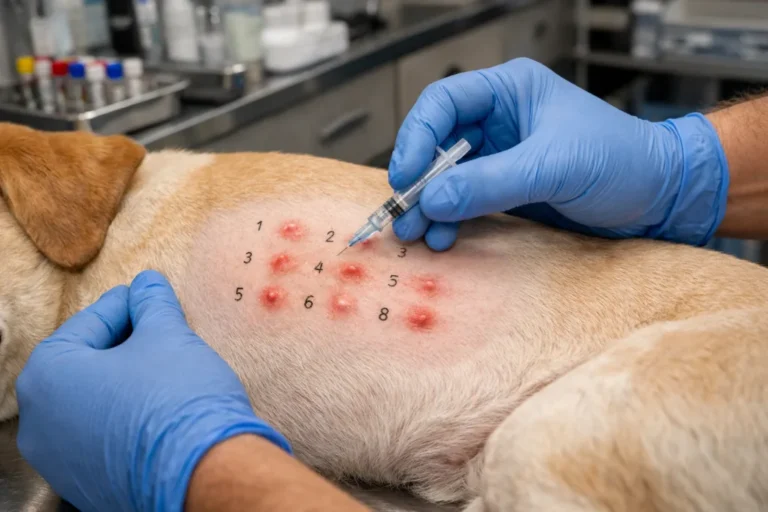
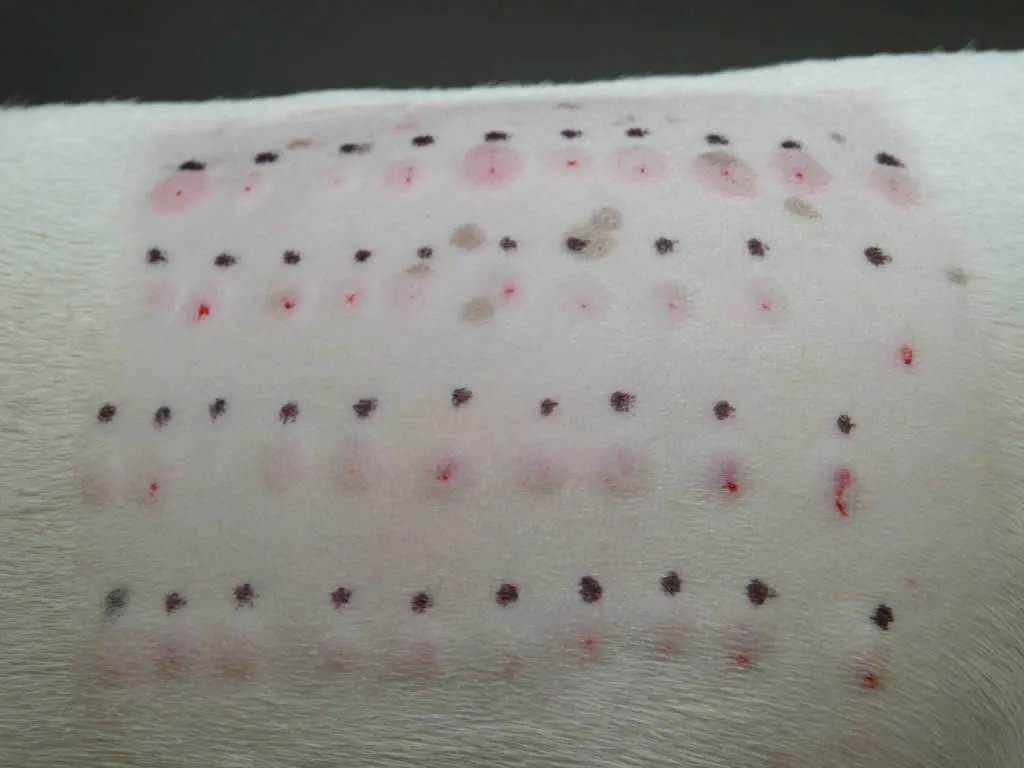
| Intradermal Skin Test | Reactions to allergens injected under the skin | Considered the gold standard for atopic dermatitis |
| Serum IgE Blood Test | Antibodies in the bloodstream | Dogs that can't be sedated or have skin conditions that block testing |
Intradermal testing requires shaving a patch on your dog's side and light sedation. The vet injects small amounts of common allergens and watches for skin reactions. It identifies exactly what your dog reacts to, which allows customized immunotherapy (allergy shots).
Blood tests are easier logistically but slightly less precise. They're useful when sedation isn't an option, or when a dog has severe skin inflammation that interferes with skin test readings.
At-Home Clues: What to Track Before Your Vet Visit
Walking into the vet prepared saves time and money. Here's what to document in the week or two before your appointment.
- When symptoms started. Allergies often begin between 6 months and 3 years of age.
- Where your dog itches. Paws and ears point to environmental. The rump and tail base suggest fleas.
- Seasonal pattern. Symptoms that worsen in spring or fall suggest pollen. Year-round symptoms suggest indoor allergens or food.
- Diet history. Any recent food switches, new treats, table scraps, or flavored medications.
- Bath and grooming products. New shampoos or household cleaners can trigger contact reactions.
- Photos of rashes or hot spots. Especially if symptoms come and go.
- Reaction to flea treatment. If you're already using preventatives, note which one and how consistently.
If you have a multi-dog home, note which dog is affected. That helps rule out environmental factors affecting only one pet, often a clue it's not a shared allergen.
What Dog Allergies Look Like vs. Other Conditions
This is where a lot of owners get stuck. Many skin conditions look alike at first glance. Here's how to tell them apart.
| Condition | Key Distinguishing Feature | Contagious? |
|---|---|---|
| Allergies | Symmetrical itching, chronic pattern, comes and goes | No |
| Bacterial skin infection (pyoderma) | Circular lesions, yellow crusts, often follows scratching damage | No |
| Yeast infection | Musty smell, brown greasy discharge, especially in ears and skin folds | No |
| Sarcoptic mange | Intense itching, crusty edges on ears and elbows, sudden onset | Yes (to other dogs) |
| Demodectic mange | Patchy hair loss, less itching, often in puppies or immunocompromised dogs | No |
| Ringworm | Circular bald patches with scaly edges | Yes (to humans and other animals) |
Mange is the one that scares owners most. Sarcoptic mange in particular causes intense itching that mimics allergies. A vet can rule it out with a quick skin scrape.
If you've tried allergy treatment for weeks with no improvement, ask your vet about mange testing. As of 2026, mange is still one of the most commonly missed diagnoses in itchy dogs, especially when owners self-treat for allergies first.
Ringworm is the one that can spread to you. If your dog's bald patches look scaly and you're getting red itchy spots on your arms, that's a clue. See the vet.
Don't share towels or bedding until it's ruled out.
Seasonal vs. Year-Round: How Timing Gives You a Clue
The calendar often points to the cause. Pay attention to when symptoms flare.
Spring flare-ups usually mean tree pollen. Oaks, maples, cedars, and birches hit hardest from March through May in most of North America.
Late spring and summer flares point to grass pollen. Bermuda, Timothy, Kentucky bluegrass, and ryegrass are common triggers. Symptoms that disappear after the first hard frost are almost always environmental.
Late summer and fall flares suggest ragweed and other weed pollens. Ragweed pollen counts peak from mid-August through October.
Year-round symptoms shift your focus indoors. Dust mites, storage mites, mold spores, and flea exposure don't take seasons off. Dogs with year-round symptoms may have multiple triggers or a non-seasonal cause like food.
If you want a quick pattern check, log your dog's itching on a calendar or use a pet health app. After 3-6 months, you'll see a clear seasonal trend, or no trend at all. Bring that data to your vet.
Climate matters too. As of 2026, warmer winters and longer pollen seasons are making "seasonal" allergies more like extended seasons. Some regions now see pollen 10 months a year, which blurs the line between seasonal and year-round allergies.
Food Allergy or Environmental Allergy? How to Tell the Difference
Owners often assume food is the culprit because it feels more controllable. The data says otherwise. Environmental allergies are roughly 3-4 times more common than food allergies in dogs.
A few patterns help you distinguish the two without testing:
- Age of onset matters. Food allergies often appear before age 1. Environmental allergies usually start between 1 and 3 years.
- Seasonal or not? Year-round itching with no seasonal pattern leans food. Seasonal patterns lean environmental.
- Response to steroids. Environmental allergies often improve dramatically with corticosteroids. Food allergies usually don't.
- Digestive signs. Vomiting and diarrhea alongside itching strengthen the food allergy case.
- Recurrent ear infections. Two or more ear infections a year, especially in a young dog, often trace back to food.
- Itching not responding to flea control. If strict flea prevention doesn't change a thing, food is more likely.
The elimination diet is the only real way to confirm food allergy. No blood test or saliva test on the market reliably diagnoses food allergies in dogs. Save your money on those kits and talk to your vet about a proper diet trial.
Common Mistakes Dog Owners Make With Allergy Symptoms
Most allergy suffering isn't from the allergy itself. It comes from well-meaning mistakes that delay the real diagnosis.
Treating with over-the-counter antihistamines without a diagnosis. Benadryl and similar meds may take the edge off itching but don't address the cause. They also vary widely in how well they work. Some dogs respond, most don't.
Stopping flea prevention in winter. Fleas survive indoors year-round. Many "winter allergies" are actually flea allergy dermatitis that flares up the moment prevention lapses.
Switching foods every few weeks instead of committing to an elimination trial. Food allergies require 8-12 weeks of strict feeding. Random food swaps muddy the picture and waste months.
Using human allergy medications at the wrong dose. Some human antihistamines are safe for dogs in specific doses. Others aren't. Never dose your dog without veterinary guidance.
Ignoring ear infections. Repeated ear infections are almost never "just one of those things." They're usually a sign of underlying allergies that haven't been diagnosed.
Skipping the vet because symptoms "aren't that bad." Allergies get worse without treatment. What looks mild now can progress to severe skin infections and chronic ear disease.
Using essential oils or unproven online remedies. Tea tree oil, coconut oil, and other "natural" treatments can soothe minor irritation but also cause contact reactions. Worse, some essential oils are toxic to dogs.
Safe Treatment Options Your Vet May Recommend
Once your vet confirms allergies, treatment usually combines several approaches. No single fix works for every dog.
| Treatment | What It Does | Best For |
|---|---|---|
| Apoquel (oclacitinib) | Daily pill that blocks itch signaling | Fast relief for atopic dermatitis |
| Cytopoint (lokivetmab) | Injectable antibody that neutralizes itch for 4-8 weeks | Dogs that hate daily pills |
| Allergen-specific immunotherapy | Customized shots or oral drops based on allergy test results | Long-term desensitization |
| Prescription antihistamines | Vet-approved doses of cetirizine or hydroxyzine | Mild cases, multi-drug approach |
| Topical therapies | Medicated shampoos, sprays, wipes | Soothing skin, controlling secondary infections |
| Essential fatty acid supplements | Omega-3 and omega-6 support for skin barrier | Mild support, not a standalone fix |
Corticosteroids (prednisone) are still used for severe flares, but long-term use carries risks. Most vets now reserve steroids for short-term relief while other treatments kick in. Apoquel and Cytopoint have largely replaced chronic steroid use in allergic dogs since they became widely available.
For food allergies, the only true treatment is avoiding the trigger ingredient. Once you've identified it through an elimination trial, your vet will help you choose a long-term diet that excludes it.
When to Skip the Wait and See a Vet Immediately
Most allergy cases aren't emergencies. A few are. Get to a vet right away if your dog shows any of these:
- Facial swelling, especially around the muzzle or eyes. This can signal an acute allergic reaction that may progress to airway involvement.
- Hives that spread quickly across the body.
- Vomiting or collapse shortly after eating something new. Classic anaphylaxis signs.
- Difficulty breathing or excessive drooling.
- Severe itching that started within hours of a new medication, food, or vaccine.
- Open wounds with yellow pus or a foul smell. Secondary infection that needs immediate treatment.
Acute allergic reactions can escalate fast. The difference between "manageable" and "life-threatening" sometimes comes down to an hour. If your gut says something is wrong, trust it.
Long-Term Management: Keeping Allergies Under Control
Allergies are usually managed, not cured. The goal is keeping symptoms mild enough that your dog enjoys a normal life.
A solid management plan typically includes:
- Year-round flea prevention, even for indoor dogs. One flea bite can keep a flea-allergic dog itching for weeks.
- Regular bathing with a gentle or medicated shampoo. Every 1-2 weeks helps wash off allergens before they penetrate the skin.
- Wiping paws and belly after walks. Removes pollen and grass allergens before your dog licks them off.
- Frequent vacuuming and washing of dog bedding. Cuts down dust mite and dander buildup.
- Air purifiers with HEPA filters. Helpful in homes with high indoor allergen loads.
- A consistent, vet-approved diet. No random treats or table scraps if food allergies are part of the picture.
- Routine vet checkups. Every 6-12 months to catch flares early.
Most dogs with well-managed allergies live completely normal, happy lives. The key is staying ahead of flares instead of chasing them.
Frequently Asked Questions
What dog breed has the most allergies?
Labrador Retrievers, Golden Retrievers, French Bulldogs, English Bulldogs, West Highland White Terriers, German Shepherds, and Shar-Peis have the highest rates of atopic dermatitis. Any breed can develop allergies, but these breeds are genetically predisposed.
Can dogs suddenly develop allergies?
Yes. Dogs can develop new allergies at any age, even if they've never shown symptoms before. Most cases start between 6 months and 3 years, but adult-onset allergies are common, especially after a change in environment, diet, or immune health.
What do dogs with environmental allergies act like?
They scratch, lick, and chew constantly, especially their paws, ears, belly, and armpits. They often have red or inflamed skin, recurrent ear infections, hair loss from chewing, and a musty odor from secondary yeast infections. Many rub their face on carpets or furniture.
How do vets test for dog allergies?
Vets use a combination of flea checks, elimination diet trials, intradermal skin tests, and serum IgE blood tests. No single test covers every allergy. Diagnosis usually happens in stages, ruling out causes one at a time.
Is Benadryl safe for dogs with allergies?
Diphenhydramine (Benadryl) can be safe for dogs at vet-approved doses. It's not a strong itch reliever for most allergic dogs, though. Talk to your vet before giving any human allergy medication, including dosage and potential interactions.
How long do dog allergy flare-ups last?
Flare-ups last as long as the trigger is present. Environmental allergens may cause symptoms for weeks or months during pollen season. Food allergy symptoms persist until the trigger ingredient is removed.
With proper treatment, most flares can be controlled within 1-2 weeks.
What to Do Next: Your Action Plan
If you suspect your dog has allergies, here's a focused plan to move forward.
Week 1: Document everything. Use a notebook or app to log itching episodes, body locations, foods, and any environmental changes. Photograph rashes.
Week 2: Book a vet visit. Bring your notes and photos. Ask about flea control first, even if you don't see fleas.
Weeks 3-14: Run an elimination diet trial if your vet suspects food allergy. Strict adherence matters. No treats, no scraps.
Ongoing: Maintain year-round flea prevention and follow any treatment plan your vet recommends. Plan for management, not a quick fix.
The sooner you get a real diagnosis, the sooner your dog stops scratching and gets back to being a dog.