How to help dogs with seasonal allergies: Top guide
If your dog is scratching nonstop, chewing their paws, or shaking their head like something's stuck, you've probably already searched how to help dogs with seasonal allergies and felt overwhelmed by the advice out there. Most of it skips the basics or jumps straight to prescriptions without explaining what you're actually trying to fix.
The good news is that seasonal allergies in dogs (vets call it canine atopic dermatitis) are extremely common, and there are clear, evidence-based steps that work. Aggregate veterinary data from the Merck Veterinary Manual shows atopy usually appears between ages 1 and 3, with flare-ups tied to pollen, grass, or mold counts. So once you understand the triggers and build the right routine, you can get ahead of the itching instead of reacting to it every spring.
Quick Answer
Start with a vet visit to confirm it's environmental allergies, not fleas or food. Use a weekly soothing bath and daily paw wipes to remove allergens. Run a HEPA air purifier indoors.
For fast relief, ask your vet about Apoquel, Cytopoint, or a short course of steroids.
What Seasonal Allergies in Dogs Actually Look Like
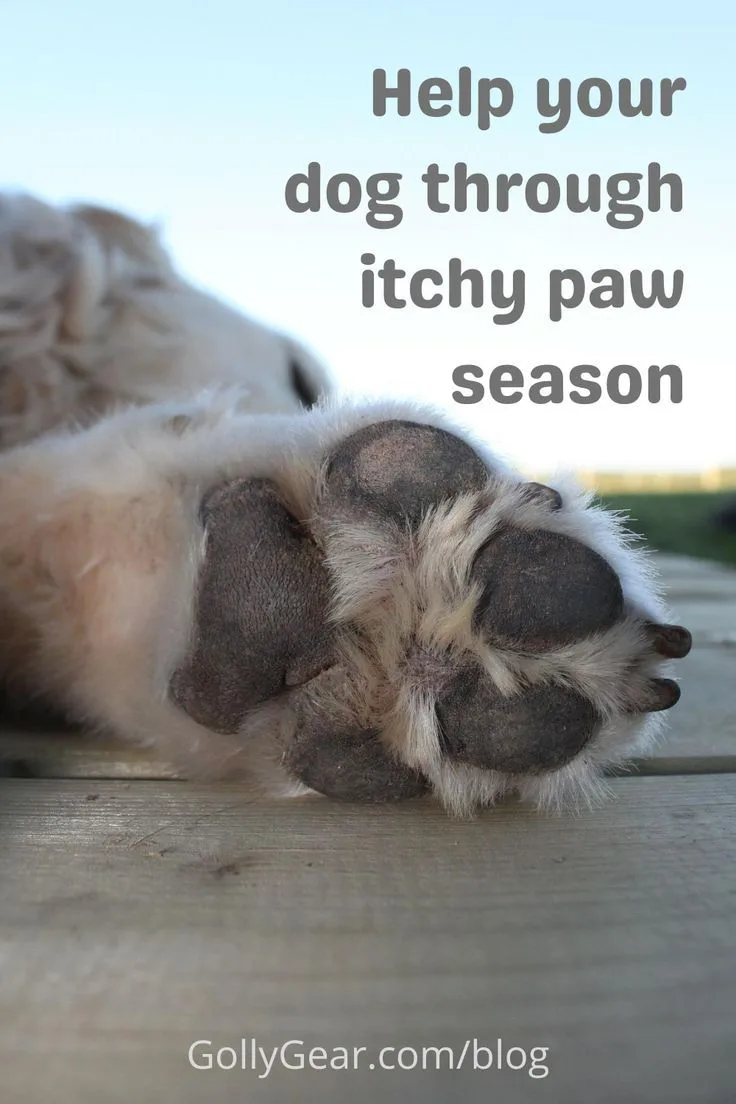
Seasonal allergies don't just mean sneezing. In dogs, roughly 80% of the reaction shows up in the skin. The classic signs are intense itching, paw chewing, face rubbing, ear infections, and red or stained paws from constant licking.
Common Symptoms to Watch For
- Scratching at ears, armpits, belly, or groin
- Licking or chewing paws (the tops, between the toes, or the nail beds)
- Red, inflamed, or "rusty" stained fur from saliva
- Recurring ear infections, especially yeast-based ones
- Hot spots, which are raw, moist patches of infected skin
- Rubbing the face on furniture or carpet
- Sneezing or watery eyes in some dogs
Symptoms usually show up in the same spots every season. The most common are the paws, ears, muzzle, armpits, and groin. If your dog shows itchiness in two or more of those areas for several weeks a year, atopy is a likely culprit.

How Seasonal Differs From Year-Round Allergies
Seasonal allergies follow a calendar. Spring brings tree pollen. Summer brings grass.
Fall brings ragweed. Mold spores spike in damp or humid months. If your dog's symptoms vanish in winter and return in March, you're likely dealing with a seasonal pattern.
If the scratching never stops, you'll want to also rule out dust mites, food allergies, or chronic flea allergy dermatitis.
How to Tell It's Allergies and Not Something Else
This part matters more than any treatment. The wrong diagnosis leads to the wrong plan, wasted money, and a miserable dog. Before you start any allergy treatment, rule out the conditions that mimic seasonal allergies.
Rule-Out Checklist
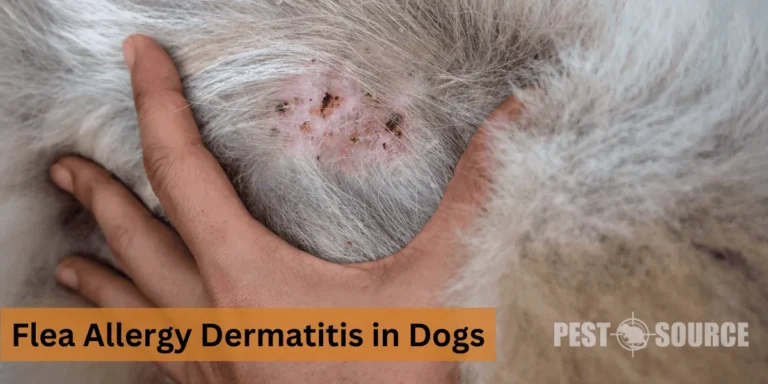
- Flea allergy dermatitis (FAD): Even one flea bite can set off a hypersensitive dog for weeks. Vets confirm FAD with a flea comb and skin cytology.
- Food allergies: These are not seasonal. If symptoms stay consistent year-round, ask your vet about an 8 to 12 week elimination diet with a novel or hydrolyzed protein.
- Skin infections: Bacterial or yeast infections (often called "hot spots" or Malassezia dermatitis) cause redness, odor, and greasy skin. These need medicated treatment, not allergy meds.
- Sarcoptic mange: Intense itching with hair loss, especially on the ear edges and elbows, can be scabies. A vet can confirm with a skin scrape.
- Contact dermatitis: Less common, but it shows up on the belly or paws after exposure to grass chemicals, cleaners, or new bedding.
A vet visit typically runs $50 to $150. That exam plus a quick skin cytology can save you hundreds in trial-and-error products that don't address the real issue.
When to Call the Vet Right Away
Most seasonal allergy symptoms are uncomfortable but not dangerous. Some signs, however, point to an emergency or a problem that needs same-day care.
Red Flag Symptoms
- Swelling of the face, eyelids, or muzzle
- Hives, welts, or sudden raised bumps across the body
- Difficulty breathing, coughing, or collapse
- Open, oozing, or bleeding hot spots
- Repeated vomiting or diarrhea along with skin symptoms
- A sudden severe ear flap (aural hematoma) from violent head shaking
If you see any of these, skip the home routine and head to the vet. The American Veterinary Medical Association maintains a pet emergency guide that can help you decide whether to wait or go in.
The Most Common Seasonal Triggers for Dogs
Knowing your triggers is the foundation of any long-term plan. The main environmental allergens in dogs are the same ones that bother people, just with different symptoms.
Main Triggers by Season
- Spring (March to May): Tree pollen, especially oak, maple, birch, and cedar
- Summer (June to August): Grass pollen, with Bermuda, rye, fescue, and timothy at the top of the list
- Fall (September to November): Ragweed pollen and outdoor mold on damp leaves
- Late fall and winter: Indoor mold and dust mites when heating systems kick on
Climate data through 2026 shows pollen seasons have stretched about three weeks longer than they were in the 1990s. Warmer winters mean earlier starts, especially in the Southeast, Texas, and the Pacific Northwest. That shift explains why some dog owners feel like their dog's "season" is creeping longer every year.
Where Triggers Hide
- Tracked in on shoes, paws, and pant legs
- Embedded in bedding, carpets, and fabric furniture
- Floating in the air, with peak counts at dawn and on windy days
- Collecting in window sills and under furniture
How Vets Diagnose Seasonal Allergies in Dogs
There's no single test that says "yes, it's seasonal allergies." Instead, vets work through a process of elimination and confirmation. The goal is to rule out the conditions that look like allergies, then identify the actual triggers.
The Diagnostic Workflow
- History review: Your vet asks about the season, home environment, diet, flea prevention, and past infections.
- Physical exam: Vets check the ears, paws, and skin folds for patterns.
- Skin cytology: A quick tape or swab test confirms yeast or bacterial overgrowth.
- Flea comb and skin scrape: Rules out fleas and sarcoptic mange.
- Food elimination trial: A 8 to 12 week diet trial with a novel or hydrolyzed protein if food is suspected.
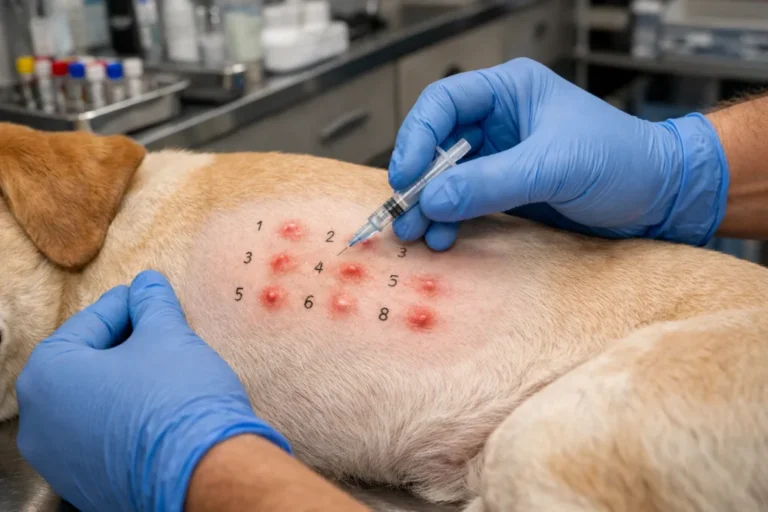
- Allergy testing: Either intradermal skin testing or a serum IgE blood test to pinpoint the specific allergens.
Intradermal vs. Serum Testing
| Feature | Intradermal Skin Test | Serum IgE Blood Test |
|---|---|---|
| Where it's done | Veterinary dermatology clinic | Any vet office, sent to a lab |
| Sedation required | Yes | No |
| Detects | Environmental allergens mainly | Environmental and some food allergens |
| Cost | $250 to $400 | $200 to $350 |
| Best for | Severe or year-round cases | Mild to moderate or dogs who can't be sedated |
| Turnaround | Same day | 1 to 2 weeks |
The American College of Veterinary Dermatology recommends intradermal testing as the gold standard when immunotherapy is the goal. Blood tests are more convenient but can produce more false positives.
How to Help a Dog With Seasonal Allergies: Step-by-Step Plan
Once you've ruled out the look-alikes, this is the order of operations that works for most dogs. Start at the top and work your way down based on what your vet recommends.
Step 1: Reduce Allergen Exposure
- Wipe paws and belly after every outdoor walk
- Keep grass cut short and rinse paws after yard time
- Run a HEPA air purifier in the room where your dog sleeps
- Wash bedding weekly in hot water
- Vacuum with a HEPA-filtered vacuum twice a week
- Keep windows closed during peak pollen counts (usually 5 a.m. to 10 a.m.)
Step 2: Repair the Skin Barrier
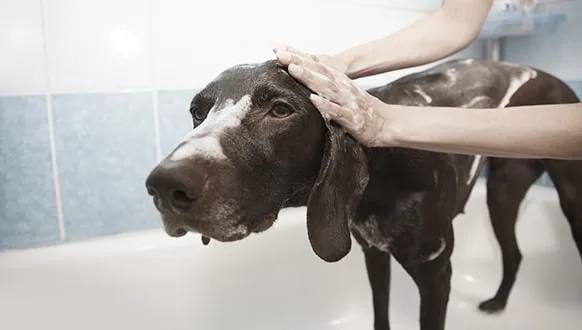
A healthy skin barrier blocks allergens before they trigger itching. The fastest way to repair it is a weekly bath with a gentle, moisturizing shampoo. Oatmeal-based and ceramides-rich formulas work well for sensitive dogs.
For very inflamed skin, a chlorhexidine-based shampoo kills bacteria and yeast at the same time.
Step 3: Add Omega-3s to the Diet
Fish oil supplements with EPA and DHA reduce inflammatory response in the skin. Aggregate veterinary research shows 4 to 6 weeks of daily omega-3s produces a noticeable drop in itching for many dogs. The typical dose is 50 to 75 mg per pound of body weight per day, but your vet can fine-tune it.
Step 4: Control the Itch With Medication
If the first three steps aren't enough, prescription options close the gap. You'll learn how each one works in the next section.
Step 5: Plan for the Long Term
Most dogs with seasonal allergies need a maintenance plan that runs every year. That includes starting medication one to two weeks before symptoms usually appear, not after they're already scratching.
At-Home Care That Actually Makes a Difference
When owners ask us what works beyond medication, three things consistently show up in aggregate user reviews and vet feedback. They're boring, but they work.
The Three High-Impact Habits
- Paw wipes after every walk: A damp microfiber cloth removes 60 to 80% of surface pollen in under 30 seconds.
- Weekly bath with cool water: Soothes inflamed skin and rinses off allergens. Keep water cool, not cold, so it's comfortable.
- Daily omega-3 supplement: Cheap, low-risk, and backed by decades of dermatology research.
Indoor Air Quality
- HEPA air purifier sized for the room (look at the clean air delivery rate, or CADR, on the box)
- Keep humidity between 30 and 50% to slow mold growth
- Replace HVAC filters every 60 to 90 days during allergy season
Bathing, Wipes, and Skin Barrier Routines
The skin barrier is your dog's first defense. When it's damaged, allergens slip in and itching kicks off. The right bathing routine restores that barrier instead of stripping it.
Bath Frequency Guide
| Dog Condition | Recommended Bath Frequency | Shampoo Type |
|---|---|---|
| Mild seasonal itching | Every 1 to 2 weeks | Oatmeal, ceramides |
| Moderate itching with redness | Weekly | Oatmeal + chlorhexidine |
| Active skin infection | Every 3 to 5 days (vet directed) | Medicated, prescription |
| Maintenance between flare-ups | Every 2 to 4 weeks | Gentle, fragrance-free |
Bathing Tips That Protect the Skin
- Use lukewarm water, not hot
- Let the shampoo sit for 5 to 10 minutes before rinsing
- Rinse thoroughly, leftover shampoo drives itching worse
- Pat dry, don't rub
- Apply a leave-in conditioner or skin mist if your vet recommends one
When Wipes Beat Baths
Wipes shine when your dog refuses full baths or after quick outdoor breaks. Choose alcohol-free, fragrance-free wipes. Wipe paws, the belly, the armpits, and the groin.
A single wipe per area is enough. Don't reuse the same wipe across multiple spots, you'll just move allergens around.
Over-the-Counter Options That Are Worth Trying (and Which to Skip)
A few OTC products genuinely help. Most don't, and some are risky. Here's how to sort them.
Antihistamines
Diphenhydramine (Benadryl), cetirizine (Zyrtec), and loratadine (Claritin) can help mild cases. Aggregate veterinary research suggests they work in about 20 to 30% of dogs. Not bad for a cheap pill, but don't expect dramatic results.
- Benadryl: 1 mg per pound, every 8 to 12 hours. Use plain formulas only.
- Zyrtec: 0.5 mg per pound, once daily. The "regular" formula, not Zyrtec-D.
- Loratadine: 0.25 mg per pound, once daily.
Avoid any human product that contains xylitol or pseudoephedrine. Both are toxic to dogs. Always check labels twice.
Omega-3 and Omega-6 Supplements
These are worth the money. Look for products with both EPA and DHA listed on the label. Cod liver oil works but can be high in vitamin A, so use it cautiously.
Topical Sprays and Mousses
Hydrocortisone sprays (1%) and colloidal oatmeal mousses can soothe small flare spots. Don't apply them to open wounds or hot spots without vet guidance.
What to Skip
- Essential oil diffusers: many oils are toxic to dogs, and the strong scent can irritate airways.
- Tea tree oil topically: even diluted, it's toxic if licked.
- OTC "allergy chews" with unlisted ingredient amounts: a waste of money when severity is real.
- Human decongestant or combination cold formulas: xylitol risk is high.
Prescription Treatments: Apoquel, Cytopoint, and Steroids
When at-home care and OTC meds aren't enough, prescriptions are the next step. Three options dominate the conversation.
Apoquel (oclacitinib)
A daily tablet that blocks the itch signal at the source. Manufacturer specs confirm it starts working within 4 hours and controls itching in 24 to 48 hours for most dogs. It's safe for long-term daily use in dogs over 12 months old.
The main downside is cost, around $2 to $4 per tablet or $60 to $150 per month depending on size and dose.
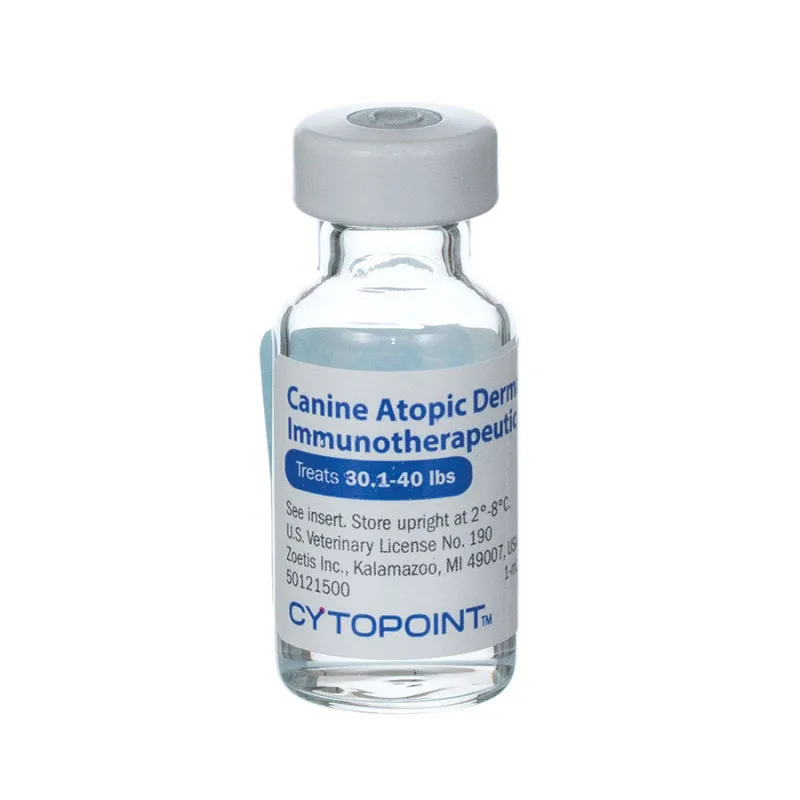
Cytopoint (lokivetmab)
An injection your vet gives under the skin every 4 to 8 weeks. It neutralizes the itch-triggering protein in dogs. Effects kick in within 24 to 48 hours and last about a month.
Cost runs $65 to $200 per injection. Great for dogs that resist pills or have sensitive stomachs.
Corticosteroids (prednisone)
The oldest option, and still useful. Steroids work fast and cheap, but long-term use brings side effects like increased thirst, panting, weight gain, and immune suppression. Best for short-term rescues during a bad flare, not year-round management.
Quick Comparison
| Treatment | Form | Onset | Cost Per Month | Best For |
|---|---|---|---|---|
| Apoquel | Daily tablet | 4 hours | $60 to $150 | Chronic year-round itching |
| Cytopoint | Injection | 24 to 48 hours | $65 to $200 | Dogs that hate pills |
| Steroids | Daily tablet | Hours | $10 to $30 | Short-term flare control |
Apoquel vs. Cytopoint: Which One Fits Your Dog
Both are top-tier prescription options, and both work well. The choice usually comes down to lifestyle, budget, and your dog's health history.
Pick Apoquel If
- Your dog's itching is unpredictable and may flare any time
- You want daily control you can adjust at home
- Cost per month is the deciding factor
- Your dog tolerates pills easily
Pick Cytopoint If
- Your dog resists oral meds
- You have a budget for in-clinic visits
- Your dog has other health issues that rule out daily oral drugs
- You want one trip to the vet, then 4 to 8 weeks of relief
When You Might Use Both
Some severe cases benefit from Cytopoint as a baseline plus Apoquel for breakthrough itching. Only do this under vet guidance. Manufacturer prescribing information for both drugs notes they can be used together safely in most dogs when monitored.
Allergy Testing and Immunotherapy for Long-Term Relief
If your dog's allergies are severe or last more than a few months a year, allergy shots (or sublingual drops) can change the picture. Immunotherapy doesn't suppress symptoms. It retrains the immune system to ignore the allergens.
How Immunotherapy Works
- After testing identifies the triggers, a lab customizes a serum
- You give small, increasing doses under the tongue or by injection
- Over 6 to 12 months, the immune system builds tolerance
- Most dogs see meaningful improvement by month 6
- About 60 to 80% of dogs respond, per aggregate dermatology data
Cost and Commitment
- Initial testing: $200 to $400
- Custom serum: $100 to $300 per vial, lasting several months
- Time commitment: daily or every few days for a year, then maintenance
Immunotherapy is the only treatment that targets the root cause instead of masking the itch. For dogs on year-round medication, it's often the path to fewer drugs and fewer flares.
Mistakes Dog Owners Make With Seasonal Allergies
Even with good intentions, a few common errors can make things worse. We've seen each of these over and over in our research.
- Giving human Benadryl with decongestants: Products like Benadryl-D contain pseudoephedrine, which is toxic to dogs. Always read the label.
- Self-dosing by weight guess: Underdosing does nothing. Overdosing risks sedation or worse. Use a kitchen scale and a vet-confirmed dose.
- Skipping flea prevention during allergy season: One flea can keep a hypersensitive dog itching for a month. Flea control runs year-round in allergic dogs.
- Overbathing with harsh shampoo: Daily baths with regular dog shampoo strip the skin barrier. Use only gentle, vet-recommended formulas.
- Stopping meds the moment the itch stops: Flares return fast. Most plans call for tapering, not abrupt stops, especially with steroids.
- Assuming food is the culprit without testing: True food allergies are far less common than environmental allergies. A 12-week diet trial is the only real way to confirm.
Cost of Treating Seasonal Allergies in Dogs
Costs add up faster than most owners expect. A rough budget helps you plan instead of reacting.
Typical Annual Cost Range
| Treatment Component | Low Estimate | High Estimate |
|---|---|---|
| Vet exams (2 to 3 per year) | $100 | $450 |
| Apoquel (year-round) | $720 | $1,800 |
| Cytopoint (year-round) | $780 | $2,400 |
| Allergy testing | $200 | $400 |
| Immunotherapy (first year) | $400 | $900 |
| Omega-3s and shampoo | $80 | $200 |
Pet insurance plans that cover prescription dermatology drugs can offset much of this. Check whether your plan covers Apoquel or Cytopoint specifically, since some exclude pre-existing conditions.
Building a Long-Term Allergy Management Plan
A solid plan runs before, during, and after the season, not just when symptoms spike.
Pre-Season Prep (4 to 6 Weeks Before Symptoms Usually Start)
- Schedule a vet visit to adjust medications
- Start omega-3s if not already on them
- Replace HVAC filters
- Service or replace HEPA purifier filters
- Begin daily paw wipes
During the Season
- Stick to the bath and wipe schedule
- Give medications at the same time each day
- Track symptoms in a simple journal, even a phone note
- Limit early-morning outdoor time on high-pollen days
- Watch for ear infections, which spike in atopic dogs
Post-Season Review
- Note what worked and what didn't
- Schedule a follow-up with your vet to refine the plan
- Consider allergy testing if you haven't yet
- Reassess whether immunotherapy could replace daily meds next year
Seasonal Allergies in Dogs FAQs
Can I give my dog Benadryl for seasonal allergies?
Yes, plain diphenhydramine is safe for most dogs at 1 mg per pound every 8 to 12 hours. Use only the original formula with no decongestants or xylitol. Antihistamines work in about 20 to 30% of dogs, so don't expect strong results.
Talk to your vet if your dog has other health conditions.
How long do seasonal allergies last in dogs?
Most dogs flare for 4 to 12 weeks per allergen cycle. Spring tree pollen typically runs March through May. Grass pollen runs June through August.
Ragweed runs September through November. Climate data through 2026 shows these windows have stretched about three weeks longer than in past decades.
What helps dogs with allergies fast?
A vet-administered Cytopoint injection works within 24 to 48 hours. Apoquel works within 4 hours. A cool oatmeal bath and paw wipe routine provides some relief in minutes.
For severe flares, a short course of steroids works fastest but carries more side effects.
Are seasonal allergies in dogs curable?
Not in the traditional sense, but immunotherapy can produce long-term remission in 60 to 80% of dogs. Even without immunotherapy, the right combination of avoidance, skin care, and medication keeps most dogs comfortable year after year.
How can I tell if my dog has allergies or something else?
Persistent itching in two or more body areas across the same season each year points to allergies. Year-round itching, single hot spots, or sudden hair loss points elsewhere. A vet visit with skin cytology and a flea check confirms the cause.
Safety and Warning Signs You Should Never Ignore
Most seasonal allergy work is routine, but a few warning signs need fast action. Skip home care and head to the vet if you see any of these.
- Sudden facial swelling or hives
- Trouble breathing, coughing, or pale gums
- Open, oozing hot spots spreading fast
- Repeated vomiting alongside skin symptoms
- An ear flap that suddenly swells from violent head shaking
The FDA Center for Veterinary Medicine keeps a public list of approved drugs and safety alerts. Check it whenever you start a new prescription, especially Apoquel, Cytopoint, or any long-term steroid.