How much do allergy tests cost for dogs: Best guide
If your dog won't stop scratching, you've probably already typed "how much do allergy tests cost for dogs" into a search bar at midnight. The honest answer is that it depends on which test your vet runs, where you live, and whether your dog needs sedation. As of 2026, most U.S. owners pay somewhere between $80 for a basic at-home kit and $650 for a full workup at a veterinary dermatologist, before any treatment kicks in.
A few numbers worth knowing upfront. Intradermal skin testing, the gold standard for environmental allergies, runs $250 to $400 plus sedation. Serum IgE blood panels land in the $150 to $500 range.
At-home saliva and hair kits sit at $80 to $200 but lack the validation needed for a real diagnosis. Your total bill usually includes the vet visit itself, the test, and often a recheck, so the sticker price is rarely the final price. Let's break down what each option actually costs and when it's worth paying for.
Quick Answer
Dog allergy tests cost $80 to $650 in 2026, depending on the type. At-home saliva and hair kits run $80 to $200. Serum IgE blood panels cost $150 to $500.
Intradermal skin testing at a vet runs $250 to $400, plus sedation. Vet consult fees of $50 to $150 are usually extra.
What Dog Allergy Testing Actually Costs (and Why the Price Varies So Much)
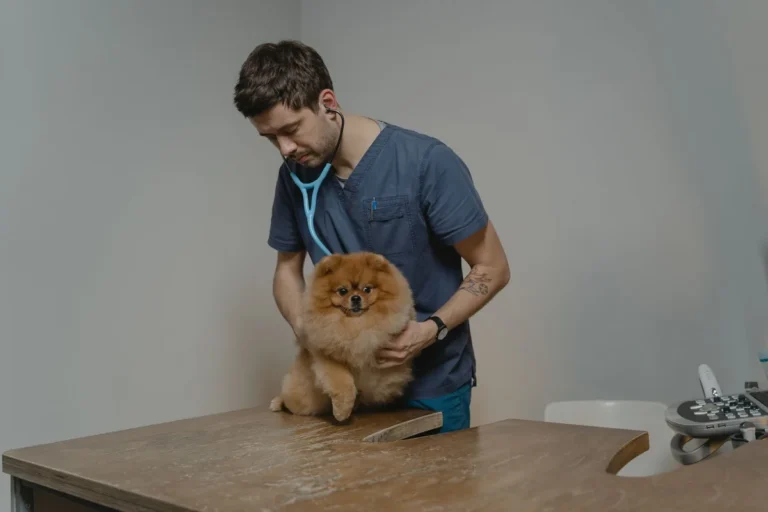
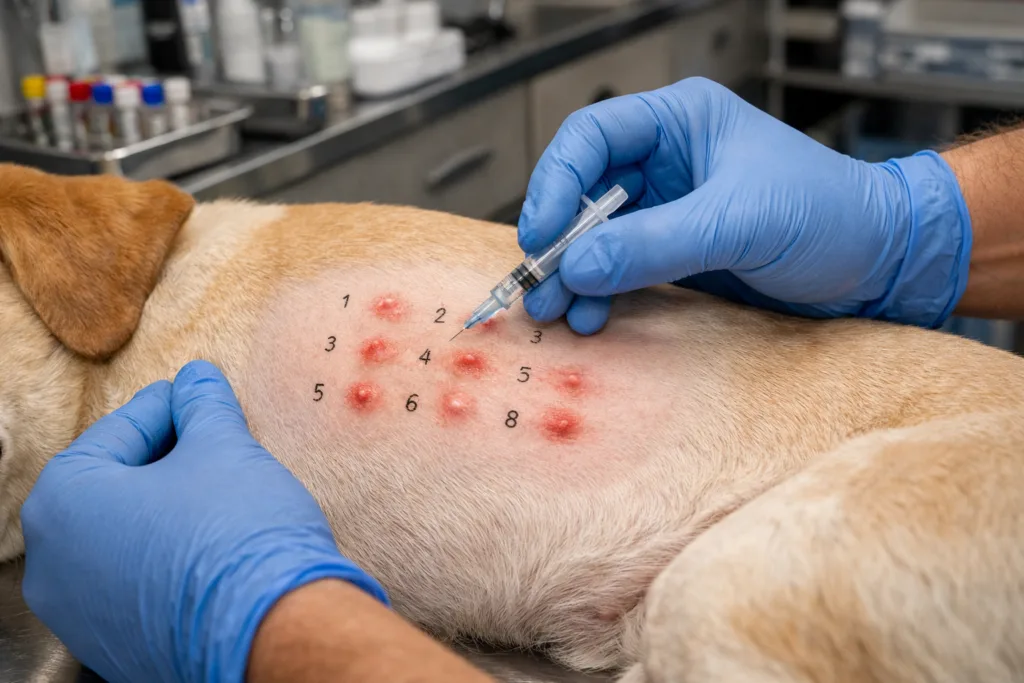
The big spread comes down to three things: who runs the test, what's being looked for, and how the sample is processed. A general practice vet can draw blood and send it to a reference lab for a serum IgE panel. A board-certified veterinary dermatologist does intradermal skin testing in-house, which requires shaved skin, multiple injections, and usually light sedation.
Then there's the question of what you're testing for. Environmental allergies (pollen, dust, mold) need one approach. Food allergies need something completely different, often an elimination diet rather than a blood or skin test at all.
Many dogs end up needing both workups, which is where costs stack up faster than owners expect.
Geographic location matters too. Urban specialty clinics in cities like New York or San Francisco charge 30 to 50 percent more than rural general practices for the same procedure. Pet insurance coverage varies wildly by plan, and most wellness add-ons don't cover diagnostics.
Here's a quick look at the typical price bands owners report in 2026:
| Test Type | Typical Cost | Who Runs It |
|---|---|---|
| At-home saliva/hair kit | $80–$200 | Owner-collected, mailed to lab |
| Serum IgE blood panel | $150–$500 | GP vet or specialist |
| Intradermal skin test | $250–$400 | Veterinary dermatologist |
| Vet consultation fee | $50–$150 | Any vet |
| Sedation (if needed) | $50–$150 | Clinic-administered |
Keep in mind these are out-of-pocket ranges before insurance reimbursement. The next sections walk through each test type in detail so you can match the right option to your dog's symptoms and your budget.
The Three Main Types of Dog Allergy Tests
Most vets and dermatologists work with three core testing methods, plus a fourth option that's technically a diagnostic trial rather than a lab test. Each one answers a different question, and the price tags reflect that.
Environmental Allergy Testing
This is what most people picture when they think "allergy test." It looks for inhaled or contact allergens like tree pollen, grass, dust mites, and mold. Two methods dominate:
- Intradermal skin testing (IDST): Tiny amounts of allergens are injected into shaved skin, and reactions are measured.
- Serum allergen-specific IgE testing: A blood sample is tested for antibodies against common allergens.
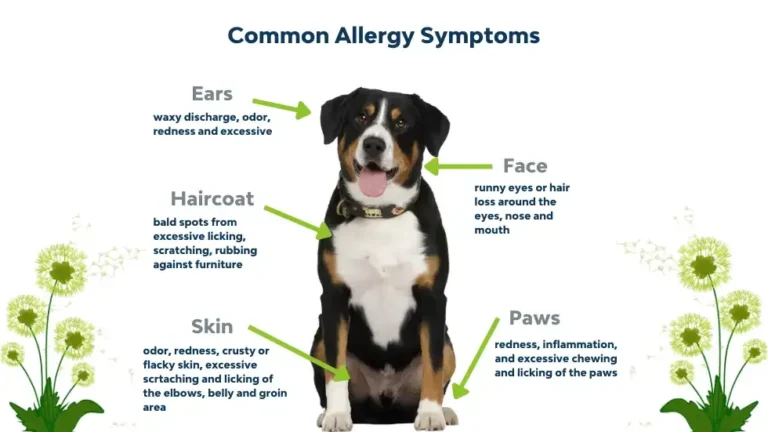
Environmental testing makes sense for dogs with seasonal itching, recurrent ear infections, or paw-licking that flares up at certain times of year. Costs land in the $150 to $500 range for blood work, or $250 to $400 for the skin test.
Food Allergy Testing
This is where owners get tripped up. True food allergies in dogs involve an immune response, usually to a protein like chicken, beef, or dairy. Most vets don't trust blood or saliva tests for food allergies because the science isn't strong enough.
The gold standard is an 8 to 12 week elimination diet using a hydrolyzed protein or novel protein formula.
Elimination diets cost $150 to $400 in special food, but they're considered more reliable than any commercial food sensitivity panel on the market. We'll cover this in more detail in a later section.
Flea Allergy Dermatitis Testing
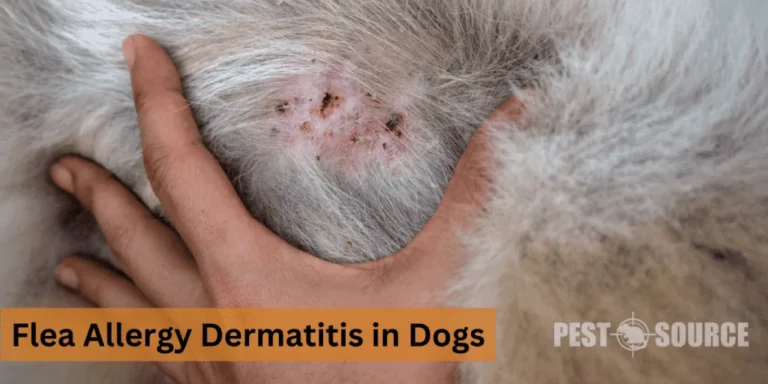
Often the cheapest diagnosis of all. If your dog is itchy along the lower back, tail base, and thighs, flea allergy dermatitis (FAD) is the first thing to rule out. A simple flea comb and visual check costs nothing, and a trial of strict flea control for 8 to 12 weeks usually confirms it.
Intradermal Skin Testing: $250–$400
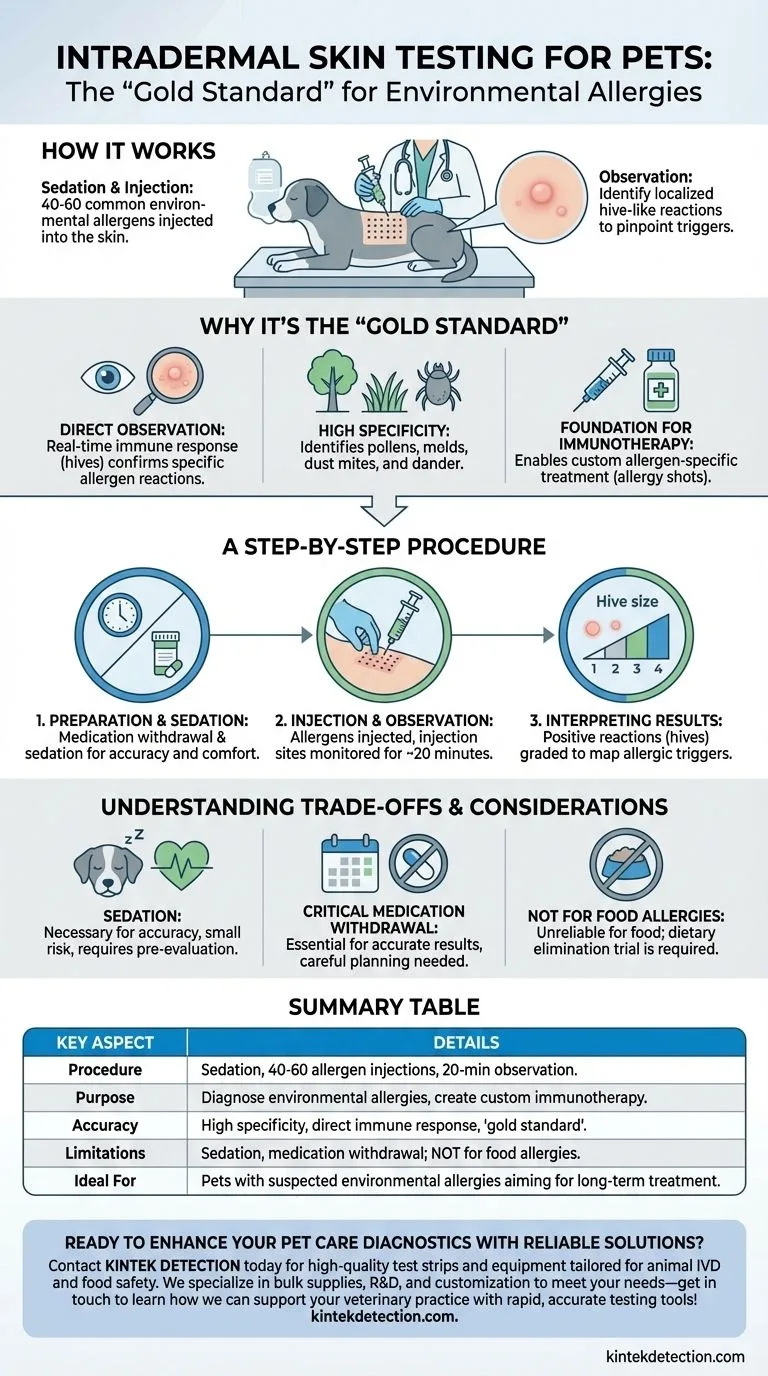
Intradermal skin testing is the method veterinary dermatologists consider the most accurate for environmental allergies. A patch of skin on the side of the chest or abdomen is shaved, and small amounts of different allergens are injected just under the surface. After about 15 to 20 minutes, the vet reads the reactions.
A raised, red wheal means your dog reacted to that allergen.
Because the test requires the dog to stay still for the duration, most clinics use mild sedation. That's where the extra $50 to $150 comes in. The whole appointment usually runs 1.5 to 2 hours, and results are available the same day.
Who should consider it:
- Dogs with year-round or seasonal itching that hasn't responded to basic treatment.
- Dogs being evaluated for allergen-specific immunotherapy (allergy shots or drops).
- Dogs with complex symptoms that need a clear environmental trigger identified.
The catch: your dog must be off antihistamines and steroids for a set period before testing (typically 7 to 14 days for steroids, 3 to 7 days for antihistamines), or the results will be suppressed. That's a critical pre-test step we'll cover later.
Serum IgE Blood Testing: $150–$500
Serum IgE testing is the more accessible option for many owners. Your regular vet draws a blood sample and sends it to a reference lab. The lab measures IgE antibodies against a panel of common allergens, anywhere from 40 to 100+ depending on the test ordered.
Pricing varies by panel size and lab. Smaller regional panels start around $150, while broader screens covering dozens of grasses, trees, molds, and insects can run $300 to $500. The advantage is that no sedation is needed, and your dog doesn't have to be off medications for as long (though steroids can still skew results).
When it makes sense:
- Dogs who can't safely be sedated.
- Dogs whose symptoms are clear but where intradermal testing isn't available nearby.
- Owners who want a starting point before committing to a dermatologist visit.
The honest limitation: serum IgE tests can show exposure without true allergy, and they sometimes miss reactions that skin testing catches. Most dermatologists still consider IDST more accurate, but blood testing is a legitimate and more affordable alternative when done for the right reasons. The American College of Veterinary Dermatology notes that both methods have their place, and the best choice depends on the individual patient.
At-Home Saliva and Hair Tests: $80–$200
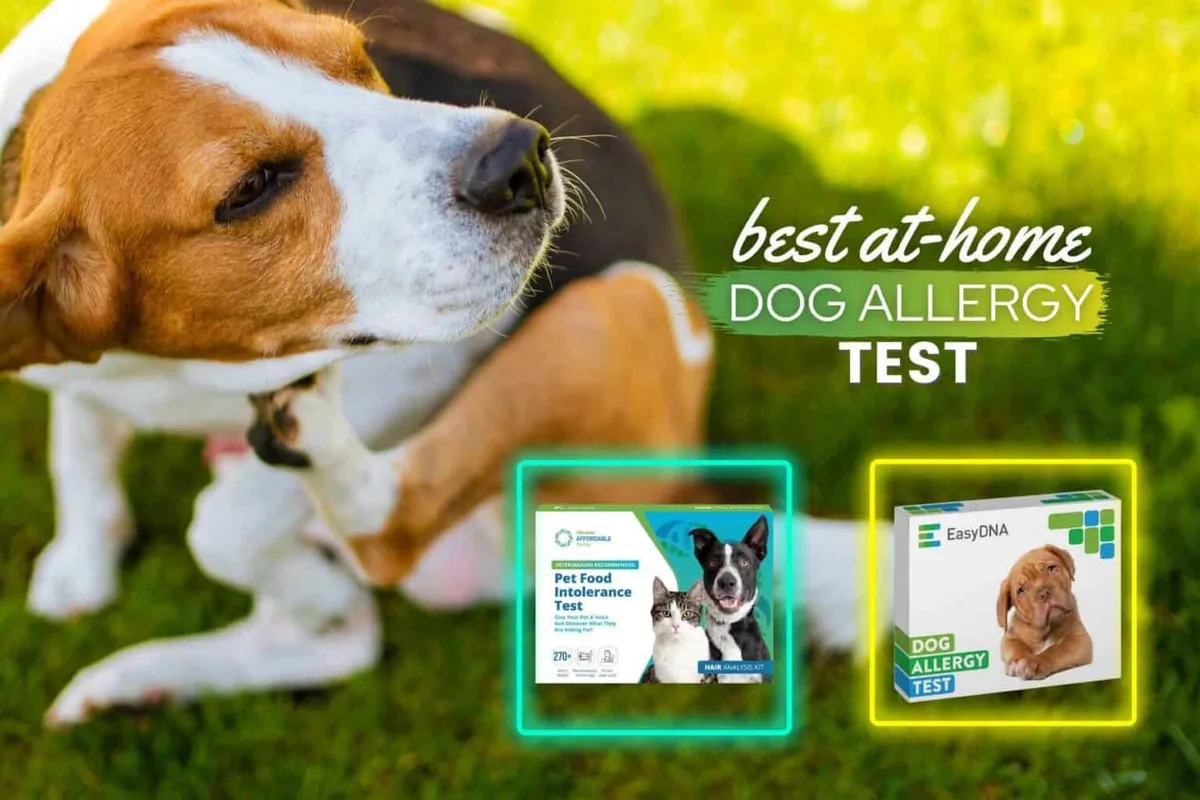
At-home kits from brands like 5Strands, Glacier Peak Holistics, and Nutriscan have exploded in popularity because they look easy and cheap. You order a kit online, collect saliva or hair, mail it back, and get a report in 2 to 3 weeks showing "sensitivities" to dozens of foods, plants, or environmental triggers.
The problem is that most veterinary dermatologists don't consider these validated diagnostic tools. Peer-reviewed research and the American Veterinary Medical Association guidance both point out that saliva and hair analysis lack the controlled studies needed to confirm they reliably distinguish true allergies from normal exposure.
What the kits can do:
- Offer a rough starting point for owners who can't afford a vet visit right away.
- Flag patterns that prompt a follow-up conversation with a vet.
- Provide a long list of "items to avoid" that may or may not be clinically relevant.
What they can't do:
- Diagnose a true IgE-mediated allergy.
- Replace intradermal or serum testing for treatment planning.
- Guide immunotherapy decisions.
In our research, aggregate user reviews for these kits are mixed. Some owners swear they identified a trigger their vet missed. Others report long lists of "sensitivities" that turned out to be noise, leading to expensive and unnecessary diet changes.
If you go this route, treat the results as a conversation starter with your vet, not a diagnosis.
Why "Cheap" At-Home Tests Can Cost You More Long-Term
That $80 saliva kit can feel like a win until the follow-up costs start stacking. Here's how the math usually goes in real cases.
Say the kit flags 12 food "sensitivities" including chicken, beef, and wheat. You swap to a $70 bag of limited-ingredient kibble. Two months later the itching is the same, or worse, because the real trigger was a pollen or dust mite allergy that needed a different test entirely.
Now you've spent $80 on the kit, $140 on special food, and you're back at the vet booking the serum panel you avoided in the first place. Aggregate user reviews consistently report this pattern: at-home results lead to months of restricted diets with no clinical improvement, because the test couldn't actually identify the trigger.
The real cost isn't the kit. It's the months of wasted treatment, unnecessary food changes, and delayed relief for a dog who's been scratching the whole time.
Hidden Fees Most Owners Don't Budget For
The test price is rarely the final price. Most owners get caught off guard by line items that show up on the invoice after the appointment.
Common add-ons:
- Initial consultation: $50 to $150, often separate from the test fee.
- Sedation or anesthesia: $50 to $150, required for intradermal skin testing.
- Cytology or skin scrapes: $30 to $80, used to rule out infection or mites first.
- Recheck appointments: $40 to $100, usually needed 2 to 4 weeks after results.
- Follow-up blood work: $60 to $120, common if your dog is on long-term medication.
If your dog ends up starting immunotherapy, expect $40 to $120 per month for the serum or sublingual drops. It adds up fast, which is why the smartest move is asking for a written estimate before any testing begins.
When an Elimination Diet Beats a Blood Test (and Costs Less)
For suspected food allergies, an elimination diet is almost always more reliable than any blood or saliva test on the market. It also tends to be cheaper over the full diagnostic window.
The protocol is straightforward. You feed a hydrolyzed protein diet (where the protein is broken down too small to trigger a reaction) or a novel protein your dog has never eaten, for 8 to 12 weeks. No treats, no table scraps, no flavored medications.
If symptoms improve, you reintroduce old foods one at a time to identify the trigger.
Cost breakdown for a 12-week trial on a mid-size dog:
- Hydrolyzed protein food: $150 to $300
- Novel protein alternative: $100 to $250
- Extra rechecks if needed: $40 to $100
That puts most elimination trials at $150 to $400, which is comparable to a blood panel but with stronger diagnostic value for food-specific issues. The catch is discipline. One stolen bite of bacon ruins the whole trial and resets the clock.
This is the one area where cutting the test out entirely is the smartest move.
Does Pet Insurance Cover Allergy Testing?
Coverage depends entirely on your plan and provider. Most accident and illness policies cover allergy testing as a diagnostic procedure, but only if your vet deems it medically necessary. That usually means documented symptoms, prior treatments that didn't work, and a clear clinical reason to test.
Typical reimbursement rates sit between 70 and 90 percent after your deductible, which can knock a $400 intradermal test down to $40 to $120 out of pocket. Wellness add-ons, the cheap prevention-focused plans, almost never cover diagnostics. They handle vaccines, flea prevention, and nail trims.
A few practical tips:
- Call your insurer before the test and ask for pre-authorization.
- Get the procedure billed under diagnostic workup, not a routine visit.
- Keep all records, because immunotherapy follow-ups often need separate approval.
If you don't have insurance yet, look for plans that explicitly list dermatology and chronic conditions in their covered conditions list. Some exclude allergies as a pre-existing condition, which can lock you out of coverage if your dog has been symptomatic before enrollment.
How to Know Which Test Your Dog Actually Needs
The right test depends on what your dog's symptoms look like and what you've already tried. Here's a simple decision flow that matches the most common scenarios.
Itching mainly at certain times of year, or year-round with no diet link
Start with environmental allergy testing. If your vet offers both, intradermal skin testing is the gold standard. Serum IgE is a solid backup if sedation isn't safe or a specialist isn't nearby.
Itching started after a diet change, or improves on a limited ingredient food
Skip the blood test for food and go straight to an elimination diet trial. The 8 to 12 week protocol is more reliable than any commercial food panel.
Itching concentrated on the lower back, tail base, and thighs
Rule out flea allergy dermatitis first with strict flea control for 8 to 12 weeks. It's the cheapest diagnosis to confirm or eliminate.
Multiple symptoms with no clear pattern
A vet dermatologist is worth the consult fee. They'll walk you through which combination of tests makes sense based on history, exam findings, and prior treatment responses.
The general rule: don't test for everything at once. Targeted testing based on symptoms costs less and produces clearer answers than a shotgun approach.
Medication Withdrawals Before Testing (Don't Skip This)
If your dog is on antihistamines, steroids, or certain anti-itch medications, the test results can be completely suppressed. That's money wasted and a delayed diagnosis.
Standard withdrawal windows your vet will likely require:
- Oral steroids (prednisone): 14 to 30 days off
- Injectable steroids (Depo-Medrol): up to 8 weeks off
- Apoquel (oclacitinib): 3 to 7 days off
- Cytopoint (lokivetmab): 4 to 8 weeks off
- Antihistamines like Benadryl or Zyrtec: 3 to 7 days off
- Topical steroid creams: variable, ask your vet
Stopping these meds can mean 2 to 4 weeks of uncomfortable itching before testing. Talk to your vet about a bridging plan, often using safer options like omega-3s or a short course of antibiotics if there's a secondary infection.
What Happens After You Get the Results
Getting the test results is the easy part. Putting them to work is where most owners stall.
If the test points to environmental triggers, the next steps usually include:
- Allergen avoidance strategies (more frequent baths, HEPA filters, wiping paws after walks).
- Allergen-specific immunotherapy (ASIT), either shots (SCIT) or sublingual drops (SLIT).
- Long-term medication management with Apoquel, Cytopoint, or Atopica.
If the test points to food triggers, you'll formalize the elimination diet findings into a permanent feeding plan. Most dogs end up on a prescription or limited-ingredient diet for life.
Expect a recheck 4 to 8 weeks after starting any new treatment. That's when your vet fine-tunes the plan based on real-world response.
Long-Term Costs: Immunotherapy vs. Symptom Management
Treating allergies is a marathon, not a sprint. Here's how the two main long-term paths compare on cost.
Immunotherapy (ASIT)
- Custom serum or sublingual drops: $200 to $400 initial setup
- Monthly refill: $40 to $120
- Success rate: 60 to 80 percent of dogs show meaningful improvement within 6 to 12 months
- Goal: reduce or eliminate the need for daily medications
Symptom Management (Apoquel, Cytopoint, Atopica)
- Apoquel: $1.50 to $3 per day, or $45 to $90 per month
- Cytopoint injection: $50 to $100 per dose, every 4 to 8 weeks
- Atopica: $60 to $150 per month
Over a year, immunotherapy often wins on cost once symptoms are under control, but it requires patience. Symptom management works faster but adds up to $1,000+ per year for the life of the dog.
Regional Price Differences and Where to Find a Vet Dermatologist
Costs vary by region, and so does access to specialists.
- Urban specialty clinics (NYC, LA, Chicago): 20 to 50 percent higher than national averages
- Rural general practices: often at the low end of the ranges above
- University teaching hospitals: sometimes offer discounted testing by board-certified dermatologists
- Telehealth consultations: $50 to $150 for initial triage, useful if no specialist is local
The American College of Veterinary Dermatology maintains a directory of board-certified specialists by state. If your dog needs intradermal testing and there's no dermatologist within driving distance, ask your GP vet about a serum IgE panel as a first step.
Red Flags: Signs Your Vet Is Over-Testing or Under-Testing
Not every testing plan makes sense. Watch for these warning signs.
Over-testing red flags:
- Recommending both intradermal and serum IgE testing in the same visit without clear justification.
- Running food sensitivity panels when the symptoms clearly point to environmental triggers.
- Suggesting at-home kits as a replacement for a clinical workup, rather than a supplement.
Under-testing red flags:
- Diagnosing "allergies" based on symptoms alone, with no rule-out for mites, infection, or endocrine disease.
- Skipping intradermal testing when immunotherapy is the goal and the dog is a good candidate.
- Prescribing long-term steroids without ever identifying the underlying trigger.
A trustworthy vet will explain the differential diagnosis, walk you through the rule-out steps, and only test once a clear clinical question needs answering. If the plan feels rushed or vague, get a second opinion.
Frequently Asked Questions
How much does a dog allergy test cost at a vet?
In 2026, expect $150 to $500 for a serum IgE blood panel or $250 to $400 for intradermal skin testing, before the $50 to $150 consultation fee.
Are at-home dog allergy tests worth it?
They're cheap, but most veterinary dermatologists don't consider saliva or hair tests reliable for diagnosis. Use them as a conversation starter, not a final answer.
Does pet insurance cover allergy testing for dogs?
Most accident and illness plans cover it at 70 to 90 percent reimbursement. Wellness plans usually don't. Pre-authorization is recommended.
How long does allergy testing take for dogs?
Serum IgE results arrive in 3 to 14 days. Intradermal skin test results are read the same day. Elimination diet trials take 8 to 12 weeks.
The Bottom Line: What to Budget and When to Test
Plan for $200 to $650 total when budgeting for a full allergy workup, including the consult, test, and follow-up. Skip at-home kits as a primary diagnostic tool. They're a supplement, not a substitute.
Use an elimination diet for suspected food allergies, intradermal or serum testing for environmental triggers, and a board-certified dermatologist for complex cases.
Test when symptoms have lasted more than a few weeks, haven't responded to basic treatment, or point toward immunotherapy as the long-term plan. That's where the money actually buys relief.