How to tell if a dog has allergies
If you're noticing your dog scratching more than usual, licking their paws raw, or shaking their head like something's wrong in their ears, you're probably asking the exact question we hear most often: how to tell if a dog has allergies. Allergies are actually one of the most common reasons dogs end up at the vet, with atopic dermatitis affecting roughly 10, 15% of the canine population, according to veterinary literature. The good news is that once you know what to look for, the signs are pretty clear.
And as of 2026, vets have better tools than ever to pinpoint the trigger and get your dog comfortable again.
Most allergic dogs fall into one of three buckets: flea allergy, food allergy, or environmental allergy (often called atopy). Each one looks a little different on the dog, which is why owners so often mix them up. What follows is a practical, evidence-based walkthrough of what allergies actually look like on a dog, how to tell them apart from lookalike conditions, and what your vet is going to want to know when you walk in.
Quick Answer
Dogs with allergies usually show itch, redness, and recurrent skin or ear issues. Common signs include scratching, paw chewing, face rubbing, hot spots, and recurring ear infections. Allergies fall into three main types: flea, food, and environmental.
Each has slightly different clues, so pattern and timing matter. A vet visit is the only reliable way to confirm the trigger.
Why Getting This Right Matters for Your Dog
Allergies aren't just an itch problem. Left unrecognized, they spiral. A dog that scratches for weeks develops raw skin, and raw skin invites bacterial and yeast infections.
Those secondary infections are far more painful and far more expensive to treat than the original allergy. The Merck Veterinary Manual, a standard veterinary reference, repeatedly emphasizes that controlling itch early prevents these secondary complications.
There's a second reason this matters. Many owners spend months (and real money) on the wrong fix. They switch dog food three times trying to "solve" what turns out to be a flea issue.
Or they bathe constantly for what is actually a food allergy. Pattern recognition saves time, money, and a lot of frustration for both of you.
And a third reason, less obvious: allergic disease in dogs is a welfare issue. Chronic itching changes dog behavior. Dogs lick paws until they're stained brown.
They lose sleep. They get snappy when touched in sore spots. Recognizing the signs early returns their comfort and personality faster than you'd expect.
The Three Main Types of Dog Allergies (And How to Tell Them Apart)
Dogs react to allergens through their immune system, specifically through immunoglobulin E (IgE) antibodies, which trigger inflammation and itch. The trigger is what splits the three main types apart.
| Allergy Type | Common Trigger | Typical Age of Onset | Seasonal? | Classic Clue |
|---|---|---|---|---|
| Flea allergy dermatitis | Flea saliva | Any age | Often warm months, but year-round in warm climates | Itching concentrated at the lower back and tail base |
| Food allergy | Beef, chicken, dairy, wheat, egg, soy | Often under 1 year or after 5+ years on same diet | No | Year-round itch, sometimes with digestive signs |
| Environmental (atopy) | Pollen, dust mites, mold, grasses | 1–3 years old | Often yes | Licking paws, ear infections, face rubbing |
A fourth, less common type is contact allergy, where a dog reacts to something touching the skin directly (a certain rug cleaner, for example). It usually shows up only on the belly or feet where the dog lies on the offending surface.
The Telltale Signs Your Dog Has Allergies

This is where the practical detective work happens. Most allergic dogs show some combination of these signs, and the pattern tells you a lot.
Skin Symptoms That Point to Allergies
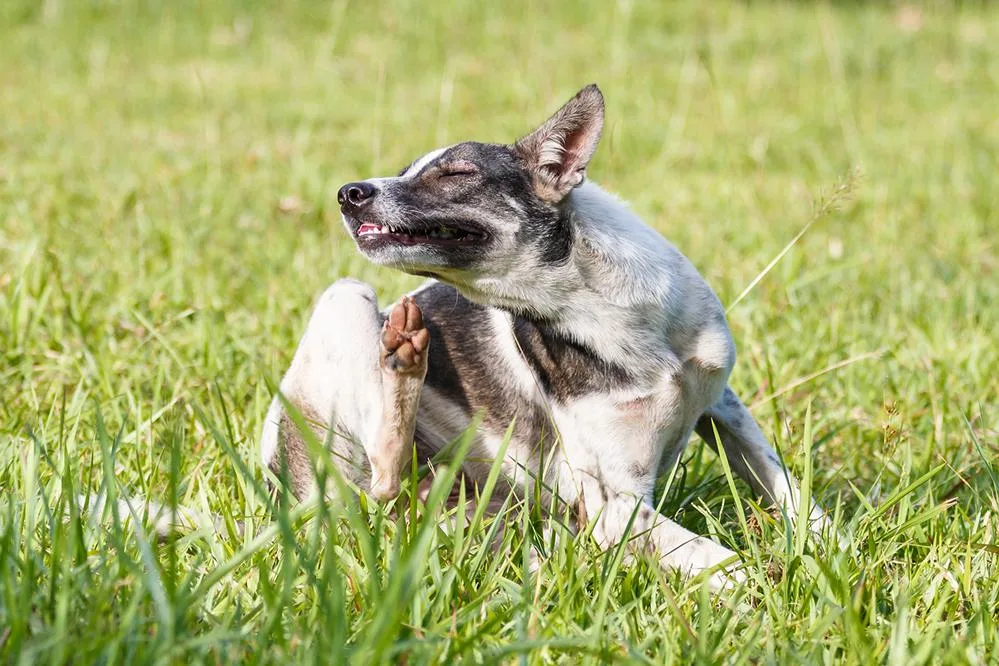
Itch is the headline. Veterinary dermatologists describe pruritus (the medical word for itch) as the cardinal sign of allergic skin disease. If your dog isn't scratching, licking, chewing, or rubbing, allergies are less likely.
Beyond itch, watch for:
- Redness along the belly, groin, armpits, and inner thighs
- Hair loss from repetitive licking or chewing
- Hot spots, also called acute moist dermatitis, which are red, weeping, painful patches that show up fast
- Dark or stained fur on the paws from chronic saliva contact
- Scabs or crusted skin, especially along the back and tail base in flea allergy
- Thickened, leathery skin in chronic, untreated cases
A dog with any two of these plus itch almost always has an allergic or parasitic skin condition, per the diagnostic criteria used by the American College of Veterinary Dermatology.
Ear Problems That Often Signal Allergies
Recurring ear infections are one of the strongest single clues. Roughly half of dogs with food or environmental allergies get otitis externa (outer ear infection) at some point, and many get them repeatedly.
Signs to watch for:
- Head shaking or tilting
- Odor from the ears (often yeasty or sweet)
- Redness or swelling of the ear canal
- Scratching at the ears or rubbing them on furniture
- Crust or discharge
A dog that has had two or more ear infections in a year should be evaluated for underlying allergies, not just treated symptomatically each time.
Paw Licking, Chewing, and Other Behavioral Clues
Paw chewing is the classic atopy sign. Dogs with environmental allergies lick between their toes because allergens collect there on walks. You'll see:
- Brown or pink saliva staining on white feet
- Redness between the toes
- Licking that ramps up after walks or after lying on grass
- Chewing at the nails or nail beds
Face rubbing is the other giveaway. Dogs rub their faces on carpets, couches, or your leg to relieve itchy muzzles and ears. It's not affectionate behavior.
It's scratching with the face.
Scooting (dragging the bottom on the floor) usually points to anal gland issues, but in allergic dogs the scooting can come from itchy, inflamed skin around the rear. Worth noting when you talk to your vet.
Digestive Signs That Suggest a Food Allergy
Only about 10, 15% of food-allergic dogs show digestive signs, so most don't. When they do, you'll see:
- Loose stool or diarrhea
- Vomiting
- More frequent bowel movements
- Gassiness
Crucially, these gut signs often show up alongside skin signs, never alone in most true food allergy cases. The skin is usually still the loudest symptom.
What an Environmental Allergy Looks Like in Dogs
Environmental allergies, the medical term is canine atopic dermatitis, are reactions to airborne or contact allergens in the dog's surroundings. The most common triggers are pollen (trees, grasses, weeds), dust mites, and mold spores.
Seasonal Allergy Patterns by Region and Climate
Timing is your biggest clue. A dog that itches from April through June and again in September likely has pollen allergies. A dog that itches every November through February in a snowbelt state is reacting to indoor allergens like dust mites kicked up by forced-air heating.
Regional and climate context matters:
- Spring (March, May): tree pollen peaks
- Summer (June, August): grass pollen
- Fall (September, October): weed pollen, especially ragweed
- Winter indoors: dust mites and mold in humid homes
- Year-round in warm, humid climates like the Gulf Coast: mold and flea pressure never fully stop
If you keep a symptom diary and the itch has a calendar, you've likely got atopy.
Common Environmental Triggers (Pollen, Dust, Mold, Grass)
Per peer-reviewed research in Veterinary Dermatology and the Merck Veterinary Manual, the most reported environmental triggers in dogs are:
- House dust mites (the single most common indoor allergen for dogs)
- Grass pollens (especially Bermuda, Timothy, and orchard grass)
- Tree pollens (oak, cedar, elm, birch)
- Weed pollens (ragweed, sage)
- Outdoor and indoor molds (Alternaria, Cladosporium)
Dogs with atopy often react to more than one of these, which is why allergy shots or sublingual immunotherapy usually include a custom mix rather than a single allergen.
What a Food Allergy Looks Like in Dogs
True food allergy in dogs is an immune reaction to a specific protein in the diet, most often beef, chicken, dairy, wheat, egg, or soy. It's less common than environmental or flea allergy, but it's worth taking seriously when other treatments haven't helped.
True Food Allergy vs. Food Intolerance
These two get confused constantly, and the treatment path is different.
| Feature | True Food Allergy | Food Intolerance |
|---|---|---|
| Mechanism | Immune system (IgE-mediated) | Digestive system, can't break down a food |
| Skin signs common? | Yes, itch and ear infections | Rare |
| Digestive signs common? | Sometimes | Often (gas, loose stool, vomiting) |
| Common triggers | Beef, chicken, dairy, wheat, egg, soy | Lactose, gluten, certain additives |
| Diagnosed by | 8–12 week elimination diet trial | Often trial-and-error diet change |
The key takeaway: a dog with chronic ear infections and itch that hasn't responded to flea control or environmental treatment deserves an elimination diet trial, even if the stool looks fine.
Why Elimination Diets Take 8–12 Weeks
An elimination diet is the gold standard for diagnosing food allergy, and there's no shortcut. You feed a novel protein (something the dog has never eaten, like venison or duck) or a hydrolyzed protein diet (proteins broken down so small the immune system can't recognize them). Royal Canin and Hill's both make veterinary prescription diets specifically for this.
You feed nothing else for 8 to 12 weeks. No treats. No table scraps.
No flavored medications if you can avoid them. Then you challenge the original diet and watch for the itch to return. If it returns within 1, 2 weeks, food allergy is confirmed.
The reason it takes so long: it takes that long for the old food proteins to fully leave the dog's system and for any inflammation to settle. Per veterinary dermatology textbooks, some dogs show improvement by week 4, but many take the full 12 weeks to clear.
What Flea Allergy Dermatitis Looks Like
Flea allergy dermatitis, or FAD, is the most common allergic skin disease in dogs worldwide. It's caused by an immune reaction to proteins in flea saliva, and it takes just one bite to set off a full flare.
Why One Flea Bite Can Cause a Major Reaction
A flea-allergic dog reacts to antigens in flea saliva that normal dogs barely notice. After a single bite, the itch can be intense for days, even though the flea itself is long gone. This is why dogs can have obvious allergic skin disease while owners swear there's no flea problem.
Where to Check Your Dog for Fleas
Flea-allergic dogs itch in a very specific pattern. The classic distribution is the lower back, tail base, hind legs, and inner thighs. That's because fleas prefer to feed along the dorsal lumbar region.
Here's how to check for fleas even when you don't see the bugs themselves:
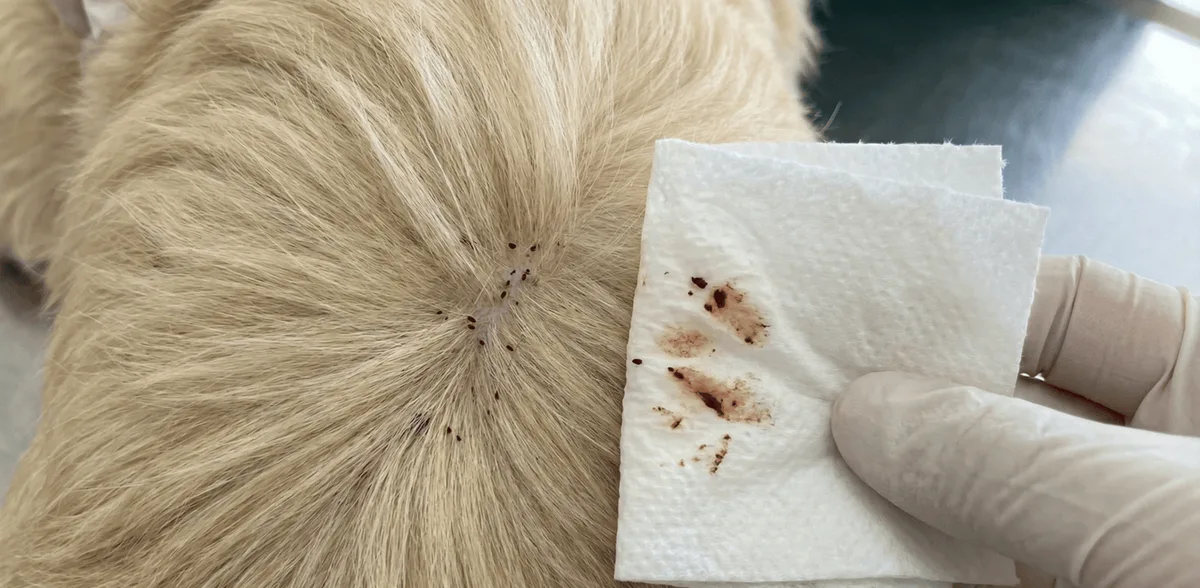
- Use a fine-tooth flea comb along the lower back and tail base
- Wipe the comb contents on a damp white paper towel
- If you see black specks that bleed reddish-brown onto the towel, that's flea dirt (digested blood)
- Look for live fleas, but remember: even a heavily flea-allergic dog may only have a few adult fleas because the reaction starts fast
If you find flea dirt on the comb, your dog almost certainly has fleas whether you've seen them or not. Treatment of the dog plus every animal and soft surface in the home is required to break the cycle.
Conditions That Mimic Dog Allergies (And How to Rule Them Out)
Several skin conditions look like allergies but need different treatment. This is where misdiagnosis gets expensive, so a vet exam matters.
Allergies vs. Mange
Sarcoptic mange (scabies) is the great mimicker. It causes intense itch, especially on the ear edges, elbows, and hocks. Unlike allergies, mange is contagious to other dogs and mildly contagious to people.
A skin scraping at the vet can confirm sarcoptic mites, but false negatives are common. Often vets will do a "treatment trial" with a prescription scabies medication if the suspicion is high.
Demodectic mange looks different. It usually causes patchy hair loss with minimal itching, often around the face and paws, and is more common in puppies or dogs with weakened immune systems.
Allergies vs. Yeast or Bacterial Skin Infections
Secondary infections are common in allergic dogs, but they can also be the primary problem. A yeast infection (usually Malassezia) causes greasy, smelly skin with brown discharge, especially in the ears, between the toes, and in skin folds. Bacterial pyoderma shows up as red bumps, pustules, or circular crusts.
The catch: infections often hide under allergies, so treating the infection alone gives temporary relief, then the itch returns. Both need addressing.
Allergies vs. Ringworm
Ringworm (dermatophytosis) isn't actually a worm. It's a fungal infection that causes circular, scaly patches of hair loss. Itch is variable.
Unlike allergies, ringworm is contagious to other pets and people. A fungal culture or PCR confirms it, and treatment runs 6 to 12 weeks.
Dog Allergy Diagnosis: What a Vet Actually Does
The vet visit isn't a quick prescription. A proper allergy workup takes a few steps, and knowing them helps you prepare.
The Physical Exam and Symptom History
Most of the diagnosis comes from pattern recognition. Your vet will look at the body distribution of the lesions and ask about timing, diet, flea control, and previous treatments. This is where a symptom diary pays off.
Bring notes on:
- When the itch started
- Seasonal patterns
- Diet history, including treats and table food
- Flea prevention product and last dose
- Any recent changes (new bedding, cleaning products, walks)
- Response to previous medications
Skin Cytology and Skin Scrapings
Skin cytology is a quick in-clinic test. The vet presses a slide to the affected skin, stains it, and looks under the microscope. It identifies yeast, bacteria, and inflammatory cells within minutes.
Skin scrapings are similar but used to look for mites. They're not always diagnostic on the first try, especially with sarcoptic mange, so a negative scrape doesn't fully rule mites out.
Intradermal vs. Serum Allergy Testing
If environmental allergies are suspected, your vet may refer you to a veterinary dermatologist for one of two tests:
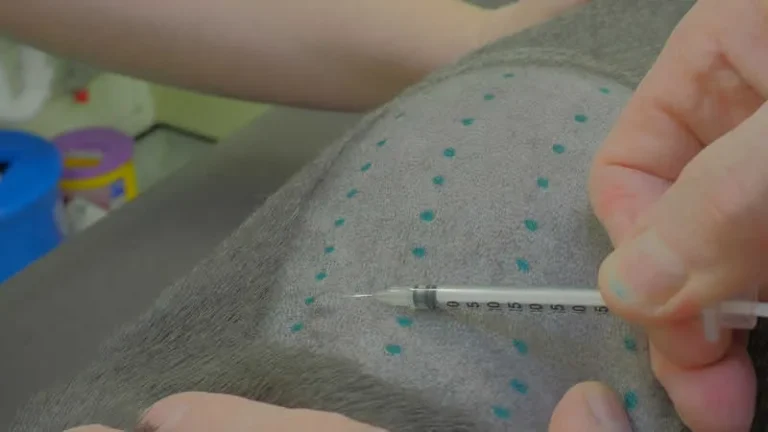
- Intradermal skin testing: small amounts of allergens are injected into the skin. A wheal (raised bump) means a positive reaction. Considered the gold standard for atopy.
- Serum IgE testing: a blood draw that measures IgE antibodies to common allergens. Less sensitive than skin testing in some cases but useful when sedation for skin testing isn't possible.
Both tests identify which allergens to include in immunotherapy (allergy shots or sublingual drops), which is the only treatment that targets the cause rather than masking symptoms.
Per the American College of Veterinary Dermatology, immunotherapy success rates hover around 60, 80% in dogs, with improvements typically showing after 3 to 6 months of consistent dosing.
Treatment Options Your Vet May Recommend
Once the diagnosis is in, treatment usually combines several approaches. No single fix works for every dog, and most allergic dogs need a layered plan.
Apoquel, Cytopoint, Antihistamines, and Steroids Compared
| Treatment | Drug Class | Speed of Relief | Duration | Best For |
|---|---|---|---|---|
| Apoquel (oclacitinib) | JAK inhibitor | 4 hours | Daily oral tablet | Long-term itch control in atopy |
| Cytopoint (lokivetmab) | Monoclonal antibody | 24–48 hours | 4–8 weeks per injection | Dogs that won't take pills or need periodic dosing |
| Antihistamines (e.g., diphenhydramine, cetirizine) | H1 blocker | Variable, often modest | Daily oral | Mild allergies, adjunct therapy |
| Prednisone/prednisolone | Corticosteroid | Hours | Short-term burst or taper | Acute flares, severe itching |
Apoquel and Cytopoint are prescription-only drugs. Apoquel works by blocking the JAK-STAT pathway that drives itch signaling. Cytopoint targets interleukin-31, the specific cytokine that tells the brain "itch." Both are FDA-approved for canine atopic dermatitis and have transformed allergy management since they hit the market.
Neither is a cure, but they let allergic dogs live comfortably while the underlying cause gets managed.
Antihistamines work best before exposure starts (seasonal use) and tend to be more helpful in mild cases. Steroids still have a place for severe flares but are used cautiously long-term due to side effects like increased thirst, hunger, panting, and over time, potential liver or adrenal effects.
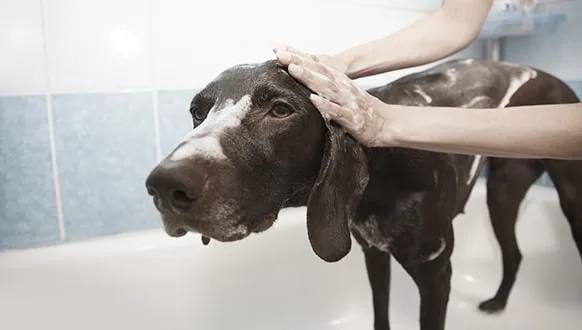
Medicated and Hypoallergenic Shampoos
Bathing helps more than most owners realize. It physically removes allergens from the coat and skin, soothes inflammation, and reduces yeast and bacteria on contact.
Two main types:
- Hypoallergenic or moisturizing shampoos: gentle enough for frequent use, good for environmental allergies
- Medicated shampoos: chlorhexidine for bacteria, miconazole for yeast, or combination products for infected skin
Most dermatologists recommend bathing every 1 to 2 weeks during allergy season. Leave the lather on for 10 minutes before rinsing so the active ingredients actually work.
Immunotherapy (Allergy Shots and Drops)
Immunotherapy is the only treatment that retrains the immune system. It works by giving gradually increasing doses of the offending allergens, which over time desensitizes the dog. It comes as injections (shots) or sublingual drops, both custom-mixed for your dog.
The catch is time. Improvement typically shows in 3 to 6 months, and the full course runs a year or more. Per the ACVD, 60, 80% of dogs show meaningful improvement, making it the best long-term option for confirmed environmental allergies.
Prescription and Limited Ingredient Diets
For food allergy, diet is the only treatment. Options include:
- Novel protein diets: a single protein source the dog has never eaten (venison, rabbit, duck)
- Hydrolyzed protein diets: proteins broken into tiny pieces the immune system can't detect
- Limited ingredient diets: fewer components, easier to control exposure
Once diagnosed, the dog stays on the safe diet indefinitely, with strict avoidance of the trigger protein. Treats, flavored medications, and even some toothpastes may need swapping.
What You Can Safely Try at Home Before the Vet Visit
A few steps help while you wait for your appointment:
- Start or upgrade flea control on every pet in the home
- Wipe your dog's paws and belly with a damp cloth after walks to remove pollen
- Wash bedding weekly in hot water to cut dust mites
- Switch to a fragrance-free, dye-free detergent for any fabric the dog touches
- Keep a 2-week symptom diary: when itching peaks, what they ate, weather, walks
These don't replace a vet exam, but they help you bring useful information to the appointment and may reduce itch in the meantime.
Mistakes Dog Owners Make When Suspecting Allergies
We've seen these patterns over and over in clinic visits. Avoid them and you'll save time and money.
Giving Human Medications Without Guidance
This is the most dangerous one. Diphenhydramine (Benadryl) is sometimes appropriate for dogs, but dosing varies by weight, and some formulations contain acetaminophen or pseudoephedrine, both toxic to dogs. Other human antihistamines can interact badly with prescription meds.
Never give anything without talking to your vet first.
Stopping Treatment Too Early
When a dog starts looking better, the temptation is to stop the Apoquel, change the diet back, or skip the flea preventive. Allergic disease is managed, not cured. Stopping mid-treatment almost guarantees a flare, often worse than the original.
Skipping Flea Prevention
Even indoor dogs need year-round flea prevention in most of the U.S. A single flea bite is enough to set off flea allergy dermatitis, so "I never see fleas" isn't enough. Use a vet-recommended product consistently, even in winter.
When It's an Emergency (Not Just Allergies)
Allergies are rarely emergencies, but some related signs are. Get to a vet right away if your dog shows:
- Sudden facial swelling (eyes, muzzle, lips)
- Hives spreading across the body
- Vomiting or collapse shortly after a vaccine, medication, or new food
- Difficulty breathing
- Pale gums
These can signal anaphylaxis, which is rare in dogs but life-threatening. For routine itch, redness, and ear infections, schedule a normal appointment, but if any of the above shows up, head to an emergency clinic.
Breed Predispositions: Which Dogs Are Most Prone to Allergies
Genetics plays a real role. Veterinary literature consistently flags certain breeds as higher risk for atopic dermatitis, including:
- Golden Retrievers and Labrador Retrievers
- West Highland White Terriers
- English Bulldogs and French Bulldogs
- Boxers
- Shar-Peis
- Cocker Spaniels
- Irish Setters
- Dalmatians
If your dog is on this list and showing itch, allergies belong near the top of your differential. It doesn't mean they'll definitely develop allergies, but the baseline suspicion is higher.
How to Track Symptoms So Your Vet Has Better Data
A symptom log is one of the highest-leverage things you can do. Vets make better diagnoses with good data.
Capture weekly:
- Itch intensity on a 1, 10 scale
- Body locations scratched
- Any foods or treats outside the regular diet
- Weather and recent walks
- Flea preventive dose dates
- Any medications given, including OTC
Bring the log to your vet visit. It often cuts weeks off the diagnostic timeline.
Frequently Asked Questions About Dog Allergies
Can dogs be allergic to grass?
Yes. Grass pollen is one of the top triggers for canine atopic dermatitis, and direct contact with grass blades can also cause contact dermatitis. Dogs with grass allergies often lick their paws and inner thighs after walks.
How do I know if my dog has a food allergy or a sensitive stomach?
Run an 8, 12 week elimination diet trial under vet guidance. If itch and ear infections clear on the trial and return when the old diet comes back, food allergy is the likely cause. Sensitive stomach alone usually doesn't cause skin symptoms.
Are dog allergy tests accurate?
Blood serum IgE tests can produce false positives and false negatives, so results need vet interpretation. Intradermal skin testing is more reliable for environmental allergens. Neither is reliable for food allergy diagnosis, which is why elimination diets remain the standard.
Can puppies have allergies?
Yes. Food allergies often show up before age one. Environmental atopy usually starts between ages 1 and 3, but puppies as young as 6 months can show signs.
Early vet evaluation prevents the secondary infections that come with chronic scratching.
What's the fastest way to stop my dog from itching?
Schedule a vet visit for a proper diagnosis first. In the short term, cool baths with a gentle shampoo can soothe skin, and your vet may prescribe Apoquel (relief within about 4 hours) or Cytopoint (relief within 24, 48 hours) depending on the case.
The Bottom Line on Spotting and Managing Dog Allergies
Catching allergies early means catching them before secondary infections set in. The three main types (flea, food, environmental) have distinct patterns once you know what to look for, and most dogs respond well to a layered treatment plan.
Work with your vet, not against the internet. Combine prescription treatment with smart home management (flea control, paw wiping, bathing, and diet discipline) and most allergic dogs get back to being dogs. It takes patience, especially with food trials and immunotherapy, but the payoff is a comfortable, itch-free dog who sleeps through the night again.