How to treat eye allergies in dogs: Easy guide
If your dog is pawing at their face and their eyes look red, watery, or gunky, you're probably wondering how to treat eye allergies in dogs without making things worse. The good news is that most mild cases respond well to a combination of vet-prescribed eye drops, gentle at-home cleaning, and reducing allergen exposure. The bad news is that "allergies" is one of the most overused labels in dog eye care, and getting it wrong can mean missing something serious.
Eye discomfort in dogs has dozens of possible causes. Research published in veterinary ophthalmology journals shows that around 50% of dogs with atopic dermatitis (the skin version of environmental allergies) also show ocular signs. That number is high enough that allergy-driven conjunctivitis should always be on the table, but not high enough to skip a proper exam.
As of 2026, the standard diagnostic approach hasn't changed much, but the range of safe, dog-specific medications has grown, which is why getting the right starting point matters.
Quick Answer
Most mild dog eye allergies clear up with a vet-prescribed antihistamine or steroid eye drop. Flush the eye gently with saline first. Remove the allergen if possible.
Always rule out infection or ulcers before treating at home.
Why Getting Eye Allergy Treatment Right in Dogs Actually Matters
Eyes are unforgiving. A misdiagnosed allergy can mask a corneal ulcer, dry eye, or even glaucoma, and the wrong drop on top of those can turn a fixable problem into a vision-threatening one.
This matters because dog owners see "red eye" and reach for whatever is in the bathroom cabinet. Sometimes that works. Sometimes it costs the dog days of pain and the owner a four-figure emergency bill.
Treating eye allergies in dogs safely comes down to two things: confirming it really is an allergy, and using only products that are safe for canine eyes.
The Merck Veterinary Manual, a reference widely used in clinical practice, lists conjunctivitis as one of the most common ocular presentations in dogs. Allergic conjunctivitis is a frequent cause, but so is dry eye (keratoconjunctivitis sicca), bacterial infection, and foreign bodies under the eyelid. The symptoms overlap.
The treatments don't.
Signs Your Dog's Eyes Are Reacting to Allergies (And What Else It Could Be)
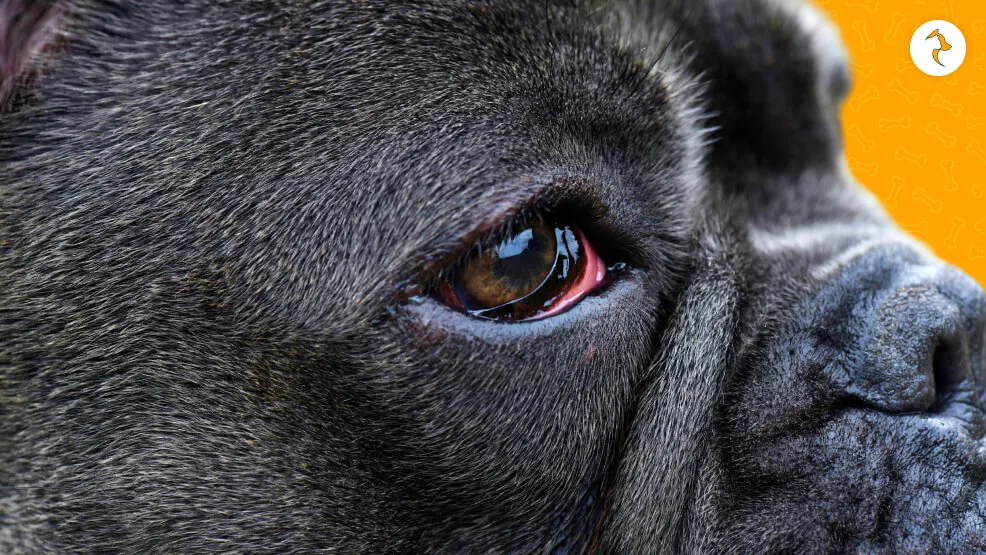
Allergic conjunctivitis in dogs tends to look the same on the surface: red, watery, mildly puffy, and itchy. The discharge is usually clear or slightly cloudy. Both eyes are often involved because environmental allergens hit both at once.
Here's a quick way to think about what you're seeing.
Symptom-by-Symptom Breakdown
- Clear watery discharge in both eyes: most likely allergic or irritant-related.
- Yellow or green discharge: more likely bacterial infection, not allergy.
- Squinting or holding the eye shut: pain signal, could mean a scratch or ulcer.
- One eye only affected: think foreign body, scratch, or unilateral disease, allergies are usually bilateral.
- Swelling around the eye that feels firm: possible glaucoma or orbital issue, not allergy.
Conditions That Mimic Eye Allergies
A few common look-alikes catch even experienced owners off guard:
| Condition | How It Looks Similar | Key Difference |
|---|---|---|
| Dry eye (KCS) | Red, irritated eyes | Thick mucus discharge, not watery |
| Corneal ulcer | Red, squinting, tearing | Dog holds eye shut, light-sensitive |
| Bacterial conjunctivitis | Red, inflamed conjunctiva | Yellow-green pus, often one eye |
| Glaucoma | Red, cloudy eye | Hard, enlarged eyeball, mid-dilated pupil |
| Foreign body | Sudden tearing, pawing | One eye, sudden onset |
When in doubt, treat it like an emergency until proven otherwise. The American College of Veterinary Ophthalmologists recommends prompt evaluation for any red eye lasting more than 24 hours.
The First Move: When to Call the Vet vs. When You Can Monitor at Home
Not every red eye needs an emergency visit, but every red eye needs a decision.
Call the vet right away if your dog shows any of these:
- Holding the eye fully or partially shut
- Cloudiness or a bluish tint to the cornea
- Yellow or green discharge
- Blood in or around the eye
- Swelling that makes the eye bulge or look puffy
- Any change after a known scratch or fight
Monitor at home for 12 to 24 hours only if:
- Both eyes are mildly red and watery
- The dog is still active and eating normally
- There's no squinting or pain response
- No discharge other than clear tears
- You can identify a likely trigger (new yard treatment, spring pollen, dust from renovation)
A day of watchful waiting is reasonable for a mild, bilateral, clear-discharge presentation in an otherwise normal dog. Anything past that needs eyes-on (literally) examination by a vet.
What Vets Actually Look For During an Eye Allergy Exam
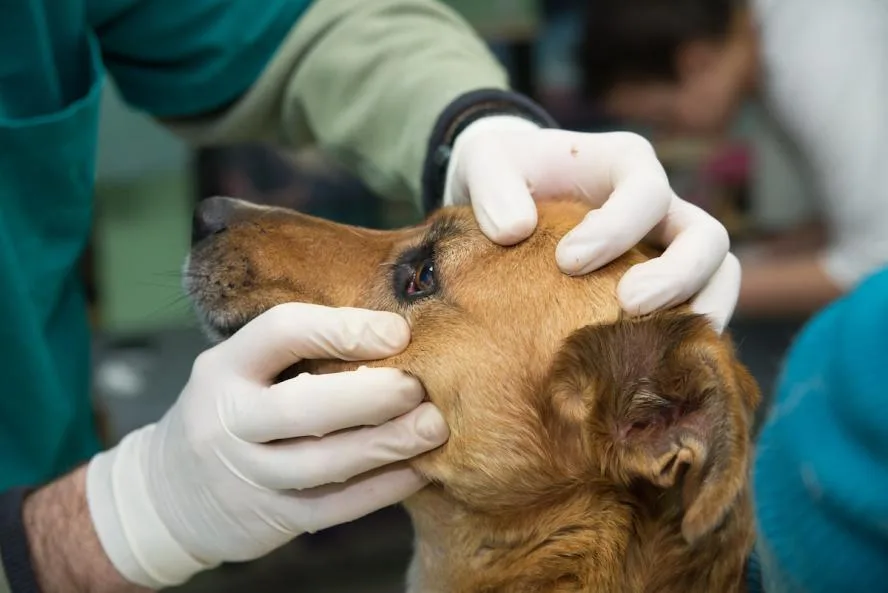
A vet doesn't just glance at the eye and call it allergies. The exam has layers, and each one rules out something more serious.
The Standard Diagnostic Toolkit
A proper canine eye workup usually includes:
- Schirmer tear test: measures tear production. Normal is 15 to 25 mm per minute. Low numbers mean dry eye, which mimics allergies but needs different treatment.
- Fluorescein stain: a green dye applied to the eye that lights up any scratch, ulcer, or foreign body damage under blue light. Allergies won't stain. Ulcers will glow bright green.
- Tonometry: measures eye pressure. Normal canine intraocular pressure runs 15 to 25 mmHg. High readings point to glaucoma, which is a true emergency.
- Conjunctival exam: vets flip the lid and look for follicles, foreign material, or unusual inflammation patterns that hint at allergy versus infection.
Why You Can't Skip This Step
Steroid eye drops, the most common allergy treatment, can make a corneal ulcer dramatically worse. They slow healing and can lead to a melting ulcer, which is a surgical emergency. Without the fluorescein stain, you don't know if one is hiding under that red, watery surface.
This is why vets don't hand out allergy eye drops over the phone for a dog they've never seen. The exam takes about ten minutes and prevents a lifetime of regret.
Common Causes of Eye Allergies in Dogs
The trigger matters because some are seasonal and predictable. Others are year-round and easier to fix once you spot them.
Environmental Allergens (Atopy)
Pollen, grass, mold spores, and dust mites are the top offenders. These dogs often have itchy skin, ear infections, or paw-licking alongside the eye signs. Spring and fall are peak seasons.
In warmer climates, symptoms can run nearly year-round.
Irritant Contact Allergies
Shampoos, lawn chemicals, cleaning products, and even certain dog wipe ingredients can splash or migrate to the eye. The reaction is usually sudden and tied to a recent exposure.
Food Allergies
Less common as a direct eye trigger, but possible. Food allergies more typically show up as skin and GI signs. Ocular symptoms alone are rarely food-driven.
Breed Predisposition
Brachycephalic breeds (Pugs, Bulldogs, Shih Tzus, Boston Terriers) have shallow eye sockets and prominent eyes. They get more environmental exposure and more conjunctival irritation. Aggregate reviews from veterinary ophthalmology clinics consistently report higher allergy eye rates in these breeds.
Parasite-Linked Reactions
Less commonly, some dogs react to fly bites or surface mites around the eyes. These produce localized swelling rather than diffuse redness.
Safe Home Care Before or Between Vet Visits
If you can't get to the vet right away, or you're waiting for an appointment, a few steps help without risking harm.
Saline Flush
Plain sterile saline (the kind sold for contact lens rinsing, no added cleaners) is safe to flush visible debris or pollen out of the eye. Hold the bottle tip about an inch away. Let the saline flow across the eye surface, not directly into the center.
Repeat two to three times per eye per session. Don't reuse the same bottle between eyes to avoid cross-contamination.
Cool Compress
A clean, damp washcloth held gently against closed eyelids for 2 to 3 minutes can reduce swelling and itching. It won't cure the allergy, but it gives the dog some relief while you wait for medication.
Wipe Away Discharge
Use a soft, lint-free cloth dampened with warm water. Wipe outward, away from the inner corner. Use a clean section of cloth for each pass so you're not dragging bacteria back in.
What Not to Do at Home
Don't apply human allergy eye drops (like Visine or Zaditor) unless a vet has specifically said to. Many contain preservatives or drugs that aren't safe for canine eyes. Don't use essential oils, herbal washes, or tea tree products near the eyes.
These can cause chemical burns.
Veterinary Treatment Options That Work
Once the vet confirms an allergy and rules out ulcers or infection, the treatment menu is short and effective.
Topical Antihistamines
Drugs like olopatadine or ketotifen block histamine release at the eye surface. They're the first choice for mild, seasonal cases. Twice-daily dosing is typical.
Relief often starts within hours.
Topical Corticosteroids
For more inflamed eyes, vets may prescribe prednisolone acetate or dexamethasone drops. These work faster and deeper than antihistamines. They're powerful, but contraindicated if any corneal damage is present.
Mast Cell Stabilizers
Cromolyn sodium or similar drugs prevent the allergic cascade before it starts. They're better for prevention than acute relief. Vets use them for dogs with predictable seasonal patterns.
Combination Drops
Some products pair an antihistamine with a mast cell stabilizer. Convenient, broad coverage, and the most common prescription for chronic allergy eyes.
Oral Antihistamines
Drugs like cetirizine (Zyrtec) or diphenhydramine (Benadryl) help when the dog has full-body allergy signs alongside the eye issues. They do less for the eyes specifically, but they calm the system.
Best Eye Drops and Medications for Dog Eye Allergies
There's no single "best" drop, because the right pick depends on the eye exam findings.
| Medication Type | Best For | Onset | Key Caveat |
|---|---|---|---|
| Olopatadine 0.1% | Mild seasonal itching | 30 min | Prescription only |
| Ketotifen 0.025% | Mild to moderate itching | Hours | OTC in some countries |
| Prednisolone acetate 1% | Moderate to severe inflammation | Hours to days | Cannot use with ulcers |
| Cyclosporine 0.2% | Chronic dry eye/allergy overlap | Weeks | Not for acute relief |
| Tacrolimus 0.03% | Refractory chronic cases | Weeks | Compounded usually |
| Cetirizine (oral) | Body-wide allergy signs | Hours | Dose is 1 mg/kg once daily |
Manufacturer labeling for these products consistently emphasizes the same rule: confirm the eye surface is intact before using steroids. Manufacturer specs for olopatadine confirm it has minimal systemic absorption, which makes it a safer long-term pick.
How to Actually Give Your Dog Eye Drops Without Losing a Finger
Most treatment plans fail because the drops don't make it into the eye. Here's a method that works on even the squirmiest dogs.
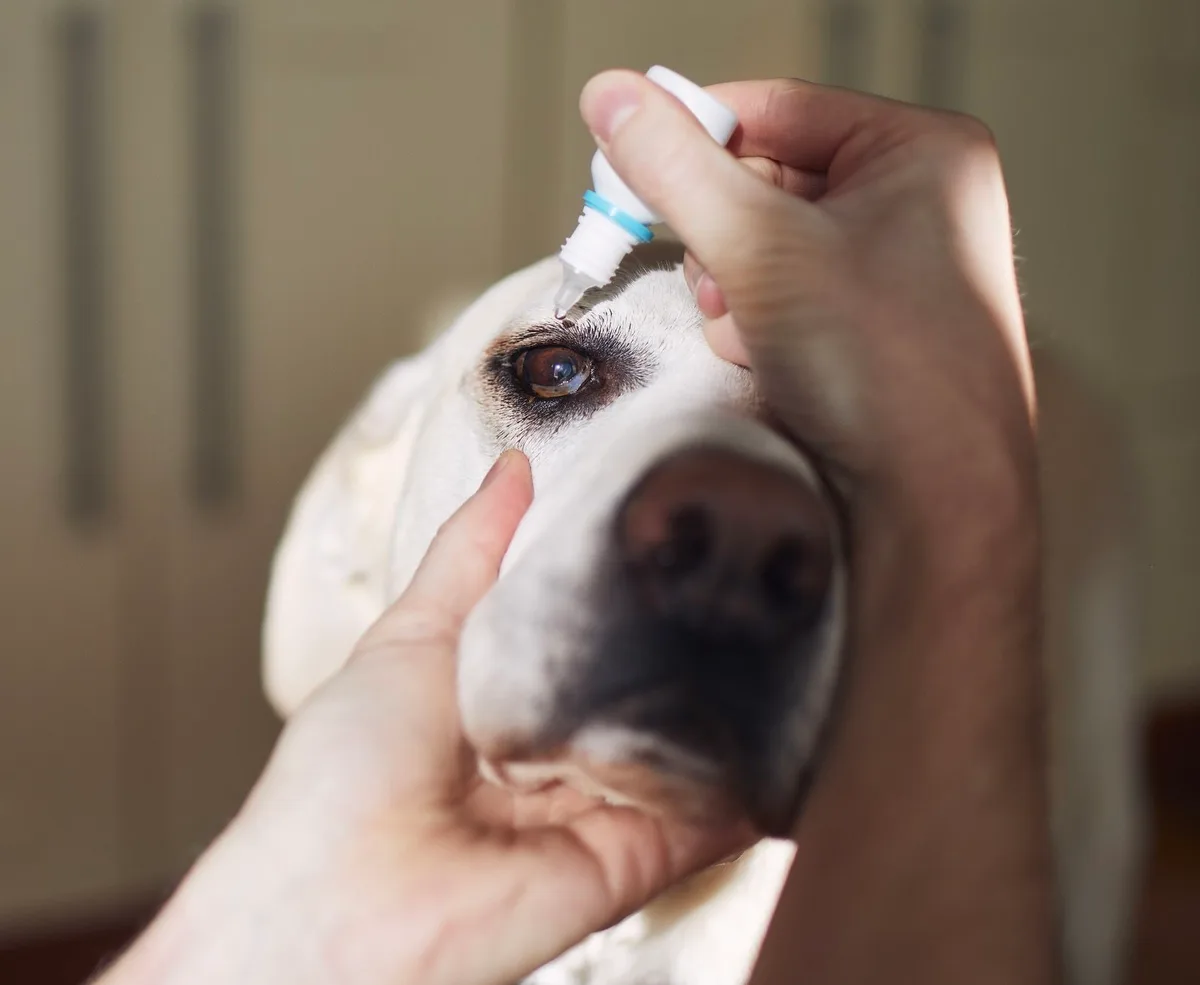
Step-by-Step
- Position the dog sitting or standing, facing away from you. This blocks their most natural escape route (forward).
- Hold a treat in your non-dominant hand near the dog's nose for distraction.
- With your dominant hand, rest your pinky on the dog's forehead for stability.
- Use your thumb to gently pull down the lower eyelid, creating a small pocket.
- Aim the drop bottle above the eye, not directly at the cornea (which causes a blink reflex).
- Squeeze one drop into the pocket. Don't worry if you miss. A second drop is fine, but more than that wastes product.
- Hold the dog's head still for 5 seconds so the drop doesn't roll out.
- Reward immediately with the treat and praise.
Tips From Veterinary Technicians
- Warming the bottle in your pocket for a few minutes reduces the cold-shock blink.
- Practice with saline first so the dog learns the routine before medication.
- Wrap anxious dogs in a towel burrito, leaving only the head out.
- If the dog has long facial hair, pin it back with a clip so it doesn't absorb the drop.
Medications to Avoid and Why
A few common "helpful" products are actually dangerous for dogs.
Human Redness-Relief Drops
Drugs like Visine contain tetrahydrozoline, which constricts blood vessels. In dogs it can cause systemic side effects, including drops in heart rate and blood pressure. Avoid entirely.
Human Antihistamine Drops With Preservatives
Some OTC drops contain benzalkonium chloride (BAK). It's safe in human eyes in low concentrations, but BAK can irritate or damage the canine corneal surface with repeated use. Veterinary formulations use dog-safe preservatives or single-dose vials.
Steroid Drops With Hidden Ulcers
This is the big one. As noted earlier, steroids delay healing and can worsen corneal damage. Always confirm with fluorescein stain first.
Neomycin-Containing Drops
Some combination eye meds include neomycin, an antibiotic. Aggregate reviews in veterinary dermatology note that neomycin is a top contact allergen in dogs. It can make the very problem you're treating worse.
Breed-Specific Risks and Considerations
Brachycephalic breeds carry the heaviest burden here. Their shallow orbits and large palpebral fissures leave more conjunctiva exposed to pollen, dust, and irritants. They also have a higher baseline rate of corneal exposure issues, which complicates any steroid-based treatment plan.
Breeds Needing Extra Vigilance
- Pugs and Bulldogs: chronic conjunctivitis is common, often needs long-term management.
- Shih Tzus and Lhasa Apsos: dense facial hair traps allergens and mechanically irritates the eye.
- Cocker Spaniels: prone to dry eye, which mimics allergies and changes the treatment approach.
For these breeds, a vet relationship matters more than for the average dog. Don't wait for repeated flare-ups to book a check.
Seasonal vs. Year-Round Allergy Management
Seasonal cases track pollen counts. In most of North America, spring (March to May) hits hard with tree pollen. Late summer and fall (August to October) bring ragweed and mold.
Year-round cases usually point to indoor allergens like dust mites or a chronic irritant source.
Practical Seasonal Steps
- Wipe the dog's face and eye area after outdoor time during peak pollen days.
- Run the air conditioner with a MERV-rated filter instead of open windows.
- Bathe the dog weekly during flare-ups to wash off allergens trapped in the coat.
For year-round dogs, consider allergy testing through your vet. Serum or skin testing can pinpoint specific triggers, opening the door to immunotherapy (allergy shots or sublingual drops tailored to your dog).
Mistakes Owners Make With Dog Eye Allergies
Most complications we see trace back to a handful of repeat errors.
- Using leftover human eye drops without vet approval.
- Skipping the vet exam and going straight to "allergy" assumptions.
- Stopping medication the moment the eye looks better (inflammation often returns).
- Rubbing or massaging the eye during flare-ups (increases trauma risk).
- Skipping the e-collar, which lets the dog scratch and create real damage.
- Treating for weeks without improvement and missing a slow-growing ulcer.
If a treatment isn't working in 5 to 7 days, go back to the vet. The diagnosis may be wrong.
When Home Treatment Isn't Enough
Persistent redness beyond a week is a red flag. So is any progression: more discharge, more swelling, more squinting. At that point, the dog needs a recheck, possibly with a veterinary ophthalmologist referral.
Specialists have equipment (slit-lamp biomicroscopy, ocular ultrasound) that general practice doesn't.
The American College of Veterinary Ophthalmologists maintains a public directory of board-certified specialists. If the eyes aren't responding, that referral is worth the trip.
Building a Long-Term Plan to Keep Flare-Ups Down
The best allergy management is the one that prevents flares, not just treats them.
Daily Habits That Help
- Wipe eye area once daily with a damp cloth during allergy season.
- Use a vet-approved omega-3 supplement, which research links to reduced inflammatory response.
- Keep facial hair trimmed short around the eyes for long-haired breeds.
- Vacuum and dust weekly if dust mites are a trigger.
Treatment Rotation Strategy
Dogs on long-term antihistamine drops sometimes need their medication changed yearly. Receptor desensitization can reduce effectiveness over time. Talk to your vet if you notice diminishing returns.
Frequently Asked Questions
Can I use human allergy eye drops on my dog?
No, not without vet approval. Many contain drugs or preservatives unsafe for canine eyes. Use only products prescribed for your specific dog.
How long does it take for dog eye allergies to clear up?
With the right drops, most mild cases improve within 48 to 72 hours. Full resolution typically takes 7 to 14 days. Chronic cases may need ongoing management.
Are dog eye allergies contagious to other dogs or people?
No. Allergic conjunctivitis is not contagious. However, if the underlying cause is bacterial, that's a different story and worth confirming with your vet.
What can I give my dog for eye allergies at home?
Saline rinses and cool compresses are safe at home. For anything medicated, see your vet first. Oral antihistamines like cetirizine (1 mg/kg once daily) can help body-wide signs but won't replace eye-specific treatment.
When should I worry that it's not allergies?
If your dog has yellow-green discharge, holds the eye shut, or shows any cloudiness, treat it as an emergency. Pain signals mean something more serious is likely going on.
Do dog eye allergies go away on their own?
Sometimes, if the trigger is removed. Most cases need at least short-term medication to settle the inflammation and prevent secondary issues.