Dog Food With Grain vs Grain Free: Which Is Better?


Is Grain-Inclusive Dog Food Good?
Yes. For most healthy dogs, I would choose a good grain-inclusive food first. When I compare dog food with grain vs grain free, grain-inclusive recipes win for simple everyday feeding. Grains can provide energy, fiber, vitamins, minerals, and useful plant nutrients. They are not just cheap fillers. Rice, oats, barley, and corn can all have a place in a well-made dog food.
I also like how easy these foods are to use. On busy American mornings, I want a bowl that gives my dog steady nutrition without turning feeding into a science project. I have found that a complete and balanced grain-inclusive recipe is often the simplest choice for healthy adult dogs. Still, the recipe matters. A poor food does not become good just because it contains grains.
One important point changed how I view dog food with grain vs grain free. A dog does not need grain-free food simply because grains sound less natural. Dogs can digest properly cooked grains, and true grain allergies appear to be uncommon. If a dog has a suspected food allergy, I would work with a veterinarian instead of guessing from the front of a bag.
What Makes It Stand Out / Key Features
- Uses grainsCommon grains include rice, oats, barley, corn, and wheat, depending on the recipe.
- Steady energyGrains can supply digestible carbohydrate that helps support normal daily activity.
- Useful fiberSome grains provide fiber that can support normal bowel function and stool quality.
- Nutrient varietyWhole or properly processed grains can add vitamins, minerals, fatty acids, and plant compounds.
- Easy daily feedingA complete and balanced recipe can work well as the main food for many healthy dogs.
- Wide selectionAmerican stores offer many grain-inclusive recipes for puppies, adults, seniors, and different activity levels.
My Recommendation
I recommend a complete and balanced grain-inclusive food for most healthy dogs. Focus on the full recipe, life stage, calories, protein, and your dog’s response rather than fearing grains.
| Best For | Why |
|---|---|
| Healthy adult dogs | Offers balanced everyday nutrition when the recipe is complete and balanced. |
| Budget-conscious owners | There are many nutritious grain-inclusive options at different price points. |
| Dogs without food allergies | There is usually no nutritional reason to remove grains from the diet. |
Is Grain-Free Dog Food Good?
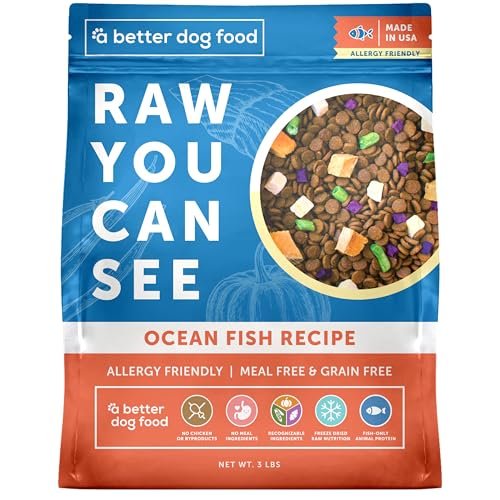
It depends. Grain-free food can be useful in specific cases, but I would not call it the better choice for every dog. In this dog food with grain vs grain free test, the grain-free option makes more sense when there is a clear dietary reason to avoid certain grains or when a veterinarian recommends a specific formula.
The biggest mistake is treating grain-free as a synonym for high protein or premium nutrition. A grain-free recipe still needs carbohydrates, unless it is specially formulated another way. Many grain-free foods use peas, lentils, chickpeas, potatoes, or other starches instead. So the missing grain may simply be replaced by another carbohydrate source.
I also pay closer attention to the full recipe because of the long-running concern about diet-associated canine dilated cardiomyopathy, or DCM. The FDA has investigated reports involving some diets, many of which were grain-free and rich in pulses. The science is complex, and grain-free food has not been proven to cause heart disease in every dog. Still, that concern is enough for me to avoid choosing grain-free only because it sounds more natural.
What Makes It Stand Out / Key Features
- No traditional grainsThese recipes avoid ingredients such as wheat, corn, rice, barley, and oats.
- Alternative carbohydratesCommon replacements include peas, lentils, chickpeas, potatoes, and tapioca.
- Useful for selected dietsSome dogs may need a specific ingredient removed as part of a veterinarian-guided diet plan.
- Many protein choicesGrain-free foods come in chicken, beef, fish, lamb, turkey, and other protein recipes.
- Often highly palatableMany formulas use rich animal ingredients that can appeal to picky eaters.
- Recipe quality still mattersRemoving grains does not guarantee better nutrition, so the whole formula needs to be checked.
My Recommendation
Consider grain-free food when your veterinarian identifies a clear reason. Do not choose it only because the label sounds cleaner or more natural.
| Best For | Why |
|---|---|
| Dogs with a confirmed grain issue | A grain-free formula may help when a specific grain must be avoided. |
| Vet-guided diet trials | It can be part of a controlled diet plan when chosen with professional advice. |
| Owners needing specific ingredients | Some recipes offer simple ingredient lists that make ingredient selection easier. |
dog food with grain vs grain free: Side-by-Side Test
The best way to understand dog food with grain vs grain free is to look past the marketing. I would judge both by nutrition, ingredient quality, safety, cost, and how the individual dog responds.
Think of the grain question like choosing a road. Grain-free is not a faster road for every dog. It is simply another route. The right route depends on the dog, the recipe, and the reason for choosing it.
Nutrition: Which Has The Edge?
Both can provide complete nutrition, but the recipe matters more than whether grains are present.
| Feature | Product 1 | Product 2 |
|---|---|---|
| Complete and balanced | Widely available | Widely available |
| Carbohydrate source | Often grains and other plants | Often potatoes, peas, lentils, or other plants |
| Nutrient value | Can be excellent | Can be excellent |
| Main concern | Poor recipes can still be low quality | Grain-free does not guarantee better nutrition |
⭐ Product 1 – 9/10 | Product 2 – 8/10
Grain-inclusive food has the edge for general everyday nutrition because it offers more simple choices for healthy dogs.
Digestion: Which Is Easier?
Dogs differ, so digestion depends on the full recipe, fiber level, protein source, and the individual dog.
| Feature | Product 1 | Product 2 |
|---|---|---|
| Digestibility | Often very good when grains are well cooked | Can also be very good |
| Fiber | May come from grains and other plants | Often comes from pulses and vegetables |
| Sensitive stomach | Depends on the recipe | Depends on the recipe |
⭐ Product 1 – 9/10 | Product 2 – 8/10
Neither wins for every dog, but grain-inclusive food gives owners many simple digestion-friendly choices.
Allergies: Which Is Better?
Food allergies are real, but true grain allergies are not the most common cause of food allergy in dogs.
| Feature | Product 1 | Product 2 |
|---|---|---|
| Avoids grains | No | Yes |
| Useful for food trials | Sometimes | Sometimes |
| Vet guidance | Helpful | Especially important |
| Best approach | Identify the actual trigger | Identify the actual trigger |
⭐ Product 1 – 8/10 | Product 2 – 9/10
Grain-free has the edge only when avoiding grains is part of a clear dietary plan.
Heart Health: What Should You Know?
This is where I would be most careful, because diet-associated heart disease has been a major concern in veterinary nutrition.
| Feature | Product 1 | Product 2 |
|---|---|---|
| Grain content | Contains grains | No traditional grains |
| Pulse-heavy recipes | Varies | Can be common |
| DCM concern | Not the main diet pattern under investigation | Some formulas have been part of the concern |
| My approach | Good default | Use with a clear reason |
⭐ Product 1 – 9/10 | Product 2 – 7/10
For routine feeding, I give grain-inclusive food the edge because it avoids an unnecessary diet choice for most healthy dogs.
Cost: Which Saves More?
Price changes by brand, protein, bag size, and formula, but grain-inclusive foods often give shoppers more budget choices.
| Feature | Product 1 | Product 2 |
|---|---|---|
| Budget options | Very common | Available but often fewer |
| Premium options | Many | Many |
| Value | Often strong | Depends on the formula |
⭐ Product 1 – 9/10 | Product 2 – 8/10
Grain-inclusive food usually wins on value because there are more choices across price ranges.
Availability: Which Is Easier?
When I shop at major U.S. pet stores or order online, both types are easy to find, but grain-inclusive options are broader.
| Feature | Product 1 | Product 2 |
|---|---|---|
| Store selection | Excellent | Very good |
| Online selection | Excellent | Excellent |
| Life-stage choices | Very broad | Broad |
⭐ Product 1 – 10/10 | Product 2 – 9/10
Grain-inclusive food wins by a small margin because it is available in almost every major dog food category.
Everyday Use: Which Is Simpler?
For a healthy dog with no known dietary problem, simple is often better.
| Feature | Product 1 | Product 2 |
|---|---|---|
| Routine feeding | Excellent | Good |
| No special diet needed | Strong choice | Usually unnecessary |
| Veterinary diet need | May fit | May fit |
⭐ Product 1 – 10/10 | Product 2 – 8/10
For normal daily feeding, grain-inclusive food is the simpler choice for most dogs.
Final Verdict: Which Should You Buy?
After comparing dog food with grain vs grain free, I would pick a high-quality grain-inclusive food for most healthy dogs. It can provide complete nutrition, useful fiber, steady energy, and good value. Grain-free food still has a place. It can make sense when a veterinarian identifies a real dietary need or when a specific ingredient must be avoided.
The biggest lesson is this: do not buy the front of the bag. Read the full recipe. Check that the food is complete and balanced for your dog’s life stage. Look at calories and protein. Then watch your dog’s weight, stool, skin, energy, and overall health. In dog food with grain vs grain free, the best food is the one that safely meets your dog’s actual needs.