
How to help dogs allergies: Easy guide
If your dog won't stop scratching, you're not alone. Skin allergies are one of the top reasons dogs end up at the vet, and figuring out how to help dogs with allergies usually starts before any medication does. The right answer depends on what your dog is actually reacting to, and that part trips up a lot of owners.
Most allergic dogs fall into one of three buckets: flea allergy dermatitis, environmental allergies (atopy), or food allergies. Veterinary dermatology sources put atopic dermatitis at roughly 10, 15% of the dog population, and it's the category most owners miss because the trigger is invisible. As of 2026, the standard diagnostic path still starts with ruling out parasites, then moves to either allergy testing or an elimination diet, depending on the signs.
Knowing which path to walk matters more than any single product you can buy.
Quick Answer
You help a dog with allergies by first identifying the trigger: flea, food, or environmental. Then match the treatment to that trigger. Use strict flea control for flea allergy dermatitis.
Run an 8, 12 week elimination diet for suspected food allergy. Use Apoquel, Cytopoint, or allergen immunotherapy for environmental allergies. Always confirm with a vet before starting medication.
What Dog Allergies Actually Look Like (And Why It's Hard to Tell)
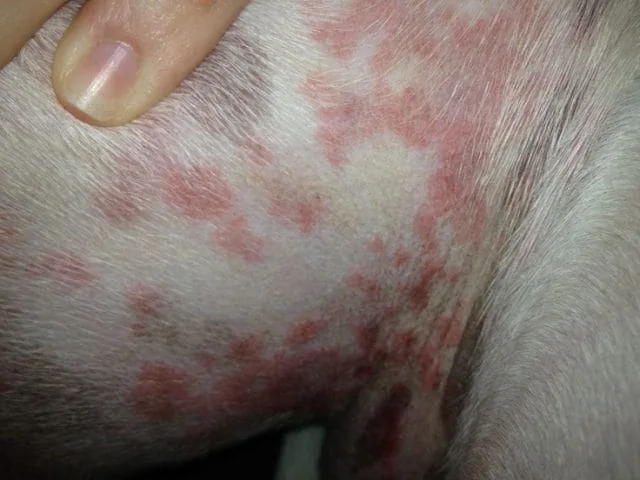
Allergies in dogs don't look like allergies in people. You're not usually looking at sneezing and watery eyes. You're looking at a dog scratching constantly, licking paws, getting recurring ear infections, or developing hot spots on the skin.
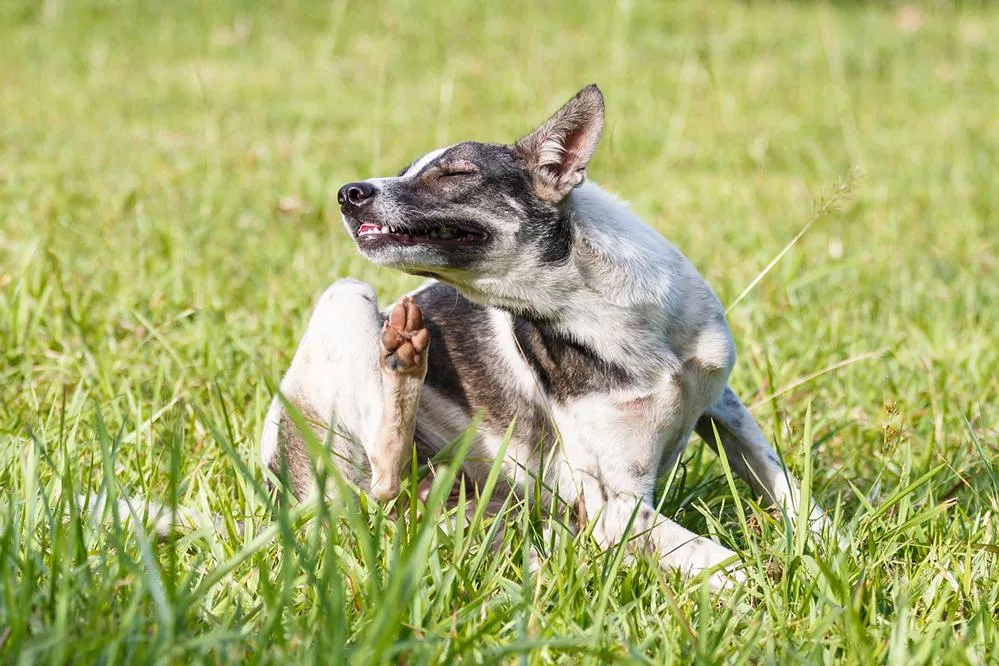
The tricky part is that all three main types produce similar symptoms. A dog with flea allergy dermatitis looks a lot like a dog with atopy at first glance. They both scratch, both chew at their flanks, and both end up with secondary skin infections if you wait too long.
What separates them is usually the pattern. Flea allergy tends to focus on the lower back, tail base, and hind legs. Food allergy often shows up as year-round itching plus digestive signs like soft stool.
Environmental allergies tend to flare seasonally in spring and fall, unless the trigger is something indoor like dust mites.
The Merck Veterinary Manual and ACVD guidance both point out that skin allergy is a diagnosis of exclusion. That means ruling out parasites, infections, and endocrine disease before calling it an allergy. If your dog has never had a proper workup, the real diagnosis might not be allergy at all.
The Three Main Types of Dog Allergies, and Why It Matters
The three categories behave differently and respond to different treatments. Mixing them up is the single biggest reason allergy management fails.
Flea allergy dermatitis (FAD). Triggered by proteins in flea saliva. Even one bite can set off a reaction in a sensitized dog. This one is the easiest to confirm and the easiest to fix with strict flea control, yet clinical reports consistently show it's also the most commonly missed.
Environmental allergies (atopy). Triggered by airborne allergens like pollen, dust mites, and mold. Tends to start between 6 months and 3 years of age and often runs in certain breeds. Labradors, Golden Retrievers, French Bulldogs, German Shepherds, Westies, and Boxers all show higher predisposition in veterinary dermatology literature.
Food allergies. Triggered by specific protein sources, most commonly beef, chicken, dairy, or egg in dogs. Unlike people, food allergy in dogs almost always shows up as skin symptoms, not digestive ones. Around 10% of allergic dogs have food as a primary driver, and the only reliable diagnostic is an elimination diet.
If you're wondering why this matters in practical terms: the treatments don't overlap much. A hypoallergenic diet won't fix flea allergy. Cytopoint won't fix a chicken sensitivity.
You have to know which lane you're in.
| Allergy Type | Main Trigger | Best Diagnostic | First-Line Treatment |
|---|---|---|---|
| Flea allergy dermatitis | Flea saliva protein | Response to flea control | Strict year-round flea prevention |
| Environmental (atopy) | Pollen, dust mites, mold | Intradermal or serum allergy testing | Apoquel, Cytopoint, or immunotherapy |
| Food allergy | Specific dietary protein | 8–12 week elimination diet | Permanent diet change |
Signs You Shouldn't Ignore: When It's More Than Just Itching
Mild scratching is normal dog behavior. Allergies show up when scratching crosses into a pattern that interferes with sleep, eating, or skin health.
Here are the signs that move things from "watchful waiting" to "act now":
- Scratching that wakes the dog at night or stops play
- Hair loss around the eyes, ears, groin, or armpits
- Repeated ear infections, more than two per year is a red flag
- Hot spots, those raw, moist, painful patches that appear within hours
- Constant paw licking or chewing, with red or brown staining on the fur between the toes
- Skin that smells yeasty or shows blackened, thickened areas
- Chronic soft stool alongside scratching, which raises the food allergy possibility
Any single one of these is worth a vet visit. Two or more together is what tells a vet it's likely an allergy, not just dry skin or boredom.
Untreated allergic skin disease progresses from itching to infection to thickened, damaged skin that's harder to reverse. The earlier the intervention, the better the long-term outcome, and that's been a consistent finding in veterinary dermatology research.
Step 1: Rule Out Flea Allergy Dermatitis First
This step sounds obvious but it's the one most owners skip because they don't see fleas. Flea allergy dogs are often fastidious groomers and remove evidence before you ever spot a bug. If you see "no fleas," that doesn't rule out FAD.
The working test is simple. Apply a prescription-strength flea preventative on every animal in the household for at least 8, 12 weeks. Use a product recommended by your vet, not a grocery store generic.
If the itching dramatically improves, you had flea allergy or at least a heavy flea component.
Common mistakes that sink this test:
- Using over-the-counter flea products that don't break the flea life cycle
- Treating only the itchy dog while leaving untreated pets in the home as a flea reservoir
- Stopping prevention during winter, which doesn't work in most US and UK climates because indoor fleas survive year-round
- Bathing the dog right after applying topical preventatives, which dilutes them
If the test works, the answer is ongoing flea control, not medication. If it doesn't improve things, you're looking at environmental or food allergy and you move on to step 2.
Step 2: Decide If It's Environmental (Atopy) or Food-Related
Once fleas are ruled out, you're choosing between two paths. The choice depends on the pattern you see.
Pick the environmental path if your dog:
- Started itching between 6 months and 3 years of age
- Has clear seasonal flares in spring, summer, or fall
- Has ear infections or paw-licking as a dominant feature
- Comes from a predisposed breed like a Labrador, French Bulldog, or Westie
- Tests positive on intradermal or serum allergy testing
Pick the food allergy path if your dog:
- Itches year-round without seasonal variation
- Has chronic soft stool, gas, or frequent bowel movements
- Started symptoms after a diet change, though this isn't always the case
- Is a young dog under 1 year or a senior dog with new-onset symptoms, both groups where food allergy is more common
- Has had poor response to Apoquel or Cytopoint, since food allergy doesn't respond to those drugs
A common question is whether you can test for food allergy with a blood panel. Honest answer: serum food allergy panels are unreliable in dogs, with false positives and false negatives both common. The elimination diet is still the diagnostic gold standard, and the World Small Animal Veterinary Association nutrition guidelines reinforce that position.
If both patterns fit, run the elimination diet first. Food allergy is cheaper to rule out and easier to manage long term than atopy.
How Vets Confirm What Your Dog Is Allergic To
Vets don't guess. They run a workup because the symptoms of allergy overlap with infections, mange, and hormonal skin disease. Skipping this step is how dogs end up on years of the wrong treatment.
The standard diagnostic sequence:
- Skin scrape and cytology. Rules out demodex mites, bacterial overgrowth, and yeast. Cheap, fast, done in-clinic.
- Fecal parasite check. Confirms there's no GI parasite confusing the picture, especially relevant for food allergy workups.
- Trial of flea prevention. We covered this in step 1. A therapeutic trial counts as a diagnostic test, not just a treatment.
- Allergy testing. Either intradermal skin testing (the gold standard, done by a dermatology specialist) or serum IgE testing (blood draw, less sensitive but more accessible).
- Elimination diet trial. Confirms or rules out food allergy over 8, 12 weeks.
Allergy testing tells you what the dog is sensitized to, but sensitization isn't the same as clinical allergy. A dog can test positive to ragweed and not actually react. That's why vets combine test results with the clinical history.
Intradermal testing requires sedation and shaved skin. It's typically done at a veterinary dermatologist's office. Serum allergy testing is more convenient but slightly less reliable for environmental allergens.
For food, neither blood nor skin test is trustworthy, which is why the elimination diet remains the standard.
Elimination Diets: The 8–12 Week Rule Most Owners Break
The elimination diet is the only reliable way to diagnose food allergy in dogs. It's also the one most owners quit early or run incorrectly. Per veterinary dermatology literature, around 80% of failed elimination diets fail because of owner error, not because the dog wasn't food allergic.
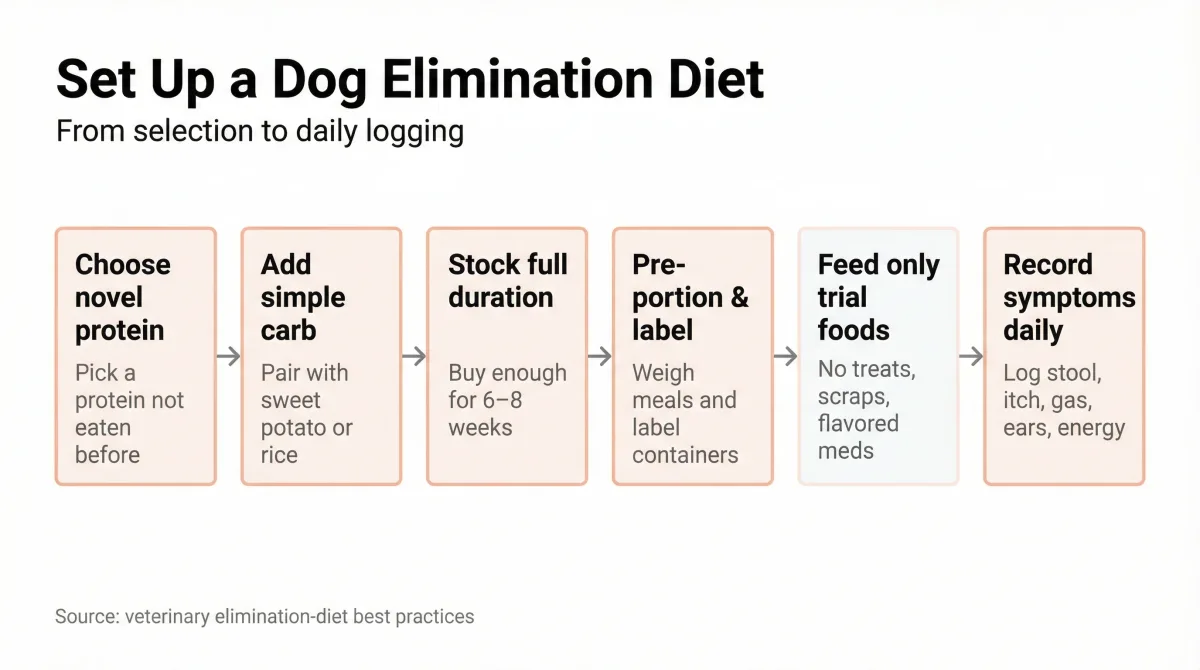
Here's how to actually run one:
- Pick a single novel protein your dog has never eaten, like duck, venison, or rabbit. Or use a hydrolyzed protein diet, where the protein is broken down small enough that the immune system can't recognize it.
- Feed only that food for 8, 12 weeks. Nothing else. No treats, no table scraps, no flavored medications, no dental chews, no fish oil with chicken flavoring.
- Watch for a 50% or greater improvement in itching by week 8 to 12. If you see it, the next step is a controlled reintroduction to identify the trigger.
- During reintroduction, add one protein source back for 1 to 2 weeks at a time. Watch for itching flare. This tells you what the dog can and can't eat going forward.
Common ways owners break the trial:
- Giving heartworm or flea preventatives in flavored form, which contains animal protein
- Letting kids or other family members feed scraps
- Using flavored toothpaste or dental treats
- Stopping at week 4 because "nothing changed," when most dogs need the full 8 weeks
If you're not committed to strict feeding, don't bother running the trial. A failed elimination diet tells you nothing useful and wastes 3 months.
At-Home Management That Actually Helps (and What's a Waste of Time)
Once diagnosis is underway, several at-home steps make a measurable difference. Some popular suggestions don't.
What helps:
- Frequent bathing with a gentle, moisturizing shampoo. Washes allergens off the coat and skin. Chlorhexidine-based options help with secondary infections.
- Wiping paws and belly after outdoor walks. Removes pollen before it absorbs through the skin.
- HEPA air purifiers in main rooms. Reduces indoor airborne allergens like dust mites and mold spores.
- Omega-3 fatty acid supplements. EPA and DHA at appropriate doses have a mild anti-inflammatory effect. Look for marine oil supplements with labeled EPA and DHA amounts.
- Washable dog beds and frequent hot-water washing. Kills dust mites in fabric the dog lies on.
What's mostly a waste:
- Switching to a grain-free diet without running an elimination trial (grain allergy is rare in dogs)
- Coconut oil topically (no real evidence for canine allergy relief)
- Apple cider vinegar rinses (can irritate broken skin)
- Over-the-counter "allergy support" chews with vague ingredient lists
The at-home stuff rarely fixes allergy by itself. It's a layer on top of medical management, not a substitute.
Antihistamines for Dogs: When They Work and When They Don't
Antihistamines are the first thing owners try because they're cheap and available without a prescription. The honest picture is that they work in a minority of dogs.
Benadryl (diphenhydramine), Zyrtec (cetirizine), and Claritin (loratadine) are the most common. Veterinary pharmacologists generally consider cetirizine and loratadine safer for long-term use than diphenhydramine because they cause less sedation.
Reality check:
- Antihistamines work best as a preventive, before the itch cycle ramps up. They don't do much once a dog is in full flare.
- Effectiveness estimates from clinical reports range from 10% to 30% of dogs. That means most dogs see no meaningful improvement.
- They're safe enough to try, but don't expect them to replace Apoquel or Cytopoint for moderate to severe cases.
- Never use formulations with pseudoephedrine or xylitol. Both are toxic to dogs.
If your dog does respond to antihistamines, that's a win. If not, you're not doing anything wrong, it's just the biology.
Apoquel vs Cytopoint: Choosing the Right Prescription Option
For atopic dermatitis that needs real intervention, Apoquel and Cytopoint are the two prescription options most vets reach for. They work differently and fit different lifestyles.

Apoquel (oclacitinib). A daily oral tablet that blocks itch signaling at the JAK enzyme level. Starts working within 4 hours in most dogs. Approved for dogs over 12 months of age.
Manufacturer data confirms a strong safety profile for long-term daily use.
Cytopoint (lokivetmab). A monoclonal antibody injection given every 4 to 8 weeks. Targets IL-31, the specific itch cytokine in dogs. No daily pills to forget.
Not metabolized through the liver or kidneys, which matters for dogs with other health issues.
| Feature | Apoquel | Cytopoint |
|---|---|---|
| Format | Daily oral tablet | Injection at vet |
| Onset | ~4 hours | 24 to 48 hours |
| Frequency | Daily | Every 4–8 weeks |
| Best for | Owners comfortable giving daily meds | Owners who can't pill or want fewer dosing moments |
| Approved age | 12 months and up | 12 months and up |
Both are prescription-only. A vet will usually pick one based on the dog's health history, the owner's lifestyle, and cost. Apoquel retail typically runs $60 to $150 per month depending on dog size.
Cytopoint averages $65 to $200 per injection. Neither is a cure. They manage itch while you address the underlying cause or pursue immunotherapy.
For dogs who don't respond to either, allergen immunotherapy is usually the next step.
Allergen Immunotherapy (Allergy Shots): The Long Game
Allergen immunotherapy is the only treatment that addresses the underlying immune response rather than just suppressing itch. Veterinary dermatology sources report success rates around 60, 80%, defined as a meaningful reduction in symptoms, though full remission is less common.
The process starts with allergy testing to identify specific triggers. A custom serum is formulated containing those allergens at gradually increasing doses. Owners administer injections at home every few days, with dose adjustments over months.
Sublingual (oral) immunotherapy exists as well, mainly through veterinary dermatology specialists.
The trade-off is time. Most dogs need 6 to 12 months before improvement shows up. Cost runs roughly $300 to $800 for the initial serum, with ongoing refill expenses.
It's the right choice for young dogs facing lifelong allergy, for owners who want to reduce medication dependency, and for dogs whose triggers are well-defined through testing.
Immunotherapy doesn't replace other management during the ramp-up. Most dogs stay on Apoquel or Cytopoint for the first year while the immune system recalibrates.
Costs and What to Expect Long-Term
Allergy management in dogs is a long-term financial commitment, not a one-time fix. Knowing the rough cost ranges helps you plan and avoid sticker shock at the vet.
| Item | Typical Cost (USD) | Frequency |
|---|---|---|
| Apoquel | $60 to $150 | Monthly |
| Cytopoint injection | $65 to $200 | Every 4 to 8 weeks |
| Allergen immunotherapy serum | $300 to $800 initial | Refills every 6 to 12 months |
| Veterinary dermatologist consult | $200 to $400 | Initial visit |
| Elimination diet (hydrolyzed) | $60 to $120 | Monthly during trial |
| Intradermal skin testing | $300 to $600 | One-time |
Add routine vet visits, ear infection treatments, and skin cytology costs, and a moderate allergy dog can run $1,200 to $2,500 per year. Severe cases with secondary infections climb higher. Pet insurance that covers pre-existing conditions is rare, so most of this is out of pocket.
Some manufacturers offer rebates on Apoquel and Cytopoint that shave 10 to 30 percent off, worth asking your vet about.
Mistakes Owners Make That Make Allergies Worse
Most allergy management failures are owner-driven, not medication-driven. These are the patterns we see repeatedly in veterinary dermatology referrals.
- Stopping flea prevention seasonally. Indoor fleas survive winter in most climates.
- Running a sloppy elimination diet. One treat ruins the whole 8-week trial.
- Bathing too often with harsh shampoo, which strips the skin barrier and increases allergen absorption.
- Using human antihistamines without confirming the formulation is dog-safe. Some contain xylitol or decongestants that are toxic.
- Assuming grain-free food fixes allergies. True food allergy in dogs is almost always protein-based, not grain-based.
- Waiting too long between flare and vet visit. Secondary infections are far more expensive to treat than early intervention.
- Giving Apoquel or Cytopoint without addressing fleas first. You can't out-medicate an untreated flea allergy.
When You Need a Veterinary Dermatologist (Not Just Your Regular Vet)
Your primary vet handles most canine allergy cases. A board-certified veterinary dermatologist is the next step when the case stops responding to standard care.
Refer out if your dog has had more than two ear infections in a year, if Apoquel and Cytopoint both fail to control symptoms, if skin infections keep coming back despite treatment, or if the working diagnosis keeps changing. A dermatologist brings intradermal skin testing, customized immunotherapy, advanced biopsy interpretation, and access to drugs your general vet may not stock.
The American College of Veterinary Dermatology maintains a directory of board-certified specialists. Expect a referral appointment to cost $200 to $400 for the initial consult, but the diagnostic clarity often saves money over the long run.
Foods and Treats That Quietly Sabotage an Elimination Diet
The single biggest reason elimination diets fail is hidden animal protein sneaking in through "approved" channels. Owners are strict about kibble but overlook everything else.
Watch out for:
- Flavored heartworm preventatives (some contain pork or beef)
- Flavored NSAIDs or other medications
- Fish oil or omega-3 chews with chicken or beef flavoring
- Dental chews, even "natural" ones, usually contain multiple proteins
- Probiotic pastes with animal-derived flavoring
- Toothpaste, even pet-specific, often contains poultry or beef derivatives
During the trial, every edible thing the dog consumes has to be accounted for. Talk to your vet about switching to unflavored preventatives and medications. If a medication only comes flavored, that doesn't disqualify the trial, but it has to be the same product the whole time so the variable stays constant.
Seasonal vs Year-Round Allergies: Adjusting the Plan
Seasonal allergies follow pollen cycles. Spring brings tree pollen, summer brings grass, and fall brings ragweed. Dogs in seasonal-atopy patterns often need medication only during their trigger window, which makes Cytopoint especially attractive since one injection can cover the worst weeks.
Year-round allergies point to indoor triggers (dust mites, mold) or food. These dogs need continuous management rather than seasonal dosing. Year-round cases also benefit more from immunotherapy, since avoiding an indoor allergen is much harder than avoiding a seasonal one.
Regional climate matters. Dogs in the humid Southeast US and Gulf Coast carry heavier mold and flea burdens. Dogs in the UK face longer grass pollen seasons than much of the US.
Indoor heating in winter can spike dust mite exposure even when outdoor allergens are low.
Red Flags That Mean "Go to the Vet Now"
Most allergy management can wait for a scheduled appointment. Some signs cannot.
- Sudden facial swelling or hives, which can signal anaphylaxis or acute allergic reaction
- Difficulty breathing, panting at rest, or blue gums
- A hot spot the size of a quarter or larger that's spreading within hours
- Repeated vomiting or bloody stool alongside skin symptoms
- Open wounds from scratching that are leaking pus or smell bad
- Lethargy plus fever, which suggests deeper infection
These aren't "watch and wait" situations. They need same-day or emergency veterinary care. Anaphylaxis in dogs is rare but real, and secondary skin infections can turn septic if left untreated.
Your 30-Day Action Plan for a Dog With Allergies
Here's a realistic sequence for owners starting from scratch:
- Week 1. Schedule a vet visit. Document when itching started, where on the body, and any pattern you notice. Start strict prescription flea prevention on every pet in the home.
- Week 2. Run the diagnostic workup. Skin scrape, cytology, fecal check, and discussion of whether to test for environmental allergens now or after a food trial.
- Weeks 3 to 12. Run an elimination diet if food allergy is on the table. Continue flea prevention. Begin bathing and paw-wipe routine. Add omega-3 supplementation.
- Weeks 4 to 6. If environmental allergy is the leading diagnosis, start Apoquel or Cytopoint to break the itch cycle. Discuss allergy testing for future immunotherapy.
- Month 2 onward. Reassess at the vet. If Apoquel or Cytopoint alone works, plan long-term dosing. If response is partial, refer to a dermatologist for intradermal testing and immunotherapy.
Allergy management is rarely a straight line. Expect flares, especially during seasonal peaks, and expect to adjust the plan as you go. The dogs who do best are the ones whose owners stay consistent with the boring parts (flea control, bathing, diet discipline) while staying flexible on the medical side.
Maintenance: Long-Term Management Without Burning Out
Allergy care is a marathon, not a sprint. The owners who get the best results build small, repeatable habits. Wipe paws after walks.
Bathe on a schedule your vet approves. Give preventatives year-round. Recheck with the vet at the first sign of a flare rather than waiting for a full-blown infection.
Track what works. A simple notebook or note on your phone with flare dates, new foods, and medication changes helps your vet adjust the plan faster. Allergy dogs often need a small dose adjustment before each pollen season, and that data makes it easier.
Expect setbacks even on a good plan. Pollen counts spike, new foods slip in, a flea preventative lapses. The goal isn't a perfect record, it's a fast response when something shifts.
Frequently Asked Questions
How long does it take for dog allergy treatment to work?
It depends on the treatment. Apoquel works within 4 hours for most dogs. Cytopoint takes 24 to 48 hours.
Elimination diets need 8 to 12 weeks. Allergen immunotherapy takes 6 to 12 months for meaningful improvement. Plan timelines accordingly and don't quit a treatment early.
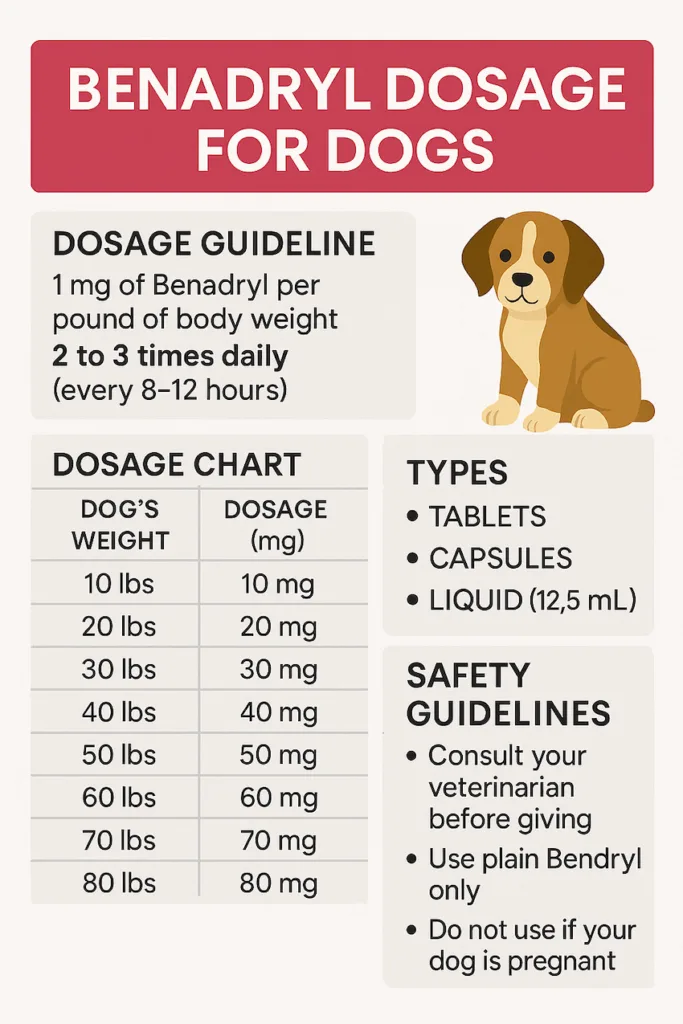
Can I give my dog Benadryl for allergies?
Benadryl (diphenhydramine) is sometimes used in dogs, but only under veterinary guidance. Use plain formulations without decongestants. Never use products with xylitol.
Most dogs get limited relief from antihistamines, so don't expect it to replace prescription options for moderate to severe allergy.
What is the best food for a dog with skin allergies?
There is no single best food. For suspected food allergy, the best food is the one used in a strict elimination trial, either a hydrolyzed protein diet or a novel protein the dog has never eaten. Long-term, feed whichever protein the dog tolerates without flaring.
Are dog allergies curable?
Environmental allergies are not curable but are manageable. Allergen immunotherapy can produce long-term remission in some dogs, but most need ongoing medication or immunotherapy lifelong. Food allergies resolve when the trigger protein is permanently removed from the diet.
How do I know if my dog has fleas if I can't see them?
Use a flea comb on the lower back and tail base, looking for black specks (flea dirt) that turn red when wet on a white paper towel. Many allergic dogs groom fleas away before you spot them. A therapeutic flea prevention trial for 8 to 12 weeks is the most reliable diagnostic.
When should I see a vet instead of trying home remedies?
See a vet if itching lasts more than a week, if there's hair loss or skin damage, if your dog has more than one ear infection per year, if home treatments don't help within 2 weeks, or if you see any of the red flag signs (swelling, breathing trouble, spreading hot spots).


One Comment