How to know if dog has food allergy
If your dog won't stop scratching, chewing their paws, or getting recurring ear infections, a food allergy might be the reason. Figuring out how to know if dog has food allergy isn't a quick blood test or a five-minute vet visit. It takes real detective work, mostly because the symptoms look almost identical to environmental allergies, flea allergies, and plain old food intolerances.
Most dog owners we talk to have already tried a few things (a different kibble, a "hypoallergenic" bag from the pet store) before landing on the actual diagnostic path.
The only proven way to confirm a food allergy in dogs is a strict elimination diet trial lasting 8 to 12 weeks, followed by a structured challenge phase. Research from the American College of Veterinary Dermatology confirms there's no reliable shortcut through blood, saliva, or hair tests. As of 2026, this gold-standard protocol hasn't changed, even with all the new "at-home allergy kits" on the market.
Here's how the process actually works, what to watch for, and where most owners go wrong.
Quick Answer
You can't confirm a dog food allergy with a blood or saliva test. The only reliable method is a strict 8 to 12 week elimination diet trial. Watch for chronic itching, recurring ear infections, paw licking, and GI issues like vomiting or diarrhea.
If symptoms clear during the trial and return on challenge, food allergy is confirmed. Always work with your vet on the protocol.
Why Food Allergies Are Overlooked (and Often Misdiagnosed)
Here's the frustrating part. Food allergies in dogs mimic a dozen other conditions, so most owners (and even some vets) chase the wrong thing first. We've seen dogs get months of antibiotics for "ear infections" when the real driver was a chicken-based diet.
We've seen others get steroid shots every spring for a "seasonal allergy" that never went away because chicken was still in the bowl year-round.
Veterinary dermatology research shows that roughly 10% of all canine allergy cases are food-related. That number is lower than what most dog forums suggest, but it's still significant. The bigger issue isn't how common food allergies are.
It's how often they get missed.
Three reasons food allergies slip through the cracks:
- Symptoms overlap with environmental allergies. Atopic dermatitis (pollen, dust, mold allergies) looks nearly identical on the skin. Red belly, itchy paws, ear gunk. Without a structured test, you can't tell them apart by looking.
- Blood and saliva tests are unreliable for food. Per the American College of Veterinary Dermatology, serum IgE and saliva-based tests have poor sensitivity and specificity for food allergens in dogs. They generate false positives and false negatives at high rates.
- Most dogs have eaten the trigger protein for years. Dogs typically need at least one continuous exposure (often longer) before a food allergy develops. So a dog that's eaten chicken since puppyhood can suddenly react at age 3 or 5. The diet feels "normal," which tricks owners into ruling it out.
If you've been treating chronic skin or ear issues without a real answer, food deserves a proper look.
The Most Common Signs of Food Allergy in Dogs
Food allergies in dogs show up in two main ways: skin problems and digestive problems. Sometimes you get both. Sometimes just one.
The pattern matters more than any single symptom.
Skin Symptoms
- Non-seasonal itching that doesn't follow a pollen calendar
- Chronic ear infections (yeast or bacterial) that keep coming back
- Paw licking and chewing, especially between the toes
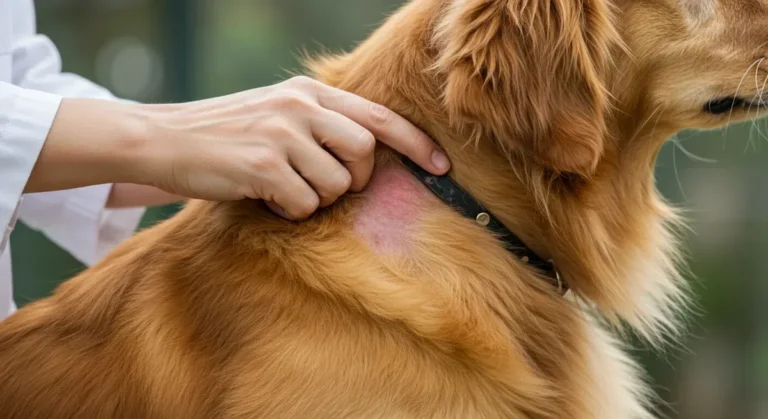
- Red, inflamed belly, groin, or armpit areas
- Hot spots that heal and return
- Facial rubbing against furniture or carpet
Digestive Symptoms
- Chronic loose stool or diarrhea
- Intermittent vomiting, often undigested food
- Excessive gas
- Frequent bowel movements (more than 3-4 per day)
- Scooting that doesn't resolve with anal gland care
What the Research Shows
The most common food allergens in dogs, based on dermatology case data, are:
| Allergen | Common Source |
|---|---|
| Beef | Most dry kibble, many treats |
| Dairy | Cheese, yogurt, milk-based treats |
| Chicken | Standard poultry-based kibble |
| Wheat | Grain-inclusive formulas, some treats |
| Egg | Baked treats, some kibble binders |
| Lamb | Often in "sensitive" formulas |
| Soy | Plant-protein boosters in kibble |
Note that chicken and beef top the list, which matters because they're the most common proteins in mainstream dog food. The more a dog eats one protein, the higher the chance of sensitization over time.
If your dog shows non-seasonal itching plus any GI sign, food allergy moves up the suspicion list fast.
Food Allergy vs. Food Intolerance vs. Environmental Allergy
This is the part that trips up almost everyone. Three different problems, three different causes, three different fixes. Mixing them up leads to wasted time and money.
| Condition | Cause | Typical Symptoms | How to Diagnose |
|---|---|---|---|
| Food allergy | Immune system reacting to a protein | Itching, ear infections, vomiting, diarrhea | 8-12 week elimination diet |
| Food intolerance | Digestive system can't process an ingredient | Gas, loose stool, bloating, no itching | Trial of different diet, no immune test |
| Environmental allergy (atopy) | Immune reaction to pollen, dust, mold | Seasonal itching, paw chewing, ear issues | Skin or serum testing, rule out food first |
A few practical ways to tell them apart before you commit to a full elimination trial:
- Seasonal pattern suggests environment. If symptoms clear in winter and flare in spring or fall, pollen or mold is more likely. Food allergies don't follow a calendar.
- Year-round symptoms with no seasonal shift point toward food or a chronic irritant.
- Sudden onset after years on the same diet is a classic food allergy pattern. Intolerances often show up sooner.
- Response to a diet change without a strict trial is unreliable. Many dogs improve on a new kibble because of the placebo effect on the owner, or because the new food has anti-inflammatory omega-3s.
Per the WSAVA nutritional guidelines, an elimination diet trial is the only method with proven diagnostic accuracy. If your vet skips this step, ask why.
Breeds and Life Stages Most Affected by Food Allergies
Food allergies can hit any dog, but some patterns show up clearly in the clinical data. Purebred dogs in general show higher rates of allergic disease, including food allergy, than mixed-breed dogs. A few breeds appear over and over in dermatology case logs.
Breeds with higher reported rates of food allergy:
- French Bulldogs
- Labrador Retrievers
- Golden Retrievers
- Cocker Spaniels
- German Shepherds
- West Highland White Terriers
- Boxers
- Shar-Peis
Age matters too. Most dogs with food allergies start showing symptoms between 6 months and 3 years of age. Dogs that suddenly develop "allergy-like" symptoms after years of stable health should raise food allergy suspicion, especially if no new environmental exposures line up with the timing.
Puppies under 6 months can also have food allergies, though it's less common. When very young dogs show chronic itching or GI upset, your vet may also want to rule out parasites, mange, and congenital skin conditions before committing to an elimination trial.
There's no reliable way to predict food allergy from breed alone. A French Bulldog can eat chicken for years without issue. A mixed-breed mutt can react to beef by 8 months.
Use the breed data as one clue among many, not a rule.

The Elimination Diet: The Only Reliable Way to Diagnose a Food Allergy
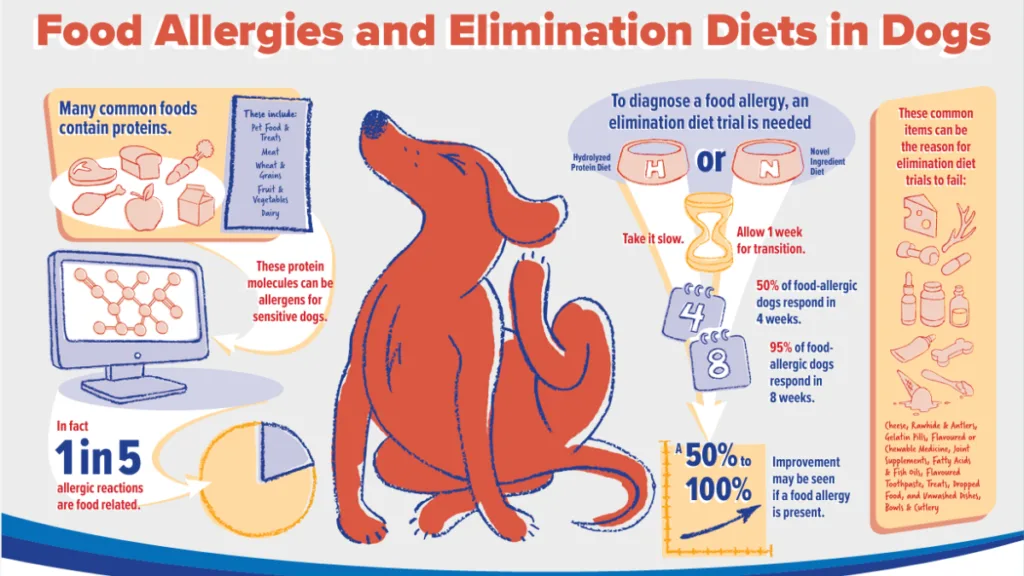
If you take one thing from this article, make it this: the elimination diet trial is the only diagnostic method with proven accuracy for canine food allergy. Everything else (blood, saliva, hair, muscle testing) is either unreliable or unproven.
Here's the basic structure of the trial, drawn from current veterinary dermatology protocols:
Phase 1: The Elimination Period (8-12 Weeks)
- Pick a diet your dog has never eaten before, or a hydrolyzed protein formula.
- Feed only that diet. No treats. No table scraps. No flavored medications.
- Watch for symptom improvement, usually by week 4-6 if food is the trigger.
- Run the full 8-12 weeks even if symptoms clear early. Partial trials miss things.
Phase 2: The Challenge Period (1-2 Weeks Per Ingredient)
- Reintroduce one suspected ingredient at a time.
- Watch closely for symptom return over 7-14 days.
- If symptoms come back, that ingredient is a confirmed trigger.
- If nothing happens after two weeks, that ingredient is likely safe.
Phase 3: Long-Term Maintenance
- Build a permanent diet around the proteins your dog tolerates.
- Avoid confirmed triggers strictly.
- Recheck periodically, as some dogs develop new sensitivities over time.
Why so strict? Even tiny amounts of the trigger protein can keep symptoms alive. A single treat with chicken meal can reset the trial.
This is where most home trials fail, because owners don't realize how many hidden sources exist.
Common hidden sources of protein during elimination trials:
- Flavored heartworm preventatives
- Flavored antibiotics or pain meds
- Toothpaste and dental chews
- Pill pockets
- Fish oil capsules (often gelatin-based)
- Leftover food from other pets in the home
Your vet can help you identify and eliminate these before the trial starts.
Choosing the Right Elimination Diet: Hydrolyzed Protein vs. Novel Protein
Once you've committed to a trial, the next decision is which diet to use. Two main options exist, and each has pros and cons.
Hydrolyzed Protein Diets
Hydrolyzed protein is broken down into tiny fragments (typically under 10 kDa) so the immune system can't recognize the original protein. Even if your dog is allergic to chicken, hydrolyzed chicken won't trigger a reaction because the immune system can't "see" it as chicken anymore.
Pros:
- Works even if your dog has been exposed to many proteins over the years
- Available in prescription form through your vet
- Well-studied in peer-reviewed dermatology research
Cons:
- More expensive than standard kibble
- Prescription-only for the most reliable brands
- Some dogs refuse the taste at first
Novel Protein Diets
A novel protein is one your dog has never eaten before, like duck, venison, rabbit, or kangaroo. The idea is simple: if the immune system has never been exposed, it can't react.
Pros:
- Available without prescription
- Often less expensive than hydrolyzed formulas
- Easy to home-cook with vet guidance
Cons:
- Harder to find truly "novel" proteins if your dog has eaten many foods
- Cross-reactivity between similar proteins is possible
- Requires careful sourcing to avoid cross-contamination
Quick Decision Guide
| Situation | Best Choice |
|---|---|
| Dog has eaten many protein sources | Hydrolyzed protein |
| Budget is tight | Novel protein (with vet guidance) |
| Multi-dog home with shared food prep risk | Hydrolyzed protein |
| Dog refuses prescription kibble | Home-cooked novel protein under vet supervision |
| Puppy with suspected food allergy | Hydrolyzed (safer for growth) |
Work with your vet to choose. They can also point you to prescription brands with verified purity, which matters because some OTC "limited ingredient" foods have tested positive for unlisted proteins.

What Counts as "Strict" During an 8–12 Week Elimination Trial
"Strict" sounds simple, but it's the part that breaks most home trials. A single bite of the wrong protein can keep the immune system activated, which means your trial results become meaningless.
Here's what strict actually means in practice:
- One food source only. No mixing kibble brands. No adding toppers.
- Water only as a beverage. No milk, no broth unless it's matched to the trial protein.
- Medications reviewed. Many flavored pills contain beef, chicken, or pork. Ask your vet for unflavored alternatives.
- Treats replaced. Use the trial protein in homemade treat form (freeze-dried, baked, or just plain).
- Multi-dog homes managed carefully. Separate feeding stations prevent food theft.
- Kids and guests briefed. Grandparents slip treats. So do toddlers. Make sure everyone knows.
A common fail point: flavored toothpaste. Most dog toothpastes are poultry-flavored. Switch to an unflavored enzymatic formula or a plain trial-protein option during the trial.
If your dog shows improvement by week 4 but you stop the trial early, you've likely missed a partial trigger. Some dogs need the full 12 weeks to fully clear stored allergens from the skin and gut. Trust the timeline.
It's the single biggest factor in getting a clean answer.
The Challenge Phase: How to Confirm the Trigger
The challenge phase is where the answer becomes clear. You've done the work of stabilizing your dog on the elimination diet, and now you reintroduce one ingredient at a time to see what happens.
How to Run a Single Challenge
- Pick one ingredient to test. Start with the most likely suspect (often chicken or beef).
- Add a small amount to the elimination diet. Cooked plain meat works best.
- Watch for symptom return over 7-14 days. Itching, ear gunk, loose stool.
- If symptoms return, that ingredient is a confirmed trigger. Stop it immediately.
- If no symptoms, wait 7-14 days, then challenge the next ingredient.
- Repeat until you've tested the major proteins.
What Symptom Return Looks Like
- Itching within 24-72 hours of reintroduction
- Ear scratching or head shaking
- Loose stool or mucus in stool
- Red patches on belly or paws
- Increased paw licking
The timeline matters. Some dogs react within hours. Others take 5-7 days.
If you see partial symptoms, keep watching. Mild reactions can build over a week.
Document everything. Take daily photos of any skin issues. Log stool quality.
Track appetite. When you're managing 3-4 challenges in a row, the data keeps you from second-guessing your results.
Pro tip: challenge ingredients one at a time, not combinations. If you feed chicken, beef, and wheat all at once and symptoms return, you don't know which one caused it. You'll have to redo the trial.
Slow is fast here.
Why Blood, Saliva, and Hair Tests Don't Work for Food Allergies
Walk into any pet store or search "dog food allergy test" online and you'll find dozens of kits. Saliva swabs. Hair samples.
At-home blood spot tests. Most of them promise to identify food sensitivities with a quick sample. Here's the hard truth: none of them have been validated for diagnosing food allergy in dogs.
Per the American College of Veterinary Dermatology, serum IgE testing for food allergens has poor diagnostic accuracy in dogs. False positives are common. False negatives are common.
Results often don't match what an elimination trial reveals.
Why These Tests Fail
- Saliva tests: No published peer-reviewed evidence supports their use for canine food allergy diagnosis.
- Hair tests: Same issue. No validated correlation between hair mineral content and food allergy.
- Blood IgE tests: They detect antibodies, but dogs can produce IgE to foods they tolerate without showing clinical signs. A positive result doesn't mean the food is causing symptoms.
What About Atopy (Environmental) Tests?
Blood and skin testing for environmental allergens (pollen, dust mites) is more reliable than food testing, but it's still imperfect. These are useful after food allergy has been ruled out, not as a first step.
The FDA Center for Veterinary Medicine has not approved any at-home food allergy test for dogs. The marketing is ahead of the science. Save your money for the elimination trial, which actually works.
If your vet offers a blood panel for food allergy, ask about its sensitivity and specificity. Most will admit the limitations once pressed. The elimination diet remains the gold standard, and it has been since long before these tests hit the market.
Mistakes Dog Owners Make When Suspecting a Food Allergy
Even well-meaning owners can sabotage a food allergy workup. After looking at hundreds of cases, the same errors show up again and again.
Switching Foods Mid-Trial
Switching kibble brands every few weeks resets the clock. Each new food needs 8-12 weeks to evaluate. Owners chasing the "right" bag often run through 4-5 foods in 6 months and learn nothing.
Trusting the Pet Store
Staff at general pet stores mean well, but most have no nutritional training. Recommendations like "try grain-free" or "this is great for sensitive skin" are marketing, not diagnosis. Grain-free diets also carry their own concerns per FDA reports on diet-associated dilated cardiomyopathy (DCM) in dogs.
Giving "Just a Little" of the Old Food
A tablespoon of forbidden kibble. A pill pocket. A lick of yogurt.
All of these can keep a trial contaminated. The immune system only needs a tiny exposure to stay activated.
Skipping the Challenge Phase
Owners often stop after seeing symptom improvement on the elimination diet. That's only half the answer. Without the challenge, you don't know which specific protein caused the issue.
The next bag of food might still trigger symptoms.
Assuming One Allergy Only
Dogs with food allergies often react to more than one protein. A dog allergic to chicken may also react to beef or egg. The challenge phase reveals the full picture.
Waiting Too Long to See a Specialist
If your regular vet has run the trial and you're still stuck, ask for a referral to a veterinary dermatologist. Board-certified specialists have the tools and experience to manage complex cases. Waiting years to escalate care wastes time your dog doesn't have.
Avoid these mistakes and your trial has a much better chance of giving you a clear, actionable answer.
When to See a Veterinary Dermatologist (and What to Expect)
Most food allergy cases can be managed by a general practice vet. But there are clear signs you need a specialist.
When to Escalate
- Symptoms didn't improve after a properly run 8-12 week trial
- Your dog is on multiple medications and still symptomatic
- Recurring ear infections that need monthly treatment
- Skin infections that keep coming back despite antibiotics
- You can't get a clean trial because of multi-dog or family logistics
A board-certified veterinary dermatologist has advanced training in allergic skin disease. They can run more refined trials, manage secondary infections more effectively, and rule out lookalike conditions like atopic dermatitis, mange, or autoimmune skin disease.
What the First Visit Looks Like
Expect a detailed history (often 30-60 minutes). The dermatologist will ask about diet history, treat history, environmental exposures, and the timeline of symptoms. Bring any food logs, photos of flare-ups, and prior lab work.
From there, they'll likely recommend a structured elimination trial (if you haven't already done one), skin cytology to check for secondary infections, and possibly intradermal skin testing for environmental allergens once food is ruled out.
Cost varies by region, but expect $300-600 for the initial consultation, plus the cost of the elimination diet and follow-up visits. Insurance plans like Trupanion or Healthy Paws often cover dermatology if you have a policy in place before symptoms start.
If your dog's quality of life is suffering, escalation is worth it. Chronic itching and recurrent infections affect sleep, behavior, and overall health. A specialist can often get things under control in weeks when primary care has stalled for months.
Long-Term Feeding Plan After a Food Allergy Diagnosis
Once you've identified the trigger (or triggers), the rest is management. Most dogs do great on a long-term diet that simply avoids the confirmed allergen.
Building a Safe Permanent Diet
- Choose a commercial food that doesn't contain any of the confirmed triggers. Read every label.
- Avoid rotational feeding if your dog has multiple confirmed triggers. Stick to one safe protein source long-term.
- Watch for cross-contamination in manufacturing. Some brands run multiple proteins on shared lines. Look for "limited ingredient" or single-protein formulas from companies with documented quality control.
- Use safe treats only. Single-ingredient freeze-dried meat, plain cooked vegetables, or commercial treats matched to the safe protein.
Does My Dog Need to Stay on Prescription Food Forever?
Not always. If your dog's triggers are uncommon (like venison or kangaroo), an OTC formula may work. If triggers include chicken and beef (the two most common proteins), a prescription hydrolyzed diet is often the easiest long-term solution.
Hydrolyzed foods are complete and balanced, so they meet AAFCO nutritional standards for maintenance.
Can Dogs Outgrow Food Allergies?
Rarely. Most food allergies are lifelong. A small number of dogs seem to develop tolerance over time, but this isn't predictable.
Plan for long-term avoidance.
What About New Allergies Developing?
Yes, this happens. A dog allergic to chicken can develop a new allergy to fish or egg years later. Watch for symptom return and run a new trial if needed.
Per the WSAVA Global Nutrition Guidelines, any long-term elimination diet should be reviewed periodically for nutritional completeness, especially in growing puppies or dogs with other health conditions.
A solid long-term plan keeps the diagnosis you worked hard to get from unraveling. Stay consistent, label-read every purchase, and check in with your vet annually.
Cost of Diagnosing and Managing a Dog's Food Allergy
The full process isn't cheap, but it's predictable. Here's what to budget for in a typical U.S. market as of 2026.
| Item | Estimated Cost (USD) | Notes |
|---|---|---|
| Initial vet consultation | $75-150 | Standard office visit |
| Elimination diet (prescription hydrolyzed, 12 weeks) | $120-300 | Depends on dog size |
| Novel protein trial (OTC, 12 weeks) | $80-200 | Often cheaper option |
| Follow-up vet visits (2-3) | $150-450 | Spread over 3-4 months |
| Veterinary dermatologist consultation | $300-600 | Only if escalated |
| Long-term prescription food (yearly) | $500-1,200 | Varies with dog size |
| OTC safe food (yearly) | $300-700 | If novel protein works |
Add in treat costs and any flavored medication swaps, and you're looking at a realistic $600-1,500 for the first year, depending on which path you take.
Pet insurance can offset much of this if you enroll before symptoms start. Most plans cover diagnostics and prescription food once a condition is documented. If you don't have insurance, ask your vet about payment plans or manufacturer rebates on prescription diets.
Royal Canin, Hill's, and Purina all run occasional rebate programs.
The cost of getting it right is real but finite. The cost of mismanaging food allergy (years of meds, repeated infections, emergency vet visits) is usually much higher in the long run.
Real Scenarios: How Food Allergy Diagnosis Plays Out
A typical case: a 4-year-old Labrador with year-round paw chewing and two ear infections in six months. Symptom timeline doesn't match pollen seasons. Owner runs a 10-week hydrolyzed diet trial.
Ear infections stop. Paw chewing drops by week 6. Challenge phase confirms chicken as the trigger.
Long-term hydrolyzed food keeps the dog symptom-free.
Tougher case: a 2-year-old French Bulldog with chronic diarrhea and intermittent itching. Two elimination trials, partial improvement both times. Switched to a home-cooked novel protein under veterinary nutritionist guidance.
Final diagnosis: chicken and egg allergy with secondary environmental atopy. Managed with combined diet control and seasonal medication.
These aren't guarantees, but they show the range. Most dogs respond well when the trial is run properly. A smaller group needs both diet work and environmental allergy management.
Either way, the process is the same: rule food in or out first, then deal with whatever's left.
Frequently Asked Questions
How long does it take to know if a dog has a food allergy?
A properly run elimination diet trial takes 8 to 12 weeks, followed by a 1-2 week per ingredient challenge phase. Total diagnostic time is usually 4-6 months from start to confirmed trigger.
Can a dog suddenly develop a food allergy?
Yes. Dogs typically need at least one year of exposure to a protein before showing clinical signs, so a food eaten since puppyhood can trigger symptoms at any age. Sudden onset in adult dogs is a classic food allergy pattern.
Are grain-free diets better for dogs with food allergies?
Not necessarily. Most canine food allergies are to animal proteins (beef, chicken, dairy), not grains. Grain-free diets also carry potential cardiac concerns per FDA reports on diet-associated DCM.
Work with your vet to identify the actual trigger.
Can I use an at-home food allergy test for my dog?
No reliable at-home test exists for canine food allergy. Saliva, hair, and most blood spot tests have not been validated through peer-reviewed research. An elimination diet trial is the only method with proven accuracy.
What's the difference between a food allergy and a food sensitivity in dogs?
A food allergy involves the immune system and often shows up as skin or ear issues. A food sensitivity or intolerance is a digestive reaction without immune involvement. Both require a diet change but have different diagnostic paths.