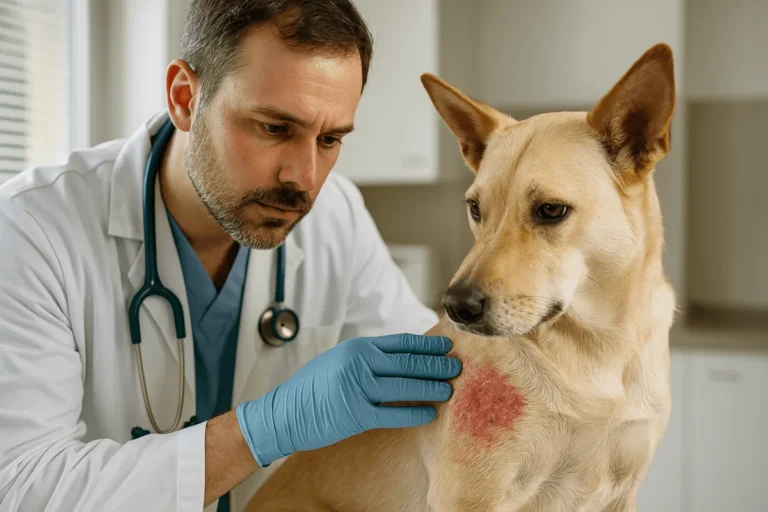
How to treat dogs with allergies naturally: Best guide
If your dog is scratching nonstop, licking their paws raw, or shaking their head like something's wrong, you're probably searching for a softer way to help. That's exactly why we put this guide together. Here's how to treat dogs with allergies naturally, using methods backed by veterinary research, owner experience, and published guidelines, not internet folklore.
Natural allergy care works best when you know what you're treating and when it's safe to skip medication. According to the American College of Veterinary Dermatology, roughly 10, 15% of dogs develop some form of allergic skin disease, with many showing first signs between 6 months and 3 years of age. We'll walk through what actually works, what's risky, and when it's time to call your vet.
Quick Answer
You can treat dogs with allergies naturally by combining omega-3 fatty acids, quercetin, coconut oil, probiotics, and a strict elimination diet. Always start with a vet diagnosis. Bathing with hypoallergenic shampoo and reducing indoor allergens helps too.
Natural methods typically take 4 to 8 weeks to show full results.
Why Treating Dog Allergies Naturally Requires Real Caution
Natural doesn't mean risk-free, and this matters more than most owners realize. Every remedy on this list has a real upside, but also a real ceiling, and a wrong dose or wrong assumption can leave your dog suffering while you wait for an "all-natural miracle" that never shows up.
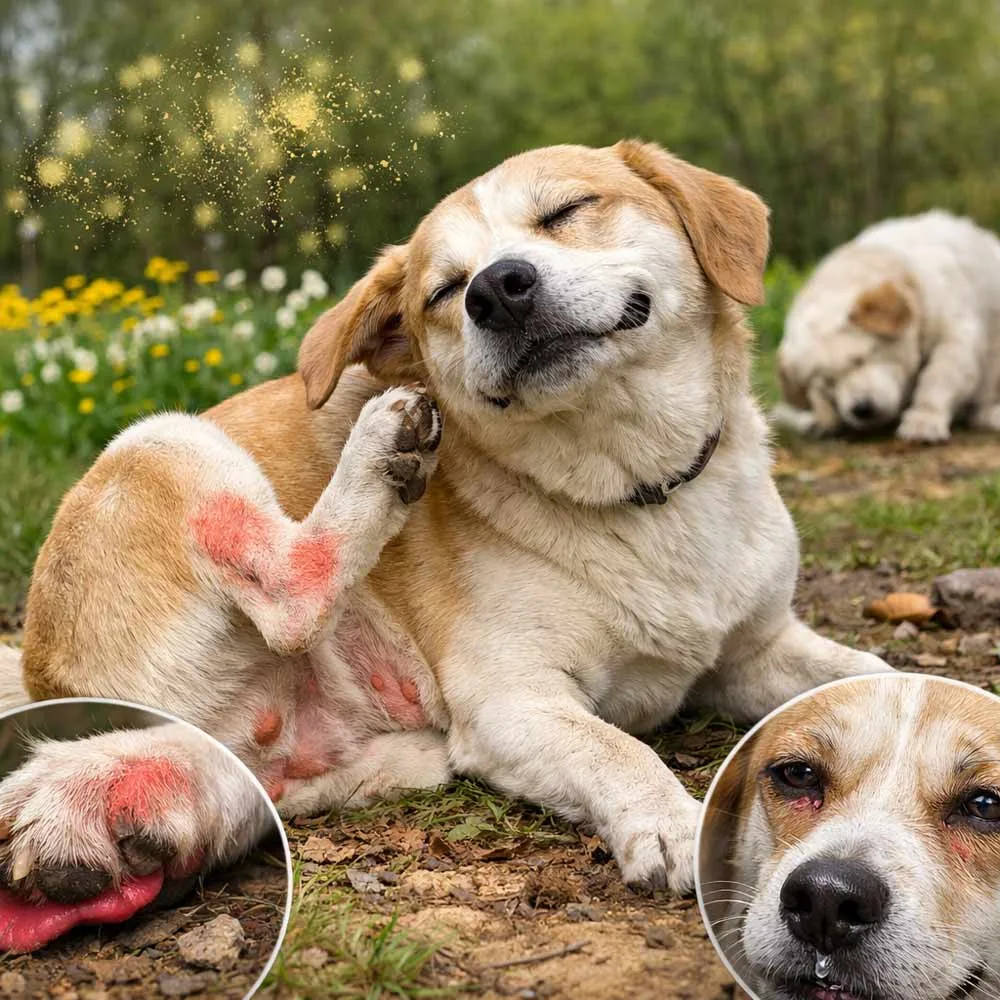
The biggest danger isn't the supplements themselves. It's the delay. Owners try quercetin and honey for two weeks, see no change, and assume "natural just doesn't work." Meanwhile, the itch-scratch cycle has broken the skin barrier and invited a secondary bacterial infection that needs antibiotics.
The remedy wasn't wrong. The plan was.
A second hidden risk is misdiagnosis. You can give the perfect omega-3 dose every day, but if your dog's itching is caused by flea saliva (and 1 in 4 allergic dogs reacts to fleas first), no supplement will fix it. Flea control has to come before anything else, every single time, year-round in most climates.
Third, "natural" gets treated as a magic word, and the internet is full of advice that crosses the line from helpful to harmful. Tea tree oil, undiluted essential oils, high-dose garlic, and certain herbal blends can be toxic to dogs, especially small breeds. We're going to flag those clearly so you know what to avoid and why.
Finally, as of 2026, the consensus among veterinary dermatologists is that integrative care (natural methods alongside, not instead of, conventional medicine when needed) produces the best long-term outcomes. Your job isn't to choose a side. It's to stack smart, safe choices that reduce your dog's reliance on heavy medication over time.
What Actually Counts as a "Natural" Allergy Treatment for Dogs
Let's get clear on what this term means in real veterinary practice, because the marketing version and the working version are not the same thing.
In a clinical sense, "natural" allergy treatment covers anything outside prescription pharmaceuticals. That includes supplements, diet changes, topical botanicals, environmental control, and behavioral or grooming routines. It does not mean unproven.
Some natural interventions have peer-reviewed studies behind them. Others are mostly tradition. We'll be honest about which is which.
Here's a working framework that helps most owners think about this clearly:
| Category | Examples | Evidence Level | Best Used For |
|---|---|---|---|
| Nutrient supplements | Omega-3 fish oil, quercetin, colostrum | Strong for omega-3, moderate for quercetin | Reducing inflammatory response |
| Topical botanicals | Coconut oil, oatmeal soaks, aloe vera | Moderate | Soothing inflamed skin and paws |
| Diet changes | Elimination diets, hypoallergenic proteins | Strong for food allergy diagnosis | Identifying food triggers |
| Environmental control | HEPA filters, frequent bathing, paw rinses | Strong | Reducing daily allergen load |
| Fermented and whole foods | Probiotics, local raw honey | Moderate | Immune modulation, seasonal tolerance |
What does NOT count as safe natural treatment: essential oils applied neat, "natural" flea collars with essential oil blends, high-dose garlic, and homemade herbal tinctures without veterinary guidance. We'll come back to these in the safety section.
The Three Main Allergy Types and Why the Right One Changes Everything
Every natural protocol starts with knowing which allergy you're targeting. Get this wrong, and even the best routine wastes time.
Environmental Allergies (Atopic Dermatitis)
This is the most common form. Dogs react to tree pollen, grass pollen, dust mites, or mold spores. Symptoms usually show up seasonally at first, then often become year-round as the dog ages.
The itch typically hits the paws, belly, face, and ears.
Environmental allergies respond best to a layered natural protocol: omega-3s, regular bathing, paw rinses after walks, air filtration indoors, and quercetin during peak seasons. Prescription options like Apoquel or Cytopoint can be used short-term while you build up the natural foundation.
Food Allergies and Sensitivities
True food allergies involve an immune response, usually to a specific protein like chicken, beef, or dairy. Sensitivities are milder and harder to pin down. Either way, you cannot fix this with supplements alone.
You have to change the diet.
An elimination diet is the gold standard for diagnosis: 8 to 12 weeks on a single novel or hydrolyzed protein, with no other food, treats, or flavored medications. If symptoms improve, you reintroduce old ingredients one at a time. That's how you find the real trigger.
Flea Allergy Dermatitis (FAD)
A single flea bite can set off a week-long itch reaction in a sensitive dog. This is technically an environmental allergy, but it deserves its own category because the fix is mechanical: kill the fleas and keep them gone.
If your dog has FAD and you skip flea control, nothing else will work. Natural methods support recovery, but they don't replace year-round flea prevention in most climates.
Signs Your Dog's Itching Is Allergy-Related (and Not Something Else)
Not every itch is an allergy. Look for patterns:
- Repeated scratching at the same body areas (paws, ears, belly, groin)
- Recurring ear infections or head shaking
- Red or stained paws from constant licking
- Seasonal flares that line up with pollen counts
- Digestive signs like loose stool alongside skin symptoms
If the itch is sudden, severe, or paired with vomiting or swelling, that's not an allergy plan situation. Head to the vet.
When Natural Care Makes Sense and When You Need a Vet First
Here's a decision tree most owners find useful:
If your dog has mild to moderate itching, no open wounds, no ear infections, and is otherwise healthy:
- You can start a natural plan while scheduling a vet visit for proper diagnosis.
- Begin omega-3 supplementation, increase bathing frequency, and address flea control.
If your dog has open sores, hot spots, recurrent ear infections, or constant scratching that disturbs sleep:
- See the vet first.
- These signs usually mean the skin barrier is broken and a secondary infection is brewing.
- Natural support helps, but antibiotics or prescription anti-inflammatories may be needed to break the cycle.
If your dog has facial swelling, hives, vomiting, or sudden collapse:
- This is an emergency.
- Go to the vet immediately. Natural methods do not address anaphylaxis.
If you're considering a fully homemade or raw elimination diet:
- Run it by your vet or a veterinary nutritionist.
- Per AAFCO guidelines, homemade diets need to be complete and balanced for long-term feeding, otherwise you'll trade allergies for malnutrition.
The general rule: natural care is for managing and reducing flare-ups over time. Acute, severe, or unusual symptoms need professional diagnosis first, every time.
Safe Natural Remedies for Dog Allergies That Have Real Evidence Behind Them
Now we get into the actual toolkit. These are the interventions with the most consistent results across studies and owner reports. Each one works best when used as part of a stacked plan, not as a solo fix.
Omega-3 Fatty Acids: The Foundation
If you do one thing, do this. Omega-3s (specifically EPA and DHA from marine oils) reduce inflammatory cytokines in the skin and improve the lipid barrier. Published research in journals like Veterinary Dermatology shows measurable improvement in itch scores after 6 to 12 weeks of consistent dosing.
Typical starting dose is 50 to 75 mg of combined EPA and DHA per kilogram of body weight daily. For a 10 kg dog, that's roughly 500 to 750 mg of EPA+DHA per day. Use a high-quality cold-pressed fish oil or a triglyceride-form algae oil if your dog is allergic to fish.
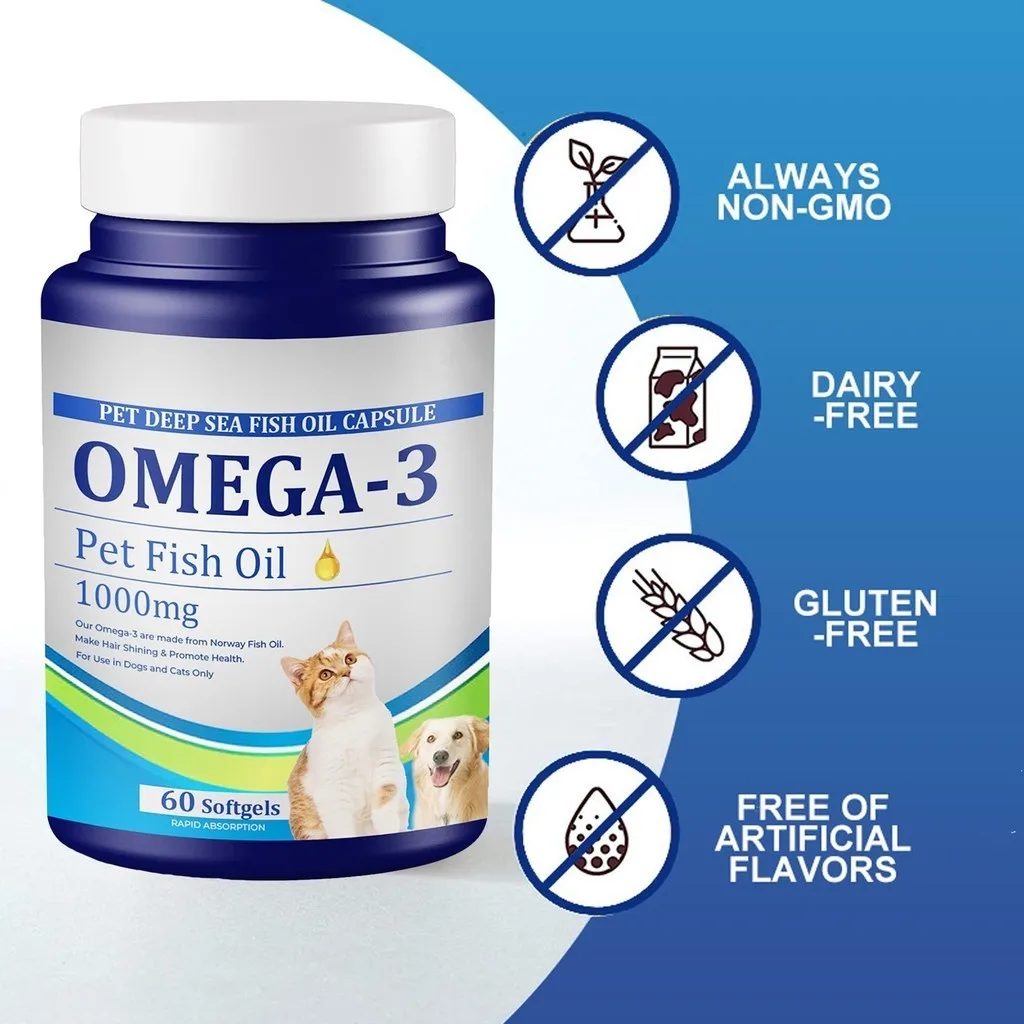
Build the dose up over 1 to 2 weeks to avoid loose stools. Refrigerate the bottle. Check the label for actual EPA and DHA amounts, not just "fish oil 1000 mg," because the active omega-3 content is usually much lower than the total oil weight.
Quercetin: Nature's Antihistamine
Quercetin is a bioflavonoid found in apples, berries, and onions (though you should never give your dog onions directly). It works by stabilizing mast cells, the same cells that release histamine during an allergic response.
The commonly cited canine dose is 5 to 10 mg per pound of body weight, twice daily, ideally given with a small amount of food to improve absorption. Look for a quercetin supplement that includes bromelain, which improves bioavailability.
Expect 2 to 4 weeks of consistent dosing before you see a clear difference. Quercetin is best started before peak allergy season, not after symptoms peak.
Coconut Oil for Skin and Coat
Coconut oil has two real uses for allergic dogs: internal anti-inflammatory support and topical skin barrier repair. The lauric acid content gives it mild antibacterial properties, which can help prevent secondary infections on hot spots or irritated paws.
For internal use, start at 1 teaspoon per 10 pounds of body weight per day. Too much too fast causes digestive upset, so ramp up over a week. For topical use, apply a thin layer to dry, flaky, or mildly irritated areas.
Skip it on raw or weeping skin, where it can trap moisture and slow healing.
Use cold-pressed, unrefined coconut oil. Refined versions have less of the active compounds that matter.
Local Raw Honey for Pollen Exposure
The theory is sound: small daily exposure to local pollen through honey helps the immune system build tolerance, similar in concept to allergy shots. The catch is that the honey has to be raw and produced within roughly 50 miles of where your dog lives, otherwise the pollen profile won't match.
Typical dosing runs from 1 teaspoon per day for small dogs up to 1 tablespoon for large dogs. Mix it into food or offer it on a spoon. Honey is not appropriate for diabetic dogs or puppies under 1 year.
Honey works best as a seasonal prep, started 4 to 6 weeks before pollen season ramps up in your region.
Probiotics and Gut-Immune Support
A meaningful chunk of the immune system lives in the gut. Research in both human and veterinary medicine shows that specific probiotic strains can help modulate allergic responses by improving gut barrier function and balancing immune signaling.
Look for a canine-specific probiotic with strains like Lactobacillus rhamnosus, Bifidobacterium animalis, or Enterococcus faecium. Total daily CFU should land between 1 and 5 billion for most dogs. Give the probiotic separately from antibiotics, at least 2 hours apart.
Improvement shows up over 4 to 8 weeks, alongside other natural interventions.
Colostrum, Herbal Blends, and Other Supportive Options
Bovine colostrum contains immune-modulating compounds that may help reduce allergic hypersensitivity. The evidence is moderate, mostly from small clinical trials and owner-reported outcomes. Standard doses land around 500 mg to 1 g per day for medium dogs, scaled by weight.
Single herbs like nettle leaf, licorice root, and chamomile have traditional use and some emerging research, but quality control varies wildly. If you go this route, work with a holistic veterinarian who can guide dosing and watch for interactions.
A note on herbal blends: they're often sold as one-size-fits-all solutions, but the right herb depends on the dog's symptoms, other medications, and overall health. There is no safe universal blend.
Building a Natural Allergy Routine Step by Step
A random stack of supplements won't beat a structured routine. The order matters as much as the ingredients. Start with diagnosis and environmental basics, then layer in nutrients, then fine-tune.
Step 1: Get the Right Diagnosis Before Anything Else
The first move is figuring out what you're actually treating. Your vet can run an intradermal skin test, a serum allergy panel, or both. For food allergies, the elimination diet itself is the diagnostic tool.
Skin cytology can confirm whether a secondary infection is present.
Don't skip this step because your neighbor's dog had "the same thing." Allergies share symptoms but differ in triggers, and your protocol changes depending on what shows up on testing.
Step 2: Set Up an Elimination Diet Correctly
If food allergy is on the table, this is your most powerful diagnostic tool. Feed one novel or hydrolyzed protein and one novel carbohydrate for 8 to 12 weeks straight. No treats, no table scraps, no flavored medications, no dental chews.
The diet has to be airtight or the test results are meaningless.

Common novel protein choices include duck, venison, rabbit, or hydrolyzed soy. Many owners do this alongside a visit to a veterinary nutritionist to make sure the diet stays complete and balanced. If symptoms improve after 8 to 12 weeks, reintroduce ingredients one at a time to identify the trigger.
Step 3: Start the Bathing and Paw-Soak Protocol
Bathing washes off surface allergens before they get absorbed through the skin. For a dog with environmental allergies, a hypoallergenic or oatmeal-based shampoo used once or twice a week during flare-ups makes a noticeable difference.
After walks, rinse or wipe the paws every time. Use plain lukewarm water, or a 50/50 dilution of apple cider vinegar and water if the skin is intact. Dry the paws thoroughly, especially between the toes, where moisture gets trapped.
Step 4: Add Supplements in the Right Order
Start one supplement at a time so you can see what actually helps. A common order:
- Week 1: omega-3 fish oil (build up dose slowly)
- Week 2: probiotic with breakfast
- Week 3: quercetin with bromelain, twice daily
- Week 4: coconut oil internally and topically as needed
Add each one over 3 to 7 days before introducing the next. If anything causes vomiting, diarrhea, or worsening itch, stop that single supplement and talk to your vet.
Step 5: Reduce Indoor Allergen Load
A HEPA filter in the room where your dog sleeps cuts airborne pollen and dust significantly. Wash bedding weekly in fragrance-free detergent. Vacuum with a HEPA-equipped vacuum at least twice a week if your dog spends time on carpets or furniture.
Keep windows closed during high pollen count days, and check local pollen forecasts the same way you'd check the weather. Small environmental changes add up.
Natural Dosage Guidelines That Actually Work for Dogs
Dose by weight, not by guesswork. The ranges below come from published veterinary sources and clinical practice, but always confirm with your vet for dogs on medication or with chronic illness.
| Remedy | Standard Canine Dose | Form | Notes |
|---|---|---|---|
| Omega-3 fish oil | 50–75 mg EPA+DHA per kg body weight, daily | Liquid or capsule | Build dose over 1–2 weeks |
| Quercetin | 5–10 mg per lb body weight, twice daily | Capsule or powder | Pair with bromelain for absorption |
| Coconut oil | 1 tsp per 10 lb body weight, daily | Cold-pressed, unrefined | Start with half dose for digestive tolerance |
| Probiotics | 1–5 billion CFU daily | Canine-specific blend | Give 2 hours apart from antibiotics |
| Colostrum | 500 mg to 1 g per day for medium dogs | Capsule or powder | Scale up or down by weight |
| Local raw honey | 1 tsp (small dogs) to 1 tbsp (large dogs), daily | Raw, local | Not for diabetics or puppies under 1 year |
If your dog is on blood thinners, anti-seizure meds, or has a known chronic disease, run any new supplement past your vet first. Even natural compounds can interact with pharmaceuticals.
Natural vs Pharmaceutical Allergy Treatments: Honest Comparison
This isn't a turf war. The smartest plan usually blends both.
| Factor | Natural Approach | Pharmaceutical Approach |
|---|---|---|
| Time to results | 4–8 weeks for full effect | Hours to days for most drugs |
| Side effects | Generally mild at proper doses | Varies; steroids carry long-term risks |
| Cost over time | Moderate, ongoing | High for chronic cases |
| Best for | Mild to moderate, chronic, seasonal | Severe flares, acute infections |
| Long-term sustainability | Strong | Mixed, depends on the drug |
| Risk of delay | High if misdiagnosed or underdosed | Low |
Most integrative vets use pharmaceuticals to break a severe flare, then build up natural support so the dog needs less medication over time. That's the goal: fewer drugs, not zero drugs forever.
What to Avoid: Natural Remedies That Can Hurt Your Dog
Some of the most-shared "natural remedies" online are genuinely dangerous for dogs. Avoid these:
- Tea tree oil, applied neat or even heavily diluted. Dogs absorb it fast through the skin, and toxicity symptoms include lethargy, tremors, and liver damage.
- Essential oil diffusers in small enclosed spaces, especially with cats in the home, but dogs are at risk too.
- Garlic, onion, and chives in any form, all toxic to dogs and capable of causing anemia.
- High-dose vitamin A from cod liver oil, which can cause bone and joint pain over time.
- Undiluted apple cider vinegar on broken skin. It stings and slows healing.
- "Natural" flea collars with citrus or essential oil blends. Efficacy is poor and toxicity risk is real.
If a remedy sounds too simple to be true, it usually is. Your vet can usually tell you in 30 seconds whether a given "natural" approach is safe for your specific dog.
Mistakes Owners Make When Going the Natural Route
A few patterns come up over and over. Watch for them in your own plan:
- Stopping flea prevention because it "isn't natural." Flea allergy doesn't care about your philosophy.
- Expecting results in a week. Natural methods compound slowly. Plan for two months.
- Adding five supplements at once. You won't know what's working, and adverse reactions are harder to track.
- Skipping the elimination diet "because he eats the same food all the time." Repetition doesn't rule out allergy.
- Using undiluted apple cider vinegar or essential oils on inflamed skin.
- Assuming "grain-free" means hypoallergenic. It usually means nothing for allergies.
Realistic Timeline: What to Expect Week by Week
Most natural protocols follow a fairly predictable curve, assuming correct diagnosis and consistent dosing:
| Timeframe | What Most Owners Notice |
|---|---|
| Week 1–2 | Little to no visible change; gut and skin adjusting |
| Week 3–4 | Slight reduction in scratching, better stool quality |
| Week 5–6 | Coat looks glossier, paw licking less frequent |
| Week 7–8 | Meaningful drop in itch, fewer hot spots |
| Week 9–12 | Full effect for most dogs; time to reassess |
If nothing has changed by week 8 at full doses, the diagnosis is probably wrong, or a stronger intervention is needed.
Tracking Progress: How to Know the Natural Plan Is Working
You can't manage what you don't measure. Keep a simple weekly log of itch score (1, 10), ear gunk, paw redness, stool quality, and any supplement changes. Take monthly photos of the same body areas for visual comparison.
If your vet is onboard, share the log at each visit. Objective data beats memory every time, especially during slow-progress months.
Special Cases: Puppies, Seniors, and Dogs on Other Medications
Puppies under 6 months need gentler dosing and faster vet involvement. Senior dogs often have kidney or liver changes that affect how they process supplements. Dogs on NSAIDs, seizure meds, or thyroid drugs need extra caution, since omega-3s and herbs can interact with these.
For any of these groups, your vet or a board-certified veterinary dermatologist should approve the full plan before you start. A general practitioner can handle most cases, but complex or non-responding dogs benefit from a specialist referral through the American College of Veterinary Dermatology.
Frequently Asked Questions
How long does it take for natural allergy treatments to work on dogs?
Most natural interventions take 4 to 8 weeks to show full results. Omega-3s and probiotics sit at the slower end. Quercetin and coconut oil can show partial improvement within 2 to 3 weeks.
Plan for the long game, not instant relief, especially during peak pollen season.
Can I treat my dog's allergies naturally without seeing a vet?
For very mild seasonal itching with no other symptoms, you can start basic natural support while booking a vet appointment. For anything beyond mild itching, including hot spots, ear infections, or digestive symptoms, see the vet first. Misdiagnosis is the most common reason natural plans "fail."
Are natural allergy remedies safe for puppies?
Most supplements are safe for puppies over 6 months at appropriately scaled doses. Local honey should wait until after 1 year of age due to botulism risk. Probiotics are generally fine from weaning onward.
Always confirm dosing with your vet, since puppies are more sensitive to imbalances.
What's the best natural remedy for dog paw licking?
Paw licking usually points to environmental allergens picked up on walks. The most effective natural response is a quick paw rinse after every outing (plain water or a 50/50 apple cider vinegar and water mix if the paws are intact), plus daily omega-3s and a HEPA filter in the room where your dog sleeps. Coconut oil on the paw pads can soothe dryness overnight.
Will coconut oil help my dog's allergic skin?
Yes, for mild dryness and surface irritation. Coconut oil's lauric acid gives it mild antibacterial properties and helps restore the skin barrier. Skip it on raw or oozing skin, where it can trap bacteria.
For full-body inflammation, pair it with omega-3s and a proper diagnosis to address the underlying cause.
Final Verdict: A Smarter Way to Handle Dog Allergies Naturally
Natural allergy care works, but only when it's structured around the right diagnosis, realistic timelines, and safe dosing. The strongest plans stack evidence-backed supplements (omega-3s, quercetin, probiotics) with environmental control, dietary work where needed, and conventional medicine when the flare demands it.
If your dog is mildly itchy and otherwise healthy, start with omega-3s, regular bathing, and a vet visit to confirm what you're dealing with. If your dog has open sores, ear infections, or sudden swelling, see the vet first. That single decision will save you weeks of frustration.
Done right, a natural approach can cut your dog's medication needs, improve skin and coat quality, and make allergy season something you handle instead of dread. That's the real win.