How to treat a dog’s allergies: The Best Guide
If your dog won't stop scratching, you're probably searching how to treat a dog's allergies at 2 a.m. while listening to another paw-thump-thump-thump on the hardwood. That endless licking, the red belly, the gunky ears you've cleaned four times this month, all of it points to one thing: a hypersensitive immune system reacting to something your dog breathes, eats, or gets bitten by. The good news?
Allergies are very manageable once you know which type you're dealing with.
The tricky part is that "allergies" is a catch-all word for at least four different conditions, and each one needs a different plan. About 10 to 15% of dogs deal with some form of allergic skin disease, according to veterinary dermatology research published in 2026. Get the type right and treatment gets straightforward.
Treat the wrong thing and you'll burn months and dollars with no relief. Let's walk through how to actually figure it out.
Quick Answer
Treat a dog's allergies by first identifying the type: environmental, food, flea, or contact. Then control itching with Apoquel, Cytopoint, or targeted antihistamines. Treat secondary infections.
Run an 8 to 12 week elimination diet for suspected food allergies. Use year-round flea prevention. Add omega-3s and weekly medicated baths.
Work with your vet on long-term immunotherapy if symptoms persist.
Why Getting Dog Allergies Right Matters
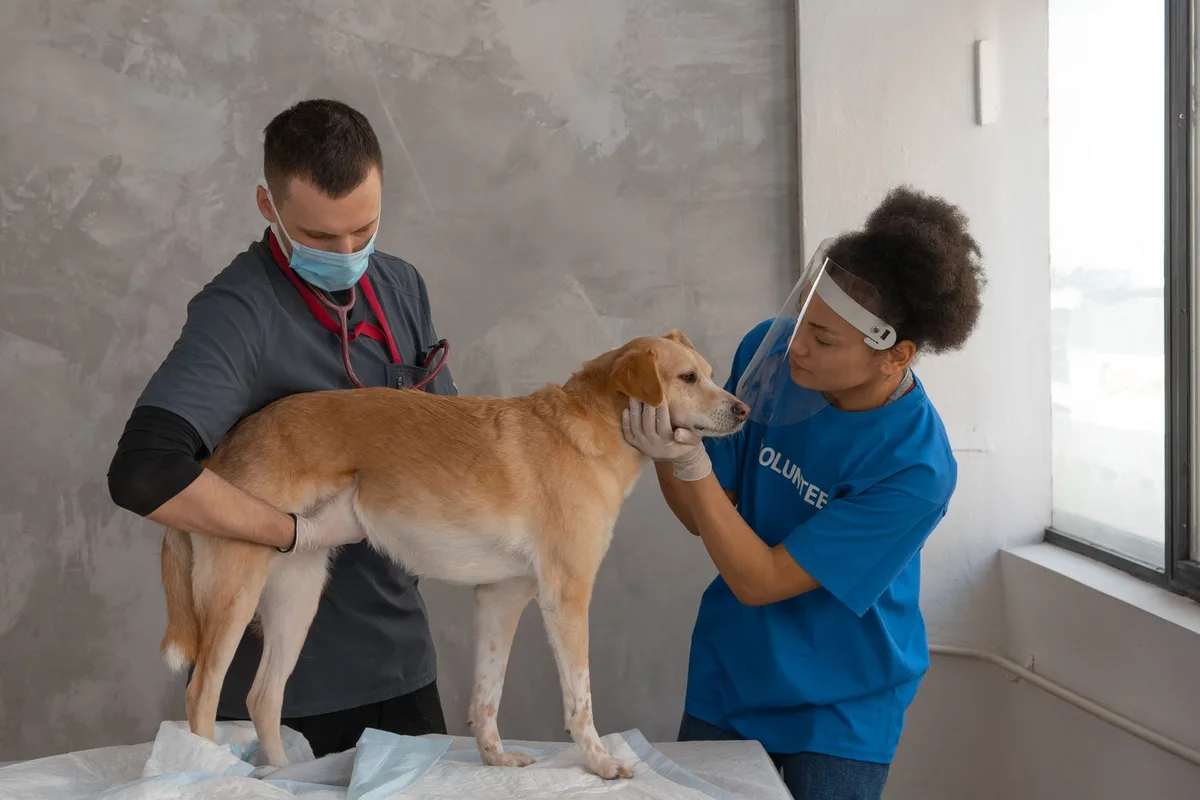
Here's the thing most owners don't realize: allergies in dogs almost never kill, but unmanaged allergies quietly destroy quality of life. Chronic itching disrupts sleep, drives anxiety, and leads to skin thickening, ear infections, and hot spots that need antibiotics.
Worse, mistreating the wrong allergy type wastes time. Steroids calm itch fast but don't fix a flea problem. Antihistamines barely touch severe atopy.
A "grain-free" diet won't help a dog allergic to beef. We've seen owners spend six months and over a thousand dollars barking up the wrong tree.
That's why we anchor everything on accurate diagnosis first, itch control second, and long-term management third. Miss any of those and the cycle restarts.
The 4 Main Types of Dog Allergies (And How to Tell Them Apart)
Dogs react to allergens through four main pathways. Most cases we see are environmental, but they often overlap. Pinpoint the type, and the treatment plan gets obvious.
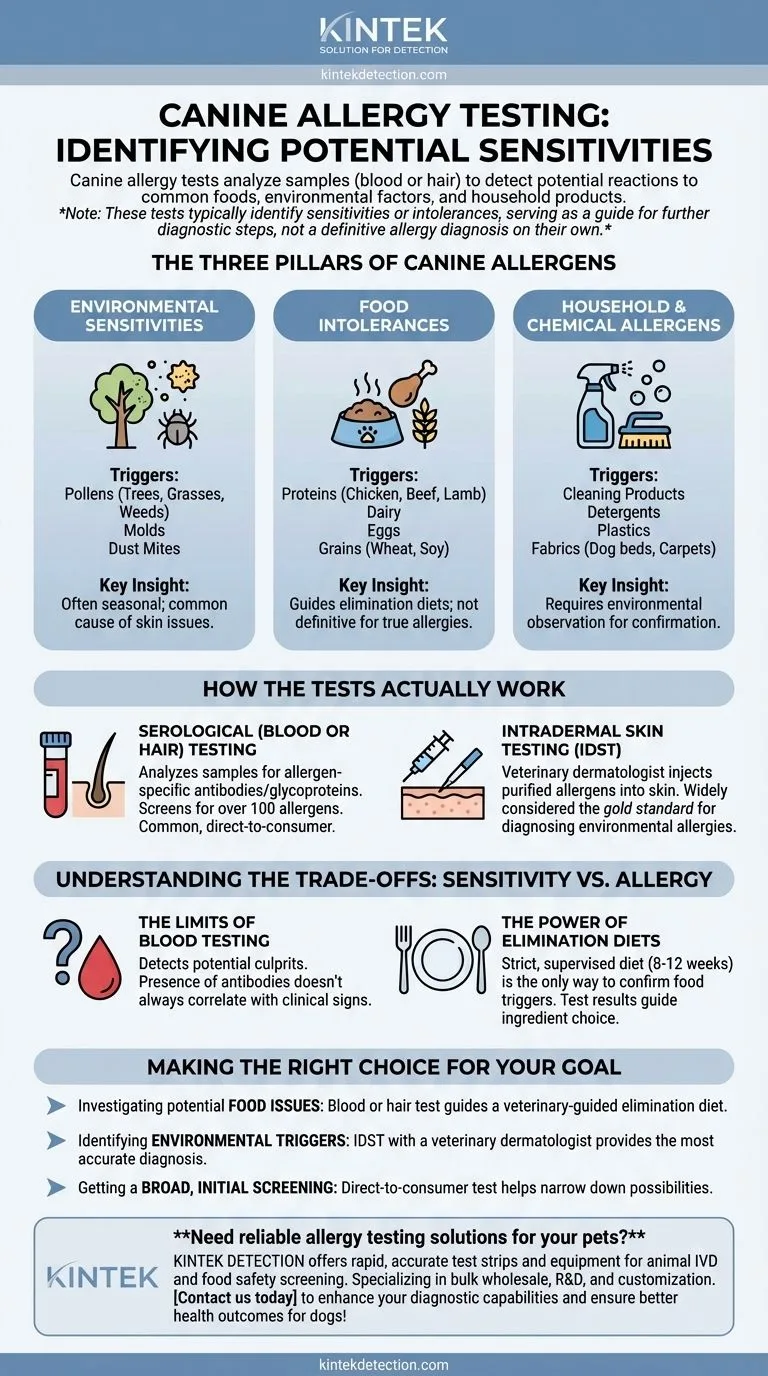
Environmental Allergies (Atopy) in Dogs
Atopic dermatitis is the most common form, triggered by airborne allergens like pollen, dust mites, and mold. Symptoms usually start between 6 months and 3 years of age. Watch for:
- Itchy paws, armpits, groin, and face
- Recurring ear infections (often the first clue)
- Seasonal flares in spring or fall
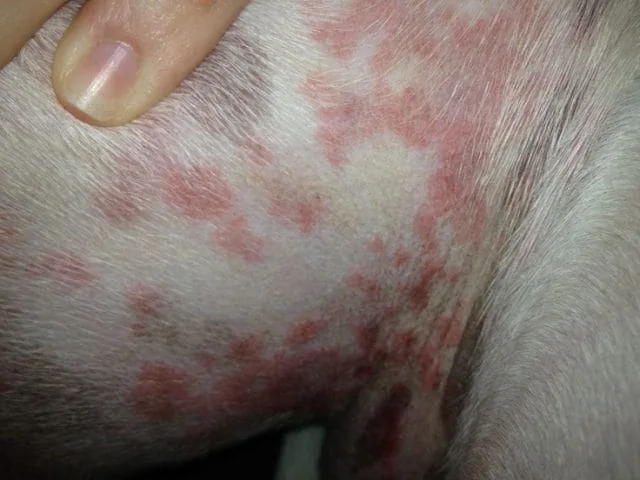
- Licking the belly until it turns pink
Breeds with higher genetic risk include Golden Retrievers, Labradors, French Bulldogs, Westies, Boxers, and Shar-Peis.
Food Allergies vs. Food Intolerance
True food allergies are immune-mediated, usually to a protein like beef, chicken, or dairy. Food intolerance is a digestive issue, often to lactose or gluten. They look different:
- Food allergy signs: Chronic ear infections, itchy rear end, recurrent skin infections, occasional vomiting
- Food intolerance signs: Loose stool, gas, bloating, no skin issues
Only an elimination diet confirms a real food allergy. Blood tests for food allergens are unreliable, and we'll explain why later.
Flea Allergy Dermatitis (FAD)
One flea bite can trigger a two-week itch cycle in a sensitized dog. The classic sign is hair loss and scabbing over the lower back, tail base, and hind thighs. Even indoor dogs get FAD.
Fleas hitchhike on humans, other pets, and used furniture.
Contact Allergies
Less common. Reactions to shampoo, cleaning products, lawn chemicals, or new bedding. Symptoms appear where the skin touches the trigger, usually the belly, paws, or chest.
Removing the suspect usually clears it in 1 to 2 weeks.
Red Flags That Need a Vet Right Now
Most allergies can wait a few days for an appointment. Some signs mean you should call your vet today.
- Swollen face, hives, or sudden vomiting after a new food or medication
- Open wounds or rapidly spreading hot spots
- Ears that smell yeasty, are hot to the touch, or have discharge
- Persistent head tilt or balance issues
- Any allergy symptom in a puppy under 6 months
- Difficulty breathing or sudden lethargy
If your dog shows any of these, treat it like an emergency. Allergic reactions can escalate fast, and ear infections left untreated can damage hearing permanently.
The Step-by-Step Process for Treating Dog Allergies
Treating dog allergies isn't a single pill or shampoo. It's a layered process where each step builds on the last. Skip one and the next one won't work as well.
Here's the framework we use in practice. Steps must happen sequentially, not in parallel.
Step 1: Rule Out Non-Allergy Causes First
Not every itch is an allergy. Before treating anything, your vet should rule out:
- Mites (Sarcoptes, Demodex)
- Ringworm
- Bacterial or yeast overgrowth
- Hypothyroidism
- Pain-driven licking (joint disease, anal gland issues)
Skin scrapings, cytology, and basic bloodwork take about 15 minutes in clinic and save you months of misdirected treatment.
Step 2: Get the Right Diagnosis (Cytology, Skin Testing, Elimination Diet)
Diagnosis depends on the suspected type. For environmental allergies, intradermal skin testing (the gold standard) or serum IgE blood testing helps identify triggers. The American College of Veterinary Dermatology certifies specialists who run these tests daily.
For food allergies, the only reliable test is an 8 to 12 week elimination diet. We'll cover that in detail in Step 4.
Step 3: Start Flea Prevention for Every Dog in the House
Before anything else, start year-round flea control on every pet in the home. Isoxazoline preventives (NexGard, Bravecto, Simparica, Credelio) kill fleas fast. Skip this step and every other treatment loses ground.
Even one flea bite keeps the itch cycle going for two weeks. Owners who insist "we don't have fleas" usually find them on a flea comb within 30 seconds.
Step 4: Run a Real 8–12 Week Elimination Diet

Food allergies can't be diagnosed with a blood test. Period. The only reliable method is a controlled elimination diet followed by a rechallenge.
How it works:
- Pick a novel protein (kangaroo, rabbit, duck, venison) or a hydrolyzed protein (Royal Canin HP, Hill's z/d, Purina HA). Hydrolyzed proteins are broken into pieces under 10,000 daltons, too small for the immune system to recognize.
- Feed only that diet for 8 to 12 weeks. No treats, no table scraps, no flavored medications.
- If symptoms improve, reintroduce old foods one at a time. A flare within 1 to 14 days confirms the trigger.
Most owners quit at week 4 because "it's not working." Itch from food allergy takes 6 to 8 weeks minimum to resolve. Stick with it.
Step 5: Treat Secondary Infections Before Anything Else
Allergic skin gets infected fast. Bacteria (Staphylococcus) and yeast (Malassezia) thrive on inflamed skin. Your vet will run cytology to check.
If infection is present, treat with:
- Antibiotics (usually 3 to 4 weeks)
- Antifungals for yeast
- Medicated baths with chlorhexidine or miconazole
Trying to control itch without clearing infection is like putting out a fire while someone pours gasoline on it.
Step 6: Manage the Itch (Apoquel, Cytopoint, Antihistamines)
Once infection is under control, target the itch itself. The three main options:
- Apoquel (oclacitinib): Tablet, works in 4 hours, controls itch within 24 hours. Dosed at 0.4 to 0.6 mg/kg twice daily for 14 days, then once daily. Avoid in dogs under 12 months and dogs with active cancer.
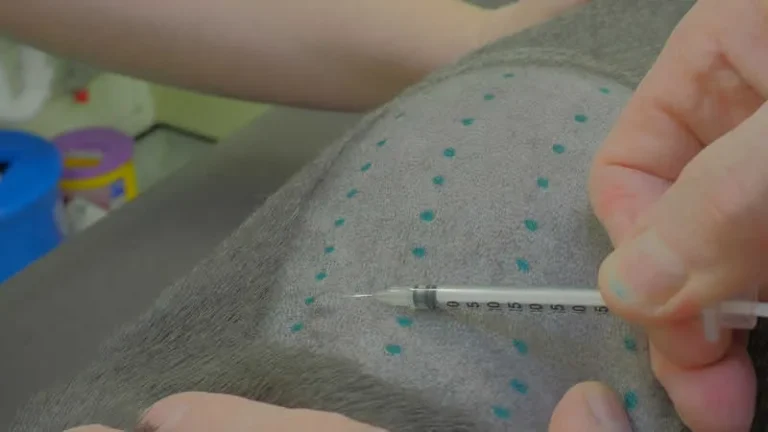
- Cytopoint (lokivetmab): Injection given every 4 to 8 weeks, works in 24 to 48 hours. Safe for most dogs, including seniors and dogs with other illnesses.
- Antihistamines: Benadryl (diphenhydramine), cetirizine, or loratadine. Only 10 to 15% of dogs respond well. Best for mild seasonal allergies, not severe flares.
Steroids like prednisone work too, but long-term use causes side effects (increased thirst, panting, immune suppression, muscle loss). Use them as a short-term bridge, not a permanent solution.
Step 7: Add Skin-Supportive Care (Baths, Omega-3s, Topicals)
Daily meds work better when paired with skin barrier support:
- Weekly baths with oatmeal or chlorhexidine shampoos
- Omega-3 fatty acids at 50 to 75 mg/kg EPA+DHA daily (look for marine oil, not flaxseed)
- Wipe paws after walks to remove pollen
- Use fragrance-free, dye-free detergents and household cleaners
These don't replace medication but they reduce how much medication your dog needs.
Step 8: Consider Allergen-Specific Immunotherapy
If environmental allergies flare every year, immunotherapy can desensitize the immune system. Your vet formulates custom shots or sublingual drops based on your dog's specific allergens. Success rate sits around 60 to 80%, but it takes 6 to 12 months to see full results.
It's the only treatment that actually changes the immune response rather than masking symptoms. Best for dogs under 8 years old with confirmed environmental allergies.
Apoquel vs. Cytopoint vs. Steroids vs. Antihistamines
Picking the right itch control comes down to severity, age, and how long you'll need it. Here's how the main options stack up:
| Option | Onset | Format | Best For | Watch For |
|---|---|---|---|---|
| Apoquel | ~4 hours | Daily tablet | Moderate to severe year-round itch | Avoid under 12 months, active cancer |
| Cytopoint | 24–48 hours | Injection every 4–8 weeks | Owners who hate giving pills, dogs with other illnesses | Higher cost per shot |
| Steroids | 6–12 hours | Tablet or injection | Short-term emergency relief | Long-term side effects |
| Antihistamines | 1–2 weeks | OTC tablet | Mild seasonal itch, prevention | Low success rate in dogs |
Apoquel and Cytopoint are first-line choices for most allergic dogs in 2026. Steroids still have a place for crisis flares, but we use them as a bridge, not a destination. Antihistamines are best for mild cases or as a backup when other meds aren't an option.
Hydrolyzed Protein vs. Novel Protein Diets
Both diets are used in elimination trials, but they're built differently. A hydrolyzed protein diet breaks chicken, soy, or other proteins into fragments too small for the immune system to recognize. A novel protein diet uses ingredients the dog has never eaten, like kangaroo, rabbit, or venison.
Hydrolyzed is more reliable for most dogs because prior exposure to "novel" proteins is hard to confirm. Treats, flavored preventives, and table scraps all count as exposure. Hydrolyzed diets also tend to be more complete and balanced for long-term feeding.
Novel protein diets work well when the dog truly has no history with the chosen protein, but they're harder to manage at home.
Allergy Testing Compared: Intradermal vs. Blood (Serum IgE)
Veterinary dermatologists use two main tools for environmental allergy testing. Each has trade-offs:
- Intradermal skin testing: Considered the gold standard. The vet injects small amounts of allergens into the skin and measures reactions. Requires sedation and clipping a patch of fur. Results guide immunotherapy formulation with the best accuracy.
- Serum IgE blood testing: Easier, no sedation needed, any vet can order it. Useful when skin testing isn't practical. Slightly less accurate for some allergens, but still a solid starting point.
Neither test works for food allergies. Don't waste money on food panels. The elimination diet is the only reliable food allergy test.
What Dog Allergies Actually Cost Per Month
Let's be honest about the dollars, because owners ask this every visit. Here's a realistic monthly breakdown for a medium-sized dog in 2026:
| Treatment | Monthly Cost |
|---|---|
| Apoquel | $60–$150 |
| Cytopoint (per shot, lasts 4–8 weeks) | $60–$300 |
| Prescription hypoallergenic food | $70–$120 |
| Omega-3 supplements | $15–$30 |
| Medicated shampoo | $10–$20 |
| Monthly flea prevention | $15–$45 |
A severe allergy case easily runs $150 to $400 per month when all treatments are combined. The good news: once you find the right mix, many dogs stabilize on lower-cost maintenance plans within 6 to 12 months.
Weight-Based Medication Dosing for Dogs
Dosing by weight isn't optional, it's the difference between safe and toxic. Here are the standard ranges vets use:
- Apoquel: 0.4 to 0.6 mg/kg twice daily for 14 days, then once daily
- Cytopoint: 2 mg/kg by subcutaneous injection every 4 to 8 weeks
- Diphenhydramine (Benadryl): 1 mg/kg two to three times daily (use plain formula, no xylitol)
- Cetirizine (Zyrtec): 0.5 to 1 mg/kg once daily
- Omega-3 EPA+DHA: 50 to 75 mg/kg daily
Always confirm the dose with your vet before giving anything. Human formulations sometimes contain xylitol, which is toxic to dogs even in small amounts.
Mistakes Owners Make When Treating Dog Allergies
Some missteps come up over and over in clinic. Here are the ones that cost owners the most time:
- Stopping antibiotics when the skin looks better, before the full course finishes
- Quitting the elimination diet at week 4 instead of week 8 to 12
- Skipping flea prevention because "we don't see fleas"
- Using hydrocortisone cream on large raw areas (dogs lick it off and ingest steroids)
- Giving human Benadryl with xylitol or combined cold medicines
- Treating itch without checking for secondary infection first
- Buying grain-free food thinking it'll fix a chicken allergy
Most of these delay relief by weeks or months. A simple plan with your vet avoids all of them.
Home Remedies That Actually Help (And Ones That Don't)
A few home moves genuinely support treatment. Cool baths with colloidal oatmeal calm inflamed skin fast. Coconut oil applied to small dry patches can soothe, though it can worsen yeast if overused.
Wiping paws after walks reduces pollen load on the feet.
What doesn't help: apple cider vinegar rinses (burns raw skin), essential oil sprays (toxic to dogs), essential oil diffusers (respiratory irritant), and brewer's yeast tablets (no proven benefit). When in doubt, leave the bathtub for plain oatmeal and let the vet handle the rest.
Seasonal vs. Year-Round Allergy Management
Environmental allergies often follow a seasonal pattern. Spring brings tree pollen, summer brings grass pollen, and fall brings ragweed and mold. If your dog's itch flares only in certain months, you can plan ahead.
Start antihistamines or omega-3s two weeks before the typical flare. Boost bath frequency during peak pollen. Keep windows closed on high-pollen days.
For year-round allergies (dust mites, certain molds), consistent medication beats seasonal ramping. Cytopoint works especially well for dogs who need predictable year-round coverage.
When to See a Veterinary Dermatologist
Your regular vet can handle most allergy cases. Referral to a board-certified veterinary dermatologist makes sense when:
- Itch isn't controlled after 3 months of standard treatment
- Your dog needs full intradermal skin testing for immunotherapy
- There are repeated ear infections needing advanced workup
- Skin infections keep coming back despite appropriate antibiotics
- You've tried multiple diets with no clear answer
You can find a certified specialist through the American College of Veterinary Dermatology directory. Expect wait times of 2 to 8 weeks depending on your region.
Long-Term Skin and Coat Maintenance for Allergic Dogs
Allergies are managed, not cured. Maintenance keeps flare-ups small and infrequent.
- Bathe weekly with a gentle, fragrance-free shampoo
- Brush regularly to distribute natural oils
- Keep ears clean and dry, check weekly
- Maintain year-round flea prevention even if you "never see fleas"
- Recheck with your vet every 6 to 12 months
- Adjust medications seasonally based on flare patterns
- Stick with the prescription diet long-term if food allergy is confirmed
Owners who commit to maintenance see fewer infections, less medication use, and a much happier dog. It's the unglamorous part of allergy care that makes everything else work.
A Vet-Informed Plan You Can Start Today
You've now got the framework: identify the type, rule out other causes, control fleas, run an elimination diet if food allergy is suspected, treat infections, manage itch, and maintain long-term. Start with a vet visit, not Google. Bring a list of symptoms, when they started, and what you've already tried.
That one step alone can cut months off the timeline.
If you're waiting for that appointment, two safe moves right now: start year-round flea prevention and add omega-3 fatty acids to meals. Both are low-risk, widely available, and support whatever plan your vet builds next.
Frequently Asked Questions
How long does it take for dog allergy treatment to work?
Itch relief from Apoquel or Cytopoint typically starts within 24 hours. Elimination diets take 8 to 12 weeks to show full results. Immunotherapy needs 6 to 12 months.
Can I give my dog Benadryl for allergies?
Yes, at 1 mg/kg two to three times daily, using plain diphenhydramine without xylitol. Expect mild help only, since antihistamines work in roughly 10 to 15% of dogs.
What's the best dog food for a dog with allergies?
Hydrolyzed protein diets like Royal Canin HP or Hill's z/d are the most reliable for confirmed food allergies. Novel protein diets work when the protein is truly new to your dog.
Are dog allergies curable?
No. Allergies are managed, not cured. Most dogs need lifelong maintenance, though many stabilize on lower medication doses over time.
When should I worry about my dog's scratching?
Call your vet if scratching causes open wounds, hot spots, hair loss, or skin odor. Ear scratching combined with head shaking needs prompt attention too.