How to test a dog for allergies: The Best Guide
If your dog won't stop scratching, licking their paws, or shaking their head, you've probably already typed "how to test a dog for allergies" into a search bar at 2 AM. We get it. Watching your dog itch themselves raw is miserable, and the urge to order a quick at-home kit and fix it tonight is real.
Here's the honest truth: most of those kits won't help, and the wrong test can waste months.
The real options come down to three evidence-based methods used in veterinary medicine as of 2026: intradermal skin testing (the gold standard, with 40, 80 allergens evaluated), serum IgE blood panels, and a strict 8, 12 week elimination diet for food triggers. Below, we'll walk through how each one works, what it actually costs, and how to get results you can trust.
Quick Answer
Dogs are tested for allergies using three main methods. Intradermal skin testing by a veterinary dermatologist is the gold standard for environmental allergies. Serum IgE blood panels screen for allergen-specific antibodies.
Food allergies are diagnosed through an 8, 12 week elimination diet trial. Direct-to-consumer saliva or hair tests are not considered reliable.
Why Accuracy Matters When Testing a Dog for Allergies
Allergies look like allergies until they don't. That chronic ear infection might be a food allergy. The hot spot on your dog's belly might be a flea allergy.
The paw-licking ritual you blame on grass pollen might actually be a yeast infection secondary to a food sensitivity. Wrong test, wrong answer, months wasted, dog still suffering.
The stakes are higher than most owners realize. Canine atopic dermatitis affects roughly 10, 15% of dogs, and a misdiagnosis sends you down a treatment path that masks symptoms while the root trigger keeps firing. That's why the American College of Veterinary Dermatology recommends evidence-based testing rather than guesswork, and why any vet worth their stethoscope will rule out infections, parasites, and endocrine issues before touching an allergy panel.
Two specific risks deserve a spotlight. First, the booming market in direct-to-consumer pet allergy kits (saliva, hair, fur analysis) has zero peer-reviewed validation. The FDA Center for Veterinary Medicine hasn't approved most of them.
Second, blood tests for food allergens carry notoriously high false-positive rates, often flagging ingredients your dog has never reacted to. That's not a small error. It leads to unnecessary diet restrictions and nutritional gaps over months.
Bottom line: an accurate allergy diagnosis protects your dog's immune system, gut health, and quality of life. It also saves you money. Skin testing plus a food trial averages $600, $900 total.
Two years of misdirected Apoquel, Cytopoint, and specialty kibble runs four times that.
The Three Real Allergy Tests (and Why Most Others Don't Work)
When we say "real" allergy tests, we mean methods with peer-reviewed evidence behind them. Anything else is marketing.
Intradermal Skin Testing (the Gold Standard)
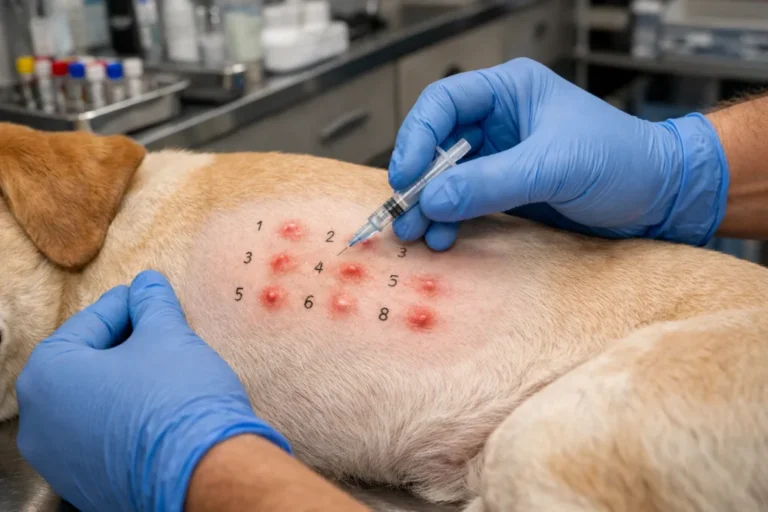
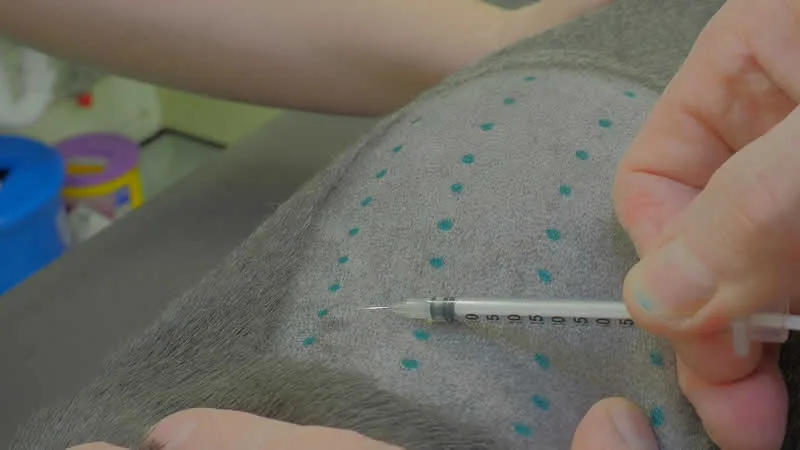
Intradermal skin testing, often called IDST, is what board-certified veterinary dermatologists consider the most accurate method for environmental allergens. Here's how it works. Your dog is sedated, a patch of fur on the chest or flank is shaved, and tiny amounts of 40, 80 allergens (pollens, molds, dust mites, fleas) are injected just under the skin.
A positive reaction looks like a small hive. The vet reads the pattern within 15, 30 minutes.
It's not used for food allergens. That's a common misconception. Skin testing detects IgE antibodies to inhaled or contact allergens, not dietary triggers.
If your dog reacts to Bermuda grass but not to chicken, IDST will tell you that, and it won't help you figure out the kibble.
Serum IgE Blood Testing
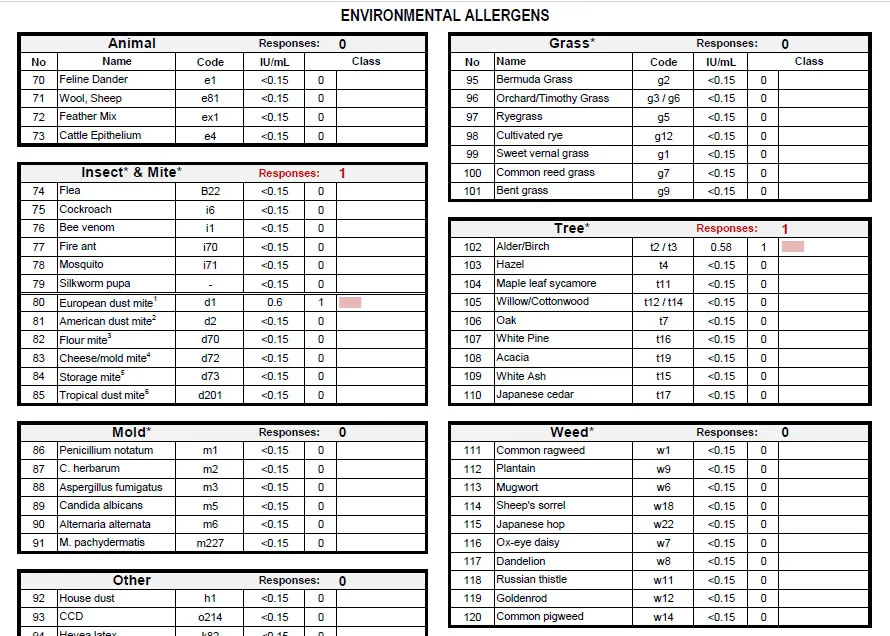
A serum IgE test is a blood draw that measures allergen-specific antibodies circulating in your dog's blood. It's convenient because it doesn't require sedation or a specialist, and any vet can order the panel. Results come back in 1, 3 weeks, depending on the lab.
The catch: it's useful for environmental allergens and less reliable for food. Aggregate reviews from veterinary dermatologists consistently report false-positive rates above 50% for food allergens on standard IgE panels. That means if your dog tests "positive" for chicken or beef, there's a coin-flip chance it's wrong.
For environmental triggers, accuracy improves, but it's still considered slightly less sensitive than intradermal testing.
Elimination Diet Trials for Food Allergies
An elimination diet is the only reliable way to diagnose food allergies in dogs. Period. There's no shortcut.
Here's the deal. You feed a single novel protein (or a hydrolyzed prescription diet) for 8, 12 weeks, then reintroduce suspected triggers one at a time to see what causes a reaction.
It sounds simple. It's not. You can't give treats, table scraps, flavored medications, or even certain chew toys during the trial.
One rogue piece of chicken can invalidate 10 weeks of work. But the results are definitive, and peer-reviewed studies in Veterinary Dermatology confirm that properly executed elimination diets identify food allergens in roughly 20, 30% of dogs with chronic pruritus.
What Allergy Testing Can't Tell You
Here's the part most articles skip. Allergy tests don't tell you everything. They identify what your dog's immune system reacts to, but they don't measure severity, they don't predict future reactions, and they can't distinguish between true allergy and simple irritation.
A few things testing genuinely cannot do:
- Differentiate between IgE-mediated allergy and food intolerance (which doesn't involve the immune system)
- Quantify how severe a reaction will be
- Rule out atopic dermatitis without a clinical exam
- Replace a good physical and history from your vet
This matters because owners sometimes chase a "positive" test result for an allergen that isn't actually causing clinical signs. The dog tests positive for timothy grass but only flares up in winter. That positive means exposure, not causation.
Your vet, not the lab report, makes the final call.
Signs Your Dog Needs Allergy Testing Now
Not every itch needs a full allergy workup. Dogs scratch. That's normal.
But certain patterns tell us testing is overdue.
Persistent scratching lasting more than four weeks. Chewing at paws, especially between the toes. Recurrent ear infections (more than two per year).
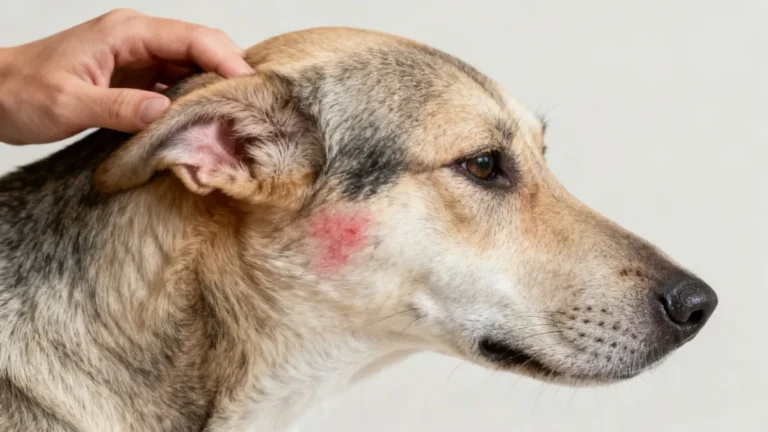
Red, inflamed skin around the groin, armpits, or belly. Hot spots that keep coming back. Chronic anal gland issues or gastrointestinal upset alongside skin signs.
Breed plays a role, too. Retrievers, Bulldogs, Terriers, Setters, and Boxers are over-represented in atopic dermatitis cases. If you've got one of these breeds and they're itching without an obvious cause, testing is worth the conversation with your vet.
Age matters as well. Environmental allergies usually appear between 6 months and 3 years. Food allergies can show up at any age but commonly start under a year.
If your senior dog suddenly develops allergies, the vet should rule out hypothyroidism, Cushing's disease, and other endocrine causes before going down the allergy road.
How to Prepare Your Dog for Accurate Test Results
Most failed allergy tests fail because of bad preparation. Skipping this step wastes hundreds of dollars and weeks of waiting.
Medications to Stop Before Testing (and When)
Antihistamines can suppress skin reactions and skew intradermal results. Most dermatologists ask you to stop Benadryl, Zyrtec, and Claritin 5, 14 days before testing. Steroids are a bigger problem.
Oral prednisone needs to be tapered off at least 2, 4 weeks before intradermal testing. Injectable steroids like Depo-Medrol can interfere for 6, 8 weeks. Topical steroids on the test area need a 2-week washout.
Blood testing is more forgiving. Most vets don't require stopping antihistamines for a serum IgE panel, though steroids can still affect results. Your vet will give you a specific timeline based on your dog's medications, but the rule is: don't stop anything without their guidance.
Rebound itching can be brutal.
Timing and Seasonal Considerations
If your dog flares up in spring and you want to test for tree pollen, schedule the test in late winter, right before symptoms peak. Testing during peak season isn't useless, but your dog may be so reactive that distinguishing allergens from one another becomes tricky. Off-season testing of a non-flaring dog can also produce false negatives because IgE levels dip when exposure is low.
Geography matters too. A dog in Arizona faces different regional allergens than one in the Pacific Northwest. The panel your vet orders should reflect local exposure, not a generic national list.
The Step-by-Step Allergy Testing Process
Now that you know the methods, here's how the actual workflow plays out in practice. Think of it as a decision tree: each step rules things out or moves you closer to a real answer.
Step 1: Rule Out the Obvious First
Before any allergy testing, your vet should confirm your dog is parasite-free. Fleas, mites (especially Sarcoptes), and skin infections mimic allergies almost perfectly. A simple skin scrape, cytology, and flea combing take 15 minutes and can save you months of misdirected treatment.
Secondary bacterial or yeast infections also need treatment first. Allergic skin breeds infection like still water breeds mosquitoes. Treating the allergy without clearing the infection is like mopping the floor while the sink is still running.
Step 2: Decide Between Food Trial, Blood Test, or Skin Test
This is the fork in the road. The right choice depends on your dog's symptom pattern.
If the main signs are ear infections, anal gland issues, and digestive upset alongside itching, start with a food trial. If your dog itches seasonally with no GI signs, go straight to intradermal or serum testing for environmental allergens. If you can't afford the dermatologist or your dog can't be sedated, a serum IgE panel is your next-best option.
| Symptom Pattern | First Test to Try |
|---|---|
| Seasonal itching, no GI issues | Intradermal skin test or serum IgE |
| Year-round itching plus GI upset | Elimination diet trial |
| Recurrent ear infections, paw licking | Start with food trial, then environmental testing |
| Sudden adult-onset itching | Full workup first; rule out endocrine disease |
Step 3: Run the Test (or Start the Diet Trial)
For intradermal testing, expect a morning appointment at a dermatology referral clinic. Sedation, shave, injections, reading, and you're usually home by early afternoon. For serum IgE, it's a quick blood draw at your regular vet, with results in 1, 3 weeks.
For an elimination diet, you'll get a prescription food and a strict do-not-feed list. Set a reminder. The 8, 12 week mark is where owners slip.
Step 4: Interpret Results With Your Vet
Don't read the lab report alone. Positive on grass pollen plus a clinical grass flare in spring equals a real trigger. Positive on storage mites plus a dog that sleeps on a wool rug probably matters.
Positive on chicken but no flare during the reintroduction phase should be ignored. Your vet connects the dots between the test, the history, and the exam. That's where the answer lives.
Step 5: Build a Long-Term Management Plan
A positive test isn't the finish line. It's the starting point for a plan. Options include allergen-specific immunotherapy (custom shots or sublingual drops built from the test results), dietary management, environmental changes (HEPA filters, frequent washing, hypoallergenic bedding), and symptomatic medications like Apoquel or Cytopoint for breakthrough flares.
Success isn't zero itching. It's a happier, more comfortable dog with fewer infections and less medication over time.
Intradermal vs. Blood Test vs. Diet Trial: Honest Comparison
We've talked through each method individually. Here's how they stack up against each other when you need to choose.
| Method | Best For | Accuracy | Cost Range | Time to Result |
|---|---|---|---|---|
| Intradermal skin test | Environmental allergies | Gold standard | $200–$400 | Same day |
| Serum IgE blood test | Environmental allergies (screening) | Good for env., poor for food | $150–$300 | 1–3 weeks |
| Elimination diet trial | Food allergies | Definitive | $200–$500 (food cost) | 8–12 weeks |
The key takeaway: no single test does it all. Most dogs with true environmental allergies benefit from intradermal testing. Most dogs with food-related symptoms need a diet trial.
Dogs with mixed patterns often need both, sequenced months apart to avoid confusion.
One honest caveat: intradermal testing requires a veterinary dermatologist. Not every city has one, and wait times can run 4, 8 weeks. If that's a barrier, a serum IgE panel with an experienced general vet is a reasonable starting point.
Just don't expect the same precision.
Common Mistakes That Lead to Wrong Allergy Diagnoses
We've seen these patterns repeat. Skipping them will save you real money and real frustration.
Stopping steroids cold before testing. Some rebound itch is normal. Talk to your vet about tapering, not quitting.
Testing the dog during peak season. False positives spike. Testing too early in a puppy.
IgE levels need time to build, and false negatives are common under age one. Cheating on the elimination diet. One treat resets the trial to week zero.
Trusting a direct-to-consumer kit. Saliva and hair tests have no validated accuracy in peer-reviewed literature. Treating the test result instead of the dog.
The dog is the patient, not the printout.
The single biggest mistake? Going straight to allergy testing without ruling out fleas, mites, and infections. We've watched owners spend $800 on a panel that came back confusing, only to discover the real cause was a missed Sarcoptes mite that a $40 skin scrape would have caught on day one.
What Allergy Testing Actually Costs in 2026
Costs vary by region, but here are realistic numbers to plan around, based on aggregate veterinary pricing data.
| Service | Typical Cost Range |
|---|---|
| Initial vet consultation | $75–$150 |
| Skin scrape and cytology | $40–$100 |
| Serum IgE blood panel | $150–$300 |
| Intradermal skin testing (with sedation) | $200–$400 |
| Veterinary dermatologist consultation | $150–$250 |
| Prescription hydrolyzed diet (3-month supply) | $150–$300 |
| Custom allergen-specific immunotherapy (year one) | $300–$600 |
Total workup for an accurate diagnosis typically runs $600, $900. Compare that to years of symptomatic Apoquel ($30, $60/month), Cytopoint injections ($50, $100 each), and specialty kibble ($80, $150/month). A real diagnosis usually pays for itself within 12 months.
When to See a Veterinary Dermatologist
A general vet handles straightforward cases well. But referral to a board-certified dermatologist makes sense in several situations.
Your dog has been itchy for more than three months without a clear diagnosis. Standard treatments aren't working. The skin infections keep coming back.
You want intradermal testing for immunotherapy. The case involves unusual patterns (face rubbing, nail fold inflammation, vulvar or anal licking).
The American College of Veterinary Dermatology maintains a searchable directory of board-certified specialists. Yes, there's often a wait. Yes, it costs more upfront.
But for chronic or severe cases, dermatologist-led care consistently outperforms general practice in peer-reviewed comparisons.
Real-World Results: What Success Actually Looks Like
Allergy management isn't about curing allergies. Dogs don't outgrow them. Success looks like this: fewer ear infections (down from four per year to one), less paw-licking, a coat that's not constantly red, and reduced reliance on daily medication.
Aggregate clinical data on allergen-specific immunotherapy shows 60, 80% of dogs show meaningful improvement within 6, 12 months. For diet-managed food allergies, success means stable skin and digestion on the trigger-free diet, with no flares when accidental exposure happens rarely.
The dogs that don't do well almost always share one thing: incomplete diagnosis. They had fleas missed. Or the food trial was sloppy.
Or they were tested while on steroids. Get the prep right, and most dogs get dramatically better.
Pros and Cons of Each Testing Method
No test is perfect. Each one has trade-offs worth weighing before you commit your time and money.
Intradermal skin testing is the most accurate for environmental allergens, but it requires sedation, a specialist, and a medication washout. Serum IgE blood testing is convenient and widely available, yet less precise and prone to food false positives. Elimination diets are the gold standard for food allergies, though they're slow, strict, and easy to mess up.
| Method | Strengths | Weaknesses |
|---|---|---|
| Intradermal skin test | High accuracy for environmental allergens, immediate results | Requires sedation and specialist, no food allergy data |
| Serum IgE blood test | Easy to run at any vet, no sedation | Lower sensitivity, unreliable for food allergens |
| Elimination diet trial | Definitive food allergy diagnosis | 8–12 weeks of strict feeding, easy to contaminate |
The practical takeaway? Start with whatever matches your dog's symptom pattern, and accept that you may need a second method later if the first doesn't explain everything.
Use Cases: Which Test Fits Your Dog's Situation?
Different dogs need different paths. Here's how the choice plays out in real cases.
A two-year-old Golden Retriever scratching every spring since age one, no digestive issues? Go straight to intradermal or serum IgE testing. A five-year-old French Bulldog with chronic ear infections and loose stool?
Start with an elimination diet. A senior dog with sudden year-round itching at age ten? Run a full senior workup first to rule out hypothyroidism and Cushing's before any allergy panel.
Geographic exposure matters too. Dogs in the Southeast US face high mold and grass burdens year-round. Dogs in arid Southwest states deal more with dust mites and storage mites.
The panel should match the local environment, and your vet will know which allergens are clinically relevant in your zip code.
Lifestyle influences the call as well. Working dogs, hunting breeds, and outdoor-only dogs have higher exposure to pollen and flea antigens. Apartment dogs often react more to indoor allergens like dust mites and cockroach antigen.
Match the test to the life your dog actually lives.
Mistakes to Avoid When Testing a Dog for Allergies
We've covered the prep, but the execution has pitfalls too. Here's what goes wrong most often, and how to dodge it.
Testing while on steroids without a washout. False negatives are almost guaranteed. Always confirm with your vet when medications can be safely stopped.
Cheating on the elimination diet. A single treat resets the clock. Set a reminder and tell every family member the rules.
Reading the lab report without your vet. Positive on paper doesn't mean clinically relevant. Your vet correlates the test with the history.
Skipping flea control. Even one flea bite can blow up an "allergy" diagnosis. Year-round flea prevention is non-negotiable for allergic dogs.
Expecting a cure. Allergy management is a marathon, not a sprint. Plan for long-term care, not a one-time fix.
One more, often overlooked: don't restart the offending diet after a successful trial without a structured challenge. The challenge phase (reintroducing ingredients one at a time) is what confirms the actual trigger. Skipping it leaves you guessing.
Expert Tips for Better Allergy Test Results
A few tricks from veterinary dermatologists that don't always make it into standard handouts.
Use a calendar. Mark the washout start date, the test date, and the 8, 12 week diet trial endpoint. Owners who track compliance get cleaner results.
Photograph flare-ups. Date-stamped photos of ear redness, paw inflammation, or hot spots help your vet (and the dermatologist) see patterns you'd otherwise forget. Keep a symptom diary.
Daily notes on itching score (1, 10), food, and environment make the eventual diagnosis faster. Ask about regional panels. Some labs customize allergen lists by ZIP code.
More relevant allergens, fewer false positives. Consider seasonal timing for intradermal testing. Late winter for spring-flaring dogs, late summer for fall-flaring dogs.
Peak-season testing is harder to interpret.
Finally, treat the secondary infections before testing if you can. Clear skin gives cleaner intradermal readings and a more accurate food trial baseline. Your vet may prescribe a 2, 4 week course of antibiotics or antifungals first, and that's a good thing.
Your Next Move: A Simple Decision Guide
If your dog is scratching right now, here's the path to walk through based on what works in practice.
Step one: see your regular vet for a physical, skin scrape, and cytology. Rule out fleas, mites, and infections. Step two: decide based on symptoms.
Year-round itching plus GI issues means food trial first. Seasonal itching with no GI means intradermal or serum testing. Step three: prepare properly.
Stop the right medications, time the test, and commit to the protocol. Step four: interpret results with your vet, not Google. Step five: build a management plan using immunotherapy, diet, environmental changes, and targeted medication.
If the first round doesn't give clear answers, refer to a veterinary dermatologist through the American College of Veterinary Dermatology directory. Chronic or complex cases need specialist eyes.
Accurate testing is the difference between managing your dog's allergies for years and chasing symptoms forever. Done right, most dogs see meaningful improvement. Done wrong, you spend months spinning wheels.
The choice is yours.
Frequently Asked Questions
How much does dog allergy testing cost?
A complete workup, including vet consultation, skin scrape, intradermal or blood testing, and any food trial, typically runs $600, $900. Individual tests range from $150 for a serum IgE panel to $400 for intradermal skin testing.
Are at-home dog allergy test kits accurate?
No credible peer-reviewed evidence supports the accuracy of saliva or hair-based at-home kits. Veterinary dermatologists consistently report that these tests produce unreliable results and should not guide treatment decisions.
Can a blood test detect food allergies in dogs?
Serum IgE blood tests have high false-positive rates for food allergens, often above 50%. The reliable method for diagnosing food allergies is an 8, 12 week elimination diet trial followed by controlled reintroduction.
How long does an elimination diet trial take?
A proper elimination diet trial requires 8, 12 weeks of strict feeding with a novel or hydrolyzed protein. Treats, table scraps, and flavored medications must be avoided. A shorter trial cannot confirm or rule out food allergy.
Do dogs need to stop medications before allergy testing?
Yes. Antihistamines should be stopped 5, 14 days before intradermal testing, and oral steroids require a 2, 4 week taper and washout. Always coordinate medication changes with your vet to avoid rebound symptoms.
What's the best allergy test for dogs?
Intradermal skin testing is the gold standard for environmental allergens, performed by a veterinary dermatologist. For food allergies, the elimination diet trial is the only reliable option. The "best" test depends on your dog's symptom pattern and history.