How to help dog with allergies: Best Guide
If your dog won't stop scratching, chewing their paws, or shaking their head, you've probably googled "how to help dog with allergies" at midnight, desperate for something that actually works. You're not alone. Allergic skin disease is one of the most common reasons dogs see the vet, and the frustration is real because the right answer depends entirely on what your dog is allergic to.
Most dogs fall into one of three categories: flea allergy dermatitis, food allergies, or environmental allergies (called atopic dermatitis). Peer-reviewed data published in Veterinary Dermatology shows atopic dermatitis affects roughly 10 to 15 percent of dogs, while flea allergy dermatitis accounts for about half of all canine skin allergy cases. The good news is that once you figure out which type you're dealing with, the path forward becomes much clearer.
Quick Answer
To help a dog with allergies, start by ruling out fleas with vet-recommended prevention. Then identify whether the trigger is food or environmental through an exam, an 8 to 12 week elimination diet, or allergy testing. Treat symptoms with prescription options like Apoquel or Cytopoint, support the skin barrier with omega-3s and baths, and follow up long term.
Start Here: What Your Dog's Symptoms Are Telling You
Before you spend money on tests, special food, or medications, slow down and watch your dog. Where they itch and when they itch tells you almost as much as any lab result. Different allergy types produce different "signatures," and matching the signature is the first decision point.
- Paws, ears, belly, groin, and armpits: Classic atopic dermatitis pattern. Environmental allergens like pollen, dust mites, or mold are the usual suspects.
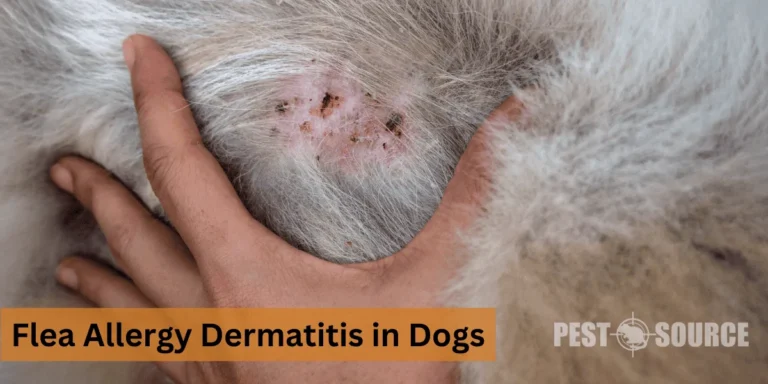
- Lower back, tail base, hind legs: This screams flea allergy dermatitis, even if you've never seen a flea on your dog.
- Year-round ear infections or recurrent hot spots: Often combined environmental plus secondary bacterial or yeast infection. Needs vet attention.
- Itching plus vomiting, diarrhea, or soft stool: Food allergy or food intolerance is more likely.
- Worsens in spring or fall: Strong seasonal signal pointing to pollen or outdoor mold.
If your dog matches one of these patterns cleanly, you'll move faster through the rest of this guide. If the pattern is muddy, that's normal too. Most atopic dogs have overlapping triggers, which is exactly why a stepwise approach beats guessing.

The Three Main Types of Dog Allergies (And How to Tell Them Apart)
Let's lay them out side by side. Knowing which one you're dealing with changes everything from what you feed your dog to which medication your vet will reach for first.
| Allergy Type | Most Common Trigger | Typical Symptom Pattern | Diagnostic Path |
|---|---|---|---|
| Flea allergy dermatitis | Saliva from flea bites | Intense itching at lower back and tail base | Response to strict flea control |
| Food allergy | Specific protein (beef, chicken, dairy, eggs, wheat) | Itching + GI signs (vomit, diarrhea, gas) | 8 to 12 week elimination diet |
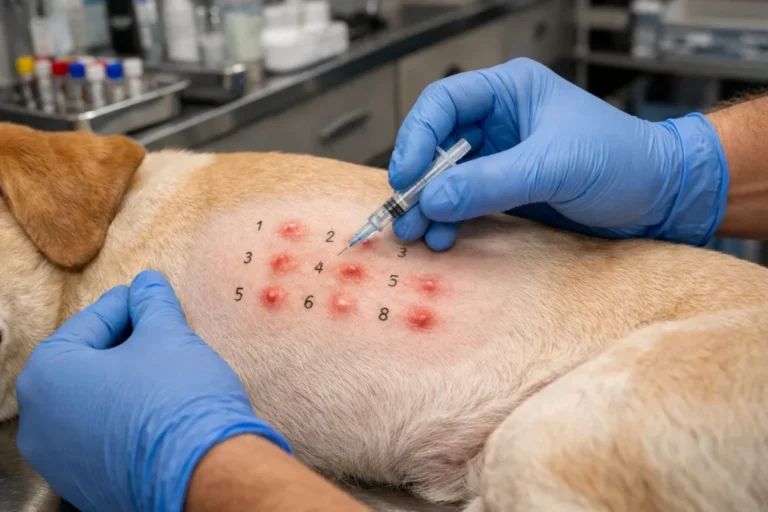
| Environmental (atopy) | Pollen, dust mites, mold, grass | Paws, ears, belly, groin; often seasonal | Intradermal or serum IgE testing |
A few things worth knowing upfront:
- Flea allergy is the most underdiagnosed cause. Dogs with FAD can react to a single bite. You don't need a "flea infestation" for it to be the culprit.
- Food allergies are actually less common than people think. True food allergy affects a small percentage of dogs, even though pet-store marketing suggests otherwise.
- Atopy usually starts between ages 1 and 3. If your older dog suddenly develops skin issues, think hormones, infections, or new environmental exposures first.
- Breed predisposition matters. Goldens, Labs, French Bulldogs, Boxers, Westies, Shar-Peis, Cocker Spaniels, German Shepherds, and Dalmatians all show higher rates of atopic dermatitis, per breed-prevalence data reported in veterinary dermatology literature.
If your dog is in one of those breeds and started itching young, atopy should sit high on your suspicion list.
Flea Allergy Dermatitis: The First Thing to Rule Out
Every vet who works with itchy dogs will tell you the same thing: rule out fleas first. Always. Even indoor-only dogs.
Even if you've never seen a flea. The American Veterinary Medical Association recommends year-round flea prevention for dogs in most US climates for exactly this reason.
Why? A single flea bite can keep a flea-allergic dog itching for two weeks. You won't necessarily see fleas because the adult fleas only live on the dog briefly, and the dog is grooming them off.
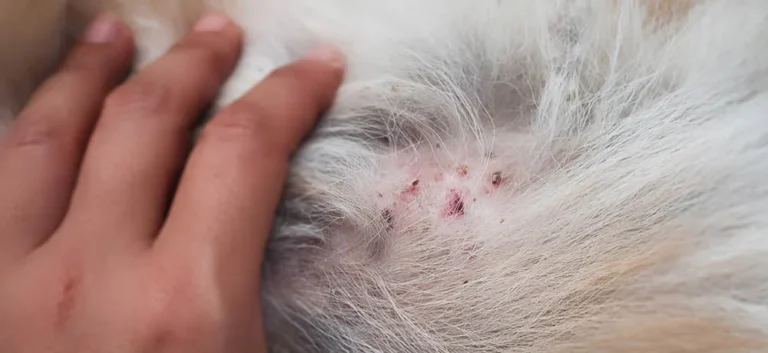
What you'll see instead is hair loss over the rump, scabs along the lower back, and a dog that won't stop chewing at the base of their tail.
Here's how to work this branch of the decision tree:
- If your dog is on flea prevention already: Check the product. Is it a true adulticide (kills fleas), or is it a repellent or "natural" option that may not be enough? Prescription options from your vet are more reliable than OTC versions.
- If your dog isn't on prevention: Start it now, on every pet in the household, and keep it going for at least 12 weeks before judging results. Most OTC top-spot products fail in this scenario.
- If itching improves dramatically on strict flea control: You had your answer. Continue prevention lifelong. This alone solves roughly half of "chronic itch" cases.
If flea control doesn't fix it, you've just eliminated the most common cause and can move on to the next branch with confidence. No wasted months.
Food Allergies vs. Food Intolerance in Dogs
These two get lumped together all the time, but they aren't the same thing, and treating them the same way leads to confused owners and itchy dogs.
- Food allergy is an immune response. The dog's immune system flags a specific protein (most commonly beef, dairy, chicken, or wheat) as a threat. True food allergies affect a relatively small slice of dogs, contrary to what the pet food aisle suggests.
- Food intolerance doesn't involve the immune system. It's a digestive issue, more like lactose intolerance in people. Symptoms lean GI (gas, loose stool, vomiting) with little to no itching.
Why does this matter? Because the diagnostic test, an elimination diet trial, works for both, but the expectation differs. With a true food allergy, you'll see both skin and gut signs improve.
With intolerance, you'll mostly see stool normalize.
The elimination diet trial is the only reliable diagnostic. Blood and saliva "food allergy" panels sold direct-to-consumer are not considered accurate by board-certified veterinary dermatologists.
Here's how to run it properly:
- Pick a novel protein your dog has never eaten (rabbit, venison, duck, kangaroo) or a hydrolyzed protein diet where the protein is broken into pieces too small for the immune system to recognize. Prescription hydrolyzed diets are the gold standard per the Merck Veterinary Manual.
- Feed only that diet for 8 to 12 weeks. No treats. No table scraps. No flavored medications if you can avoid them.
- If symptoms improve, challenge with the old food. If itching flares within 1 to 2 weeks of reintroducing the original diet, food allergy is confirmed.
It's a long process. Twelve weeks feels like forever when your dog is miserable. But cutting it short is the most common reason elimination diets "fail" in real-world use.
Environmental Allergies (Atopic Dermatitis): Pollen, Dust, and Mold
Atopic dermatitis is the umbrella term for environmental allergies. The triggers are airborne or contact-based things your dog encounters daily. Common culprits include tree and grass pollens, weed pollens (especially ragweed), dust mites, indoor and outdoor mold spores, and occasionally storage mites in dry kibble.
A few hallmarks of atopy:
- Paw chewing is the classic sign. Dogs don't have hands, so they lick and chew their paws to relieve itch.
- Ear inflammation is often the first clue. Red, warm, waxy ears that smell yeasty point strongly to underlying atopy.
- Belly and groin rubbing. Dogs scoot or rub their bellies on the carpet to scratch areas they can't reach.
- Seasonal flare pattern. Spring and fall are peak pollen seasons. Winter often brings relief for pollen-sensitive dogs, while dust mite allergic dogs may worsen indoors with the heating on.
Atopy is a diagnosis of exclusion. You rule out fleas, you rule out food, and what's left is environment. The allergy testing we cover later pinpoints exactly which environmental allergens are involved.
The Merck Veterinary Manual and the American College of Veterinary Dermatology both note that atopy is a lifelong condition requiring ongoing management, not a one-time cure. The goal is to reduce the immune response and the itch, not eliminate exposure entirely.
Step 1: Document Symptoms Before Calling the Vet
Most vet visits go better when you walk in with a timeline. Dogs can't tell us what's changing, so a few notes on your phone can save you a second appointment and a lot of guesswork.
Here's a simple log to keep for two to three weeks before the vet visit:
- When does itching happen? Morning, night, after walks, year-round, only in spring?
- Where does your dog scratch? Paws, ears, belly, armpits, base of tail?
- Any GI signs? Loose stool, gas, vomiting, or gurgling stomach?
- Food and treats. Brand, protein source, any recent changes.
- Environment. New shampoo, new cleaning product, new dog bed, recent landscaping or yard treatment.
- Flea prevention. What product, when last applied, applied to all pets?
This kind of log lets your vet skip a lot of "let me ask you a hundred questions" time and get to the diagnosis faster. It also helps you notice patterns you wouldn't otherwise catch.
A few extra details that help:
- Take photos of any rash, hair loss, or ear discharge. Phone cameras catch what you'll forget by the appointment.
- Rate the itch on a 0 to 10 scale. Vets often use a validated itch scale, and your day-to-day ratings feed right into it.
- Note sleep disruption. Dogs that scratch through the night are in significant discomfort and may need faster intervention.
Step 2: Get a Proper Veterinary Exam (What to Ask)
Not every itchy dog needs a specialist on day one, but every itchy dog needs a real exam. Here's what a thorough vet visit should cover and what to ask for if it's not coming up.
A good canine allergy workup includes:
- Skin scrape and cytology. Looks for mites and identifies whether bacteria or yeast have moved into damaged skin.
- Ear exam with otoscope. Chronic ear inflammation is one of the most common allergy clues.
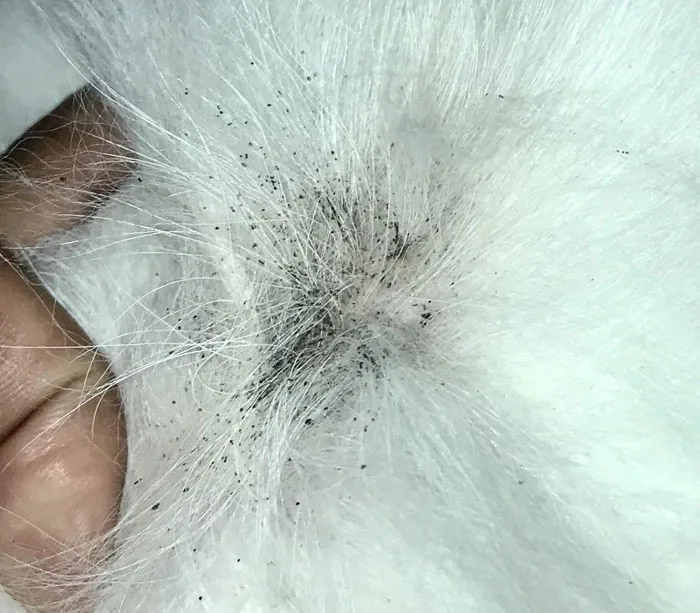
- Flea combing. Even if you don't see fleas, finding flea dirt (black specks that turn red on a wet paper towel) confirms exposure.
- Discussion of symptom log. Bring your notes.
- Diet history. Be ready to list every protein your dog has eaten over their lifetime.
If food allergy is on the table, ask your vet about a prescription hydrolyzed diet and clarify whether treats and flavored preventatives need to stop. If environmental allergy is suspected, ask whether intradermal skin testing or serum IgE testing makes more sense for your situation.
A few questions that change the path forward:
- "Has this dog ever had a skin infection before?" Repeated pyoderma or yeast infections are huge allergy clues.
- "Could this be mites?" Sarcoptic mange mimics allergies almost perfectly and needs different treatment.
- "Is Apoquel or Cytopoint appropriate to start now while we figure out the underlying cause?" Both can buy comfort fast while diagnostics run.
For an authoritative overview of the diagnostic approach, the American College of Veterinary Dermatology publishes owner-friendly guides on canine atopic dermatitis that align with what specialists actually do in practice.
Step 3: Run an Elimination Diet Trial the Right Way
If your vet suspects food allergy, the elimination diet is the next move. We covered the basics earlier, but the execution makes or breaks the trial.
Pick the diet carefully.
Hydrolyzed protein diets break proteins into peptides too small for the immune system to react to. They're the most reliable choice when you don't know which protein is the culprit. Prescription brands like Royal Canin Hydrolyzed Protein, Hill's Prescription Diet z/d, and Purina Pro Plan HA dominate this space.
Novel protein diets work if you actually know your dog's full protein history. Most people don't.
Strict means strict.
- No treats. Use kibble from the trial diet as treats.
- No table scraps.
- No flavored medications. Ask your vet about non-flavored alternatives.
- No other pets' food accessible.
- No flavored toothpaste.
- Watch for hidden dairy in medications and supplements.
Time it correctly.
Most veterinary dermatologists recommend 8 to 12 weeks. Some dogs show improvement in 4 weeks, but a meaningful subset takes 10 to 12. If you stop at week 5 because "nothing's changing," you may be one week short of your answer.
Run the challenge.
After the trial period, if symptoms have improved, reintroduce the original food deliberately. If itching returns within 7 to 14 days, you have your diagnosis.
What if it doesn't work?
If 12 weeks of strict trial produce no improvement, food allergy is unlikely. Move on to environmental allergy workup without guilt. You didn't fail; you just answered a question.
Step 4: Choose the Right Allergy Testing Method
If flea and food are ruled out, environmental allergy testing is the next step. There are two main routes, and they aren't interchangeable.
| Test Type | What It Measures | Where It's Done | Strength | Limitation |
|---|---|---|---|---|
| Intradermal skin testing | Skin reaction to injected allergens | Veterinary dermatologist | Gold standard, more accurate | Requires sedation, shaved area, no recent steroids |
| Serum IgE testing | Antibody levels in blood | Regular vet can draw | Easier, no drug withdrawal as strict | More false positives, less reliable for food allergens |
Intradermal testing is the long-standing gold standard for environmental allergies. The catch: dogs need to be off oral steroids for several weeks and off antihistamines for about a week, otherwise skin reactivity drops and results become unreliable.
Serum IgE tests are easier to access and don't require drug withdrawal. They're useful for screening, especially for dust mites or regional pollens. The trade-off is more false positives.
A few practical notes from published veterinary dermatology guidance:
- Testing for food allergies via blood or saliva is not reliable. Stick with elimination diets for food.
- Timing matters. Seasonal allergens are best tested when the dog is symptomatic but off medications.
- The dog's age matters less than you'd think. Testing can be done at any age, but immunotherapy works best in younger dogs with more years to benefit.
- Cost varies. Intradermal testing typically runs $200 to $400 depending on region, and serum tests range from $150 to $300.
The end goal of testing is usually to guide immunotherapy, not just to satisfy curiosity.
Treatment Options Compared: Apoquel vs. Cytopoint vs. Antihistamines
Once you've got a working diagnosis, the conversation shifts to control. Three options dominate the field, and they work very differently.
| Option | Class | Onset | Duration | Best For | Caveat |
|---|---|---|---|---|---|
| Apoquel (oclacitinib) | JAK inhibitor oral tablet | Within 4 hours | Daily dosing | Fast, reliable itch control | Requires daily dosing, bloodwork monitoring recommended |
| Cytopoint (lokivetmab) | Monoclonal antibody injection | 1 to 2 days | 4 to 8 weeks per shot | Owners who struggle with daily pills | More expensive per dose, requires vet visits |
| OTC antihistamines | H1 blocker | Variable | Daily | Mild cases, adjunct therapy | Only ~10 to 30% of dogs respond well |
Apoquel has become a workhorse for moderate to severe atopic dogs. Manufacturer specifications from Zoetis indicate it works within 4 hours and is approved for long-term daily use in dogs over 12 months.
Cytopoint is a once-injected monoclonal antibody that neutralizes itch at the source. Each shot lasts 4 to 8 weeks. It's a great fit for dogs that hate pills or owners who travel.
Antihistamines like diphenhydramine, cetirizine, and loratadine are widely used and inexpensive. Aggregate reviews in veterinary literature suggest only about 10 to 30 percent of dogs get meaningful relief from antihistamines alone. They're best as part of a broader plan, not the whole plan.
Combination therapy is normal. Apoquel for breakthrough itch, Cytopoint for baseline control, antihistamines on top, omega-3s in the food, regular baths. There's no single "right" answer.
The right answer is whatever keeps your dog comfortable with the fewest side effects.
Safety notes that matter:
- Never give dogs OTC cold or allergy meds without vet guidance. Some contain pseudoephedrine or xylitol, both toxic to dogs.
- Apoquel is prescription-only and shouldn't be used in dogs under 12 months.
- Cytopoint is also prescription-only and must be administered by a vet.
- Topical steroid overuse on hot spots can thin skin over time. Use as directed.
Prescription Diets: Hydrolyzed vs. Novel Protein vs. Limited Ingredient
Once food allergy is on the table, the diet aisle gets confusing fast. Three categories get pitched as "hypoallergenic," but they aren't interchangeable.
Hydrolyzed protein diets are the gold standard for diagnostic elimination trials. Manufacturers break the protein source into peptides too small for the immune system to recognize. Even a dog allergic to chicken can usually eat hydrolyzed chicken safely because the immune system can't "see" the original protein.
Novel protein diets use a single protein the dog has never eaten, like rabbit, venison, duck, kangaroo, or alligator. They work, but only if you actually know your dog's full protein history.
Limited ingredient diets use fewer ingredients to reduce exposure, but the proteins are typically common ones. They're better for maintenance once you know the trigger, but not ideal for a diagnostic trial.
| Diet Type | Best Use | Reliability for Diagnosis |
|---|---|---|
| Hydrolyzed protein | Initial 8 to 12 week elimination trial | Highest |
| Novel protein | Trial if full dietary history is known | High when history is accurate |
| Limited ingredient | Long-term maintenance | Lower |
A practical tip: if you're not sure of your dog's protein history, start with hydrolyzed. It removes the guesswork.
When Immunotherapy (Allergy Shots) Makes Sense
If your dog has confirmed environmental allergies and you're tired of symptomatic meds, immunotherapy is the only treatment that actually changes the immune response over time. Published veterinary studies report success rates consistently in the 60 to 80 percent range.
Here's the basic flow:
- Build the serum. A veterinary dermatologist mixes a custom solution based on your dog's specific allergens.
- Give the shots. Most protocols start with a ramp-up phase followed by maintenance injections every 7 to 14 days. Some dogs transition to sublingual drops.
- Wait. Improvement typically shows within 6 to 12 months.
- Stay the course. Stopping immunotherapy usually means symptoms return.
Good candidates include dogs under about 8 years old with confirmed environmental allergies, dogs whose symptoms return the moment medications are tapered, and owners who can commit to the long-term schedule. Less ideal candidates include dogs with primarily food allergies, since immunotherapy doesn't address food triggers.
Home Care That Actually Helps: Baths, Omega-3s, and Topicals
Medications get most of the attention, but the daily stuff matters more than people realize. A consistent home-care routine reduces how much medication your dog needs and improves quality of life fast.
Cool baths with a hypoallergenic or medicated shampoo. Bathing 1 to 2 times weekly physically removes allergens from the skin surface. Cool water only, gentle dog shampoo, and let the shampoo sit for 5 to 10 minutes before rinsing.
Omega-3 fatty acid supplements. EPA and DHA from fish oil reduce inflammatory skin responses over time. Veterinary dermatology guidelines suggest 50 to 75 mg per kg of combined EPA/DHA daily. It takes 6 to 8 weeks to see the benefit.
Wipe paws after outdoor time. A quick wipe with a damp cloth removes pollen and reduces how much your dog tracks into their bedding.
Wash bedding weekly in hot water. Dust mites and allergens accumulate in fabric. Hot-water washing kills mites and rinses allergens out.
Humidity control. Indoor dust mites thrive above 50 percent humidity. A dehumidifier helps, especially in damp climates.
Mistakes Owners Make That Make Allergies Worse
- Treating symptoms without finding the cause. Bathing and Apoquel help, but if your dog is reacting to chicken in their food, no amount of Cytopoint solves the underlying issue.
- Stopping flea prevention in winter. A lapse often leads to a sudden flare that gets blamed on something else.
- Using OTC "food allergy" tests from pet stores. They produce false positives and lead to unnecessary diet restrictions.
- Cutting the elimination diet short. Twelve weeks is the safer bet.
- Switching foods constantly. Every switch resets the trial.
- Skipping the ear check. Allergy dogs often have silent ear infections brewing.
- Over-bathing with harsh shampoo. Strips skin barrier oils and makes itching worse.
- Giving human allergy meds without vet guidance. Some are toxic, some are fine at different doses.
- Assuming grain-free means hypoallergenic. The protein is usually the issue, not the grain.
Costs of Managing Dog Allergies (Testing, Meds, and Food)
| Item | Typical Cost (USD) | Frequency |
|---|---|---|
| Vet exam + skin cytology | $80 to $200 | At diagnosis |
| Intradermal skin testing | $200 to $400 | Once |
| Serum IgE testing | $150 to $300 | Once |
| Elimination diet (hydrolyzed) | $60 to $120 per month | 3 months minimum |
| Apoquel | $2 to $4 per day | Ongoing |
| Cytopoint injection | $60 to $150 per shot | Every 4 to 8 weeks |
| Immunotherapy serum | $200 to $400 initial | Yearly renewal |
| Prescription flea prevention | $15 to $30 per month | Year-round |
| Medicated shampoo | $15 to $30 per bottle | Monthly |
A dog on Apoquel plus prescription flea prevention plus therapeutic food runs roughly $200 to $400 per month. As of 2026, these ranges reflect typical US pricing, varying by region.
Don't let the numbers scare you into inaction. Many of these costs overlap or replace each other. The point of working through the diagnostic tree is finding the smallest effective intervention.
Safety Warnings: What Not to Give a Dog with Allergies
- Never give human cold or sinus meds without vet approval. Pseudoephedrine and phenylephrine are toxic to dogs. Xylitol, common in liquid medications, is also dangerous.
- Don't use topical hydrocortisone meant for humans on dogs without vet guidance. Higher concentrations can thin dog skin or be licked off.
- Avoid essential-oil-based "natural" allergy remedies. Many are irritating to dog skin and some (tea tree, citrus, pennyroyal) are toxic.
- Don't double up on multiple antihistamines. Combining diphenhydramine with cetirizine increases sedation without improving itch control.
- Keep Apoquel out of reach of other pets. It's dosed by weight and is dangerous for cats.
- Use only species-appropriate flea products. Some dog flea preventatives are toxic to cats in multi-pet homes.
When in doubt, call your vet or the ASPCA Animal Poison Control Center (888-426-4435) before giving anything new.
Breeds Most Prone to Allergies and Why It Matters
Higher rates of atopic dermatitis show up in Golden Retrievers, Labrador Retrievers, French Bulldogs, English Bulldogs, Boxers, West Highland White Terriers, Shar-Peis, Cocker Spaniels, German Shepherds, Dalmatians, Irish Setters, and Vizslas.
This doesn't mean every dog of these breeds will develop allergies. It means the odds are higher and the age of onset skews younger. For owners of these breeds, an early relationship with a veterinary dermatologist and a fast start on flea prevention can save years of frustration.
Long-Term Management Plan: Keeping Allergies Under Control
Allergies in dogs are managed, not cured. The goal is to keep your dog comfortable with the minimum medication needed.
- Year-round flea prevention. No breaks.
- Stable diet. Once you've identified what works, stick with it.
- Skin barrier support. Omega-3s, occasional medicated baths, paw wipes after outdoor time.
- Quarterly vet check-ins. Even stable dogs benefit from a recheck every 3 to 6 months.
- Annual bloodwork if your dog is on Apoquel long term.
- Watch for flares. Seasonal changes, new foods, or new environments can tip a stable dog back into symptoms.
- Adjust medications seasonally. Many atopic dogs need heavier control during pollen peaks and can taper in winter.
When to See a Veterinary Dermatologist
Your regular vet can handle a lot. But it's time to escalate when your dog has failed to improve on Apoquel or Cytopoint, has year-round severe symptoms, keeps getting skin or ear infections, or you're considering allergy shots and want intradermal testing. You can find a board-certified dermatologist through the American College of Veterinary Dermatology directory.
Decision Guide: What to Do Based on Your Dog's Situation
Let's pull the whole decision tree together. Start at the top and follow the branch that matches your dog.
If your dog is intensely itchy at the lower back and tail base: Start strict flea prevention on every pet in the household. Continue for 12 weeks minimum. If itching resolves, lifelong flea control is your answer.
If itching persists, move to food allergy workup.
If your dog is itchy plus has GI signs: Run a strict 8 to 12 week elimination diet with hydrolyzed or novel protein. No treats, no scraps, no flavored preventatives. Challenge with the old food at the end.
If symptoms return on challenge, confirmed food allergy. If no improvement, move to environmental allergy testing.
If your dog has paw licking, ear infections, and belly itching (especially seasonal): Confirm flea control is solid. Start Apoquel or Cytopoint for comfort. Run intradermal or serum allergy testing.
Consider immunotherapy. Add omega-3s, medicated baths, and paw wipes.
If your dog is a young at-risk breed with early itching: Don't wait. Get a vet exam and start flea prevention now. Establish a baseline with your vet before things get worse.
If your dog has chronic ear infections or skin infections: Don't assume it's "just ear infections." Almost always there's an underlying allergy. Get cytology done and treat the infection and the allergy together.
This decision tree isn't perfect, but it captures how most successful cases play out. The dogs that struggle are usually the ones where owners skip steps, cut elimination diets short, or assume the problem will go away on its own. It won't.
Allergies are a marathon, not a sprint, but they respond beautifully to a methodical plan.
How Long Before You See Improvement
| Intervention | When You'll See Results |
|---|---|
| Strict flea control | 4 to 8 weeks for full effect |
| Apoquel | Within 4 hours for itch |
| Cytopoint | 1 to 2 days, lasts 4 to 8 weeks |
| Elimination diet | 6 to 10 weeks, full trial at 12 |
| Immunotherapy | 6 to 12 months |
| Omega-3 supplementation | 6 to 8 weeks |
| Medicated baths | Same day for surface relief |
If you're not seeing progress within the expected window, revisit the diagnosis, not the dose. Most failures trace back to missed triggers, not under-medication.
Final Takeaways
Helping a dog with allergies comes down to three habits: identify the trigger, control the itch, and maintain the plan. Skip any one and the cycle restarts. Work the steps in order, keep your vet in the loop, and your dog will spend more good days than bad ones.
Frequently Asked Questions
What are the most common signs of allergies in dogs?
Scratching, paw licking, face rubbing, ear infections, hot spots, and hair loss. Many dogs also develop recurrent skin infections. GI signs like vomiting or diarrhea point more toward food allergy.
Symptom location is one of the strongest clues to the type of allergy you're dealing with.
Can I give my dog Benadryl for allergies?
Diphenhydramine is sometimes used in dogs, but only at vet-approved doses. It helps only a small percentage of dogs meaningfully, and the dose differs from human dosing. Never give Benadryl alongside other antihistamines or sedatives without vet guidance, and never use combination cold medications that contain pseudoephedrine or xylitol.
How long does it take for Apoquel to start working?
Manufacturer specifications from Zoetis indicate Apoquel begins reducing itch within 4 hours of the first dose. Most dogs show meaningful relief within the first day.
Are grain-free dog foods better for allergies?
Not usually. True grain allergies are uncommon in dogs. The protein source (chicken, beef, dairy, eggs) is far more likely to be the trigger.
A hydrolyzed protein diet or a novel protein diet is a better diagnostic tool than simply going grain-free.
How do I know if my dog has a food allergy or environmental allergy?
Both can look similar on the skin, but food allergies often include GI signs and don't change with the seasons. The cleanest diagnostic is an 8 to 12 week elimination diet. If symptoms resolve on a strict novel or hydrolyzed diet and return when old food is reintroduced, food allergy is confirmed.
Otherwise, environmental allergies are the more likely culprit.
When should I see a veterinary dermatologist for my dog's allergies?
If your dog has failed standard treatment, has year-round severe symptoms, keeps getting skin or ear infections, or you think immunotherapy might help, it's time. You can find a board-certified dermatologist through the American College of Veterinary Dermatology at acvd.org.
What's the fastest way to stop my dog's itching right now?
A cool bath with a gentle oatmeal shampoo, an Elizabethan collar to break the scratch cycle, and a vet visit to start Apoquel or Cytopoint. Apoquel typically reduces itch within 4 hours, and Cytopoint within 1 to 2 days. OTC antihistamines alone are rarely enough for acute flares.
Can dog allergies go away on their own?
Environmental allergies don't typically resolve, but they often wax and wane with seasons and age. Food allergies don't go away once established. Flea allergy persists for life unless fleas are controlled.
The goal is management, not cure.
Are expensive allergy tests worth it for dogs?
When the result guides treatment, yes. Intradermal or serum allergy testing that leads to immunotherapy can change a dog's long-term trajectory. Direct-to-consumer saliva or hair panels are not validated and often lead to unnecessary diet restrictions.