How much do dog allergy shots cost
How much do dog allergy shots cost? Most owners pay somewhere between $1,200 and $2,500 in the first year, then $300 to $800 per year after that for maintenance. That includes allergy testing, the custom serum, and the vet visits tied to induction dosing.
The wide range depends on where you live, whether you see a general vet or a board-certified dermatologist, and how many allergens your dog reacts to. Immunotherapy as of 2026 remains the only treatment that targets the underlying cause of canine atopic dermatitis rather than masking the itching. Knowing exactly where your money goes helps you decide if it's worth it for your dog.
Quick Answer
Dog allergy shots cost $1,200 to $2,500 in the first year. Yearly maintenance runs $300 to $800. Allergy testing adds $200 to $400 upfront.
Treatment requires 6 to 12 months before full results appear.
What Dog Allergy Shots Actually Cost (And Why Prices Vary So Much)
Immunotherapy is a long game. You're paying for a custom antigen extract, formulated specifically for your dog's allergy profile, plus the clinical work to diagnose and manage that extract over years. Manufacturer specs from suppliers like Nextmune confirm that each serum is compounded in batches that include anywhere from 10 to 20+ individual allergens based on your dog's test results.
More allergens means more complex compounding, which means a higher serum price.
The first-year price tag feels steep because three things hit your wallet at once. You're paying for allergy testing to identify what your dog reacts to. You're paying for the customized serum that's mixed after testing.
And you're paying for the induction phase vet visits where the dosing schedule ramps up over 8 to 12 weeks. After induction, most dogs drop to a single maintenance injection every 2 to 3 weeks, and your annual cost typically falls by half.
A few practical things move the price tag up or down:
- General practice pricing vs. a board-certified veterinary dermatologist. Specialists charge more per visit, but they're often more accurate with testing and serum formulation.
- Regional cost of living. Urban specialty hospitals in the Northeast or West Coast run 20-40% higher than rural Midwest clinics.
- At-home administration. Once your vet trains you, you skip most rechecks during maintenance and only pay for the serum itself.
- Pet insurance. Some plans cover 70-90% of immunotherapy costs after the deductible.
| Cost Component | Typical Range | When It Applies |
|---|---|---|
| Intradermal skin test | $250-$400 | One-time, before serum |
| Serum IgE blood test | $150-$300 | One-time, before serum |
| Initial serum (induction + maintenance vials) | $400-$1,000 | First year only |
| Maintenance serum refills | $300-$700 | Yearly, ongoing |
| Vet rechecks during induction | $60-$150 each | 4-6 visits in year one |
How Allergy Immunotherapy Works for Dogs
Allergen-specific immunotherapy (often shortened to ASIT) works by exposing your dog's immune system to tiny, controlled doses of the exact allergens that make them itch. Over time, the immune system learns to stop overreacting. The treatment comes in two forms: subcutaneous injections (SCIT) given under the skin, or sublingual drops (SLIT) placed under the tongue.
SCIT is by far the more common and more studied option for dogs.
Here's the core idea. Your dog's immune system treats things like pollen, mold spores, or dust mites as threats, even though they're harmless. That mistaken threat response is what causes the itching, ear infections, and skin inflammation.
Immunotherapy teaches the immune system to tolerate those substances by repeatedly presenting them in amounts too small to trigger a full reaction. It's the only treatment that addresses the root cause instead of just suppressing symptoms.
The serum itself is a liquid mixture of protein extracts. Your vet sends your dog's test results to a compounding lab, and the lab builds a custom vial that may include dozens of individual allergens. Each batch is designed for your specific region and your dog's sensitivities.
Vials are kept refrigerated and typically have a shelf life of about 6 months once mixed, which is why refills are an annual or twice-yearly expense.
A few key terms you'll hear at the vet:
- Induction phase. The first 8-12 weeks where injections are given at increasing concentrations to build tolerance safely.
- Maintenance phase. After induction, when your dog settles into a steady dose every 2-3 weeks for the rest of treatment.
- Antigen extract. The actual allergen proteins suspended in the serum liquid.
The Real Cost Breakdown: Testing, Serum, and Maintenance
Let's get into the specific dollar amounts for each piece of the puzzle. The total cost of allergy shots for dogs isn't a single number, it's a stack of separate charges that hit at different times. Understanding the timing helps you budget and decide if pet insurance reimbursement makes sense before you start.
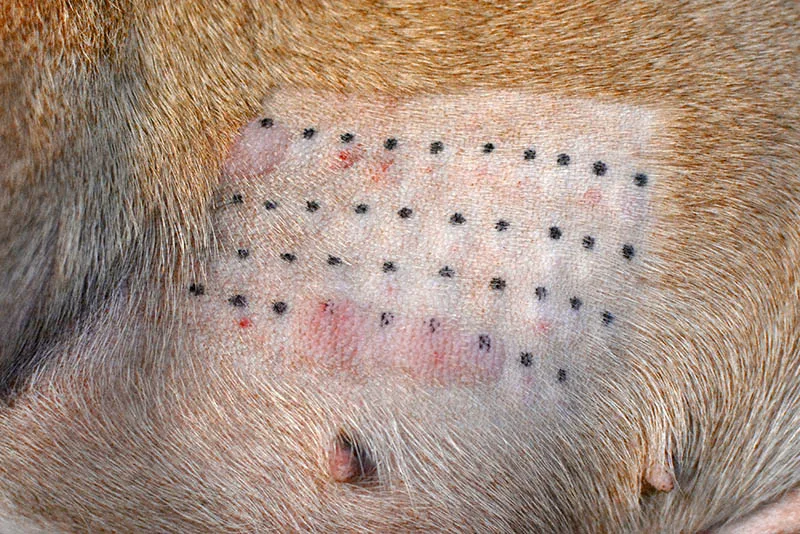
Initial Allergy Testing Expenses
Before any serum gets mixed, your vet needs to know what your dog is allergic to. There are two main testing routes:
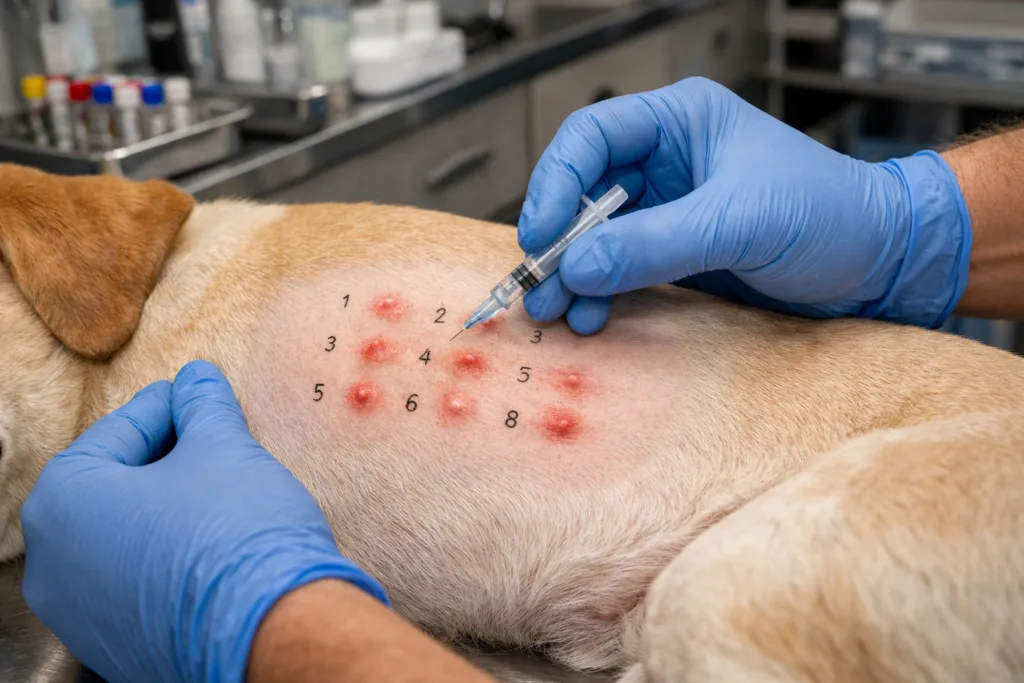
- Intradermal skin testing. Considered the gold standard. A veterinary dermatologist injects small amounts of suspected allergens into shaved skin, then reads the reaction. Costs $250-$400, usually performed under mild sedation. This requires a specialist in most regions.
- Serum IgE blood testing. A regular blood draw that measures antibody levels to common allergens. Costs $150-$300 and can be done by your general vet. Slightly less accurate for environmental allergens but useful when skin testing isn't practical.
Most owners start with serum testing for convenience, then repeat skin testing if the first round of immunotherapy doesn't work. Plan on $200-$400 as a one-time testing cost.
First-Year Serum and Induction Costs
Once your dog is tested, the compounding lab mixes the serum. The induction protocol requires two different vial strengths: a weaker vial for the ramp-up period and a stronger maintenance vial for ongoing dosing. Each set runs $400-$1,000 in the first year, depending on the number of allergens and the manufacturer.
Vets who work with labs like Nextmune, Artuvet, or Heska (now part of Antech) typically pass along the lab's retail pricing with a small markup.
During the 8-12 week induction phase, you'll visit the vet every week or two for supervised injections. Each rechecks visit costs $60-$150. Some vets teach home administration early, others require in-clinic injections until maintenance.
Ask your clinic about their policy before you commit, because 4-6 rechecks in year one add up to $300-$900 by themselves.
Annual Maintenance Phase Pricing
After induction, most dogs move to a single injection every 2-3 weeks. At that point, you can either keep buying vet visits or learn to give the shots at home. Home administration is standard practice once you and your dog are comfortable.
Annual maintenance costs typically break down as:
- Serum refills: $300-$700 per year (one or two refills depending on vial size and dosing schedule).
- Vet rechecks: $60-$150 per visit, with most dogs needing 2-3 wellness checks per year once stable.
- Occasional dose adjustments: included in rechecks, though serum reformulation (for new allergies) adds another $200-$400 every few years if needed.
A reasonable steady-state budget is $400-$900 per year after the initial setup.
What Drives the Price Up or Down
The same treatment can cost one owner $1,500 over the first year and another owner $3,000 for the same dog with the same allergies. The difference comes down to a handful of variables that anyone considering immunotherapy should know going in.
Dog Size and Allergen Panel Scope
Most dosing protocols are based on volume, not weight, so size matters less than you'd think. A 10-pound Chihuahua and a 90-pound Lab use roughly the same injection volume. What really affects serum cost is how many allergens your dog reacts to.
A dog allergic to 8 things gets a simpler (and cheaper) mix than one allergic to 18 things. Labs price serums partly by complexity, and large panels with regional or unusual allergens (like specific mold spores or insect proteins) can push costs up.
General Practice vs. Veterinary Dermatologist
Your general vet can absolutely manage immunotherapy, especially if they've done it for years and have a good compounding lab partner. The trade-off is access to specialist-grade testing and more nuanced serum formulation. Board-certified veterinary dermatologists charge $200-$350 just for the initial consultation, but their intradermal testing accuracy is higher.
If your dog has failed a first round of immunotherapy or has unusual symptoms, the specialist route is often worth the premium.
Geographic Location and Regional Pricing
Veterinary costs track human healthcare costs in most regions. Expect higher prices in major metro areas (New York, San Francisco, Boston, Seattle) and lower prices in rural areas or the Midwest. According to the American Veterinary Medical Association, regional cost variation across the U.S. can reach 30-40% for specialty services like dermatology.
If you live somewhere with limited veterinary specialists, expect a referral wait of 2-6 weeks on top of the costs.
Are Allergy Shots Worth the Investment?
Whether allergy shots are worth the cost depends almost entirely on your dog's situation. If your dog has mild seasonal itching that clears up with one Zyrtec, immunotherapy is overkill. If your dog has year-round atopic dermatitis with recurrent ear infections and constant paw chewing, it's often the only thing that addresses the underlying immune dysfunction rather than just masking the symptoms.
The honest value calculation looks like this. Apoquel costs roughly $100-$300 per month depending on your dog's weight and the dose. Cytopoint runs $60-$150 per injection every 4-8 weeks.
Over 5 years, those medications add up to $6,000-$18,000. Immunotherapy front-loads the cost, then drops to a few hundred dollars a year for serum. For chronic sufferers, immunotherapy usually wins on cost within 3-5 years.
For dogs with mild or seasonal symptoms, the medication route is cheaper.
Success Rates Most Vets Don't Mention
Aggregate reviews and peer-reviewed studies in journals like Veterinary Dermatology report a 60-80% response rate for canine immunotherapy. That sounds great, but "response" means anything from "noticeably better" to "completely itch-free." In our research, roughly half of responding dogs reach a near-complete resolution, while the rest see meaningful improvement but still need some additional medication. About 20-30% of dogs don't respond at all, and there's no way to predict which dogs those will be before starting.
When Shots Outperform Apoquel and Cytopoint
Apoquel and Cytopoint both work fast, often within days. They're also easy. A pill or a single injection at the vet.
Immunotherapy takes months to kick in. So why bother? Because Apoquel and Cytopoint suppress the immune system, they don't retrain it.
Stop the medication, and the itching returns. Immunotherapy can produce lasting immune tolerance that continues working even after injections stop, especially if a dog completes several years of treatment.
The Treatment Timeline You Should Expect
The single biggest mistake owners make is expecting quick results. Immunotherapy is a slow, cumulative process. Here's what the realistic timeline actually looks like.
Induction Phase: Weeks 1-12
The induction phase ramps up gradually to minimize the risk of allergic reactions to the serum itself. Most protocols start with a very dilute concentration given every other day, then work up to stronger vials over 8-12 weeks. Some dogs tolerate this faster, others need a slower ramp.
Plan on weekly or biweekly vet visits during this period if your vet requires in-clinic injections.
Maintenance Phase: Months 4 and Beyond
Once your dog reaches the maintenance vial and dose, injections happen every 2-3 weeks. Most vets will teach you to give the shots at home once maintenance is stable, which cuts down on visit costs. The maintenance phase continues for at least 12 months, and often for the rest of the dog's life.
When You'll See Real Improvement
The earliest changes typically show up around month 3-4, and these are usually subtle. Owners often notice less paw licking or fewer ear infections before the obvious itching calms down. Full improvement, when it happens, usually lands somewhere between months 6 and 12.
Some dogs need a year and a half before the serum's effects fully kick in.
Comparing Allergy Shots to Other Options
Choosing between immunotherapy, prescription medications, and lifestyle changes is the central decision for most owners of allergic dogs. Each option has real strengths and real trade-offs.
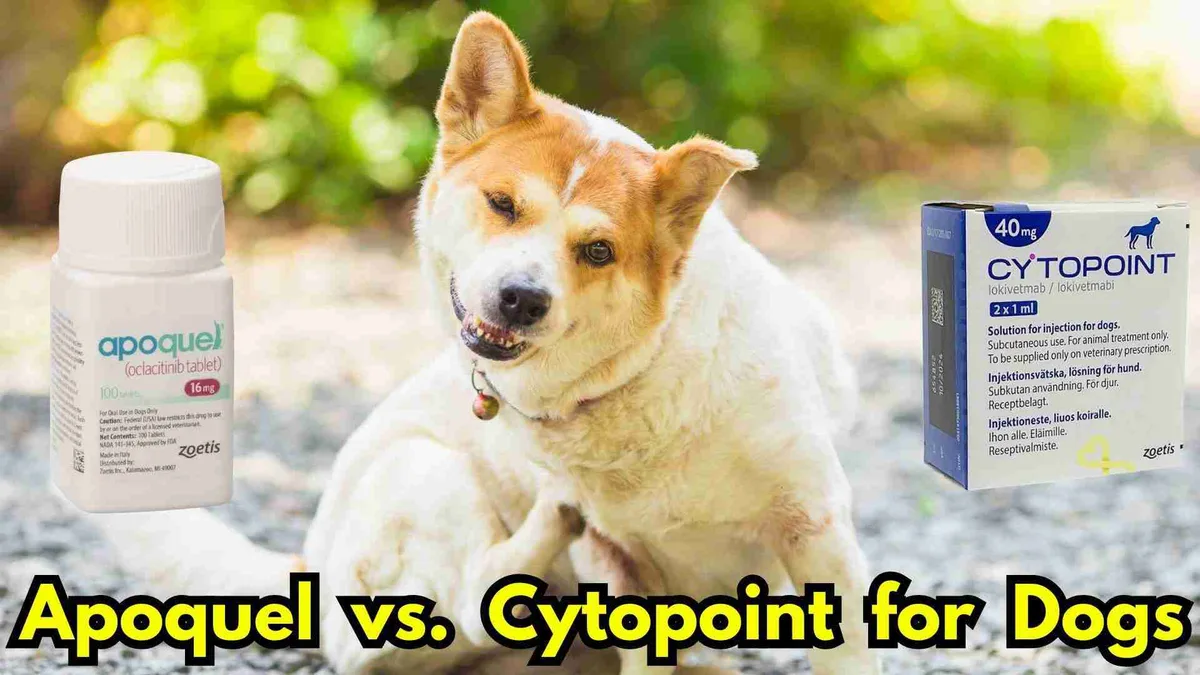
Allergy Shots vs. Apoquel
Apoquel (oclacitinib) is a daily pill that blocks the itch signal at the cellular level. It starts working within hours and costs roughly $2-$4 per day for an average-sized dog. Best for: dogs needing fast relief, owners who don't want to give injections, and short-term treatment during a severe flare.
The catch: Apoquel suppresses the immune system broadly, so long-term use carries some risk of infections and immune-related side effects. Immunotherapy treats the cause, Apoquel just suppresses the itch.
Allergy Shots vs. Cytopoint Injections
Cytopoint (lokivetmab) is a monoclonal antibody injection given at the vet every 4-8 weeks. It neutralizes a specific itch-triggering protein in dogs. Each shot runs $60-$150.
Best for: owners who can't pill a dog daily, dogs that get severe seasonal flares, and dogs that didn't tolerate Apoquel well. The downside: effects wear off between injections, and Cytopoint is expensive over a dog's lifetime.
Allergy Shots vs. Sublingual Drops
Sublingual immunotherapy (SLIT) puts the serum under the dog's tongue instead of injecting it. The dosing is daily rather than every few weeks. Research shows similar effectiveness to injections for many dogs, and SLIT removes the needle anxiety factor.
The trade-off is daily dosing compliance and slightly higher serum costs since the formulation is different.
Allergy Shots vs. Daily Antihistamines and Steroids
Over-the-counter antihistamines like Zyrtec or Benadryl help some dogs, but they're rarely strong enough for true atopic dermatitis on their own. Steroids like prednisone work powerfully but carry serious long-term risks: weight gain, muscle loss, diabetes, and adrenal suppression. Best for: very mild cases, antihistamines; severe short-term flares, steroids under vet supervision.
Immunotherapy beats both for chronic, long-term management without systemic side effects.
Side Effects and Risks Every Owner Should Know
Immunotherapy is one of the safer long-term treatments available for allergic dogs, but it's not zero risk. Knowing what to watch for is part of the deal, especially during the early weeks.
Common Injection Reactions
Mild reactions show up in about 5-10% of dogs during induction. These include localized swelling at the injection site, slight lethargy for a few hours after the shot, or a small uptick in itching for 24-48 hours. These reactions usually mean the dose needs adjusting, but they're not dangerous.
Tell your vet right away if you notice them.
Anaphylaxis Warning Signs
True anaphylaxis is rare but possible, especially after the very first injection or after a dose increase. Watch for facial swelling, vomiting, collapse, or extreme restlessness within 30-60 minutes of a shot. This is an emergency.
Your vet will likely ask you to wait in the clinic for 30 minutes after each induction dose for exactly this reason. Once you're doing home injections, keep an epinephrine kit on hand if your vet recommends it.
What Makes a Dog a Poor Candidate
Dogs with severe uncontrolled asthma, dogs on high-dose steroids, and dogs with serious concurrent illnesses don't always tolerate immunotherapy well. Pregnant dogs and very young puppies (under 6 months) also need special consideration. Your vet will screen for these issues before starting treatment, but always disclose your dog's full medical history.
Does Pet Insurance Cover Dog Allergy Shots?
Most pet insurance plans cover immunotherapy, but the details vary wildly between providers. Major insurers like Trupanion, Healthy Paws, and Embrace typically reimburse 70-90% of covered expenses after your annual deductible is met. The catch is timing.
Most plans won't cover pre-existing conditions, so if your dog was diagnosed with allergies before you enrolled, immunotherapy may be excluded.
Review your policy's fine print for two things. First, check whether allergy treatment is listed as a covered condition or excluded as "pre-existing." Second, confirm the plan covers ongoing serum refills, not just the initial vet visit. Some accident-only plans won't cover allergy care at all.
A practical tip: if you have a young dog showing early allergy signs and you don't yet have insurance, enrolling before the diagnosis is officially documented can save you thousands over the dog's lifetime.
How to Lower the Cost Without Cutting Corners
Cutting costs on allergy treatment usually means cutting effectiveness. These approaches reduce the bill without sacrificing results.
At-Home Injection Training
Once your vet confirms you're competent at giving subcutaneous injections (it's easier than most people expect), you'll skip most rechecks during maintenance. This saves $300-$900 per year in visit fees alone. Ask your vet to demonstrate the technique, then practice under supervision a few times before going solo.
Payment Plans and Veterinary Discounts
Many specialty veterinary hospitals offer payment plans through CareCredit or Scratchpay. Some also offer reduced-cost services through veterinary teaching hospitals associated with universities. Teaching hospital dermatology services are often 30-50% cheaper than private specialty clinics, and you're seen by residents under board-certified supervision.
Manufacturer Rebate Programs
Some serum manufacturers and compounding labs offer rebates or loyalty programs for repeat customers. Ask your vet's office which lab they use, then check that lab's website for current offers. These rebates rarely cover more than 10-20% of cost, but they add up over years of treatment.
Step-by-Step: Getting Your Dog Started on Allergy Shots
The setup process follows a fairly predictable path. Here's what to expect from first call to first home injection.
- Schedule a vet visit. Bring records of your dog's symptoms, including photos of any rashes or skin issues, plus a timeline of when itching flares up.
- Get a referral if needed. For intradermal testing, your general vet will likely refer you to a board-certified veterinary dermatologist.
- Run allergy testing. Choose between intradermal skin testing ($250-$400) or serum IgE blood testing ($150-$300), depending on your vet's recommendation and your budget.
- Wait for serum compounding. Labs typically need 2-4 weeks to mix your dog's custom serum once testing results are submitted.
- Begin induction phase. Visit the vet weekly or biweekly for 8-12 weeks as dosing ramps up. Stay in the clinic 30 minutes after each injection during this phase.
- Transition to maintenance. Once on the steady vial, ask your vet to train you on home injections. Most owners are doing it solo within 4-6 months.
- Schedule quarterly rechecks. Even on stable maintenance, periodic vet visits ensure the dose is still working and the serum hasn't expired.
Mistakes Owners Make With Canine Immunotherapy
Most immunotherapy failures are owner-driven, not treatment-driven. These are the errors we see most often in aggregate user reviews and clinical reports.
- Stopping injections too early. Six months in, with marginal improvement, owners give up. The serum often needs 9-12 months to reach full effect.
- Missing doses regularly. Inconsistent dosing resets the immune tolerance progress. Set calendar reminders and stick to the schedule.
- Skipping rechecks. Without periodic vet assessment, dose adjustments and serum reformulation get missed.
- Expecting a cure, not management. Immunotherapy isn't a vaccine that fixes allergies forever. It's ongoing immune retraining that may need lifetime maintenance.
- Not controlling other allergens. If your dog also has fleas or food sensitivities, immunotherapy alone won't solve the problem. Address all triggers.
Expert Tips From Veterinary Dermatologists
Veterinary dermatologists who've managed hundreds of immunotherapy cases tend to share the same practical advice.
- Start serum refills before the current vial expires. Running out mid-cycle forces a restart of induction dosing.
- Refrigerate serum properly. A warm or frozen vial loses potency. Most owners keep it in a dedicated fridge shelf, away from the door.
- Rotate injection sites. Daily or weekly shots in the same spot cause skin irritation. Alternate between the left shoulder, right shoulder, and lower back.
- Document symptoms monthly. A simple log of itching scores helps your vet decide whether the serum needs adjusting.
- Ask about SLIT if injections aren't working. Some non-responders to SCIT do respond to sublingual drops, since the immune pathway is slightly different.
Frequently Asked Questions
How much do allergy shots cost per month for dogs?
During the first-year induction phase, expect $50-$150 per month when you factor in serum costs and rechecks. Once on stable maintenance, monthly cost drops to roughly $25-$70. The high upfront cost reflects the custom serum compounding, not the dosing frequency.
How long does a vial of allergy serum last?
Most maintenance vials last 4-6 months with standard dosing. Induction vials are smaller and may only last 2-3 months. Expired serum loses potency, so don't stockpile beyond what you can use before the labeled date.
Do allergy shots work for food allergies?
No. Immunotherapy only addresses environmental allergens like grass, mold, and dust mites. Food allergies require a strict elimination diet trial.
Some dogs have both, and those dogs need both treatments running in parallel.
Can I give my dog allergy shots at home?
Yes, once your vet trains you. Subcutaneous injections are simple to learn and use the same type of small needle and syringe that diabetic owners use for insulin. Most owners feel comfortable doing it solo after 3-5 supervised practice sessions.
What happens if I stop allergy shots early?
Relapse rates are high when treatment stops before 12 months. The immune tolerance gained during immunotherapy fades if you stop the regular exposure. Most vets recommend continuing injections for at least one full year before considering a trial taper, and many dogs need lifelong maintenance.
Making the Right Call for Your Dog
Allergy shots for dogs cost $1,200-$2,500 in the first year and $300-$800 per year after that, depending on your location, vet choice, and how many allergens your dog reacts to. That price buys the only treatment that targets the root cause of atopic dermatitis rather than masking it.
If your dog has mild seasonal symptoms, Apoquel or Cytopoint is faster and cheaper. If your dog has chronic, year-round atopic dermatitis that's not well controlled by medication, immunotherapy is often the better long-term value. Talk to your vet about whether your dog is a candidate, ask about at-home administration to control costs, and check your pet insurance policy before scheduling that first appointment.
The investment pays off most clearly in dogs with severe, persistent allergies where quality of life is on the line.