How to treat environmental allergies in dogs: Honest Review
If your dog won't stop scratching, licking their paws, or rubbing their face on the carpet, you've probably already wondered how to treat environmental allergies in dogs without making things worse. You're not alone. Canine atopic dermatitis affects roughly 10 to 15% of the dog population, making it one of the most common chronic conditions vets see.
The good news is that, with the right plan, most itchy dogs feel better fast and stay that way long term.
The trick is treating the actual allergy, not just the scratching. That means confirming it's environmental, ruling out fleas and food, and then combining medication, topical care, and home changes. Peer-reviewed research in journals like the Journal of the American Veterinary Medical Association shows multi-modal treatment consistently outperforms single-drug approaches.
We'll walk through what works, what to skip, and how to build a plan you can stick to.
Quick Answer
Treat environmental allergies in dogs by combining three things. Use prescription anti-itch medication like Apoquel or Cytopoint. Add topical skin care and home allergen control.
Always rule out fleas, food allergy, and skin infections first. Most dogs improve within days of starting medication, with long-term control through immunotherapy or ongoing meds.
Why Treating Environmental Allergies in Dogs Deserves Real Attention
Environmental allergies aren't just a comfort issue. Chronic scratching damages the skin barrier, which opens the door to bacterial and yeast infections that hurt and cost a lot to treat. Left unmanaged, allergic dogs often spiral into recurring ear infections, hot spots, and hair loss.
Here's the part most owners miss: allergies are progressive. A dog that flares once a year at age two may be scratching year-round by age five if nothing changes. Early, consistent treatment changes that trajectory.
The American College of Veterinary Dermatology emphasizes that proactive management preserves skin health and prevents the itch-scratch cycle from becoming permanent.
This guide walks through the same steps a veterinary dermatologist would walk you through, minus the jargon. Whether you're dealing with your first spring flare or your dog's fifth year of year-round misery, the framework below gives you a clear path forward.
What Environmental Allergies Actually Are in Dogs
Canine environmental allergy, also called atopic dermatitis or atopy, is an immune system overreaction to harmless airborne particles. The immune system treats pollen, mold spores, or dust mite proteins as threats and launches an inflammatory response in the skin.
Common triggers include tree pollens (oak, cedar, maple), grass pollens (Bermuda, rye, Timothy), weed pollens (ragweed, pigweed), mold spores (indoor and outdoor), and dust mite proteins in bedding and upholstery.
Symptoms usually show up between ages 1 and 3, though some dogs start later. Breeds like Golden Retrievers, Labradors, French Bulldogs, Westies, and German Shepherds are overrepresented, but any dog can develop allergies. The condition is genetic, so if a parent had atopy, the puppy is at higher risk.
The key distinction: environmental allergies are inhaled or skin-contact allergies, not food allergies. They tend to flare seasonally at first (often spring or fall) and become more persistent over time.
Signs Your Dog Is Dealing With Environmental Allergies (and Not Something Else)
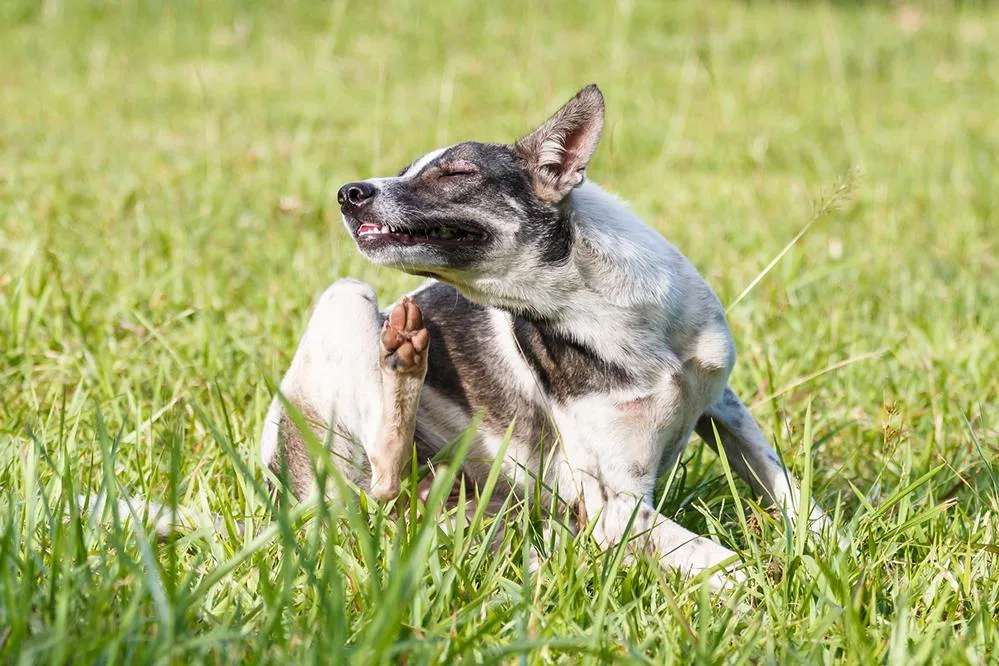
Environmental allergies in dogs show up in a predictable set of places. The classic pattern is itch in the paws, armpits, groin, face, and ears. Dogs lick, chew, scratch, or rub these areas obsessively.
Common signs to watch for include repeated paw licking or chewing (often leaving the fur rust-colored from saliva), face rubbing on furniture or carpets, recurring ear infections or head shaking, red inflamed skin in folds or belly, hot spots that appear suddenly, hair thinning on thighs or belly, and sneezing or watery eyes.
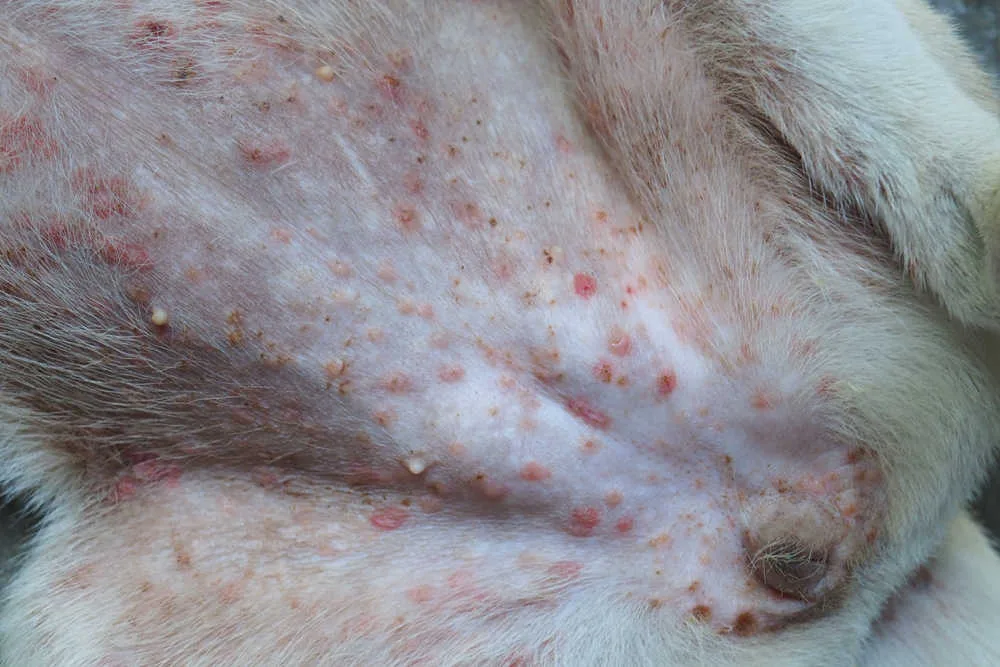
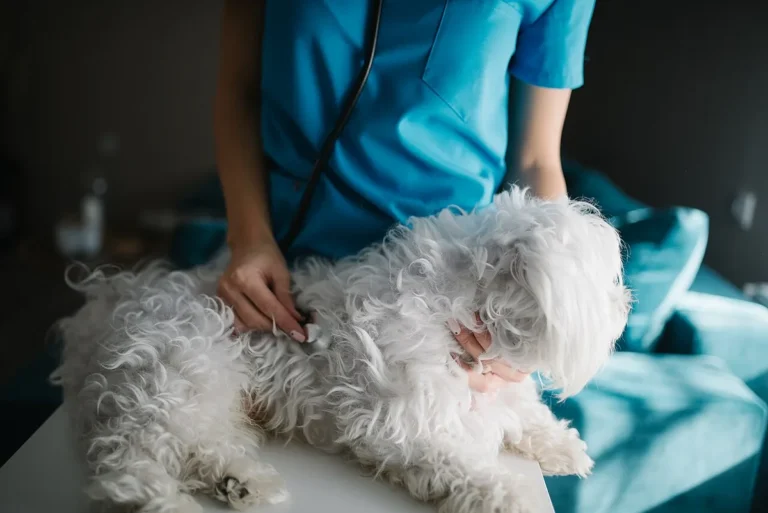
Not every itchy dog has environmental allergies. Flea allergy dermatitis, food allergies, sarcoptic mange, and bacterial skin infections can all mimic atopy. That's why a vet visit matters before you start treatment.
Your vet will check for fleas (even if you don't see them), do skin cytology to look for infection, and may recommend an elimination diet if food allergy is suspected.
A simple rule: if the itch is sudden, severe, or comes with vomiting or diarrhea, skip the home treatment and call the vet the same day.
When to Call the Vet vs. Handle It at Home
Some allergy situations are safe to manage at home, and some need a vet right away. Use this guide to decide.
Call your vet right away if your dog has raw, bleeding, or oozing skin, a sudden spread of red angry patches, signs of pain or lethargy, pus or a foul smell from skin or ears, or if it's the first time your dog has shown these signs.
Manage at home (after a vet has confirmed environmental allergies) if your dog has a known allergy history and a mild seasonal flare, symptoms are limited to paw licking and light scratching, there's no infection or hot spot, or your current plan just needs a small tweak.
A first-time flare always deserves a vet visit. Even if you're 90% sure it's allergies, your vet can rule out infections and confirm the diagnosis. Per the American College of Veterinary Dermatology, accurate diagnosis is the foundation of effective allergy management.
Step-by-Step: How to Treat Environmental Allergies in Dogs
Treating environmental allergies is a process, not a pill. The most effective plans follow a clear sequence: rule out the wrong diagnoses, confirm the right one, then layer medication, topicals, and home changes for full control.
Rule Out Fleas, Food, and Infections First
Before assuming environmental allergies, your vet will check for three common culprits.
First, fleas. Even a single flea bite can trigger allergic reactions in sensitive dogs. Your vet will look for flea dirt and may recommend a strict 8 to 12 week flea prevention trial.
Second, food allergies. A true food allergy requires an 8 to 12 week elimination diet with a novel or hydrolyzed protein. Blood tests for food allergies are unreliable.
Third, secondary infections. Bacterial and yeast infections thrive on allergy-damaged skin. Cytology (a quick skin sample under the microscope) reveals whether antibiotics or antifungals are needed.
Skipping this step is the single most common mistake owners make. If your dog has an undiagnosed infection, allergy meds won't work and the skin will keep getting worse.
Confirm the Diagnosis With Your Vet
Once other causes are ruled out, your vet may recommend allergy testing to identify specific triggers. Intradermal skin testing, the gold standard, is done by a veterinary dermatologist. Small amounts of allergens are injected into the skin to see which ones react.
Serum IgE blood testing measures allergen-specific antibodies in a blood draw. It's less precise than skin testing but useful when skin testing isn't practical.
Testing isn't required to start treatment, but it's required if you're considering immunotherapy. Knowing the exact triggers also sharpens your home allergen control plan.
Build a Treatment Plan That Combines Medication, Topicals, and Home Care
The winning formula most dermatologists follow has three layers: systemic medication to control the itch signal from inside (Apoquel, Cytopoint, antihistamines, cyclosporine, short-term steroids), topical therapy to repair skin and treat local infection (medicated shampoos, mousses, wipes, barrier sprays), and environmental control to reduce allergen exposure (HEPA filters, frequent bedding washes, post-walk rinses).
Most dogs need all three layers to stay comfortable long term. Relying on medication alone is like mopping the floor while the faucet is still running. The medication controls the symptom, but the topicals and home changes address the root cause.
A typical plan: start Apoquel or Cytopoint for immediate relief, bathe the dog twice weekly with a soothing or medicated shampoo, and add allergen reduction steps at home. After 2 to 3 months, your vet may taper medications and add immunotherapy if long-term control is the goal.
The Core Treatment Options Compared
Prescription meds are the engine of any allergy plan. Each option works differently, and your dog's age, severity, and overall health shape which one fits best.
| Medication | Form | Onset | Frequency | Best For |
|---|---|---|---|---|
| Apoquel (oclacitinib) | Oral tablet | ~4 hours | Twice daily, then once daily | Fast, flexible relief in dogs 12+ months |
| Cytopoint (lokivetmab) | Injection | ~8 hours | Every 4–8 weeks | Owners who struggle with daily pills, any age |
| Antihistamines | Oral | Days to weeks | Daily | Mild cases or add-on therapy |
| Corticosteroids | Oral or injectable | Hours | Short course | Severe flares, rescue therapy |
| Cyclosporine (Atopica) | Oral | 4–8 weeks | Daily | Long-term control when other meds fail |
| Immunotherapy | Injection or drops | 3–12 months | Per protocol | Long-term retraining of the immune system |
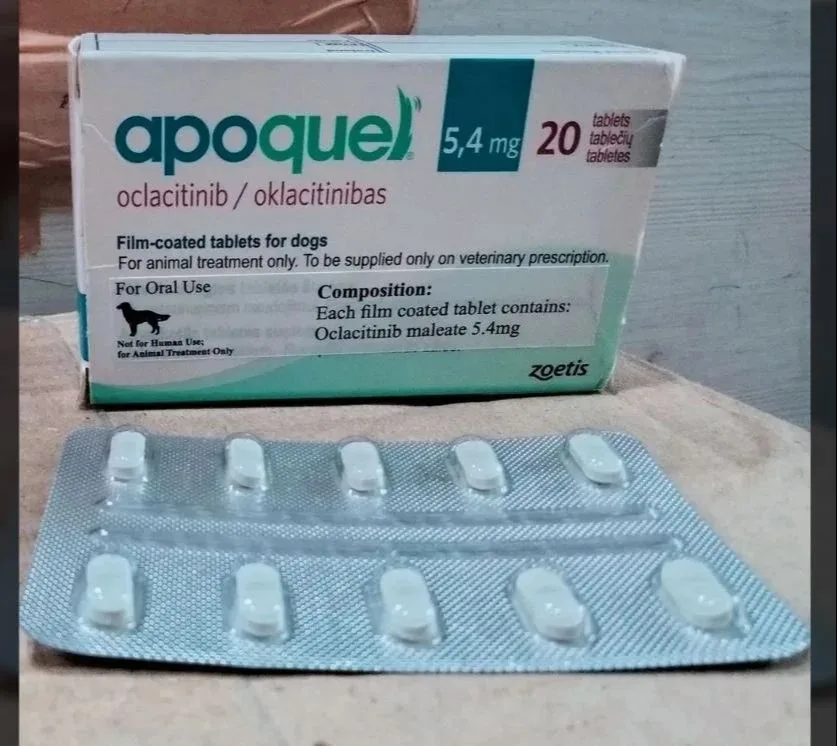
Apoquel (Oclacitinib) — Daily Oral Tablet
Apoquel blocks the JAK1 enzyme, interrupting the itch signal at its source. Manufacturer specs confirm relief within 4 hours of the first dose. It works for both immediate relief and long-term maintenance at a lower dose.
It's safe for most adult dogs but isn't approved for puppies under 12 months. Bloodwork is recommended before long-term use to monitor liver and kidney values. The main drawback is cost: around $2 to $4 per tablet, which adds up for large dogs.
Cytopoint (Lokivetmab) — Injectable Monoclonal Antibody
Cytopoint is a lab-made antibody that targets interleukin-31, the main itch-triggering protein in dogs. Your vet gives it as a subcutaneous injection, and it works for 4 to 8 weeks per shot.
It fits owners who can't pill a dog daily, and it's safe at any age. Per published clinical trials, the most common side effect is mild injection-site discomfort. Cost runs roughly $60 to $150 per injection depending on dog size and region.
Antihistamines — Cheap, But Rarely Enough
Antihistamines like cetirizine, loratadine, and diphenhydramine are widely available without a prescription. They work best for mild, seasonal itching or as an add-on to other treatments.
They rarely work alone for moderate to severe allergies. If you've tried Benadryl and your dog is still miserable, that's normal. Antihistamines block only one itch pathway, while Apoquel and Cytopoint block multiple.
Corticosteroids — Fast Relief, Real Trade-Offs
Prednisone and methylprednisolone are powerful anti-inflammatories that stop itching fast. They're useful as a short-term rescue during severe flares or when cost is a major barrier.
Long-term steroid use comes with real risks: increased thirst and appetite, weight gain, muscle loss, immune suppression, and (in rare cases) Cushing's-like effects. Most dermatologists reserve steroids for short courses of 2 to 4 weeks while waiting for Apoquel, Cytopoint, or immunotherapy to kick in.
Allergen-Specific Immunotherapy — Long-Term Retraining
Immunotherapy is the only treatment that retrains the immune system to tolerate allergens. Your vet formulates a custom serum based on your dog's allergy test, then you give injections or oral drops at home on a schedule.
Roughly 60 to 80% of dogs improve, with full effects taking 3 to 12 months. It's a marathon, not a sprint. Immunotherapy works best alongside Apoquel or Cytopoint during the ramp-up phase, then becomes the foundation of long-term control.
Cyclosporine — The Slow-Build Option
Cyclosporine (sold as Atopica) suppresses the immune response that drives allergies. It takes 4 to 8 weeks to reach full effect, so it's not a quick fix.
It helps dogs that don't tolerate Apoquel or Cytopoint, or for severe cases needing heavy-duty control. Side effects can include stomach upset and gum overgrowth. Cost is comparable to Apoquel over time.
Topical Therapy and Skin Barrier Repair
Topicals do the work that pills can't. They physically remove allergens, treat local infection, and rebuild the skin barrier. Skipping them is a common reason allergy plans stall.
Medicated shampoos containing chlorhexidine, miconazole, or phytosphingosine help when infection is present. Soothing shampoos with oatmeal reduce surface inflammation. Frequency during a flare is typically 2 to 3 baths per week, with 10 to 15 minutes of contact time before rinsing.
Between baths, leave-on mousses, wipes, and sprays keep the skin calm on busy days. Barrier-repair products with ceramides and fatty acids restore the skin's defenses, which matters because allergic skin leaks moisture and lets allergens in more easily.
A simple routine: bath twice weekly, spritz with a barrier spray on other days, and clean paws after every walk.
Home and Environmental Control That Actually Moves the Needle
You can't eliminate pollen, but you can reduce how much of it ends up on your dog and in your house. Small changes add up.
Indoor Allergen Reduction (Dust Mites, Mold, Air Filters)
Dust mites and indoor mold are year-round triggers that often get overlooked. Wash your dog's bedding weekly in hot water (above 130°F) to kill mites. Vacuum upholstered furniture and carpets with a HEPA-filter vacuum at least twice a week.
A standalone HEPA air purifier in the room where your dog sleeps makes a measurable difference. Keep humidity below 50% to slow mold growth, and fix any leaks or damp spots within a week.
Outdoor Exposure Management (Pollens, Grass, Baths After Walks)
Pollen counts peak in the early morning and on windy days. Walks later in the day cut exposure, and rinsing your dog off (or wiping paws and belly) after every outing physically removes allergens.
Keep grass cut short in your yard. Wipe your dog's face and paws with a damp cloth after walks. If your dog rolls in grass, a quick rinse matters more than you think.
Supplements That Help (and What the Evidence Actually Says)
Omega-3 fatty acids (EPA and DHA from fish oil) reduce inflammatory signaling in the skin. Peer-reviewed studies suggest a noticeable improvement in itching and coat quality after 8 to 12 weeks of consistent dosing.
Other supplements with reasonable evidence include quercetin (a natural antihistamine) and probiotics that support gut-immune balance. The catch: supplements work as support, not as replacements for prescription meds in moderate to severe cases.
Dose by your dog's weight, and use a product designed for pets. Human fish oil often includes ingredients dogs shouldn't have. Ask your vet before combining supplements with prescription meds.
Safety, Side Effects, and Drug Interactions to Watch For
Allergy meds are generally safe, but they're not interchangeable. Knowing the trade-offs prevents nasty surprises.
Apoquel suppresses a specific part of the immune system and can increase susceptibility to certain infections, especially skin and urinary infections. Bloodwork every 6 to 12 months catches early changes in liver or kidney values.
Cytopoint has a strong safety profile because it targets a single protein rather than broadly suppressing immunity. Per manufacturer documentation, adverse reactions are uncommon and usually mild.
Corticosteroids carry the longest list of risks with chronic use: increased thirst, hunger, weight gain, panting, and over time, potential diabetes or muscle wasting. They're a short-term tool, not a long-term plan.
Cyclosporine can cause vomiting or diarrhea, especially in the first few weeks. Immune suppression is broad, so infections need prompt attention.
Drug interactions matter. Apoquel and cyclosporine don't pair safely with certain antibiotics and antifungals. NSAIDs combined with steroids raise ulcer risk.
Always tell your vet about every supplement and medication your dog takes, including flea and tick preventives.
If your dog is on immunosuppressants, postpone elective procedures during infection flares, and report any vomiting, lethargy, or appetite change within 24 hours.
Cost Breakdown: What Each Treatment Really Runs
Costs vary by region, dog size, and vet pricing, but here are realistic 2026 ranges to help you plan.
| Treatment | Typical Cost Range (USD) | Notes |
|---|---|---|
| Vet exam + cytology | $80–$200 | First visit, often repeated |
| Apoquel | $2–$4 per tablet, $75–$150 monthly | Larger dogs cost more |
| Cytopoint injection | $60–$150 per shot | Every 4–8 weeks |
| Antihistamines | $10–$25 monthly | OTC, low cost |
| Corticosteroids | $15–$50 monthly | Cheap short-term, costly long-term |
| Cyclosporine | $80–$200 monthly | Brand name is pricier |
| Immunotherapy | $300–$500 initial, $30–$60 monthly | Long-term savings add up |
| Allergy testing | $200–$400 intradermal, $150–$300 serum | Required for immunotherapy |
A combined plan (Cytopoint plus immunotherapy plus topicals) commonly runs $150 to $250 monthly after the first year. Owners who skip diagnosis and try OTC-only approaches often spend more over time on repeated vet visits and failed trials.
Common Mistakes Dog Owners Make With Allergy Treatment
Even with the best intentions, a few patterns trip people up.
The biggest mistake is stopping meds too early. Apoquel and Cytopoint don't cure allergies; they control symptoms. Stopping at the first sign of improvement leads to rebound flares within weeks.
Second is overbathing. Twice-weekly baths help, but daily baths strip natural oils and weaken the skin barrier. Stick to the schedule your vet recommends.
Third is assuming food is the cause without testing. Food allergies account for only about 10% of canine allergic skin disease. Skipping a proper elimination diet to "try a different kibble" usually wastes months.
Fourth is ignoring indoor allergens. Owners focus on pollen and forget dust mites, which cause year-round symptoms.
Fifth is skipping flea prevention. One bite can keep the immune system on high alert, undoing everything else.
Long-Term Management Plan to Prevent the Next Flare
The goal isn't just stopping this flare. It's making the next one shorter, milder, or nonexistent.
A solid long-term plan has four pieces. Year-round flea prevention, even if you don't see fleas. Consistent medication at the lowest effective dose your vet identifies.
Regular bathing and barrier care. Environmental control that runs in the background: HEPA filtration, weekly bedding washes, paw wipes after walks.
Recheck with your vet every 6 to 12 months, or sooner if symptoms shift. Dogs on immunotherapy need periodic serum adjustments. Dogs on Apoquel or Cytopoint need bloodwork monitoring.
Think of allergy care like dental hygiene for dogs. Daily and weekly habits prevent the expensive, painful problems that come from neglect.
Frequently Asked Questions
How long does it take for allergy meds to work in dogs?
Apoquel and Cytopoint usually work within 4 to 8 hours. Antihistamines can take days to weeks. Immunotherapy takes 3 to 12 months for full effect.
Steroids work within hours but aren't safe for long-term use.
Can dogs fully recover from environmental allergies?
No, but they can be managed so well that symptoms are minimal or absent. Most dogs on a complete plan live essentially itch-free.
What are the side effects of Apoquel in dogs?
The most common side effects are vomiting, diarrhea, and decreased appetite. Long-term use warrants bloodwork monitoring because rare cases show changes in liver or kidney values.
Is Cytopoint better than Apoquel?
Neither is universally better. Cytopoint is easier for owners who can't pill daily and works for any age. Apoquel offers more flexible dosing and faster adjustments.
Many dermatologists use both at different stages.
Can I treat my dog's allergies without a vet?
You can support mild cases with bathing and antihistamines, but you need a vet to confirm the diagnosis, rule out infections, and prescribe effective meds. Skipping the vet often delays real relief.
How much does allergy treatment cost per year?
Expect $1,500 to $3,000 annually for a moderate case on Cytopoint plus topicals and supplies. Severe cases or immunotherapy add to that. Early, accurate diagnosis lowers lifetime cost.
Your Next Move: A Practical Decision Guide
If your dog is scratching right now, here's the shortest path to relief.
Schedule a vet visit this week. Ask for cytology and a flea check. Start Apoquel or Cytopoint if your vet confirms environmental allergies.
Begin twice-weekly baths with a soothing or medicated shampoo. Add a HEPA purifier and weekly bedding washes at home. If symptoms are severe or year-round, ask about allergy testing and immunotherapy.
If your dog is already on a plan that's working, stay consistent. Don't skip doses when symptoms improve. Keep up the baths and home control.
Recheck bloodwork if your dog has been on Apoquel or cyclosporine for over a year.
The dogs that do best aren't the ones on the fanciest meds. They're the ones with owners who stuck to the boring, consistent plan. Build the routine, keep it steady, and your dog's comfort follows.