How to tell if your dog has food allergies: Easy Guide
If your dog won't stop scratching, gets chronic ear infections, or has tummy problems that never quite clear up, you're probably wondering how to tell if your dog has food allergies. It's a fair question, and the answer isn't always what the pet store aisles suggest. Plenty of well-meaning owners switch foods repeatedly without ever confirming a true allergy, while the real culprit keeps causing trouble.
Food allergies in dogs are actually less common than people think. Veterinary dermatology research suggests only about 10, 15% of allergic dogs have a genuine food allergy, with the rest being environmental (atopy) or flea-driven. As of 2026, the gold-standard diagnostic method is still an 8, 12 week strict elimination diet trial followed by a controlled provocation phase.
Let's walk through what actually works.

Quick Answer
You tell if your dog has food allergies by running a strict 8 to 12 week elimination diet. Look for non-seasonal itching, recurrent ear infections, and chronic loose stools. Blood and saliva tests are unreliable.
Only a vet-supervised diet trial confirms it.
Why Getting This Right Matters for Your Dog's Health
Misdiagnosing a food allergy costs your dog weeks, sometimes months, of unnecessary itching, gut trouble, and steroid exposure. It also costs you money on diets that don't address the real problem, which is often environmental allergens or flea allergy dermatitis instead. The longer the wrong diagnosis drags on, the more secondary infections stack up: yeast overgrowth, bacterial skin infections, and stubborn ear issues that antibiotics alone won't fix.
Getting it right matters because the treatment is actually simple once you know the trigger. Remove the offending protein, watch your dog feel dramatically better within weeks, then reintroduce carefully to confirm. No lifelong meds required in most cases.
That's a far better outcome than a lifetime of itch pills if the real fix was just a different bag of food.
The flip side is real harm if you get it wrong. Home-prepared elimination diets without veterinary guidance can leave dogs nutritionally deficient, especially in calcium, taurine, and essential fatty acids. Over-the-counter "allergy test" kits cost owners hundreds while delivering no clinically useful data.
And a dog suffering through a true allergy while everyone chases the wrong cause is a dog who keeps losing sleep and losing patches of fur.
What a True Food Allergy Actually Looks Like in Dogs
A canine food allergy is an abnormal immune response to a specific dietary protein. The body reacts to a specific ingredient, usually something the dog has eaten repeatedly over months or years. Beef, chicken, dairy, and wheat top the list across multiple veterinary dermatology studies.
These proteins trigger IgE-mediated hypersensitivity, though the exact immune pathways are still being mapped.
The key word here is "immune." An allergy involves the immune system overreacting to something harmless. A food intolerance, like lactose intolerance, doesn't involve the immune system. It just means the gut can't digest something properly.
Both cause symptoms, but only a true allergy can be confirmed with the elimination diet approach we're walking through.
Symptoms show up in three places: skin, ears, and gut. Most allergic dogs itch. They scratch their flanks, lick their paws, rub their faces on the carpet, and shake their heads from sore ears.
Some dogs develop vomiting or chronic soft stool. A meaningful number show only skin signs with no gut symptoms at all, which trips up owners who expect every allergy to look like a stomach bug.
The cruel part is that food allergy symptoms look almost identical to environmental allergy (atopy) symptoms. That's why guessing is so unreliable. Without a controlled diet trial, even experienced vets can't tell the two apart from the exam table alone.
Food Allergy vs. Food Intolerance vs. Environmental Allergies
| Condition | Immune System Involved? | Typical Symptoms | How to Confirm |
|---|---|---|---|
| True food allergy | Yes (IgE or cell-mediated) | Itching, ear infections, sometimes GI | 8–12 week elimination diet |
| Food intolerance | No | Gas, loose stool, vomiting | Trial and error on specific foods |
| Environmental allergy (atopy) | Yes (IgE to pollens, molds, dust) | Seasonal or year-round itching | Skin or serum testing, treatment response |
| Flea allergy dermatitis | Yes (reaction to flea saliva) | Intense lower-back itching | Flea comb, response to strict flea control |
Here's the practical distinction. If your dog's itching flares up the same month every spring or fall, you're likely dealing with environmental allergens, not food. If the itching stays roughly the same year-round and traditional allergy meds only partially help, food becomes a stronger candidate.
Food intolerance usually shows up as gut symptoms without much itching. If your dog has chronic soft stool but a perfectly comfortable coat and clean ears, intolerance is a more likely explanation than allergy.
The reason this distinction matters is that treatment diverges. Food allergy means lifelong avoidance of specific proteins. Environmental allergy often needs immunotherapy or long-term immune-modulating drugs like Apoquel or Cytopoint.
Flea allergy means rigorous flea control for every animal in the household. Misdiagnosis sends you down the wrong treatment path, sometimes for years.
The Most Common Dog Food Allergens (and Why "Grain-Free" Doesn't Matter)
The top canine food allergens, ranked by frequency in veterinary case series, are:
- Beef
- Chicken
- Dairy
- Wheat
- Egg
- Soy
- Lamb
- Corn
Notice what's missing from the headlines: grains aren't the main villains. Dogs react to animal proteins far more often than to wheat, corn, or rice. The "grain-free" trend that exploded in the 2010s was based on a misreading of the data.
Veterinary dermatologists have been pushing back on this for years.
What matters is exposure. Whatever protein a dog has eaten most often and earliest in life is the most likely trigger. That's why beef and chicken top the list; they're the dominant proteins in most commercial kibbles.
A dog who's eaten nothing but chicken-based food for five years has had thousands of chances to develop a chicken allergy.
Lamb and rabbit used to be marketed as "hypoallergenic" novel proteins. They can still work, but as they've entered mainstream foods, dogs have started reacting to them too. The list of truly "novel" proteins keeps shrinking as pet food variety grows.

Here's the practical takeaway. If you're guessing which protein your dog might react to, statistically start with chicken or beef. But don't just swap proteins randomly.
The whole point of the elimination diet is to test this systematically, not by trial-and-error swapping every few weeks.
Telltale Symptoms: Skin, Ears, and Stomach Red Flags
The most common signs of canine food allergy cluster in three areas:
Skin Signs
- Non-seasonal itching (scratching, licking, chewing)
- Reddened paws, especially between the toes
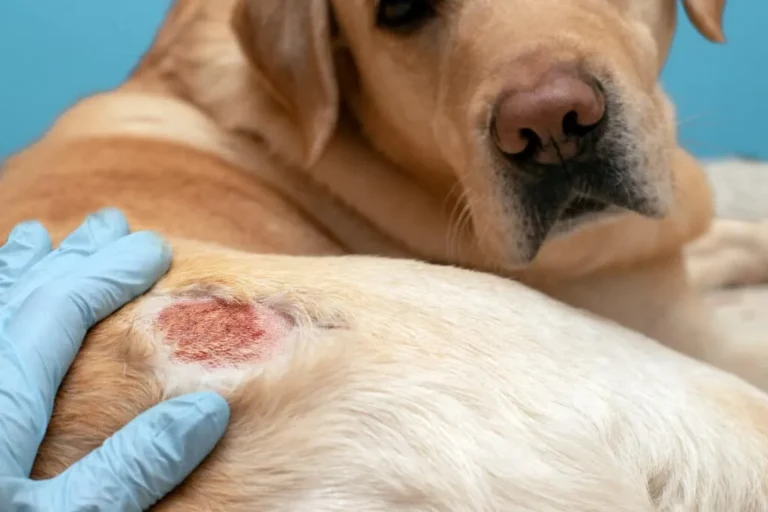
- Recurrent hot spots
- Skin infections (yeast or bacterial)
- Hair loss from constant scratching
Ear Signs
- Recurrent ear infections (otitis externa)
- Head shaking
- Ear redness or odor that keeps returning despite treatment
- Sometimes the only sign is chronic ear disease
Gastrointestinal Signs
- Chronic soft stool or diarrhea
- Frequent bowel movements (more than 3 per day)
- Vomiting
- Excessive gas
- Some dogs show only GI signs without skin issues
The pattern matters more than any single symptom. A dog with year-round itching that didn't exist last summer, who also gets ear infections every couple of months, is a more suspicious candidate than a dog with one isolated ear infection after a swim.
One of the most useful diagnostic clues is the response pattern. If your dog's itching improves dramatically with a course of steroids but returns immediately after, you're looking at an ongoing trigger, not a one-time irritation. Food is one of several possible ongoing triggers worth ruling out.
Secondary infections are often what brings dogs into the clinic. The primary itch from the allergy damages the skin barrier, then yeast and bacteria colonize the irritated area. Treating the infection without addressing the underlying allergy means the infection keeps coming back.
That's the cycle that finally tips owners toward asking the right question.
Breeds and Age Ranges Most Likely to Develop Food Allergies
Food allergy can affect any dog, but certain breeds show higher rates in dermatology referral caseloads:
| Breed | Common Allergy Type |
|---|---|
| Labrador Retriever | Environmental + food |
| Golden Retriever | Environmental + food |
| French Bulldog | Environmental + food |
| Cocker Spaniel | Food + ear issues |
| German Shepherd | Food + GI sensitivity |
| Shar-Pei | Skin fold + allergy |
| Boxer | Food + skin |
| West Highland White Terrier | Environmental + food |
Age of onset is also revealing. Most food-allergic dogs start showing symptoms before age one, though adult-onset is possible. If a seven-year-old suddenly develops itching for the first time, food is a less likely cause than environmental triggers, which often emerge as dogs mature and their immune system shifts.
Puppies with chronic soft stool and itchy skin warrant early investigation. The younger the dog at symptom onset, the higher the index of suspicion for food allergy versus later-onset atopy.
Breed predisposition is real but not deterministic. A Labrador can have environmental allergies; a mixed-breed can have food allergies. Use breed as a weighting factor, not a verdict.
Why At-Home Allergy Tests Usually Mislead You
Walk into any pet store and you'll find saliva-based or hair-based "allergy tests" for dogs. Veterinary dermatologists have evaluated these repeatedly and the consensus is clear: they don't work. Sensitivity and specificity scores fall well below what's needed for a reliable diagnosis.
A 2019 review of commercial food allergy tests found high rates of false positives and false negatives, with results showing poor correlation with actual elimination trial outcomes.
Blood serum IgE tests for food allergens are slightly better but still problematic. They can tell you whether your dog has IgE antibodies to a given protein, but the presence of antibodies doesn't necessarily mean those antibodies are causing clinical disease. Many healthy dogs test positive on serum allergy panels without ever showing symptoms.
This is why the elimination diet remains the gold standard. It's the only method that directly tests the question we actually care about: "Does removing this protein from the diet make the dog better?" Everything else is a proxy. Sometimes the proxy is right.
Often it isn't.
If you've already spent money on a home test kit, the results can still be useful as a hypothesis to test with a proper elimination diet. Just don't treat them as a diagnosis. And definitely don't start restricting your dog's diet based on a positive result without veterinary guidance, especially in puppies who need balanced nutrition.
The Elimination Diet: The Only Real Way to Diagnose It
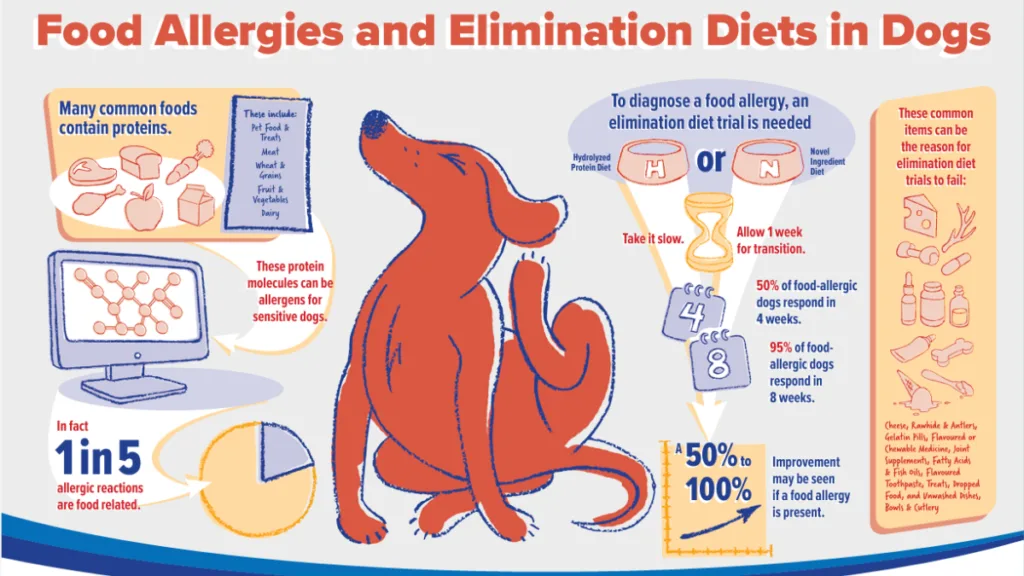
An elimination diet is simple in principle. Feed your dog a diet containing only proteins and carbohydrates they've never eaten before, or proteins broken down so small the immune system can't recognize them. Hold that diet strictly for 8 to 12 weeks.
Watch symptoms. If they improve, reintroduce the original foods one at a time to confirm which one triggers a flare.
The two main approaches:
| Approach | How It Works | Best For |
|---|---|---|
| Novel protein diet | Uses proteins the dog has never eaten | Dogs with limited diet history |
| Hydrolyzed protein diet | Proteins broken into pieces under 10 kDa | Dogs who've eaten many proteins; stricter test |
Hydrolyzed diets use proteins (usually chicken or soy) processed into molecules too small for the immune system to recognize. The threshold is roughly 10 kilodaltons. Anything smaller slips past the immune system undetected.
Prescription hydrolyzed diets (Royal Canin, Hill's z/d, Purina HA) are the most commonly used.
Novel protein diets use ingredients like venison, kangaroo, duck, or rabbit, assuming the dog has never encountered them before. This works best for young dogs or dogs with short dietary histories. For a five-year-old who's eaten chicken, beef, and lamb across multiple brands, finding a truly novel protein gets harder.
Running the 8–12 Week Trial Without Breaking It (Hidden Allergen Checklist)
This is where most home trials fail. The diet has to be strict, with zero exceptions, for the full duration. Hidden allergens lurk in places owners don't expect:
- Flavored medications (heartworm preventatives, NSAIDs)
- Toothpaste and dental chews
- Treats, even "hypoallergenic" labeled ones
- Table scraps and dropped food
- Other pets' food (multi-dog households)
- Boiled chicken given as a pill pocket
- Flavored vitamins or supplements
- Some plastic toys that contain animal-derived flavorings
The practical rules:
- Switch to the elimination diet cold turkey (no transition period needed for diagnosis).
- Use only unflavored medications or ask your vet for alternatives.
- No treats except single-ingredient versions matching the trial diet.
- Keep other pets' food secured and out of reach.
- Tell every household member (including kids) the rules.
- Boarding during the trial requires detailed instructions.
Expect to see improvement in GI symptoms within 1, 2 weeks. Skin symptoms take longer, usually 4, 8 weeks. Don't declare the trial a failure at week three if the itch hasn't fully resolved.
The timeline is genuinely 8, 12 weeks for a fair assessment.
If you've reached week 12 with no improvement, food allergy is unlikely. Redirect your diagnostic energy toward environmental allergies, flea allergy, or other skin conditions like demodicosis or cutaneous lymphoma, which can mimic allergy symptoms in older dogs.
The Provocation Phase: How to Reintroduce Foods Safely
Once symptoms resolve on the elimination diet, the next step confirms which original food was the trigger. This is called provocation or rechallenge.
Add one protein back to the diet for 5, 14 days. Watch closely for symptom return. If itching or GI issues flare, you've found a trigger.
Remove it and let symptoms clear before testing the next protein.
Common provocation order:
- Chicken (most common)
- Beef
- Dairy
- Egg
- Wheat
- Soy
Test one protein at a time. Adding three new proteins simultaneously leaves you unable to identify which one caused the flare. The provocation phase is tedious but it's the only way to build a long-term safe diet you can trust.
Document everything. Keep a simple log of date, protein reintroduced, and any symptom changes (itch score from 1, 10, stool quality, ear scratching). Patterns often show up clearly in writing that stay invisible in memory.
Mistakes Vets and Owners Make That Delay the Diagnosis
The most common diagnostic errors:
- Stopping the elimination trial at 4 weeks because the dog "still itches." Full resolution often takes 6, 8 weeks for skin.
- Using over-the-counter limited-ingredient diets instead of prescription hydrolyzed or true novel protein formulas. OTC "limited ingredient" foods often contain trace proteins from shared manufacturing lines.
- Allowing flavored medications during the trial.
- Treating secondary infections without addressing the underlying allergy, which lets the cycle continue.
- Diagnosing food allergy by serum IgE testing alone.
- Failing to rule out flea allergy dermatitis before assuming food. Even indoor dogs can have fleas.
- Adding multiple new proteins during provocation without isolating variables.
- Home-cooking elimination diets without veterinary nutritionist oversight, leading to nutritional deficiency.
These mistakes are fixable. The hardest part is patience: most failed trials come from owners (and sometimes vets) who don't give the 8, 12 week window enough time. The immune system's response to dietary change is genuinely slow.
Real-World Troubleshooting During the Elimination Trial
Even well-run trials hit snags. Here's how to handle the common ones:
The Dog Won't Eat the New Food
Some dogs refuse hydrolyzed diets outright. Try warming the food slightly, adding a tiny amount of low-sodium bone broth (check ingredients for hidden proteins), or mixing a small portion of the old food and tapering over a few days at the start. Never give in and add the suspected allergen just to get the dog eating.
The whole trial depends on it.
Symptoms Worsen During the Trial
This can happen in the first 1, 2 weeks as the gut microbiome adjusts. If worsening continues past week three, suspect a contaminant (hidden allergen) or that the chosen novel protein isn't actually novel. Check every treat, medication, and supplement against the ingredient list.
Other Pets Steal the Trial Diet
Feed pets separately during the trial. Use crates, baby gates, or separate rooms. Even a few bites of the wrong food by another animal can contaminate shared water bowls or licked surfaces.
Yes, that level of strictness is the standard.
The Dog Gets a Skin Infection Mid-Trial
Treat the infection. Antibiotics don't interfere with the diagnostic value of the trial, but document the treatment so you can account for any symptom improvement that comes from infection control rather than diet change. Your vet can help interpret this.
Hydrolyzed Protein vs. Novel Protein Diets: Which Works Better
Hydrolyzed protein diets are the more reliable diagnostic tool because the proteins are too small for the immune system to recognize, regardless of the dog's dietary history. Novel protein diets depend on the protein truly being novel to that individual dog. With so many proteins now common in commercial foods, finding one a dog has truly never eaten is harder than it sounds.
| Factor | Hydrolyzed Protein | Novel Protein |
|---|---|---|
| Reliability | High (immune-blind) | Moderate (depends on history) |
| Best for | Multi-diet history dogs | Young dogs, limited diet history |
| Cost | Higher (prescription) | Lower to moderate |
| Palatability | Some dogs reject it | Usually more appealing |
| Prescription required | Yes | Sometimes |
If budget allows, start with hydrolyzed. It's the cleaner test. If a dog refuses hydrolyzed food outright (palatability is real), switch to novel protein rather than abandoning the trial entirely.
A completed trial with novel protein beats an incomplete one with hydrolyzed.
When to Bring in a Veterinary Dermatologist
Your primary vet can absolutely run an elimination trial. But a referral to a board-certified veterinary dermatologist makes sense if:
- The trial didn't resolve symptoms and the cause remains unclear
- Your dog has overlapping skin and ear disease requiring complex management
- Secondary infections are severe or recurrent
- The dog needs long-term immune-modulating medication
- You want intradermal skin testing for environmental allergens done properly
Dermatologists have access to prescription hydrolyzed diets, can perform intradermal testing under sedation, and can coordinate with veterinary nutritionists for home-cooked elimination diets that meet AAFCO nutritional adequacy standards.
Building the Long-Term Diet Once You Know the Trigger
Once you've identified the offending protein, the long-term plan is straightforward: avoid it. Most dogs thrive on commercial diets that simply exclude their trigger ingredients.
Options for long-term feeding:
- Prescription hydrolyzed diets (ongoing)
- Commercial limited-ingredient diets using confirmed safe proteins
- Home-cooked diets formulated by a veterinary nutritionist
- Rotation diets alternating between a few confirmed safe proteins
Verify any long-term diet against AAFCO nutritional adequacy statements for the dog's life stage. The FDA Center for Veterinary Medicine also regulates pet food labeling and safety standards, useful context for evaluating any commercial product.
For home-cooked diets, work with a board-certified veterinary nutritionist. The American College of Veterinary Nutrition maintains a directory of certified specialists who can formulate balanced home diets for dogs with confirmed allergies.
Cost, Time, and What to Expect at the Vet
A typical diagnostic workup for suspected food allergy:
| Item | Estimated Cost (USD, 2026) |
|---|---|
| Initial vet consultation | $75–$200 |
| Prescription hydrolyzed diet (3 months) | $150–$300 |
| Limited-ingredient novel protein diet (3 months) | $100–$250 |
| Follow-up vet visits | $50–$150 each |
| Veterinary dermatologist consultation | $300–$600 |
| Intradermal skin testing (if needed) | $250–$500 |
The biggest variable is whether you go through your primary vet or a specialist. Specialists cost more but often shorten the diagnostic timeline by months.
Time investment is significant: 8, 12 weeks for the trial plus another 6, 10 weeks for full provocation testing across multiple proteins. Plan accordingly. Most cases resolve diagnostically within 4, 6 months from start to confirmed long-term diet.
Final Checklist Before You Start the Elimination Trial
Confirm these before week one begins. Veterinary guidance throughout is non-negotiable for a dog with ongoing symptoms.
- Vet visit completed, fleas and parasites ruled out
- Prescription or novel protein diet selected and purchased
- Hidden allergen sources identified and removed
- Multi-dog household feeding plan in place
- Flavored medications swapped for unflavored alternatives
- Symptom log started (itch score, stool quality, ear checks)
- Trial end date marked on the calendar (8, 12 weeks out)
The right outcome is a clear diagnosis and a long-term diet your dog thrives on.
Frequently Asked Questions
How long does an elimination diet trial take to confirm food allergy in dogs?
The minimum is 8 weeks, with 12 weeks being the safer bet for dogs with primarily skin symptoms. Gastrointestinal signs often improve within 1, 2 weeks, but skin symptoms can take the full 12 weeks to fully resolve. Don't end the trial early if some itch remains at week four.
Can dogs outgrow food allergies?
True food allergies rarely resolve spontaneously. Once a dog develops an immune response to a protein, lifelong avoidance is usually needed. Food intolerances, which are different, can sometimes improve if the gut heals, but IgE-mediated allergies don't typically fade with age.
Are blood tests for dog food allergies accurate?
Blood serum IgE tests for food allergens are not reliable as standalone diagnostic tools. They show high rates of false positives and false negatives, and results don't consistently correlate with elimination trial outcomes. They're useful as one piece of a broader diagnostic picture, never as a final verdict.
What's the difference between grain allergy and grain intolerance in dogs?
True grain allergy involves an immune response to grain proteins (wheat, corn, rice) and is less common than pet food marketing suggests. Grain intolerance means the gut can't digest grains well, causing GI upset without immune involvement. Most dogs with suspected "grain issues" actually react to animal proteins like chicken or beef.
Should I try a home-cooked elimination diet for my dog?
Home-cooked elimination diets can work but require veterinary nutritionist oversight to avoid nutritional deficiencies. If you go this route, work with a board-certified veterinary nutritionist who can formulate a balanced recipe meeting AAFCO standards. Don't improvise the recipe yourself, especially for growing puppies.
Can puppies have food allergies?
Yes, and puppies often show symptoms before age one. Chronic soft stool, itchy paws, and recurrent ear infections in young dogs warrant early investigation. The same elimination diet process applies, with extra care given to nutritional adequacy during growth.