
How much allergy medicine for dog: Easy guide
Your dog is scratching nonstop, you're staring at a half-used bottle of Benadryl, and you're asking the one question that matters right now: how much allergy medicine for dog is actually safe to give at home. The honest answer is that most over-the-counter antihistamines can help, but the dose depends on the exact drug, your dog's weight, and a few health details that change the rules completely. As of 2026, veterinary guidance still treats diphenhydramine at roughly 1 mg per pound of body weight every 8 to 12 hours as a common reference point, but that's only a starting line, not a finish line.
We've pulled manufacturer specs, veterinary references like Plumb's Veterinary Drug Handbook and the Merck Veterinary Manual, and WSAVA atopic dermatitis guidelines to make sure the numbers below line up with what your vet would actually tell you. The goal is simple: give you a clear, safe plan you can use tonight while still knowing exactly when to call a professional for backup.
Quick Answer
Most dogs can take diphenhydramine (Benadryl) at 1 mg per pound every 8 to 12 hours.
Cetirizine (Zyrtec) is dosed at about 0.5 mg per pound once daily.
Loratadine (Claritin) runs around 0.25 mg per pound once daily.
Always confirm the pill is plain, with no decongestants or xylitol.
Call your vet before dosing puppies, seniors, or dogs on other meds.
Why Getting the Dose Right Matters (More Than You Think)
Allergy medicine for dogs lives in a weird spot. The drugs themselves are familiar, cheap, and sitting in your bathroom cabinet. That comfort level is exactly what makes dosing errors so common, and so dangerous.
A typical 25 mg Benadryl tablet is fine for a 25-pound dog and a one-time overdose for a 4-pound Yorkie. A "small dog" liquid formula sweetened with xylitol can send a healthy adult dog into liver failure in under an hour. A child's chewable Claritin contains a decongestant that spikes blood pressure and heart rate in dogs.
None of these are rare edge cases.
There's also a quality-of-life angle that often gets missed. The right dose can stop a scratching spiral before it turns into hot spots, ear infections, or raw skin. The wrong dose either does nothing and delays real treatment, or pushes a dog into sedation, agitation, or worse.
The good news is that safe dosing is very learnable. You need three things: an accurate weight for your dog, the right drug in the right formulation, and a clear sense of which conditions change the math.
The Most Common Safe Allergy Medicines for Dogs
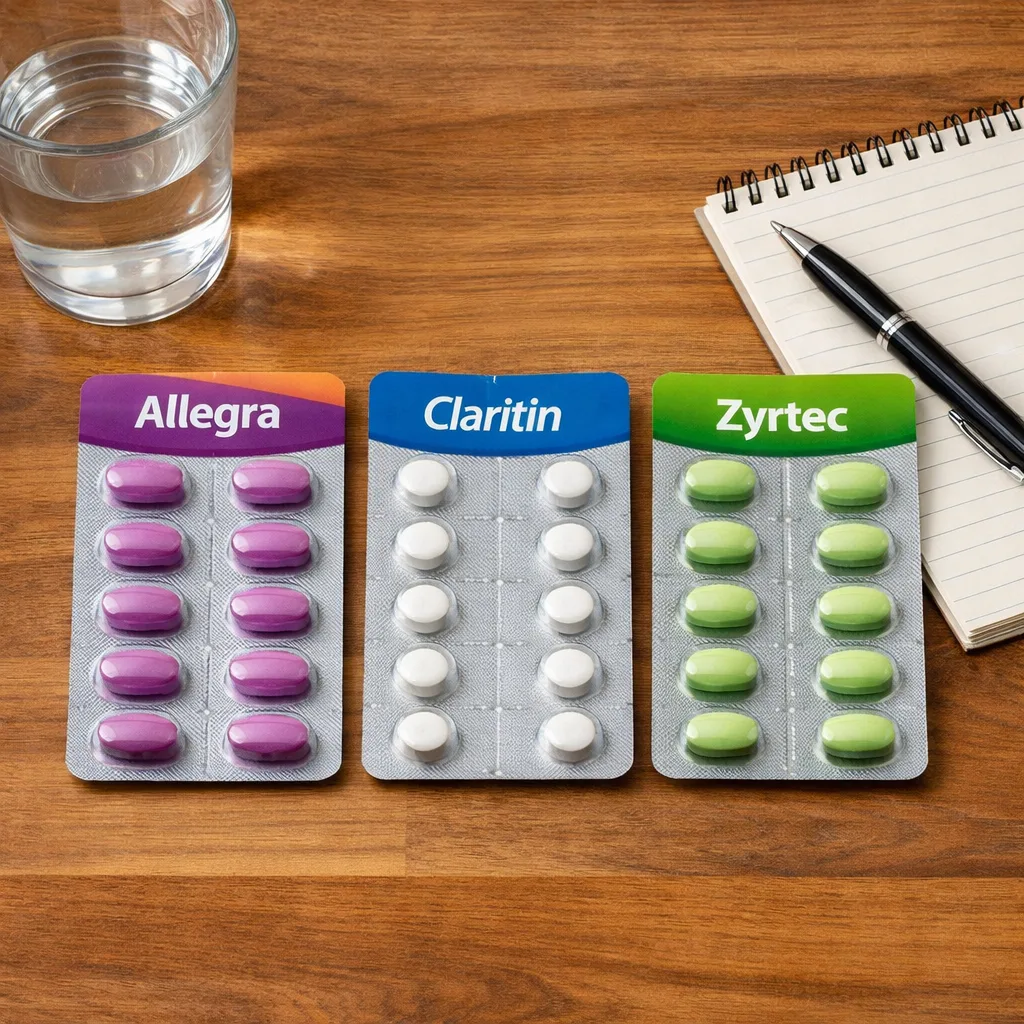
Not every allergy pill in your cabinet belongs in your dog's mouth. A short list of well-studied, widely recommended options covers most mild cases of environmental allergies in dogs. Each one works a little differently, which is why picking the right drug matters as much as picking the right dose.
| Generic name | Brand names (US) | Drug generation | Sedation risk | Common use |
|---|---|---|---|---|
| Diphenhydramine | Benadryl | First-gen | High | Sudden hives, mild itching |
| Cetirizine | Zyrtec | Second-gen | Low | Seasonal itching, chronic dermatitis |
| Loratadine | Claritin, Alavert | Second-gen | Very low | Long-term maintenance |
| Fexofenadine | Allegra | Second-gen | Very low | Dogs sensitive to other antihistamines |
| Chlorpheniramine | Piriton (UK) | First-gen | Moderate | Allergy flare-ups, UK staple |
| Hydroxyzine | Atarax (Rx) | First-gen | High | Vet-prescribed for atopic dermatitis |
Two patterns are worth noticing. First-generation antihistamines like diphenhydramine and hydroxyzine cross into the brain more easily, which is why they cause drowsiness. That's actually useful for a dog that can't settle because of itching, but it's a problem if your dog is already sedated or recovering from sedation.
Second-generation drugs like cetirizine and loratadine barely touch the brain, so they cause less sleepiness but can be a touch less effective for intense flare-ups.
Hydroxyzine usually requires a prescription because it has stronger effects on heart rhythm in some dogs. The others are available over the counter in standard formulations, but only when you stick to plain versions.
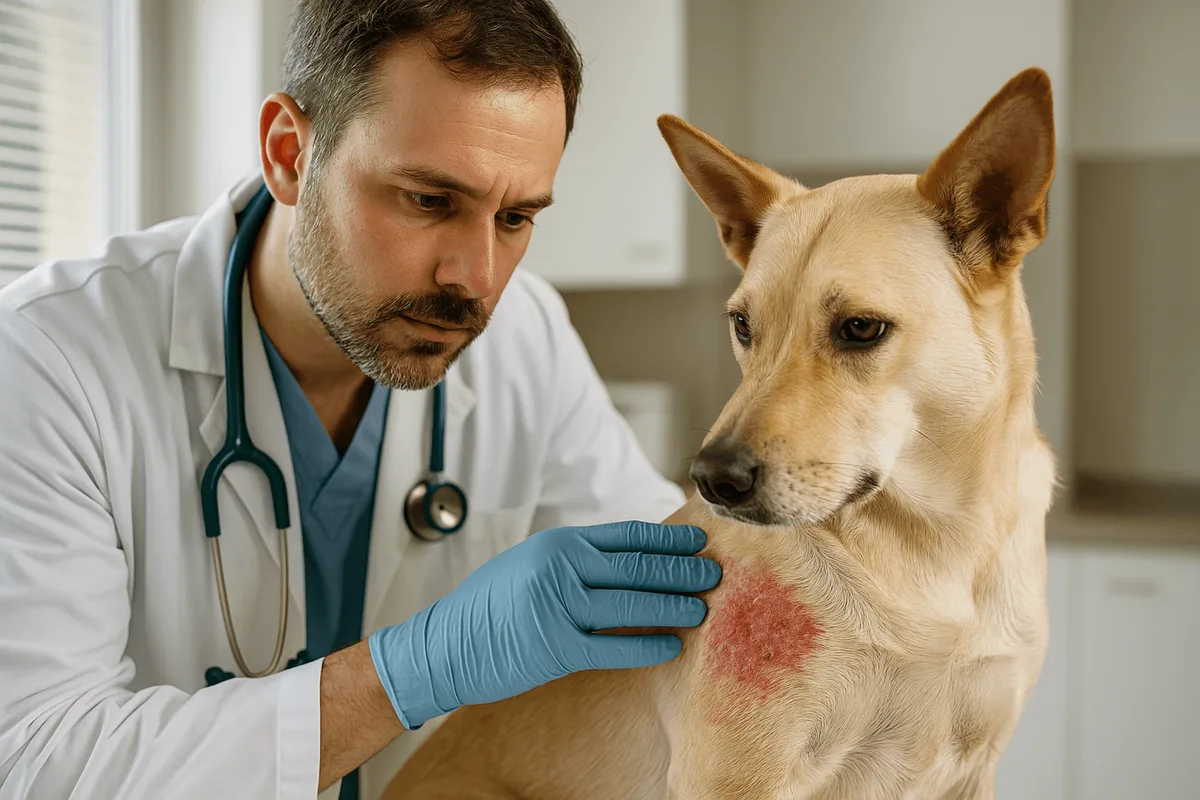
Diphenhydramine (Benadryl) Dosage for Dogs by Weight
Benadryl is the default first stop for most dog owners, and for good reason. Manufacturer specs and veterinary references like Plumb's Veterinary Drug Handbook list the standard canine dose at about 1 mg per pound of body weight, given every 8 to 12 hours. That works out to roughly 2.2 mg per kilogram if you think in metric.
A 25 mg tablet covers a 25-pound dog. A 50 mg tablet covers a 50-pound dog. Liquid children's Benadryl (12.5 mg per 5 mL) lets you split doses more precisely for small dogs, but only the version without xylitol, dyes, or added flavors.
Here's how that dose usually looks in real numbers:
| Dog weight | Diphenhydramine dose | Standard 25 mg tablet |
|---|---|---|
| 5 lbs | 5 mg | 1/4 tablet |
| 10 lbs | 10 mg | Roughly 2/5 tablet |
| 20 lbs | 20 mg | 3/4 tablet |
| 30 lbs | 30 mg | 1 + 1/4 tablet |
| 50 lbs | 50 mg | 2 tablets |
| 75 lbs | 75 mg | 3 tablets |
| 100 lbs | 100 mg | 4 tablets |
A few practical points matter here. Tablets can be split with a pill cutter, but never crush and mix with food if your dog might refuse the food and lose part of the dose. Liquid is more accurate for dogs under 10 pounds, but always read the label for xylitol first.
A good rule of thumb is to start with the lowest end of the range, especially if your dog is small, old, or on other medications. You can always give more after a few hours if there's no effect. You can't easily give less once it's already absorbed.
Cetirizine (Zyrtec) Dosage for Dogs by Weight
Cetirizine is the second-generation drug most vets reach for next, especially for dogs that get too sleepy on Benadryl. Veterinary references and manufacturer labeling for the human drug put the standard canine dose at around 0.5 mg per pound, given once every 24 hours. That's about 1 mg per kilogram.
Most human Zyrtec tablets come in 5 mg and 10 mg strengths, which lines up nicely with the dose range for small to medium dogs. Larger dogs usually take two 10 mg tablets at once, while toy breeds may need half of a 5 mg tablet dissolved into food or water.
A practical chart for once-daily dosing:
| Dog weight | Cetirizine dose | Common tablet plan |
|---|---|---|
| 5 lbs | 2.5 mg | Half of a 5 mg tablet |
| 10 lbs | 5 mg | One 5 mg tablet |
| 20 lbs | 10 mg | One 10 mg tablet |
| 40 lbs | 20 mg | Two 10 mg tablets |
| 60 lbs | 30 mg | Three 10 mg tablets |
| 80 lbs | 40 mg | Four 10 mg tablets |
A couple of details make Zyrtec easier to live with than Benadryl. The once-daily schedule is friendlier, the sedation effect is much lighter, and it's available as a regular tablet, a chewable, and a syrup, so you can match the form to a picky dog.
The catch is that "Zyrtec-D" is not the same drug. The "D" version adds pseudoephedrine, which is dangerous for dogs. Same rule for Claritin-D and Allegra-D.
Stick to plain, and you'll avoid the most common accidental poisoning we see with second-generation antihistamines.
Loratadine (Claritin) Dosage for Dogs by Weight
Loratadine is the lightest-touch option of the bunch. Veterinary references place the standard canine dose at about 0.25 mg per pound, given once every 24 hours, which is roughly 0.5 mg per kilogram. Most adult dogs end up on half of a 10 mg tablet, while larger dogs get the full tablet.
A simple chart for once-daily dosing:
| Dog weight | Loratadine dose | Common tablet plan |
|---|---|---|
| 5 lbs | 1.25 mg | Quarter of a 5 mg tablet |
| 10 lbs | 2.5 mg | Half of a 5 mg tablet |
| 20 lbs | 5 mg | One 5 mg tablet |
| 40 lbs | 10 mg | One 10 mg tablet |
| 60 lbs | 15 mg | One 10 mg tablet plus half of a 5 mg |
| 80 lbs | 20 mg | Two 10 mg tablets |
Claritin is a great fit for long-term maintenance because sedation is rare, and the once-daily schedule is easy to keep up with. It's often the go-to for dogs with mild seasonal itching that doesn't quite justify a vet visit.
The big rule is the same as with Zyrtec: only plain Claritin, never Claritin-D. The "D" adds pseudoephedrine, which raises blood pressure and heart rate and can be fatal in smaller dogs.
Fexofenadine and Chlorpheniramine Dosing
Two other antihistamines show up often enough that they're worth knowing. Fexofenadine (Allegra) and chlorpheniramine (Piriton in the UK, Chlor-Trimeton in the US) are both safe for dogs when dosed correctly, but they live in slightly different lanes.
Fexofenadine tends to land at about 1 to 2 mg per pound, given once or twice daily. It's a good pick for dogs that get drowsy on first-generation options or that have heart conditions where sedation is risky. The catch is that it works best on an empty stomach, so timing it away from meals matters more than with the other drugs.
Chlorpheniramine usually runs at about 0.1 to 0.2 mg per pound, every 8 to 12 hours. It's a long-trusted first-generation option in the UK for short-term allergy flare-ups. It's a small, white pill, easy to split, and effective for sudden hives or environmental irritation.
| Drug | Brand | Dose (per pound) | Frequency | Best for |
|---|---|---|---|---|
| Fexofenadine | Allegra | 1 to 2 mg | Once or twice daily | Sensitive dogs, heart conditions |
| Chlorpheniramine | Piriton, Chlor-Trimeton | 0.1 to 0.2 mg | Every 8 to 12 hours | Sudden hives, UK owners |
Both are second-line in most modern US practice, but they're perfectly reasonable choices when Benadryl or Zyrtec isn't available or isn't working. Keep to plain formulations, and you'll avoid the usual decongestant and sweetener traps.
What You Should Never Give Your Dog (The Dangerous Stuff)
This is the section that matters most, because the wrong pill is far more dangerous than the wrong dose. Several human allergy products contain ingredients that can cause serious harm to dogs, even in small amounts.
The most common offenders are decongestants. Pseudoephedrine and phenylephrine, found in anything labeled "D" like Zyrtec-D, Claritin-D, Allegra-D, and most cold and sinus formulas, raise heart rate and blood pressure. Dogs can develop tremors, seizures, or cardiac arrhythmias from a single dose, especially in smaller breeds.
The second offender is xylitol. This artificial sweetener shows up in many children's liquid Benadryl, chewable tablets, and "meltaway" forms. Even small amounts can trigger a rapid insulin release in dogs, dropping blood sugar and causing liver damage.
A few other combinations to avoid:
- Diphenhydramine with acetaminophen (Tylenol PM, severe liver risk)
- Any sleep aid containing doxylamine
- Combination cold formulas with multiple active ingredients
- Time-release or extended-release versions (unpredictable absorption)
The safe rule is dead simple. If the label lists anything other than the single antihistamine you planned to give, put it back in the cabinet. Your dog only needs the plain version.
Special Cases: Puppies, Seniors, and Herding Breeds
The standard dose tables above are written for healthy adult dogs in the 1 to 7 year range. Three groups need a different conversation.
Puppies under 12 weeks have immature liver and kidney function, so they clear drugs more slowly. Most pediatric references and veterinary internists suggest avoiding OTC antihistamines in very young puppies unless a vet has explicitly approved a dose. For puppies over 12 weeks, a half-dose of cetirizine or loratadine is often the safest starting point, with weight checked every two weeks because the dose changes fast during growth.
Senior dogs often have reduced organ function and may already be on multiple medications. Drugs like diphenhydramine can build up and cause prolonged sedation, constipation, or confusion. A second-generation option like cetirizine usually causes fewer cognitive side effects, but check with your vet if your senior dog has kidney, liver, or heart disease.
Herding breeds are the trickiest group. Collies, Australian Shepherds, Shelties, and related breeds often carry the MDR1 gene mutation. This gene affects how the body pumps certain drugs out of the brain and liver, which can dramatically increase sensitivity to some antihistamines.
The safest path is genetic testing or a vet visit before any medication in these breeds. The FDA Center for Veterinary Medicine maintains guidance on drug sensitivities tied to this mutation.
The pattern across all three groups is the same: start lower, watch closely, and involve your vet earlier rather than later.
Health Conditions That Change the Rules
Several common health issues in dogs make standard OTC dosing a bad idea, even when the weight is right. A short mental checklist before giving any allergy med saves a lot of trouble.
Glaucoma is worsened by first-generation antihistamines because they dilate the pupils. Heart disease and high blood pressure react badly to decongestants, but even some sedating antihistamines can change heart rhythm. Prostate enlargement can be made worse by the anticholinergic effects of older antihistamines.
Seizure disorders interact unpredictably with several sedating drugs, so a vet-guided plan matters more.
Liver or kidney disease slows drug clearance, so even a correct dose can build up to toxic levels over a few days. If your dog is on other medications like NSAIDs, fluoxetine, tramadol, or certain flea and tick preventives, drug interactions are real and worth a quick call to your vet.
A practical decision tree looks like this:
- If your dog is otherwise healthy and on no other meds, OTC antihistamines at standard doses are usually safe.
- If your dog has any chronic condition or takes other meds, call your vet first.
- If your dog is a herding breed or has had a bad reaction to meds before, ask about MDR1 testing before dosing.
The whole point of the medical details in this article is to make the safe path obvious, not to scare you off. When in doubt, a quick phone call beats a guess every time.
Step-by-Step: How to Dose Allergy Medicine for Your Dog Safely
The right process turns a confusing cabinet into a five-minute job you can repeat without second-guessing.
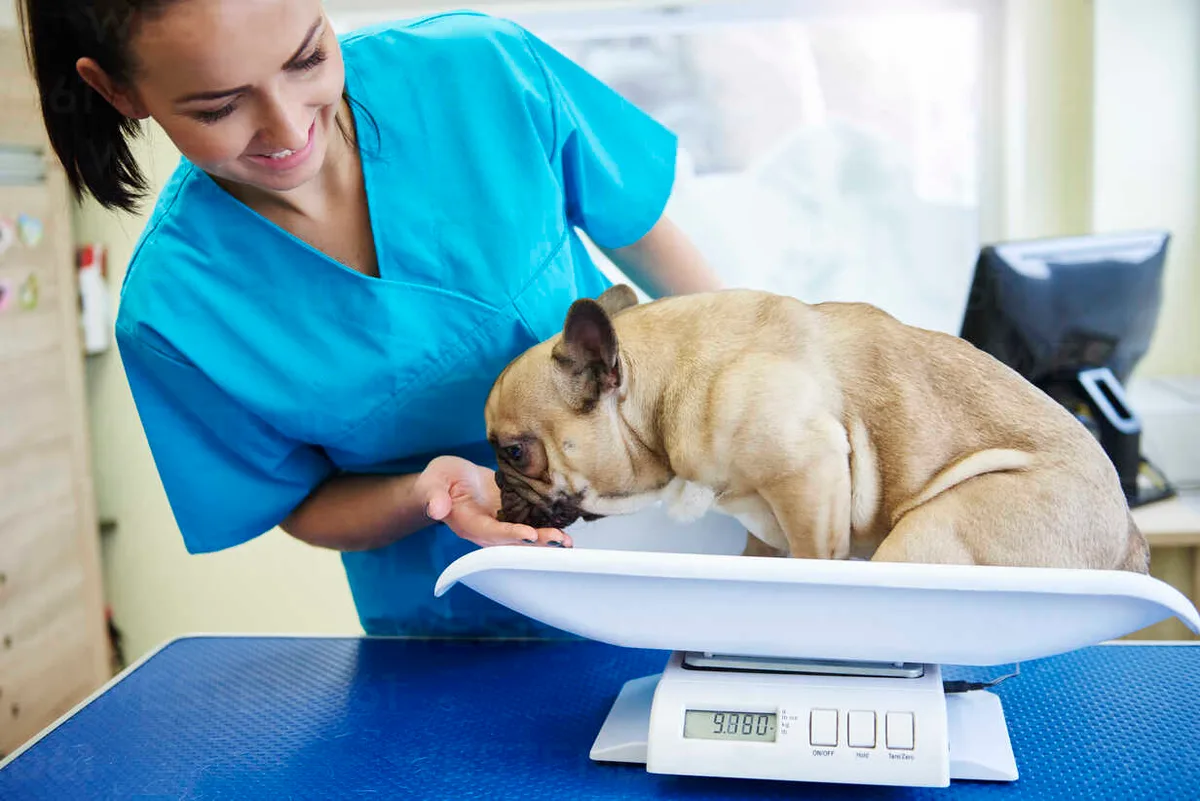
Step 1. Weigh your dog on a real scale. Don't guess.
Even a two-pound error shifts a small dog's dose by 10 percent or more. A bathroom scale with "hold" works, or weigh yourself holding the dog and subtract.
Step 2. Confirm the drug and the formulation. Look at the active ingredient list, not the brand.
The only ingredient should be the single antihistamine you planned to use. Reject anything with xylitol, pseudoephedrine, or phenylephrine.
Step 3. Calculate the exact milligram dose. Use the charts earlier in this article or the formula of 1 mg per pound for diphenhydramine, 0.5 mg per pound for cetirizine, and 0.25 mg per pound for loratadine.
Step 4. Split tablets with a pill cutter for accuracy. Round down for very small dogs rather than up.
Liquid forms are usually safer under 10 pounds.
Step 5. Give the dose with a small treat. Watch for 30 to 60 minutes.
Look for vomiting, drooling, agitation, or unusual sleepiness.
Step 6. Track response over 24 to 48 hours. Reduced scratching and calmer sleep mean the drug is working.
No change means the dose may be too low, or the issue isn't allergies.
Common Mistakes Owners Make With OTC Allergy Meds
Most dosing problems come from a handful of repeat mistakes. Spotting them ahead of time saves a lot of trouble.
- Guessing weight. A "medium dog" guess can easily be off by 15 pounds, which throws off the dose by a third.
- Using a combined cold formula. Anything with two active ingredients usually means one of them is unsafe for dogs.
- Giving the "D" version by accident. Zyrtec-D, Claritin-D, and Allegra-D all contain pseudoephedrine.
- Switching drugs every day. Antihistamines need 5 to 7 days to show full effect. Switching too soon makes the real drug look ineffective.
- Doubling up after a missed dose. Always go back to the normal schedule, never give two doses at once.
- Assuming human chewables are pet-safe. Children's chewables often contain xylitol, which is highly toxic to dogs.
- Treating food allergies like environmental allergies. Antihistamines help itching, not dietary reactions.
If you've made any of these calls, you're not alone. A quick reset to plain diphenhydramine or cetirizine at the correct weight-based dose usually gets things back on track.
When OTC Allergy Medicine Isn't Enough (Prescription Options)
Sometimes the right answer isn't a different OTC drug. It's a prescription plan that actually targets the underlying immune response. Three prescription options dominate modern canine allergy care.
Apoquel (oclacitinib) is a Janus kinase inhibitor that blocks the itch signal at the source. Most dogs see relief within 4 hours, and it's labeled for long-term use in dogs over 12 months. Average monthly cost runs around $70 to $150 depending on dose and region.
Cytopoint (lokivetmab) is a monoclonal antibody injection given at the vet. It works for 4 to 8 weeks per shot and is popular for dogs that can't tolerate oral meds. Monthly cost is similar to Apoquel, often slightly higher per dose but with no daily pills.
Atopica (cyclosporine) is an immunosuppressant used for severe atopic dermatitis. It's effective but takes 4 to 8 weeks to build up, and it requires bloodwork monitoring. Cost runs higher than the other two on average.
| Drug | Form | Onset | Frequency | Best for |
|---|---|---|---|---|
| Apoquel | Tablet | 4 hours | Daily | Fast itch relief |
| Cytopoint | Injection | 1 to 3 days | Every 4 to 8 weeks | Pill-averse dogs |
| Atopica | Capsule | 4 to 8 weeks | Daily | Severe chronic cases |
If OTC dosing hasn't helped within a week, or if your dog develops hot spots, ear infections, or raw skin, prescription care is the next step.
When to Call the Vet or Poison Control Right Away
A few situations need a phone call before anything else. If your dog has eaten a "D" version of any human allergy med, call the ASPCA Animal Poison Control Center at 1-888-426-4435 or your local emergency clinic right away. Bring the bottle with you.
Other red flags that mean stop and call:
- Facial swelling, hives spreading quickly, or vomiting after a dose
- Extreme sedation, stumbling, or collapse
- Agitation, tremors, or seizures
- Any exposure to xylitol, even a small amount
- Puppies under 12 weeks, pregnant dogs, or dogs on seizure meds
When you call, have the drug name, the exact milligram strength, the approximate amount eaten, your dog's current weight, and the time of exposure ready. That information alone shaves minutes off the response, and in toxicology, minutes matter.
Frequently Asked Questions
Can I give my dog Benadryl every day?
Yes, many dogs take diphenhydramine daily during allergy season, but it should be at the correct weight-based dose and under the guidance of a vet for long-term use. Daily use over weeks can build tolerance and reduce effectiveness.
How long does it take for allergy medicine to work in dogs?
Most antihistamines begin working within 30 to 60 minutes, with full effect over 5 to 7 days of consistent dosing. If there's no improvement after a week, a different drug or a prescription option is usually needed.
Is Zyrtec or Benadryl better for dogs?
Zyrtec (cetirizine) causes less sedation and works well for daily maintenance, while Benadryl (diphenhydramine) works faster and is often better for sudden hives. Many owners keep both on hand and switch based on the situation.
What if my dog accidentally ate a Claritin-D?
Call the ASPCA Animal Poison Control Center at 1-888-426-4435 or your emergency vet immediately. Pseudoephedrine can cause rapid heart rate, tremors, and seizures in dogs, especially in smaller breeds.
Can puppies take allergy medicine?
Puppies over 12 weeks can often take a reduced dose of cetirizine or loratadine, but puppies under 12 weeks should only be treated under direct veterinary supervision. Always confirm the weight and the formulation before giving any dose.
Final Verdict: The Safest Way to Handle It
The shortest path to a safe dose is straightforward. Weigh your dog, pick a plain OTC antihistamine, and follow the 1 mg per pound rule for diphenhydramine or the 0.5 mg per pound rule for cetirizine. Start low, watch for 30 to 60 minutes, and give the drug a full week to work.
If anything in your dog's history is unusual, puppies, seniors, herding breeds, or any chronic condition, call your vet before the first dose. If a wrong medication was swallowed or symptoms escalate, the ASPCA Animal Poison Control Center at 1-888-426-4435 is the right next call.
Done right, OTC allergy medicine buys real comfort. Done wrong, it buys a stressful night. The difference is the same handful of details covered above.




One Comment