How to help my dog with seasonal allergies: Easy guide
If your dog's been scratching like crazy every spring or fall, you're not alone. Seasonal allergies in dogs, technically called canine atopic dermatitis, affect roughly 10-15% of the canine population, and the numbers keep climbing each year. Here's how to help your dog with seasonal allergies in a way that actually brings relief, not just a temporary pause on the itching.
The tricky part is that allergy symptoms often look like other things (hot spots, ear infections, even mange), so guessing rarely works. As of 2026, veterinary dermatologists lean on a layered approach: reduce allergen exposure, treat secondary infections, and use targeted medications like Apoquel or Cytopoint when symptoms disrupt your dog's quality of life. Below, we'll walk through what seasonal allergies actually look like, how vets diagnose them, and the exact steps that move the needle.

Quick Answer
Seasonal allergies in dogs come from pollen, grass, and mold. Start with a vet visit to confirm the cause. Then treat with Apoquel or Cytopoint for fast relief.
Add omega-3s, medicated baths, and paw wiping. Reduce indoor allergens with HEPA filters and frequent vacuuming. Expect a layered plan, not a single fix.
Why Seasonal Allergies in Dogs Deserve Real Attention
Allergies aren't just a comfort issue. Left unmanaged, constant scratching leads to broken skin, bacterial infections, yeast overgrowth, and what vets call "hot spots" (raw, oozing patches that need antibiotics). Dogs with chronic allergies also sleep poorly, get restless, and sometimes develop behavioral changes from the constant irritation.
Beyond discomfort, untreated atopic dermatitis can trigger a costly cascade. A simple pollen allergy can turn into a $300 ear infection, then a $150 skin cytology visit, then a course of antibiotics. Research published in peer-reviewed veterinary journals shows that early, layered intervention cuts long-term costs and improves quality of life scores significantly compared to reactive treatment.
There's also the quality-of-life angle. A dog that's up all night scratching isn't resting, and neither are you. Treating seasonal allergies as a chronic condition (the way vets now frame it) rather than a passing nuisance is the shift that changes outcomes.
Recognizing the Signs: What Seasonal Allergies Look Like in Dogs
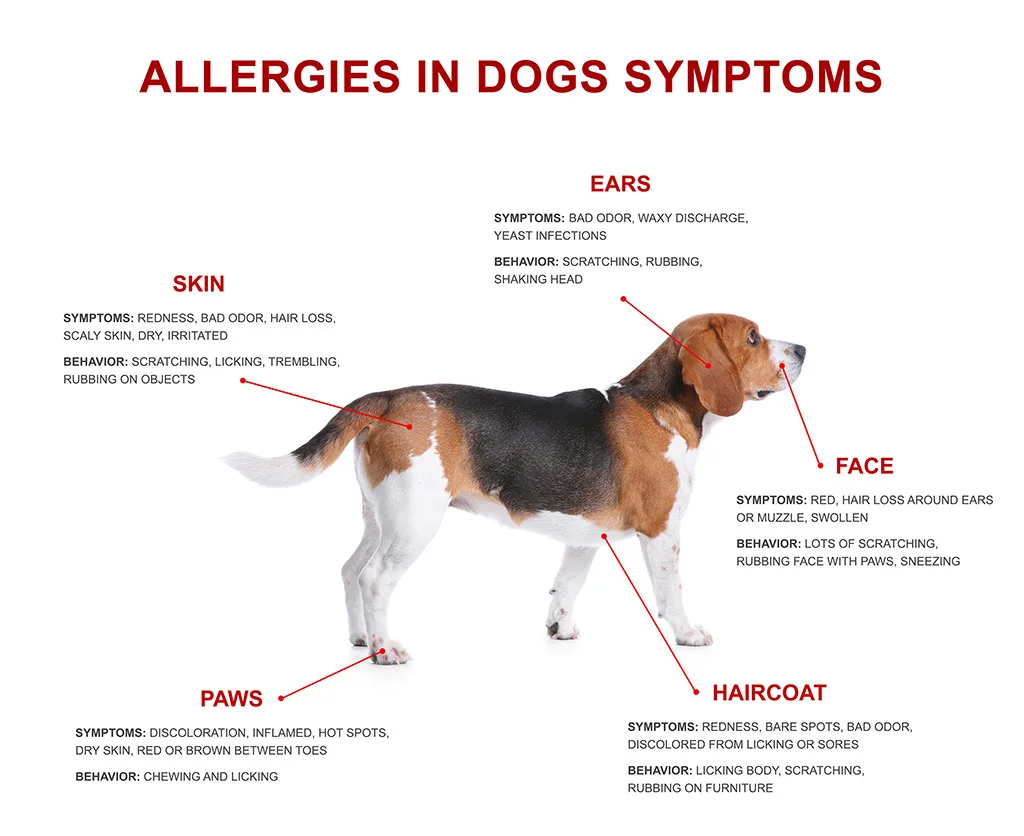
Dogs don't sneeze the way we do. They itch. The most common signs include excessive scratching, paw-licking (especially between the toes), face-rubbing on carpets or furniture, and recurring ear infections that smell yeasty or waxy.
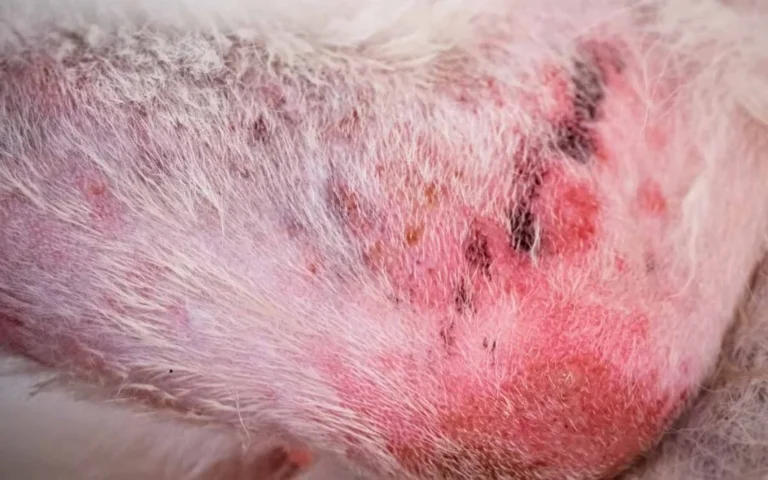
Skin symptoms show up in predictable zones: the belly, groin, armpits, between the toes, around the eyes, and inside the ears. You'll often see redness, hair thinning, or a dark, stained look on the fur from saliva discoloration (a tell-tale sign of chronic licking).
Ear infections are one of the biggest red flags. If your dog shakes his head, tilts it, or has black or yellow discharge, allergies are often the root cause. Per the Merck Veterinary Manual, up to 80% of recurrent ear infections in dogs have an allergic component.
Seasonal pattern is the giveaway. Symptoms flare in spring (tree pollen, March through May) or fall (ragweed, mold from leaf debris, August through October) and ease in winter. If your dog's symptoms follow the calendar, environmental allergies are the prime suspect.
The Most Common Triggers (and When They Hit Hardest)
The three big seasonal culprits are tree pollen, grass pollen, and mold spores. Each has its own peak window, which is why some dogs scratch in spring while others flare in late summer.
| Allergen | Peak Season | Common Regions |
|---|---|---|
| Tree pollen (oak, cedar, maple) | March to May | Southeast, Mid-Atlantic, Pacific Northwest |
| Grass pollen (bermuda, fescue, rye) | May to July | Nationwide, worse in humid zones |
| Weed pollen (ragweed) | August to October | Midwest, East Coast |
| Mold spores | Fall, after leaf drop | Humid coastal areas, wooded regions |
Climate change is shifting these windows. Data from the U.S. National Allergy Bureau shows pollen seasons now start 20 days earlier on average and last 8 days longer than they did in 1990.
If your dog's symptoms seem to drag on longer each year, that's why.
Flea saliva is technically year-round, but many owners miss it because they don't see fleas. A single bite can trigger intense itching in a flea-allergic dog, which is why vets always rule out flea allergy dermatitis before treating for seasonal triggers.
Dust mites are a fourth, often-overlooked trigger that peaks indoors during humid months. If your dog's symptoms persist indoors or flare when the AC kicks on, mites deserve a closer look.
When You Can Manage It at Home vs. When You Need the Vet
Mild itching, a little paw-licking, and minor redness can often be managed at home with paw wipes, a cool bath, and an omega-3 supplement. But anything beyond that needs veterinary input.
| Situation | Action |
|---|---|
| Mild seasonal scratching, no skin damage | Try at-home care first |
| Constant scratching, broken skin, hair loss | Vet visit within a week |
| Recurring ear infections | Vet visit, cytology needed |
| Hot spots (raw, oozing patches) | Urgent vet visit |
| Swelling, hives, facial swelling | Emergency vet immediately |
The "broken skin" line is the dividing point. Once your dog is scratching hard enough to break the skin or develop hot spots, home care alone won't stop the infection cycle. You'll need prescription medication, often both an antibiotic for the skin and an anti-itch drug to break the scratch-itch cycle.
If your dog is rubbing his face until it's raw or shaking his head nonstop, don't wait it out. Those are signs the inflammation has moved beyond what over-the-counter remedies can handle. Early vet intervention is faster, cheaper, and far less painful for your dog than letting things spiral.
Step 1: Rule Out Flea Allergy Dermatitis First
Every allergy workup starts here. Flea allergy dermatitis (FAD) is the most common allergic skin disease in dogs, and it can mimic seasonal allergies perfectly. A flea comb check and visual inspection take five minutes in the clinic.
The catch: you may not see fleas because they jump off after feeding. Vets look for "flea dirt" (black specks that turn red on a wet paper towel) and patterns of itching focused on the lower back, tail base, and rear legs. Even indoor dogs need year-round flea prevention, since one wandering flea can trigger weeks of misery.
All dogs in the household must be treated together, not just the itchy one. Skipping the "healthy" dogs re-infests the allergic dog within weeks. Modern preventives (Bravecto, NexGard, Credelio, Simparica Trio) handle both fleas and ticks in one dose and are far more reliable than older topicals.
Per the FDA Center for Veterinary Medicine, these products are approved for monthly or quarterly use depending on the formula.
If symptoms resolve once flea control is in place, you've found your answer. If itching persists, move on to Step 2.
Step 2: Talk to Your Vet About a Proper Diagnosis
Your vet's first job is ruling out everything that mimics allergies. Flea allergy dermatitis, mange (Sarcoptic and Demodectic), ringworm, hypothyroidism, and food allergies all look similar at first glance. Skin cytology and a flea comb check take just minutes in the clinic and save weeks of wrong treatment.
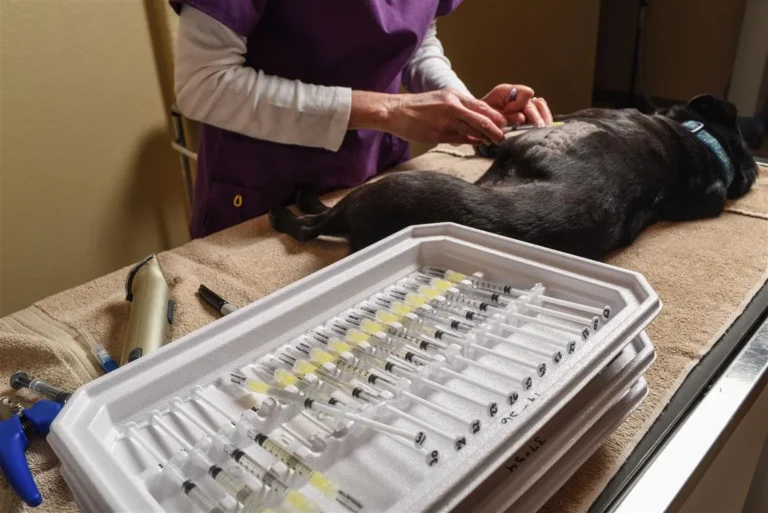
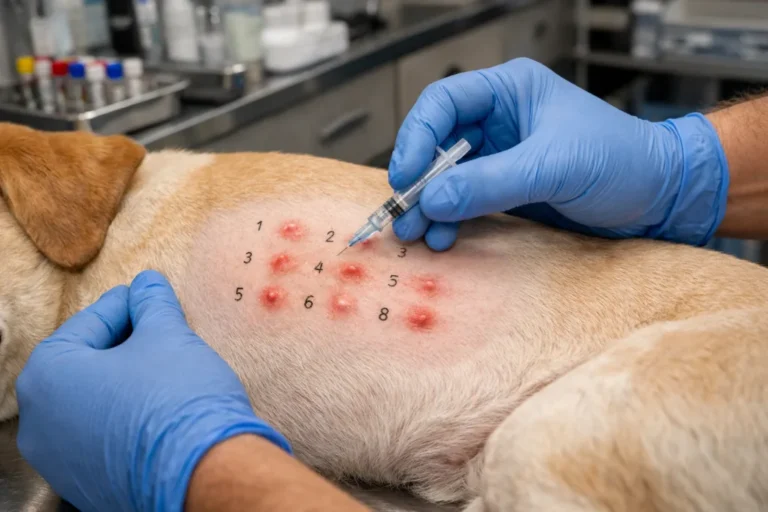
If allergies remain the top suspect, your vet may recommend intradermal allergy testing (small injections of allergens under the skin, read at 15 minutes) or serum IgE blood testing. Intradermal is considered the gold standard and is typically done by a veterinary dermatologist. Blood tests are more convenient but slightly less precise.
Either gives you the roadmap for immunotherapy if you choose that route.
The American College of Veterinary Dermatology recommends testing before starting long-term treatment so you know exactly what you're managing. A dog allergic to ragweed doesn't need the same plan as one allergic to dust mites.
Bring notes. Symptom logs (when scratching started, what changed, which body parts are worst) help your vet narrow triggers faster than a general exam alone.
Step 3: Build a Layered Treatment Plan
No single product fixes canine seasonal allergies. The dogs that do best run a layered plan: medication for fast relief, topicals for skin support, supplements for long-term resilience, and environmental changes to cut exposure. Treat them as a stack, not a sequence.
Here's what a typical layered plan looks like:
- Prescription anti-itch (Apoquel or Cytopoint) for daily comfort
- Medicated shampoo twice a week during peak season
- Omega-3 supplement daily as a baseline
- Paw and belly wipes after every outdoor walk
- HEPA filtration in main living areas
- Immunotherapy as a long-term desensitization option
Layering lets you lower medication doses over time, which reduces side effects and cost. It also means if one layer fails (say, antihistamines stop working), you still have backup.
The order matters. Start with prescription relief so your dog stops hurting. Add topicals and supplements for skin repair.
End with environmental changes to reduce future flares. Skipping straight to "natural remedies" while your dog scratches himself raw is the most common mistake we see.
Prescription Medications: Apoquel and Cytopoint Compared
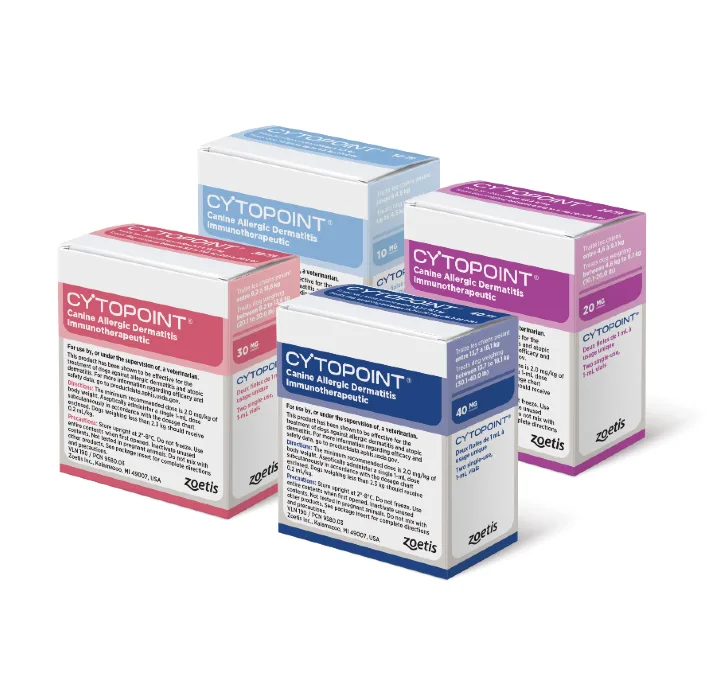
These two drugs dominate modern canine allergy care. They work differently, which is why vets choose one over the other based on your dog's profile.
| Feature | Apoquel (oclacitinib) | Cytopoint (lokivetmab) |
|---|---|---|
| Form | Oral tablet, daily | Injection, every 4 to 8 weeks |
| Onset of relief | 4 to 24 hours | 24 to 48 hours |
| Best for | Dogs owners can pill daily | Dogs that resist pills or need owner-free dosing |
| Use in puppies | 12 months and older | All ages |
| Common side effects | Occasional GI upset, rare immune suppression | Injection-site reactions, rare lethargy |
Apoquel costs roughly $2 to $4 per tablet, so a medium dog runs about $60 to $120 monthly. Cytopoint injections run $60 to $130 each depending on your dog's weight and region. Both are FDA-approved for canine atopic dermatitis.
Neither drug is a cure. Both manage symptoms. Cytopoint tends to last longer per dose, which appeals to owners who can't pill twice daily.
Apoquel gives more flexible dose control, useful for dogs whose symptoms vary week to week.
Antihistamines: When They Help and When They Don't
Over-the-counter antihistamines (diphenhydramine, cetirizine, loratadine) work in about 10 to 30% of dogs. That's it. If your dog falls in the lucky minority, great.
Most don't.
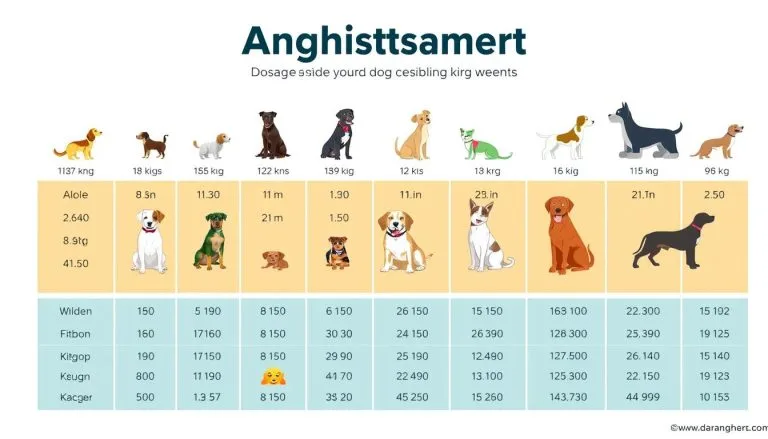
Dosing matters. The standard range is 1 mg per pound of body weight for diphenhydramine, given every 8 to 12 hours. Cetirizine runs about 0.5 mg per pound once daily.
Never use time-release formulas or any product containing pseudoephedrine or phenylephrine. Those are toxic to dogs.
Antihistamines work best before symptoms peak. Start them a few weeks before your dog's usual allergy season. Once itching has ramped up, they're far less effective.
They're also a useful add-on, not a primary treatment. Pairing an antihistamine with Apoquel or Cytopoint lets some dogs reduce their prescription dose.
Medicated Shampoos and Topical Relief
Shampoos do more than clean. Chlorhexidine and miconazole blends fight the bacterial and yeast overgrowth that allergies invite. Oatmeal and ceramides soothe the skin barrier between baths.
Bathing frequency during peak season: once or twice weekly. More than that dries out the skin. Less than that lets allergens build up in the coat.
Topical sprays and mousses fill the gaps between baths. Look for ones containing hydrocortisone (1%) for spot relief or pramoxine for non-steroidal soothing. Apply to the belly, paws, and groin where allergens settle.
Leave-in conditioners with ceramides and fatty acids rebuild the skin barrier over 4 to 6 weeks. Damaged skin lets more allergens in, which causes more scratching, which damages skin further. Breaking that cycle is the real job of topicals.
Omega-3s and Skin-Supporting Supplements
Omega-3 fatty acids (EPA and DHA from fish oil) reduce inflammatory responses at the cell level. The clinical dose range is 50 to 75 mg per kg of body weight daily, combined EPA and DHA. A 30-pound dog needs roughly 700 to 1000 mg daily to hit the therapeutic range.
Expect 6 to 8 weeks before you see the full effect. Omega-3s are a marathon, not a sprint.
Other useful supplements include quercetin (a natural antihistamine in some research), bromelain, and probiotics targeted at skin health. The evidence varies. Stick with brands that publish third-party testing for purity and heavy-metal content.
Cod liver oil won't cut it. The vitamin A dose gets toxic before you reach therapeutic omega-3 levels. Use a purified fish oil or an algae-based omega-3 instead.
Step 4: Reduce Allergen Exposure at Home
You can't keep pollen out entirely, but you can lower the dose your dog absorbs daily. The smaller the allergen load, the milder the symptoms.
Practical moves that help:
- Wipe paws and belly with a damp cloth after every walk
- Bathe weekly during peak season (see above)
- Run a HEPA air purifier in the room where your dog sleeps
- Vacuum twice weekly with a sealed HEPA-bag unit
- Wash dog bedding every 1 to 2 weeks in hot water
- Keep windows closed on high-pollen-count days
- Brush your dog outside so pollen doesn't stay trapped in the coat
Outdoor timing helps too. Pollen peaks between 5 a.m. and 10 a.m. and again at dusk. Early afternoon walks tend to be lowest pollen.
After-rain walks are also gentler because rain clears airborne pollen temporarily.
Don't skip yard management. Mow often (grass pollen drops fast after cutting). Rake leaf piles before they mold.
If you compost, keep the bin fenced off. Each step removes one more source of daily exposure.
Step 5: Consider Long-Term Solutions Like Immunotherapy
Immunotherapy (allergy shots or sublingual drops) retrains the immune system to stop overreacting to specific allergens. It's the only treatment that actually changes the underlying allergy, not just the symptoms.
Success rates cluster around 60 to 80% in published veterinary studies. Most dogs show meaningful improvement within 6 to 12 months. A subset reach the point where they no longer need daily medication.
The process: test (intradermal or serum), identify the allergens, formulate a custom serum, then dose daily or every few days. Shots are cheaper long-term but require confident handling. Sublingual drops cost more but skip the needle.
Cost ranges from $200 to $1,500+ for the first year, depending on testing and formulation. After year one, maintenance drops to roughly $30 to $60 monthly for the serum alone.
Immunotherapy works best when started early, before the skin damage becomes severe. It also requires patience. Owners looking for overnight fixes get frustrated.
Owners willing to commit 12 months get the best results.
Treatment Costs: What to Budget for Dog Allergy Care
Allergy care adds up fast if you treat each flare as a separate emergency. Planning the year in advance keeps costs predictable and outcomes better.
| Cost Item | Typical Range | Frequency |
|---|---|---|
| Initial vet consultation | $75 to $150 | Once |
| Skin cytology and infection workup | $50 to $120 | Per flare |
| Apoquel (monthly) | $60 to $120 | Daily during season |
| Cytopoint injection | $60 to $130 | Every 4 to 8 weeks |
| Intradermal allergy testing | $300 to $600 | Once |
| Immunotherapy serum (year one) | $200 to $1,000+ | Daily dosing |
| Medicated shampoo | $15 to $30 | Monthly during season |
| Omega-3 supplement | $20 to $40 | Monthly |
| HEPA air purifier | $80 to $250 | One-time |
A rough budget for a medium-sized dog with moderate seasonal allergies: $600 to $1,200 per allergy season once testing is complete. Add $300 to $500 the first year for diagnostics. Severe cases or multi-allergen dogs run higher.
Pet insurance rarely covers pre-existing conditions. If your dog was symptomatic before enrollment, allergy treatment usually won't qualify. Trupanion and similar plans cover allergy care only when the policy is in place before the first symptom.
Read the fine print before signing up.
Ask your vet about generic Apoquel alternatives. Oclacitinib is now off-patent, and generic versions have entered the market. Manufacturer coupons also exist for both Apoquel and Cytopoint through Zoetis, which can cut costs by 20 to 30% depending on your pharmacy.
Mistakes Dog Owners Make With Seasonal Allergies
The same handful of mistakes show up in clinic after clinic. Avoiding them shortens the path to relief.
- Stopping medication when symptoms clear. Seasonal allergies don't "end" because the itching stopped. Stopping Apoquel early often triggers a flare worse than the original.
- Bathing too often. Daily baths strip the skin barrier and worsen itching. Twice a week is the ceiling during peak season.
- Skipping flea prevention. Even indoor dogs need year-round flea control. One bite can wreck an allergy dog's skin for weeks.
- Self-dosing human allergy meds. Time-release tablets, decongestants, and certain antihistamines are toxic to dogs. Always check with your vet first.
- Assuming food is the cause. True food allergies are non-seasonal and account for only about 10% of canine allergy cases. Most seasonal itching is environmental.
- Waiting out ear infections. Untreated ear infections spread to the middle ear and become chronic. Flush and treat at the first sign.
- Using steroid creams long-term. They thin the skin and suppress healing. Reserve for short bursts under vet guidance.
The biggest cost driver is delaying the vet visit. A $150 consultation in early spring often prevents a $700 antibiotic course and ear flush in summer.
Special Cases: Puppies, Seniors, and Dogs With Multiple Allergies
Puppies under 12 months can't take Apoquel (it's labeled for 12 months and older). Cytopoint has no minimum age restriction, which makes it the go-to for young dogs with severe seasonal symptoms. Omega-3s and topical care carry most of the load until puppies mature.
Senior dogs add complexity. Kidney and liver function decline with age, which affects how drugs are processed. Cytopoint is often preferred because it stays in the bloodstream and breaks down without heavy organ involvement.
Apoquel still works but requires baseline bloodwork before starting.
Dogs with both food and environmental allergies are the hardest cases. They need a sequential elimination trial (8 to 12 weeks on a novel or hydrolyzed protein diet) layered with seasonal medication. Symptoms often improve 30 to 50% once food is sorted, which makes the environmental plan more manageable.
Multi-dog households complicate flea control. Every dog must be on prevention, even ones without symptoms. Otherwise the allergic dog gets bitten by a flea on the "non-allergic" sibling and flares up anyway.
Brachycephalic breeds (bulldogs, Frenchies, pugs) get ear infections faster and heal slower due to ear canal shape. Daily ear checks and proactive cleaning become non-negotiable during pollen season.
Quick Symptom Relief Checklist During Peak Pollen Season
Use this during the worst weeks to keep symptoms manageable without an emergency vet visit.
- Wipe paws and belly after every outdoor trip
- Bathe once this week with a chlorhexidine or oatmeal shampoo
- Check ears for odor, redness, or discharge; flush if needed
- Run the HEPA purifier in your dog's main room 24/7
- Give omega-3 at the full therapeutic dose
- Stick to Apoquel or Cytopoint on schedule; do not skip doses
- Brush outdoors to remove trapped pollen
- Keep windows closed on high-count days (check local pollen counts online)
- Wash bedding in hot water this week
- Note any new hot spots or behavior changes; call your vet if you see them
Run through this list every Sunday during peak season. Symptoms stay manageable when prevention is consistent.
FAQs About Seasonal Allergies in Dogs
Can seasonal allergies in dogs go away on their own?
Seasonal allergies don't disappear, but they do wax and wane with pollen exposure. Symptoms resolve when the allergen disappears (winter for ragweed, summer for tree pollen) and return the next year. Without treatment, the trend usually worsens with age.
How long does it take for Apoquel to start working?
Most dogs show meaningful improvement within 4 to 24 hours of the first dose. Full effect stabilizes by day 7. If you see no change after two weeks at the correct dose, talk to your vet about switching to Cytopoint.
Are there natural remedies that actually work for dog allergies?
Omega-3 fatty acids have the strongest evidence of any natural option. Quercetin and bromelain show mild antihistamine effects in some studies but aren't reliable as standalone treatment. Bathing, paw wiping, and air filtration are the most effective non-drug tools available.
What is the difference between Cytopoint and Apoquel?
Cytopoint is an injectable antibody that blocks one specific itch signal (IL-31) for 4 to 8 weeks. Apoquel is a daily oral pill that blocks multiple itch and inflammation pathways. Both are FDA-approved, both work well, and choice depends on lifestyle and cost.
Can dogs take Benadryl for seasonal allergies safely?
Plain diphenhydramine (Benadryl) is safe for most dogs at 1 mg per pound every 8 to 12 hours, but it works in only 10 to 30% of dogs. Never use time-release capsules, children's Benadryl with phenylephrine, or any product with pseudoephedrine. Always confirm the dose with your vet first.
When should I take my dog to the emergency vet for allergies?
Go immediately if your dog has facial swelling, hives spreading fast, vomiting, or difficulty breathing. These signal anaphylaxis, which is rare but life-threatening. Ear infections with head tilt or loss of balance also need same-day care.
The Bottom Line: A Smarter Plan for Your Itchy Dog
Seasonal allergies are a chronic condition, not a one-time problem. The dogs that do best run a layered plan: prescription relief (Apoquel or Cytopoint), skin support (omega-3s, medicated baths, topicals), and environmental control (HEPA filtration, paw wipes, allergen reduction). Add immunotherapy if you want to address the root cause, not just the symptoms.
Start early. Two to three weeks before your dog's usual flare is the right time to load up on omega-3s, refill prescriptions, and check the air filters. By the time symptoms peak, the plan should already be running.
Work with your vet. Allergies look alike from the outside, but the right treatment depends on the specific trigger, the severity, and your dog's age and health. A 30-minute consultation in early spring saves hundreds of dollars and weeks of frustration once the pollen count climbs.
Finally, track what works. A simple notebook (or note on your phone) logging symptoms, medications, and weather helps you and your vet see patterns. Over two or three seasons, you'll know exactly when to escalate treatment and when to hold steady.
That knowledge is what turns allergy care from reactive scrambling into a calm, predictable routine.