Most adult cats need about 200 to 300 calories per day, but the right mix of wet and dry food depends on body weight, age, activity, and each food’s calories.
For cat owners across the United States, feeding time can bring a common question: should you fill the bowl with kibble, open a can of wet food, or offer both? Many households choose mixed feeding because wet food adds water and dry food is easy to measure. The key is to count the calories from both foods, rather than giving a full serving of each.
A cat’s daily food needs are not the same as another cat’s needs. A small indoor cat may need less food than a large, active cat. Kittens, pregnant cats, nursing mothers, and cats with health problems also need different feeding plans. The best starting point is your cat’s ideal weight, the calorie information on the food labels, and advice from your veterinarian when needed.
This guide explains how much wet and dry food a cat should eat per day, how to calculate portions, and how to adjust meals without overfeeding. The examples use common U.S. food labels and measurements, such as calories per can, calories per cup, ounces, and pounds. Treat the sample portions as starting points, not exact prescriptions for every cat.
Source: i.pinimg.com
How Much Wet and Dry Food Should a Cat Eat Per Day?
The right amount depends on your cat’s daily calorie needs and the energy content of the foods you choose. For a typical healthy adult cat, about 200 to 300 calories per day is a useful broad starting range. A smaller or less active cat may need less, while a larger or more active cat may need more.
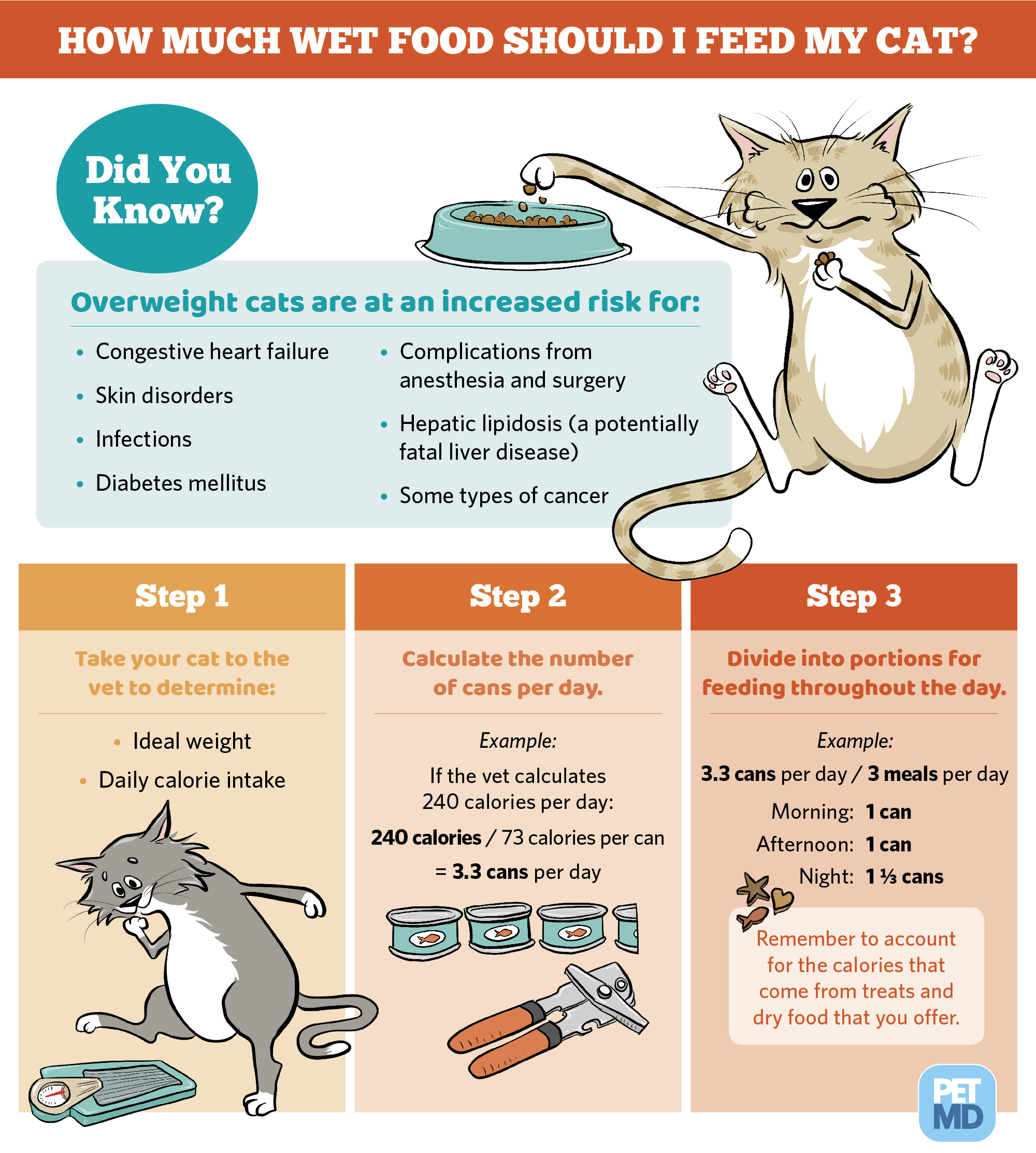
Mixed feeding works best when you decide on a daily calorie target first, then split those calories between wet and dry food. For example, if your cat needs 240 calories per day and you plan to get half from wet food and half from dry food, each food must provide about 120 calories.
The amount in ounces, cans, or cups will vary by brand and recipe. One can of wet food might contain 70 calories, while another might contain 180 calories. A cup of dry food may contain 300 calories or more, so even a small change in kibble portions can make a meaningful difference.
Source: petmd.com
Wet food
Often supplies a large share of its weight as water. Check the can or pouch for calories per container, not just the net weight.
Dry food
Contains less water and often packs more calories into a small volume. Measure it with a measuring cup or, for better precision, a kitchen scale.
Mixed feeding
Can fit many cats’ needs when wet and dry portions are measured together and the total daily calories stay near the cat’s target.
A Simple Daily Feeding Example
Imagine an adult cat that needs 240 calories per day. The owner chooses a wet food with 90 calories per can and a dry food with 400 calories per cup. These values are hypothetical and are used only to show the calculation.
If the cat receives one can of wet food, that provides 90 calories. The remaining 150 calories can come from dry food. At 400 calories per cup, the dry portion would be 150 divided by 400, or 0.375 cup. The total is 240 calories for the day.
That example does not mean every cat should eat one can and three-eighths of a cup of kibble. Your cat may need a different calorie target, and your actual foods may have very different calorie values.
Daily wet food
One hypothetical can containing 90 calories.
Daily dry food
Three-eighths of a cup of hypothetical kibble containing 400 calories per cup.
Combined daily total
240 calories from both foods, before accounting for treats or other extras.
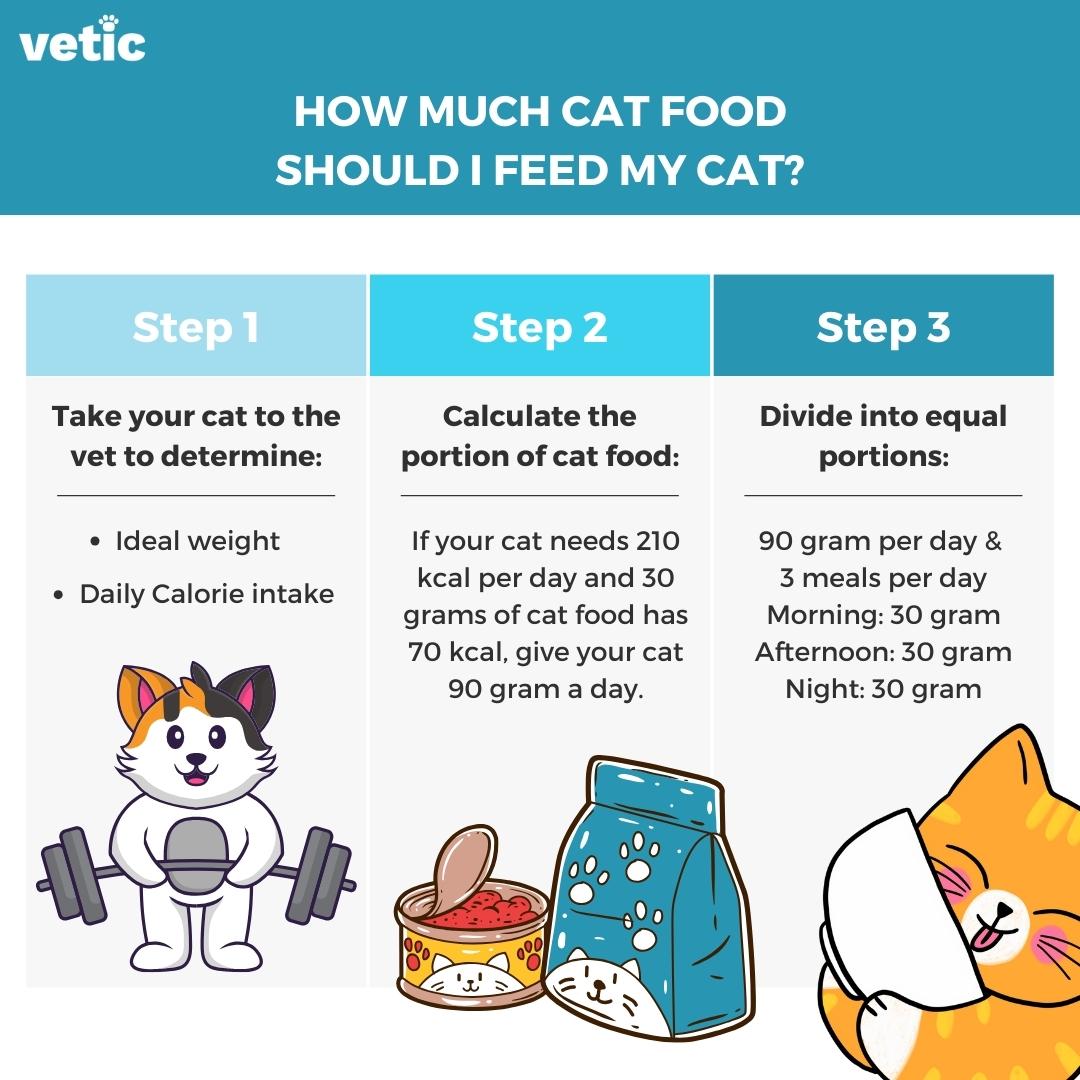
How to Calculate Your Cat’s Daily Food Portions
The most useful way to work out a mixed-feeding plan is to calculate calories before measuring portions. This prevents a common mistake: serving a full recommended amount of wet food and a full recommended amount of dry food, even though each label may describe a complete daily ration.
Start with your veterinarian’s recommended calorie target if you have one. If your cat is healthy and maintaining a suitable weight, the feeding guide on a complete and balanced adult food can provide an initial estimate. Then compare that estimate with your cat’s actual weight trend, appetite, and body condition.
A calorie target is a starting point, not a permanent number. Activity, age, neuter status, body condition, and health can change how much food a cat needs. If your cat is overweight, underweight, or losing weight without an obvious reason, ask a veterinarian to help set the target.
Source: catfoodpoint.com
Step 1: Set a daily calorie target
Use a veterinarian’s recommendation when available. Otherwise, start with the food label’s feeding guide and your cat’s ideal weight rather than assuming every cat needs the same number of calories.
Step 2: Check the wet-food calories
Find the calories per can, pouch, or ounce. If the label lists calories per kilogram or per 100 grams, use that value to calculate the portion.
Step 3: Decide how much of the target comes from wet food
Choose a practical share of the daily calories for wet food. There is no universal rule that wet food must provide exactly half.
Step 4: Subtract the wet-food calories
Subtract the calories from wet food and treats from the daily target. The remaining calories are the allowance for dry food.
Step 5: Convert the remaining calories into a measured portion
Divide the remaining calorie allowance by the dry food’s calories per cup or gram.
Step 6: Monitor and adjust
Track body weight and body shape. Make small changes when needed, and get veterinary advice before placing an overweight cat on a strict calorie-restricted diet.
The Formula for Wet and Dry Food
Use this formula to calculate the dry-food portion after choosing the wet-food amount: dry-food calories equal the daily calorie target minus wet-food calories minus treat calories. Then divide the dry-food calorie allowance by the calories per cup or gram shown on the dry-food label.
For example, suppose the daily target is 250 calories, wet food supplies 100 calories, and treats supply 10 calories. The dry-food allowance is 140 calories. If the kibble contains 350 calories per cup, divide 140 by 350 to get 0.4 cup of dry food per day.
Wet food calories
Number of cans or pouches multiplied by calories per container.
Dry food calories
Measured cups or grams multiplied by the calories per cup or gram.
Treat calories
Include treats, table scraps, and any other food that adds energy to the daily total.
How to Read a Cat Food Label
Look for a calorie statement such as kcal per can, kcal per cup, or kcal per kilogram. In pet food, a kilocalorie is the unit commonly called a calorie in everyday feeding advice. If a label gives calories per cup, check that you are measuring the same amount the label describes.
Also check whether the feeding chart refers to a complete daily amount or a single meal. Some labels provide a daily range based on body weight, while others use age or life stage. Treat those directions as a starting point and adjust them with your veterinarian’s guidance when necessary.
Calorie statement
Use the stated energy content rather than judging portions by the size of the can or bowl.
Life-stage statement
Choose a food labeled complete and balanced for your cat’s life stage, such as growth or adult maintenance.
Feeding directions
Check whether the directions describe the whole day and whether they assume the food is the only source of calories.
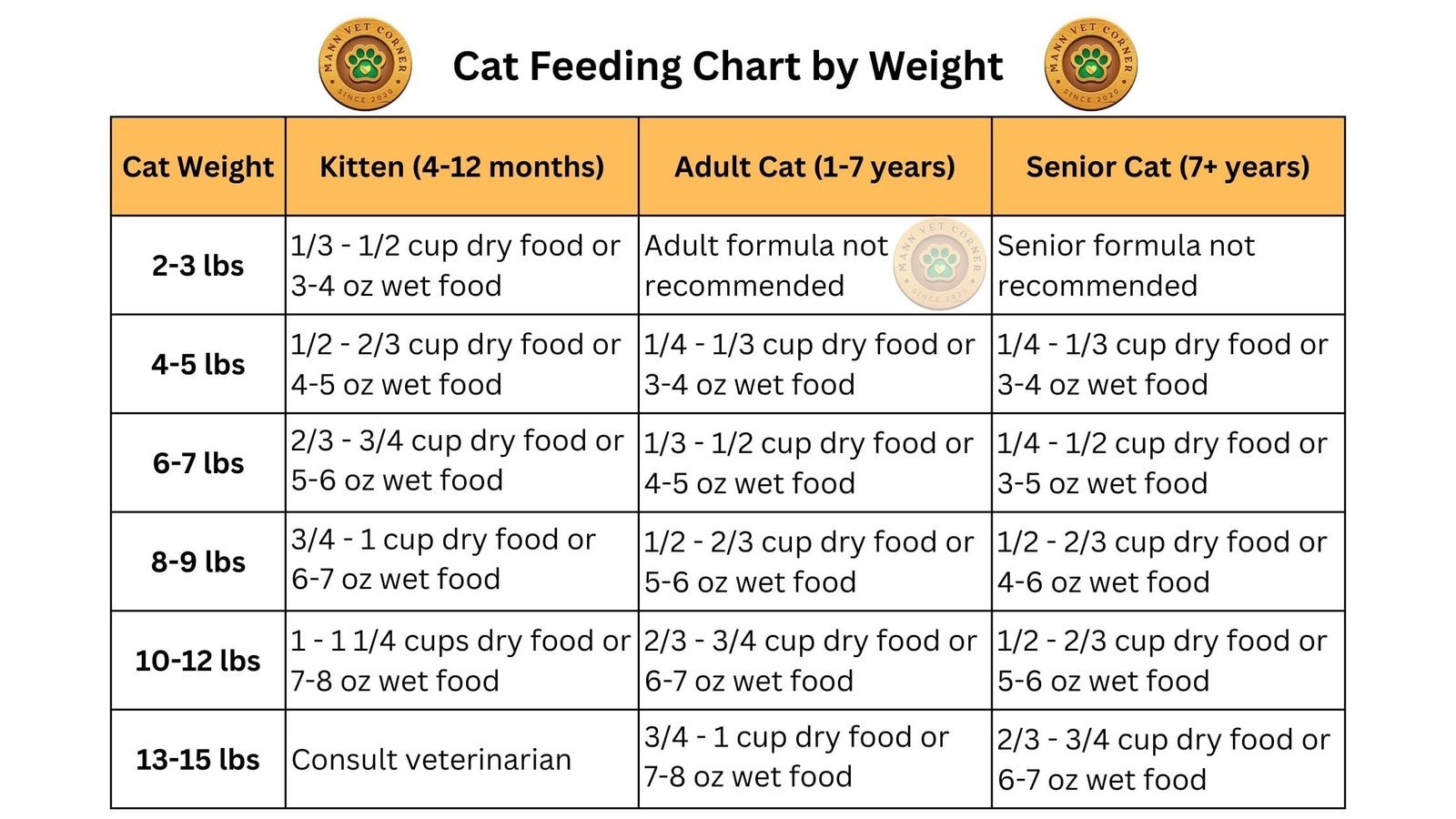
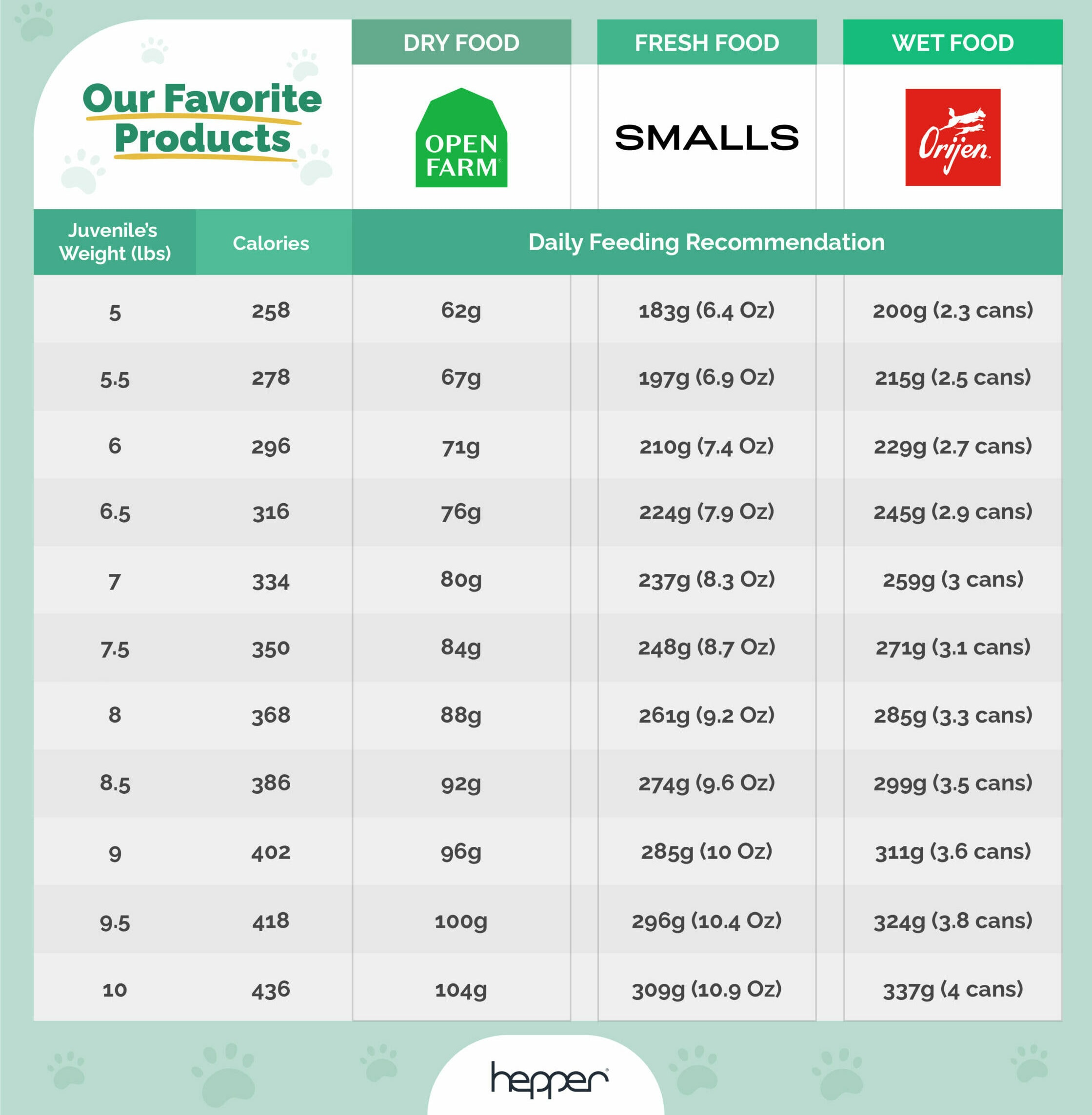
Daily Food Needs by Cat Weight
Body weight can help estimate calorie needs, but weight alone does not tell the whole story. Two cats weighing 10 pounds may need different amounts because one may be more active, younger, or naturally leaner than the other.
The table below gives broad illustrative ranges for healthy adult cats. These are not individualized prescriptions or official calorie requirements for every cat at each weight. A veterinarian may recommend a lower or higher amount based on ideal body weight, activity, health, and weight history.
If your cat is overweight, do not automatically use the current weight as the target for feeding. The goal may be to maintain a lower ideal weight, but weight loss should be planned carefully to protect muscle and avoid serious complications from eating too little.
Source: hepper.com
Small adult cat
A cat weighing around 6 pounds may need roughly 150 to 200 calories per day, depending on body condition and activity.
Average-sized adult cat
A cat weighing around 8 to 10 pounds may need roughly 180 to 250 calories per day, with individual needs varying.
Larger adult cat
A cat weighing around 12 to 15 pounds may need roughly 220 to 350 calories per day, depending on ideal weight, activity, and other factors.
Example Portions for Different Cat Sizes
The following examples show how calorie needs translate into wet and dry food. Assume a wet food containing 90 calories per 3-ounce can and dry food containing 400 calories per cup. The portions are mathematical examples, not feeding instructions for every cat of that weight.
6-pound adult cat
At a hypothetical target of 170 calories, one 90-calorie can leaves 80 calories for dry food. That equals 0.2 cup of kibble containing 400 calories per cup.
10-pound adult cat
At a hypothetical target of 230 calories, one 90-calorie can leaves 140 calories for dry food. That equals 0.35 cup of the same kibble.
14-pound adult cat
At a hypothetical target of 300 calories, one 90-calorie can leaves 210 calories for dry food. That equals about 0.53 cup of the same kibble.
Why Ideal Weight Matters More Than the Number on the Scale
A cat’s frame and body condition matter as much as its weight. A large-framed cat may be healthy at a weight that would be too high for a smaller cat. A veterinarian can assess body condition by checking the ribs, waist, and abdominal shape.
You should usually be able to feel your cat’s ribs under a light layer of fat. Viewed from above, the body should have a visible waist behind the ribs. If the ribs are hard to feel or the waist is difficult to see, ask your veterinarian whether your cat needs a feeding adjustment.
Ribs
They should be easy to feel without pressing hard, but they should not protrude sharply.
Waist
A modest inward curve behind the ribs is generally expected in a healthy adult cat.
Abdominal area
A small belly flap can be normal, so judge overall body condition rather than relying on this feature alone.
How Much Wet Food and Dry Food Should You Feed at Each Meal?
Once you know the daily amount, divide it into meals that suit your household and your cat. Many adult cats do well with two or more measured meals per day. Smaller meals may also help cats that prefer to eat little and often.
If you feed wet food in the morning and evening and leave a measured dry portion for later, count the dry food as part of the same daily total. Free-feeding from a bowl that is repeatedly topped up makes it harder to know how much your cat has eaten.
Wet food should not sit out for long periods, especially in a warm room. Follow the product’s storage directions, remove uneaten food promptly, and refrigerate opened cans or pouches as directed by the manufacturer.
Source: vetic.in
Two-meal routine
Split the daily allowance between breakfast and dinner. If using mixed feeding, decide which food will be served at each meal.
Three- or four-meal routine
Divide the same daily calories into smaller portions if your cat prefers frequent meals or if your schedule allows it.
Measured dry-food snack
Set aside a small part of the daily kibble allowance for a timed feeder or puzzle feeder instead of adding extra food.
Wet-food storage
Serve fresh portions and follow the label’s guidance for refrigeration and safe handling.
A Sample Daily Schedule
For a cat with a hypothetical daily allowance of 240 calories, you might serve 90 calories of wet food at breakfast, 60 calories of dry food in a puzzle feeder during the day, and the remaining 90 calories of wet food at dinner. This plan totals 240 calories before any treats.
The schedule can change to fit your cat’s appetite and your routine. The daily total matters more than a specific meal clock, provided the cat gets the nutrients it needs and the food is handled safely.
Morning
Serve a measured wet-food portion and provide fresh water.
Midday
Offer a measured portion of dry food, if appropriate, using a timed feeder or puzzle feeder.
Evening
Serve the remaining wet-food portion or another planned mix that fits the daily calorie target.
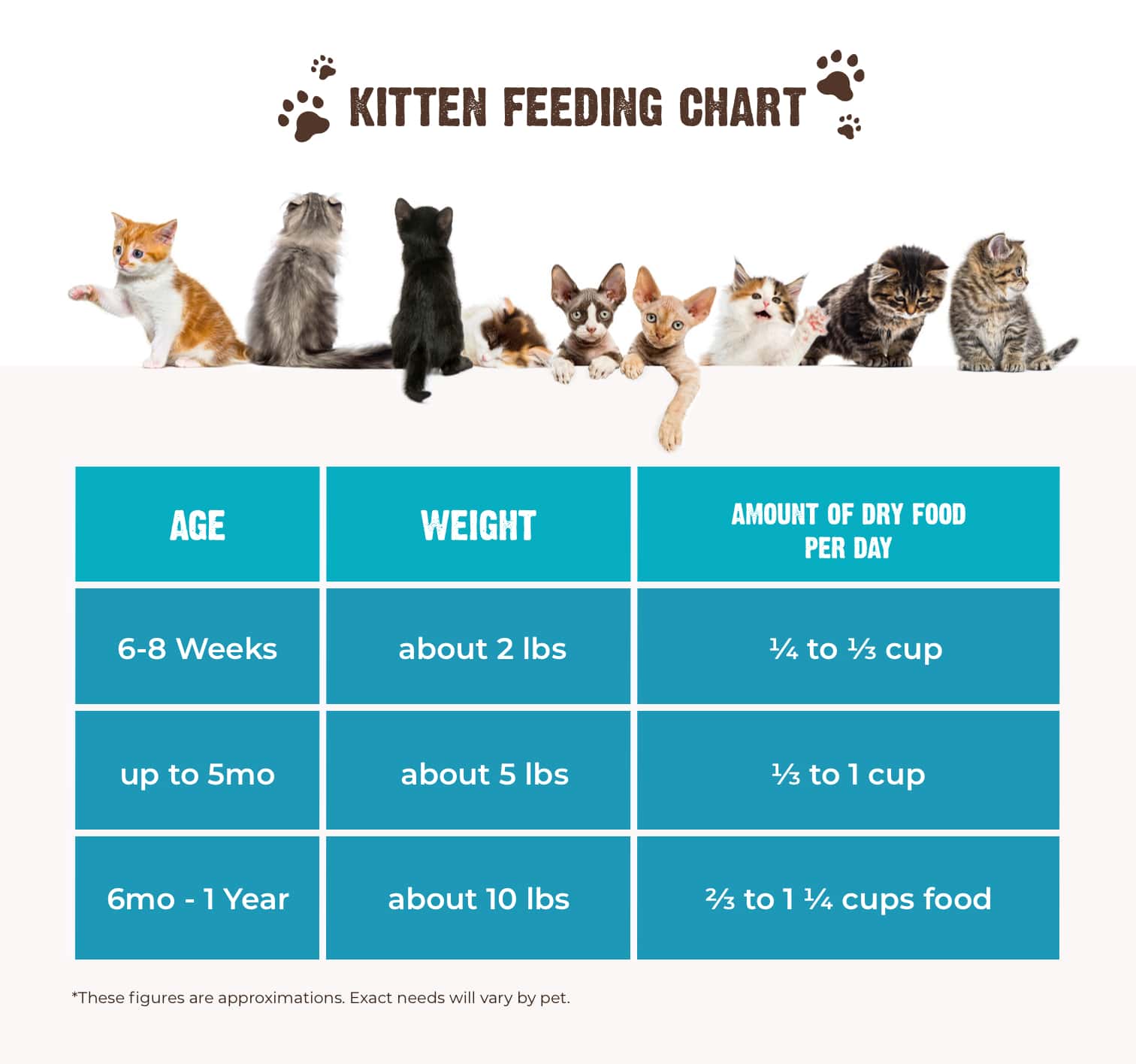
How Much Should Kittens Eat When Combining Wet and Dry Food?
Kittens need more energy per pound than most adult cats because they are growing quickly. Their stomachs are small, so they often need several meals throughout the day rather than only one or two large meals.
Choose food labeled complete and balanced for growth or for all life stages, where appropriate. Adult maintenance food may not provide the right nutrient profile for a growing kitten. The food label’s age-specific directions are a useful starting point, but the amount should change as the kitten grows.
A kitten’s food needs can change from month to month. Weigh the kitten regularly and watch for steady growth, normal energy, and healthy stool. If growth slows, the kitten seems weak, or the kitten refuses food, contact a veterinarian promptly.
Source: rawznaturalpetfood.com
Young kittens
Very young kittens may need frequent meals and special feeding care. Orphaned kittens require a kitten milk replacer and a veterinarian’s guidance, not ordinary cow’s milk.
Growing kittens
Offer several measured meals each day and adjust portions as body weight and activity change.
Kittens approaching adulthood
Continue a growth-appropriate diet until the veterinarian recommends a transition to adult maintenance food, often around 12 months but depending on the cat.
How to Mix Wet and Dry Food for a Kitten
Calculate the kitten’s total daily needs using the feeding chart for its age and weight, then use the calorie values on the wet and dry food labels. Avoid assuming that an adult cat’s calorie target applies to a kitten.
A kitten that eats very little at one meal may make up for it later, but repeated poor appetite is not something to ignore. Young kittens can become unwell faster than healthy adults, so seek veterinary advice if the kitten misses meals, loses weight, has repeated vomiting or diarrhea, or seems unusually tired.
Keep meals frequent
Offer several smaller meals rather than expecting a growing kitten to meet its needs in two large servings.
Measure both foods
Wet food and kibble both count toward the kitten’s daily calorie intake.
Track growth
Use regular weigh-ins and veterinary checks to make sure the feeding plan supports normal development.
Does a Senior Cat Need Less Wet and Dry Food?
Some older cats become less active and need fewer calories, but age alone does not mean every senior cat should eat less. Older cats may also lose muscle, have dental pain, or develop health conditions that change their nutritional needs.
A senior cat that gains weight may need smaller portions or more activity, while a senior cat that loses weight may need a prompt medical check and a different feeding plan. Do not reduce food simply because your cat has reached an older age.
Wet food can be useful for cats that find it easier to eat soft textures or need extra water in their diet. However, the best choice depends on dental health, appetite, kidney function, and any other conditions diagnosed by a veterinarian.
Source: i.pinimg.com
Watch for weight changes
Unexpected weight gain or loss deserves attention, especially in older cats.
Check chewing comfort
Dropping kibble, chewing on one side, drooling, or avoiding hard food can point to dental problems.
Use a condition-specific plan
Cats with kidney disease, diabetes, digestive problems, or other medical conditions may need a tailored diet and feeding schedule.
When a Senior Cat Eats Less
A reduced appetite can result from dental pain, nausea, stress, illness, or changes in smell and taste. Try serving a familiar food at a comfortable temperature if your cat has mild preferences, but do not use food changes to delay a medical check.
If your cat stops eating, contact your veterinarian promptly. Cats that go without enough food can develop serious health problems, especially if they are overweight or already ill.
Record intake
Note how much wet and dry food your cat actually eats instead of measuring only what you serve.
Watch other signs
Look for vomiting, changes in thirst, changes in urination, low energy, or hiding.
Arrange veterinary care
Seek advice for a sustained appetite change, rapid weight loss, or signs of pain or illness.
Is Wet Food Better Than Dry Food for Cats?
Neither wet food nor dry food is automatically best for every cat. A complete and balanced food that meets your cat’s life-stage needs can support good nutrition in either form. The choice often depends on water intake, calorie density, cost, storage, dental health, and your cat’s preferences.
Wet food usually contains much more moisture than kibble. That can help increase total water intake, which may be useful for cats that drink little from a bowl. It does not replace veterinary treatment for urinary or kidney disease, and it does not guarantee that a cat will avoid those conditions.
Dry food is convenient to store and measure, and some cats enjoy using kibble in puzzle feeders. However, its calorie density makes portion control especially important. Ordinary dry kibble should not be assumed to clean teeth; only products with suitable evidence or a recognized dental claim should be considered for that purpose.
Source: thepetfantasy.com
Potential benefits of wet food
Higher moisture content, soft texture, and the option to provide a larger food volume for a given calorie amount, depending on the recipe.
Potential benefits of dry food
Easy storage, simple portion measurement, and convenient use in feeding toys or timed feeders.
Potential drawbacks of wet food
Opened portions need proper storage, and wet food left out too long can spoil.
Potential drawbacks of dry food
Small-looking portions can contain many calories, and a bowl left full all day can make intake difficult to track.
Can Cats Eat Only Wet Food?
Yes. A healthy cat can eat only wet food if the diet is complete and balanced for its life stage and the total amount meets its energy and nutrient needs. The number of cans depends on the calories per can and the cat’s daily target.
For example, if a cat needs 240 calories and each can supplies 80 calories, the mathematical total is three cans per day. If each can contains 120 calories, the same target would equal two cans. Actual portions should account for treats and any other food.
Check the nutrition statement
Choose food that is labeled complete and balanced for the correct life stage, not a product intended only for supplemental feeding.
Use calories per container
Do not assume all 3-ounce or 5.5-ounce cans provide the same amount of energy.
Can Cats Eat Only Dry Food?
Yes. Many healthy cats can eat a complete and balanced dry diet if the portion meets their needs and fresh water is always available. Measure the food instead of refilling the bowl whenever it looks empty.
If your cat has a urinary, kidney, digestive, or other medical condition, ask your veterinarian whether a particular food type or prescription diet is appropriate. Food texture alone does not determine whether a diet is medically suitable.
Measure each serving
Use the calorie statement to work out a daily amount and split it into meals.
Support water intake
Provide clean water in easy-to-reach places and monitor changes in drinking or urination.
Common Mixed-Feeding Mistakes to Avoid
The most common feeding mistake is giving too much food because wet and dry portions are counted separately. A label may recommend a full daily ration when a food is fed alone, so adding that amount on top of another full ration can lead to excess calories.
Another mistake is measuring by volume without checking the calorie density. A cup of one kibble may contain more calories than a cup of another. The same issue applies to wet food: a larger can does not always contain proportionally more calories.
Treats, food puzzles, table scraps, and food offered by other family members also count. A simple feeding log can help everyone in the household follow the same plan and prevent extra servings from quietly adding up.
Source: blog.ironwillrawdogfood.com
Feeding full portions of both foods
Calculate one combined daily calorie budget instead of following two separate full-day portions.
Ignoring treats
Include treats in the total. As a general guideline, treats should provide no more than about 10% of daily calories, with most nutrition coming from a complete and balanced diet.
Using an unmeasured scoop
A large serving spoon or random cup can deliver more kibble than expected. Use a consistent measuring tool or a kitchen scale.
Changing food too quickly
Introduce a new food gradually over several days when possible, unless your veterinarian gives different instructions.
Assuming begging always means hunger
Cats may ask for food because of habit, attention, boredom, or a medical issue. Check the feeding plan and body condition before increasing portions.
Restricting food too sharply
Rapid calorie cuts can be dangerous for cats. A veterinarian should guide a weight-loss plan, especially for cats that are overweight.
What If Your Cat Still Seems Hungry?
First, check whether your cat is receiving the intended portion and whether another person is feeding it extra meals. Then review the calorie count, treat allowance, and body condition. If your cat is lean, highly active, or still growing, the current amount may need to change.
A sudden increase in hunger can also signal a medical problem, particularly when paired with weight loss, increased thirst, or frequent urination. Contact your veterinarian if the appetite change is new, persistent, or accompanied by other symptoms.
Check the actual intake
Measure what is served and record what remains in the bowl.
Use feeding enrichment
Try a puzzle feeder or several small meals to slow eating and add mental activity without increasing calories.
Watch for illness
Seek veterinary advice for sudden hunger, weight loss, increased thirst, or changes in urination.
What If Your Cat Leaves Food in the Bowl?
If your cat regularly leaves food, measure what remains before assuming the full serving was eaten. Your cat may need a smaller portion, may prefer smaller meals, or may dislike the food’s texture or temperature. A gradual adjustment can reduce waste while preserving the planned daily calorie intake.
Do not dismiss a sudden drop in appetite as pickiness. If your cat eats much less than usual or stops eating, contact a veterinarian promptly rather than waiting several days for the problem to resolve.
Measure leftovers
Use the amount eaten, not just the amount served, when reviewing the feeding plan.
Serve smaller portions
Offer smaller fresh wet-food meals if large servings are often left unfinished.
Check for warning signs
Vomiting, lethargy, pain, or a marked appetite change warrants prompt veterinary advice.
How to Tell Whether Your Cat Is Eating the Right Amount
Your cat’s weight trend and body condition are more useful than a single bowl measurement. A cat that maintains a healthy body shape, has normal energy, and eats a consistent amount is more likely to be receiving an appropriate portion, although these signs cannot rule out every health problem.
Weigh your cat regularly using the same method when possible. For a small cat, even a modest change can matter, so record the date and weight rather than relying on memory. If the number rises or falls over several checks, review the feeding log and contact your veterinarian if the change is unexpected.
Adjust portions gradually when the goal is routine weight maintenance. For planned weight loss or gain, ask your veterinarian to set a safe target and timeline. Cats should not undergo crash diets, and a cat that stops eating needs prompt attention.
Signs the plan may be working
Stable weight, a visible waist, ribs that are easy to feel without being prominent, normal activity, and regular eating habits.
Signs the portion may be too large
Steady weight gain, a waist that becomes harder to see, and ribs that are increasingly difficult to feel.
Signs that need attention
Unexplained weight loss, sudden appetite changes, repeated vomiting, increased thirst, or changes in urination.
A Simple Feeding Log
A short daily log can reveal patterns that are easy to miss. Record the wet-food amount, dry-food amount, treats, leftovers, and any changes in appetite or behavior. Review the record after a week or two, or sooner if your cat’s condition changes.
Wet food
Record the number of cans or pouches and their calorie content.
Dry food
Record the measured cups or grams and calories.
Treats
Record the amount and include the calories when available.
Weight and behavior
Record weight checks, appetite changes, and unusual signs that may need veterinary review.
When to Ask a Veterinarian About Your Cat’s Food
A veterinarian can help set a calorie target based on your cat’s age, ideal weight, activity, body condition, and health. This is especially useful when your cat is overweight, underweight, pregnant, nursing, growing rapidly, or living with a medical condition.
Cats with diabetes, kidney disease, urinary problems, food allergies, or digestive disease may need a specific nutrition plan. Changing the wet-to-dry ratio without considering the condition can make it harder to manage the problem, so ask before making major changes.
Seek prompt veterinary advice if your cat suddenly refuses food, repeatedly vomits, has ongoing diarrhea, seems weak, or loses weight without explanation. Cats that eat too little for too long can develop serious complications, and overweight cats are particularly vulnerable to hepatic lipidosis, a dangerous liver condition.
Weight concerns
Ask for a tailored plan if your cat needs to lose weight, gain weight, or has unexplained changes in body condition.
Medical diets
Follow professional guidance for prescription diets or food changes linked to a diagnosed condition.
Loss of appetite
Contact a veterinarian promptly if your cat stops eating or eats much less than usual. Do not force-feed unless instructed.
Life-stage changes
Review portions as your kitten grows, your adult cat becomes less active, or your senior cat’s needs change.
A Practical Checklist for Feeding Wet and Dry Food
Before setting a daily portion, gather the food labels and decide how much your cat should eat in total. This simple check helps prevent accidental overfeeding and makes it easier to explain the routine to anyone else who cares for your cat.
Confirm the life stage
Use a complete and balanced diet suitable for a kitten, adult, or other relevant life stage.
Set the calorie target
Use veterinary advice or the label as a starting point, then consider weight and body condition.
Read both calorie statements
Check calories per can or pouch for wet food and calories per cup or gram for dry food.
Plan the mix
Choose the wet-food portion, subtract its calories and treat calories, then calculate the remaining dry-food amount.
Measure each day
Use a measuring cup or kitchen scale and keep everyone in the household on the same plan.
Provide fresh water
Keep clean drinking water available even when wet food makes up much of the diet.
Review the results
Monitor weight, appetite, stool, and body shape, and consult a veterinarian when changes are unexplained.
The Best Starting Point for Your Cat
If you are unsure where to begin, do not guess by filling a bowl or counting cans alone. Start with the calorie information on the food labels and a reasonable daily target based on your cat’s ideal weight and life stage. If the target is unclear, ask your veterinarian to calculate it.
Once you have a plan, use the same measuring method each day and track your cat’s weight. A feeding plan should be easy to follow, nutritionally complete, and flexible enough to change when your cat’s needs change.
One daily budget
Wet food, dry food, treats, and other extras all fit within one calorie allowance.
Regular checks
Use body condition and weight trends to see whether the plan is suitable.
Professional support
Get veterinary help for medical conditions, weight-loss plans, or sudden changes in eating habits.
Frequently Asked Questions
Q
How much wet and dry food should a 10-pound cat eat per day?
A healthy 10-pound adult cat may need roughly 180 to 250 calories per day, but the right amount depends on ideal weight, activity, age, and health. If the daily target is 230 calories and wet food provides 90 calories, 140 calories remain for dry food and treats. With kibble containing 400 calories per cup and no treats, that equals 0.35 cup of dry food. Use your own food labels and your veterinarian’s advice to calculate the correct amount.
Q
Can I feed my cat wet food in the morning and dry food at night?
Yes. You can serve wet food in the morning and dry food at night if both portions meet your cat’s daily calorie and nutrient needs. Measure the full day’s food before dividing it into meals. Keep fresh water available and refrigerate unused wet food according to the label.
Q
Is one can of wet food and half a cup of dry food enough for a cat?
It depends on the calorie content of each food and your cat’s needs. One can might contain 70 calories or 180 calories, while half a cup of kibble might contain 150 to 250 calories or more. Add the calories from both foods and compare the total with your cat’s daily target before deciding whether the portion is enough.
Q
Should wet food make up half of my cat’s daily diet?
No fixed percentage applies to every cat. Some cats eat mostly wet food, some eat mostly dry food, and others do well with an even split. Choose a ratio that fits your cat’s health, food preferences, hydration needs, and household routine, while keeping the combined daily calories appropriate.
Q
How many times a day should I feed my cat?
Many adult cats do well with two or more measured meals each day. Kittens generally need more frequent meals because they are growing and have smaller stomachs. The best schedule depends on age, health, appetite, and your routine, but the total daily food amount should remain measured.
Q
Can I leave dry food out all day if my cat also eats wet food?
You can use free-choice dry feeding for some cats, but it makes calorie control harder because you may not know how much your cat eats. Measuring the entire daily kibble allowance is usually more useful, especially for indoor cats or cats prone to weight gain. A timed feeder can help spread measured portions throughout the day.
Q
Do cats need less dry food when they eat wet food?
Yes, if the wet food supplies calories that would otherwise come from dry food. Subtract the wet-food calories from the daily target, then calculate the remaining dry-food portion. Do not add wet food to the usual full daily kibble amount unless the combined total has been planned.
Q
What should I do if my cat is always hungry after meals?
Check the portion size, calorie calculations, treat intake, and body condition first. Smaller meals or puzzle feeders may help with food-seeking behavior without adding calories. If hunger is new or persistent, especially with weight loss, increased thirst, or frequent urination, arrange a veterinary check.
✦ Wrapping Up
Conclusion
The answer to how much wet and dry food should a cat eat per day starts with calories, not the number of cans or cups. Many healthy adult cats need around 200 to 300 calories daily, but the right amount varies with body weight, ideal body condition, age, activity, and health.
Choose a suitable complete and balanced diet, check the calorie values on both labels, and calculate one combined daily allowance. Divide that amount into meals that fit your cat’s routine, include treats in the total, and keep fresh water available.
Then watch the results. Regular weight checks, a healthy body shape, normal appetite, and steady energy can help you judge whether the plan is working. If your cat’s weight changes unexpectedly, eating habits shift, or a medical condition affects nutrition, ask your veterinarian to review the feeding plan.
💡 Key Takeaway
Write down your cat’s ideal weight, daily calorie target, wet-food calories, dry-food calories, and treat allowance. Calculate the portions from those numbers, measure them every day, and adjust the plan with veterinary guidance when your cat’s needs change.