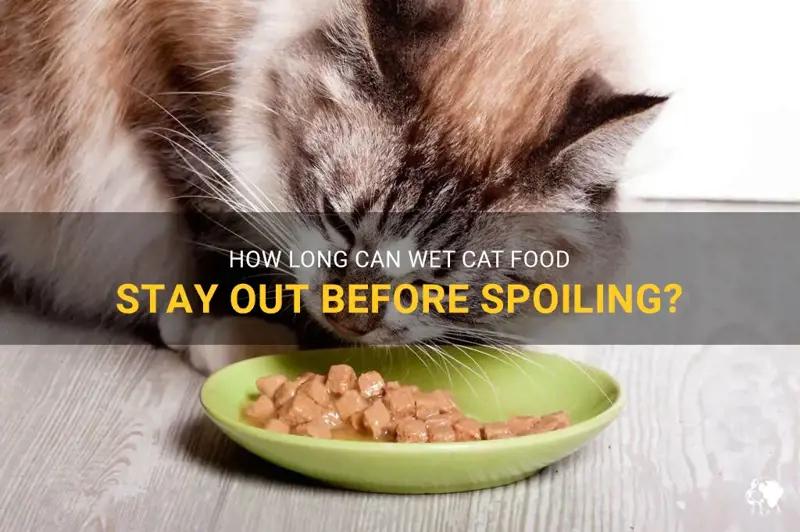
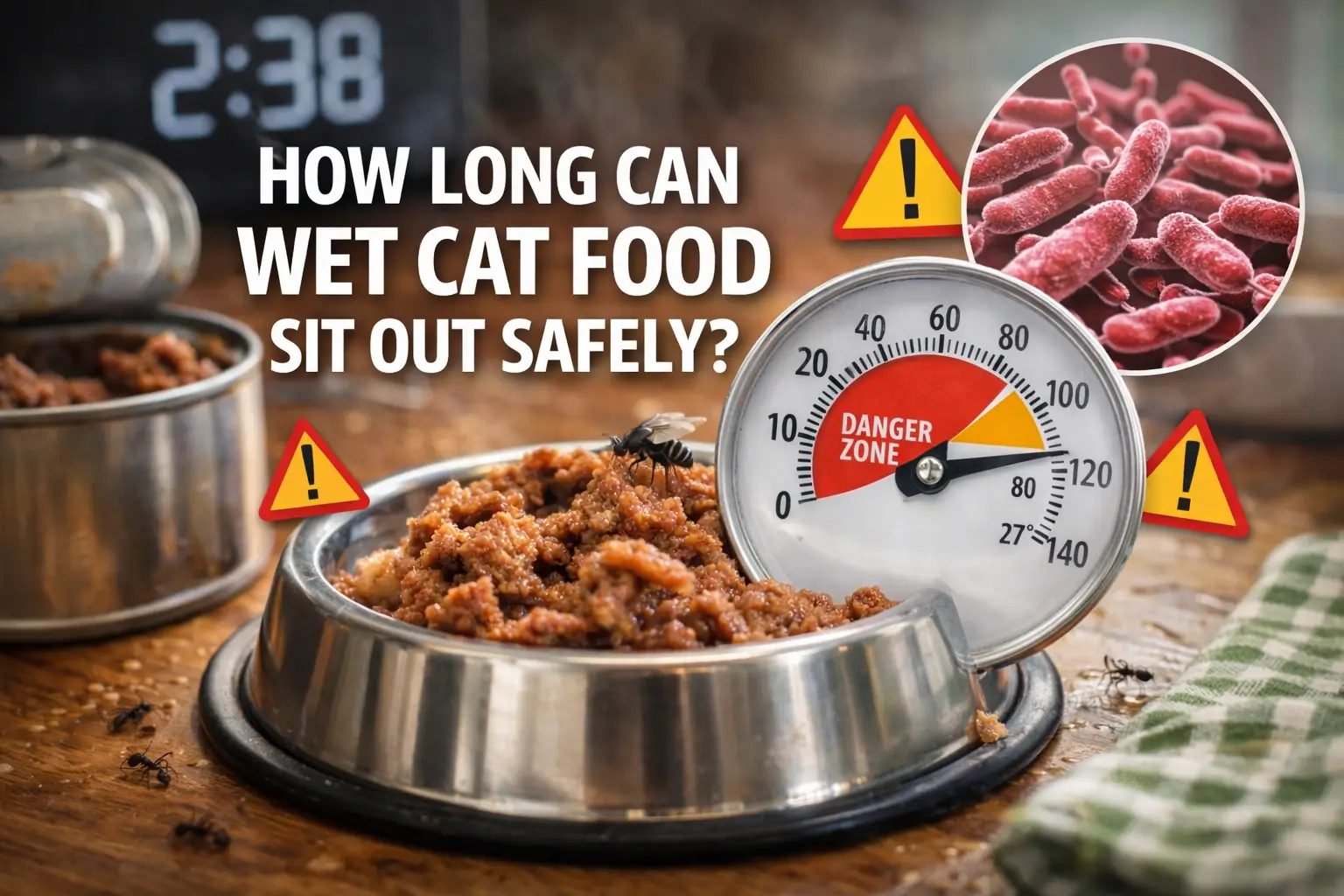
Wet cat food should generally sit out for no more than 1 to 2 hours at room temperature. In hot conditions above 90°F, limit this time to 1 hour. Refrigerate unused portions promptly and discard food left out too long.
If you feed your cat before work, after a long commute, or between errands, it can be hard to know when leftover food becomes unsafe. Many cat owners in the United States leave a bowl down while their pets eat at their own pace. The trouble is that wet food contains moisture and nutrients that can support the growth of harmful germs when the food sits out for too long.
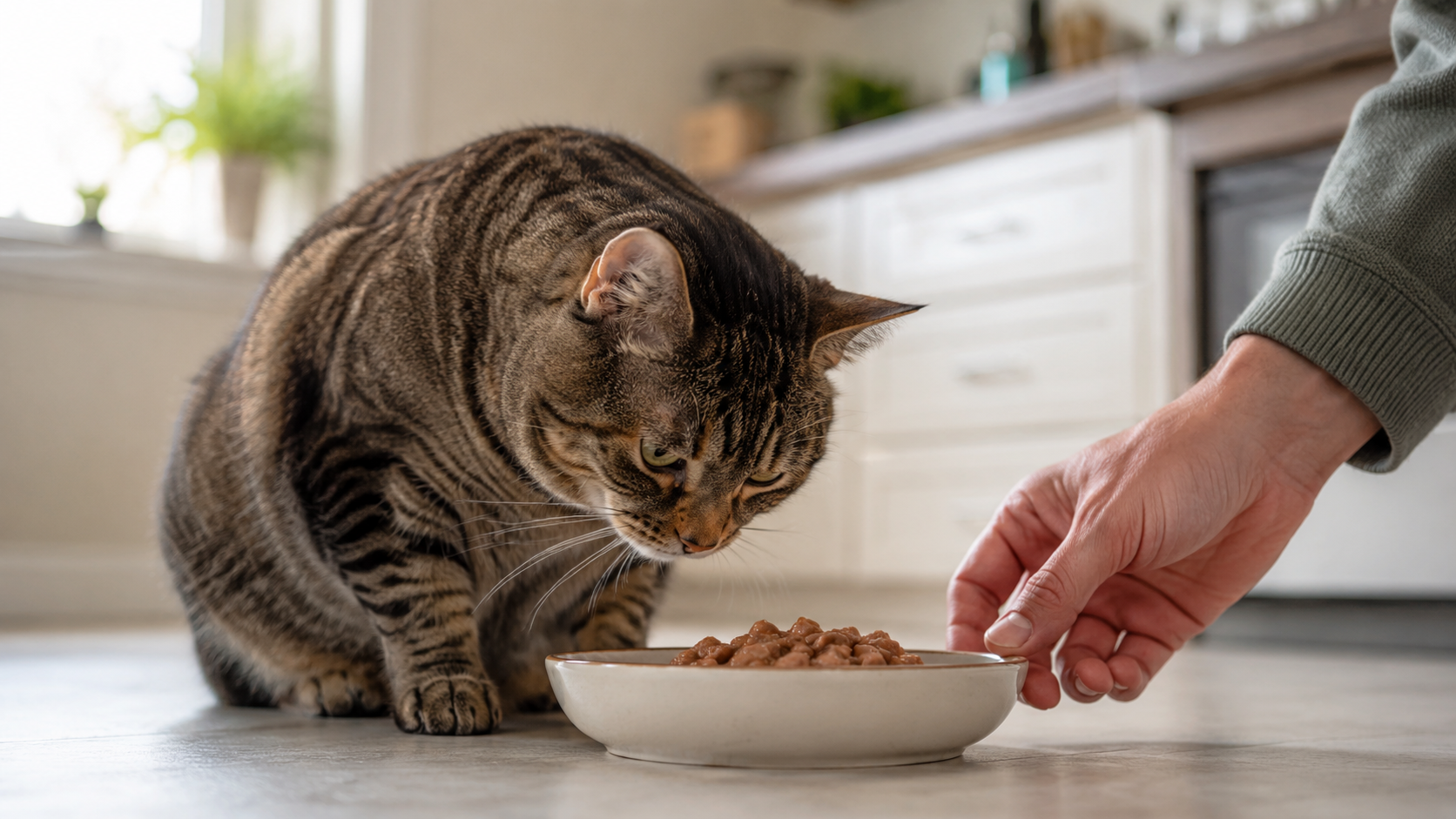
The safest routine is simple: serve a small meal, watch how long it stays in the bowl, and remove leftovers within one to two hours. When the room is very warm, use the shorter one-hour limit. Your cat may still want another bite later, but fresh food is a better choice than taking a chance on an old meal.
This guide explains how long wet cat food can sit out, how temperature changes the answer, when refrigeration helps, and what to do with opened cans, pouches, and unfinished meals. It also covers common mistakes, signs of spoilage, and practical ways to feed cats that prefer several small meals throughout the day.
Source: petshun.com
How Long Can Wet Cat Food Sit Out at Room Temperature?
Wet cat food should generally be left out for no more than one to two hours at ordinary room temperature. This is a practical safety limit for feeding a cat without leaving moist food exposed for an extended period. If your cat has not finished the meal by then, remove the bowl and discard the remaining food.
The exact time can depend on room temperature, food handling, and the product label. A cool room does not make wet food safe indefinitely, and a warm kitchen can make the risk rise faster. When you are unsure how long the food has been sitting out, choose the safer option and replace it with a fresh serving.
The two-hour limit is a common food-safety guideline for perishable food at normal room temperatures. It is not a guarantee that every bowl stays safe for exactly two hours. Using one hour as your routine limit is a more cautious choice, especially in a warm home or when the bowl is exposed to sunlight.
Source: purreats.com
At normal room temperature
Aim to remove wet food within one to two hours. Serve a smaller amount if your cat eats slowly.
Above 90°F
Do not leave wet food out for more than one hour. Hot weather, a warm room, or direct sunlight can increase the risk.
When the time is unknown
Discard the food rather than guessing. A fresh meal costs less than the risk of feeding spoiled food.
Why Is One to Two Hours the Practical Limit?
Wet cat food contains water, protein, fat, and other nutrients. Once the food is exposed to the environment, germs from the bowl, your cat’s mouth, hands, utensils, or nearby surfaces may contaminate it. Warm conditions can help some germs multiply.
The food may look and smell normal even when it is no longer safe. That is why elapsed time and temperature are more useful than a quick sniff when deciding whether to keep leftovers.
Moisture
Wet food has a high water content, so leaving it exposed requires careful handling.
Contact with saliva
A cat may transfer germs into the food while eating, making leftovers less suitable for saving.
Warm surroundings
Higher temperatures can support faster microbial growth.
Does the Type of Wet Cat Food Change the Time?
Canned pâté, shredded food in gravy, minced food, and food in pouches all need careful handling once opened. Their textures differ, but you should not assume that one type can safely sit out longer than another. Use the same cautious feeding routine unless the package gives specific instructions.
Prescription diets and specialty formulas may have their own storage directions. If the label gives a shorter limit, follow that limit. If the directions are unclear, ask the manufacturer or your veterinarian.
Pâté
Remove uneaten portions on time even if the surface still looks moist and smooth.
Gravy or shredded food
Do not assume that liquid gravy keeps the meat safe after prolonged exposure.
Prescription food
Follow the product’s specific storage and handling directions.
How Temperature Affects Wet Cat Food Safety
Temperature is one of the main factors that changes how long wet cat food should remain in the bowl. Food in a cool room may stay at a lower temperature than food near a sunny window, stove, or heater. Still, ordinary indoor conditions do not make it safe to leave wet food out all day.
For practical feeding, use the shorter time limit whenever the environment is hot. If your kitchen reaches 90°F or more, remove wet food within one hour. During a summer heat wave in the United States, an air-conditioned room may help keep the bowl cooler, but you should still follow the usual time limit.
A food bowl near a window can warm up even when the thermostat suggests a comfortable room temperature. A covered patio, sunny porch, or parked vehicle is also a poor place to leave a meal. Avoid serving wet food in these locations if you cannot keep track of its temperature and time outside refrigeration.
Source: catsdom.com
Cool indoor room
Use the one-to-two-hour limit as a practical maximum and remove leftovers sooner when possible.
Hot room or outdoor setting above 90°F
Limit the time to one hour, then discard anything left in the bowl.
Direct sunlight
Move the feeding area to a shaded indoor spot and restart with fresh food if the old portion has been exposed too long.
Unknown temperature
Choose the more cautious limit rather than extending the feeding window.
Can Wet Cat Food Sit Out Overnight?
No. Wet cat food should not be left out overnight. Even if the room is cool and the food looks unchanged in the morning, it has been exposed far longer than the usual safe feeding window.
Throw away overnight leftovers and wash the bowl before serving breakfast. Do not put the food back in the refrigerator to make it safe again. Refrigeration slows the growth of many germs, but it does not undo the risks from prolonged exposure.
Do not save it
Discard food left out overnight, including food that appears fresh.
Clean the bowl
Wash the dish with hot, soapy water and rinse it well before refilling it.
Plan a fresh meal
If your cat wants food overnight, serve a fresh portion at bedtime and remove any leftovers on time.
How to Store Opened Wet Cat Food Safely
Once you open a can or pouch, refrigerate any unused food promptly. Do not wait until the end of the day to put the remainder away. Transfer it to a clean, covered food-safe container if the original package cannot be sealed securely, then place it in a refrigerator set to 40°F or below.
Many opened wet cat foods can be kept in the refrigerator for a few days, but the exact storage period depends on the product. Some manufacturers advise using opened food within 24 hours, while others allow a longer period. Check the label or manufacturer’s instructions instead of assuming that every product lasts the same amount of time.
Use a clean spoon to remove each serving rather than putting a utensil that has touched your cat’s mouth back into the container. Close the lid after every use and keep the food separate from raw meat and other possible sources of contamination. Labeling the container with the opening date can help you avoid keeping it too long.
Source: faqcats.com
Step 1: Open and portion
Take out only the amount your cat is likely to eat during the next meal.
Step 2: Cover the remainder
Use the original lid if it seals securely, or move the food to a clean container with a tight-fitting lid.
Step 3: Refrigerate promptly
Store the remaining food at 40°F or below. Do not leave it on the counter while you finish other chores.
Step 4: Check the label
Follow the manufacturer’s limit for how many days an opened product can remain refrigerated.
Step 5: Serve with a clean utensil
Avoid introducing extra contamination into the stored food.
Should You Refrigerate an Open Can of Cat Food?
Yes. An opened can of wet cat food should be covered and refrigerated when you are not serving it. If you cannot use a proper lid, a clean food-safe container is a practical option.
Do not leave an opened can on the counter for hours and then refrigerate it for later. If the food has already exceeded the safe time outside refrigeration, chilling it does not make it safe again.
Use a clean cover
Limit exposure to air, spills, and other contaminants.
Avoid temperature swings
Take out only the serving you need and return the remainder to the refrigerator promptly.
How Long Does Opened Wet Cat Food Last in the Fridge?
The answer depends on the brand and formula. Some manufacturers recommend using opened food within 24 hours, while others allow several days under refrigeration. The package instructions are the best guide for your particular food.
If you cannot find the storage directions, check the manufacturer’s official website or contact its customer service team. When the storage time is uncertain, the food has been left warm for too long, or contamination is possible, discard it.
Follow the package
Use the stated refrigerated storage period instead of applying one universal number to all brands.
Track the opening date
Write the date on the container so you can judge how long it has been stored.
Discard questionable leftovers
Do not taste the food to check it, and do not rely on smell alone.
Can You Put Wet Cat Food Back in the Fridge After It Sits Out?
You can refrigerate unused wet cat food if you catch it within the safe feeding window and handle it cleanly. For example, if you serve breakfast and your cat stops eating after 15 minutes, you can remove the untouched remainder and refrigerate it promptly if the product’s instructions allow it. Cover the food and follow the package’s storage limit.
The key is that refrigeration must happen before the food has been left out too long. If a bowl has sat at room temperature for several hours, putting it in the refrigerator will not reverse the time already spent outside safe storage conditions. The same applies to food left overnight.
Food that has been in your cat’s mouth deserves extra care because saliva and other contaminants may enter the bowl. The simplest option is to serve smaller portions and discard the portion left after the feeding window. Avoid mixing old leftovers with fresh food, since the older portion can contaminate the new serving.
Source: meongnium.com
Within the safe window
Promptly cover and refrigerate the unused portion if the product directions permit it.
Past the safe window
Discard the food. Refrigeration does not reset the clock.
Mixed with fresh food
Do not combine questionable leftovers with a new serving.
What If My Cat Licked the Food but Barely Ate Any?
If your cat has licked the food, treat it as a serving that has been exposed to saliva. Remove it when the normal feeding window ends. Although brief contact does not automatically mean the food is spoiled, it is not a reason to leave the meal out longer.
For a cat that takes only a few bites at a time, offer smaller servings more often. This limits waste and makes it easier to provide fresh food without leaving a full bowl out for hours.
Serve less at once
Start with a small portion and add fresh food if your cat is still hungry.
Use a clean spoon
Take food from the storage container without returning a used spoon to it.
How to Tell Whether Wet Cat Food Has Gone Bad
Wet cat food may show visible signs of spoilage, but appearance alone cannot prove that it is safe. A sour or unusual smell, mold, a changed color, a slimy texture, or an unexpectedly swollen or leaking package are reasons to stop and discard the food. Do not offer questionable food to your cat just because it seems eager to eat.
Time and storage history matter more than a visual check. Food can contain harmful germs without looking, smelling, or tasting different. If it has been sitting out beyond the recommended window, discard it even if it seems completely normal.
Inspect sealed cans and pouches before opening them. Avoid using a container that is leaking, badly dented near a seam, swollen, or otherwise damaged. Follow the product’s date and storage instructions, and throw away food if you suspect contamination.
Source: canfoodgobad.com
Unusual odor
A sour, rancid, or otherwise unexpected smell is a warning sign.
Mold or color changes
Visible growth or a change from the food’s usual appearance means you should discard it.
Changed texture
Unexpected slime, separation that looks abnormal, or other unusual changes warrant caution.
Damaged packaging
Do not use a swollen, leaking, or seriously damaged can or pouch.
Excessive time outside refrigeration
Discard the food even when there are no visible signs of spoilage.
Can Cats Eat Wet Food That Smells Fine but Sat Out Too Long?
No. A normal smell does not establish that wet cat food is safe. Some harmful microorganisms do not cause clear changes in odor, color, or texture.
If the food exceeded the safe time limit, throw it away. Do not taste it yourself or let your cat act as a test. Give your pet a fresh serving from a properly stored package.
Trust time and temperature
Use the storage history rather than your nose as the main safety guide.
Do not try to rescue it
Mixing in fresh food, warming it, or chilling it again cannot reliably make mishandled food safe.
What If Your Cat Prefers Grazing Throughout the Day?
Some cats eat a few bites, walk away, and return later. That habit can make wet food management harder, especially when your workday keeps you away from home. You can support a slower eater without leaving one serving in the bowl all day.
The most useful change is to offer smaller meals at set times. If your cat does not finish the portion, remove it when the safe window ends and serve a fresh meal at the next feeding. This approach may take a little planning, but it reduces waste and keeps food handling more predictable.
For households where nobody can remove leftovers during the day, consider adjusting the feeding schedule so wet food is served when someone is home. A timed feeder designed for wet food may also help if it can keep the food cool and dispense meals according to its manufacturer’s instructions. A standard dry-food feeder should not be assumed to preserve wet food safely.
Source: askmycats.com
Offer smaller meals
Serve an amount your cat is likely to finish in one sitting instead of filling a large bowl.
Use a feeding schedule
Plan wet meals around times when you can remove leftovers and clean the bowl.
Consider a suitable feeder
Choose a device intended for wet food, and check how its cooling system and meal timing work.
Track appetite changes
If your cat suddenly eats much less than usual, speak with your veterinarian rather than assuming the issue is grazing.
Can a Wet Cat Food Feeder Keep Food Safe Longer?
Some automatic feeders for wet food include cooling features, such as an ice pack or a refrigerated compartment. These can help manage temperature, but their effectiveness depends on the device, room conditions, setup, and how long the food remains inside.
Read the feeder instructions and confirm how long it can keep food at a suitable temperature. An ordinary covered bowl or a feeder without active cooling does not make wet food safe for an entire workday.
Check cooling performance
Do not assume an ice pack keeps every compartment cold for the same length of time.
Follow the feeder instructions
Use the recommended food type, setup, and time limits.
Clean the food compartment
Wash parts that contact food as directed to reduce residue and contamination.
Common Wet Cat Food Storage Mistakes to Avoid
Most storage problems come from simple habits, such as leaving a bowl out while running errands or forgetting to refrigerate the rest of an opened can. A routine that works for dry kibble may not work for wet food because the two products have different moisture levels and handling needs.
A few small changes can make feeding safer. Keep a clean spoon and a covered storage container nearby, portion the food before serving, and set a reminder if you tend to lose track of time. If you are unsure how long a bowl has been sitting out, replace it rather than trying to judge the risk by appearance.
Source: yoyipet.com
Leaving food out all day
Wet food should not remain at room temperature from breakfast until dinner. Offer fresh meals instead.
Leaving food out overnight
Discard it the next morning, even if it appears unchanged.
Refrigerating food too late
Cold storage does not make food safe after it has spent too long in warm conditions.
Using the same dirty spoon
Avoid transferring saliva or residue from the bowl into the storage container.
Mixing old and new portions
Keep fresh food separate from leftovers whose handling history is uncertain.
Ignoring the label
The manufacturer’s storage instructions may set a shorter time limit or give specific directions for the formula.
Does Covering the Bowl Make Wet Food Last Longer?
Covering a bowl can help protect food from dust, insects, and accidental contact. However, a cover does not replace refrigeration and does not stop all microbial growth at room temperature.
Keep the normal time limit even if you use a lid. If your cat walks away from a covered bowl, remove the food or store it properly within the recommended window.
Cover for cleanliness
Use a clean cover when appropriate, but do not treat it as a way to extend the safe feeding period.
Keep a time record
Note when you served the meal so you know when to remove it.
Can You Add Warm Water to Leftover Wet Food?
Adding warm water does not make old wet food safe. Water can also introduce germs if the bowl, utensils, or water source are contaminated. If you want to soften food or improve moisture intake, mix a small amount of fresh, clean water into a fresh serving immediately before feeding.
Discard food that has exceeded its safe time outside refrigeration, whether or not water has been added. Do not use extra water, broth, or other ingredients to disguise changes in smell or texture.
Use fresh food
Add water only to a new portion that will be served promptly.
Avoid unsafe additions
Use plain clean water unless your veterinarian recommends another suitable option.
A Simple Wet Cat Food Safety Decision Table
Use this table to make a quick decision about a serving of wet cat food. It combines the main time and storage factors, but the product label should still guide storage periods for opened food. When two conditions apply, follow the more cautious instruction.
Source: petcino.com
Food has been out for 15 to 30 minutes
If it was handled cleanly and the room is not excessively hot, your cat can usually continue eating within the normal feeding window.
Food has been out for 1 hour in a room below 90°F
Remove it when the meal is finished. If your cat needs more time, consider a smaller portion and a fresh serving later.
Food has been out for 2 hours at normal room temperature
Discard the remaining food rather than extending the time limit.
Food has been out for more than 1 hour above 90°F
Discard it. Hot conditions call for the shorter limit.
Food has been out overnight
Discard it and wash the bowl before the next meal.
Unused food was refrigerated promptly
Keep it covered at 40°F or below and use it within the period stated by the manufacturer.
The storage time is unknown
Discard it. Do not rely on appearance or smell to establish safety.
What Is the Safest Daily Feeding Routine?
A repeatable routine helps prevent forgotten bowls and wasted food. Start by checking the product label, portioning a small meal, and recording when it goes down. Remove leftovers within the safe window, wash the bowl, and refrigerate unused food that was handled safely.
Before the next meal, check the stored food’s opening date and condition. If it is beyond the manufacturer’s storage limit or you are unsure how it was handled, throw it away. The goal is not to save every spoonful; it is to give your cat fresh food without unnecessary risk.
Morning
Serve a measured portion, then remove uneaten food on time.
After feeding
Refrigerate suitable unused food promptly and wash the bowl.
Later meals
Offer a fresh portion and check the stored food’s date before using it.
What to Do If Your Cat Eats Wet Food That Sat Out Too Long
If your cat eats food that may have spoiled, do not panic, but take the situation seriously. Remove the remaining food, wash the bowl, and note how long the meal was left out. Keep the package details available in case your veterinarian needs to know which food your cat ate.
Watch your cat for changes such as vomiting, diarrhea, loss of appetite, unusual tiredness, or signs of discomfort. These symptoms can have many causes, so they do not prove that spoiled food is responsible. However, a possible food-safety problem is a good reason to contact your veterinarian for advice.
Seek prompt veterinary help if your cat has repeated vomiting, bloody diarrhea, marked weakness, trouble breathing, collapse, or other severe symptoms. Kittens, senior cats, and cats with existing health problems may need more cautious assessment. Do not give human medicines or try home remedies unless your veterinarian directs you to do so.
Source: faqcats.com
Remove the questionable food
Do not allow your cat or other pets to eat more of it.
Observe your cat
Watch for vomiting, diarrhea, appetite changes, lethargy, or other unusual behavior.
Call your veterinarian
Ask for advice if symptoms develop, if the amount eaten is concerning, or if your cat is medically vulnerable.
Seek urgent care for severe signs
Repeated vomiting, blood in stool, collapse, or severe weakness needs prompt veterinary attention.
Can Spoiled Wet Cat Food Make a Cat Sick?
Yes, contaminated or spoiled food can cause illness, although not every cat that eats questionable food will become sick. The outcome depends on the type and amount of contamination and the cat’s individual health.
Do not wait for a severe reaction before asking for advice if your cat is already unwell or belongs to a higher-risk group. A veterinarian can help decide whether home monitoring or an examination is appropriate.
Mild signs
A single episode of vomiting or loose stool still deserves attention if it persists or your cat seems unwell.
Four hours is longer than the usual one-to-two-hour room-temperature feeding window. Discard the remaining food rather than refrigerating it for later. If the room was above 90°F, the recommended limit is even shorter: one hour.
Q
Can wet cat food sit out for 2 hours?
Two hours is the upper end of the common room-temperature guideline, not a target to aim for. Remove leftovers sooner when possible, especially in a warm room. At temperatures above 90°F, use a one-hour maximum.
Q
Can I leave wet cat food out while I go to work?
You should not leave a bowl of wet cat food out for an entire workday. Serve the meal when you can remove leftovers on time, arrange for someone to feed your cat later, or consider a wet-food feeder with a suitable cooling system. Follow the feeder’s directions and confirm its temperature limits.
Q
Does wet cat food need to be refrigerated after opening?
Yes. Cover and refrigerate unused food promptly after opening, keeping it at 40°F or below. Follow the manufacturer’s directions for how long it can remain refrigerated. If food has already been left out too long, do not refrigerate it in an attempt to make it safe.
Q
Can I feed my cat wet food straight from the fridge?
Yes, properly stored wet cat food can generally be served cold from the refrigerator. Some cats prefer food closer to room temperature, so you can warm a small serving gently if needed. Do not leave it on the counter for an extended period, and never microwave food in its can or pouch. Stir any warmed food well and check the temperature before serving.
Q
Can I leave wet cat food out overnight if the house is cool?
No. A cool room does not make overnight storage in an uncovered bowl a safe practice. Throw away the leftovers, wash the bowl, and serve fresh food at the next meal.
Q
How long can opened wet cat food stay in the refrigerator?
The storage period varies by brand and formula. Some products should be used within 24 hours, while others allow a few days under refrigeration. Check the package or ask the manufacturer, and keep the food covered at 40°F or below.
Q
Is wet cat food safe if it smells normal?
Not necessarily. Harmful germs may be present without changing the food’s smell, color, or texture. Use time, temperature, and storage history to make the decision. Discard food that has been left out beyond the safe window, even if it looks normal.
Q
Can I mix leftover wet cat food with a fresh serving?
Avoid mixing questionable leftovers with fresh food. If the older portion has been exposed too long or its storage history is unclear, discard it. Use a clean utensil to serve a fresh portion so the new food is not exposed to old residue.
Q
What if my cat refuses refrigerated wet food?
Try offering a small fresh portion and gently warming it to a comfortable temperature, if the product directions allow it. Stir it well and check for hot spots before feeding. Do not solve the problem by leaving the food out all day. If your cat suddenly refuses food or eats much less than usual, contact your veterinarian.
✦ Wrapping Up
Conclusion
Wet cat food should generally sit out for no more than one to two hours at room temperature, with a shorter one-hour limit when the temperature is above 90°F. Do not leave it out overnight or throughout the workday. Once you open a can or pouch, refrigerate unused food promptly and follow the manufacturer’s storage directions.
The easiest way to protect your cat is to serve smaller portions, track feeding times, and remove leftovers before they sit out too long. Keep bowls clean, use covered containers for refrigerated food, and discard anything with an uncertain storage history. These small habits help reduce waste while keeping your cat’s meals fresh and safe.
💡 Key Takeaway
Use a timer for every wet-food meal: serve a small portion, remove leftovers within one to two hours or within one hour above 90°F, and refrigerate unused food promptly if it is still within the safe window.