You can make cat food at home by cooking suitable animal protein and following a complete, cat-specific recipe designed by a veterinary nutritionist. Meat alone is not a balanced diet.
For American cat owners, homemade food can seem like a good way to control ingredients and give a pet fresh meals. You may already cook chicken, turkey, or fish for your family and wonder whether your cat can eat a similar meal. The answer is yes for some plain, cooked foods, but a cat needs much more than a bowl of meat to stay healthy.
Cats are obligate carnivores. Their bodies need nutrients such as taurine, certain fatty acids, vitamins, and minerals in the right amounts. A homemade diet that lacks these nutrients can cause serious health problems, even when the food looks fresh and your cat enjoys every bite.
This guide explains how to plan, cook, portion, and store homemade cat food safely. It also shows which ingredients to avoid, why common internet recipes may fall short, and how to work with a veterinarian to create a complete diet. The safest first step is to choose a recipe made for your cat’s age, health, and daily energy needs before you start cooking.
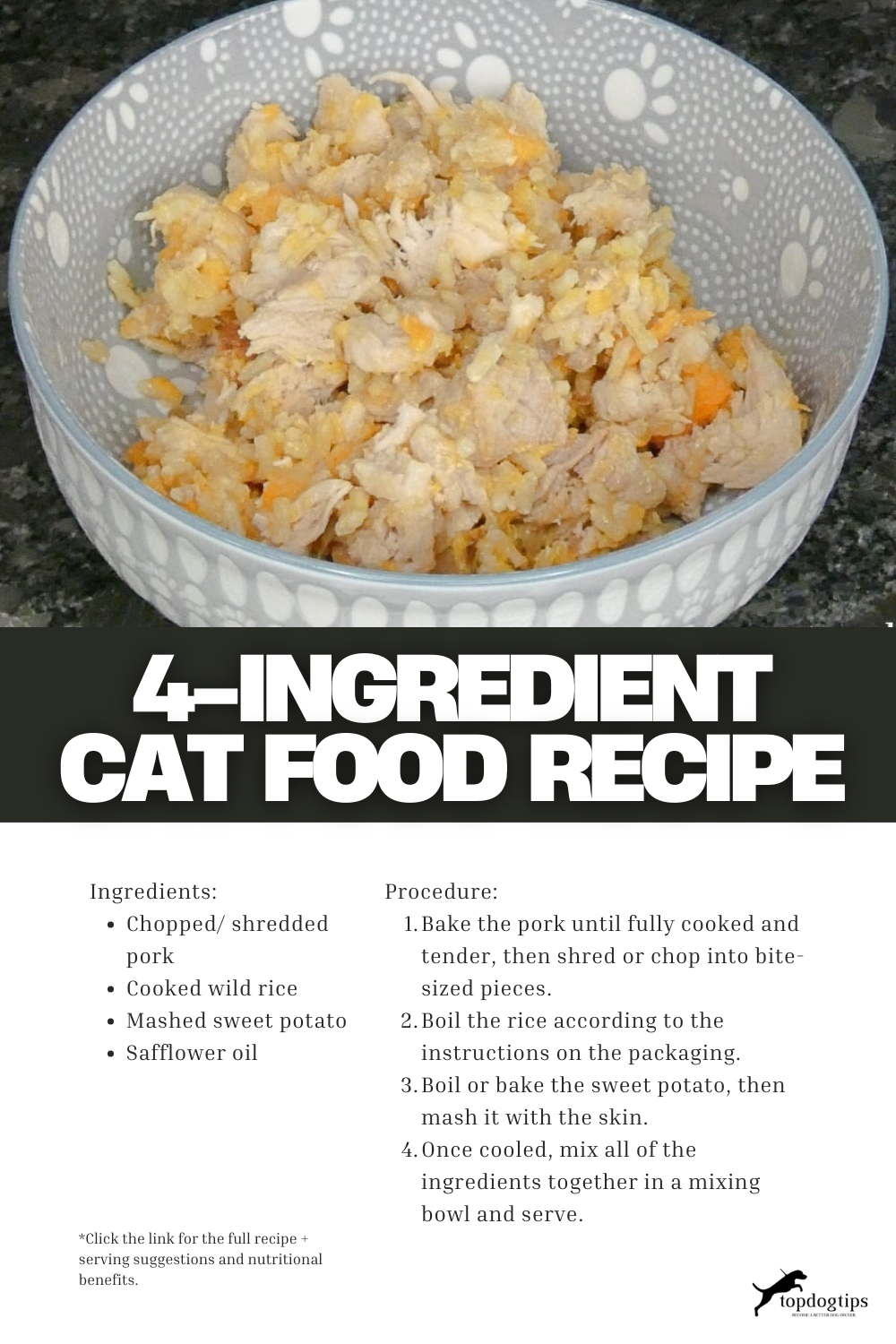
Source: i.pinimg.com
What Does Homemade Cat Food Need to Be Complete?
Homemade cat food must provide all essential nutrients in suitable amounts for the cat’s life stage. A meal can contain fresh chicken and still be nutritionally incomplete. Freshness describes how food was handled; it does not tell you whether the food meets a cat’s needs.
Cats have specific nutritional needs that differ from those of humans and dogs. They require nutrients from animal-based foods and depend on dietary sources of certain compounds that their bodies cannot make in sufficient amounts. The right balance matters over weeks and months, not just at one meal.
A complete homemade diet should be based on a recipe formulated for cats by a qualified veterinary nutrition specialist. In the United States, look for a board-certified veterinary nutritionist or another veterinarian with appropriate training in clinical nutrition. Your regular veterinarian can help you find a suitable professional and check whether the proposed diet fits your cat.
Source: catrecipes.net
Animal protein
Chicken, turkey, beef, and some fish can supply protein and amino acids. The type and amount must match the formulated recipe.
Taurine
This essential amino acid supports normal heart function, vision, and reproduction. A poorly balanced homemade diet may not supply enough.
Calcium and phosphorus
These minerals help maintain bones and other body functions. Boneless meat is high in phosphorus and generally does not provide enough calcium on its own.
Vitamins and trace minerals
Cats need specific amounts of vitamins and minerals, including vitamins A, D, and E and trace minerals such as zinc, copper, and iodine.
Essential fats
The recipe must provide suitable fatty acids and enough energy without supplying excessive fat.
Water
Moisture helps make food easier to eat and can contribute to daily fluid intake. Fresh drinking water should remain available.
Why Meat Alone Is Not Enough
Plain cooked chicken is a useful example of the difference between a safe ingredient and a complete diet. It supplies protein, but it does not automatically provide the correct balance of calcium, vitamins, essential fats, and trace minerals. Removing bones does not solve the problem; it makes careful calcium balancing even more important.
A cat may eat an incomplete diet without showing obvious signs of trouble at first. Nutritional problems can develop gradually, and some deficiencies can affect the heart, eyes, bones, or other organs. A healthy appearance today does not prove that a recipe is safe for long-term feeding.
Use a complete recipe
Follow a recipe formulated specifically for cats, including every required supplement.
Do not guess supplement amounts
Too little or too much of a nutrient can be harmful. A general multivitamin or a random scoop of calcium powder is not a substitute for a balanced formula.
Ingredients You Can Use for Homemade Cat Food
Several common foods can be used in a properly formulated homemade cat diet. The important question is not simply whether an ingredient is safe for cats. It is whether that ingredient, in the exact amount and form specified, helps create a complete diet.
Buy fresh ingredients from reliable food retailers in the United States. Keep raw meat separate from food that is ready to eat, wash your hands after handling it, and clean boards, knives, and work surfaces. Choose plain ingredients without marinades, seasoning blends, sauces, or added salt.
Source: i.ytimg.com
Chicken and turkey
Plain, fully cooked poultry can serve as a protein source. Remove bones and use the cut, skin, and fat level specified in the recipe.
Beef
Lean beef can supply protein and several minerals. Cook it thoroughly and use the specified fat content.
Eggs
Fully cooked eggs may be included in some formulated recipes. Do not add raw eggs as an improvised protein boost.
Fish
Some recipes use cooked fish, but fish should not become the whole diet unless the full formula has been designed around it.
Water or recipe-specified liquid
Water can help with texture and moisture. Use only liquids allowed by the recipe, without salt, onion, garlic, or other unsafe ingredients.
Cat-specific supplements
A formulated recipe may call for a specific vitamin-mineral blend, taurine, calcium source, or other nutrients. Use the exact products and amounts stated in the formula.
Can Cats Eat Vegetables or Rice?
Cats do not need a vegetable-heavy diet. Small amounts of certain cooked vegetables may be suitable for some cats, but they should not replace essential animal-based nutrients. Rice is not a required ingredient for cats and should not be used to stretch a meat recipe without nutritional guidance.
Do not assume that a recipe is balanced because it contains meat, vegetables, and grains. A varied ingredient list can still lack key nutrients or contain them in the wrong amounts. The full nutrient profile matters more than the number of ingredients.
Use only approved additions
Ask your veterinarian whether an extra food fits your cat’s diet and whether it would dilute the nutrients in each serving.
Keep treats limited
Treats and extras should generally provide no more than 10% of daily calories unless your veterinarian gives a different plan. Most calories should come from complete and balanced food.
Foods and Ingredients to Avoid
Some foods that people enjoy can harm cats. Never add an ingredient just because it makes a human recipe taste better. Cats do not need the salt, spices, sauces, or rich toppings commonly used in home cooking.
Avoid raw meat and raw eggs in homemade meals. Raw animal products can carry disease-causing germs, including Salmonella and certain strains of E. coli. Freezing does not reliably eliminate every pathogen, and raw diets can expose both pets and people in the household to infection.
Source: i.pinimg.com
Onions, garlic, leeks, and chives
These allium plants can damage cats’ red blood cells. Avoid them in fresh, cooked, powdered, and mixed seasoning forms.
Chocolate, coffee, and caffeine
These can cause toxic effects. Keep drinks, baking ingredients, and chocolate products away from cats.
Alcohol
Alcohol can cause serious poisoning even in small amounts. Do not use alcoholic sauces or drinks in cat food.
Grapes and raisins
Avoid these foods because their safety for cats is uncertain and serious effects have been reported in pets.
Cooked bones and bone fragments
Bones can splinter or cause choking, blockages, or injuries. Do not put them in homemade meals.
Excess salt and seasoning
Salty broths, seasoning packets, bouillon cubes, sauces, and spice mixes are unnecessary and may contain harmful ingredients.
Unapproved supplements
Human supplements, essential oils, and high-dose vitamins may be unsafe. Use only the products specified by the cat’s diet plan.
What If Your Cat Eats a Harmful Ingredient?
If your cat eats a potentially toxic food, contact your veterinarian or an animal poison service promptly. Do not wait for symptoms, and do not try to make your cat vomit unless a veterinary professional directs you to do so.
Seek urgent veterinary care if your cat has trouble breathing, collapses, has seizures, vomits repeatedly, or becomes very weak. If possible, keep the food package or ingredient list available so the veterinary team can identify what your cat ate.
Act quickly
Share the ingredient, estimated amount, and time of exposure with the veterinary team.
Do not use home remedies
Milk, oil, salt water, and other improvised treatments may make the situation worse.
How to Make Cat Food at Home Step by Step
The safest way to make homemade cat food is to start with a complete recipe and follow it exactly. The steps below explain the preparation process, but they are not a stand-alone nutritional formula. Before making a batch for daily feeding, confirm the ingredients, supplements, quantities, and cooking method with your veterinarian or veterinary nutrition specialist.
Do not use a generic meat-only recipe as a long-term meal plan. The right amount of food and the required nutrients depend on the recipe, your cat’s age, body condition, activity, and health.
Source: i.pinimg.com
Step 1: Choose the right recipe
Select a recipe formulated for cats at the correct life stage. Check that it states exact ingredient weights, supplement amounts, preparation instructions, and the number of servings.
Step 2: Gather your ingredients
Buy the required meat, approved liquids, and every listed supplement. Check labels and expiry dates, and do not substitute a similar-looking product without professional approval.
Step 3: Prepare a clean workspace
Wash your hands and clean your tools. Keep raw meat and its juices away from cooked food, clean dishes, and other foods.
Step 4: Weigh the ingredients
Use a kitchen scale when the recipe provides weights. Volume measures can be less accurate for meat and powders, so use the method stated in the formula.
Step 5: Cook the meat safely
Cook poultry, ground meat, and other animal ingredients to safe internal temperatures. For example, U.S. food safety guidance calls for poultry to reach 165°F and ground beef to reach 160°F. Follow any more specific instructions in the professionally formulated recipe.
Step 6: Prepare the food as directed
Chop or grind the cooked ingredients to the texture specified in the recipe. Do not add bones, spices, sauces, or unlisted ingredients.
Step 7: Add supplements at the correct stage
Some supplements must be added after cooking or cooling, while others follow different directions. Follow the exact recipe and product instructions so heat, moisture, and handling do not alter the intended formula.
Step 8: Mix thoroughly
Distribute the ingredients and supplements evenly. Poor mixing can leave some portions with too much of one nutrient and too little of another.
Step 9: Divide into portions
Use the serving size and daily feeding amount in the feeding plan. Weigh portions when needed for consistent calorie intake.
Step 10: Cool and store promptly
Place food in clean, shallow containers and refrigerate or freeze it promptly. Label each container with the preparation date and use the storage period recommended by your veterinarian or recipe.
How Do You Know the Food Is Prepared Properly?
Proper preparation starts with accurate measurements, safe cooking, even mixing, and prompt storage. The food should not contain bones, seasoning, spoiled ingredients, or any unapproved additions. A pleasant smell and an appealing texture are useful checks for spoilage, but neither proves nutritional completeness.
Keep a copy of the recipe with the batch. Record the ingredient brands, amounts, date, and any approved changes. If you cannot obtain a required ingredient or supplement, pause and ask the professional who formulated the recipe how to proceed.
Correct measurements
Every ingredient and supplement matches the prescribed amount.
Safe handling
The food was cooked, cooled, portioned, and stored according to safe handling guidance.
Complete records
You can identify the recipe and ingredients used for each batch.
A Simple Cooked Chicken Example: What It Can and Cannot Do
Plain cooked chicken can be useful as a small treat or a temporary food option in some situations, but chicken alone is not a complete homemade diet. This distinction is central to safe feeding. A cat may enjoy a simple chicken meal, yet that meal lacks the guaranteed nutrient balance required for daily use over time.
The example below is a preparation demonstration, not a complete recipe for daily feeding. Use it only as an occasional, unseasoned treat for a cat that can safely eat chicken, and keep treats within the cat’s daily calorie allowance. If your cat needs a special diet or has a history of food reactions, ask your veterinarian first.
Source: i.pinimg.com
What you need
A small amount of plain, boneless chicken breast and clean water. Do not add salt, oil, onion, garlic, or spices.
How to prepare it
Cook the chicken thoroughly, check that no bones remain, let it cool, and cut it into small pieces suitable for your cat.
How to serve it
Offer a small amount as a treat alongside a complete and balanced diet. Do not replace the cat’s regular food with chicken for days or weeks.
What it does not provide
Chicken alone does not guarantee sufficient taurine, calcium, vitamins, essential fatty acids, or the correct mineral balance for long-term feeding.
Why This Example Is Not a Full Recipe
A true homemade diet requires a full nutrient calculation. The amount of each nutrient depends on the ingredients, the cut of meat, the cooking method, the supplements, and the total calories in the finished food. There is no single safe supplement amount that works for every homemade chicken recipe.
Do not turn this example into a weekly meal plan by adding random vegetables, eggshell powder, fish oil, or a multivitamin. Each change can alter the diet’s nutrient balance. For routine feeding, use a professionally formulated recipe with exact quantities.
For an occasional treat
Plain cooked chicken may be offered in a small amount if your cat tolerates it.
For everyday meals
Use a complete and balanced commercial food or a properly formulated homemade diet.
How Much Homemade Food Should You Feed Your Cat?
The right daily amount depends on the calories in the complete recipe and your cat’s energy needs. Two bowls of food can look the same but supply very different amounts of energy. For this reason, portion size should be based on calories and body condition rather than a fixed number of cups or spoonfuls.
Your veterinarian can help estimate daily calorie needs and set a starting portion. The amount may need to change as your cat gains or loses weight, becomes less active, ages, or develops a health problem. Kittens generally need food designed for growth, so do not feed them an adult maintenance recipe unless a qualified professional has confirmed it is appropriate.
Source: petcarepicked.com
Check calories per serving
Use the calorie value provided for the complete recipe. Do not estimate calories from the weight of meat alone.
Measure daily portions
Weigh each serving or use the portion method recommended by your veterinarian.
Track body condition
Monitor weight and body shape regularly. Ask your veterinarian to assess whether your cat is too thin, at a healthy weight, or overweight.
Count all extras
Treats, table scraps, and toppers contribute calories and can dilute a balanced diet.
An Example of Calculating Portions
Suppose a veterinary professional sets a hypothetical daily target of 200 calories and the complete homemade recipe supplies 100 calories per 100 grams. The starting daily amount would be 200 grams of that prepared food, because each gram supplies one calorie under this example.
This is a math example, not a feeding recommendation for every cat. The actual calorie target must be individualized, and the calorie value must come from the complete recipe. If the recipe changes, its energy content may change too.
Formula
Daily grams = prescribed daily calories divided by calories per gram of the prepared food.
Example
200 calories per day divided by 1 calorie per gram equals 200 grams per day.
Practical check
Reassess the portion with your veterinarian if your cat’s weight, appetite, activity, or health changes.
How to Store Homemade Cat Food Safely
Homemade cat food needs careful storage because cooked meat can support bacterial growth if it stays warm for too long. Divide a fresh batch into clean, shallow containers and refrigerate or freeze it promptly rather than leaving a large pot on the counter to cool for hours.
As a general U.S. food safety rule, refrigerate perishable cooked food within two hours, or within one hour when the surrounding temperature is above 90°F. Keep the refrigerator at 40°F or below and the freezer at 0°F. These are general food-handling limits; the safe storage period for a particular cat-food recipe may differ, so follow the recipe’s instructions and your veterinarian’s guidance.
Source: caticles.com
Refrigerate small portions
Store food in covered, clean containers and mark the date. Make only the amount you can safely use within the advised refrigerated storage period.
Freeze portions you will not use soon
Divide the batch into meal-sized containers before freezing. This reduces repeated thawing and handling.
Thaw safely
Thaw food in the refrigerator. Do not leave it on the counter for hours, and do not refreeze food that has been handled unsafely.
Serve at a comfortable temperature
If your cat prefers food that is not cold, gently bring a portion closer to room temperature. Avoid hot spots from microwaving and check the food before serving.
Discard questionable food
Throw away food that has been left out too long or shows signs of spoilage. Do not rely on smell alone to judge safety.
How Long Does Homemade Cat Food Last?
There is no single storage time that fits every recipe, container, refrigerator, and handling method. Follow the storage instructions that come with the professionally formulated recipe, and ask the formulator how long that particular batch may be kept chilled or frozen.
Write the preparation date on each container and use older portions first when they remain within the approved storage period. If the food was left warm for too long, contaminated by raw meat juices, or thawed under unsafe conditions, discard it rather than risking your cat’s health.
Label every batch
Record the date made and the recipe used.
Avoid repeated warming
Warm only the portion you plan to serve, and discard leftovers that have been sitting out beyond safe limits.
How to Switch Your Cat to Homemade Food
Move to a new diet gradually when your veterinarian says the change is suitable. A sudden switch can upset a cat’s stomach or cause food refusal. A slow transition also gives you time to see whether your cat accepts the new texture and flavor.
A transition may take about seven to ten days for some healthy adult cats, but the right pace varies. Cats with sensitive digestion or medical conditions may need a different plan. If your cat refuses food, vomits repeatedly, has diarrhea, or seems unwell, stop the transition and contact your veterinarian.
Source: i.pinimg.com
Start with a small change
Offer a small amount of the new, complete food alongside the current diet if your veterinarian approves.
Increase slowly
Gradually adjust the proportions over several days, based on appetite and stool quality.
Watch the litter box
Changes in stool, repeated vomiting, or straining may indicate that the diet or transition needs review.
Protect appetite
Do not force-feed or let a cat go without food to make it accept a new recipe.
When Food Refusal Becomes Urgent
Cats that stop eating can develop serious health problems, including hepatic lipidosis, a form of liver disease. Do not assume a cat will eat when hunger becomes strong enough. Contact a veterinarian promptly if your cat refuses food, especially if it is overweight, young, elderly, or already ill.
Seek veterinary advice the same day if an adult cat has not eaten for about 24 hours, or sooner if it is weak, vomiting, dehydrated, or otherwise unwell. Kittens and cats with known medical conditions may need attention much earlier.
Do not wait several days
A prolonged lack of food is not a safe way to manage a picky eater.
Report other symptoms
Tell your veterinarian about vomiting, diarrhea, weight loss, changes in thirst, and changes in urination.
Common Homemade Cat Food Mistakes
Most homemade diet problems start with a reasonable idea that is taken too far. An owner may want to use fresh meat, reduce waste, or help a cat with a sensitive stomach. The risk appears when an unbalanced recipe becomes the cat’s main food or when ingredients are changed without checking the nutrient impact.
A consistent recipe is easier to assess and maintain than one that changes every few days. Keep the formula stable unless the veterinary professional who designed it approves an adjustment.
Source: caticles.com
Feeding only chicken or tuna
These foods do not provide every nutrient a cat needs in the correct amounts. Use them only as allowed by the feeding plan.
Leaving out supplements
A supplement may be a core part of the formula, not an optional extra. Do not omit it because the food already looks nutritious.
Replacing ingredients without approval
Different cuts of meat and different supplement brands can change nutrient levels. Ask the recipe’s formulator before making a substitution.
Using internet recipes without a nutrient analysis
A recipe with exact cooking instructions may still be nutritionally incomplete. Check who formulated it and whether it is designed to meet feline nutritional requirements.
Ignoring weight changes
A complete diet can still provide too many or too few calories. Track weight and adjust portions with veterinary guidance.
Assuming homemade food treats a disease
A homemade diet is not automatically suitable for kidney disease, urinary problems, allergies, diabetes, or digestive disorders. These conditions may require carefully controlled nutrients.
Homemade Food for Kittens and Cats With Health Problems
Kittens need food that supports growth, so an adult maintenance formula may not meet their needs. Pregnant and nursing cats also have different energy and nutrient demands. Use a diet formulated for the specific life stage rather than adapting an adult recipe yourself.
Cats with kidney disease, urinary tract problems, diabetes, food allergies, pancreatitis, or other medical conditions may need a carefully selected diet. A change in protein, fat, phosphorus, sodium, moisture, or other nutrients can matter, so ask your veterinarian before preparing food for a cat with a diagnosis.
For a suspected food allergy, do not add multiple new ingredients at once. A veterinarian may recommend a controlled elimination diet with strict rules about treats, supplements, and other foods. An improvised homemade recipe can make the results hard to interpret.
Kittens
Use a complete growth diet formulated for kittens and obtain veterinary guidance before preparing homemade meals.
Senior cats
Choose food based on body condition, dental health, kidney function, and other individual needs rather than age alone.
Cats with medical conditions
Ask the treating veterinarian whether a homemade diet is appropriate and who should formulate it.
Is Homemade Cat Food Better Than Commercial Cat Food?
Homemade cat food is not automatically healthier than commercial food. A properly formulated homemade diet can give an owner close control over ingredients, but it takes planning, careful measuring, safe handling, and ongoing effort. A complete commercial cat food can be a practical choice when it meets the nutritional needs of the cat and is fed as directed.
The best option depends on your cat’s needs, the quality of the diet, your ability to follow the recipe, and your budget. A homemade diet that misses essential nutrients is not an improvement over a complete commercial diet, even if every ingredient is fresh.
In the United States, check the nutritional adequacy statement on commercial pet food labels and confirm that the food is appropriate for your cat’s life stage. If you choose homemade food, ask the formulator how the recipe’s nutritional adequacy was assessed and how often it should be reviewed.
Source: i.pinimg.com
Ingredient control
Homemade food lets you select ingredients, but ingredient control alone does not guarantee nutritional balance.
Convenience
Commercial food is usually easier to store and serve. Homemade meals require shopping, cooking, portioning, cleaning, and freezer space.
Cost
Compare the full cost of meat, supplements, preparation time, storage, and veterinary formulation with the cost of a complete commercial diet.
Consistency
Commercial diets are prepared to a set formulation. Homemade diets depend on accurate measurements and consistent ingredients each time.
Medical needs
Some cats benefit from a veterinarian-directed diet, but homemade food is not the right answer for every medical condition.
A Practical Decision Guide
Choose homemade food only if you can follow a complete recipe and keep the preparation process consistent. If you cannot obtain the specified supplements, weigh ingredients accurately, or store batches safely, a complete commercial diet may be the more reliable option.
You can also discuss a mixed feeding plan with your veterinarian. However, adding unbalanced homemade food to complete commercial food can dilute the overall nutrient balance if the extras supply too many calories. Ask how much of each food your cat can have without compromising daily nutrition.
Homemade may suit you if
You have a professionally formulated recipe, can obtain the required ingredients, and can prepare and store each batch correctly.
Commercial food may suit you if
You need a convenient, consistent diet that provides complete nutrition for your cat’s life stage.
Seek veterinary advice first if
Your cat is growing, pregnant, nursing, losing weight, refusing food, or living with a diagnosed health condition.
Frequently Asked Questions
Q
Can I make cat food at home with just chicken?
You can prepare plain, boneless, fully cooked chicken as an occasional treat for many cats, but chicken alone is not a complete diet. It does not reliably provide all the nutrients a cat needs, including the correct balance of taurine, calcium, vitamins, and minerals. For everyday feeding, use a complete recipe formulated specifically for cats.
Q
Is homemade cat food safe without supplements?
Not necessarily. Many homemade recipes need specific supplements to supply nutrients that meat and other basic ingredients do not provide in sufficient amounts. Do not skip a supplement or replace it with a human multivitamin unless the veterinary professional who formulated the recipe approves the change.
Q
Can I feed my cat raw homemade food?
Raw homemade food carries risks from bacteria and other pathogens that can affect cats and people. Freezing does not reliably remove all harmful organisms. A properly formulated cooked diet is a safer option for many households, but the cooking method and supplement timing must follow the recipe’s instructions.
Q
How long can homemade cat food stay in the refrigerator?
The safe storage period depends on the recipe, handling, and storage conditions. Refrigerate food promptly in clean, covered containers, keep the refrigerator at 40°F or below, and follow the storage period provided by the recipe’s formulator. Freeze portions you will not use within that period.
Q
Can kittens eat homemade cat food?
Kittens need a complete diet designed to support growth. A homemade recipe intended for adult cats may not provide the right nutrients or energy for a growing kitten. Ask your veterinarian or a qualified veterinary nutrition specialist to formulate a diet for your kitten’s age and stage of development.
Q
Can homemade cat food help with allergies?
A properly planned diet may help a veterinarian investigate a suspected food allergy, but an improvised recipe is not a reliable diagnostic tool. A food trial often requires strict control over every ingredient, treat, and supplement. Work with your veterinarian to choose the diet and follow the trial for the recommended period.
Q
How can I tell if my cat’s homemade diet is working?
Track appetite, body weight, stool quality, energy, and any changes in vomiting or other symptoms. These signs help you notice problems, but they cannot prove that the diet meets every nutrient need. Regular veterinary checkups and review of the recipe are important for cats eating homemade food long term.
✦ Wrapping Up
Conclusion
Learning how to make cat food at home starts with one key rule: the food must be complete and balanced, not just fresh. Plain cooked chicken or turkey can be useful as a small treat, but meat alone does not meet a cat’s daily nutritional needs. A safe homemade diet requires exact ingredients, the right supplements, careful cooking, and clean storage.
Before replacing your cat’s regular food, speak with your veterinarian and obtain a recipe designed for your cat’s life stage and health. Follow the measurements, cooking instructions, supplement directions, and feeding amounts without making unapproved changes. Monitor your cat’s weight and appetite, and seek help if your cat stops eating or develops symptoms.
💡 Key Takeaway
Before cooking a full batch, ask your veterinarian for a complete cat-specific recipe or a referral to a board-certified veterinary nutritionist. Buy every listed ingredient and supplement, follow the formula exactly, and use a small portion of plain cooked meat only as a treat until the complete diet is ready.