Most healthy adult cats need about 200 to 300 calories per day, but the right amount depends on body weight, age, activity, and health.
If you share your home with a cat in the United States, you may feed your pet before work, after school, or while getting dinner ready. It is easy to pour kibble into a bowl and hope for the best. Yet a portion that suits one cat may leave another hungry or cause unwanted weight gain.
The best way to decide how much cat food per day to serve is to start with your cat’s daily calorie needs. Then use the calories listed on the food package to work out the right amount. A healthy adult cat weighing about 10 pounds may need around 200 to 250 calories per day, although some cats need more or less.
Age, body shape, activity, and health all affect this amount. A growing kitten needs more food for its size than many adult cats. An older cat may need fewer calories if it moves less, while a very active cat may need more. Your veterinarian can help set a suitable daily target, especially if your cat needs to lose weight or has a health problem.
Source: purreats.com
How Much Cat Food Should a Cat Eat Each Day?
The right daily portion depends on how many calories your cat needs, not simply how full the food bowl looks. For a healthy adult cat, a starting range of about 200 to 300 calories per day is often useful. Smaller cats may need less, while larger or more active cats may need more.
Think of calories as your cat’s daily food budget. The food type determines how much food fits that budget. Dry food packs many calories into a small volume, while wet food contains much more water and often provides fewer calories per ounce.
These figures are starting points, not fixed rules. Two cats of the same weight may have different needs because of age, activity, body condition, and metabolism. A feeding plan should support a steady, healthy weight rather than follow a number without checking the cat.
Source: detroitchinatown.org
Small adult cat
A cat weighing around 6 to 8 pounds may need roughly 150 to 220 calories per day, depending on its body condition and activity.
Medium adult cat
A cat weighing around 8 to 10 pounds may need roughly 180 to 250 calories per day.
Large adult cat
A cat weighing around 12 to 15 pounds may need roughly 240 to 350 calories per day if that weight is healthy for its frame.
Less active or overweight cat
A cat that moves very little or carries excess body fat may need fewer calories than a lean, active cat of the same weight. Ask your veterinarian for a safe target.
Daily Feeding Estimates by Cat Weight
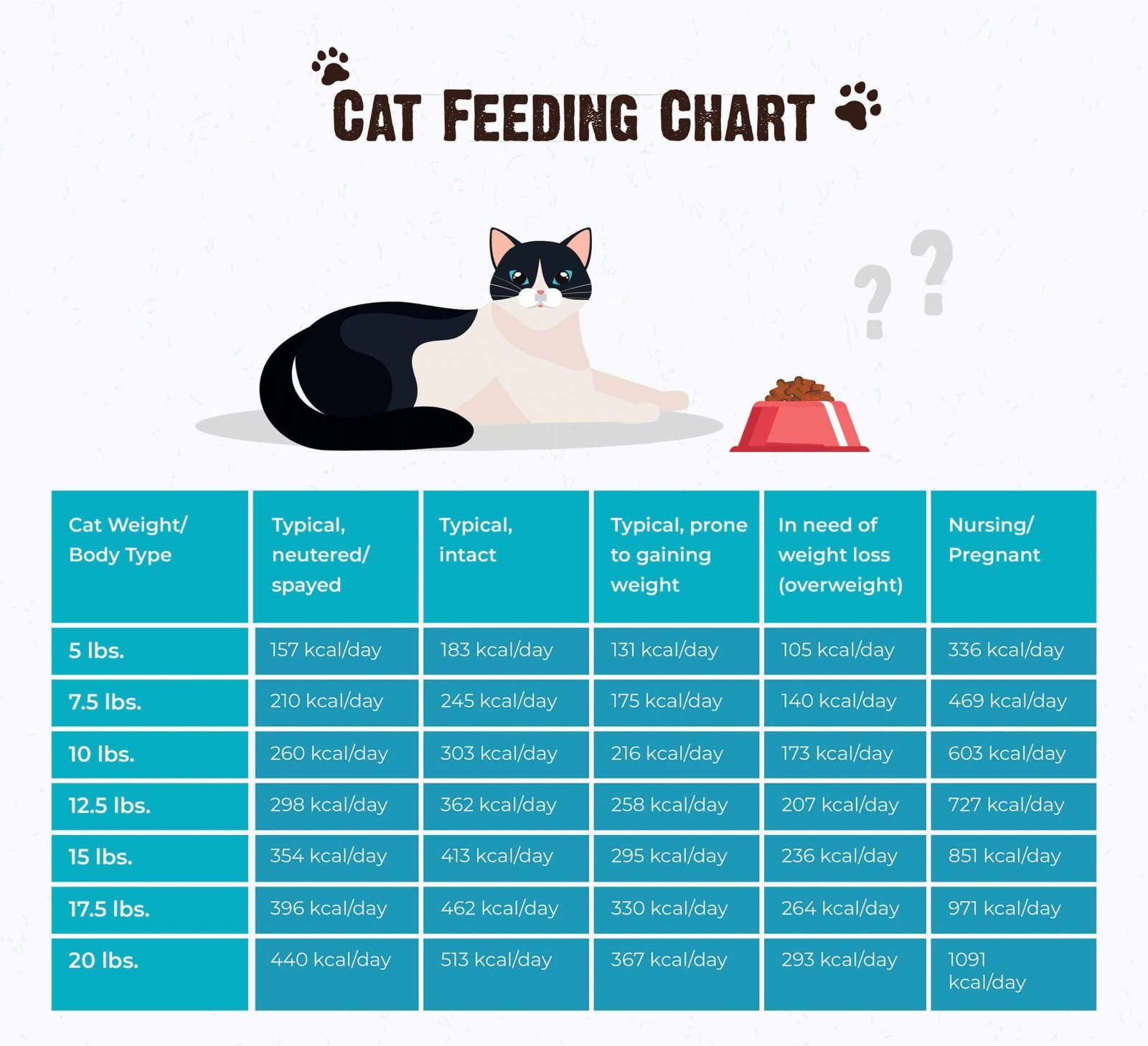
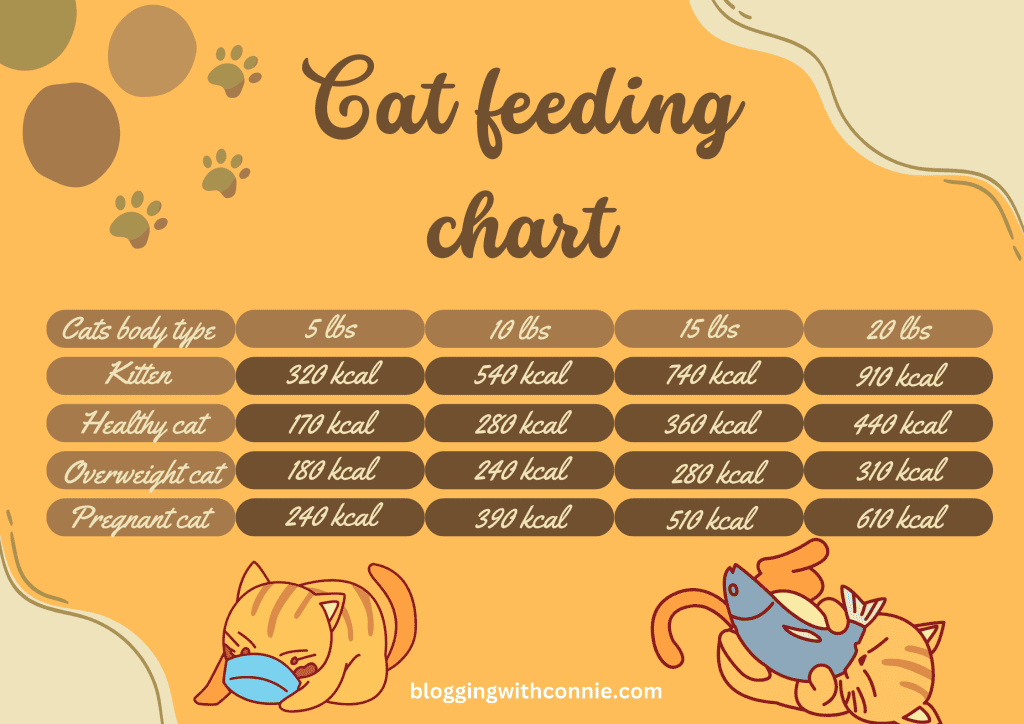
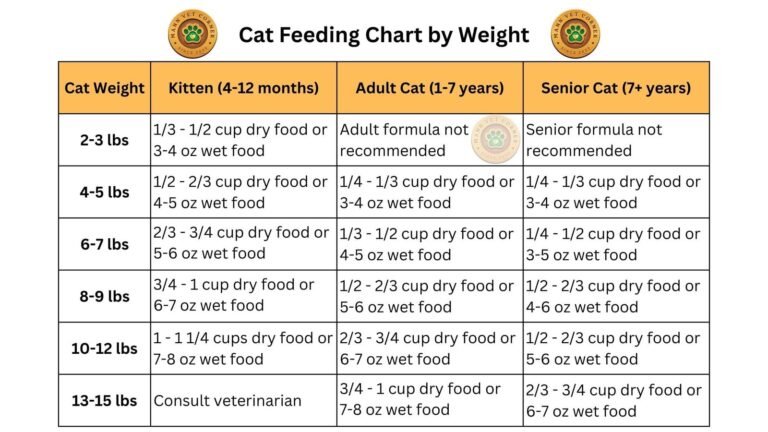
The table below offers broad estimates for healthy adult cats. The calorie figures are illustrative starting points, not a veterinary prescription. Your cat’s ideal weight and body condition matter more than its current weight alone.
If your cat weighs 15 pounds but should weigh 11 pounds, feeding based only on its current weight may provide too many calories. Ask your veterinarian to estimate an appropriate goal weight and daily calorie allowance.
6-pound cat
Start by considering approximately 150 to 180 calories per day, then adjust to the cat’s condition and needs.
8-pound cat
A rough starting range is 170 to 220 calories per day.
10-pound cat
A rough starting range is 200 to 250 calories per day.
12-pound cat
A rough starting range is 220 to 300 calories per day if this weight is appropriate for the cat.
15-pound cat
A rough starting range is 260 to 350 calories per day for a cat whose size and body condition support this amount.
Why Weight Alone Does Not Give the Full Answer
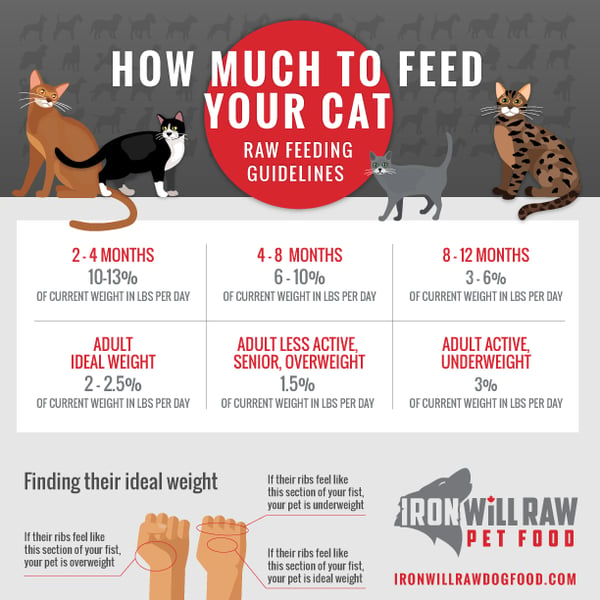
A cat’s frame and muscle mass affect its ideal weight. A naturally large cat may be healthy at a weight that would be excessive for a small-framed cat. A body condition check helps show whether the current food amount is working.
You should be able to feel your cat’s ribs with light pressure, though they should not stick out sharply. From above, many healthy cats have a visible waist behind the ribs. If the ribs are hard to feel or the waist is hard to see, ask your veterinarian whether the cat needs a weight plan.
Check the ribs
They should be easy to feel under a thin layer of fat without pressing hard.
Check the waist
A healthy adult cat often has a slight waist when viewed from above.
Watch the trend
A gradual, unexplained change in weight can signal a feeding issue or an underlying health problem.
How to Calculate Your Cat’s Daily Food Portion
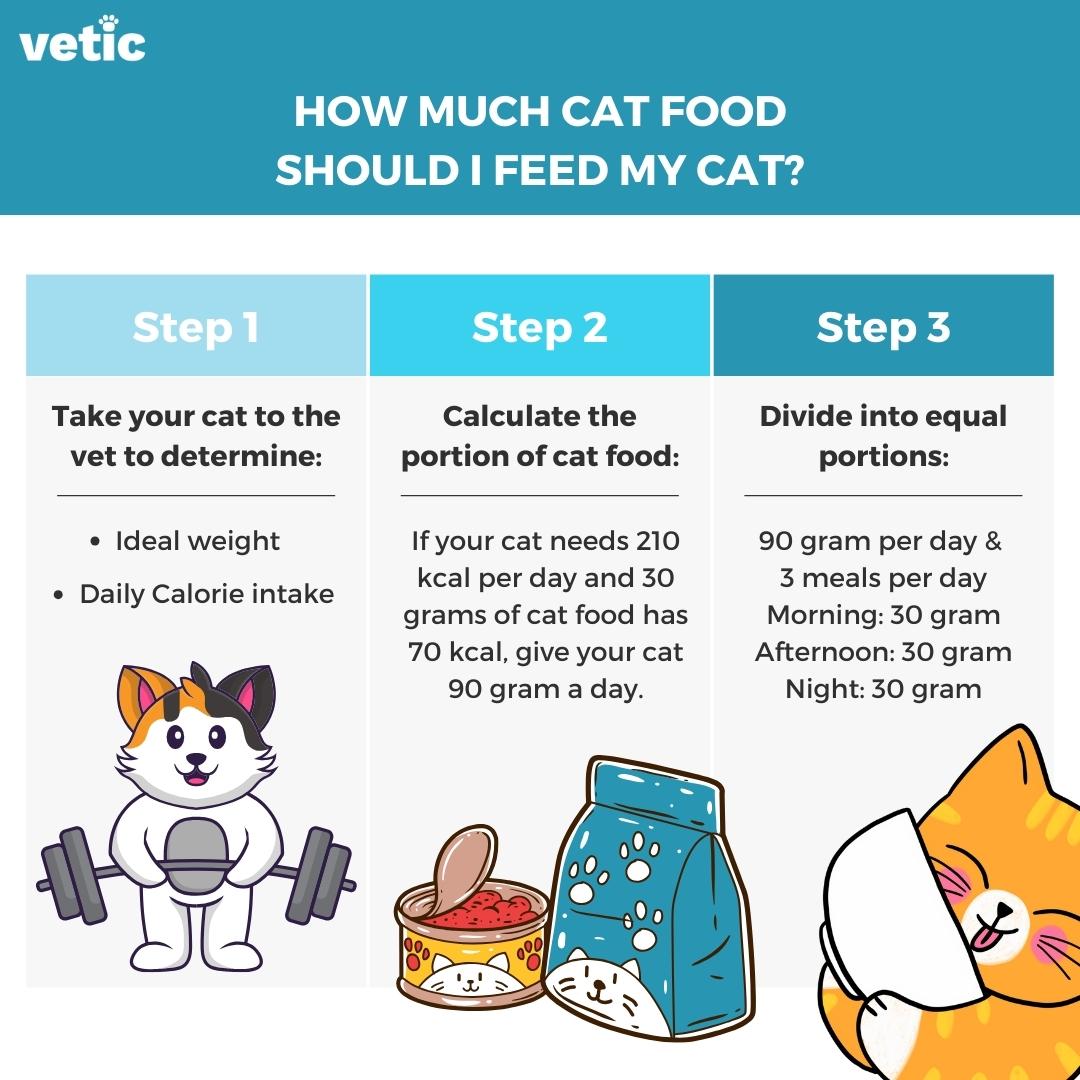
You can work out a useful starting portion with two details: your cat’s daily calorie target and the calories in its food. Check the package for a calorie statement, often shown as kilocalories per cup, can, pouch, or kilogram. One kilocalorie is what pet food labels usually mean when they say a calorie.
The basic formula is simple: daily food amount equals daily calorie target divided by calories per unit of food. If your cat needs 220 calories per day and the dry food contains 400 calories per cup, divide 220 by 400. The result is 0.55 cup per day before accounting for treats or other foods.
Food labels may provide a suggested feeding range based on weight. That guidance is a helpful starting point, but it may not fit every cat. Use the label alongside your veterinarian’s advice and your cat’s weight trend.
Source: nakedgrapefruit.com
Step 1: Find the calorie target
Use a veterinary recommendation or a suitable estimate based on ideal weight, age, activity, and body condition.
Step 2: Read the food label
Find the calories per cup, can, pouch, or gram. Make sure you use the unit shown on the package.
Step 3: Divide calories by food calories
For food labeled 400 calories per cup and a daily target of 220 calories, the starting amount is 0.55 cup per day.
Step 4: Subtract treats
If treats provide 20 calories, the main food should provide about 200 calories to keep the total near 220.
Step 5: Measure and monitor
Measure the daily amount, divide it into meals, and track body weight and appetite.
A Simple Dry Food Calculation
Suppose your adult cat needs 240 calories each day, and the dry food provides 400 calories per cup. Dividing 240 by 400 gives 0.6 cup of food per day if the cat receives no other calories.
If you feed three meals, divide that amount into three portions of 0.2 cup each. These portions are only an example. If your cat also eats wet food or treats, subtract those calories before working out the dry food amount.
Daily target
240 calories.
Dry food energy
400 calories per cup.
Daily dry food portion
0.6 cup when dry food supplies all daily calories.
A Simple Wet Food Calculation
Suppose a can contains 180 calories and your cat needs 240 calories each day. If you feed only that food, 240 divided by 180 equals about 1.33 cans per day. In practice, you may divide the amount between cans and refrigerate any unused portion according to the package directions.
Do not assume that every can has the same calorie content. A small can of one recipe may provide more calories than a larger can of another. Check the exact product label each time you change recipes.
Daily target
240 calories.
Calories per can
180 calories.
Daily portion
About 1.33 cans if the cat receives no other calories.
How Much Dry Cat Food Per Day Is Enough?
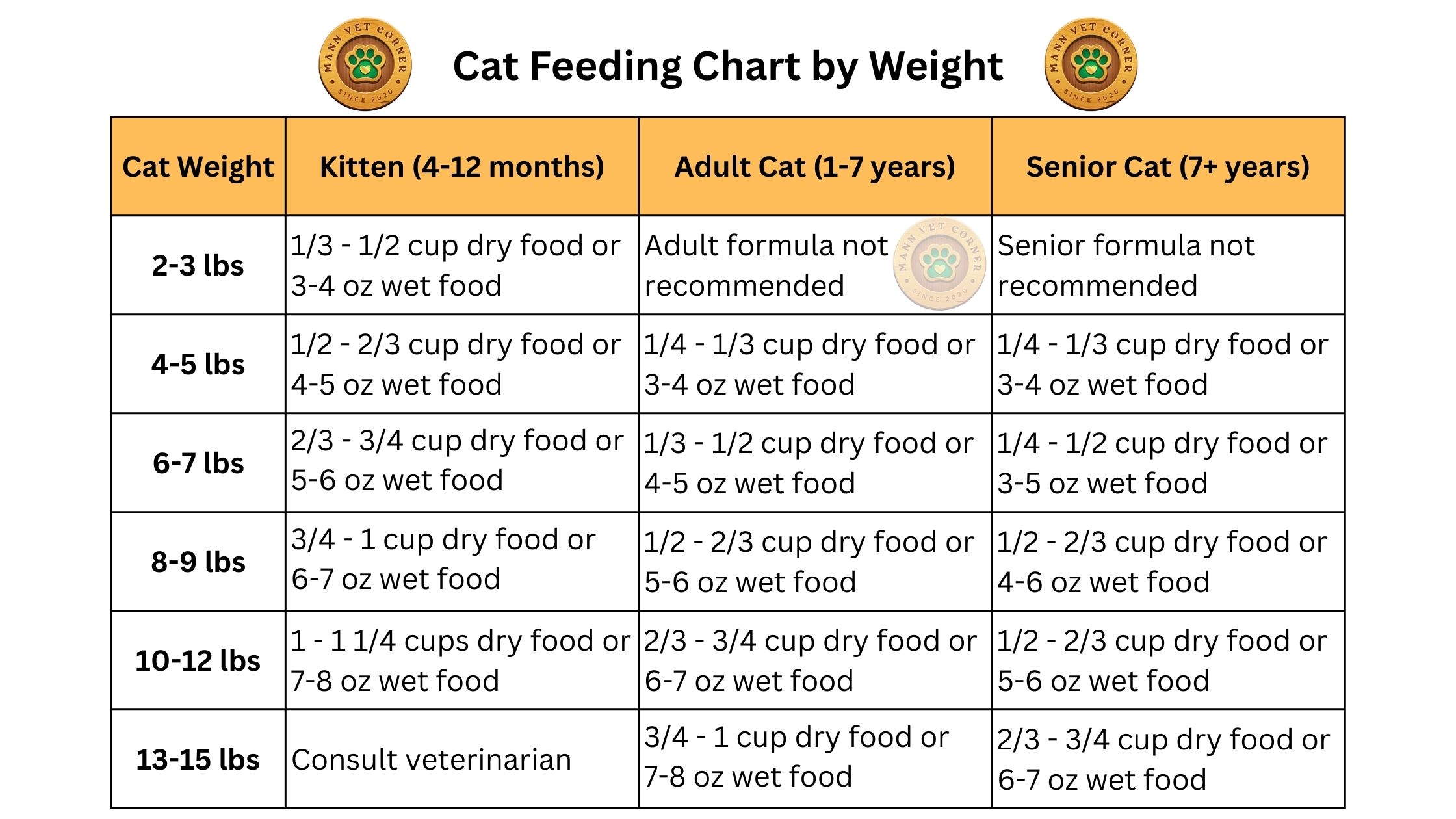
Dry cat food often provides more calories per cup than wet food because it contains less water. This means a small scoop can supply a large share of your cat’s daily energy. Measuring by eye can lead to overfeeding, especially when the same bowl gets topped up several times.
For some adult cats, a portion of roughly one-half cup per day may be close to the right amount. Others may need much less or more. The calorie density printed on the package is the best way to turn a general estimate into a practical portion.
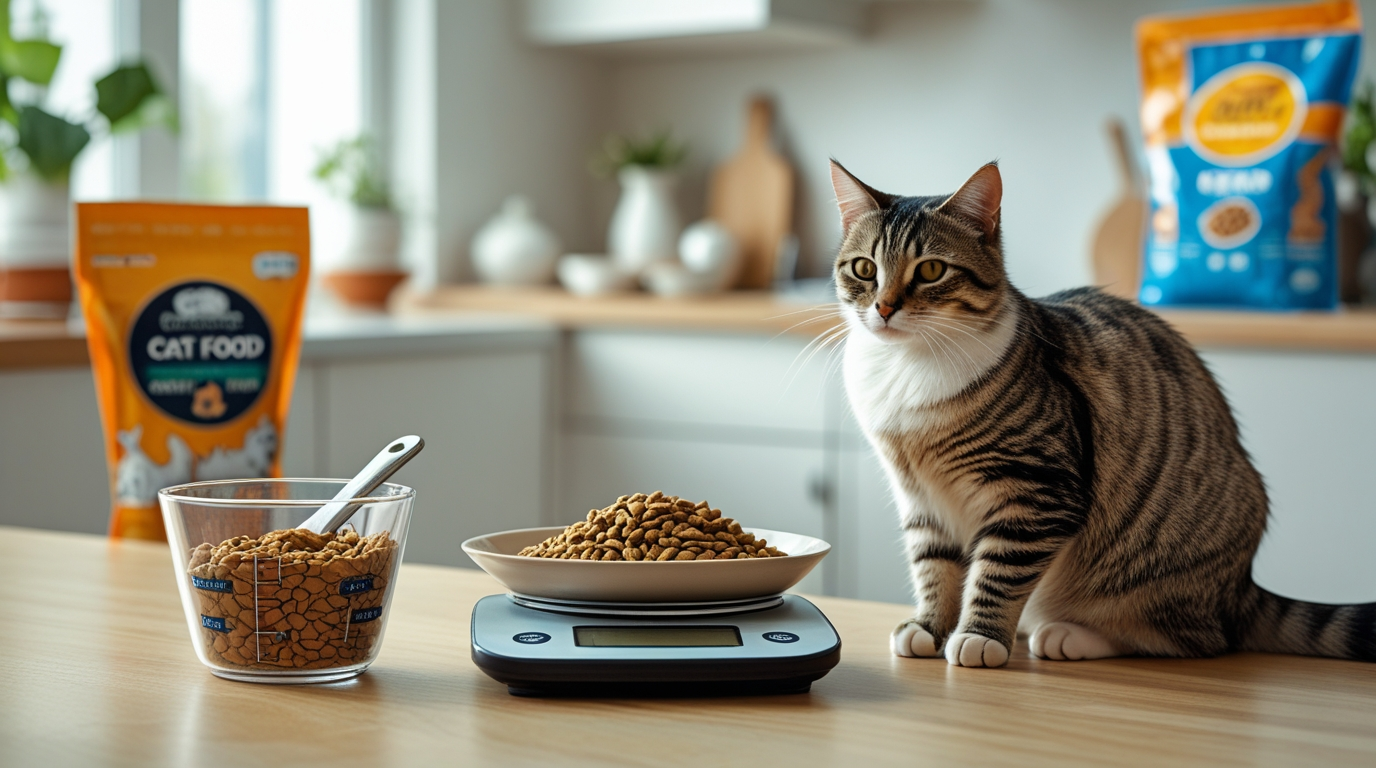
A standard measuring cup is better than an unmeasured scoop, but a kitchen scale can be even more precise. If the label lists calories per kilogram or grams, weighing the food can help you serve the intended amount each day.
Source: mannvetcorner.com
Measure once for the full day
Place the cat’s full daily dry food allowance in a container, then use that amount for all meals.
Avoid constant topping up
Refilling the bowl whenever it looks low makes it hard to know how much the cat eats.
Use the correct recipe information
Calorie content can differ between kitten, adult, indoor, weight-control, and other formulas.
Store food well
Keep kibble in a cool, dry place in a sealed container, following the manufacturer’s storage directions.
Is Free-Feeding Dry Food a Good Idea?
Free-feeding means leaving dry food available for a cat to eat throughout the day. It can work for some cats that naturally eat small amounts and maintain a healthy weight. However, it makes portion control harder when a cat keeps eating after its energy needs are met.
If your cat gains weight, steals food from other pets, or eats too quickly, measured meals may be more useful. An automatic feeder can dispense measured portions on a schedule, but you still need to set the correct daily amount and check that the feeder works.
Free-feeding may suit
Cats that self-regulate well and maintain a healthy body condition.
Measured meals may suit
Cats that gain weight easily, need a prescribed diet, or share a home with food-seeking pets.
How Much Wet Cat Food Per Day Should You Feed?
Wet cat food supplies water as well as calories. Many cats enjoy its texture, and the added moisture can help increase water intake through meals. However, wet food does not automatically provide fewer calories in every case, so compare the exact calorie content before setting a portion.
Some adult cats may need around two to three small cans per day, while others need more or less. This estimate can be misleading unless you know the can size and calorie content. A large can and a small can are not equal servings, and recipes vary in energy density.
Divide the total daily amount into meals that suit your cat’s appetite and your schedule. Refrigerate opened food as directed on its label, and discard food left out long enough to become unsafe. Fresh food and clean bowls help keep meals appealing.
Source: catwhisk.com
Check calories per can
Use the package’s calorie statement rather than assuming a fixed number of cans is right for every cat.
Serve suitable portions
Split the daily amount into two or more meals if that works for your cat and household.
Keep wet food fresh
Follow the label’s storage instructions for opened cans and pouches.
Provide drinking water
Wet food contributes moisture but does not remove the need for clean drinking water.
How Many Cans or Pouches Per Day?
Start with the calorie target, then divide it by the calories in each can or pouch. For example, if a cat needs 210 calories per day and each can provides 105 calories, two cans would meet that target before treats or other food are counted.
If the cat eats a mix of wet and dry food, count both types together. Feeding a full wet food allowance and a full dry food allowance at the same time can provide far more calories than intended.
One 100-calorie pouch
Provides 100 calories, regardless of whether it looks like a large or small serving.
Two 100-calorie pouches
Provide 200 calories in total.
Mixed feeding
Subtract calories from wet food before calculating how much dry food remains in the daily budget.
How Much Cat Food Should Kittens Eat?
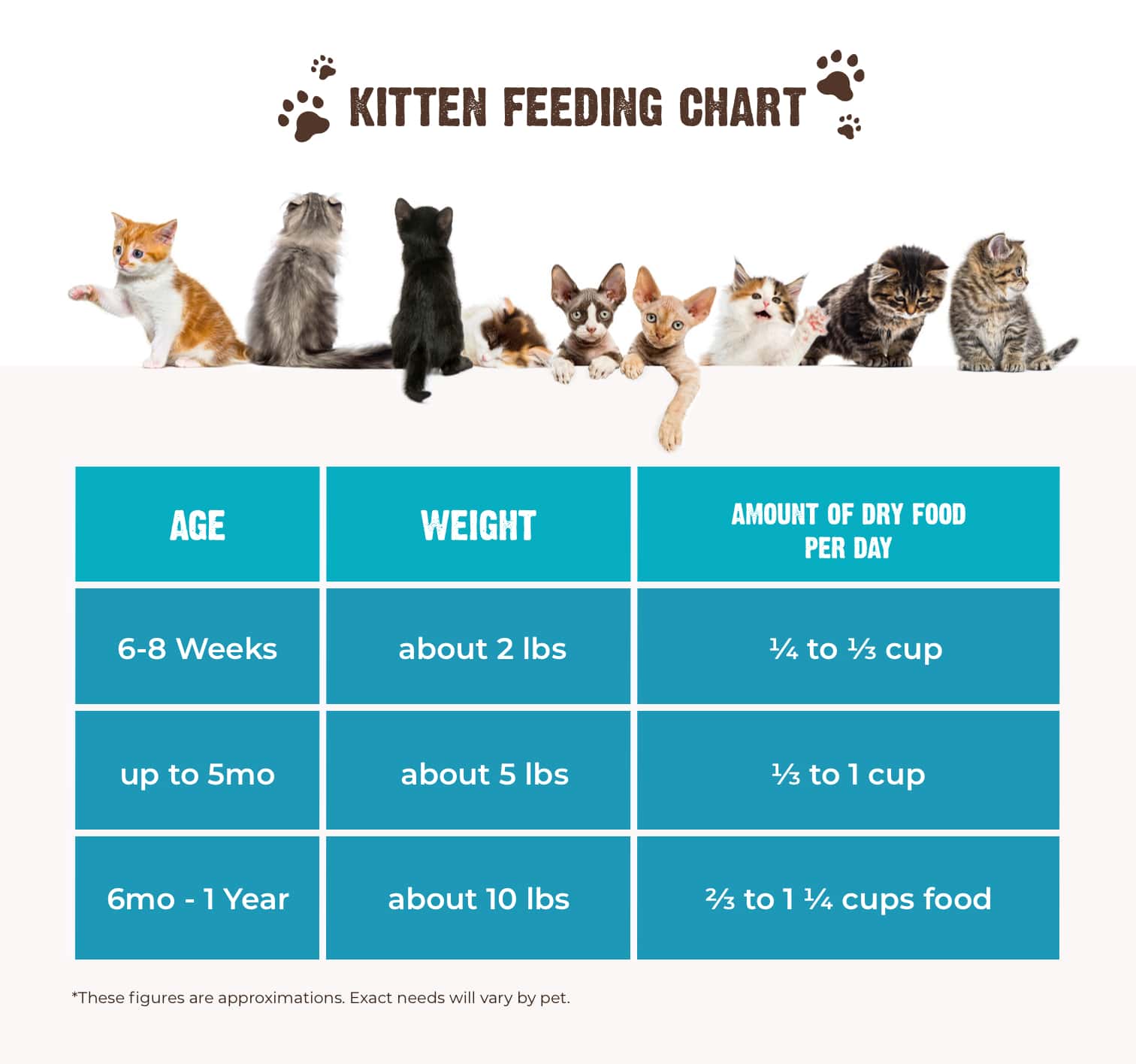
Kittens need food that supports rapid growth, muscle development, and play. Their small stomachs mean they usually do better with several meals a day than with one or two large servings. Use a complete and balanced kitten food that is made for growth, and follow the package directions while checking progress with your veterinarian.
A kitten’s needs change quickly as it grows. A young kitten may need three to four meals a day, while an older kitten may do well with three meals, depending on its age, size, and appetite. Very young kittens that are not fully weaned need specialized care and an appropriate kitten milk replacer rather than ordinary cow’s milk.
Do not place a growing kitten on a weight-loss diet without veterinary direction. Too little food can interfere with growth, while too much can lead to excess body fat. Regular weight checks help you see whether the feeding plan is working.
Source: detroitchinatown.org
Around 4 to 8 weeks
Kittens are often in the weaning stage. They need a suitable kitten diet and may require help from a veterinarian or rescue professional if they are not eating well.
Around 2 to 4 months
Several small meals each day can help meet growth needs and suit a small stomach.
Around 4 to 6 months
Growth remains active, so kitten food and regular meal times are still important.
Around 6 to 12 months
The feeding amount should change as growth rate and body size change. Many cats remain on kitten food until about 12 months, though individual needs vary.
How Much Should a 3-Month-Old Kitten Eat?
A 3-month-old kitten needs a growth diet and several small meals each day. There is no single safe number of cups or cans for every kitten because food calorie density and body weight differ widely.
Use the kitten food label as a starting point based on current weight and age. Measure the full daily amount, divide it among meals, and check the kitten’s weight and growth regularly. Contact a veterinarian if the kitten is not gaining as expected, has diarrhea, vomits repeatedly, or refuses food.
Choose kitten food
Select food labeled complete and balanced for growth or for all life stages.
Offer several meals
Small, regular meals help young kittens meet their energy needs.
Track growth
Weight gain, play, stool quality, and appetite all help show whether feeding is going well.
How Much Food Do Senior Cats Need?
Senior cats do not all need less food. Some older cats become less active and gain weight more easily, while others lose muscle or struggle to absorb nutrients as they age. The correct portion depends on body condition, health, and the cat’s ability to maintain muscle.
A senior cat that eats less than usual, drinks much more water, loses weight, or seems unusually hungry may have a medical problem. Conditions such as dental disease, kidney disease, diabetes, and thyroid disease can affect appetite and weight. A feeding change alone may not address the cause.
Keep meals easy to reach, especially for cats with stiff joints or mobility problems. A wide, shallow bowl may help some cats eat more comfortably. Ask your veterinarian whether your cat needs a senior diet or a diet designed for a diagnosed condition.
Source: rawznaturalpetfood.com
Monitor body weight
Weigh your cat regularly and look for changes rather than relying only on how much food remains in the bowl.
Watch muscle condition
A cat can lose muscle even when its body weight appears stable.
Make food easy to reach
Place meals in a calm spot that your cat can reach without climbing or jumping if movement is difficult.
Not always. A less active senior cat may need fewer calories, but an older cat that loses weight or muscle may need a different feeding plan. Cutting food simply because a cat has reached a certain age can do more harm than good.
Use body condition, weight trends, appetite, and veterinary findings to guide the decision. If your senior cat has a chronic condition, follow the veterinarian’s diet and feeding instructions instead of making large changes on your own.
Reduce food only when appropriate
A lower calorie allowance may suit a cat gaining excess fat, but it should still provide enough essential nutrients.
Investigate weight loss
Do not assume that an older cat is simply eating less because of age.
How Often Should You Feed Your Cat?
Many healthy adult cats do well with two measured meals per day, while others prefer three or four smaller meals. The best schedule is one that meets the cat’s calorie needs and fits its health needs and household routine. Meal frequency does not replace portion control.
Cats often like predictable feeding times. A regular schedule can make it easier to notice a change in appetite and to keep track of how much each cat eats. If your cat begs between meals, first check whether the daily portion is right before adding extra food.
Some cats with certain medical conditions need more frequent meals or a specific schedule. If your veterinarian has given feeding instructions for a health condition or medication, follow those directions.
Source: storage.googleapis.com
Two meals per day
A practical schedule for many healthy adult cats, such as morning and evening.
Three or four smaller meals
May suit cats that prefer small portions or households able to provide more frequent meals.
Scheduled automatic feeding
Can help maintain consistent portions when people are away, provided the device is set correctly and checked regularly.
Special medical schedules
Must follow the veterinarian’s instructions, especially when a diet or medication depends on meal timing.
Should You Leave Food Out All Day?
Leaving a measured amount of dry food out may work for a cat that eats small amounts and stays at a healthy weight. It is less useful when a cat eats too much, when several pets share the same bowl, or when you cannot tell which pet has eaten.
Wet food should not sit out for long periods. Follow the manufacturer’s directions and remove leftovers before they spoil. If your cat grazes, consider smaller servings more often rather than leaving a large portion available all day.
Use measured portions
Even if food remains available, set out only the amount intended for the day.
Keep track of each cat
Feed pets separately if one cat steals another’s food or needs a special diet.
How to Feed a Cat a Mix of Wet and Dry Food
You can feed both wet and dry food as long as the combined calories fit your cat’s daily needs. This approach can offer variety and provide moisture from wet food while keeping some dry food for convenience. The main challenge is counting both portions correctly.
First, decide how many calories should come from each type of food. Then calculate the wet food amount and the dry food amount separately. Do not give a full daily serving of each food unless the combined total has been planned to meet the cat’s needs.
For example, a cat with a daily target of 240 calories might receive 120 calories from wet food and 120 calories from dry food. If the wet food provides 100 calories per can and the dry food provides 400 calories per cup, the example plan would use 1.2 cans and 0.3 cup of dry food per day. Treat calories would need to fit within the same total.
Source: catwhisk.com
Choose the calorie split
Decide how much of the daily target should come from wet food and how much from dry food.
Calculate each portion
Use the calorie content on each product label rather than matching portions by volume.
Keep a daily record
Write down meals, treats, and any food used to give medicine so extras do not go unnoticed.
Do Wet and Dry Foods Need to Be the Same Brand?
They do not always need to come from the same brand, but each food should be suitable for your cat’s life stage and nutritional needs. Look for a complete and balanced statement on the label. Some products are meant only for occasional or supplemental feeding and should not make up the whole diet.
If your cat has a medical condition, food sensitivities, or a prescribed diet, ask your veterinarian before mixing products. A change in food can affect digestion and may make it harder to follow a therapeutic feeding plan.
Check the nutritional statement
Make sure the main foods provide complete and balanced nutrition for the appropriate life stage.
Introduce changes gradually
A gradual transition over several days may reduce stomach upset, unless a veterinarian advises a different approach.
How Much Should You Feed an Overweight or Indoor Cat?
Indoor cats may burn fewer calories if they spend much of the day resting, but living indoors does not automatically mean a cat is overweight. Play, climbing, age, muscle mass, and individual metabolism all affect energy needs. Judge the portion by the cat’s body condition and weight trend rather than its indoor status alone.
For a cat that needs to lose weight, the goal is steady, safe fat loss while preserving muscle and providing essential nutrients. Do not sharply reduce food or let a cat go without eating to speed up weight loss. Cats that stop eating can develop serious health problems, including hepatic lipidosis, a dangerous buildup of fat in the liver.
Ask your veterinarian to set a daily calorie target based on ideal weight and health. Weigh portions, limit high-calorie treats, and increase play in a way that suits your cat. Review progress regularly and adjust the plan with professional guidance.
Source: artofit.org
Use ideal weight as a guide
The right target may be based on a healthy goal weight rather than the cat’s current weight.
Avoid sudden food cuts
A very restrictive diet can be dangerous, particularly if the cat begins refusing food.
Add safe activity
Short play sessions with a wand toy, food puzzles, and climbing options can help increase movement.
Track results
Use regular weight checks and veterinary reviews to guide gradual changes.
Why Does My Cat Always Seem Hungry?
A cat may beg because it has learned that begging brings food, because meals are too small for its needs, or because it enjoys eating. Some cats also ask for food out of boredom or because they prefer several small meals throughout the day.
However, a strong increase in appetite can sometimes point to a health issue. If your cat seems constantly hungry while losing weight, drinking more water, urinating more often, or acting differently, arrange a veterinary visit. Do not keep adding food without checking the cause.
Check the daily total
Include meals, treats, table scraps, and food given by other household members.
Try enrichment
Food puzzles and short play sessions may help a cat that seeks food out of boredom.
Look for other signs
Unusual thirst, frequent urination, vomiting, or weight loss should prompt veterinary advice.
Common Cat Feeding Mistakes to Avoid
Many feeding problems start with small habits rather than a single large mistake. A few extra treats, a generous scoop, and food left out for grazing can add up over time. Measuring the daily total gives you a clearer picture of what your cat actually eats.
Another common mistake is changing food portions without watching weight or appetite. A feeding chart cannot account for every cat, and a package recommendation may need adjustment. Use the label as a guide, then check whether the plan supports a healthy body condition.
Source: mannvetcorner.com
Guessing portion sizes
A scoop that looks small may hold more food than expected. Measure the amount instead.
Ignoring treats
Treats contain calories too. Keep them to a modest share of daily intake and reduce the main food portion when needed.
Feeding by bowl size
A large bowl does not mean a cat needs a large serving.
Using the wrong life-stage food
Growing kittens have different nutrient needs from adult cats. Choose food designed for the correct life stage.
Changing food too fast
A sudden diet change can upset digestion in some cats. Make gradual changes when practical and follow veterinary instructions.
Ignoring appetite changes
A sudden change in how much a cat eats may signal illness and should not be dismissed as fussiness.
How Much Should Cat Treats Count Toward Daily Food?
Treats should make up only a small part of a cat’s daily calorie intake. A common guideline is to keep treats and other extras at no more than about 10 percent of daily calories, with the rest coming from complete and balanced food. Some cats with medical or weight concerns may need a stricter limit.
For a cat with a 200-calorie daily target, 10 percent equals 20 calories. If treats provide 20 calories, the remaining 180 calories should come from the planned main diet. Small pieces of human food can count too, so check ingredients and avoid foods that are unsafe for cats.
Count all extras
Include commercial treats, table scraps, lickable snacks, and food used during training.
Choose cat-safe foods
Avoid toxic foods and seasonings, including onion and garlic, and do not offer bones that could cause injury.
Use small rewards
A few tiny treats may be enough for training without using a large share of the daily calorie budget.
How to Tell Whether Your Cat Is Eating the Right Amount
The best signs of a suitable feeding plan are a stable, healthy body condition, normal energy, a steady appetite, and a weight trend that fits your cat’s age and health. A clean bowl does not always mean the cat needs more food, just as leftovers do not always mean the portion is too large.
Weigh your cat on a consistent schedule, such as every two to four weeks when monitoring a routine feeding plan. Use the same scale when possible and record the result. If your cat is growing, losing weight, or following a weight-management plan, your veterinarian may recommend more frequent checks.
If weight rises or falls unexpectedly, review the daily food total first. Check whether someone else in the household is feeding the cat, whether treat amounts have changed, and whether the food’s calorie content is different. Persistent changes need veterinary assessment because illness can affect appetite and weight.
Source: purreats.com
A healthy body condition
Ribs can be felt with light pressure, and the body has a visible waist when viewed from above in many healthy adult cats.
A steady weight trend
Weight stays within a healthy range unless a planned, veterinarian-guided change is underway.
Normal appetite and behavior
Your cat eats its usual meals, stays alert, and behaves normally.
Normal digestion
Stool quality and frequency remain typical for your cat, without persistent vomiting or diarrhea.
When Should You Call a Veterinarian?
Contact a veterinarian if your cat loses weight without a clear reason, repeatedly vomits, has ongoing diarrhea, drinks much more than usual, or shows a lasting change in appetite. A cat that stops eating needs prompt attention. Do not wait several days to see whether a cat with no appetite improves on its own.
Seek urgent veterinary advice if your cat has eaten little or nothing for about 24 hours, and sooner for kittens, frail senior cats, or cats with known medical problems. Repeated vomiting, marked weakness, breathing trouble, collapse, or signs of severe pain also call for urgent care. A veterinarian can identify the cause and recommend a safe feeding plan.
Sudden refusal to eat
Call promptly, especially if the cat has other symptoms or is overweight.
Unexpected weight loss
Arrange an examination rather than simply increasing the food amount.
Signs of dehydration or illness
Seek veterinary advice for weakness, repeated vomiting, marked lethargy, or reduced urination.
How to Make a Simple Daily Feeding Plan
A written feeding plan helps everyone in the household serve the same amount. This is especially useful when more than one person feeds the cat or when the cat eats both wet and dry food. Start with a daily calorie target, write down each food’s calorie content, and divide the portions across the day.
Keep the plan flexible enough to account for treats and changes in activity. If the cat’s weight shifts, do not make a large adjustment based on one measurement. Check the portion, confirm the food label, and ask your veterinarian whether the calorie target needs to change.
Source: catwhisk.com
Morning
Serve a measured portion of the daily allowance and provide fresh drinking water.
Midday, if needed
Offer a planned small meal or use an automatic feeder set to dispense a measured amount.
Evening
Serve the remaining planned portion rather than adding an unmeasured extra meal.
End of day
Record treats and leftovers, wash food bowls as needed, and make sure fresh water remains available.
What to Do if Your Cat Still Seems Hungry
First, confirm that the daily target is appropriate for your cat’s age, weight, and body condition. Check the package calorie statement and make sure the food is complete and balanced for the cat’s life stage. If the cat’s needs have changed, the current portion may no longer be suitable.
If the calorie target appears appropriate, try splitting the same daily amount into smaller meals. Slow-feeding bowls and food puzzles may help cats that eat quickly. If the hunger is new, intense, or paired with weight loss or increased thirst, arrange a veterinary check rather than repeatedly adding food.
Check the math
Confirm that the measured portion matches the calorie target and that all food sources are counted.
Adjust meal timing
More frequent small meals may help some cats feel more satisfied.
Rule out health concerns
A sudden increase in hunger can be a sign of illness, especially when weight is falling.
Frequently Asked Questions
Q
How much cat food per day does a 10-pound cat need?
A healthy adult cat weighing 10 pounds may need roughly 200 to 250 calories per day, although individual needs vary. The amount in cups or cans depends on the food’s calorie density. Check the label and ask your veterinarian to confirm a target based on your cat’s ideal weight and body condition.
Q
Is one cup of dry cat food per day too much?
One cup may provide too many calories for many adult cats, but the answer depends on the product. If the food contains 400 calories per cup, one cup supplies 400 calories before treats are counted. Compare that amount with your cat’s daily calorie target instead of relying on cup size alone.
Q
How many times a day should I feed my cat?
Many healthy adult cats do well with two meals per day, while others prefer three or four smaller meals. Kittens generally need more frequent meals because they are growing and have small stomachs. Follow any special schedule your veterinarian recommends for a medical condition.
Q
Should I feed my cat wet food or dry food?
Both can provide complete nutrition when the food is suitable for your cat’s life stage and health. Wet food provides more moisture, while dry food is often easier to measure and store. The better choice depends on calorie needs, hydration, preference, budget, and any veterinary diet requirements.
Q
Can I leave dry food out all day?
You can leave a measured daily portion out for some cats that maintain a healthy weight and do not overeat. However, free-feeding makes it harder to monitor intake and can encourage weight gain in cats that eat too much. Measured meals may work better when portion control matters or several pets share a home.
Q
How much should I reduce my cat’s food if it is overweight?
Do not make a large calorie cut without veterinary guidance. Your veterinarian can estimate your cat’s ideal weight and set a safe daily calorie target that preserves muscle and provides essential nutrients. Rapid restriction or prolonged refusal to eat can be dangerous for cats.
Q
Do treats count toward my cat’s daily food amount?
Yes. Treats, table scraps, and other extras all add calories. A common guideline is to keep treats at no more than about 10 percent of daily calories, although cats with weight or medical concerns may need a lower amount. Reduce the main food portion when needed to stay near the daily target.
Q
What should I do if my cat suddenly stops eating?
Contact a veterinarian promptly if your cat refuses food, particularly if the change is sudden or other symptoms appear. Seek advice sooner for kittens, senior cats, and cats with existing health problems. Do not force-feed or wait several days for the appetite to return without veterinary guidance.
✦ Wrapping Up
Conclusion
The right amount of cat food per day depends on your cat’s age, weight, activity, body condition, and health. Many healthy adult cats need roughly 200 to 300 calories daily, but that broad range is only a starting point. Kittens, senior cats, active cats, and cats with medical needs may require a different plan.
Use the calorie information on the food package to calculate portions, count treats as part of the daily total, and divide food into meals that suit your cat. Check body condition and weight regularly instead of assuming that a feeding chart will always be right. If your cat gains or loses weight unexpectedly, has a sudden appetite change, or stops eating, seek veterinary advice.
💡 Key Takeaway
Today, check your cat’s weight and food label, calculate the calories in its current daily portion, and record all treats. If you are unsure of the right calorie target or your cat has a health concern, ask your veterinarian for an individualized feeding plan.