How much is an allergy shot for dogs: Easy guide
If you've typed "how much is an allergy shot for dogs" into a search bar, you're probably staring at a quote from your vet that doesn't quite make sense. Maybe it's $300. Maybe it's $1,500.
Maybe it's a number with a "per year" attached that nobody warned you about.
Here's the honest answer. The serum itself costs roughly $5 to $15 per dose once it's compounded, but the real price tag is much bigger. As of 2026, most U.S. dog owners spend between $1,000 and $2,000 in the first year of allergen immunotherapy, then $400 to $800 every year after that for maintenance.
The reason it's so confusing is that you're not buying a "shot." You're buying a custom treatment plan, and the cost depends on which phase your dog is in. Let's break that down properly.
Quick Answer
Allergy shots for dogs typically cost $1,000 to $2,000 in the first year. That covers allergy testing, custom serum, and vet visits. Annual maintenance runs $400 to $800.
Per-dose cost after the initial serum is about $5 to $15.
What Does an Allergy Shot for Dogs Actually Cost?
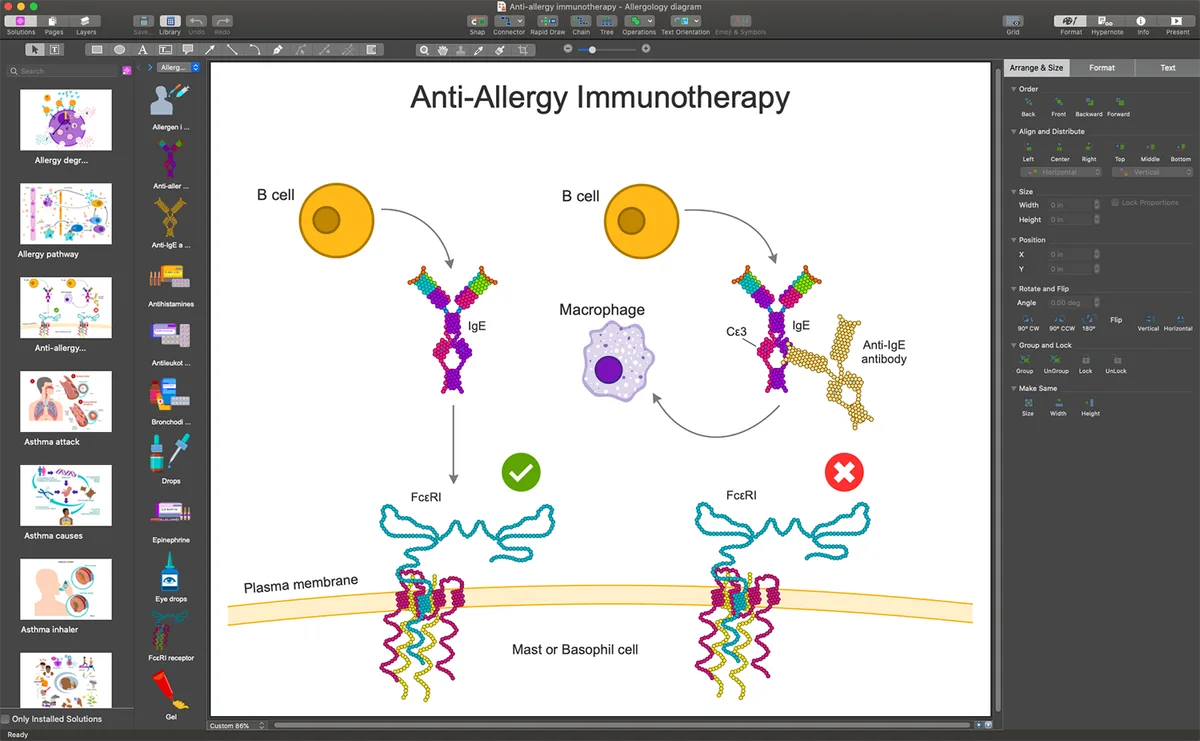
The phrase "allergy shot" is doing a lot of heavy lifting, and it's part of why pricing feels so murky. What your vet is actually prescribing is allergen-specific immunotherapy, or ASIT, a custom-built serum designed to slowly retrain your dog's immune system so it stops overreacting to things like dust mites, mold spores, or tree pollen.
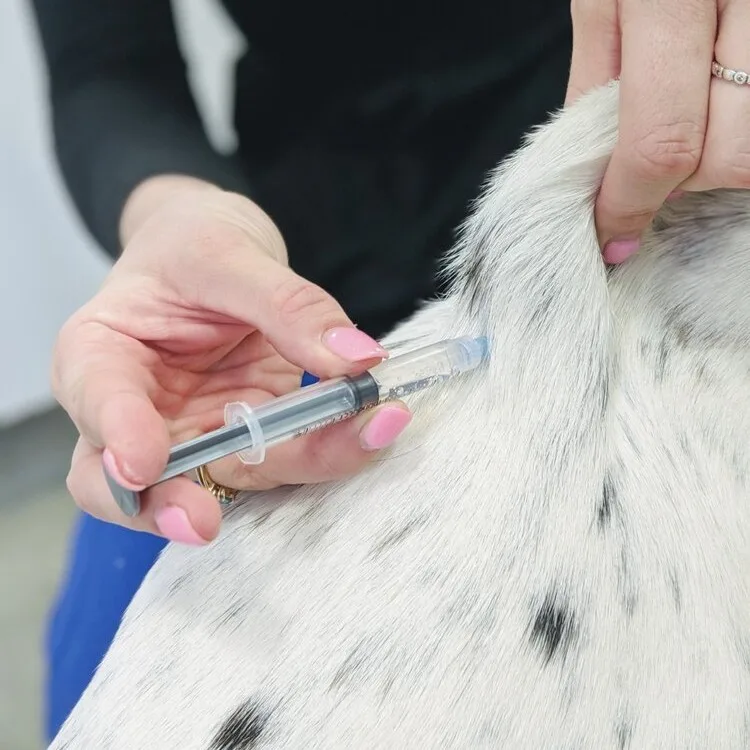
The serum is mixed for your dog specifically. A compounding pharmacy or veterinary lab takes the results of an allergy test, then combines the relevant allergens into a vial (or several vials) at carefully measured concentrations. Your vet or you, after training, inject a small amount under the skin on a set schedule.
The per-injection price on its own is almost misleading. A dose of compounded serum might cost as little as the price of a coffee, but the upfront lab fee for making that serum, the allergy test that decides what goes in it, and the vet visits that supervise the start of treatment are where the real money sits. When people quote "allergy shots cost $150 to $300 each," they're usually rolling every line item into one number.
So when you ask how much is an allergy shot for dogs, the more useful question is: how much is the full first year, and how much will I pay every year after that.
Why the Price Isn't Just "Per Shot" — How Allergen Immunotherapy Pricing Works
Think of it less like buying a pill and more like buying a course of physical therapy. The session is cheap. The plan is the cost.
Three line items drive the bill:
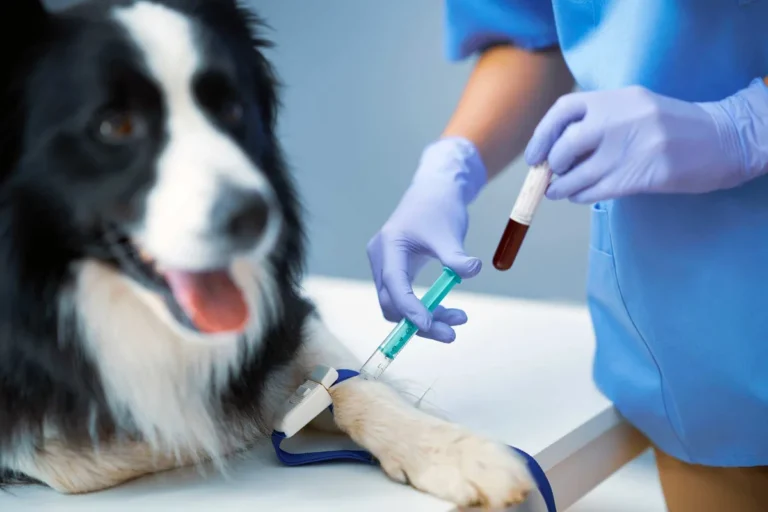
- The allergy test. Before any serum is made, your vet needs to know what your dog is allergic to. This is usually a serum IgE blood test or an intradermal skin test, run by a veterinary dermatologist. The test alone runs $200 to $500 depending on your region and whether a specialist is involved.
- The custom serum. This is the actual "shot." A compounding lab mixes the allergens your dog reacted to into a treatment vial. The first-year serum cost lands between $300 and $600, with annual refills at $200 to $400.
- The vet visits and induction monitoring. Early on, your dog may need several rechecks to adjust the dose. These visits typically run $75 to $200 each.
Put those together and you get the first-year total of roughly $1,000 to $2,000. Subsequent years are smaller because you're just refilling the serum and checking in with the vet once or twice a year.
Geographic location matters more than most owners expect. A general practice in rural Kansas might quote the lower end of those ranges. A specialty dermatology clinic in Manhattan or San Francisco can easily run 20 to 40 percent higher.
Pet insurance sometimes helps here, but more on that later.
The Two Phases of Dog Allergy Shots and What Each One Costs
This is the part most pricing articles skip, and it's the part that catches owners off guard. Allergy immunotherapy isn't one flat cost. It has two very different phases, and they cost very different amounts.
The Induction Phase (Months 1 to 4 or So)
Right after the serum is made, your dog starts a "ramp up." The dose is small at first, then gradually increases as your dog's system gets used to it. Most protocols call for injections every 1 to 7 days during this period.
You're not paying more per shot in this phase, you're paying more often. The serum vial is being used up faster, the vet is monitoring more closely, and you'll likely have 2 to 3 check-in visits during induction. Expect to use 30 to 50 percent of your first-year serum in just the first few months.
The Maintenance Phase (Month 4+ and Ongoing)
Once your dog is on a stable, effective dose, injections drop to every 2 to 4 weeks. Many dogs stay on maintenance for years. Some stay on it for life.
The cost here settles into a predictable rhythm: a serum refill once or twice a year and a vet check every 6 to 12 months.
This is also where pricing starts to feel like a bargain compared to other allergy drugs, which we'll get to in the comparison section.
Average Allergy Shot Costs for Dogs by Treatment Stage
| Treatment Stage | What's Included | Typical Cost (2026) |
|---|---|---|
| Allergy testing (initial) | Blood or intradermal test | $200 to $500 |
| First-year serum | Custom allergen vials | $300 to $600 |
| Induction-phase vet visits | 2 to 3 monitoring exams | $150 to $400 |
| Maintenance serum (annual) | Refill vials | $200 to $400 |
| Maintenance vet visits (annual) | 1 to 2 check-ups | $75 to $200 |
| First-year total | Everything above | $1,000 to $2,000 |
| Each subsequent year | Serum + check-ups | $400 to $800 |
A few caveats. The wide ranges exist because vet pricing varies so much by region and clinic type. A board-certified veterinary dermatologist will charge more than a general practice vet, but they may also test and dose more accurately, which can shorten the time to results.
Per American College of Veterinary Dermatology guidance, allergy testing and immunotherapy dosing should ideally be managed by or in consultation with a specialist, especially for severe or year-round cases.
Also, "success" doesn't usually mean stopping the shots. It means the shots let you reduce or stop other medications. For many owners, the math works out because they're no longer paying monthly for Apoquel, Cytopoint, or repeated ear infection treatments.
First-Year Cost Breakdown: Testing, Serum, and Vet Visits
Let's walk through a realistic year-one bill so the numbers stop feeling abstract. We'll use a mid-range example, the kind of case a general practice vet in a mid-sized U.S. city might handle.
- Allergy testing (serum IgE blood panel): $250 to $350. A veterinary dermatology specialist may charge $400 to $500.
- Initial serum (custom allergen vials): $400. This is a common mid-market figure for a one-vial setup with 8 to 12 allergens included.
- Induction-phase vet visits (3 visits): $75 to $150 each, so roughly $225 to $450.
- Additional diagnostics (if needed): Skin cytology, ear swab, or bloodwork to rule out infection. Add $100 to $250.
- Concurrent medications during ramp-up: Many dogs stay on Apoquel, Cytopoint, or steroids for the first few months while the serum builds up. Budget $300 to $600 if your dog is on a monthly med during induction.
Add those up and you land between $1,275 and $2,100, right inside the $1,000 to $2,000 first-year range we quoted earlier. A dog with severe, year-round atopic dermatitis who sees a specialist will land at the top of that range. A dog with milder seasonal allergies managed by a general practice vet will land at the bottom.
One thing worth flagging: the induction phase is when most owners quietly overspend. They keep refilling monthly medications because the serum hasn't kicked in yet, then feel frustrated when the bill is double what they expected. The serum needs 6 to 12 months to show full effect in most dogs, so plan accordingly.
Annual Maintenance Cost: What You'll Pay After the First Year
Once your dog is on a stable maintenance dose, the cost structure gets simple. You're really only paying for two things: the serum refill and an annual or twice-yearly vet check.
- Serum refill: $200 to $400 per year. Most dogs use one to two vials annually at maintenance dosing.
- Vet check (1 to 2 visits): $75 to $200 per year.
- Total annual maintenance: Roughly $400 to $800.
Compare that to a year of monthly Apoquel or Cytopoint, which can easily run $1,200 to $2,400 per year for a medium-to-large dog, and the cost case for immunotherapy gets stronger the longer your dog stays on it. That's the math many owners don't run until they're already two years in.
There's one hidden cost worth mentioning: storage. The serum must be refrigerated, not frozen, and it expires. If you miss doses or your dog goes off schedule for a long stretch, you may need a fresh vial, which adds to the annual cost.
Stay on schedule and this rarely happens.
What Drives the Price Up (or Down) for Your Dog
A few variables move the needle more than others. Knowing which ones apply to your situation helps you predict your real number.
- Region and clinic type. Specialty dermatology clinics and coastal metros cost more. Rural general practices cost less.
- Number of allergens in the serum. A dog allergic to 4 things will have a cheaper serum than a dog allergic to 12 things. The lab sets the price partly by how many allergens go into the mix.
- Dog's size and dose. Larger dogs often need higher volumes per injection, which uses the vial up faster and shortens the time between refills.
- Concurrent medications. If your dog stays on Apoquel or Cytopoint during the first year, your out-of-pocket looks much higher.
- Whether a specialist is involved. A board-certified veterinary dermatologist typically charges more per visit but may also reach an effective dose faster, which can save money on medications over time.
- Pet insurance. Some plans cover allergy testing and immunotherapy as part of a wellness or chronic condition rider. Many do not. Check your specific policy before assuming anything.
If you're trying to bring the cost down, the two biggest levers are choosing a general practice vet for induction (with specialist consult only if needed) and committing to at-home injections once your vet trains you. At-home dosing eliminates the per-visit injection fee, which adds up fast during the induction phase.
Are Dog Allergy Shots Worth It? Benefits vs. Real-World Costs
Cost is only half the question. The other half is whether the shots actually do anything.
Aggregate outcomes reported across peer-reviewed veterinary literature suggest that 60 to 80 percent of dogs with confirmed environmental allergies show meaningful improvement on allergen immunotherapy. Improvement usually means less itching, fewer ear infections, less paw-licking, better sleep, and a reduced need for other medications.
For many owners, that's the win. The shots don't cure allergies. Nothing does, yet.
What they do is retrain the immune system so the allergic response is muted. Some dogs come off all other medications. Some drop to a low-dose Apoquel regimen.
Some stay on Cytopoint a few times a year for flare-ups.
The cost-benefit case is strongest for dogs with:
- Year-round environmental allergies (not just seasonal)
- Multiple allergic symptoms (skin, ears, paws, hot spots)
- Repeated ear infections or skin infections requiring antibiotics
- A young age at diagnosis, where long-term management is the realistic horizon
The case is weaker for dogs with mild seasonal symptoms that respond well to a single medication, or for dogs whose primary issue is food allergy, because immunotherapy doesn't address food allergens. That's a separate diagnosis and a separate treatment plan.
Allergy Shots vs. Apoquel, Cytopoint, and Steroids: A Real Cost Comparison
This is the comparison most owners actually want, because these are the three medications your vet will probably mention when you bring up allergy shots.
| Treatment | Typical Annual Cost (Medium Dog) | How It Works | Main Drawback |
|---|---|---|---|
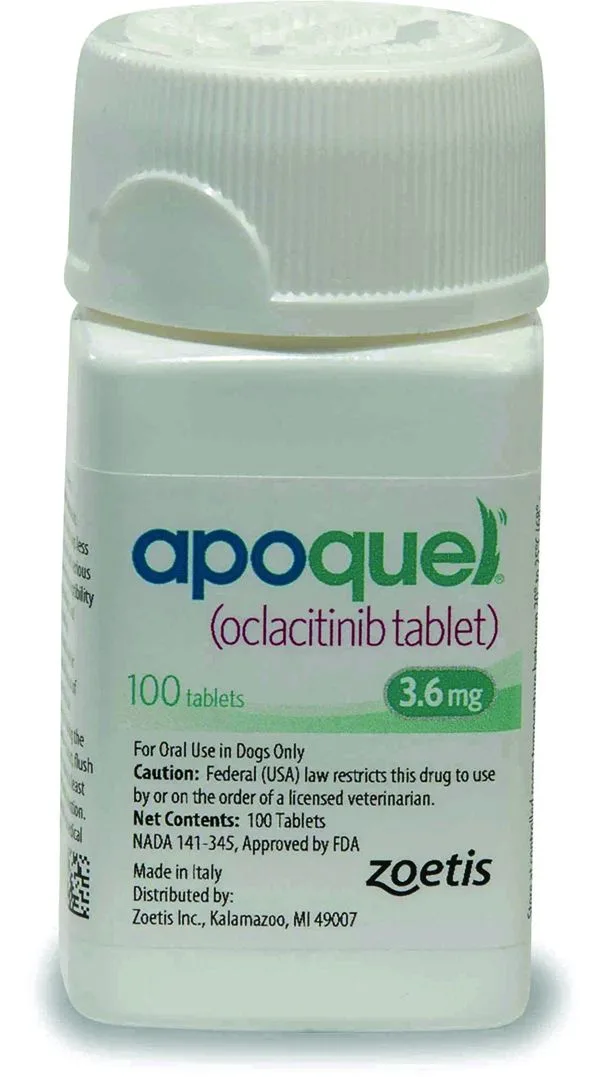
| Apoquel (daily pill) | $1,200 to $1,800 | Blocks itch signaling | Daily dosing, long-term immune suppression concerns |
| Cytopoint (injection every 4 to 8 weeks) | $1,200 to $2,000 | Antibody that neutralizes itch signal | Must be repeated indefinitely, doesn't address underlying allergy |
| Oral steroids (prednisone) | $200 to $500 | Broad anti-inflammatory | Long-term side effects (liver, muscle, immunity) |
| Allergen immunotherapy (maintenance) | $400 to $800 | Retrains immune system over time | Slow onset (6 to 12 months), requires injections |
A few real-world notes from aggregate owner reports and veterinary practice data:
- Apoquel works fast (often within 24 hours) and is convenient, but the monthly cost adds up faster than immunotherapy over a 3 to 5 year horizon.
- Cytopoint is popular because it doesn't require daily pills, but each injection only lasts 4 to 8 weeks, and the per-shot cost is similar to a full year of immunotherapy serum.
- Steroids are cheap and effective short-term, but long-term use carries well-documented health risks and most dermatologists now steer away from them as a primary treatment.
- Immunotherapy is the only one of the four that targets the underlying allergy, not just the symptoms.
You can also use them together. Many dogs start Apoquel or Cytopoint for immediate relief and stay on it through the 6 to 12 month ramp-up, then taper off as the serum takes effect. That hybrid approach is common and reasonable.
When Allergy Shots Make Sense for Your Dog (and When They Don't)
Use this as a quick gut check before committing.
Allergy shots make sense if:
- Your dog has confirmed environmental allergies (not food)
- Symptoms are year-round or span multiple seasons
- Other medications help but you don't want to stay on them forever
- Your dog is young enough to benefit from long-term management
- You're okay with a 6 to 12 month wait for full effect
Allergy shots don't make sense if:
- Symptoms are mild and only last a few weeks each year
- Apoquel or Cytopoint already controls symptoms cheaply
- Your dog has food allergies as the primary issue
- You can't commit to the injection schedule consistently
- Your vet can't access reliable allergy testing in your area
There's also a middle path: sublingual immunotherapy (SLIT), where the same allergen serum is given as oral drops instead of injections. It's less common for dogs than for humans, but some veterinary dermatologists offer it. Ask your vet if it's an option if the injection schedule is a deal-breaker.
How Long Dogs Stay on Allergy Shots — and What That Means for Your Wallet
The honest answer is: most dogs stay on immunotherapy for years, and a meaningful number stay on it for life.
Here's how it usually plays out, based on aggregate outcomes reported in veterinary dermatology literature:
- After 12 months: Most dogs show clear improvement. Your vet will evaluate whether to continue, adjust, or trial a pause.
- After 2 to 3 years: Some dogs can stop the shots and maintain the improvement. Others relapse and restart.
- After 5+ years: A subset of dogs appears to develop lasting tolerance. The data on exactly how many is still thin, but the long-term remission rate is real enough that most dermatologists consider immunotherapy a long-term investment rather than a temporary fix.
Multiply $400 to $800 per year by 3 to 5 years and you're looking at $1,200 to $4,000 in lifetime immunotherapy costs. That's a wide range, and it overlaps with the cost of staying on Apoquel or Cytopoint for the same period, which is the comparison that actually matters.
Pet Insurance and Allergy Shots: What's Actually Covered
Pet insurance is a mixed bag here. Here's what our research into common U.S. pet insurance policies (as of 2026) shows:
- Accident and illness plans typically cover the vet visits and allergy testing as part of diagnosing a covered condition, but often exclude the serum itself or treat it as a recurring maintenance cost.
- Wellness add-ons rarely cover immunotherapy because it's not considered preventive care.
- Chronic condition riders, available from some insurers, may cover ongoing serum refills, but usually with annual caps.
If you're shopping for insurance specifically because your dog has allergies, read the fine print on "chronic conditions" and "recurring treatment." Two policies that look similar can differ by thousands of dollars over a dog's lifetime on this single issue.
If you already have insurance, call before your first allergy test and ask whether the test, the serum, and the maintenance visits are covered. Get the answer in writing if you can.
Common Mistakes That Make Allergy Shots More Expensive Than They Need to Be
These are the patterns our research into owner experiences and veterinary practice guidance keeps surfacing:
- Skipping the vet visit during dose adjustments. A small tweak early on can prevent months of ineffective treatment and wasted serum.
- Stopping and restarting without consulting your vet. Restarting usually means re-induction, which uses more serum and burns more time.
- Buying from a non-veterinary compounding pharmacy. The serum needs to be made to specific standards. Bargain-bin compounding is not the place to save money here.
- Assuming the serum will work in a month. It almost never does. Plan for 6 to 12 months before judging.
- Not treating concurrent infections. Allergies and skin infections feed each other. If your dog has a bacterial or yeast infection, the serum won't show results until that's resolved.
How to Talk to Your Vet About Cost Without Cutting Corners
Vets hear cost questions all the time, and a good one will walk you through the line items. Here's how to make the conversation productive:
- Ask for an itemized estimate. "Per shot" is rarely the real number. Get the test, serum, and visit costs broken out.
- Ask about at-home injection training. If you're comfortable giving injections, you'll save a lot during induction.
- Ask whether a general practice vet can manage induction, with a specialist consult only if needed. This can cut the first-year cost substantially.
- Ask about generic or alternative serum formulations. Some labs offer regional or standardized mixes at a lower price point.
- Ask about payment plans or financing. Many clinics work with third-party financing specifically for chronic condition treatment.
A vet who bristles at cost questions is a red flag. A vet who answers them with a line-item breakdown is the right partner for a multi-year treatment plan.
Maintenance and Long-Term Optimization
Once your dog is stable, the goal is keeping the protocol tight so costs stay predictable. Stick to the schedule, refrigerate the serum, and book the annual recheck. If a flare hits, call your vet before adjusting doses yourself.
Consistency is what keeps the annual cost near the lower end of the range.
Safety and Compliance Warnings
Immunotherapy is safe for most dogs, but reactions do happen. Watch for facial swelling, vomiting, or extreme lethargy within 30 minutes of an early dose. Those signs mean call your vet, or head to an emergency clinic.
Long-term, follow your vet's refrigeration and expiration guidance exactly. Compromised serum is both ineffective and a waste of money.
Allergy Shot FAQs for Dog Owners
How Much Is an Allergy Shot for Dogs Without Insurance?
Without insurance, plan on $1,000 to $2,000 for the first year and $400 to $800 per year after that. The serum refill is the recurring line item, while the testing and induction visits hit hardest upfront.
Are Allergy Shots Painful for Dogs?
Most dogs tolerate the injection about as well as any other subcutaneous shot. The needle is small, the volume is tiny, and the discomfort lasts a second. Treats help.
Can Puppies Get Allergy Shots?
Yes, but most dermatologists wait until a dog is at least 6 to 12 months old and has a confirmed allergy diagnosis. Younger dogs can be tested, and earlier intervention sometimes leads to better long-term outcomes.
What If My Dog Misses a Dose?
Give it as soon as you remember, then call your vet if you've missed more than a few days. Long gaps can require a partial re-induction, which uses more serum.
Do Allergy Shots Work for Food Allergies?
No. Immunotherapy only addresses environmental allergens like pollen, dust mites, and mold. Food allergies need a different diagnosis and an elimination diet trial.