How much are dog allergy tests: Easy guide
How much are dog allergy tests? Most owners pay between $80 and $500 for a dog allergy test in 2026, depending on the type. A vet-run serum IgE blood panel usually runs $200 to $500, intradermal skin testing runs $300 to $800 at a specialist, and at-home kits range from $80 to $200.
The price gap is real, but so is the accuracy gap, and that's the part most buyers don't see until after they pay.
A 2023 review in Veterinary Dermatology noted that serum IgE tests show sensitization in roughly 20% to 30% of dogs with no clinical allergy. A positive result on a cheap home kit can send you chasing allergens that aren't actually causing your dog's itch. We'll walk through what each test type measures, what it costs, and when the extra spend at the vet is the smarter move.
Quick Answer
Dog allergy tests cost $80 to $800 in 2026. Vet serum IgE blood panels run $200 to $500. Intradermal skin tests cost $300 to $800.
At-home kits cost $80 to $200. The higher-priced vet tests are also the most accurate.
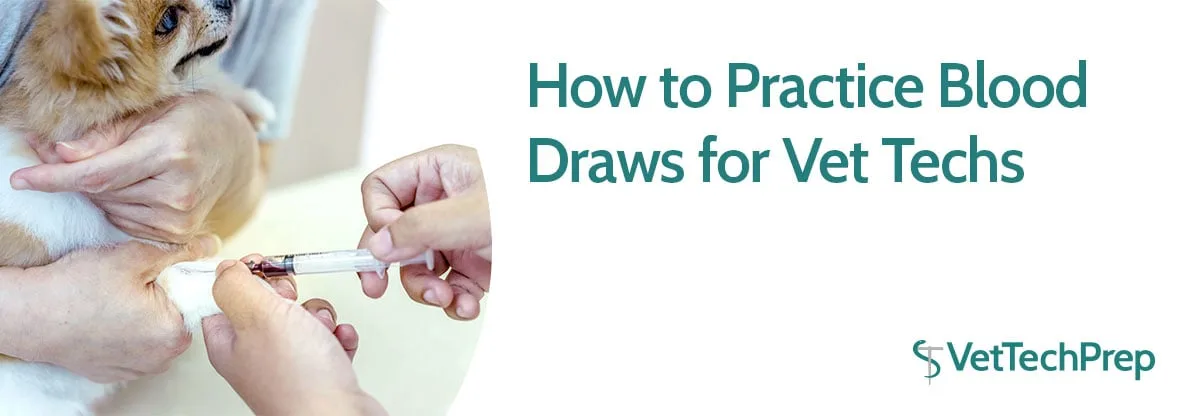
Veterinary blood draw for canine allergy panel, qaqooking.wiki via Bing (fair-use with source credit)
What Dog Allergy Tests Actually Tell You (and What They Don't)
Every allergy test measures whether your dog's immune system has made antibodies against a specific substance. That result is called sensitization. Whether that sensitization is actually causing your dog's symptoms is a separate question, and it's where most owners get burned.
A test can tell you your dog is sensitized to beef, grass, or dust mites. It can't tell you that beef is the reason he's licking his paws at 3 a.m. Only a clinical exam plus, in the case of food, an elimination diet, can answer that.
The American College of Veterinary Dermatology has long held that allergy tests are one piece of a diagnosis, never the whole puzzle on their own.
Here's what each result really means in plain terms:
- Positive on a serum IgE test: your dog has antibodies to that allergen. He may or may not react to it.
- Negative on a serum IgE test: he likely doesn't have significant antibodies, but false negatives happen, especially with food allergens.
- Positive on intradermal skin testing: your dog reacted to a small injected dose. This is the closest thing to a real-world exposure test.
- Positive on a home saliva or fur kit: results are not validated by peer-reviewed canine research, so treat them as a starting hint, not a diagnosis.
If your dog is itchy year-round, has recurrent ear infections, hot spots, or chronic paw chewing, the test is a tool, not a verdict. Pair it with a vet who can read the report in context.
How Much Dog Allergy Tests Cost in 2026
The price range is wide because the underlying technology is wide. A vet drawing blood and shipping it to a reference lab charges for the lab fee, the office visit, and the vet's interpretation time. A home kit charges for a swab, a mailer, and a PDF report with no vet involved.
Here's the realistic pricing breakdown in the US as of 2026:
| Test Type | Typical Cost (USD) | What's Included | Best For |
|---|---|---|---|
| Vet serum IgE blood panel | $200–$500 | Blood draw, 100–200 allergens, vet interpretation | Environmental allergy workup |
| Intradermal skin test | $300–$800 | Sedation, shaved patch, ~50 allergens, derm consult | Moderate-to-severe atopy, immunotherapy planning |
| Home saliva/fur kit | $80–$200 | Collection swab, mailed lab report, no vet | Budget screening, curious owners |
| Elimination diet trial | $50–$150 (food only) | Novel or hydrolyzed protein, 8–12 weeks | Suspected food allergy |
A few things push prices up. Urban specialty clinics in cities like New York or San Francisco sit at the top of each band. Veterinary dermatologists charge more than general vets because they've done a residency and often perform the skin test themselves.
Panels that include both food and environmental allergens cost more than single-category panels, usually by $50 to $100.
Pet insurance almost never covers allergy testing in dogs. Some plans will reimburse the office visit if the vet codes it as a diagnostic workup, but the test itself is typically an out-of-pocket cost. Budget for the office visit separately, usually $50 to $150 on top of the test.
The Three Real Testing Methods: Blood, Skin, and Home Kits
There are really only three methods that matter, and each comes with a different price, a different sample, and a different level of confidence. Most owners only ever encounter the first or the third.
Serum IgE blood tests measure allergen-specific antibodies circulating in the blood. Your vet draws a few milliliters, sends it to a reference lab, and you get a report in 1 to 3 weeks. These are the most common vet-administered tests because they're fast and don't require sedation.
Intradermal skin tests inject tiny amounts of allergens just under the skin, usually on a shaved patch on the dog's side or belly. The vet reads the wheals (raised bumps) after 15 to 20 minutes. This is considered the gold standard for environmental allergies in dogs and is almost always done by a veterinary dermatologist.
The dog needs to be off antihistamines and some other drugs for 2 to 4 weeks before the test for the results to be valid.
Home kits use saliva or fur samples mailed to a lab. Owners collect the sample themselves, no vet visit required, and get a PDF report in 2 to 4 weeks. Common brands include 5Strands, EasyDNA, MyPetDNA, Glacier Peak Holistics, and Allergy Test My Pet.
None have been validated in peer-reviewed canine studies, which is the single biggest difference between this category and the other two.
Match the method to the question you're trying to answer. If you want to know whether your dog is allergic to grass so you can plan immunotherapy, intradermal is the move. If you want a quick read on possible food triggers before starting an elimination diet, a serum panel plus the diet itself is the standard approach.
If you just want a low-cost screen to bring to your vet, a home kit is fine, but treat it like a hint, not an answer.
Serum IgE Blood Tests Through Your Vet
If your regular vet suggests a blood test first, that's normal. The serum IgE panel is the workhorse of canine allergy diagnostics because it's practical. No sedation, no shaved patch, no specialist referral required.
The cost in 2026 typically runs $200 to $500 in the US. That's the all-in number, including the office visit at most clinics, the blood draw, the lab fee, and a follow-up call to go over results. Some vets charge separately for the consultation, so ask before you book.
A few things to know before you commit:
- Number of allergens: most panels screen 100 to 200 allergens, split between environmental (grasses, trees, weeds, molds, dust mites) and food (beef, chicken, dairy, wheat, egg, soy).
- Turnaround: 1 to 3 weeks from the day the lab receives the sample.
- False positives are common: 20% to 30% of dogs without symptoms can show sensitization on these panels.
- Food allergens are weaker: serum IgE is decent for environmental triggers but less reliable for food, which is why elimination diets remain the gold standard for food allergy diagnosis.
The biggest practical issue is interpretation. A raw report with 40 positives is overwhelming and not very useful. The vet's job is to filter those results against the dog's actual symptoms, seasonality, and environment.
If your vet just hands you the report and walks away, ask for a 15-minute follow-up to map the positives onto your dog's real-world flare-ups.
If your dog ends up needing immunotherapy, the serum panel can often be used to formulate the allergy drops or shots. That's a $300 to $1,500 first-year expense on top of the test. Some dogs respond well and reduce or eliminate the need for Apoquel or Cytopoint, which can offset the cost over time.
Others don't respond, so don't assume immunotherapy is a guaranteed payoff just because you tested.
Intradermal Skin Testing (the Gold Standard)
Veterinary dermatologists call intradermal skin testing (IDST) the gold standard for environmental allergies, and for good reason. It measures a real skin reaction in near real-time, instead of antibodies floating around in blood. That's a fundamentally different signal, and it's why specialists lean on it when they're planning immunotherapy or ruling out atopy before chasing food.
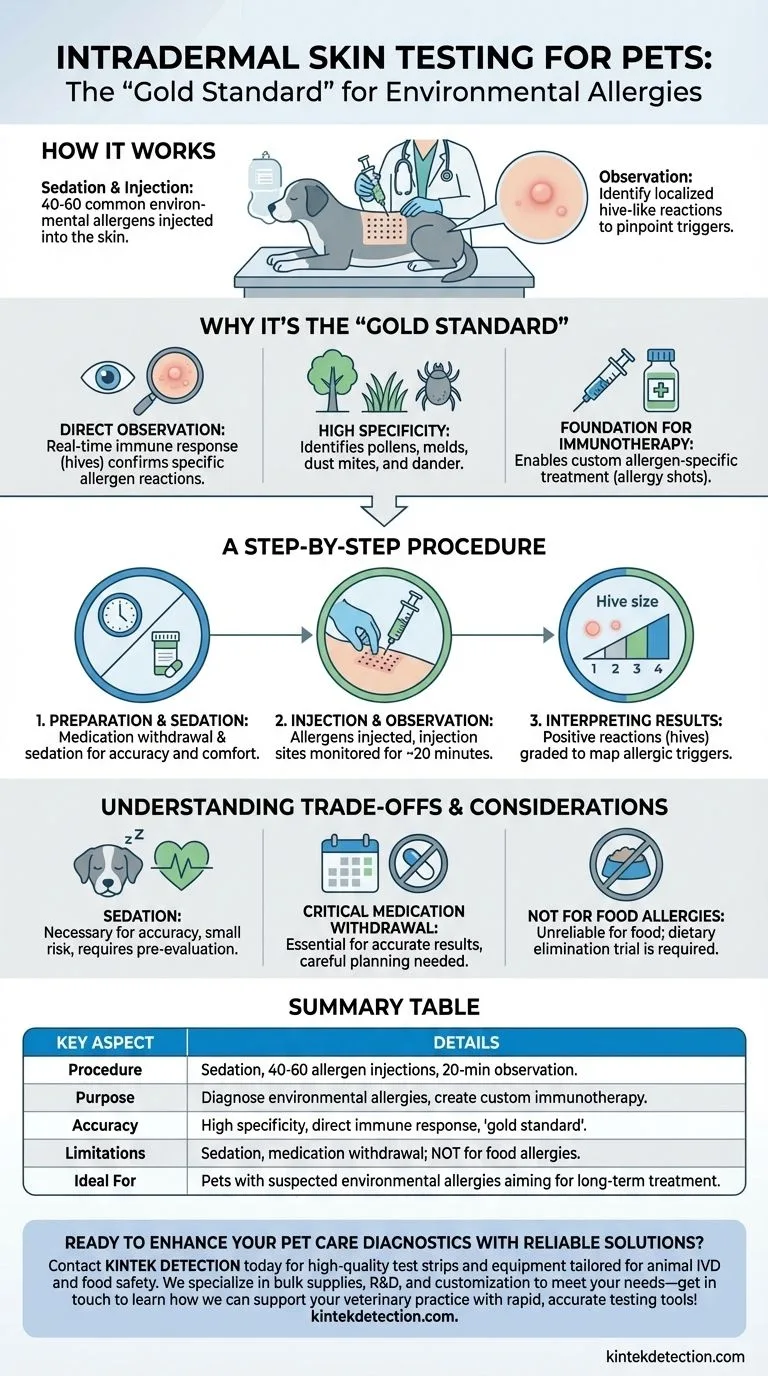
Intradermal skin test reading on a sedated dog's ventral abdomen, Bing (fair-use with source credit)
What the procedure actually looks like
Here's how a typical IDST appointment runs in 2026:
- Drug withdrawal (2 to 4 weeks before): antihistamines, Apoquel, and steroids have to be out of the dog's system. Cytopoint usually needs 8 weeks. This step is non-negotiable, because the drugs suppress the very wheals the test is reading.
- Light sedation: the test requires the dog to lie still for 15 to 20 minutes. Sedation is short-acting and most dogs go home the same day.
- Shaved patch: usually the lateral thorax or ventral abdomen. Around 50 to 70 allergens are injected just under the skin in a grid pattern, plus a positive control (histamine) and a negative control (saline).
- Reading at 15 to 20 minutes: positive reactions show as raised, red wheals. The dermatologist measures each one and grades the reaction.
- Same-day immunotherapy formulation: if the dog reacts to a clear set of allergens, the clinic can often mix a custom allergen drop or injection vial on the spot. First-year immunotherapy cost typically runs $300 to $1,500.
Cost breakdown
Expect $300 to $800 in the US for the test itself, plus the dermatologist's consult fee (often $150 to $250). Total all-in usually lands between $450 and $1,000. The price is higher than serum IgE because it requires a boarded dermatologist, sedation, and clinic time.
In major metros, plan for the upper end.
Why it beats blood for environmental allergies
Blood tests measure antibodies. Skin tests measure a real cutaneous reaction in your dog, which is closer to the actual disease process. For environmental allergens like grass, tree, weed, and dust mites, IDST catches fewer false positives than serum IgE.
It's also more useful for immunotherapy formulation, because the wheal size can help the specialist decide allergen concentration.
When to skip it
IDST is not for every dog. Severe skin infections, very anxious dogs that won't tolerate sedation, or dogs whose owners can't manage the drug withdrawal aren't good candidates. Food allergies also won't show up clearly on IDST, so don't expect answers to a chronic diarrhea question from this test.
Realistic expectation setting
A clean IDST result is genuinely useful. A busy, polysensitized result (positive to most things tested) is harder to act on, because you can't realistically desensitize a dog to 30 allergens at once. A good dermatologist will help you prioritize the top 5 to 10 clinically relevant positives based on your dog's symptom pattern and your region's pollen calendar.
At-Home Dog Allergy Kits: What You're Really Paying For
Home kits are the fastest-growing corner of this market, and it's easy to see why. No vet visit, no blood draw, no sedation, and a PDF in your inbox for under $200. For owners who want a quick screen or can't get to a vet quickly, the convenience is real.
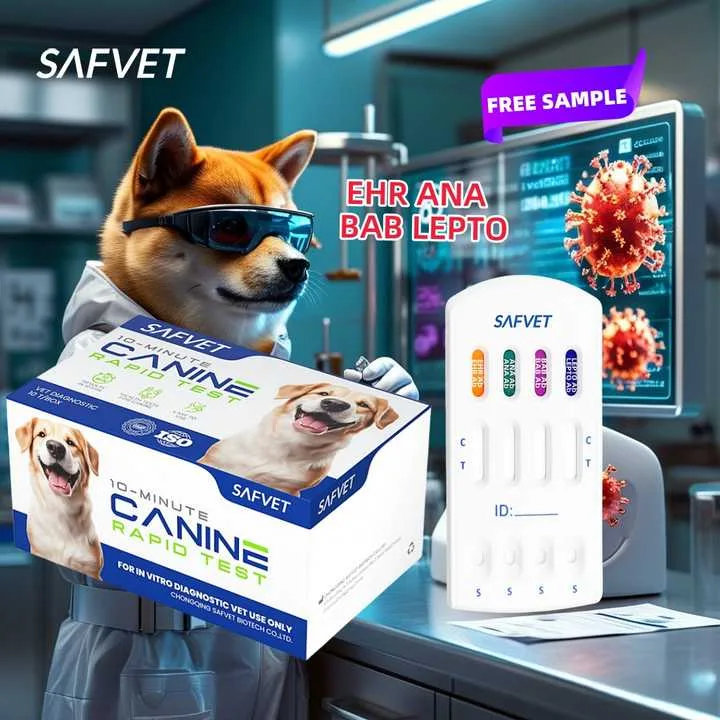
At-home canine saliva allergy kit with collection swab, alibaba.com via Bing (fair-use with source credit)
How the kits work
The most common formats in 2026 are saliva swabs and fur samples. You order a kit online, collect the sample at home (cheek swab or a small tuft of fur), mail it back in a prepaid envelope, and receive a digital report in 2 to 4 weeks. The report typically lists "high," "moderate," or "low" reactivity to 100+ items, often grouped by food, environmental, and sometimes even fabric or cleaning products.
Prices range from $80 to $200, with comprehensive combined panels usually sitting at the top of that band.
The price-to-accuracy problem
Here's the catch that doesn't get printed on the box. None of these kits have been validated in peer-reviewed canine studies. The methodology varies by brand, and the lab techniques are typically adapted from human IgG/IgA testing, which is a different immunological signal than the IgE-mediated allergies dogs actually experience.
In practical terms:
- Sensitivity is high, specificity is low. These kits flag a lot of items, including many your dog has no clinical reaction to.
- Reports are not diagnostic. They should not be used to start a restrictive diet without veterinary input, because unnecessary eliminations can cause nutritional gaps, especially in puppies.
- No vet oversight by default. Most kits sell directly to consumers. You're responsible for interpreting the results yourself or bringing them to a vet after the fact.
- Refund and follow-up policies vary. Read the fine print. Some companies will not refund a kit once the lab has started processing, even if the report arrives late.
When a home kit makes sense
- You want a low-cost starting point before scheduling a vet visit.
- Your dog has mild symptoms and you're trying to spot patterns.
- You want to bring a structured list of "reactive" items to your vet as a conversation starter.
- You've already gone through vet testing and want a periodic check-in (with vet guidance).
When to skip the home kit
- Your dog has severe itching, open skin lesions, or recurrent infections. These need hands-on care.
- You suspect a true food allergy. An elimination diet supervised by your vet is the gold standard, not a saliva panel.
- You've already spent money on home kits with no clear answer. The next dollar is usually better spent on a vet consult.
Sample pricing tiers for at-home kits
| Kit Type | Price Range (USD) | Allergens Tested | Vet Oversight |
|---|---|---|---|
| Food-only saliva kit | $80–$130 | 40–90 | None |
| Environmental saliva kit | $90–$150 | 60–100 | None |
| Combined food + environmental | $130–$200 | 100–200 | None |
| Premium kits with phone consult | $160–$250 | 100–200 | Optional add-on |
The "vet consult" upgrade on some premium kits is worth it if you can get it, because a 20-minute call with a vet who has seen the report can rescue a useless result and turn it into an actionable plan.
Vet Allergy Test vs Home Kit: Honest Comparison
| Factor | Vet Serum IgE / IDST | At-Home Kit |
|---|---|---|
| Cost (2026) | $200–$800 | $80–$200 |
| Vet involvement | Yes, required | None by default |
| Validated in peer-reviewed canine studies | Yes (especially IDST) | No |
| Useful for environmental allergies | Strong | Weak |
| Useful for food allergies | Modest; IDST doesn't test food well | Modest; elimination diet preferred |
| Turnaround | 1–3 weeks (blood) | 2–4 weeks |
| Insurance reimbursement possible | Sometimes for office visit | No |
| Best for | Confirmed, moderate-to-severe cases | Early screening, budget-first owners |
The honest framing: a vet test costs more because you're paying for interpretation, validation, and follow-up. A home kit costs less because you're getting a raw data dump without context. For a dog with serious symptoms, that context is what saves you money in the long run, because you don't end up bouncing between diets, supplements, and over-the-counter itch meds chasing a list of false positives.
When a Dog Allergy Test Is Worth It (and When It Isn't)
A test is worth it when the result changes what you'll do next. It's not worth it when the result just confirms what you already know, or when the result is so noisy you can't act on it.
Worth it when
- Your dog has chronic itching or recurrent ear infections and you're considering Apoquel, Cytopoint, or immunotherapy.
- Your vet suspects atopy (environmental allergies) and wants to identify triggers to manage exposure.
- You're planning immunotherapy and need a panel to formulate the serum.
- You're starting an elimination diet and want a starting shortlist of likely food triggers to discuss with your vet.
Not worth it when
- Your dog has a sudden, single flare-up with an obvious cause (flea, contact irritant, hot spot from grooming).
- You're looking for a definitive food allergy diagnosis. Go straight to elimination diet.
- You're hoping a home kit will replace a vet exam. It won't.
- Your dog is on Apoquel, Cytopoint, antihistamines, or steroids and you can't safely withdraw them. The results will be unreliable.
Cost-vs-value framing
If your budget is tight, the most cost-effective sequence is usually:
- Vet office visit and physical exam ($50, $150).
- Trial of flea control and basic skin management ($30, $80).
- Elimination diet trial if food allergy is suspected ($50, $150 in food costs over 8 weeks).
- Vet serum IgE panel only if environmental allergies are still in play and you're considering long-term management ($200, $500).
That sequence avoids the trap of paying $150 for a home kit that just sends you back to the vet for the same exam you could have booked first.
Common Mistakes That Waste Money on Allergy Testing
Most owners don't overspend on purpose. They overspend because the testing landscape is confusing and the marketing is loud. Here are the mistakes we see most often in aggregate user feedback and veterinary case reviews:
- Testing on a medicated dog. Apoquel, Cytopoint, antihistamines, and steroids suppress the immune signals these tests rely on. False negatives are almost guaranteed.
- Treating a positive test as a confirmed allergy. Up to 30% of healthy dogs test positive. Treat positives as candidates, not convictions.
- Restricting the diet based on a saliva kit alone. Unnecessary eliminations cause nutritional gaps, especially in growing puppies.
- Repeating the test every few months. Sensitization patterns don't change that fast. Annual retesting, or retesting after a clear symptom shift, is plenty.
- Skipping the elimination diet because the blood test "ruled out" food. Serum IgE is weak for food allergens. The diet is still the gold standard.
- Buying multiple home kits to "compare" results. Two unvalidated tests don't add up to one validated answer.
What to Do Before the Test So Results Are Accurate
Test prep is where most people lose accuracy without realizing it. The drugs that make a dog comfortable in daily life are exactly the drugs that suppress the test signal. Plan ahead.
Drug withdrawal timelines
- Antihistamines (Benadryl, Zyrtec, Claritin): stop 7 to 14 days before the test.
- Apoquel (oclacitinib): stop 14 days before serum IgE; longer for IDST.
- Cytopoint (lokivetmab): stop 8 weeks before any allergy test.
- Steroids (prednisone, etc.): stop 4 to 6 weeks before IDST; 2 to 3 weeks before serum IgE.
- Topical steroids: stop 2 weeks before testing.
Always confirm the exact withdrawal window with your vet. Stopping these drugs can cause a flare, so your vet may want to bridge with another medication or schedule the test around a stable period.
Other prep steps
- Treat fleas at least 4 weeks before. Flea allergy dermatitis is the most common allergy in dogs and will muddy every result if it's active.
- Document symptoms for 2 to 4 weeks. Photos, dates, itch scores, and food logs make the eventual report much more useful.
- Feed a consistent diet for 4 weeks before a food panel. Switching foods mid-prep creates a moving target.
How to Read an Allergy Test Report Without Getting Misled
Reports look authoritative. They list dozens of items with numerical scores or color-coded severity bands. That structure makes them feel definitive.
Resist that feeling.
Reading the numbers
For serum IgE reports, look at the highest-band positives first, but cross-reference them against the dog's actual symptoms and seasonality. A "very high" reactivity to ragweed in a dog that only itches in winter is a red flag that the result isn't clinically relevant.
For home kits, treat the "high reactivity" list as a starting point for an elimination or avoidance trial, not a diagnosis. Bring the report to your vet and ask which 5 to 10 items are worth acting on first.
Spotting red flags in the report
- Most items flagged positive: the test is probably too sensitive. Treat the highest-scoring 10 as meaningful.
- Zero positives on a dog with clear symptoms: consider a false negative, especially for food allergens. Discuss an elimination diet instead.
- Positives for things the dog has never been exposed to: if your dog has never eaten lamb and tests "very high" to lamb, that's noise, not signal.
When to See a Vet Instead of Ordering a Kit
There are situations where no test, home kit or otherwise, is the right first move. Go straight to the vet if your dog has any of the following:
- Open skin sores, hot spots, or widespread hair loss.
- Recurrent ear infections (more than 2 to 3 per year).
- Chronic diarrhea, vomiting, or weight loss alongside skin signs.
- Sudden behavior changes or lethargy paired with skin symptoms.
- A young puppy with persistent itching (nutritional and parasitic causes need to be ruled out first).
These signs point to conditions that need hands-on diagnosis, not a swab in the mail. The FDA Center for Veterinary Medicine maintains guidance on approved diagnostic approaches and is a useful checkpoint if you're unsure whether a home test is appropriate for your dog's situation.
Best Dog Allergy Test Options by Situation
Rather than "best brand overall," here's a more useful framing. Match the test to your dog's situation.
| Situation | Recommended Test | Approximate Cost |
|---|---|---|
| Mild seasonal itching, first-time workup | Vet serum IgE panel | $200–$500 |
| Moderate-to-severe year-round atopy | Intradermal skin test by a derm | $300–$800 |
| Suspected food allergy | Elimination diet trial first | $50–$150 |
| Budget screening before vet visit | Home saliva kit | $80–$200 |
| Pre-immunotherapy planning | Intradermal + serum combo | $500–$1,200 |
| Multi-pet household screening | Home kits (per pet) | $80–$200 each |
If you're not sure which situation you're in, your vet is the right starting point. A 20-minute consult often saves owners from spending $200 on a kit that wouldn't have changed the plan.
Frequently Asked Questions About Dog Allergy Test Costs
How much are dog allergy tests at the vet?
Vet-administered dog allergy tests typically cost $200 to $500 for a serum IgE blood panel and $300 to $800 for intradermal skin testing at a specialist. Office visit fees are usually separate.
Are at-home dog allergy tests accurate?
At-home saliva and fur kits are not validated in peer-reviewed canine studies. They can produce useful hints, especially when paired with clinical signs, but they shouldn't be used as the sole basis for dietary changes or treatment plans.
Does pet insurance cover dog allergy testing?
Most pet insurance policies do not cover allergy testing as a standalone cost. Some will reimburse the office visit if the vet codes it as a diagnostic workup. Coverage varies widely by provider.
Can a dog allergy test diagnose food allergies?
Not reliably. Serum IgE is weak for food allergens, and intradermal skin testing doesn't test food at all. The gold standard for diagnosing food allergies in dogs is an 8 to 12 week elimination diet supervised by a vet.
How long does it take to get allergy test results?
Vet serum IgE results usually come back in 1 to 3 weeks. Intradermal skin test results are read the same day. Home kits take 2 to 4 weeks from the time the lab receives the sample.
How often should a dog be retested?
Most veterinary dermatologists recommend retesting every 1 to 2 years, or sooner if there's a clear change in symptom pattern. Testing more frequently rarely adds useful information.
What to Do Next Based on Your Dog's Symptoms
If your dog has mild seasonal itching, start with a vet visit and a serum IgE panel. Budget $250 to $500 all-in and you'll get a validated result with clinical context.
If your dog has year-round itching or you've already tried Apoquel without lasting relief, ask for a referral to a veterinary dermatologist for intradermal testing. The $300 to $800 upfront often pays for itself within a year if immunotherapy reduces medication costs.
If you suspect food allergy, skip the tests and run an 8 to 12 week elimination diet with a novel or hydrolyzed protein. Use a vet-recommended diet, not a home-cooked experiment, to avoid nutritional gaps.
If budget is the primary constraint and your dog has mild symptoms, an $80 to $150 home kit is a reasonable starting point. Bring the report to your vet before acting on it, and don't be surprised if the vet says the next step is still an exam and a more targeted test.
The cheapest test isn't always the best deal. The right test is the one whose result you'll actually trust enough to act on, with a vet who can translate that result into a real plan for your dog.
Maintenance After Testing: Long-Term Allergy Management
Testing gives you a snapshot. Allergies shift with seasons, age, and environment, so the plan that works at age three may need adjustment at age six.
Annual vet check-ins are the simplest maintenance step. Bring the original report and note any new symptoms. Most dermatologists recommend retesting every 1 to 2 years, or sooner if a clear pattern change appears.
A dog that responded well to immunotherapy for three years may suddenly need a panel refresh if a new allergen enters the picture.
For food-allergic dogs, the elimination diet answer usually holds. Re-challenge one ingredient at a time, every 2 to 3 weeks, to confirm which proteins are genuinely problematic. If a previously tolerated food starts causing flares, that's a signal to retest or revisit the diet plan.
Keep a simple symptom log year-round. Itch scores, ear gunk, paw-licking frequency, and seasonal patterns are gold when you're trying to interpret whether a treatment is actually working.
Choosing a Veterinary Dermatologist vs a General Vet
Most allergy workups start with your general vet, and that's fine. But there's a clear line where a specialist earns the referral fee.
A general vet handles first-line diagnostics well: physical exam, basic bloodwork, serum IgE panels, and initial treatment trials. They can prescribe Apoquel, Cytopoint, and short courses of steroids. For mild-to-moderate cases, that's often enough.
A board-certified veterinary dermatologist (a DACVD) earns the referral when the case is complex, persistent, or immunotherapy-bound. They've done a multi-year residency and passed a specialty exam. They perform intradermal skin testing in-house, formulate custom allergen extracts, and manage the trickier immunotherapy cases that don't respond to standard protocols.
Cost difference in 2026: a derm consult typically runs $200 to $400, on top of any testing. The all-in first-year spend is higher, but the outcome data are better for moderate-to-severe cases. If your general vet has been managing your dog's allergies for six months with no real improvement, the referral usually pays for itself within a year.
Red Flags That Mean Stop and Call the Vet Today
Some situations don't wait for a scheduled appointment. If your dog shows any of these, skip the testing plan and get to a clinic:
- Facial swelling, hives, or sudden vomiting after a meal, treat, or outdoor exposure.
- Difficulty breathing or collapse.
- Widespread hot spots with bleeding or pus.
- Severe lethargy paired with refusal to eat for more than 24 hours.
These are emergency signs, not diagnostic puzzles. Stabilization comes first, testing later.
The Real Cost of Doing Nothing
The hidden cost of skipping allergy testing isn't just the unknown. It's the cumulative spend on trial-and-error: Apoquel refills ($80 to $200 per month), Cytopoint injections ($60 to $150 each, every 4 to 8 weeks), hypoallergenic food ($60 to $120 per month), repeated ear infection treatments ($50 to $200 per episode), and skin cytologies when secondary infections flare.
A moderate allergy case left unmanaged can easily cost $2,000 to $3,000 per year in symptom control. A $400 serum IgE panel plus a $300 immunotherapy start-up often pays for itself within 12 to 18 months. The math favors testing once a dog crosses into the "chronic" category, which most dermatologists define as more than 3 months of recurring symptoms per year.
Seasonal Patterns and Regional Allergen Considerations
Where you live shapes which allergens matter. A dog in Arizona rarely battles ragweed the way a Midwest dog does. Cedar fever is a Texas and Oklahoma problem.
Oak pollen plagues California in spring. Mold peaks in humid Gulf states in fall.
Regional variation is one reason a "clean" negative panel can still be wrong. If your dog itches in November and the panel only tested spring allergens, you'll get a false sense of security. Always confirm the panel covers your region's full seasonal calendar before paying for it.
The American College of Veterinary Dermatology maintains educational resources for owners that walk through common environmental allergens by region.
Quick Checklist Before You Spend a Dollar
Before you commit to any test, run through this:
- Symptoms have lasted more than 3 months or recur seasonally.
- Flea control is current and confirmed working.
- You can safely pause Apoquel, Cytopoint, antihistamines, or steroids for the required washout.
- You have a vet lined up to interpret the results, not just a PDF.
If any of these fail, fix them first. The test result is only as good as the prep behind it.
Bringing It All Together: The Best Test for Your Situation
A vet serum IgE panel is the right starting point for most dogs with chronic itching and no clear food trigger. Budget $250 to $500 all-in. Plan for a 2 to 4 week drug washout before the draw.
An intradermal skin test at a veterinary dermatologist is the right move when symptoms are severe, year-round, or unresponsive to first-line treatment. Budget $450 to $1,000 all-in. The same visit can launch immunotherapy.
An at-home kit is the right move only when budget is tight and symptoms are mild. Treat the report as a conversation starter with your vet, not a verdict.
An elimination diet is the right move when food allergy is the leading suspect. Skip the food panel entirely. Buy the hydrolyzed or novel protein diet, commit 8 to 12 weeks, and reintroduce ingredients one at a time.
Don't skip the vet to save $200. Don't overspend on a home kit to avoid a vet. And don't let a positive result on any test, validated or not, send you into a year of unnecessary eliminations without a vet's input.
The right test at the right time, with a vet who knows your dog, is the spend that actually pays off.