How much allergy meds for dog: Easy guide
How much allergy meds for dog depends on three things: the active ingredient, your dog's weight, and whether a vet has confirmed the diagnosis. As of 2026, most veterinary sources still recommend a starting dose of 1 mg per pound of body weight for diphenhydramine (Benadryl), given two to three times daily, with similar weight-based math for cetirizine and loratadine.
That math is only safe when the medication contains nothing toxic to dogs. Aggregate vet reports show the most common cause of allergy-med emergencies in dogs isn't the antihistamine itself. It's hidden ingredients like xylitol or pseudoephedrine in a "people" pill bottle.
Before you reach for anything in your medicine cabinet, here's what to confirm with your vet, and what to check on the label.
Quick Answer
Most dogs take 1 mg of Benadryl per pound, two to three times daily. Cetirizine doses run around 0.5 mg per pound once daily. Loratadine sits near 0.25 to 0.5 mg per pound once daily.
Always confirm the medication is plain, with no xylitol, pseudoephedrine, or acetaminophen. Call your vet before dosing.
Why Accurate Allergy Med Dosing Matters for Dogs
Dogs aren't small humans. Their liver enzymes clear certain drugs more slowly than ours do, which means a "kid-sized" dose isn't automatically safe. The flip side is also true.
Too little does nothing, and you assume the med "doesn't work" when it just wasn't enough.
The stakes are real. The FDA Center for Veterinary Medicine maintains a public database of adverse drug events in pets, and antihistamine mishaps show up every year. Most involve a dog getting into a bottle unsupervised, not a careful owner following a dosage chart.
Still, even intentional dosing can go wrong when a human product contains an extra active ingredient your dog can't metabolize.
If your dog has any of these, a phone call to the vet matters more than a chart:
- Heart disease
- Glaucoma
- Prostate issues
- Pregnancy or nursing
- A current prescription for another medication
That's the baseline. Now let's look at which allergy meds are considered safe enough to use at home.
Common Allergy Medications Safe (and Unsafe) for Dogs
Five over-the-counter antihistamines show up most often in veterinary references for canine allergy relief. Each has a different safety profile, onset time, and sedation effect.
| Antihistamine | Brand Names | OTC? | Common Side Effect |
|---|---|---|---|
| Diphenhydramine | Benadryl | Yes | Drowsiness, dry mouth |
| Cetirizine | Zyrtec | Yes | Mild drowsiness |
| Loratadine | Claritin, Alavert | Yes | Rarely drowsy |
| Chlorpheniramine | Chlor-Trimeton | Yes | Drowsiness |
| Hydroxyzine | Atarax (Rx) | Prescription | Strong sedation |
Diphenhydramine gets most of the home-use attention because it's been studied longest. Cetirizine and loratadine are popular because they cause less sedation, which matters for working dogs or ones that already sleep poorly from itching.
What about prescription options? Apoquel (oclacitinib) and Cytopoint (lokivetmab) work differently from antihistamines and target the itch signal directly. They're vet-prescribed for moderate to severe cases and don't follow the same weight-based math as OTC options.
The unsafe list is where most dosing errors happen. Per the ASPCA Animal Poison Control Center, the following ingredients in human allergy products can cause serious problems:
- Pseudoephedrine (a decongestant in many "D" versions like Claritin-D)
- Xylitol (a sweetener in some liquid or chewable formulations)
- Acetaminophen (combined with antihistamines in products like Tylenol PM)
- Ibuprofen (paired with diphenhydramine in some sleep aids)
Plain is the only safe choice. The label must say one active ingredient and nothing else.
Dog Allergy Med Dosage Chart by Weight
This is the table every owner screenshots. Use it as a starting reference, not a substitute for a vet call. Doses assume a single-active-ingredient product with no additives.
| Dog Weight | Diphenhydramine (25 mg tablet) | Cetirizine (10 mg tablet) | Loratadine (10 mg tablet) |
|---|---|---|---|
| 5 lbs | 5 mg (1/5 tablet) | 2.5 mg (1/4 tablet) | 1.25 mg |
| 10 lbs | 10 mg (2/5 tablet) | 5 mg (1/2 tablet) | 2.5 mg (1/4 tablet) |
| 20 lbs | 20 mg (3/4 tablet) | 10 mg (1 tablet) | 5 mg (1/2 tablet) |
| 30 lbs | 30 mg (1 + 1/5 tablets) | 15 mg (1.5 tablets) | 7.5 mg (3/4 tablet) |
| 50 lbs | 50 mg (2 tablets) | 20 mg (2 tablets) | 10 mg (1 tablet) |
| 75 lbs | 75 mg (3 tablets) | 30 mg (3 tablets) | 15 mg (1.5 tablets) |
| 100 lbs | 100 mg (4 tablets) | 40 mg (4 tablets) | 20 mg (2 tablets) |
Three quick notes on using this:
- Tablets can be split, but liquid formulations of these drugs often contain xylitol. Check the inactive ingredients.
- Loratadine doses for dogs are usually capped at 10 mg per dog, regardless of size.
- Frequency is once daily for cetirizine and loratadine, and two to three times daily for diphenhydramine.
Diphenhydramine (Benadryl) Dosage for Dogs
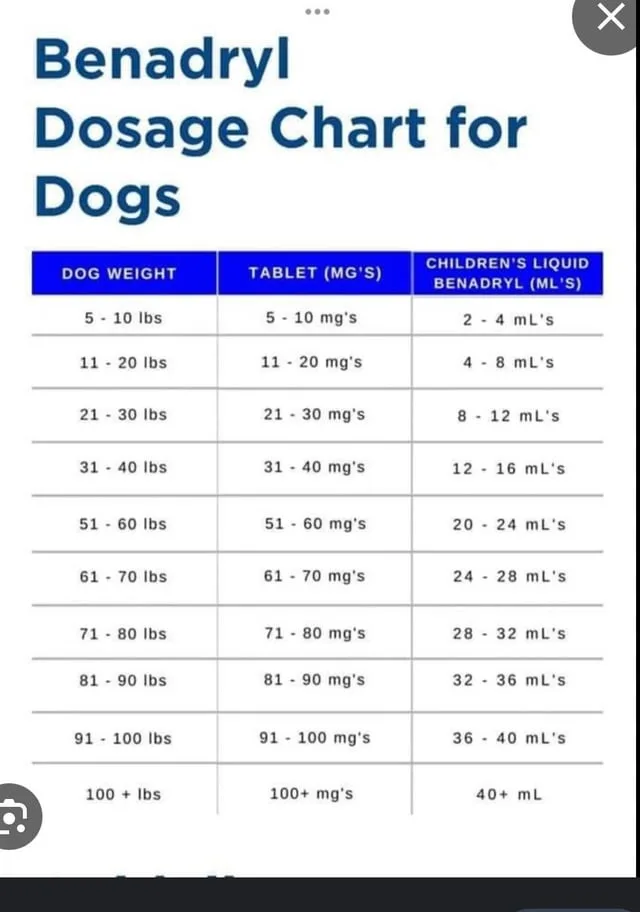
Benadryl is the default home option because it works fast and the dose is easy to remember: 1 mg per pound, every 8 to 12 hours. A 25-pound dog gets one full 25 mg tablet per dose.
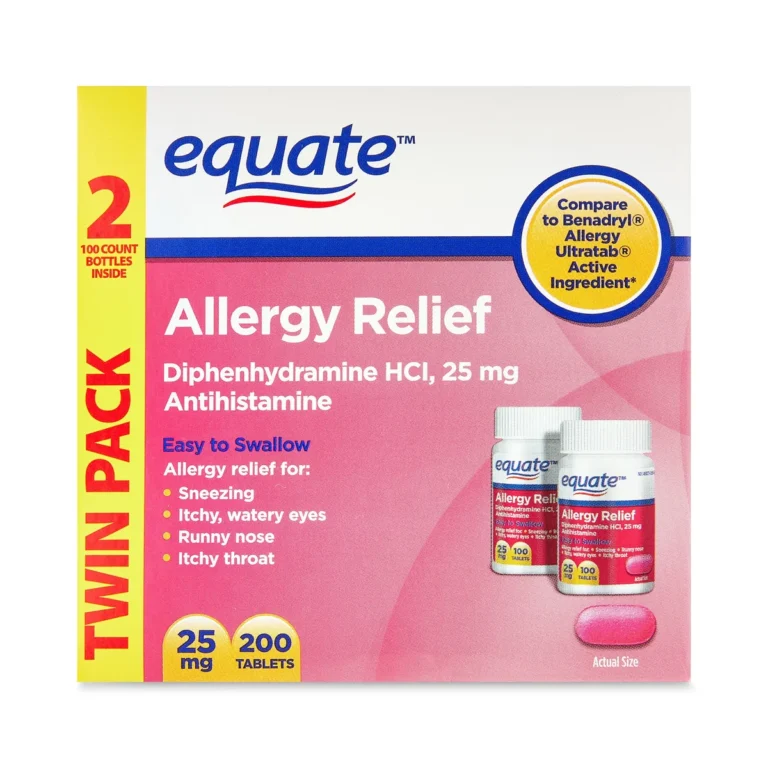
Use only plain Benadryl. Avoid Benadryl-D, Benadryl Allergy Plus Congestion, and any children's formula with xylitol. Children's liquid Benadryl is technically dosable by syringe, but most adult tablet forms are simpler.
Mild sedation is expected. If your dog seems hyper instead of sleepy, that's a known paradoxical reaction. Skip the next dose and call your vet before trying again.
Cetirizine (Zyrtec) Dosage for Dogs
Cetirizine is the second most common pick because it rarely causes drowsiness. Dose it at 0.5 mg per pound, once daily, with a typical ceiling of 10 mg per dog.
Make sure you're grabbing Zyrtec, not Zyrtec-D. The "-D" version contains pseudoephedrine, which raises blood pressure and heart rate in dogs and can be toxic at relatively small doses.
Cetirizine takes about an hour to kick in. For sudden flare-ups, diphenhydramine works faster.
Loratadine (Claritin) Dosage for Dogs
Loratadine is the non-drowsy option vets often suggest for dogs that need to stay alert. Dose it at 0.25 to 0.5 mg per pound, once daily, with 10 mg per dog as the practical ceiling.
Like the others, plain Claritin is fine. Claritin-D is not. Some 24-hour Claritin products also include a decongestant.
Read the front of the box, not just the active ingredient line.
Ingredients That Make Human Allergy Meds Dangerous for Dogs
This is the section that saves lives. The active ingredient is only half the story. Inactive ingredients and combination formulas are where dogs get hurt.
| Ingredient | Where It Hides | Why It's a Problem |
|---|---|---|
| Xylitol | Liquid meds, chewables, gummies | Causes rapid insulin release, hypoglycemia, liver failure |
| Pseudoephedrine | "D" versions of Claritin, Zyrtec, Mucinex | Elevated heart rate, tremors, seizures |
| Acetaminophen | Tylenol PM, Excedrin Tension Headache | Liver damage, red blood cell injury |
| Ibuprofen | Advil PM, Motrin PM | Kidney failure, GI ulcers |
| Phenylephrine | Some sinus and cold formulas | Cardiovascular stress |
The label rule is simple: one active ingredient that matches the chart above, and nothing else. If the package lists more than one drug on the front, put it back.
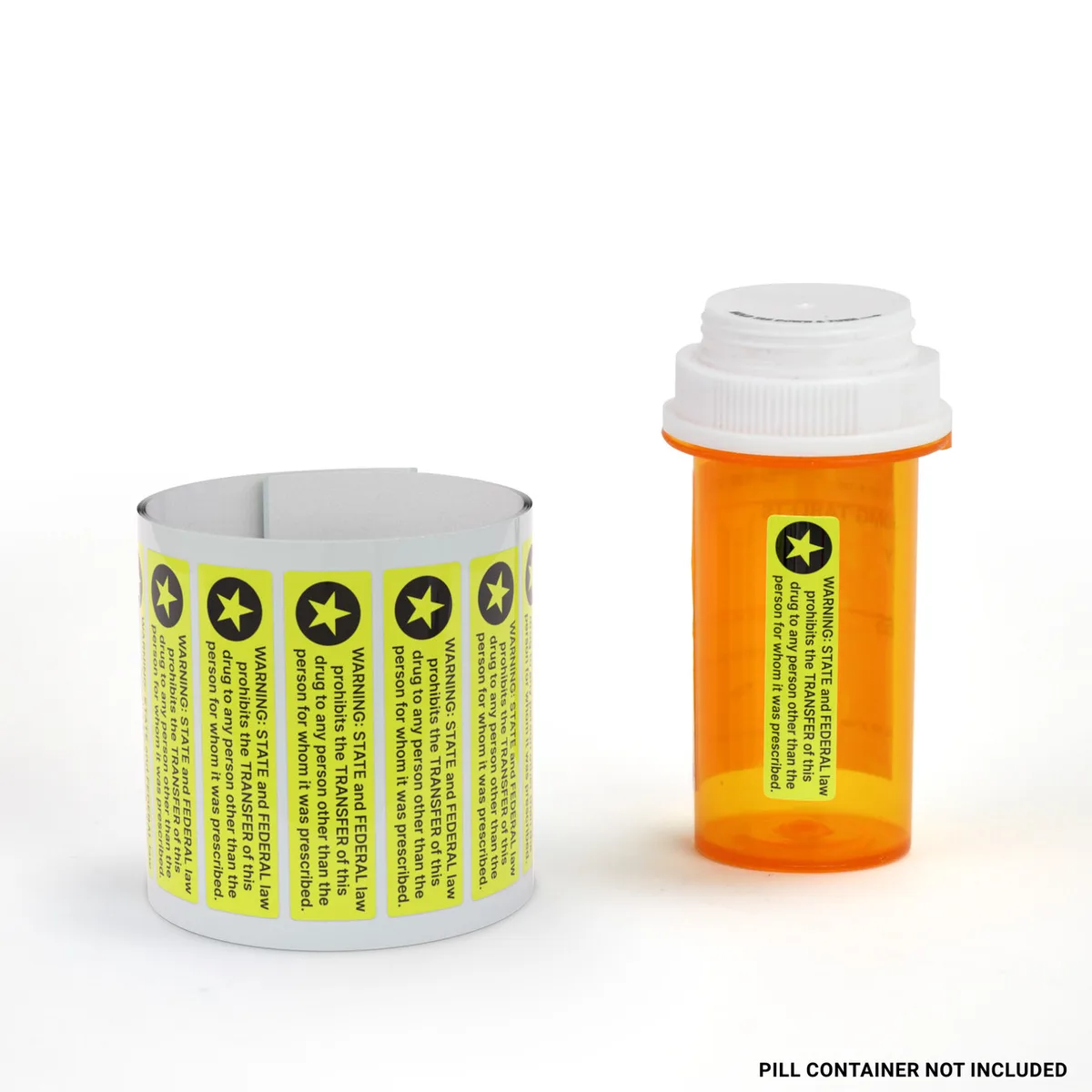
If your dog has ingested any product containing xylitol, pseudoephedrine, acetaminophen, or ibuprofen, contact your vet or the ASPCA Animal Poison Control Center immediately. Don't wait for symptoms. Many of these toxins work on a short clock, and early treatment makes the difference.
Step-by-Step: How to Give Your Dog Allergy Meds Safely
Dosing a dog the right way is a short checklist, not a guessing game. Most ER visits for allergy meds trace back to a missed step.
Step 1: Confirm the Symptoms Are Actually Allergies
Allergies in dogs usually show up as itching, face rubbing, ear infections, or hot spots. Sneezing happens, but less than people expect. If your dog is vomiting, lethargic, or has a swollen face, that's an emergency, not an allergy dose.
Step 2: Weigh Your Dog Accurately
A kitchen scale works for small dogs. For bigger ones, weigh yourself, then weigh yourself holding the dog. The difference is the dog's weight in pounds.
Guessing "around 50" when the dog is actually 38 can throw off a dose by 25%.
Step 3: Check the Label for Toxic Ingredients
Confirm the package lists a single active ingredient matching the chart above. If you see xylitol, pseudoephedrine, acetaminophen, or any second active drug, skip it.
Step 4: Calculate the Dose
Use the dosage chart. For Benadryl, that's 1 mg per pound. For Zyrtec, 0.5 mg per pound.
Round down for partial tablets rather than up.
Step 5: Administer and Monitor for Side Effects
Give the dose with food to reduce stomach upset. Watch for sedation, vomiting, or restlessness over the next 12 hours. If anything seems off, call your vet before the next scheduled dose.
Prescription Allergy Treatments: Apoquel, Cytopoint, and Atopica
When OTC antihistamines aren't enough, vets have three workhorse prescriptions. They work through different pathways than diphenhydramine and don't follow the same weight-based math.
| Treatment | Drug Class | Form | Typical Use |
|---|---|---|---|
| Apoquel | JAK inhibitor | Tablet, twice daily then once daily | Fast-acting itch relief |
| Cytopoint | Monoclonal antibody injection | Injection every 4 to 8 weeks | Long-lasting itch control |
| Atopica (cyclosporine) | Immunosuppressant | Capsule, once daily | Severe atopic dermatitis |
Apoquel starts working within 4 hours and is the most commonly prescribed option for acute flares. Cytopoint is popular for owners who can't pill a dog reliably. Atopica takes 4 to 8 weeks to build effect and is usually reserved for cases that don't respond to the others.
None of these are dosed like OTC antihistamines. They're vet-prescribed based on weight, lab work, and the dog's overall health history. Expect a baseline blood panel before starting Apoquel or Atopica.
OTC Antihistamines vs. Prescription Allergy Meds: Which Is Right?
Choose an OTC antihistamine when:
- Symptoms are mild or seasonal
- The dog is otherwise healthy
- You're waiting for a vet appointment
- Cost is a primary concern
Choose a prescription when:
- Itching disrupts sleep or causes skin damage
- OTC options have already failed
- The dog has year-round symptoms
- Ear infections keep recurring
Aggregate reviews from veterinary dermatology practices suggest that antihistamines alone control symptoms in roughly 20 to 30% of atopic dogs. For the rest, the itch pathway runs deeper than histamine, which is why Apoquel and Cytopoint exist. They target the itch signal further upstream.
If you're not sure where your dog falls on that spectrum, your vet can run intradermal allergy testing. It maps exactly which environmental triggers are causing the reaction, which makes treatment far more targeted.
Mistakes Dog Owners Make When Dosing Allergy Meds
These are the calls veterinary hotlines field every spring and fall. Most are avoidable.
- Using combination products. "Benadryl Allergy Plus" sounds safer than plain Benadryl. It isn't. It contains a decongestant that's toxic to dogs.
- Assuming children's formulas are gentler. Children's Benadryl liquid often contains xylitol. Tablets are safer.
- Doubling up on sedatives. Benadryl plus a calming treat or CBD product can oversedate. Stack with care.
- Treating food allergies with antihistamines. Histamine isn't the main driver in food reactions. A diet trial is the actual fix.
- Stopping too early. Antihistamines take 7 to 14 days of consistent dosing to reach full effect in some dogs. A single missed week resets that clock.
- Dosing a dog by feel. A heavier dog needs more. Always weigh, then calculate.
Side Effects and Warning Signs to Watch For
Most dogs tolerate OTC antihistamines well. When side effects show up, they're usually mild and reversible. Still, knowing the red flags matters.
| Side Effect | Common? | Action |
|---|---|---|
| Drowsiness | Yes, especially with Benadryl | Expected, no action needed |
| Dry mouth | Common | Offer water |
| Hyperactivity | Less common | Skip next dose, call vet |
| Vomiting | Uncommon | Give next dose with food |
| Urinary retention | Rare | Call vet |
| Rapid breathing or collapse | Emergency | Go to ER immediately |
The difference between a side effect and an emergency usually comes down to speed. Mild sedation ramps up gradually. Toxic reactions hit fast, often within 30 minutes of dosing.
If your dog seems "off" in a way that doesn't match a normal drowsy antihistamine response, treat it as urgent.
When to Skip the Home Dose and Call Your Vet
Some situations aren't safe to manage from the medicine cabinet. If your dog shows any of these, skip the OTC route and contact your vet before giving anything.
- Facial swelling or hives spreading quickly
- Difficulty breathing or excessive panting
- Repeated vomiting or diarrhea
- Known exposure to a toxic ingredient
- A puppy under 8 weeks old
- Concurrent use of other prescription meds
Antihistamines treat histamine-driven reactions. They do little for bacterial skin infections, mange, or endocrine disease, which can all mimic allergies. A vet can rule those out with a skin scrape, cytology, or blood panel.
Breed-Specific Risks: MDR1 Gene and Drug Sensitivity
Herding breeds (Collies, Australian Shepherds, Shelties, and a few others) carry a genetic mutation called MDR1 that affects drug transport across the brain and liver. For these dogs, several common medications build up to toxic levels at standard doses.
The mutation doesn't affect diphenhydramine, cetirizine, or loratadine significantly. It does affect drugs like ivermectin, loperamide, and certain sedatives. If your dog is a herding breed or a mixed breed with herding ancestry, ask your vet about MDR1 testing before any new prescription.
The test is a simple cheek swab.
For OTC antihistamines specifically, breed matters less than size and ingredient list. A 90-pound Labrador and a 90-pound Border Collie can both take the same Benadryl dose, assuming the product is plain.
Cost of Allergy Meds for Dogs: OTC vs. Prescription
Price shifts a lot depending on route, but the rough math helps frame expectations.
| Option | Typical Monthly Cost (US, 2026) |
|---|---|
| Diphenhydramine (generic Benadryl) | $5 to $15 |
| Cetirizine (generic Zyrtec) | $8 to $20 |
| Loratadine (generic Claritin) | $8 to $20 |
| Apoquel | $60 to $180 |
| Cytopoint injection | $50 to $200 per shot, every 4 to 8 weeks |
| Atopica | $80 to $250 |
Generic antihistamines cost pennies per dose. Prescription options run much higher, but they're often the only thing that works for moderate to severe allergies. Pet insurance plans that cover prescriptions can offset Apoquel and Cytopoint costs significantly.
Check your plan's formulary before assuming coverage.
Frequently Asked Questions
Can I give my dog Benadryl every day?
Yes, daily dosing is common for seasonal allergies. The standard rate is 1 mg per pound, two to three times daily. Long-term use should still be confirmed with your vet, especially if your dog takes other meds.
How long does it take for allergy meds to work in dogs?
Diphenhydramine starts working within 30 to 60 minutes. Cetirizine and loratadine take about an hour. Full effect on chronic itching often requires 7 to 14 days of consistent dosing.
What if my dog misses a dose?
Give it as soon as you remember. If it's close to the next scheduled dose, skip the missed one. Don't double up.
Doubling increases the risk of sedation without adding real benefit.
Can puppies take allergy medication?
Most OTC antihistamines are considered safe for puppies over 8 weeks old at appropriately reduced doses. Always confirm with your vet first. Puppies metabolize drugs differently, and dosing errors are riskier at small body weights.
Are natural remedies like quercetin or coconut oil effective?
Some owners report improvement with quercetin (sometimes called "nature's Benadryl") and omega-3 fatty acids. Evidence is mostly anecdotal. These work best as add-ons, not replacements, for diagnosed allergies.
When should I switch from OTC to prescription?
If symptoms haven't improved after two weeks of correct OTC dosing, it's time to talk to your vet. Severe itching, skin infections, or year-round symptoms usually need prescription-strength options like Apoquel or Cytopoint.
Final Take: A Vet-First Approach to Dosing Your Dog
Allergy meds work for dogs, and the dosing math is straightforward once you know the rules. Weigh the dog. Pick a single-active-ingredient product.
Calculate by weight. Watch for side effects.
The shortcut version is simple: Benadryl at 1 mg per pound, plain Zyrtec at 0.5 mg per pound, plain Claritin at about 0.3 mg per pound. Anything outside those formulas deserves a vet call before you dose.
When in doubt, the phone call costs nothing. The wrong dose can cost a lot more.