Five liters equals about 21.13 US cups by volume, but the number of cups of cat food that fit depends on how the kibble settles.
If you buy dry cat food in bulk at a US pet store, you may want to know how much a 5-liter container can hold. The answer starts with a simple conversion: 5 liters is about 21.13 US customary cups. This is a measure of space, not weight, so it tells you the container’s capacity rather than the exact number of pounds of kibble it will hold.
Cat food pieces vary in size, shape, and density. Small, dense pieces may settle differently from large, airy kibble, and the amount of empty space between pieces can change the final count. For the most useful result, separate the container’s volume from the food’s weight and from the amount your cat should eat each day.
Source: www.youtube.com
How Many Cups of Cat Food Are in 5 Liters?
A 5-liter container has a volume of about 21.13 US customary cups. This is the direct answer to the measurement question. However, the conversion describes the space available inside the container, not a guaranteed amount of dry cat food by weight.
Think of a container as a small room. Its size tells you how much space is available, but it does not tell you the weight of everything inside. The same idea applies to cat food. Different kibble shapes can fill the same container while weighing different amounts.
For a practical estimate, start with 21.13 cups as the container’s theoretical capacity. The amount of usable space may be slightly lower if the container has a thick lid, curved sides, or an internal shape that reduces its stated capacity.
Source: www.youtube.com
Container volume
Five liters equals approximately 21.13 US cups of volume.
Food volume
The actual number of cups of kibble depends on how much space the pieces and air gaps occupy.
Food weight
The weight of 21 cups of kibble varies by formula, piece size, and density.
The Difference Between a US Cup and a Liter
In the United States, recipes and household measurements commonly use the US customary cup. One US cup equals about 236.59 milliliters, while one liter equals 1,000 milliliters. Dividing 1,000 by 236.59 gives approximately 4.23 US cups per liter.
Multiply 4.23 cups by 5 liters, and the result is about 21.13 cups. The calculation is useful for dry food, wet food, water, and other materials when you are comparing container volumes. The material inside the container does not change the volume conversion.
One liter
Approximately 4.23 US customary cups.
Five liters
Approximately 21.13 US customary cups.
Why the Answer Is Not a Fixed Number of Scoops
A cup is a volume measure, but a scoop can vary in size. A scoop marked as one cup should hold about 236.59 milliliters when filled to its intended level. A scoop with no size marking may hold less or more, even if it looks like a typical measuring cup.
The food itself also matters. Large pieces can leave more gaps, while smaller pieces may settle into spaces between other pieces. As a result, a container’s measured volume gives you a useful starting point, but it cannot establish the exact weight of the food without additional information.
Use a standard measuring cup
Choose a cup marked in US customary units rather than relying on an unmarked scoop.
Level the food consistently
Use the same filling method each time so your measurements remain more consistent.
How to Convert 5 Liters Into US Cups
You can convert 5 liters to cups with one simple formula. First, change liters to milliliters by multiplying by 1,000. Then divide the result by the number of milliliters in a US customary cup.
This calculation gives you the container’s approximate cup capacity. It is useful when buying a food bin, checking a storage container, or estimating how much dry food you can transfer from a large bag.
Source: www.youtube.com
Step 1: Convert liters to milliliters
Multiply 5 by 1,000 to get 5,000 milliliters.
Step 2: Divide by the US cup volume
Divide 5,000 by 236.59 to get approximately 21.13 cups.
Step 3: Allow for practical limits
Remember that container shape, usable capacity, and kibble arrangement affect how much food fits.
The Formula for Liters to Cups
Use this formula for a US customary cup: cups = liters multiplied by 1,000, divided by 236.59. For 5 liters, the result is approximately 21.13 cups.
If you only need a quick estimate, multiply the number of liters by 4.23. Five multiplied by 4.23 gives 21.15 cups, a slightly different result caused by rounding. For greater accuracy, use the full conversion factor rather than the rounded figure.
More precise calculation
5,000 ÷ 236.588 = approximately 21.13 US cups.
Quick estimate
5 × 4.23 = approximately 21.15 US cups.
What If Your Measuring Cup Uses Milliliters?
A metric measuring cup marked in milliliters works well for this conversion. One US cup is about 237 milliliters when rounded to a whole number. You can use that mark to measure the equivalent volume without needing a cup labeled with US customary units.
Be careful not to confuse a 250-milliliter metric cup with a US customary cup. Five liters divided by 250 milliliters equals 20 metric cups, while the same five liters equals about 21.13 US cups. Both calculations can be correct because the cup sizes differ.
US customary cup
Approximately 236.59 milliliters.
250-milliliter metric cup
Exactly 250 milliliters by definition, giving 20 cups in 5 liters.
How Much Dry Cat Food Fits in a 5-Liter Container?
A 5-liter container can hold about 21.13 US cups of volume, but the amount of dry cat food it holds by weight is not universal. A cup of one kibble formula may weigh more or less than a cup of another formula. That difference matters when you estimate how many pounds of food will fit in the bin.
The best way to find the actual amount for your cat’s food is to measure it directly. Fill a standard measuring cup using your usual method, weigh the food on a kitchen scale, and repeat the process if you want a more stable estimate. This helps you determine how many ounces or grams fit into a known volume of your specific food.
Do not assume that 5 liters of kibble weighs 5 kilograms. That would only be true for a material with a density of one kilogram per liter. Dry cat food contains air spaces between pieces and has a different bulk density, so its weight must be measured or established from reliable product-specific data.
Source: bdservicerules.info
Kibble size
Small, medium, and large pieces can pack differently in the same volume.
Kibble density
Some formulas are heavier per cup than others, even when the cups look equally full.
Filling method
Scooping, pouring, shaking, and settling can change the amount of food that fits.
Container design
The shape of the bin and the space beneath its lid can reduce usable capacity.
How to Measure Your Own Cat Food
Start with a clean, dry measuring cup and a kitchen scale. Place an empty bowl or container on the scale and reset the display to zero. Add one level cup of kibble and record its weight in grams or ounces.
Repeat the measurement a few times using the same filling method. The results may vary slightly because kibble does not settle in exactly the same way each time. An average of several measurements gives you a more useful estimate than a single scoop.
Once you know the average weight of one cup, you can estimate the weight of a full 5-liter container by multiplying that average by approximately 21.13. Treat the result as an estimate because the actual container may not hold the full theoretical volume and the kibble may pack differently when poured in bulk.
Example calculation
If one level cup of your specific food weighs 100 grams, 21.13 cups would weigh about 2,113 grams. This is a hypothetical example, not a standard weight for cat food.
Check the result
For the most accurate total, weigh the food that actually fits inside the container instead of relying only on the calculation.
Can You Estimate Pounds of Cat Food From Liters?
You can estimate pounds from liters only when you know the food’s bulk density or the average weight per cup. Without one of these values, a liter measurement does not provide enough information to calculate the weight accurately.
If the food label provides a cup-to-weight conversion, use that value as your starting point. If it does not, weigh a measured portion yourself. To convert grams to pounds, divide the number of grams by approximately 453.6. To convert ounces to pounds, divide the ounces by 16.
Grams to pounds
Divide grams by 453.6 to estimate pounds.
Ounces to pounds
Divide ounces by 16.
How Long Will 5 Liters of Cat Food Last?
A 5-liter container’s duration depends on how many cups of food it holds in practice and how much your cat eats each day. If the container holds close to 21.13 measured cups, you can estimate its duration by dividing that amount by your cat’s daily portion in cups.
This calculation estimates how long the food will last, not how much your cat should eat. Your cat’s age, body size, activity level, health, body condition, and the calorie content of the food all affect the appropriate daily amount. Follow the feeding guidance for the specific food and ask your veterinarian for a personalized plan when needed.
Source: www.youtube.com
Daily portion of 1/4 cup
21.13 cups divided by 0.25 cup per day equals about 84.5 days.
Daily portion of 1/2 cup
21.13 cups divided by 0.5 cup per day equals about 42.3 days.
Daily portion of 3/4 cup
21.13 cups divided by 0.75 cup per day equals about 28.2 days.
Daily portion of 1 cup
21.13 cups divided by 1 cup per day equals about 21.1 days.
A Simple Cat Food Duration Table
The table below assumes the container holds the full theoretical equivalent of 21.13 US cups. It also assumes one cat eats the listed amount every day and that no food is spilled or wasted. Actual results will change if the usable capacity is lower or more than one cat shares the food.
1/4 cup daily
About 84 days of food.
1/3 cup daily
About 63 days of food.
1/2 cup daily
About 42 days of food.
2/3 cup daily
About 32 days of food.
3/4 cup daily
About 28 days of food.
1 cup daily
About 21 days of food.
What If You Have More Than One Cat?
For two cats, add their daily portions together before dividing the available food by the total. For example, if each cat eats half a cup per day, their combined daily use is one cup, so a theoretical 21.13-cup supply lasts about 21 days.
If the cats have different food needs, measure each portion separately. Feeding them from a shared bowl can make it hard to tell which cat is eating too much or too little. Separate feeding areas or scheduled meals can help you track intake more accurately.
Add daily portions
Combine the cups eaten by all cats to find total daily use.
Divide available cups by daily use
The result estimates the number of days the food supply will last.
How to Store Dry Cat Food in a 5-Liter Bin
A 5-liter bin can be useful for keeping a small amount of dry cat food close at hand, but the container must suit the food and your storage routine. Choose a clean, dry bin with a secure lid and enough room to close it without crushing food or forcing the lid down.
Dry cat food can lose freshness when exposed to air, heat, moisture, or strong odors. Follow the storage directions on the package, keep the food in a cool and dry place, and avoid putting the bin near a stove, sunny window, or damp area. A sealed container helps limit exposure, but it does not make old or spoiled food safe.
For many households, keeping the kibble in its original bag and placing that bag inside a clean storage bin is a practical approach. The bag preserves the product label, lot details, and best-by information. It also helps reduce direct contact between the food and the storage container.
Source: www.youtube.com
Keep the container dry
Moisture can damage dry food and may encourage mold growth.
Close the lid securely
A secure lid helps limit exposure to air, pests, and household odors.
Retain package information
Keep the original bag or save the product details, lot number, and date information.
Clean before refilling
Wash and dry the bin as appropriate before adding a fresh supply. Avoid mixing new food with old residue.
Should You Pour the Whole Bag Into the Bin?
You do not need to pour the entire bag into a 5-liter bin. If the bag is larger than the container, transfer only the amount that fits comfortably and keep the rest sealed according to the package directions. Forcing the lid closed can spill food or interfere with the seal.
If you use the original bag inside the bin, fold or close the bag securely before placing the lid on the container. This method can reduce direct contact with the bin and makes it easier to identify the food later.
For small bags
Check the actual volume before transferring the food. Package weight alone does not show how much space the kibble will occupy.
For large bags
Keep the remaining food in its original packaging or another suitable sealed storage arrangement.
How to Tell Whether Stored Cat Food Is Still Suitable
Check the package date and inspect the food before serving it. Unusual odors, damp or clumped pieces, visible mold, insect activity, or damaged packaging are reasons to stop using the food and assess the problem. Do not taste pet food to check whether it is safe.
If you suspect contamination or spoilage, do not feed the food to your cat. Contact the manufacturer if you need help interpreting the lot information or reporting a product issue. Seek veterinary advice if your cat becomes ill after eating questionable food.
Inspect the food
Look for moisture, mold, pests, or changes from its normal appearance and smell.
Check the label
Follow the product’s storage instructions and date guidance.
How Much Cat Food Should You Feed Each Day?
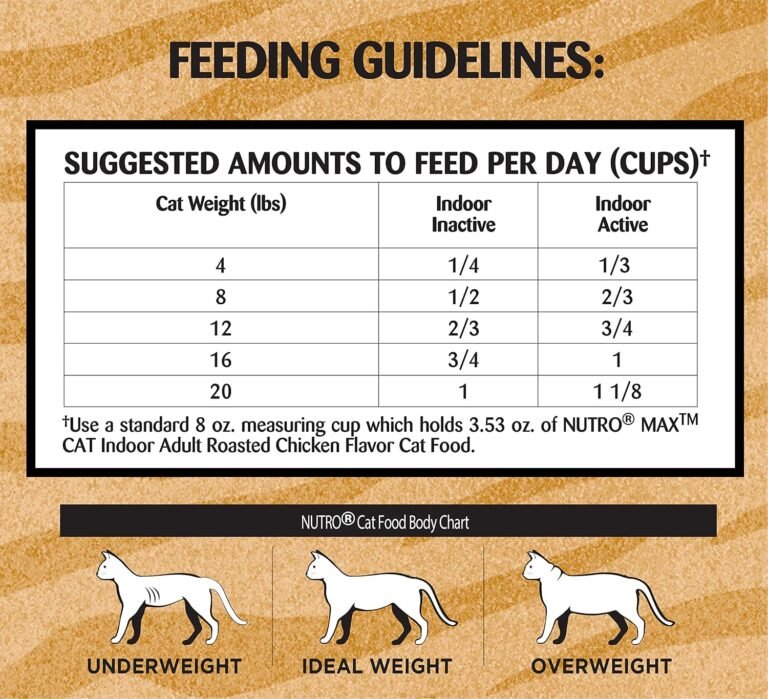
The number of cups that fit inside a container does not determine the right daily portion for your cat. A 5-liter bin may hold weeks of food, but your cat’s needs depend on its calorie requirements and the energy content of the particular food.
Start with the feeding guide on the package, using your cat’s weight and life stage as directed. The package amount is a starting point, not a perfect answer for every cat. Adjustments may be needed based on body condition, activity, weight changes, treats, and any advice from your veterinarian.
Kittens, adult cats, and senior cats may have different nutritional needs. Cats with certain health conditions may also need a specific diet or feeding schedule. If you are unsure how much to feed, ask your veterinarian rather than using the capacity of a storage bin as a guide.
Source: www.youtube.com
Read the feeding guide
Use the instructions for your specific formula and your cat’s weight or life stage.
Count all food sources
Include wet food, treats, and other foods when considering daily calorie intake.
Measure portions consistently
Use the same measuring method each day, and consider a kitchen scale if accurate portions are important.
Monitor body condition
Watch for unwanted weight changes and discuss concerns with your veterinarian.
Why Measuring by Weight Can Help
A measuring cup is convenient, but a kitchen scale can provide a more consistent portion by weight. This is helpful when kibble pieces settle unevenly or when the food label gives feeding instructions in grams rather than cups.
To use a scale, place a bowl on it, reset the scale to zero, and add the recommended amount of food. Record the portion that works for your feeding plan. If you change formulas, check the new food’s instructions because its calorie content and weight per cup may differ.
More consistent portions
Weighing food can reduce variation caused by loosely or tightly filled cups.
Useful when changing food
Recheck portions when the new formula has a different calorie density or weight per cup.
What If Your Cat Seems Hungry After Eating?
A cat that asks for food often may be following a routine, seeking attention, or responding to a feeding schedule. It may also be getting too little food, especially if its weight is falling or its needs have changed. Hunger alone does not prove that you should increase the portion.
Review the amount offered, include treats in the daily total, and check whether your cat is maintaining a healthy body condition. If hunger increases suddenly or comes with weight loss, increased thirst, vomiting, or other changes, arrange a veterinary visit.
Check the daily total
Confirm the amount your cat actually eats rather than relying on what you place in the bowl.
Watch for health changes
Sudden changes in appetite or weight deserve veterinary attention.
Common Mistakes When Converting Cat Food Measurements
Most measurement errors happen when people confuse volume with weight or use different cup sizes without realizing it. A simple conversion works well only when the units match the question being asked. Before estimating storage needs or daily portions, check whether the label refers to cups, milliliters, grams, ounces, or pounds.
Another common mistake is assuming that a bin labeled 5 liters will always hold exactly 21.13 cups of food. That number is the mathematical capacity in US cups, but the bin’s shape and usable interior space can affect the amount that fits. The most reliable check is to measure the actual food in the actual container.
Source: bdservicerules.info
Mistake: Treating liters as kilograms
Liters measure volume, while kilograms measure mass. You need the food’s density or a direct weight measurement to convert between them.
Mistake: Using an unmarked scoop
A scoop may not equal one US cup. Check its stated volume or measure it with a standard cup.
Mistake: Assuming every kibble weighs the same
Different formulas can have different weights per cup. Use data for the specific food.
Mistake: Filling above the rim
A heaped cup can contain more food than a level cup, leading to inconsistent estimates.
Mistake: Feeding according to container size
Storage capacity does not establish the appropriate amount for a cat’s daily diet.
How to Troubleshoot a Measurement That Seems Wrong
If your food bin holds fewer cups than expected, first check whether the stated capacity refers to the usable interior volume. Some containers include space taken up by the lid, a thick base, or curved walls. Next, check whether your measuring cup is a US customary cup or a metric cup.
If your weight estimate seems too high or too low, weigh a level cup of your own kibble and compare the result with any cup-to-weight information on the package. Make sure the scale is set to the right unit and that you have tared the empty bowl. These checks usually help identify the source of the difference without guessing.
Check the units
Confirm that your cup is measured in US customary units or identify its exact milliliter capacity.
Check the container
Measure usable space rather than relying only on the outside dimensions.
Check the scale
Reset it to zero with the empty bowl in place and confirm the displayed unit.
A Quick Conversion Chart for Cat Food Containers
A conversion chart makes it easier to compare common storage sizes without repeating the calculation. The values below use US customary cups and standard metric liters. They describe theoretical volume, not the weight of the food or a guaranteed number of full scoops.
Source: www.youtube.com
1 liter
About 4.23 US cups.
2 liters
About 8.45 US cups.
3 liters
About 12.68 US cups.
4 liters
About 16.91 US cups.
5 liters
About 21.13 US cups.
6 liters
About 25.36 US cups.
10 liters
About 42.27 US cups.
How to Use the Chart for Storage Planning
Choose a container size based on the volume you need, then check whether your particular food fits. If you plan to store several weeks of kibble, estimate the number of cups used per day and multiply by the number of days you want to cover. Compare that result with the container’s usable capacity.
For example, if your cat eats half a cup per day and you want to store 14 days of food, you need about 7 cups. A 5-liter container has a theoretical volume of about 21.13 cups, so it has enough volume for that amount in a typical case, provided its usable interior space is sufficient and the food fits as expected.
Estimate the required volume
Multiply the daily cup amount by the number of days you want to store.
Allow room for handling
Do not overfill the bin; leave enough space to close the lid securely.
What This Conversion Can and Cannot Tell You
The conversion from liters to cups is a mathematical relationship between two units of volume. It does not depend on the brand of cat food, the cat’s age, or the type of kibble. Five liters always equals approximately 21.13 US customary cups when both measurements refer to volume.
The conversion cannot tell you the exact number of pounds in the container, the calorie content of the food, how long an opened bag remains fresh, or how much a particular cat should eat. Those questions require other information, such as the food’s weight per cup, package directions, storage guidance, and your cat’s individual needs.
For a practical answer, use the conversion to estimate space, measure your food to establish its actual weight, and use the food label or veterinary advice to set feeding portions. Keeping these three tasks separate prevents a simple container calculation from turning into an inaccurate feeding plan.
Source: www.youtube.com
What it tells you
The theoretical volume of a 5-liter container in US customary cups.
What it does not tell you
The exact weight of kibble, calories in a portion, or the right daily amount for your cat.
What to do next
Measure your specific food, check the package directions, and choose a storage method that keeps it dry and protected.
A Practical Example From Container to Feeding Bowl
Imagine that you buy a dry food formula and want to move some of it into a 5-liter bin. The mathematical capacity is about 21.13 US cups. You then measure one level cup of your chosen kibble and weigh it, giving you a product-specific estimate of weight per cup.
Next, you use the package feeding guide or your veterinarian’s advice to determine the amount your cat needs each day. If the plan calls for half a cup daily, the theoretical volume in the bin would represent about 42 days of food for one cat. The actual duration may be shorter if the bin holds less than its theoretical capacity or if the cat receives a larger daily portion.
This method connects storage planning with feeding needs without treating them as the same question. It also makes it easy to update your estimate when you change food, adjust a portion, or start feeding another cat.
Measure
Find the volume and weight of a typical portion of your actual food.
Plan
Estimate how many days the available food will last based on the total daily amount.
Review
Recheck your estimate whenever the food formula or feeding plan changes.
Frequently Asked Questions
Q
Is 5 liters equal to 21 cups of cat food?
Yes, approximately. Five liters equals about 21.13 US customary cups by volume, so 21 cups is a convenient rounded estimate. The exact amount of kibble that fits may differ because of container shape, usable capacity, and the way the pieces settle.
Q
How many pounds of dry cat food fit in 5 liters?
There is no single accurate pound value for all dry cat foods. The weight depends on the food’s bulk density and the space between pieces. Weigh a level cup of your specific kibble, multiply its average weight by approximately 21.13, and convert the result to pounds for a rough estimate. Weighing the actual filled container is more accurate.
Q
How many days will 5 liters of cat food last?
If the container holds about 21.13 cups, it lasts around 42 days when one cat eats half a cup per day. At one cup per day, it lasts about 21 days. These are mathematical examples, not feeding recommendations, and actual results depend on usable container capacity and the cat’s daily portion.
Q
Does a 5-liter container hold the same amount of every cat food?
The container has the same volume, but different kibble formulas can pack differently. Piece size, shape, density, and the way the food settles can change the amount that fits. Measure your own food if you need a reliable estimate.
Q
Is a 5-liter container suitable for storing dry cat food?
It can be suitable for storing a modest supply if the container is clean, dry, easy to seal, and large enough for the amount you want to store. Keep the food in a cool, dry place and follow the package’s storage directions. Keeping the original bag inside the container can also preserve the product and lot information.
Q
Can I use a 250-milliliter cup to measure 5 liters of cat food?
Yes, but 250 milliliters is larger than a US customary cup, which holds about 236.59 milliliters. Five liters divided by 250 milliliters equals exactly 20 metric cups. If you use US customary cups, the same volume is about 21.13 cups.
Q
Should I feed my cat based on how much food fits in the container?
No. Container capacity only describes storage volume. Choose a daily portion based on the food’s feeding guide, your cat’s weight and life stage, its overall diet, and veterinary advice when needed. If your cat has a health condition or changes weight unexpectedly, ask your veterinarian for guidance.
✦ Wrapping Up
Conclusion
Five liters equals approximately 21.13 US customary cups, making it a useful reference when planning dry cat food storage. This figure measures volume, not the exact weight of the kibble. Different food formulas can fill the same space while weighing different amounts.
For a dependable estimate, measure a level cup of your own cat food and weigh it if you need to know the amount in ounces, grams, or pounds. Then compare the food’s daily use with the container’s usable capacity to estimate how long the supply will last.
Keep storage and feeding decisions separate. A container tells you how much food can fit, while the package feeding guide and your cat’s individual needs help determine how much food to serve. Store the food in a clean, dry, sealed space and check the label for product-specific instructions.
💡 Key Takeaway
Use 21.13 US cups as the theoretical volume for 5 liters, then measure your specific kibble to estimate its weight and storage duration. Follow the food label or your veterinarian’s advice when deciding how much your cat should eat.