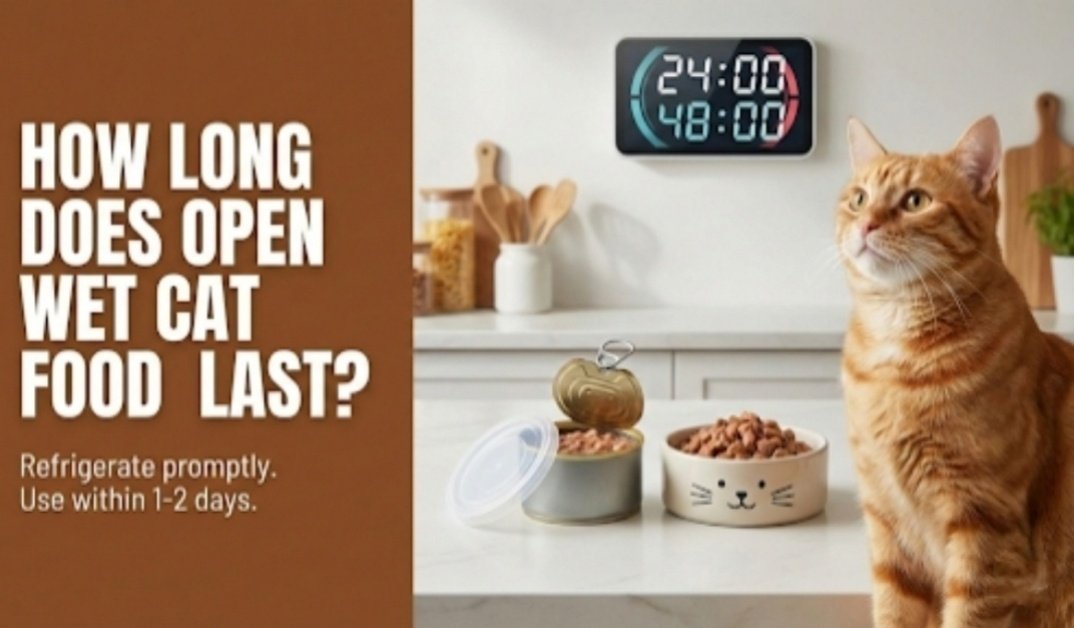
Wet cat food can usually sit out for 1 to 2 hours, while opened food can generally stay refrigerated for 3 to 5 days if stored properly and the label allows it.
For cat owners across the United States, feeding time often falls between work, school runs, errands, and a busy evening at home. Wet cat food makes meals easy, but an opened can or a half-finished bowl raises an important question: how long is the food still safe to eat? The answer depends on whether the food is sealed, sitting in a bowl, or stored in the refrigerator.
Wet food contains moisture, which makes it a good place for harmful germs to grow when it sits at room temperature. As a practical rule, pick up uneaten food within 1 to 2 hours, or sooner in a warm room. Refrigerate unused portions promptly, follow the package instructions, and throw away food that has been left out too long. Smell and appearance alone cannot prove that food is safe.
This guide explains how long wet cat food lasts in common home settings, how to store an opened can, how to handle leftovers, and when to throw food away. It also covers warm weather, travel, kittens, and other situations in which safe food handling matters.
Source: hangrypants.com
How Long Does Wet Cat Food Last in Different Conditions?
Wet cat food has different storage limits depending on whether the package is sealed, the food is in a bowl, or the leftovers are refrigerated. The most useful first step is to identify which situation applies to your cat’s meal.
The time ranges below are general household guidelines. A specific food may have stricter instructions, so always read the label before storing or serving it. When you cannot confirm how long food has been sitting out, throwing it away is safer than guessing.
Source: canfoodgobad.com
Unopened can or pouch
Store it in a cool, dry place until the printed date, provided the package remains intact and the manufacturer permits storage under those conditions.
Food in the bowl
Remove uneaten wet food within 1 to 2 hours at ordinary room temperature. Use a shorter window when the room is hot or the food is exposed to direct sun.
Opened food in the refrigerator
A common guideline is 3 to 5 days in a covered container at 40°F or below, unless the product label gives a shorter period.
Food left out overnight
Discard it. Refrigerating it in the morning does not undo the time it spent at room temperature.
Food in a hot car or outdoors
Do not treat it like refrigerated food. Heat can shorten its safe holding time, so discard it if it has been exposed to unsafe temperatures or its storage history is uncertain.
Why Does Wet Cat Food Spoil?
Wet cat food contains much more water than dry kibble. Once a can or pouch is opened, the food can be exposed to bacteria, yeasts, molds, and other contaminants from the air, a feeding dish, hands, or utensils. Warm conditions can help some microbes grow faster.
Commercial wet food is processed and packaged to remain stable while unopened when stored as directed. Opening the package changes that protection. Refrigeration slows the growth of many microbes, but it does not stop every form of spoilage or make contaminated food safe again.
Moisture
The water in wet food supports microbial growth when storage conditions allow it.
Temperature
Warm rooms and hot weather can make food unsafe sooner than a cool indoor setting.
Handling
Dirty bowls, used spoons, and contact with raw meat or other contaminants can introduce unwanted microbes.
A Simple Rule for Everyday Feeding
Treat the bowl as a short-term serving area, not a storage container. Serve the amount your cat is likely to eat, note when the meal starts, and remove leftovers within the recommended time. If your cat eats slowly, smaller servings can help reduce waste.
For example, if you put food down at 7:00 a.m., aim to remove any remaining food by 8:00 or 9:00 a.m. at ordinary room temperature. Do not extend the time just because the food still looks fresh.
Best habit
Write the opening date on the can or container and use the oldest properly stored portion first.
When in doubt
Discard food if you cannot tell when it was opened or how long it has been sitting out.
How Long Can Wet Cat Food Sit Out at Room Temperature?
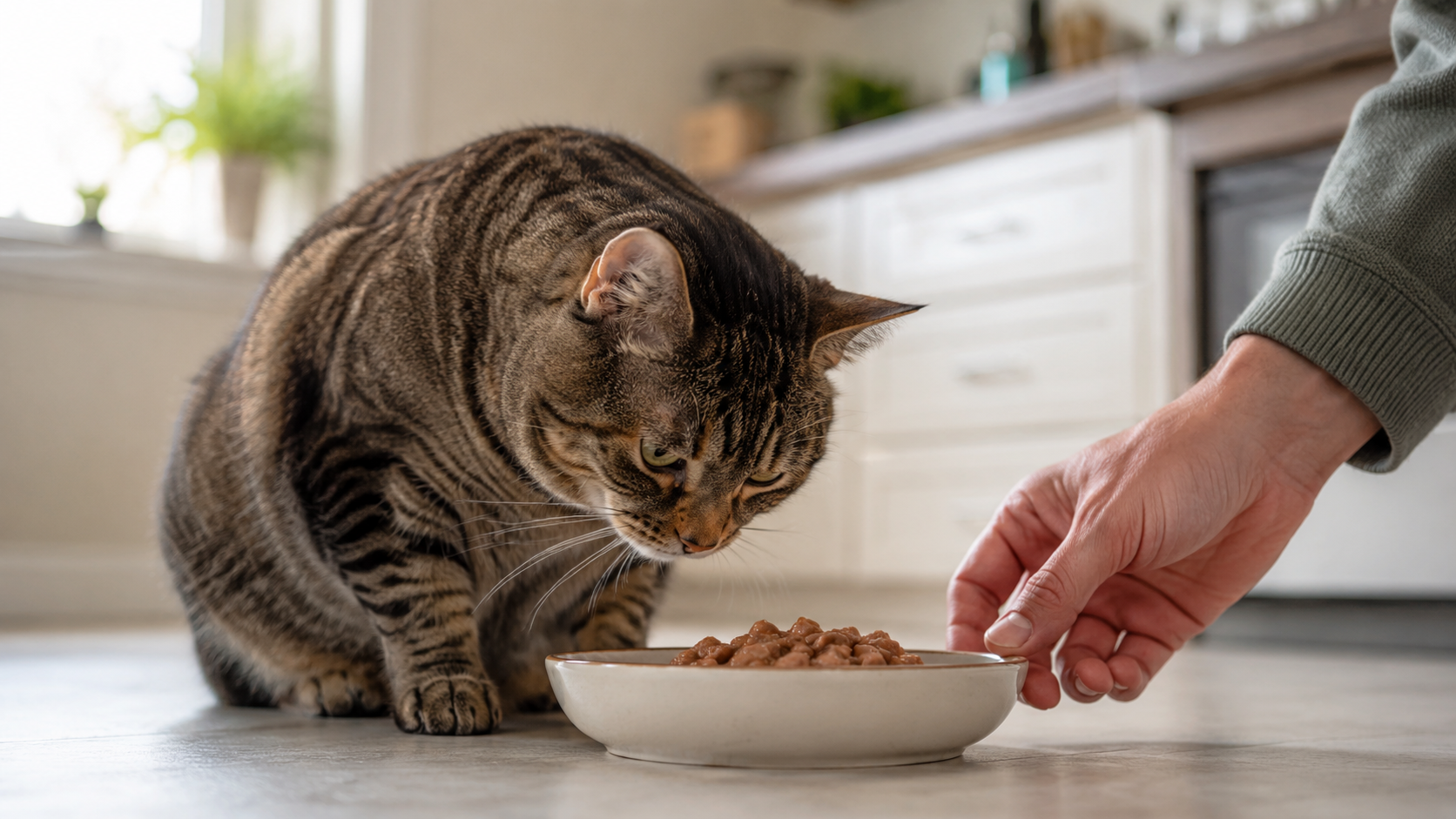
Wet cat food should generally stay in the bowl for no more than 1 to 2 hours at room temperature. This is a practical limit for routine feeding, not a guarantee that every meal remains safe for the full two hours. If the food becomes warm, dirty, or exposed to insects, remove it sooner.
The clock starts when the food is put out, not when your cat takes the first bite. A cat that walks away from breakfast and returns several hours later should not be allowed to finish the same portion simply because some food remains in the dish.
The room itself matters. A bowl in a cool, air-conditioned home is not the same as a bowl on a sunny porch during a summer heat wave. When conditions are warm, choose a shorter serving window and keep food out of direct sunlight.
Source: floppycats.com
Cool indoor room
Remove leftovers within 1 to 2 hours as a general rule.
Warm kitchen or summer weather
Use a shorter window, particularly when the room feels hot or the bowl sits near a sunny window.
Outdoor feeding
Keep serving periods short because heat, insects, dirt, and wildlife can contaminate food.
Overnight feeding
Do not leave ordinary wet food out overnight. Refrigerate the unused portion and offer a fresh serving later.
Can Wet Cat Food Sit Out for Four Hours?
Four hours is longer than the usual recommended serving window for wet cat food at room temperature. Even if the bowl is indoors and the food looks normal, discard the leftovers rather than saving them for the next meal.
A cool room does not make a bowl equivalent to a refrigerator. Refrigerators keep food at a controlled low temperature, while indoor temperatures vary and may allow microbes to multiply. Do not use appearance or smell to justify a longer serving period.
If four hours have passed
Throw away the remaining food, wash the bowl, and serve a fresh portion when your cat is ready to eat.
Can Wet Cat Food Sit Out for Two Hours?
Two hours is the upper end of a common general guideline for wet food at ordinary room temperature. It should not be treated as a target when the room is hot or the food has been handled poorly.
If you know that food has been sitting out for nearly two hours, do not put it back in the refrigerator to save for tomorrow. Once the recommended serving period has passed, discard the leftovers.
Practical choice
Offer smaller servings and refill the bowl with fresh food if your cat needs another meal.
How Long Does Wet Cat Food Last in the Fridge?
Opened wet cat food can generally last 3 to 5 days in the refrigerator when it is handled cleanly, covered, and kept at 40°F or below. However, some brands recommend using opened food sooner, so the package directions should decide the final limit.
Refrigeration slows microbial growth, but it does not reset the food’s history. If the food sat out too long before you put it away, chilling it will not make it safe. The same applies if the food was contaminated by a dirty spoon or an unclean dish.
Store the food in a covered container or use a suitable can cover. A tight cover helps reduce exposure to other foods, odors, and moisture loss. Keep the container on a stable refrigerator shelf rather than leaving it on the counter between meals.
Source: ourpettails.com
Keep the refrigerator cold
Set the refrigerator to 40°F or below and check the temperature if you suspect it is not cooling properly.
Cover the food
Use a clean, airtight food-safe container or a lid made for the can.
Mark the opening date
Write the date on the lid or container so you can track how long the food has been stored.
Follow the label
Use a shorter storage period if the manufacturer gives one.
Can Opened Wet Cat Food Last Seven Days in the Fridge?
Seven days is longer than the common 3-to-5-day guideline for opened wet cat food. Unless the manufacturer explicitly provides a longer storage period for that exact product, do not assume a full week is safe.
The food may still look and smell normal after several days, but those signs cannot reliably rule out harmful microbes. If you have lost track of the opening date or are unsure whether the refrigerator stayed cold, discard the food.
Safer approach
Use the opened portion within the label’s stated time, or within the usual 3-to-5-day range when the label permits it.
Can You Refrigerate Wet Cat Food After It Has Sat Out?
You can refrigerate unused food promptly after serving it, as long as it has not exceeded its safe time out and has not been contaminated. Do not refrigerate leftovers that have been sitting in the bowl for several hours or overnight.
The key is to separate fresh unused food from food that has already been exposed during feeding. If you expect your cat to leave some food behind, set aside the unused portion in a clean container before filling the bowl.
Unused food
Cover and refrigerate it promptly.
Food from the bowl
Discard it after the recommended serving window rather than returning it to the storage container.
How Long Does Wet Cat Food Last After Opening?
Once you open a can or pouch, follow the manufacturer’s storage instructions and refrigerate any unused portion promptly. Many opened wet cat foods can be kept for 3 to 5 days under proper refrigeration, but that range is not universal.
The type of package does not remove the need for safe handling. Food from a can, tray, or pouch can spoil after opening if it stays warm or becomes contaminated. The exact ingredients, processing method, and product directions can affect the recommended storage period.
If your cat eats only a small amount at each meal, consider buying a package size that matches its usual serving needs. A smaller package may cost more per ounce but can reduce the amount of food you throw away.
Source: storage.googleapis.com
Read the package
Look for directions such as refrigerate after opening and use within a stated number of days.
Use a clean utensil
Scoop out food with a clean spoon instead of using a utensil that has been in your cat’s mouth.
Close the package
Cover the can or move the food into a clean, sealed container before refrigerating.
Keep track of age
Label the opening date rather than relying on memory.
Does Wet Cat Food Last Longer in a Can or a Pouch?
Neither package type automatically gives opened food a longer safe life. Once the seal is broken, the storage directions for the specific product matter more than whether the original package was metal or flexible material.
A can may be easier to cover with a fitted lid, while a pouch may be harder to reseal after opening. In either case, transfer leftovers to a clean, covered container if the original package cannot be closed securely.
For cans
Use a clean lid or transfer the food to a covered container.
For pouches
Follow the package directions and seal or transfer any unused portion as instructed.
How Long Does Wet Cat Food Last in the Freezer?
Freezing can preserve some wet cat foods for longer, but not every product is intended to be frozen. Freezing may change the texture, moisture distribution, or appearance after thawing, and the package may not provide validated freezer-storage instructions.
Before freezing a large quantity, check the manufacturer’s guidance. If freezing is permitted, divide the food into small, clean, airtight portions, label the date, and thaw each portion in the refrigerator. Do not thaw wet cat food on the counter, and do not refreeze a portion that has been handled unsafely.
Before freezing
Confirm that the food and its packaging are suitable for freezing.
When thawing
Thaw in the refrigerator and follow the product’s instructions for use after thawing.
After serving
Apply the usual room-temperature serving limit to the thawed food.
How Long Does Unopened Wet Cat Food Last?
Unopened commercial wet cat food can often remain shelf-stable until its printed best-by or expiration date when stored as directed. The date applies to the sealed product under the stated storage conditions, not to a can that has already been opened.
Store unopened cans and pouches in a cool, dry place away from direct sunlight, heat sources, and moisture. A pantry or closed cupboard is often suitable if it stays within the storage conditions on the label.
Do not use a package just because the printed date has not passed if the container is damaged. A compromised seal can allow contamination or spoilage even when the date appears acceptable.
Source: i.ytimg.com
Check the date
Use the printed date as directed by the manufacturer.
Inspect the package
Avoid cans that are swollen, leaking, badly rusted, or deeply dented, especially near a seam.
Keep storage conditions stable
Avoid hot garages, damp sheds, and areas where temperatures fluctuate sharply.
Can You Use Wet Cat Food Past Its Expiration Date?
Do not assume that an unopened can is safe simply because it looks normal after the printed date. The date and wording are set by the manufacturer, and the product’s quality or safety may not be assured beyond the stated period.
Check whether the label says best by, use by, or another date term, and follow the manufacturer’s advice. If the package is swollen, leaking, or damaged, discard it without opening or tasting the contents.
When the date has passed
Check the manufacturer’s guidance and choose an in-date package when possible.
When the package is damaged
Discard it regardless of the printed date.
How to Store Wet Cat Food Safely
Good storage starts before you open the can. Wash your hands, prepare a clean feeding dish, and use a clean utensil to remove the portion your cat needs. Keep the unused food separate from the bowl so you do not accidentally save leftovers that have already been exposed.
After serving, cover the unused portion and place it in the refrigerator promptly. Keep the refrigerator at 40°F or below, and avoid leaving the can on the counter while you wait for the next meal.
A simple routine helps prevent waste. Decide how much your cat usually eats, serve that amount, and refrigerate the remainder before your cat begins eating. This makes it easier to track storage time and lowers the chance of mixing old food with a fresh portion.
Source: petshun.com
Step 1: Wash your hands
Clean your hands before opening the package or handling the food.
Step 2: Use a clean bowl and spoon
Do not use dirty utensils or put a used spoon back into the can.
Step 3: Serve a suitable portion
Start with the amount your cat usually eats in one sitting.
Step 4: Cover unused food
Seal the can with a suitable cover or transfer the food to a clean, covered container.
Step 5: Refrigerate promptly
Keep the food at 40°F or below and record the opening date.
Step 6: Remove leftovers
Discard food that remains in the bowl beyond the recommended serving period.
Should You Warm Refrigerated Wet Cat Food?
Some cats prefer food closer to room temperature because cold food may be less appealing to them. You can warm a small portion gently if your cat prefers it, but avoid overheating it.
A simple option is to place the serving in a clean bowl and let it warm briefly, or stir in a little warm water if this suits your cat’s diet. Never leave the whole container on the counter for a long period just to take the chill off. Discard the serving according to the usual time limit.
Warm gently
Check the food temperature before serving so it is not hot enough to burn your cat’s mouth.
Keep the stored portion cold
Warm only the amount you plan to serve rather than repeatedly heating the full container.
How to Reduce Wet Cat Food Waste
If you often throw away half a can, compare the package size with your cat’s normal meal size. Small cans, trays, or pouches may help if your cat eats little at a time, while larger packages can be useful for households with several cats when portions are managed safely.
You can also split the food into clean portions before serving. Keep the unused portion refrigerated and use it within the label’s storage window. Avoid topping off an old bowl with fresh food, because the older food may contaminate the new serving.
Measure the usual meal
Use your cat’s feeding plan and appetite to choose a sensible serving size.
Choose a suitable package
Match package size to how much your cat can safely eat before the food needs refrigeration.
Keep portions separate
Store unused food apart from food already placed in the feeding bowl.
Signs That Wet Cat Food May Have Gone Bad
Wet cat food may be spoiled if it develops an unusual sour or rotten odor, visible mold, a change in color, or an unexpected texture. A swollen or leaking unopened can is also a warning sign that the package may be compromised.
These signs are useful warnings, but their absence does not prove that food is safe. Some harmful microbes do not produce an obvious smell or visible change. Storage time and temperature are therefore more reliable decision points than a quick look or sniff.
Never taste pet food to test whether it has spoiled. If you are unsure how long it has been open or whether it was stored correctly, discard it and clean the dish before serving fresh food.
Source: meongnium.com
Unusual smell
A sour, rancid, or rotten odor is a reason to discard the food.
Visible mold
Throw the food away and do not scrape off the affected area to save the rest.
Unexpected texture or color
Discard food that has changed in a way the product label does not describe.
Damaged package
Do not open or feed food from a swollen, leaking, or seriously damaged can.
Unknown storage history
When the time or temperature is uncertain, choose a fresh portion.
What If My Cat Already Ate Spoiled Wet Food?
If your cat has eaten food that may have spoiled, remove the remaining food and watch for changes in behavior, appetite, and digestion. Possible signs of illness include vomiting, diarrhea, unusual tiredness, drooling, or refusal to eat.
Contact your veterinarian if symptoms appear, persist, or concern you. Seek urgent veterinary help if your cat has repeated vomiting, bloody diarrhea, marked weakness, trouble breathing, collapse, or other severe symptoms. Kittens, older cats, and cats with existing health problems may need prompt assessment.
Do not try to make your cat vomit or give human medicines unless a veterinarian specifically tells you to do so. If possible, keep the food packaging and note when your cat ate the food, how much it may have eaten, and when symptoms began.
Remove the source
Discard the questionable food and wash the bowl thoroughly.
Observe your cat
Watch for vomiting, diarrhea, low energy, appetite changes, or other unusual signs.
Call a veterinarian
Ask for advice if your cat develops symptoms or has a higher risk of complications.
Special Situations That Affect Wet Cat Food Storage
Some feeding situations need extra care because the usual room-temperature guideline may not fit the conditions. Heat, travel, a cat’s eating habits, and special medical needs can all change the best way to handle a meal.
The safest plan is to keep wet food cold until serving, offer only what your cat needs, and discard leftovers when their storage history is uncertain. Do not extend the serving time just because your cat prefers to eat slowly.
Source: catilife.com
During hot weather
Serve smaller portions and remove leftovers sooner if the room is warm.
During travel
Use an insulated cooler with ice packs to keep unused food cold, and follow the label’s storage directions.
For cats that graze
Offer small fresh meals more often instead of leaving a large bowl out all day.
For cats with special dietary needs
Ask your veterinarian whether a specific feeding and storage routine is needed.
How Long Does Wet Cat Food Last in Hot Weather?
Wet food can become unsafe faster in hot conditions, so the usual 1-to-2-hour guideline should not be treated as a guarantee. If the bowl is outdoors, in direct sun, or in a very warm room, remove it sooner and avoid saving the leftovers.
During a heat wave, keep unopened packages away from hot cars, sheds, and sunlit windows. If a refrigerator loses power and the food warms above safe storage temperatures, use the temperature and time history to decide whether to discard it. If you cannot confirm that it stayed cold, do not feed it.
Serve in small amounts
Give your cat a portion it can eat promptly, then offer fresh food later if needed.
Avoid direct sunlight
Place the bowl in a cool indoor spot and keep the unused food refrigerated.
How Should You Handle Wet Cat Food While Traveling?
When traveling by car, keep opened wet food in a clean, sealed container inside an insulated cooler with sufficient ice packs. A parked car can become very hot, so do not leave the food in the vehicle without reliable cooling.
Bring a clean bowl, spoon, and a way to wash your hands. Keep unused food separate from served food, and discard any portion whose time or temperature history is uncertain. For longer trips, single-serving packages may make portion control easier, although opened packages still need proper storage.
Pack cold storage
Use an insulated cooler and enough ice packs to keep food at a safe temperature.
Bring clean supplies
Use clean utensils and a clean feeding bowl for each meal.
Avoid risky leftovers
Do not keep food that has been sitting warm in a car or travel bag.
Common Wet Cat Food Storage Mistakes
Most storage problems come from treating wet food like dry kibble. Dry food is usually less moist, while wet food needs careful handling after opening. A few simple habits can prevent many avoidable risks.
The most important rule is to make decisions based on time, temperature, and package instructions. A clean-looking bowl does not guarantee safety, and refrigeration cannot reverse unsafe storage.
Source: hangrypants.com
Leaving food out overnight
Discard it rather than offering it at breakfast.
Saving old bowl leftovers
Do not return food that has been sitting in the bowl to the original can or storage container.
Ignoring the opening date
Label the container so you can track the storage period.
Assuming smell proves safety
Food can contain harmful microbes without a clear odor or visible spoilage.
Using a damaged can
Discard swollen, leaking, or seriously damaged packages.
Repeatedly warming the whole container
Warm only the serving you need and return the unused portion to cold storage promptly.
A Quick Decision Guide for Leftover Wet Cat Food
Use the table below to decide what to do with common leftovers. These are general guidelines, so a product label with stricter instructions should take priority.
Fresh food left out for less than one hour
If it has been handled cleanly and remains at an ordinary room temperature, serve it within the recommended window or refrigerate unused food promptly.
Food left out for one to two hours
Finish the meal within the usual window, then discard any remaining food. Do not save bowl leftovers for a later meal.
Food left out longer than two hours
Discard it rather than refrigerating it for later.
Opened food refrigerated for three to five days
Use it only if the label allows that period, the refrigerator stayed at 40°F or below, and the food was handled properly.
Opened food stored for more than five days
Discard it unless the manufacturer explicitly provides a longer storage period for that exact product and the food has been stored as directed.
Food with an unknown storage history
Discard it. Guessing is not worth the risk to your cat.
A Practical Wet Cat Food Routine for Busy Homes
A repeatable routine makes safe feeding easier, especially in homes where several people feed the cat. Keep the unopened packages together, store a clean can cover nearby, and label opened food with the date. This reduces the chance that someone will mistake an old container for a fresh one.
For a morning meal, remove the food from the refrigerator, scoop out a fresh serving with a clean spoon, and put the remaining portion back in the refrigerator promptly. At the next meal, inspect the container and check the opening date before serving it.
If your cat routinely leaves food behind, adjust the serving size rather than extending the time the bowl stays out. Cats vary in appetite, and a sudden or lasting change in eating habits may need veterinary advice rather than a change in food storage alone.
Source: ourpettails.com
Before feeding
Check the storage date and package condition, then use a clean utensil.
During feeding
Serve a small enough portion for your cat to eat within the recommended time.
After feeding
Discard bowl leftovers when the serving window ends and wash the dish.
At the end of the day
Check that opened food is covered and refrigerated, and discard any portion that is too old or has been stored incorrectly.
When Should You Ask a Veterinarian for Advice?
Ask your veterinarian for guidance if your cat repeatedly refuses food, develops digestive symptoms, or has a health condition that affects feeding. A veterinarian can help determine whether the problem relates to food preference, illness, diet, or another cause.
Do not rely on a different storage routine to solve a sudden loss of appetite. Cats that stop eating may need prompt assessment, especially if they are overweight, very young, older, or already ill. If your cat has severe symptoms after eating questionable food, seek urgent veterinary care.
Persistent appetite change
Contact your veterinarian if your cat eats much less than usual or repeatedly refuses meals.
Signs of illness
Seek advice for vomiting, diarrhea, lethargy, or other concerning changes.
Individual feeding needs
Follow a veterinarian’s specific instructions for cats with medical or nutritional needs.
Frequently Asked Questions
Q
How long does wet cat food last after opening if refrigerated?
Opened wet cat food generally lasts 3 to 5 days in a refrigerator kept at 40°F or below, provided it is covered and handled cleanly. The manufacturer’s instructions take priority, and some products may require a shorter storage period. Label the opening date and discard food if its storage history is uncertain.
Q
Can I leave wet cat food out overnight?
No. Ordinary wet cat food should not be left out overnight. Discard any food that has remained in the bowl for several hours, wash the dish, and serve a fresh portion. Put unused food in the refrigerator promptly after opening.
Q
Can wet cat food go bad even if it smells normal?
Yes. Harmful microbes may be present without a strong odor, visible mold, or a change in color. Use the time, temperature, package condition, and storage instructions to judge safety rather than relying on smell alone.
Q
Should wet cat food be served cold or at room temperature?
Wet cat food can generally be served cold if your cat accepts it. If your cat prefers warmer food, gently warm only the portion you plan to serve and check that it is not hot. Do not leave the full container on the counter for a long period to warm up.
Q
How long can wet cat food sit out in summer?
Use a shorter serving window when the room is hot, and never leave wet food in direct sunlight or a hot car. The usual 1-to-2-hour guideline for room temperature is not a guarantee in warm conditions. Serve smaller portions and discard leftovers sooner when the temperature is high.
Q
Can I save wet cat food that my cat has already eaten from?
Do not return food from the feeding bowl to the original can or container. Saliva, utensils, and contact with the bowl can introduce contaminants. Discard leftovers after the recommended serving period and store only unused food that has been handled cleanly.
Q
Can I freeze opened wet cat food to make it last longer?
Only freeze it if the manufacturer says freezing is suitable for that product. Freezing may change the texture, and the package may not provide a validated storage period after thawing. If freezing is permitted, use clean, sealed portions and thaw them in the refrigerator.
✦ Wrapping Up
Conclusion
Wet cat food lasts for different periods depending on how it is stored. As a general rule, remove food from the bowl within 1 to 2 hours at ordinary room temperature, and keep opened leftovers refrigerated for about 3 to 5 days only when the product label allows it. Unopened cans and pouches should stay in a cool, dry place and be used according to their printed dates.
The most reliable way to protect your cat is to track time and temperature, keep unused food covered and cold, and avoid saving leftovers that have been sitting in the bowl too long. Do not depend on smell or appearance to prove that food is safe. When the storage history is unclear, discard the food and offer a fresh serving.
A few simple habits can make daily feeding safer without making it harder. Prepare a clean bowl, serve a suitable portion, refrigerate the unused food promptly, and mark the opening date. If your cat becomes ill after eating questionable food or shows a lasting change in appetite, contact your veterinarian.
💡 Key Takeaway
Remember three rules: remove wet food from the bowl within 1 to 2 hours, refrigerate unused opened food promptly at 40°F or below, and follow the package’s storage limit. If you are unsure whether the food is safe, throw it away.