Most adult cats need a daily mix of wet and dry food based on their calorie needs, ideal weight, age, and activity. Count calories from both foods together, then divide the total into suitable meals.
In American homes, feeding a cat often means opening a can of food before work, filling a dry-food bowl during the day, or serving dinner after a long commute. Mixing wet and dry food can make this routine easier. The key is to measure both foods so your cat gets enough energy without eating too much.
There is no single wet-to-dry ratio that works for every cat. A small indoor cat may need much less food than a large, active cat. The calories in each brand also vary, so a serving that looks small can provide more energy than you expect.
The safest starting point is your cat’s daily calorie target and the calorie information on each food label. Use those figures to plan portions, keep treats within the daily total, and adjust the amount as your cat’s weight changes. Your veterinarian can help set a target for kittens, senior cats, overweight cats, and cats with medical needs.
Source: centralcountiesservices.org
How Much Wet And Dry Food Should You Feed A Cat Each Day?
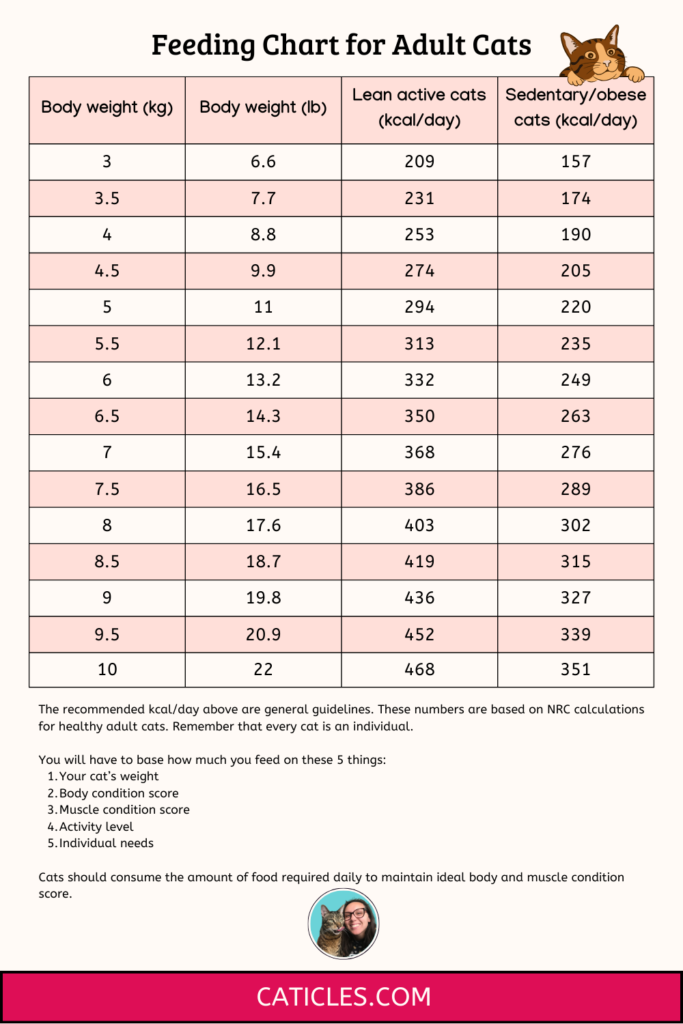
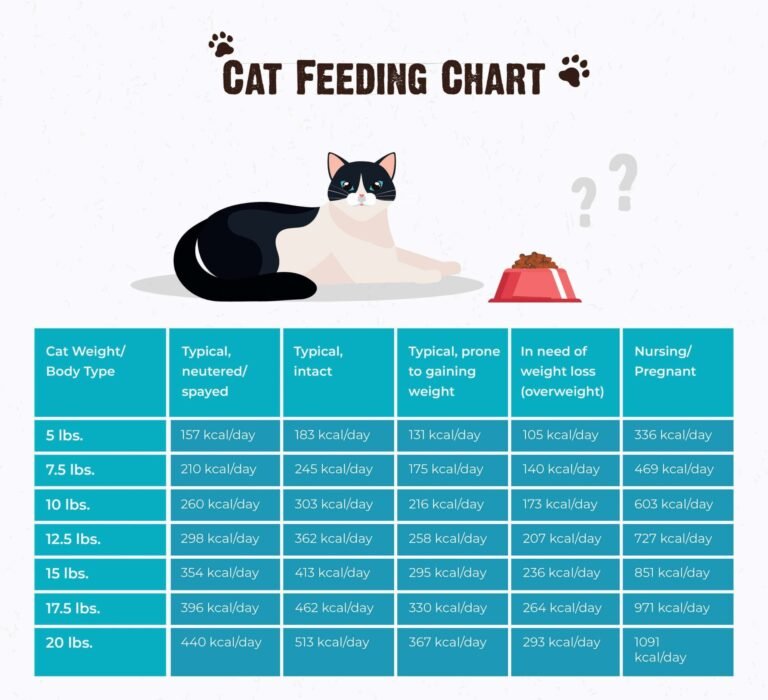
The right amount depends on how many calories your cat needs and how many calories come from each food. Many healthy adult cats need roughly 20 to 30 calories per pound of ideal body weight each day as a broad starting estimate. This is not a fixed rule, and some cats need more or less based on age, activity, body condition, and health.
For example, a hypothetical 10-pound adult cat might start with an estimated daily need of 200 to 300 calories. That range is only a planning guide. A veterinarian can help identify a more suitable target by looking at the cat’s ideal weight, body condition, and lifestyle.
Once you have a calorie target, choose how much of it will come from wet food and how much will come from dry food. Some owners use wet food for most meals and a small measured dry portion for convenience. Others split the calories more evenly. Neither approach is automatically best for every cat.
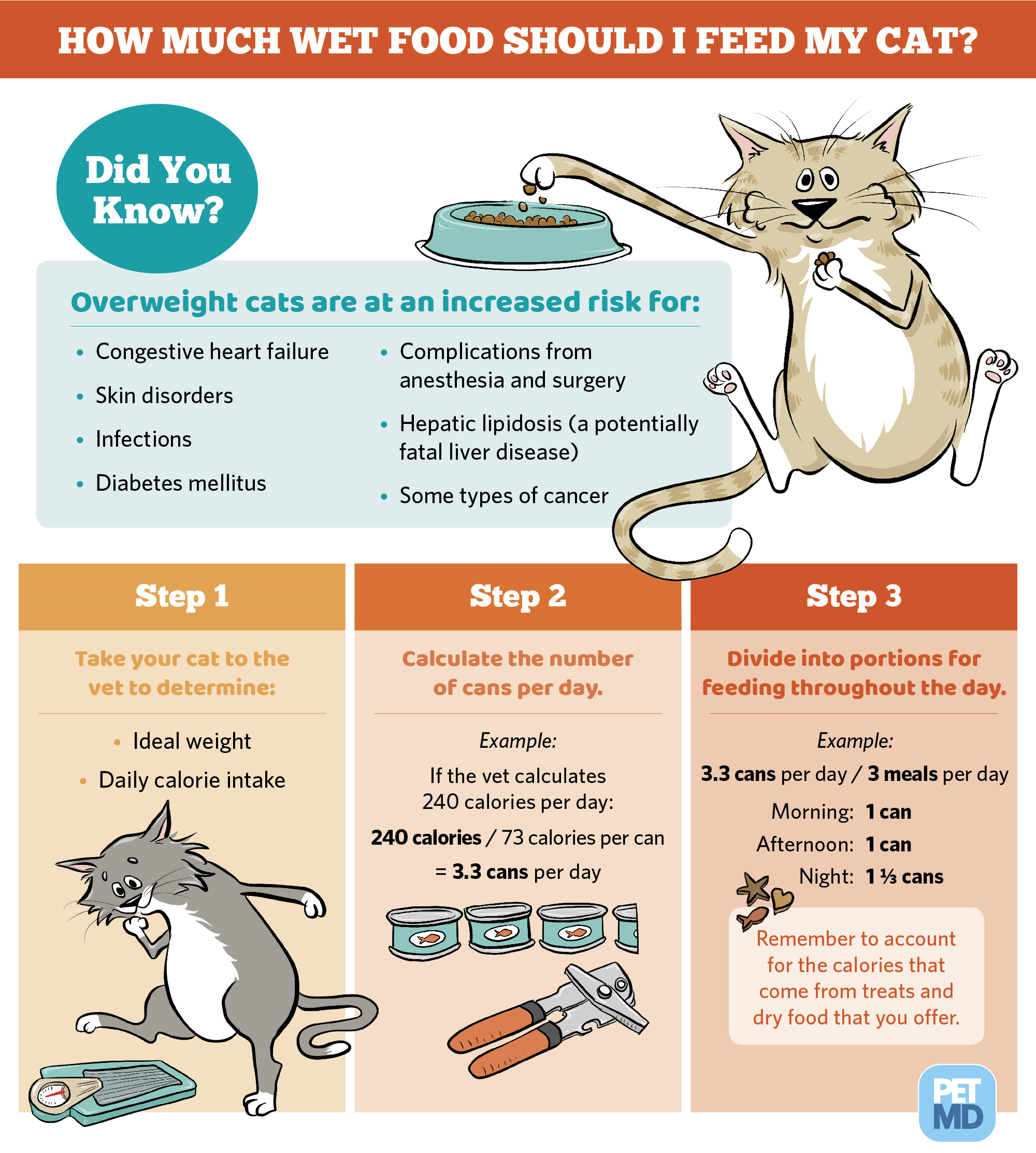
Source: petMD
Wet-food-heavy plan
Feed most daily calories from wet food and use a smaller dry portion for snacks, puzzle feeders, or scheduled meals.
Balanced mixed plan
Divide daily calories between wet and dry food according to your cat’s needs and the calorie density of each product.
Dry-food-heavy plan
Use measured dry food for most calories and add wet food as part of the same daily allowance. Do not add the wet food on top of a full dry-food ration.
A Simple Example For A 10-Pound Adult Cat
Suppose your veterinarian recommends 250 calories per day for your healthy adult cat. You select a complete wet food that provides 90 calories per 3-ounce can and a dry food that provides 400 calories per cup. These figures are hypothetical examples, not recommendations for every brand or cat.
If you serve two cans of the wet food, your cat receives 180 calories. The remaining allowance is 70 calories. Since the dry food contains 400 calories per cup, you would divide 70 by 400 and multiply by one cup. The result is 0.175 cup, or about 2.8 tablespoons, of dry food.
This example shows why portion math matters. Two cans plus a full cup of dry food would provide 580 calories, far above the hypothetical 250-calorie target. Always use the actual calorie figures printed on your packages.
Daily target
250 calories.
Wet food
Two 3-ounce cans at 90 calories each provide 180 calories.
Dry food
The remaining 70 calories equal 0.175 cup when the dry food contains 400 calories per cup.
How To Calculate The Right Wet And Dry Food Ratio
You do not need a special feeding calculator to work out a mixed diet. You need your cat’s daily calorie target, the calorie content of the wet food, and the calorie content of the dry food. The same method works whether you feed canned pâté, wet chunks in gravy, kibble, or a combination of textures.
First, check the label for calories per can, pouch, ounce, or cup. Some packages list kilocalories, often written as kcal. For pet food, one kilocalorie is the unit commonly called a calorie in everyday feeding advice.
Next, choose the number of wet-food servings that fits your plan. Multiply the calories per serving by the number of servings, then subtract that result from your cat’s daily target. Finally, divide the remaining calories by the dry food’s calories per cup to calculate the dry portion.
Source: storage.googleapis.com
Step 1: Find the daily target
Use a veterinarian’s recommendation when available. A general calorie estimate is only a starting point.
Step 2: Calculate wet-food calories
Multiply the calories in one can or pouch by the number of servings you plan to feed.
Step 3: Find the remaining calories
Subtract the wet-food calories from the total daily allowance, leaving room for dry food and treats.
Step 4: Convert calories to dry food
Divide the remaining calories by the calories per cup shown on the dry-food label.
Step 5: Divide the portions into meals
Split the daily amount into two or more meals based on your cat’s routine and feeding needs.
The Mixed-Feeding Formula
Use this formula to calculate the dry portion after choosing the wet portion: dry food in cups equals the daily calorie target minus wet-food calories and treat calories, divided by dry-food calories per cup.
For example, a cat with a 240-calorie daily target receives 150 calories from wet food and 10 calories from treats. The remaining 80 calories can come from dry food. If the kibble contains 400 calories per cup, the daily dry portion is 80 divided by 400, or 0.2 cup.
This formula assumes the calorie values are accurate and the daily target includes all food and treats. If your cat eats food from another pet’s bowl, receives table scraps, or gets extra treats from family members, the planned total will no longer match the actual intake.
Keep the units consistent
Use calories for every food and treat before converting the remaining amount to cups, grams, cans, or pouches.
Avoid double feeding
Do not follow the full daily recommendation for both wet food and dry food. Each package’s feeding guide may assume that its product supplies the entire diet.
What If The Label Lists Calories Per Ounce?
If the label lists calories per ounce rather than per can, multiply that figure by the ounces you plan to serve. For example, 30 calories per ounce multiplied by 3 ounces equals 90 calories.
A kitchen scale can make portion control more accurate, especially when the label gives calories per gram or when your cat eats a small amount of kibble. Measuring by weight also helps prevent the gradual overfilling that can happen with a scoop.
Canned food
Use calories per can or pouch when available. Otherwise, calculate the calories in the amount actually served.
Dry food
Use calories per cup or per gram, matching the measurement method to the package information.
Example Feeding Amounts For Different Adult Cats
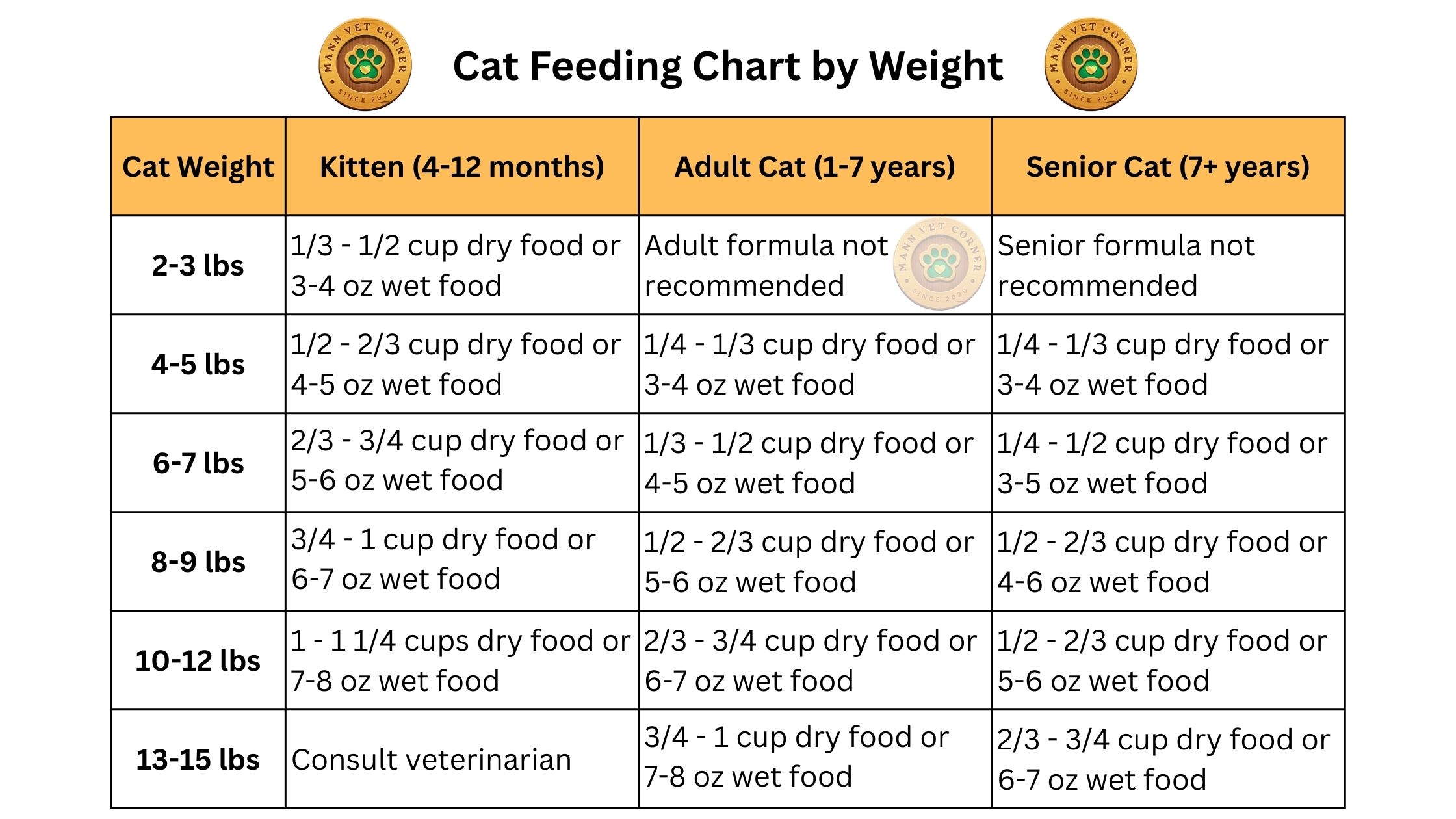
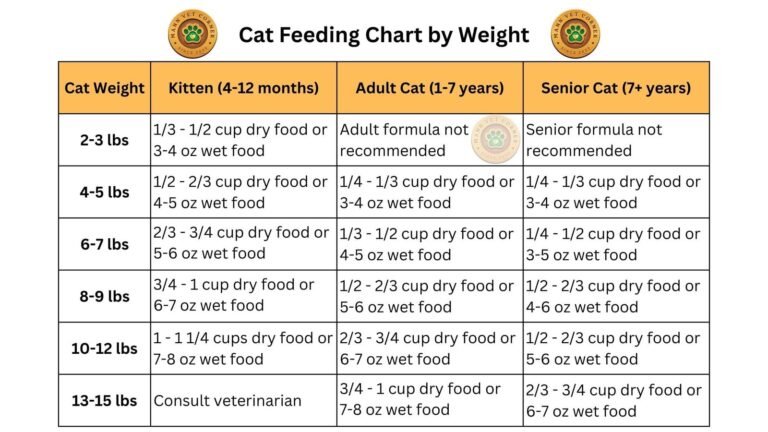
A feeding chart can help you plan, but it cannot replace a calorie calculation for an individual cat. The table below uses hypothetical calorie targets and example food values to show how wet and dry portions can change with different needs.
For this illustration, the wet food supplies 90 calories per 3-ounce can, and the dry food supplies 400 calories per cup. These values are examples only. Actual products may contain more or fewer calories, so check your labels before using any portion.
The daily targets below are not prescribed amounts for cats of those weights. Weight alone does not reveal whether a cat is lean, overweight, very active, elderly, or affected by a medical condition.
Source: michupet.com
Small adult cat
A smaller cat may need fewer total calories, so its dry portion should shrink when the wet-food share stays the same.
Larger adult cat
A larger cat may need more calories, but ideal body condition and activity matter as much as body weight.
Indoor adult cat
A cat that spends most of its time indoors may use less energy than a highly active cat of similar size.
Illustrative Daily Portion Table
The following table shows how the calculation works when each cat has a different assumed calorie target and receives one can of wet food daily. It is a math example, not a universal feeding chart.
200-calorie target
One 90-calorie can leaves 110 calories for dry food and treats. With no treats, that equals 0.275 cup of the example kibble.
250-calorie target
One 90-calorie can leaves 160 calories for dry food and treats. With no treats, that equals 0.4 cup of the example kibble.
300-calorie target
One 90-calorie can leaves 210 calories for dry food and treats. With no treats, that equals 0.525 cup of the example kibble.
Why Feeding Labels Can Give Different Amounts
One brand may recommend a full can for a certain weight, while another may suggest more cans or a combination of wet and dry food. The products may have different calorie densities, moisture levels, and nutritional formulations.
Feeding charts also use different assumptions about a cat’s age, activity, and body condition. Treat the package directions as a starting point, not an instruction to ignore your cat’s actual needs.
Check calories first
Compare energy content instead of comparing can counts or cup sizes alone.
Check the life-stage statement
Confirm that the food is complete and balanced for your cat’s life stage.
How Much Wet Food Should You Feed Along With Dry Food?
The amount of wet food depends on the share of daily calories you want it to provide. Some cats eat one small serving of wet food with measured kibble, while others receive several wet meals and only a little dry food.
Wet food contains much more water than dry kibble in most cases. This can help increase dietary water intake, although a cat’s total hydration also depends on drinking, health, environment, and the moisture content of its full diet.
Wet food is not automatically low in calories. Rich recipes, larger cans, and some gravy-based foods can deliver more energy than expected. Check the actual calorie content rather than assuming that every can is a light meal.
Source: storage.googleapis.com
One can plus kibble
Count the can’s calories, then calculate how much dry food fits the remaining allowance.
Two or more cans plus kibble
Add the calories from every can before deciding how much kibble to offer.
Wet food for most meals
Use the dry portion for a measured snack or meal, rather than adding an unrestricted bowl.
How Many Ounces Or Cans Of Wet Food Are Enough?
There is no universal number of cans because cans come in different sizes and recipes have different calorie levels. A 3-ounce can and a 5.5-ounce can do not provide the same amount of food, and their calorie totals may differ by more than their size alone suggests.
If a can contains 90 calories and your cat needs 240 calories per day, that can supplies 37.5 percent of the daily target. You can use the remaining 150 calories for dry food and any treats, provided the full diet remains nutritionally complete.
If your cat needs a different calorie target, repeat the calculation. Do not copy another cat’s can count unless you have confirmed that the cats have similar needs and eat the same product.
Read the net weight
Check whether the package contains 3 ounces, 5.5 ounces, or another serving size.
Read the calorie statement
Use calories per can or pouch to work out the real portion.
How Much Dry Food Should You Feed Along With Wet Food?
Dry food should fill only the calorie gap left after you account for wet food and treats. Because kibble has little moisture and is often calorie-dense by volume, a small-looking portion can provide a substantial amount of energy.
A free-filled bowl makes it difficult to know how much your cat eats. Even if your cat seems to stop when full, the total can creep up when food is always available, especially in a home where several people refill the bowl.
Measure the full daily dry portion once, then divide it between meals or place portions in a puzzle feeder. If you leave some food available during the day, take that amount from the measured daily allowance rather than adding more later.
Source: storage.googleapis.com
Use a consistent measure
A kitchen scale is useful when the package lists calories per gram or when small portions are hard to measure accurately.
Set aside the daily amount
Put the day’s kibble in a separate container so you can see how much remains.
Count extras
Include training treats, dental treats, and food used to give medicine when calculating the daily intake.
Is Dry Food More Fattening Than Wet Food?
Dry food is often more calorie-dense per gram because it contains much less water. This means a small volume can provide a large share of a cat’s daily energy needs.
That does not mean dry food always causes weight gain or that wet food guarantees weight loss. Total calories, portion size, activity, and the food’s nutrient profile determine whether the diet supports a healthy body condition.
If weight control is the goal, compare the calories in the actual portions you serve. A large serving of a high-calorie wet food can still exceed a cat’s needs, while a carefully measured dry portion can fit a healthy feeding plan.
Compare equal calorie amounts
Look at the volume and weight needed to provide the same number of calories, rather than judging food by bowl size.
Check the whole diet
Choose complete and balanced food and avoid reducing portions so much that the cat misses needed nutrients.
How To Feed Wet And Dry Food On A Daily Schedule
A steady feeding schedule helps you measure intake and notice changes in appetite. Many adult cats do well with two or more scheduled meals, while some prefer smaller meals spread across the day.
Choose a routine that fits your workday and your cat’s needs. If you leave for work early, you might offer wet food before leaving, measured kibble in a puzzle feeder later, and another wet meal in the evening.
Keep the daily total fixed even when you change the number of meals. Four small meals should contain the same planned daily calories as two larger meals unless your veterinarian recommends a different intake.
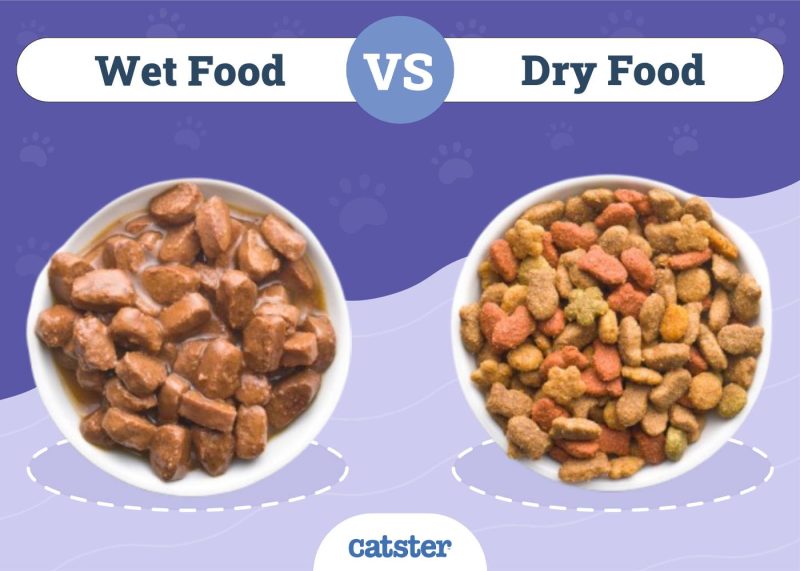
Source: www.catster.com
Morning
Serve a measured wet-food portion and any planned dry food for the first meal.
Midday
Offer part of the measured dry ration in a puzzle feeder or use a scheduled feeder if suitable.
Evening
Serve the remaining wet food and dry food portions needed to meet the daily plan.
Before bed
Check what your cat actually ate and record any uneaten food, extra treats, or unusual changes.
How Long Can Wet Cat Food Sit Out?
Wet cat food spoils more quickly at room temperature than dry kibble. A common food-safety guideline is to remove uneaten wet food after about two hours at normal room temperature, and sooner when the room is very warm.
Do not leave wet food out for an entire workday simply because your cat prefers to graze. Serve smaller portions, refrigerate unused food promptly according to the package directions, and wash food bowls regularly.
Automatic feeders designed for wet food may help when you need timed meals. Follow the device’s instructions and do not assume that every feeder keeps food safely chilled.
Serve small portions
Offer only what your cat is likely to eat during the meal.
Refrigerate leftovers
Cover opened cans or transfer food to a suitable container and follow the manufacturer’s storage guidance.
Watch for heat
Food can spoil faster in hot conditions, so remove leftovers sooner when the room is warm.
How Age, Activity, And Health Change Feeding Amounts
Your cat’s daily calorie needs can change over time. A growing kitten has different needs from a mature adult, and a senior cat may need a different feeding plan because of changes in muscle mass, activity, or health.
Body weight is useful, but it does not tell the whole story. Two cats that weigh 10 pounds may have very different ideal weights, activity levels, and calorie needs.
Review portions when your cat’s routine changes, such as after neutering, a move from outdoor access to indoor living, or a change in activity. If your cat gains or loses weight without a clear reason, speak with a veterinarian rather than repeatedly changing food amounts on your own.
Source: pawsbro.com
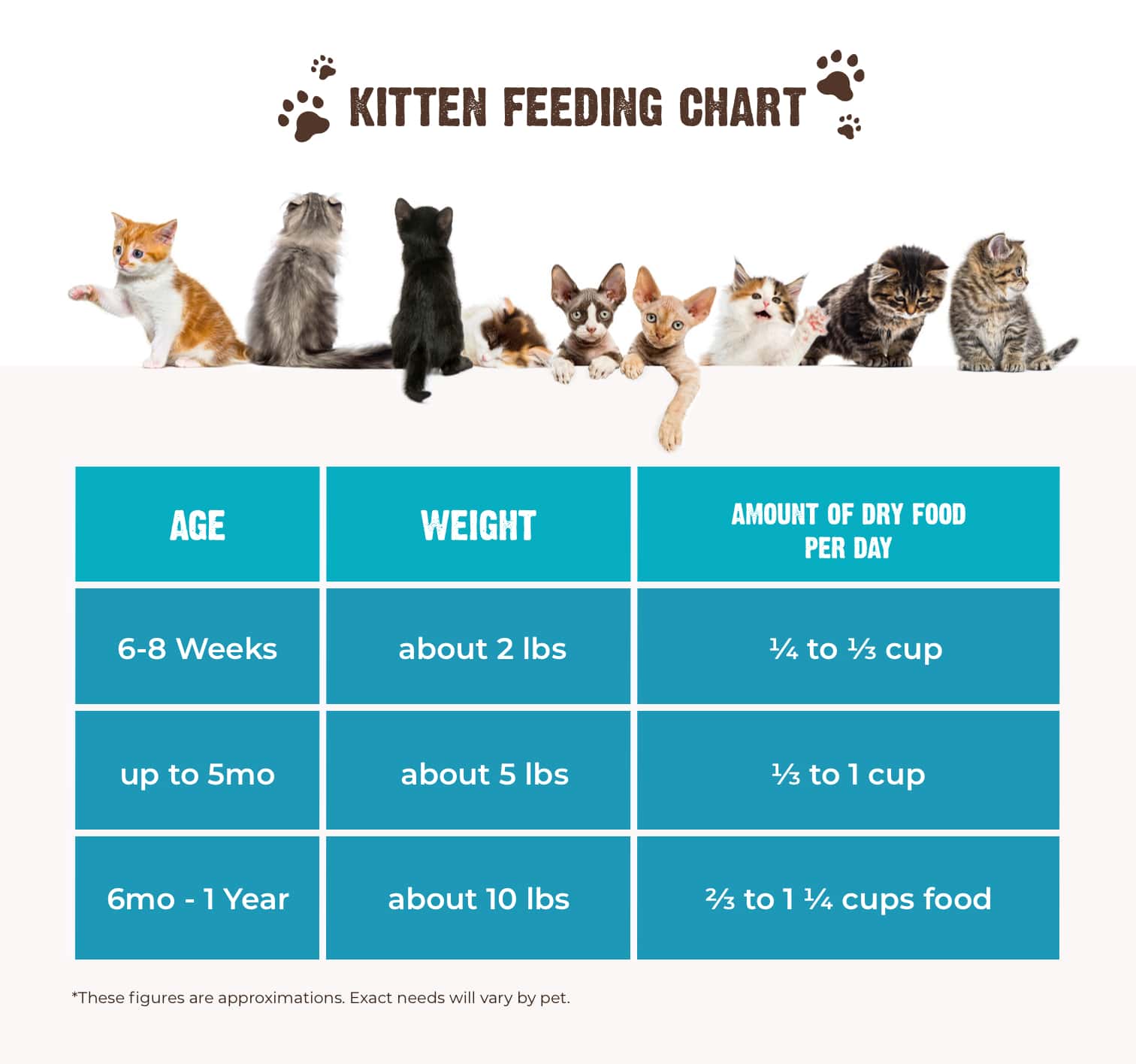
Kittens
Growing kittens often need more calories per pound than adults and usually benefit from several meals a day. Use food labeled complete and balanced for growth or all life stages.
Adult cats
Most healthy adults need a measured daily intake based on ideal body weight, body condition, and activity.
Senior cats
Older cats may need a review of calories, protein, hydration, and dental comfort. Age alone does not mean every senior cat should eat less.
Overweight cats
Weight loss should be gradual and planned. A veterinarian can set a safe calorie target and help protect muscle mass.
Pregnant or nursing cats
Energy needs can rise substantially during pregnancy and nursing. Ask your veterinarian about an appropriate growth or reproduction diet and feeding schedule.
What If Your Cat Is Overweight?
If your cat is overweight, do not sharply cut both wet and dry food at once without guidance. Cats that eat too little for too long can develop serious health problems, including hepatic lipidosis, a dangerous condition involving fat buildup in the liver.
A veterinarian can estimate an appropriate target weight, calculate a safe calorie allowance, and suggest a diet that supplies essential nutrients during weight loss. The plan may involve changing the mix of wet and dry food, but the calorie and nutrient totals matter most.
Weigh your cat regularly using a suitable pet scale or a reliable home method. Record the result and discuss the trend with your veterinarian instead of judging progress only by how the cat looks.
Avoid crash diets
Do not starve a cat or make a large sudden reduction in food intake.
Use measured portions
Weigh or measure each meal and include all treats in the total.
Track gradual change
Follow the veterinarian’s recommended rate of weight loss and schedule.
What If Your Cat Is Underweight Or Suddenly Eats Less?
A cat that is underweight may need more calories, but the cause of the low weight matters. Dental pain, intestinal disease, parasites, kidney problems, stress, and other conditions can affect appetite or weight.
Do not assume that adding more kibble will solve unexplained weight loss. Arrange a veterinary check if your cat loses weight without a clear reason, eats much less than usual, or has ongoing vomiting, diarrhea, or other concerning signs.
Contact a veterinarian promptly if your cat stops eating. Cats that go without adequate food can become seriously ill, and kittens, overweight cats, and cats with existing conditions may face added risks.
Watch appetite changes
Record what your cat eats and when the change began.
Check for other signs
Note changes in thirst, urination, stool, activity, and vomiting.
Get timely help
Seek veterinary advice rather than waiting several days for appetite to return.
How To Tell If You Are Feeding The Right Amount
The best way to check your feeding plan is to track body condition, weight, appetite, and energy over time. A cat that eats eagerly is not necessarily hungry, and a cat that leaves some food behind is not necessarily getting too much.
Look at your cat from above and from the side. In a cat at a healthy body condition, you can usually feel the ribs beneath a light layer of fat, see a waist behind the ribs, and notice a modest abdominal tuck. Long fur can hide these features, so use touch as well as sight.
Keep a simple feeding record for a few weeks. Write down the amount of wet food, dry food, and treats, along with periodic weights and any appetite changes. This record makes it easier to see whether the plan is working and gives your veterinarian useful information.
Source: spice.alibaba.com
Signs the amount may be suitable
Your cat maintains a healthy body condition, has steady energy, eats normally, and does not show unexplained weight changes.
Signs the intake may be too high
Your cat gains excess weight over time, loses its visible waist, or receives frequent unmeasured snacks in addition to meals.
Signs that need attention
Sudden weight loss, a major appetite change, persistent vomiting, diarrhea, marked thirst changes, or lethargy can indicate a problem beyond portion size.
When Should You Adjust The Portions?
Do not change the plan after one unusual meal or one small change on the scale. Look for a consistent pattern and consider whether treats, other pets’ food, activity, or changes in routine explain it.
If a healthy adult cat gradually gains weight, ask your veterinarian whether the daily calorie target should be lowered. If the cat loses weight unexpectedly or appears unwell, seek veterinary advice before increasing or reducing portions.
When a veterinarian recommends an adjustment, change the measured amount carefully and monitor the result. Recheck the food labels whenever you change brands because a new recipe may provide more or fewer calories per serving.
Review the total
Add wet food, dry food, treats, table scraps, and food used for medication.
Recheck the label
Confirm calories per can, pouch, cup, or gram after every product change.
Monitor the trend
Use repeat weight checks and body condition rather than appetite alone to judge the result.
Common Mistakes When Mixing Wet And Dry Cat Food
Mixed feeding can work well, but small mistakes can add up over weeks or months. The most common problem is treating the wet-food amount and dry-food amount as two separate full diets rather than parts of one daily allowance.
Another common mistake is judging food by volume alone. A large bowl of wet food may contain fewer calories than a small amount of kibble, while a high-calorie canned recipe may provide more energy than expected.
A clear routine helps prevent these problems. Measure the daily portions, tell everyone in the household how much the cat can receive, and keep an eye on weight and appetite.
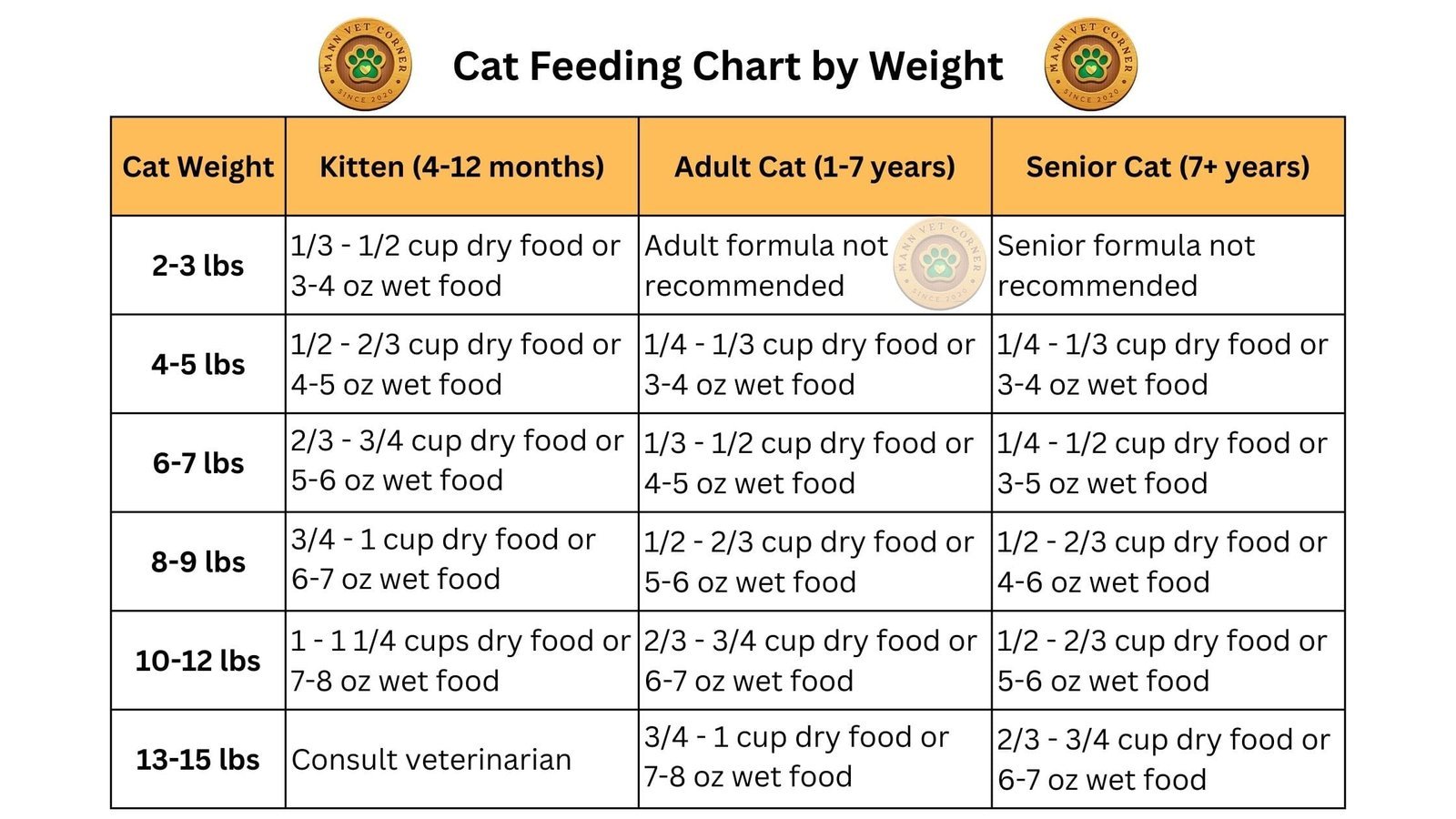
Source: mannvetcorner.com
Feeding two full portions
Do not give the full recommended daily serving of wet food and the full recommended daily serving of dry food unless a professional plan specifically accounts for both.
Ignoring treats
Treats and table scraps add calories. As a general guideline, treats should make up no more than about 10 percent of daily calories, with most nutrition coming from complete and balanced food.
Switching food too quickly
A sudden change can upset some cats’ stomachs. When practical, transition gradually over about a week or as directed by your veterinarian.
Leaving wet food out too long
Remove uneaten wet food after about two hours at room temperature, sooner in hot conditions, and follow package storage guidance.
Choosing food that is not complete and balanced
Check the nutritional adequacy statement and select a product suitable for the cat’s life stage. Foods labeled for supplemental or intermittent feeding should not be assumed to provide a complete diet.
Ignoring medical needs
Cats with kidney disease, diabetes, urinary conditions, food allergies, or other health concerns may need a specific feeding plan. Ask the veterinarian before changing the diet.
How To Switch Your Cat To A Mixed Diet
Introduce a new food gradually when your cat is otherwise well and your veterinarian has not advised a faster change. Start by replacing a small part of the current diet with the new food, then increase the new portion over several days.
For example, you might begin with roughly 25 percent new food and 75 percent old food, then move to a half-and-half mix, followed by 75 percent new food and 25 percent old food. These are practical transition examples, not rigid rules. Some cats need a slower change, especially if they have a sensitive stomach.
Keep the total calories close to the planned amount during the transition. If you add wet food, reduce the dry portion accordingly instead of giving the new food as an extra meal. Stop and contact your veterinarian if your cat develops persistent digestive signs or refuses food.
Begin with a small change
Mix a little of the new food into the existing routine when the foods can be safely combined.
Increase gradually
Move toward the new plan as your cat tolerates it, using a slower pace if needed.
Protect food intake
Do not let a cat go without adequate nutrition because it rejects the new food. Ask for veterinary advice if it refuses meals.
Choosing A Suitable Wet And Dry Food Combination
Choose foods that meet your cat’s nutritional needs before deciding on a preferred ratio. In the United States, look for a nutritional adequacy statement indicating that the food is complete and balanced for the appropriate life stage or is suitable for all life stages when that fits your cat.
The Association of American Feed Control Officials, commonly called AAFCO, establishes nutritional model standards and feeding-test protocols used in pet food regulation. AAFCO does not approve or endorse individual pet food brands. The label’s nutritional adequacy statement helps you determine whether a product is intended to provide a complete diet.
Wet and dry food can both provide complete nutrition when properly formulated. Wet food offers more moisture, while dry food is convenient to store, measure, and use in some puzzle feeders. The right choice depends on your cat’s needs, preferences, dental health, and your ability to maintain accurate portions.
Source: petMD
For kittens
Choose food labeled complete and balanced for growth or all life stages, and follow veterinary guidance on frequent meals and growth.
For healthy adults
Choose a complete and balanced adult-maintenance diet and adjust the portion to maintain a healthy body condition.
For cats with medical conditions
Use a therapeutic diet when prescribed and ask before mixing it with another food that could change its nutritional effect.
For picky eaters
Try suitable textures and serving temperatures while preserving the daily calorie plan. Do not rely on unbalanced homemade additions to make up most of the diet.
Does Wet Food Help Cats Drink More Water?
Wet food supplies water as part of the meal, so cats that eat it usually receive more dietary moisture than cats that eat only dry food. This can be useful for cats that do not drink much from a bowl, although the benefit depends on the whole diet and the individual cat.
Keep clean, fresh drinking water available even when your cat eats wet food. Some cats prefer wide, shallow bowls or a water fountain, while others drink more when water is placed away from food and litter areas.
If your cat suddenly drinks much more or much less than usual, contact a veterinarian. A change in thirst can be a sign of a medical problem and should not automatically be blamed on the food.
Offer fresh water
Wash bowls and refill them regularly.
Consider preferences
Try a clean bowl or a different water location if your cat avoids its current setup.
Watch for changes
Seek veterinary advice if drinking or urination changes noticeably.
A Practical Checklist For Your Cat’s Feeding Plan
A good feeding plan should be easy to follow every day. It should state the total daily calorie target, the number of cans or pouches, the dry-food amount, the treat allowance, and the times you plan to serve each portion.
Write the plan where everyone who feeds the cat can see it. If more than one person offers food, use a shared record or a premeasured container to prevent accidental double meals.
Review the plan regularly, especially when your cat’s weight, activity, health, or food brand changes. A simple system is more useful than a complicated schedule that no one can follow consistently.
Source: www.catster.com
Confirm the calorie target
Use a veterinary recommendation when possible, especially if your cat needs weight loss or has a medical condition.
Read both labels
Record calories per can or pouch and calories per cup or gram.
Measure each portion
Set aside the total wet food, dry food, and treats allowed for the day.
Maintain a schedule
Divide the daily allowance into meals that suit your cat and household.
Track results
Record weight, appetite, and unusual signs, then review the plan when the pattern changes.
A Simple Daily Feeding Record
You can keep a short note on your phone or a paper chart near the food storage area. Record the food name, portion, time, and any leftovers so you can compare the planned amount with what your cat actually eats.
If you have multiple cats, feed them separately when possible and check that each one receives its own portion. A shared bowl can make it difficult to know which cat ate the food and how much each cat consumed.
Morning entry
Record the wet and dry portions served and any medicine given with food.
Evening entry
Record the remaining food, treats, and any change in appetite.
Weekly review
Check the feeding record and weight trend, and contact your veterinarian if you notice a concerning change.
Frequently Asked Questions
Q
Can I Feed My Cat Wet Food In The Morning And Dry Food At Night?
Yes. You can serve wet food in the morning and dry food at night if the combined portions meet your cat’s daily calorie and nutritional needs. You can also reverse the schedule or divide both types between meals.
Measure the entire day’s allowance first. The main concern is not the order of the foods but whether your cat receives the right total amount and whether the foods are suitable for its life stage and health.
Q
Is It Better To Feed Cats Wet Food, Dry Food, Or Both?
Wet food, dry food, and mixed feeding can all work when the diet is complete and balanced and the portions match the cat’s needs. Wet food provides more dietary moisture, while dry food is convenient to store and portion.
There is no single best ratio for every cat. Consider your cat’s hydration, preferences, body condition, medical needs, and your ability to measure meals accurately. A veterinarian can help if your cat has a condition that calls for a specific diet.
Q
How Much Wet And Dry Food Should I Feed A 10-Pound Cat?
A 10-pound cat does not have one universal daily portion. A broad starting estimate for many adult cats is about 200 to 300 calories per day, but the right amount depends on ideal body weight, activity, age, body condition, and health.
For a hypothetical 250-calorie target, two cans containing 90 calories each would provide 180 calories. The remaining 70 calories could come from dry food, assuming no additional calories are needed for treats. Check your actual food labels and ask your veterinarian to confirm the target.
Q
Can I Leave Dry Food Out All Day If My Cat Also Eats Wet Food?
You can use measured dry food for grazing if your cat maintains a healthy weight and does not overeat. Set aside the full daily dry-food allowance and do not refill the bowl without accounting for the extra calories.
If your cat gains weight or you cannot track how much it eats, scheduled meals or a suitable automatic feeder may make portion control easier. Remove wet-food leftovers after about two hours at room temperature, and sooner when conditions are hot.
Q
How Many Times A Day Should I Feed Wet And Dry Food?
Many adult cats do well with two or more meals per day, while some prefer several small meals. Kittens generally need more frequent feeding because they are growing and have different energy needs.
Divide the daily calorie allowance across the meals rather than giving a full day’s amount at each feeding. Follow your veterinarian’s instructions if your cat has a medical condition or needs a special schedule.
Q
Should I Reduce Dry Food When I Add Wet Food?
Yes, if the added wet food would otherwise push the total above your cat’s daily calorie target. Calculate the calories in the wet food, subtract them from the daily allowance, and use the remaining calories to determine the dry portion and treat budget.
For example, adding a 90-calorie can to an unchanged dry-food ration adds 90 calories to the daily total. Unless your cat needs those extra calories, reduce the dry portion or otherwise revise the plan.
Q
How Do I Know If My Cat Is Eating Too Much?
Gradual weight gain, loss of a visible waist, and a growing layer of body fat can suggest that your cat is getting more calories than it uses. Unmeasured kibble, treats, table scraps, and food from another pet’s bowl can all add to the total.
Track portions and body weight, then discuss persistent weight gain with your veterinarian. Do not put an overweight cat on a crash diet because severe food restriction can cause serious illness.
✦ Wrapping Up
Conclusion
The right amount of wet and dry food depends on your cat’s daily calorie needs, the calories in each product, and the cat’s age, activity, body condition, and health. Start with a suitable calorie target, calculate the wet-food portion, and use the remaining allowance to measure dry food and treats.
A balanced feeding plan does not have to be complex. Read the labels, measure each portion, follow a steady schedule, and keep fresh water available. Watch your cat’s weight and appetite so you can spot changes before they become bigger problems.
If your cat is growing, losing weight, gaining excess fat, refusing food, or living with a health condition, ask a veterinarian for an individualized plan. The goal is not to feed a certain number of cans or cups; it is to provide enough complete nutrition to support a healthy, comfortable life.
💡 Key Takeaway
Today, write down your cat’s daily calorie target, the calories per can of wet food, and the calories per cup of dry food. Calculate the wet portion first, subtract its calories from the daily target, and measure the remaining dry food and treat allowance. Review the plan with your veterinarian if you are unsure about the target.