How much does allergy testing cost for a dog: Easy guide
How much does allergy testing cost for a dog? Most pet parents pay somewhere between $150 and $600 for a full workup, depending on the test type and whether a board-certified veterinary dermatologist is involved. Blood serum panels run $150 to $350, intradermal skin testing usually lands at $200 to $400, and the consultation fee often adds another $150 to $250 on top.
As of 2026, those numbers hold steady in most U.S. markets, though coastal cities trend higher.
The tricky part isn't the sticker price. It's knowing which test your dog actually needs, what insurance will cover, and which expenses sneak in after the diagnosis lands. We're going to walk through the real costs, the trade-offs between test types, and the mistakes that drain budgets without giving you useful answers.
Quick Answer
Dog allergy testing costs $150 to $600 in 2026. Blood serum panels average $150 to $350. Intradermal skin testing runs $200 to $400.
Veterinary dermatology consults add $150 to $250. At-home saliva kits cost $80 to $200 but are less reliable.
Why Accurate Allergy Testing Matters (and Why Cost Isn't the Only Variable)
A wrong test, or the wrong test at the wrong time, can cost you twice. You pay once for the panel that doesn't help, then again for the one you actually needed. Worse, your dog spends weeks on trial-and-error meds while the real trigger keeps flaring up.
Veterinary dermatologists follow guidelines from the American College of Veterinary Dermatology, which sets standards for how allergy diagnoses should be approached. The goal is simple: identify the trigger, then build a treatment plan that targets it instead of masking symptoms.
Here's what makes this more than a price comparison:
- Test accuracy varies a lot between methods. Intradermal skin testing remains the gold standard for environmental allergies, with sensitivity rates around 75 to 85 percent in peer-reviewed studies.
- Medication washout matters. Dogs on Apoquel, steroids, or antihistamines often need 14 to 30 days off those drugs before skin testing gives clean results. Skipping this step wastes the appointment.
- Insurance doesn't always pay. Many policies cover diagnostics but exclude allergy-specific panels or treat them as pre-existing.
The cheapest option is rarely the smartest one. A $99 at-home saliva kit might look appealing, but the American Veterinary Medical Association has long cautioned that direct-to-consumer allergy tests for pets lack validation. You're often paying for noise, not answers.
The Three Main Types of Dog Allergy Tests
There are really only three paths a vet will consider. Each one looks at allergies differently, costs differently, and fits different situations.
Intradermal Skin Testing (IDT)
This is the gold standard for environmental allergies, also called atopy. The dog is lightly sedated, a patch of fur on the side or chest is shaved, and tiny amounts of common allergens (grasses, trees, dust mites, mold spores) are injected just under the skin. After 15 to 20 minutes, the vet reads the reaction.
Raised, red wheals point to a positive response.
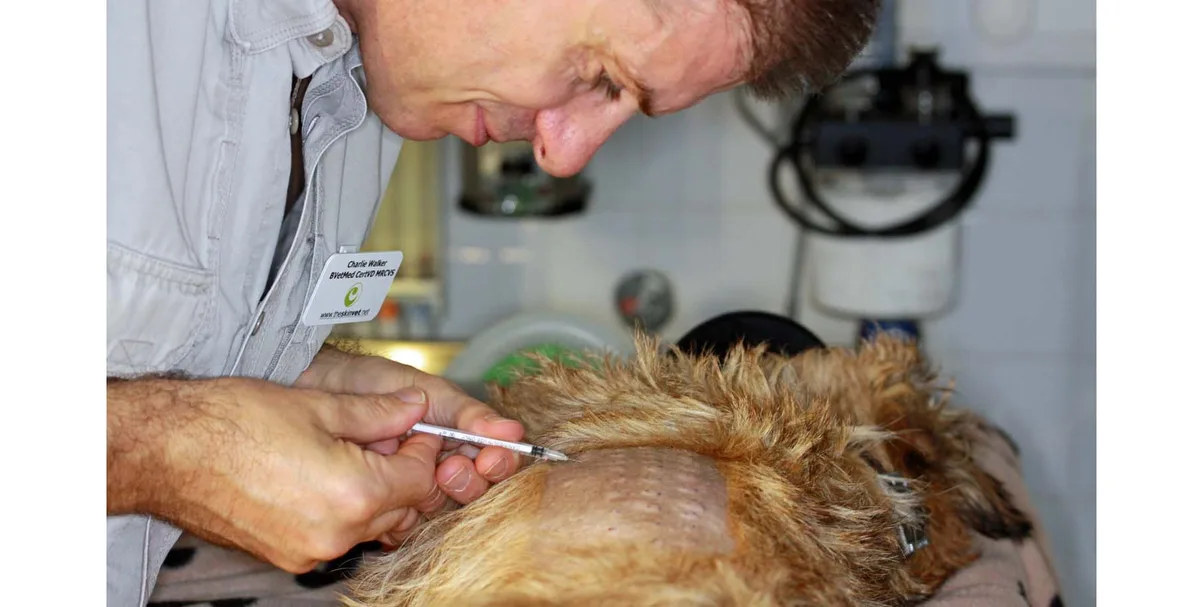
IDT works best for dogs whose main symptom is itching, licking, or recurrent skin and ear infections. It requires a washout period from steroids (typically 14 to 30 days) and from Apoquel (about 7 to 14 days). Antihistamines usually need 7 to 10 days off.
Cost range: $200 to $400 for the test itself, often bundled with a dermatology consultation that brings the total to $500 to $700.
Why it matters: IDT feeds directly into immunotherapy formulation. If the test shows a dust mite and storage mite allergy, the lab can mix a custom allergy vaccine (shots or sublingual drops) targeting those exact triggers.
Serum IgE Blood Testing
A blood draw measures allergen-specific IgE antibodies in the bloodstream. It's easier logistically because sedation isn't required, and dogs don't need to stop most medications as long in advance.
Cost range: $150 to $350 depending on the lab (Heska, VARL, Spectrum, Bio-Medical Services) and how many allergens are on the panel. Expanded panels covering 80+ allergens cost more.
Best for: dogs who can't be sedated, dogs in remote areas without a dermatologist nearby, or dogs whose symptoms are moderate and the vet wants a broad screening. Blood tests are also used when immunotherapy is the goal but intradermal testing isn't feasible.
Limitations: sensitivity is lower than IDT for environmental allergens, around 60 to 75 percent depending on the study. False positives happen, especially with cross-reactive allergens.
Saliva, Hair, and At-Home Kits
These are the kits you see online. You swab the dog's mouth, snip some fur, mail it in, and get a colorful report a few weeks later.
Cost range: $80 to $200.
Honest take: most veterinary dermatologists don't consider these reliable. The American College of Veterinary Dermatology doesn't endorse them for clinical diagnosis. They can mislead owners into eliminating foods the dog doesn't actually react to, or worse, missing the real trigger entirely.
If money is extremely tight, a structured elimination diet trial (covered later) gives you more useful information about food than a saliva kit ever will.
What Each Test Actually Diagnoses
Not all allergies are the same, and not every test covers every type. This is where a lot of pet parents get confused, and where costs can snowball.
Environmental Allergies (Atopy)
Pollen, mold, dust mites, storage mites, and indoor allergens. Intradermal skin testing is the most accurate for these. Blood serum tests work but with slightly lower sensitivity.
Saliva kits aren't validated for environmental allergies at all.
Food Allergies vs Food Sensitivities
True food allergies involve an immune response, usually IgE-mediated. Food sensitivities are more about digestion and may not show up on any allergy test. Here's the hard truth: the only reliable way to diagnose a food allergy in dogs is an elimination diet trial lasting 8 to 12 weeks, not a blood or saliva panel.
Cost of a proper elimination trial: $50 to $300 depending on whether you use a prescription hydrolyzed protein diet (Hill's z/d, Royal Canin Hydrolyzed Protein, Purina HA) or a novel protein approach under vet guidance.
Flea Allergy Dermatitis
FAD is the most common allergy in dogs and the easiest to miss. A single flea bite can trigger weeks of itching in a sensitive dog. Testing isn't usually needed.
If your dog is on year-round flea prevention and still itching, FAD is less likely, but it's always part of the initial workup.
Full Cost Breakdown by Test Type
Here's how the numbers stack up side by side:
| Test Type | Cost Range | Best For | Reliability |
|---|---|---|---|
| Intradermal Skin Test | $200 to $400 | Environmental allergies, immunotherapy planning | High (75 to 85 percent sensitivity) |
| Serum IgE Blood Test | $150 to $350 | Dogs who can't be sedated, remote locations | Moderate (60 to 75 percent) |
| At-Home Saliva/Hair Kit | $80 to $200 | Not recommended for diagnosis | Low, not validated |
| Elimination Diet Trial | $50 to $300 | Suspected food allergies | High for food, gold standard |
| Dermatology Consultation | $150 to $250 | Complex or chronic cases | N/A (exam fee) |
Add it up for a full workup: a vet visit, intradermal testing, and initial treatment plan can realistically run $600 to $1,000 at a specialty clinic. A general practice vet doing a blood panel might keep it under $400.
Cost Variables Most Vets Won't Mention Upfront
The published price ranges are honest, but they don't capture what really changes your bill. These are the variables that explain why two dog owners in the same city can pay $300 or $900 for the same test.
Regional Pricing Differences
Coastal cities (New York, San Francisco, Boston, Seattle) run 20 to 40 percent higher than the national average. The Midwest and South tend to sit at or below average. Rural areas with limited specialists often have lower consult fees but higher travel costs if you need to see a dermatologist.
Urban vs Rural Clinic Rates
A board-certified veterinary dermatologist in a major metro area typically charges $200 to $350 just for the initial exam. A general practice vet in a small town might charge $75 to $125 for the same visit. The trade-off: specialists carry more diagnostic experience, and complex cases usually end up there anyway.
Breed and Age Factors
Some breeds need more sedation monitoring (brachycephalic breeds like Bulldogs and Pugs). Older dogs may need pre-anesthetic bloodwork ($80 to $200) before IDT. None of this is hidden, but it's rarely itemized on the first estimate.
Pre-Test Medication Washout Costs
If your dog is currently on Apoquel, Cytopoint, steroids, or antihistamines, you'll likely need to stop them before testing. That window of unmanaged itching can mean extra meds, extra cone use, or extra baths to keep your dog comfortable. Factor in $30 to $100 for interim comfort supplies.
When You Actually Need a Veterinary Dermatologist (vs Your Regular Vet)
A general practice vet handles straightforward cases well. If your dog has mild seasonal itching, a single food trial, or a recent flea allergy flare, start there. The cost is lower and the wait is shorter.
A board-certified veterinary dermatologist (DACVD) is worth the referral when:
- The itching hasn't responded to standard treatments after 3 to 6 months.
- Your dog has recurrent ear infections (more than 3 per year).
- Skin infections keep coming back despite antibiotics.
- You're considering immunotherapy and want accurate IDT results.
- The diagnosis is unclear after initial workup.
Wait times for new dermatology appointments typically run 2 to 8 weeks in most U.S. markets. That's another reason to start with your regular vet and get the referral process moving early.
Does Pet Insurance Cover Allergy Testing?
Coverage depends on the insurer, the plan tier, and whether the condition is pre-existing. Most accident-and-illness plans do cover diagnostic testing, including allergy panels, as long as the condition wasn't noted before your policy's effective date.
Pre-Authorization and Reimbursement
Some insurers (Trupanion, Healthy Paws) pay the vet directly at checkout. Others (Embrace, MetLife) require you to pay upfront and submit for reimbursement. Either way, you'll want a pre-authorization for any test over $500.
Typical reimbursement: 70 to 90 percent of the invoice after your deductible is met.
Common Exclusions to Watch For
- Pre-existing conditions (allergies noted before enrollment often excluded).
- Wellness plans (these don't cover diagnostics).
- At-home kits (rarely eligible for reimbursement).
- Dietary trials (food costs usually out of pocket).
Read the fine print before scheduling. A five-minute call to your insurer can save a $400 surprise.
The Hidden Cost: Treatment After Diagnosis
Testing is step one. Treatment is where the real money shows up, and where long-term planning matters most.
Immunotherapy (Allergy Shots vs Sublingual Drops)
Once IDT or serum testing identifies triggers, a lab formulates a custom vaccine. This is where the diagnostic investment pays off.
- Allergy shots (subcutaneous immunotherapy, SCIT): $300 to $700 initial formulation, then $20 to $60 per month for vials.
- Sublingual drops (SLIT): $300 to $500 initial, then $30 to $80 per month.
Both have similar success rates. Per peer-reviewed studies in Veterinary Dermatology, about 60 to 80 percent of dogs show meaningful improvement within 6 to 12 months. Shots are cheaper per dose.
Drops are easier to administer.
Prescription Elimination Diets
If food allergy is suspected, expect $50 to $100 per month on prescription hydrolyzed protein food during the 8 to 12 week trial. After diagnosis, you may continue the food long-term or test reintroduction of specific ingredients.
Ongoing Meds Like Apoquel and Cytopoint
Many dogs need symptomatic relief even while immunotherapy ramps up. Apoquel runs $2 to $4 per tablet daily. Cytopoint injections at the vet cost $50 to $150 every 4 to 8 weeks.
Over a year, these add $600 to $1,800 to your allergy budget.
Realistic Budgets: Mild, Moderate, and Severe Allergy Cases
| Case Severity | Testing Costs | First-Year Treatment | Total Year One |
|---|---|---|---|
| Mild (seasonal, responsive to meds) | $150 to $300 (blood test + exam) | $300 to $600 | $450 to $900 |
| Moderate (year-round, needs immunotherapy) | $400 to $700 (IDT + consult) | $1,200 to $2,000 | $1,600 to $2,700 |
| Severe (recurrent infections, multiple allergens) | $600 to $1,000 (specialist workup) | $2,000 to $3,500 | $2,600 to $4,500 |
These are realistic U.S. ranges as of 2026. Insurance can cut out-of-pocket by half or more if your plan covers chronic conditions.
Mistakes Pet Owners Make With Allergy Testing
These are the missteps that cost money without delivering answers.
Paying for Unreliable At-Home Tests
We've covered this twice already because it matters that much. A $150 saliva kit that points to the wrong allergens leads to a $400 vet bill later when the real problem is still there. Skip the kit, save for the real test.
Skipping the Washout Period
If your vet says stop Apoquel for 14 days before skin testing, do it. Testing while the drug is suppressing skin reactions gives you false negatives. You'll have paid $400 for a panel that says your dog is allergic to nothing.
Confusing Food Allergy Tests With Elimination Diet Trials
No blood, saliva, or hair test reliably diagnoses food allergy in dogs. The elimination diet trial is the only validated method. Spending $200 on a food panel is wasted money if it delays a proper trial.
Treating Symptoms Without a Diagnosis
Apoquel and Cytopoint manage itching. They don't tell you what's causing it. Long-term symptom suppression without identifying triggers means your dog stays on meds forever, and you never solve the underlying problem.
How to Decide Which Test Is Right for Your Dog
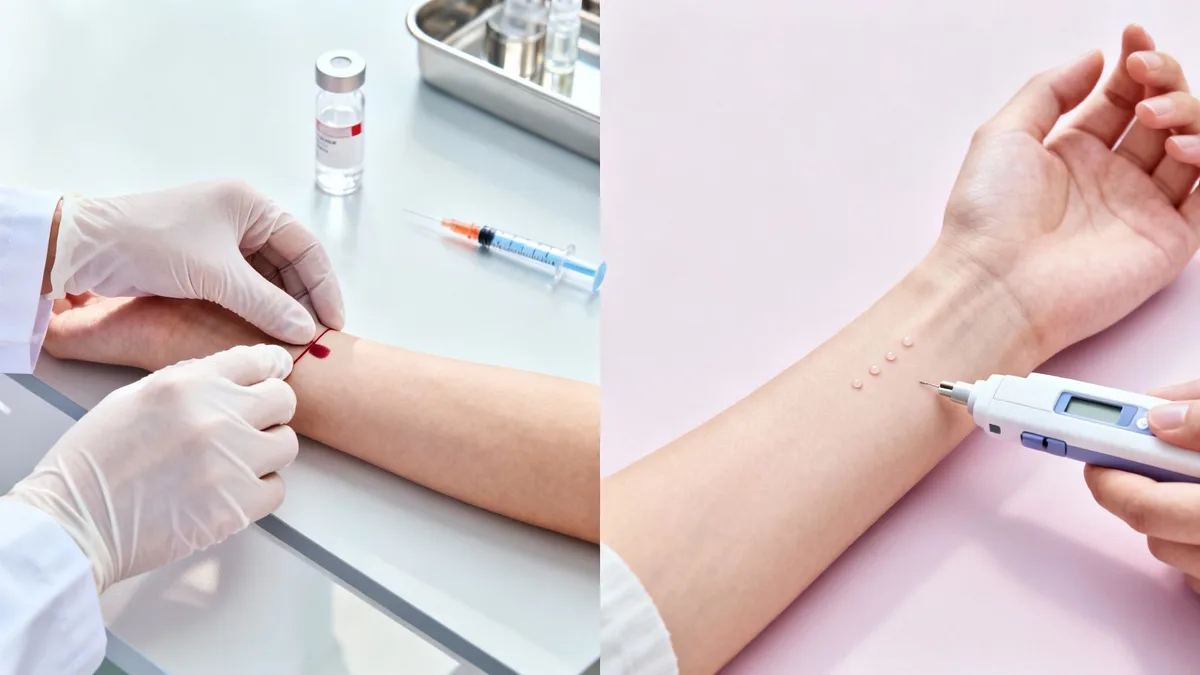
Use this decision path:
- Symptoms mostly environmental (seasonal, paws, ears, armpits)? Go IDT if a dermatologist is accessible. Go serum if not.
- Symptoms year-round and food is suspected? Start an elimination diet trial in parallel with any environmental testing.
- Dog can't be sedated, or you're remote? Serum IgE blood testing is your best bet.
- Budget under $200? Skip the kits, talk to your vet about a structured trial of Apoquel or Cytopoint while you save for proper testing.
- Already on long-term meds with no diagnosis? Ask your vet about a referral. The cost of testing now is usually less than another year of trial-and-error.
Questions to Ask Your Vet Before Agreeing to Any Test
- What's the most likely allergy type based on my dog's symptoms?
- Do we need a washout period, and for how long?
- Is this test feeding into an immunotherapy plan, or is it diagnostic only?
- What's the total cost including follow-up visits?
- Does my insurance cover this, and do you handle the claim?
- If this test is inconclusive, what's the next step?
A good vet will answer these without hesitation. If they can't, get a second opinion.
The Three Main Types of Dog Allergy Tests: Quick Reference
IDT gives the clearest environmental results but needs sedation. Serum works almost anywhere with lower sensitivity. At-home kits look cheap and usually aren't worth the money.
Food allergies need a diet trial, not a test.
How to Talk to Your Vet About Cost Without Feeling Awkward
Ask for an itemized quote before any test is scheduled. Itemization shows the exam fee, lab fee, sedation fee, and follow-up separately, so you can ask which lines are flexible. Phrases that work in real clinics: "Can we phase this?" "Is there a lower-cost lab for the serum?" "If I pay today instead of billing, is there a discount?"
When the Test Is Negative but the Dog Is Still Itchy
A negative panel doesn't mean your dog isn't allergic. It means the panel missed it. Common reasons: incomplete medication washout, uncommon allergens, or non-allergic causes like mites or yeast.
If symptoms persist, your vet should pivot to skin scrapings, cytology, or biopsy, which catch what allergy tests miss.
Real Owner Scenarios: What Three Common Cases Actually Cost
A Golden with seasonal itching: $220 serum panel, $90/month Apoquel, $400 initial immunotherapy. Year one around $1,130. A Bulldog with year-round ear infections: $285 consult, $375 IDT, $450 initial SLIT, $120 Cytopoint every 6 weeks.
Year one near $2,400. A mixed breed with suspected food allergy: $75/month hydrolyzed food for a 12-week trial. Year one about $900.
When to Skip Testing and Go Straight to Treatment
If your dog has mild seasonal itching that responds to Apoquel or Cytopoint, and you're not pursuing immunotherapy, a $400 panel won't change your management. The same logic applies to elderly dogs or those with other major health issues, where sedation risk may outweigh the benefit of a definitive diagnosis. Testing makes sense when symptoms are severe, multiple treatments have failed, or you specifically want long-term immunotherapy.
Frequently Asked Questions
Is allergy testing worth the money for dogs?
Yes, when the goal is long-term management or immunotherapy. Testing pays for itself if it lets you stop guessing and treat the actual trigger.
Can I test my dog for allergies at home?
At-home saliva and hair kits exist but aren't validated for clinical diagnosis. Per current veterinary dermatology standards, they produce unreliable results.
What's the cheapest way to find out what my dog is allergic to?
Talk to your regular vet about a targeted exam and a food elimination trial. That combination costs $200 to $400 and gives you more useful data than any direct-to-consumer kit.
How long do allergy test results take?
Blood serum panels usually return in 1 to 3 weeks. Intradermal skin testing gives results the same day. Custom immunotherapy adds another 2 to 4 weeks.
Will my dog need to be sedated for allergy testing?
Only for intradermal skin testing. The sedation is light, but pre-anesthetic bloodwork ($80 to $200) is often required for older dogs or brachycephalic breeds.
How much does allergy testing cost for a dog without insurance?
Expect to pay full price: $150 to $600 for the test plus $150 to $250 for the consultation. Shop around, ask for itemized estimates, and ask about payment plans.
Final Take: What a Smart Pet Parent Should Do Next
Start with your regular vet. Describe the symptoms clearly, ask about a referral if the case is complex, and don't pay for at-home kits that lack validation. If immunotherapy is on the table, invest in intradermal skin testing at a dermatology clinic.
If food is the main suspect, run a proper elimination diet. And before you book anything, call your insurance company to confirm coverage so you know exactly what you're spending out of pocket.