How much is allergy testing for dogs: Easy Guide
How much is allergy testing for dogs? Most owners will pay somewhere between $150 and $400 for a standard panel, but the real total often climbs past $700 once you add the vet exam, sedation (for skin tests), and follow-up treatment. The exact number depends on which test your vet runs, where you live, and whether your dog needs food allergy work, environmental allergy work, or both.
Pricing data from veterinary dermatology practices in 2025 and 2026 shows a wide spread, mostly because the "test" part is only one line item. An elimination diet trial runs $60 to $120 per month in special food. Immunotherapy (the allergy shots or drops you might buy after the results come back) runs $300 to $1,000 a year.
None of that is optional if you actually want the dog to feel better. Here's how the pieces fit together.
Quick Answer
Allergy testing for dogs costs $150 to $400 for a single panel. Blood serum panels typically run $150 to $350. Intradermal skin testing runs $200 to $400.
Vet exam fees of $50 to $150 are usually added. Total all-in cost usually lands between $300 and $700.
Why the Cost Varies So Much
Three things drive the price tag: who runs the test, what the test looks for, and what you do with the results.
First, the test type matters. A serum panel sent to a reference lab is cheaper than intradermal skin testing, which requires sedation, shaved skin, and a trained veterinary dermatologist. Saliva and hair kits you can order online look cheap (often under $200), but they measure different things, and the dermatology community doesn't treat them as reliable.
Second, the panel size matters. A 40-allergen environmental panel costs less than an 80-allergen regional panel. Food allergy blood panels are usually a separate add-on.
Some labs bundle flea, mite, and mold screens; others charge per category.
Third, geography and provider matter. Urban specialty clinics in major metros charge more than rural general practices. A board-certified veterinary dermatologist (DACVD diplomate, per ACVD standards) will cost more than a general vet running a basic panel.
Here's a rough breakdown of what's bundled vs. extra:
| Test Type | What You Pay For | What It Usually Excludes |
|---|---|---|
| Serum IgE blood panel | Lab analysis, shipping, vet interpretation | Exam fee, follow-up treatment |
| Intradermal skin test | Sedation, allergens, vet time | Blood work, exam fee, treatment plan |
| At-home saliva/hair kit | Kit + lab processing | Any vet guidance or treatment |
| Elimination diet trial | Novel protein food, time | Test "lab" cost, vet recheck |
The Main Types of Dog Allergy Tests (and What Each Actually Does)
There's no single "allergy test." There are four distinct methods, each answering a different question.
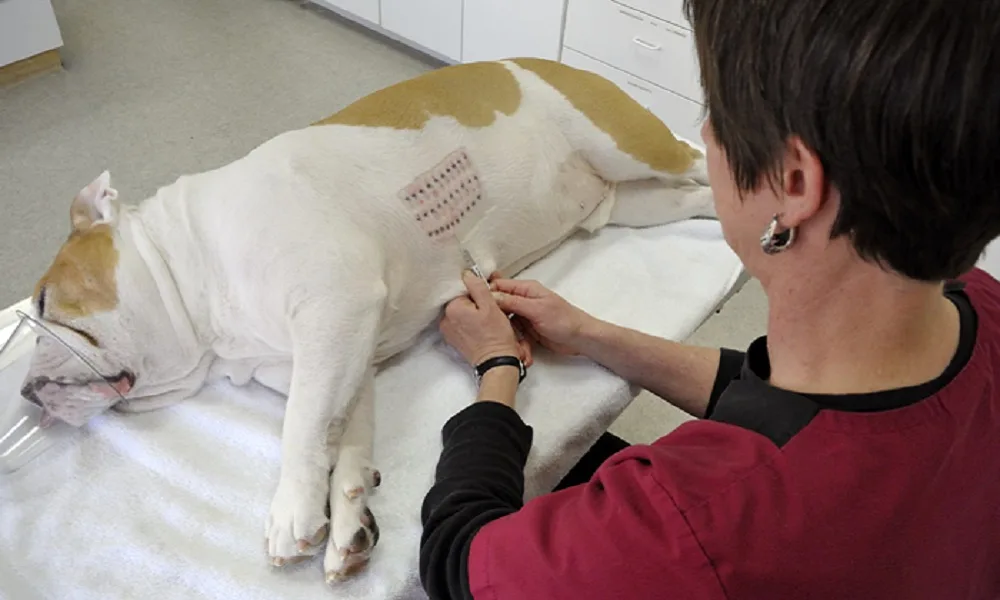
Intradermal skin testing (IDT) is the long-standing gold standard for environmental allergies. A vet injects small amounts of allergens just under the dog's skin and watches for a reaction. It requires sedation, a shaved patch on the side, and a vet trained to read the wheals.
Serum IgE blood testing measures allergen-specific antibodies in the blood. A single draw goes to a lab, and results come back in 1 to 2 weeks. It's the most common option because it's easier to run and doesn't require sedation.
Saliva and hair-based tests measure IgA or other markers in saliva or fur. These are direct-to-consumer kits. The American College of Veterinary Dermatology has stated publicly that these methods lack peer-reviewed validation for diagnosing allergies in dogs.
Elimination diet trials are the only validated way to diagnose food allergies. You feed a strict novel protein or hydrolyzed diet for 8 to 12 weeks and watch for symptom changes. No blood, saliva, or hair test reliably identifies food allergens.
Each method targets a different branch of the allergy tree. Knowing which branch you're hunting matters before you spend anything.
Intradermal Skin Testing: The Gold Standard
Intradermal testing is what most veterinary dermatologists call the most accurate method for environmental allergens. The process looks like this:
- The vet shaves a patch on the dog's side or chest.
- The dog is lightly sedated.
- Dozens of tiny allergen injections are placed in a grid pattern.
- After 15 to 20 minutes, the vet reads the wheals (raised bumps) to identify reactions.
Typical cost: $200 to $400 for the test itself, plus $50 to $150 for the sedation and anesthesia monitoring, plus the exam fee. Total often lands between $350 and $650.
It's the gold standard for a reason: it shows real-time skin reactions, not just antibody levels. The downsides are logistical. It requires a vet trained in dermatology (not all general vets run these), sedation carries small risks, and certain medications (antihistamines, steroids, Apoquel) must be discontinued 2 to 4 weeks before testing for accurate results.
If your dog is a candidate for allergen-specific immunotherapy (the allergy shots or sublingual drops), most dermatologists prefer to start from IDT results. Serum IgE can also guide immunotherapy, but many dermatologists consider skin testing the stronger starting point.
Serum IgE Blood Panels: The Most Common Option
Most general veterinary practices offer serum IgE testing because it's logistically simpler. One blood draw, sent to a reference lab, results in 5 to 14 days.
Typical cost: $150 to $350 for the panel, with some lab services (like Heska, IDEXX, or Spectrum) pricing in tiers based on allergen count.
What it measures: IgE antibodies tied to specific allergens (grass, tree pollen, dust mites, mold, certain insects). Higher IgE levels suggest sensitization, though they don't always equal a clinical allergy.
Pros:
- No sedation required
- Can be done by general vets
- Easier to run on young, old, or sick dogs
- Good for regional allergen mapping
Cons:
- False positives are common (sensitization without symptoms)
- Less reliable for food allergens
- Medications don't need to be stopped as long as with skin testing
- Slightly less accurate than IDT in some peer-reviewed comparisons
The blood panel is the right starting point for most dogs. It's accessible, affordable, and gives actionable data when paired with a good clinical history.
At-Home Saliva and Hair Kits: Why Vets Rarely Recommend Them
Mail-in saliva and hair kits show up everywhere online, and they all promise "results in days" for under $200. The pitch is appealing: no vet visit, no blood draw, no sedation. Just a sample, a prepaid envelope, and a colorful report.
The problem is clinical validity. These tests claim to measure IgA, cortisol, or other immune markers, but peer-reviewed studies have not validated their accuracy for diagnosing canine allergies. The American College of Veterinary Dermatology has consistently noted that food and environmental sensitivities can't be reliably identified through saliva or hair samples.
What the kit industry calls "sensitivity" often reflects general immune reactivity, not a true allergic response. Aggregate user feedback in dermatology forums suggests these reports frequently produce long lists of "problem" foods or environmental triggers that don't match the dog's actual symptoms.
You'll still pay $80 to $200 for one of these kits, plus the cost of any food or environmental changes you make based on a flawed report. That's wasted money that could have gone toward a real diagnostic.
Elimination Diet Trials: The Only Reliable Way to Test Food Allergies
If food allergy is on the table, no blood, saliva, or hair test is reliable. The gold standard is an elimination diet trial. This isn't a quick lab test; it's a structured feeding experiment lasting 8 to 12 weeks.
Here's the basic structure:
- Pick a novel protein and carbohydrate (rabbit and sweet potato, venison and green pea, or a hydrolyzed prescription diet).
- Feed only that food for 8 to 12 weeks. No treats, table scraps, flavored meds, or flavored toothpaste.
- Watch for symptom change (itching, ear infections, stool quality, hotspots).
- If symptoms improve, reintroduce old foods one at a time to identify the trigger.
The cost here is steady, not lumpy. Novel protein diets run $60 to $120 per month for a medium dog, depending on size and brand. Prescription hydrolyzed diets (like Royal Canin HP or Hill's z/d) sit at the higher end but are stricter and easier to run.
Total trial cost for a medium dog: roughly $180 to $360 in food, plus rechecks. That's a meaningful spend, but it's the only path that actually answers the food allergy question.
Average Cost of Allergy Testing for Dogs (Real Numbers)
Here's what real-world veterinary bills look like as of 2026, based on aggregate pricing from specialty clinics and general practices across multiple U.S. regions.
| Test or Service | Typical Cost | What's Usually Included |
|---|---|---|
| Initial vet exam | $50 to $150 | Consultation, physical, history review |
| Serum IgE panel (40 to 80 allergens) | $150 to $350 | Lab draw, shipping, interpretation |
| Intradermal skin testing | $200 to $400 | Sedation, allergens, reading |
| Sedation / anesthesia monitoring | $50 to $150 | IV catheter, drugs, monitoring |
| Saliva or hair kit (direct-to-consumer) | $80 to $200 | Kit, lab processing, color report |
| Elimination diet food (per month) | $60 to $120 | Hydrolyzed or novel protein formula |
| Allergen-specific immunotherapy (year 1) | $300 to $1,000 | Custom serum or sublingual drops |
| Recheck appointments | $50 to $100 each | Progress review, med adjustments |
For most owners, the realistic all-in budget for an accurate diagnosis lands between $300 and $700. If you go straight to a veterinary dermatologist, expect $500 to $1,000 before treatment starts.
Hidden Costs Most Owners Forget About
The test itself is the line item everyone plans for. The follow-up is where budgets go sideways.
Repeat testing. Many vets recommend rechecking IgE levels or retesting panels after a year or two of immunotherapy to see if the dog's sensitivity profile has shifted. Each retest can run another $150 to $300.
Treatment maintenance. Cytopoint injections run $50 to $100 per dose, monthly. Apoquel runs $2 to $4 per day for a medium dog, which adds up to $700+ per year. These drugs don't cure allergies; they manage symptoms while you address the underlying cause.
Diet trial rechecks. If you run an elimination diet, you'll typically have at least two rechecks during the 8 to 12 week window. Each visit is $50 to $100.
Secondary infections. Chronic scratching and ear inflammation often lead to bacterial or yeast infections. Treatment is usually $30 to $80 per episode, and allergic dogs commonly cycle through several infections a year.
Ear medications and ear washes. Dogs with environmental allergies frequently need ongoing ear care. A maintenance ear wash runs $15 to $25 per bottle; prescription ear meds run $25 to $60 per course.
Add these together and the "allergy dog" annual cost can exceed $1,500 even after the initial testing is done.
Does Pet Insurance Cover Allergy Testing?
Coverage depends entirely on your insurer, your plan, and whether allergies are classified as pre-existing. Most accident-and-illness plans cover allergy testing if the condition wasn't diagnosed before enrollment.
What to expect:
- Major insurers (Trupanion, Healthy Paws, Embrace) typically cover diagnostic testing once the deductible is met. Coverage usually runs 70% to 90% after deductible.
- Wellness add-ons don't cover allergy testing. They only cover vaccines, dentals, and routine exams.
- Pre-existing clauses are the trap. If your dog showed allergy symptoms before the policy start date, the insurer may classify it as pre-existing and deny coverage for testing and treatment.
If you're shopping for insurance with a known allergic puppy, enroll early before symptoms show. If your dog is already symptomatic, ask whether your insurer offers a "cure" clause that drops the pre-existing label after a symptom-free period.
Coverage for ongoing treatments (immunotherapy, Apoquel, Cytopoint) usually requires the same deductible structure. Plan to pay out of pocket until the deductible is met.
When Allergy Testing Actually Makes Sense (and When It Doesn't)
Testing makes sense when you have a clear, persistent symptom pattern and a plan for the results. It doesn't make sense when symptoms are vague or the dog hasn't been thoroughly examined first.
Testing is worth it if:
- Your dog has chronic itching, recurrent ear infections, or hotspots lasting more than 3 months
- First-line treatments (flea control, food trial, antibiotics) have failed
- You're considering long-term immunotherapy and need a sensitization map
- The dog is young to middle-aged with no other serious illness
Testing usually isn't worth it yet if:
- Symptoms started less than 4 weeks ago
- Flea control hasn't been rigorously applied for at least 8 weeks
- The dog hasn't had a basic workup (skin scrape, cytology, fungal culture)
- You're not prepared to act on the results with treatment or diet change
The biggest waste of money in our research isn't the test itself. It's testing a dog whose itching is actually a flea issue, food issue, or skin infection that would have shown up on a cheaper workup first.
Mistakes That Lead to Wasted Money or Wrong Answers
A few errors come up again and again in clinical feedback.
Skipping the physical workup. Jumping straight to an allergy panel before ruling out mites, yeast, bacterial infections, or fleas leads to false answers. The dog tests "allergic to grass" when the real issue is a Sarcoptes mite infestation.
Testing while on medications. Steroids, Apoquel, and antihistamines skew IgE results and skin test wheals. Most vets need a 2 to 4 week washout period before testing. If the dog can't come off these drugs safely, blood testing is still an option, but interpretation gets harder.
Trusting a positive food allergy result. Blood panels frequently flag foods the dog actually tolerates fine. Treating those flags as gospel leads to unnecessary dietary restrictions and nutritional gaps.
Stopping the elimination diet too early. Symptoms often flare in weeks 1 to 3 before improving. Owners who quit at week 4 miss the trial's most informative window.
Skipping immunotherapy after testing. Some owners pay $400 for a panel, never act on it, and end up spending more on symptom management than treatment would have cost. The test is only useful if the data drives a plan.
How to Choose the Right Test for Your Dog
Use this decision framework:
- Suspected food allergy only: Start with an 8 to 12 week elimination diet. Skip blood food panels entirely.
- Suspected environmental allergy, mild symptoms: Try flea control, regular bathing, and a 30 to 60 day Apoquel trial before testing.
- Suspected environmental allergy, year-round or severe: Go straight to a serum IgE panel through your vet. If immunotherapy is on the table, ask if intradermal testing would be a stronger starting point.
- Multi-system signs (skin + GI): Run an elimination diet first, then add a serum IgE panel if skin symptoms persist.
- Strong family history or breed predisposition (Frenchies, Labs, goldens, terriers): Test earlier in the workup rather than later. These breeds progress fast and benefit from early immunotherapy.
What to Do After You Get the Results
The panel is a map, not a cure. Here's how to use it.
Match the data to your geography. A dog testing positive for Bermuda grass in the Northeast is unlikely to have that as a clinical driver. Focus on regional, year-round allergens first.
Pair the results with a symptom diary. Note what the dog eats, where it walks, when itching spikes. Patterns usually jump out within 4 to 6 weeks.
Decide on immunotherapy if the symptom pattern matches the panel. Subcutaneous injections or sublingual drops cost $300 to $1,000 the first year, but they target the underlying sensitization rather than just suppressing itch.
Recheck medication use. If Apoquel or Cytopoint is still needed during immunotherapy, that's a sign the desensitization plan needs adjustment.
Keep flea control rigorous. Flea allergy dermatitis often overlaps with environmental allergies, and a single flea can override months of immunotherapy progress.
Frequently Asked Questions
How accurate are at-home dog allergy test kits?
At-home saliva and hair kits are not considered reliable for diagnosing allergies. Veterinary dermatologists rely on intradermal skin testing or serum IgE panels instead. Use mail-in kits only for general curiosity, not for treatment decisions.
Can I test my dog for allergies without going to the vet?
You can order a saliva or hair kit online without a vet, but the results won't guide treatment. Valid testing requires a vet exam, blood draw, or skin test performed by a licensed practice.
How long do allergy test results take?
Serum IgE panels typically return in 5 to 14 days. Intradermal skin testing gives same-day results. Elimination diet trials take 8 to 12 weeks to interpret.
What's the cheapest way to test a dog for food allergies?
The cheapest reliable method is a home-cooked novel protein elimination diet, costing $60 to $120 per month. Blood food panels cost more and are less accurate for food triggers.
Is allergy testing worth it for older dogs?
It can be, but only if the dog is healthy enough for sedation (if doing skin testing) and the owner is willing to commit to long-term management. For senior dogs with multiple health issues, symptom management with Apoquel or Cytopoint may be more practical.
Final Take: What a Smart Owner Should Budget For
Plan for $300 to $700 in diagnostic costs during the first 3 months. Then budget another $500 to $1,500 annually for ongoing treatment, immunotherapy, rechecks, and secondary infections. Total first-year cost commonly lands between $1,000 and $2,500.
The smartest move is sequencing your spending. Start with a vet exam and basic workup ($150 to $250). Add a strict flea control trial for 8 weeks.
Run an elimination diet if food allergy is suspected. Only then pay for serum IgE or intradermal testing if symptoms remain.
That's the path that turns allergy testing from a money pit into the diagnostic tool it's supposed to be.