How much does dog allergy testing cost: Easy guide
How much does dog allergy testing cost? Most owners pay somewhere between $200 and $1,000, depending on the test type and whether a veterinary dermatologist is involved. In our research, intradermal skin testing with a specialist runs $250 to $800, serum IgE blood panels land at $200 to $500, and at-home kits cost $80 to $300.
The wide spread comes down to who reads the results, how many allergens are screened, and whether you're paying for clinical expertise or just a mailed swab.
The part most articles skip is what happens after you pay. A positive result on the wrong test can send you down a year-long rabbit hole of elimination diets and shots that don't help. Aggregate reviews and veterinary dermatology guidance from the American College of Veterinary Dermatology point to one consistent rule as of 2026: the cheapest test is rarely the most accurate, and the most accurate test isn't always the one your dog needs first.
Quick Answer
Dog allergy testing costs between $200 and $1,000 in the U.S. Intradermal skin testing averages $250 to $800. Serum IgE blood panels run $200 to $500.
At-home kits cost $80 to $300. A veterinary dermatologist consultation adds $150 to $400 on top.
Why Dog Allergy Testing Costs Vary So Much
Three things drive the price: who runs the test, what's actually being measured, and whether interpretation is included. A blood draw at your regular vet with a panel sent to a reference lab sits at the low end. A sedated intradermal test with a board-certified veterinary dermatologist sits at the high end.
The chemistry and lab time aren't wildly different, but the clinical judgment behind the results is.
There's also a fourth driver most owners don't see: false positives. Cheap saliva and hair tests flag sensitivities that don't translate to true allergies. When the result is wrong, owners spend on elimination diets, specialty foods, and shots for problems that were never allergic in the first place.
That hidden cost is where the real money leaks.
Here's how the three main testing categories break down:
| Test Type | Typical U.S. Cost | Who Runs It | Sample Type |
|---|---|---|---|
| Intradermal skin test | $250 to $800 | Veterinary dermatologist | Shaved skin, sedated |
| Serum IgE blood panel | $200 to $500 | General practice vet or specialist | Blood draw |
| At-home kit (saliva/hair) | $80 to $300 | Direct to consumer | Swab or fur pluck |
The Three Main Types of Dog Allergy Tests (and What Each Actually Does)
Every allergy test for dogs falls into one of three buckets, and they're not interchangeable.
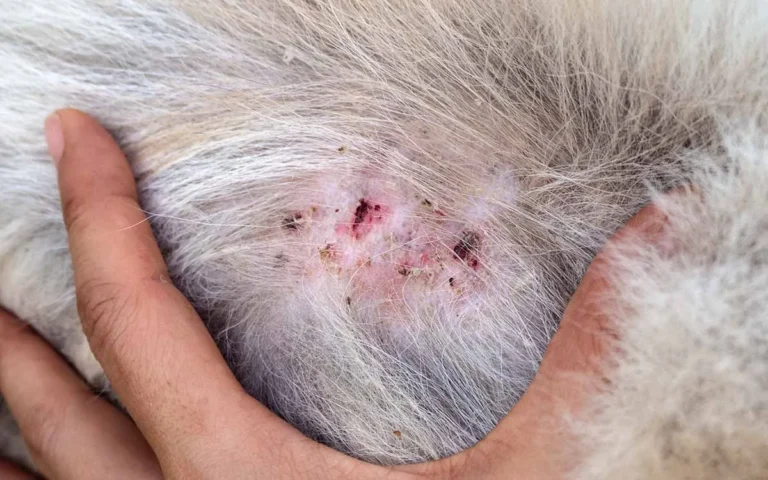
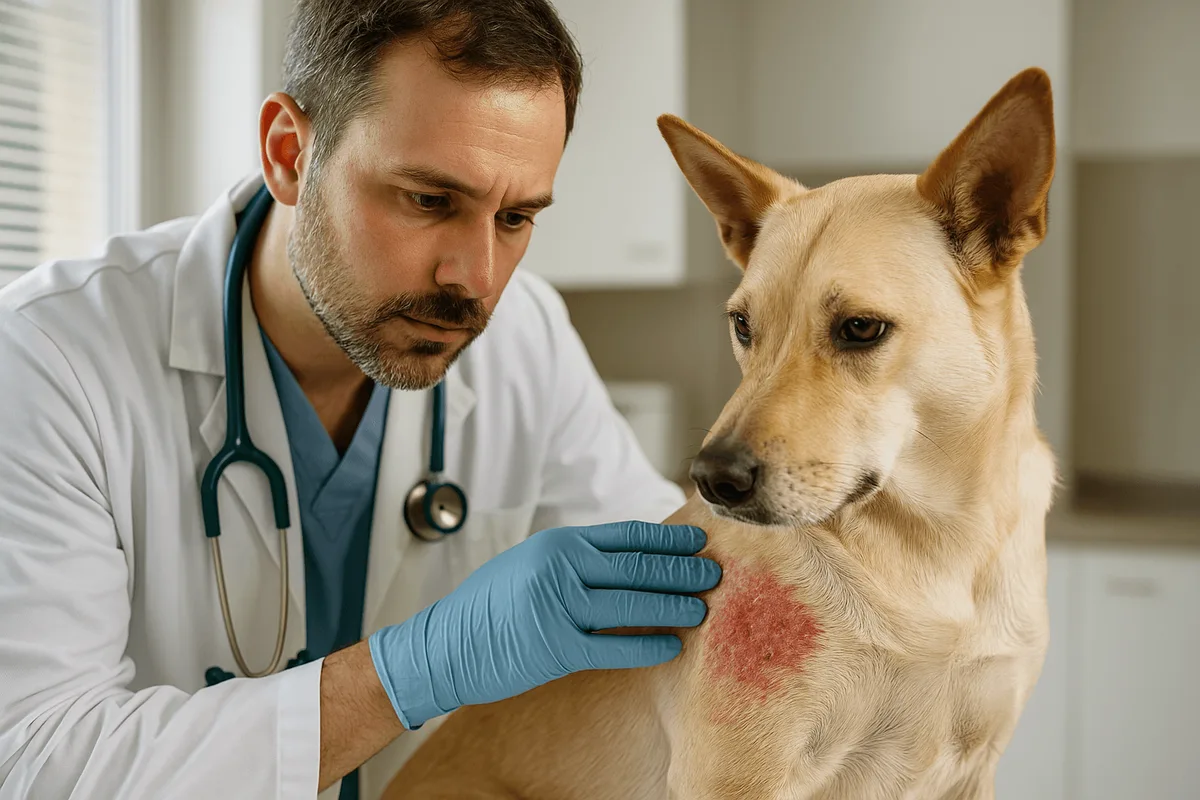
Intradermal skin testing (IDT) is the long-standing clinical standard. A veterinary dermatologist shaves a patch of skin, usually on the side of the chest, and injects small amounts of suspected allergens just under the surface. A positive reaction shows up as a raised, red wheal within 15 to 20 minutes.
IDT requires sedation, takes about an hour in clinic, and is the test most commonly used to design allergen-specific immunotherapy.
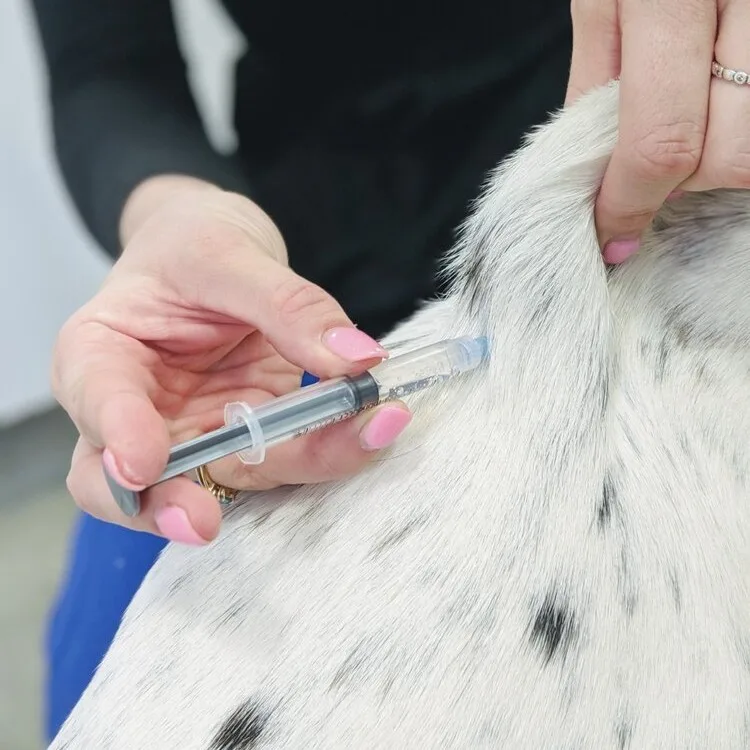
Serum IgE blood testing measures circulating antibodies against specific allergens in a blood sample. The vet draws blood, sends it to a reference lab like IDEXX or Heska, and results come back in 5 to 14 days. Blood testing is widely available through general practice vets, doesn't require sedation, and is often the practical first step when a specialist isn't accessible.
At-home kits collect a sample at home and mail it to a private lab. Companies like 5Strands and EasyDNA market these as a low-friction alternative. Results usually arrive in 2 to 4 weeks.
The catch: these tests aren't validated against intradermal results, and most veterinary dermatologists don't use them for clinical decision-making.
The choice between them usually comes down to access, budget, and what you're trying to figure out.
Intradermal Skin Testing: The Gold Standard Most Owners Never Get
Intradermal skin testing is what veterinary dermatologists reach for when they need to design custom immunotherapy. The procedure looks like this: your dog is sedated, a rectangular patch on the lateral thorax is shaved, and roughly 40 to 60 allergens are injected in a grid pattern. Histamine and saline controls confirm the skin is responding normally.
The dermatologist reads the wheal sizes at 15 and 20 minutes, then maps positive reactions to specific environmental allergens like dust mites, storage mites, grass pollens, tree pollens, and mold spores.
Costs typically run $250 to $800 for the procedure itself, before the specialist's exam fee. When you add the consultation ($150 to $400) and any subsequent immunotherapy serum ($300 to $1,500 annually), total first-year spend can hit $1,500 to $2,500.
Why it's worth it:
- Highest correlation with real-world allergic disease in peer-reviewed studies.
- Allows the vet to build a custom immunotherapy serum tailored to your dog's triggers.
- Same-day results mean treatment planning starts immediately.
- Avoids the false-positive trap common with at-home kits.
Why most owners never get it:
- Requires referral to a board-certified veterinary dermatologist (DACVD).
- Average wait time for a dermatology appointment is 4 to 12 weeks.
- Costs more upfront than a blood panel.
- Requires sedation, which adds risk for senior dogs.
IDT is best for dogs with year-round or severe environmental allergies where the owner is committed to long-term immunotherapy.
Serum IgE Blood Panels: What Vets Actually Run
Serum IgE testing is the workhorse of canine allergy diagnostics. It's accessible, doesn't require sedation, and most general practice vets can order it. The vet draws a blood sample, sends it to a reference lab, and the lab runs an ELISA assay to detect allergen-specific IgE antibodies.
Typical cost: $200 to $500. Larger panels covering more allergens cost more. Some labs offer regional panels tailored to local pollen profiles, which improves clinical relevance.
What blood panels actually measure:
- Environmental allergens (grasses, trees, weeds, molds, dust mites).
- Sometimes flea antigens.
- Occasionally food allergens, though food IgE testing is controversial.
Accuracy considerations:
Blood tests detect sensitization, meaning the immune system has made antibodies against an allergen. Sensitization doesn't always equal clinical allergy. A dog can test positive for ragweed but only flare after rolling in cut grass.
This gap is why dermatologists often combine blood results with intradermal testing or response-to-treatment trials.
When blood testing makes sense:
- A specialist isn't available within a reasonable timeframe.
- The dog is too old or sick to safely sedate.
- The vet wants a baseline before starting symptomatic treatment.
- The owner is considering immunotherapy and needs a starting panel.
If your vet offers a serum IgE panel with a turnaround of a week or less, that's usually the most balanced first step for most dogs with suspected environmental allergies.
At-Home Dog Allergy Kits: What You're Really Paying For
At-home kits have exploded in popularity over the last few years. You order a kit online, swab your dog's cheek or pluck a few hairs, mail it back, and get a PDF report in two to four weeks. No vet visit.
No sedation. No waiting room.
Costs range from about $80 to $300, with prices scaling by the number of items tested. Some kits test 100+ items and return color-coded charts ranked by "severity."
Here's the part the marketing skips:
These tests are not validated against intradermal or serum IgE results. Most measure IgA or IgG antibodies in saliva, or analyze hair samples using spectrometry. Neither method has strong peer-reviewed evidence for diagnosing true IgE-mediated allergies in dogs.
Aggregate reviews from veterinary dermatologists consistently warn that results don't correlate well with clinical disease.
The Merck Veterinary Manual and ACVD-aligned guidance are blunt: at-home saliva and hair kits should be treated as informational, not diagnostic. If you use one, treat the output as a starting point for a conversation with your vet, not a treatment plan.
Real Price Ranges by Test Type
Prices shift depending on where you live, who's running the test, and whether interpretation is included.
| Service | Typical Cost | What's Included |
|---|---|---|
| General vet office visit | $50 to $150 | Exam, rule-out workup |
| Skin cytology + ear swab | $40 to $100 | Rules out infection/parasites |
| Serum IgE panel (~60 allergens) | $200 to $400 | Lab fee, vet interpretation |
| Intradermal skin test with dermatologist | $400 to $1,000 | Sedation, procedure, interpretation |
| At-home saliva/hair kit | $80 to $300 | Sample collection, mailed report |
| Custom immunotherapy (year one) | $300 to $1,500 | Custom serum, dosing plan |
A realistic first-year budget for a dog diagnosed with atopic dermatitis and started on immunotherapy lands between $1,500 and $3,000 once treatment and rechecks are included.
What a Veterinary Dermatologist Visit Adds to the Bill
A board-certified veterinary dermatologist (DACVD) charges more than a general practice vet, and for good reason. They've completed a multi-year residency, passed a specialty board exam, and focus exclusively on skin and allergy cases. Their exam fee typically runs $150 to $400, covering a longer consultation and a more thorough dermatologic workup.
What you're paying for isn't just the time. It's pattern recognition. A vet who sees 30 skin cases a week can spot atypical mange, cutaneous lymphoma, or hormonal skin disease that a generalist might call "allergies" by default.
When a specialist visit is worth the upcharge:
- Your dog has been on Apoquel or Cytopoint for over a year with partial response.
- Symptoms started before age 1 or after age 8 (atypical windows for atopy).
- There's a mix of skin, ear, and GI symptoms that don't fit one disease.
- You're considering allergy shots and want them custom-formulated.
When a GP visit is the right starting point:
- First-time itching with no prior workup.
- Suspected flea allergy or simple environmental triggers.
- Owner needs a baseline before deciding on specialist referral.
The wait is the real cost most owners don't price in. Dermatology appointments in major metros often book out 6 to 12 weeks.
Pet Insurance and Allergy Testing: What's Actually Covered
Most accident-and-illness plans cover the diagnostic workup, including blood allergy panels, once your deductible is met. Coverage for intradermal skin testing is also common but may require a licensed vet to perform or supervise it. Custom immunotherapy serum is usually covered under prescription benefits.
Where owners get tripped up:
- Pre-existing conditions. If itching appeared before your policy's effective date, testing and treatment are excluded.
- Wellness plans don't cover allergy testing.
- At-home kits are rarely reimbursable. Insurers typically require a vet invoice tied to a clinical exam.
- Annual caps and per-condition limits can hit chronic allergy care mid-year.
Trupanion, Embrace, and Healthy Paws all cover allergy testing under their standard illness plans, though each has different rules. Confirm directly with the insurer before scheduling.
The Hidden Costs Most Owners Forget About
The price tag on the test is the smallest part of the bill for most dogs with chronic allergies.
- Cytopoint injections every 4 to 8 weeks ($60 to $150 per dose).
- Apoquel daily ($50 to $100 per month, ongoing).
- Recurrent ear infection treatment ($80 to $250 per episode).
- Medicated shampoos and topical sprays ($20 to $60 monthly).
- Hypoallergenic or prescription diets ($60 to $150 per month during trials).
- Annual dermatology rechecks ($150 to $300 each).
- Custom immunotherapy refills every 6 to 12 months ($200 to $600 per refill).
Lifetime costs for atopic dermatitis commonly run $1,500 to $3,000 per year once diagnostics are done.
Accuracy by Test Type: Where the Science Gets Uncomfortable
Intradermal skin testing, when performed by an experienced veterinary dermatologist, has the strongest correlation with true environmental allergies. Studies report sensitivity and specificity in the 70% to 90% range for environmental allergens.
Serum IgE blood testing varies more. Some labs (Heska, IDEXX) have reasonable sensitivity for dust mites and storage mites, but accuracy drops for pollen and mold. False positives are common.
At-home saliva and hair kits sit at the bottom. Most have no peer-reviewed validation for diagnosing canine allergies.
| Test Type | Evidence Strength | Typical Use |
|---|---|---|
| Intradermal (specialist) | Strong | Custom immunotherapy planning |
| Serum IgE (validated lab) | Moderate | First-line environmental screening |
| At-home saliva/hair | Weak | Informational only |
Food Allergy Testing vs. Elimination Diet: The Part the Industry Skips
Blood, saliva, and hair tests marketed for food allergies in dogs are not reliable. The only validated method for diagnosing food allergies in dogs is an elimination diet trial.
An elimination diet means feeding a novel or hydrolyzed protein source for 8 to 12 weeks, with no other treats, table food, or flavored medications. If symptoms improve, you challenge with individual ingredients to identify the trigger. It's slow.
It's boring. It's also the gold standard.
Prescription hydrolyzed diets run $60 to $150 per month. The full trial including rechallenges typically lands at $400 to $900.
If a company is selling a "food allergy test" with a mailed saliva sample, treat the result with skepticism. Use it as a hypothesis to test with your vet, not a verdict.
Treatment Costs After Testing: Shots, Apoquel, and Cytopoint
Allergen-specific immunotherapy (ASIT) is the only disease-modifying option. Custom shots or sublingual drops are formulated from your dog's test results. Costs run $300 to $1,500 in the first year, then $200 to $600 annually.
Success rates hover around 60% to 80%, with most dogs improving within 6 to 12 months.
Apoquel (oclacitinib) provides fast symptomatic relief, typically within 24 hours. Daily dosing costs $50 to $100 per month. It's a daily medication, not a cure.
Cytopoint (lokivetmab) is a monoclonal antibody injection given every 4 to 8 weeks. Each dose runs $60 to $150. It controls itching without suppressing the whole immune system.
Most dogs end up on a combination: immunotherapy for long-term control, plus Apoquel or Cytopoint for flare-ups.
When Allergy Testing Is Worth Every Penny (and When It's a Waste)
Worth it:
- Year-round itching or recurrent ear infections with no clear trigger.
- Considering long-term treatment and want immunotherapy tailored to real allergens.
- Food allergy suspected and willing to commit to a 12-week elimination diet.
- Insurance coverage makes the cost manageable.
Probably a waste:
- First-time mild seasonal itching that may resolve with flea control and symptomatic care.
- Owners unwilling to act on results.
- Buying an at-home kit as a substitute for a vet exam. Underlying infections, mange, or hormonal disease won't show up on an allergy panel.
- Tight budget with no room for follow-up treatment.
Common Mistakes Owners Make After Getting Results
- Treating the PDF, not the dog. A positive allergen on paper doesn't always match what your dog reacts to in real life.
- Stopping flea control. Flea allergy dermatitis is the most common allergy in dogs, and even one bite can flare an allergic dog.
- Skipping the elimination diet for food suspects. There's no shortcut.
- Expecting immunotherapy to work in a month. It takes 6 to 12 months for most dogs to respond.
- Ignoring secondary infections. Bacterial or yeast overgrowth needs to be treated alongside allergies.
Questions to Ask Your Vet Before You Spend the Money
- What rule-outs have we done before testing? (Skin cytology, ear swab, fecal, flea comb.)
- Is intradermal or serum testing better for my dog's symptoms?
- Will insurance cover this, and do you handle the paperwork?
- What happens after a positive result?
- If food allergy is possible, are we willing to do a proper elimination diet?
- What's the realistic first-year budget, including treatment?
A vet who walks through these clearly is the right vet for the case.
Regional Pricing Differences and Wait Times
Urban specialty hospitals in California, the Northeast, and the Pacific Northwest sit at the top of the price range. Rural and Midwestern general practices typically run 20% to 40% lower.
Wait times for board-certified dermatologists are the bigger constraint. Major metros often book out 8 to 12 weeks. University teaching hospitals may have shorter waits but require referral and travel.
Teledermatology consultations have grown as of 2026 and can shorten the wait, though intradermal testing still requires in-person visits.
If you're in a high-pollen region (Southeast for mold and grass, Texas for cedar, Mountain West for sage), testing is more clinically useful. In lower-allergen regions, non-allergy diagnoses are more likely.
The Bottom Line: What to Budget and When to Test
For most dogs, the realistic budget for a proper allergy workup in the first year looks like this:
- Initial workup and blood panel: $300 to $600.
- Specialist consultation and intradermal test (if needed): $500 to $1,200.
- Custom immunotherapy first year: $300 to $1,500.
- Symptomatic medication (Apoquel or Cytopoint): $600 to $1,500.
- Diet trials, ear care, topicals: $200 to $600.
That puts a well-managed first year between $1,900 and $5,400, depending on region and severity.
Test when symptoms are persistent, recurrent, or unexplained. Skip the test when symptoms are mild, new, and likely to resolve with basic care. Whatever you spend, spend it on a vet who can tell you what the results actually mean.
Frequently Asked Questions
How accurate are at-home dog allergy test kits?
At-home saliva and hair kits lack peer-reviewed validation for diagnosing true canine allergies. Aggregate veterinary dermatology guidance treats their results as informational only. Use them as conversation starters with your vet, not as a basis for treatment changes.
Does pet insurance cover allergy testing for dogs?
Most accident-and-illness plans cover blood panels and intradermal skin testing once your deductible is met. Custom immunotherapy is usually included under prescription benefits. Pre-existing conditions are the most common reason claims get denied.
How much does allergy testing cost for dogs without insurance?
Without insurance, expect $200 to $500 for a serum IgE panel at a general vet, or $400 to $1,000 for intradermal skin testing with a specialist. At-home kits run $80 to $300 but aren't considered diagnostic.
Is dog allergy testing worth the money?
Testing is worth it when the results will change treatment, especially when immunotherapy or a structured elimination diet is on the table. It's less valuable for mild, first-time itching that may resolve with flea control and basic care.
How long does it take to get dog allergy test results back?
Serum IgE blood panels typically return in 5 to 14 days. Intradermal skin testing produces same-day results. At-home saliva and hair kits usually take 2 to 4 weeks including shipping.
Can food allergies in dogs be tested with a blood or saliva test?
No reliable blood, saliva, or hair test exists for diagnosing food allergies in dogs. Veterinary dermatologists use an 8 to 12 week elimination diet trial as the gold standard. IgE panels for food allergens produce too many false positives to be clinically useful.