Best Cat Food For Constipation: Top 5 Picks
The best cat food for constipation supports healthy digestion with suitable fiber, good hydration, and balanced nutrition.
Your cat visits the litter box several times but leaves little behind. The stool may look hard, dry, or small. It can be stressful to watch, especially when you have a busy American household and want your pet to stay comfortable. Food can play a useful role in digestive health, but not every digestive formula treats constipation. I looked at five products with different approaches, including fiber-rich food, probiotics, and stool support supplements. My goal is to help you understand their strengths, limits, and best uses. One important point: repeated straining or an inability to pass stool needs veterinary care, not just a new food.
🏆 Top 3 Products

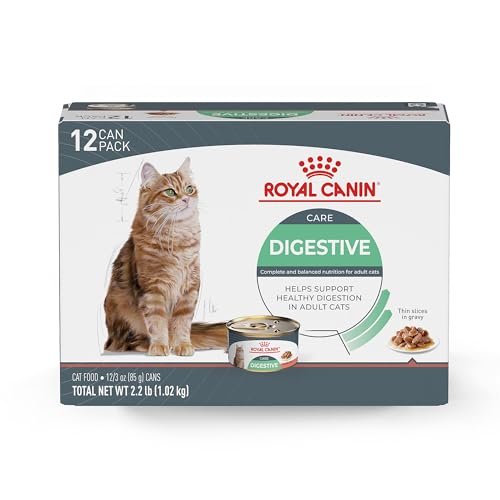
Royal Canin Digestive Care Adult Cat Food
Its digestive-focused formula and attention to stool quality make it a useful option for adult cats that need routine digestive support.

Blue Buffalo True Solutions Digestive Care
Its prebiotic fiber and chicken-based adult formula make it worth considering for cats that need regular digestive support.

Purina Pro Plan AdvantEDGE Digestive Support
Its combination of prebiotics, probiotics, and postbiotics offers several forms of digestive support in one dry food.
Cat Constipation Relief Herbal Stool Softener

This product is marketed as an herbal constipation relief liquid for cats. Its listing describes a 30 ml formula intended to support bowel and digestive health. It is presented for both young and senior cats. Unlike the other products in this guide, it is not a complete cat food. It is a stool support supplement, so I would consider it only when a veterinarian approves its use.
Liquid products may seem easy to give because they can be measured in small amounts. However, the word herbal does not mean risk-free. The full ingredient list, strength, directions, and safety information matter before a cat takes any laxative product. Constipation can have several causes, including dehydration, pain, and a physical blockage. A supplement cannot fix every cause, so a veterinary check should come first.
✅ Pros
- ✔ Liquid format may be easier to measure than some solid supplements.
- ✔ The listing specifically targets feline constipation support.
- ✔ The 30 ml bottle provides a clearly stated package size.
- ✔ The product is marketed for both young and senior cats.
- ✔ It focuses on bowel and digestive health rather than general nutrition alone.
- ✔ A liquid format may suit cats that refuse chewable supplements.
- ✔ It gives cat owners another product option to discuss with a veterinarian.
⚠️ Cons
- ✖ It is not a complete or balanced cat food.
- ✖ The product listing does not establish that it treats every cause of constipation.
- ✖ Herbal ingredients can still cause side effects or interact with medicines.
- ✖ The exact suitability for kittens, pregnant cats, and cats with chronic illness needs veterinary review.
- ✖ It should not delay treatment when a cat cannot pass stool.
My Recommendation
I would not choose this liquid as the main answer to the best cat food for constipation. It is a supplement, not a meal, and it does not provide the complete nutrition a cat needs. It may be worth discussing with a veterinarian if your cat has confirmed constipation and the vet believes this particular formula is appropriate. Ask about the ingredients, dose, possible interactions, and expected response before using it. Do not combine it with another laxative unless your veterinarian gives clear instructions. If your cat strains without producing stool, vomits, stops eating, or seems weak, seek veterinary help promptly.
| Best For | Why |
|---|---|
| Cats with vet-confirmed constipation | A veterinarian can decide whether this liquid supplement fits the cat’s condition and treatment plan. |
| Cats that dislike chewable supplements | The liquid format may be easier to measure and give when approved. |
| Owners seeking a stool support supplement | The product is marketed for bowel support, but it must not replace complete cat food or veterinary care. |
Natural Cat Laxative With Six Probiotics

This product is marketed as a natural cat laxative with six probiotics. Its listing describes a 2 fl oz liquid formula that combines stool support with digestive health claims. Probiotics are beneficial microorganisms that may support a healthy gut environment. However, they do not act as a guaranteed treatment for constipation. The exact strains, amounts, and other ingredients matter when judging a probiotic product.
I like the idea of looking at digestive health as a whole rather than focusing only on stool. A cat’s gut needs a suitable diet, enough water, and regular movement. Still, a probiotic supplement and a complete food serve different purposes. This product cannot replace a balanced meal. Before giving it to a constipated cat, ask your veterinarian whether the formula is suitable and whether a laxative is actually needed.
✅ Pros
- ✔ The product is designed specifically for feline digestive support.
- ✔ It lists six probiotics as part of its formula.
- ✔ The liquid format may suit cats that reject tablets.
- ✔ The 2 fl oz package gives owners a stated product volume.
- ✔ It combines probiotic support with a stool support purpose.
- ✔ It may be useful to discuss as part of a wider digestive care plan.
- ✔ It offers an alternative format for owners who prefer liquid supplements.
⚠️ Cons
- ✖ It is not a complete and balanced cat food.
- ✖ The number of probiotic types alone does not prove product effectiveness.
- ✖ The listing does not establish a cure for feline constipation.
- ✖ Some cats may dislike the taste or refuse the liquid.
- ✖ A laxative may be unsuitable when the cat has an obstruction or another serious condition.
My Recommendation
This product may interest owners who want to discuss both probiotics and stool support with their veterinarian. I would not use it as a first response to unexplained constipation. Ask for the full probiotic strain names, amounts, active ingredients, and dosing instructions. A probiotic may support some digestive needs, but it does not replace water intake, an appropriate diet, or treatment of an underlying illness. For a cat with ongoing constipation, the cause matters more than the product’s natural label.
| Best For | Why |
|---|---|
| Cats needing vet-approved digestive support | Its probiotic and stool support claims can be reviewed as part of an individual care plan. |
| Cats that resist solid supplements | The liquid format may be easier to administer if the cat accepts its taste. |
| Owners interested in probiotics | The six-probiotic claim gives owners a reason to review the exact strains with their veterinarian. |
Purina Pro Plan AdvantEDGE Digestive Support
Purina Pro Plan AdvantEDGE Digestive Support is a salmon and rice dry cat food. Its listed formula includes prebiotics, probiotics, and postbiotics. These ingredients have different roles in digestive support. Prebiotics help feed certain beneficial gut bacteria, while probiotics provide live microorganisms. Postbiotics are products made from microorganisms or their components. Together, these features make the formula interesting for owners who want to support regular digestion.
This is one of the more relevant choices in my search for the best cat food for constipation because it is an actual meal rather than a laxative supplement. Still, digestive support does not automatically mean constipation treatment. Dry food contains little water compared with wet food, so hydration remains important. I would consider this formula when a veterinarian approves a dry digestive diet and the cat drinks enough water. Adding suitable wet food may also help increase daily moisture intake.
✅ Pros
- ✔ It is a complete food option rather than a stand-alone laxative supplement.
- ✔ The salmon and rice recipe offers a clearly stated main flavor combination.
- ✔ The formula includes prebiotics for gut bacteria support.
- ✔ It includes probiotics as part of its digestive support approach.
- ✔ It also lists postbiotics, adding another digestive support feature.
- ✔ The dry format is convenient for measured meals.
- ✔ The 5 lb bag offers a practical package size for many households.
- ✔ It may suit cats whose owners prefer a salmon-based recipe.
⚠️ Cons
- ✖ Dry food provides much less moisture than wet cat food.
- ✖ The product is not proven to treat every type of constipation.
- ✖ Some cats may not enjoy salmon-based food.
- ✖ A multi-component digestive formula may not suit every cat’s dietary needs.
- ✖ A sudden food change can upset the digestive system.
- ✖ The product’s suitability depends on the cat’s age and health.
My Recommendation
I would consider this one of the strongest food options in this group for routine digestive support. Its combination of prebiotics, probiotics, and postbiotics gives it a broader digestive focus than an ordinary dry formula. It may be a sensible choice for an adult cat that tolerates salmon and needs a digestive-focused diet. However, I would not rely on dry food alone for a cat with hard, dry stools. Discuss hydration, wet food, and the right fiber level with your veterinarian. A cat with severe or repeated constipation may need more than a food change.
| Best For | Why |
|---|---|
| Adult cats needing digestive support | Its prebiotic, probiotic, and postbiotic combination focuses on digestive health. |
| Cats that enjoy salmon recipes | The salmon and rice recipe gives owners a clear protein and flavor option. |
| Owners who prefer dry food | The kibble format is convenient for portioning and daily feeding. |
Blue Buffalo True Solutions Digestive Care
Blue Buffalo True Solutions Digestive Care is an adult dry cat food made with chicken. The listing highlights clinically proven prebiotic fiber and describes the recipe as a high-protein digestive care formula. Prebiotic fiber can help support beneficial bacteria in the gut. Fiber also plays a role in stool formation, although the right amount and type can differ from one cat to another. This makes the formula worth considering for cats that need everyday digestive support.
Fiber deserves special attention when choosing the best cat food for constipation. Some cats may benefit from a suitable fiber level, while others need a different approach. More fiber is not always better. If a cat does not drink enough water, adding fiber without a plan may not solve the problem. I would look at this food as a possible part of a balanced feeding routine, not as a guaranteed constipation remedy. Check the nutrition label and discuss the best fiber approach with your veterinarian.
✅ Pros
- ✔ The formula is designed for adult cats.
- ✔ It highlights prebiotic fiber for digestive support.
- ✔ The chicken recipe gives owners a familiar protein option.
- ✔ The listing describes the food as high in protein.
- ✔ It is a complete food option rather than a separate digestive supplement.
- ✔ The 3.5 lb bag may be convenient for testing food acceptance.
- ✔ Its digestive focus makes it relevant to cats with routine stomach and stool concerns.
- ✔ Prebiotic fiber can support beneficial gut bacteria.
⚠️ Cons
- ✖ It is a dry food and does not provide the moisture of canned food.
- ✖ Chicken may not suit cats with a confirmed chicken allergy or intolerance.
- ✖ Its fiber level may not match every constipated cat’s needs.
- ✖ It is not a treatment for severe constipation or bowel obstruction.
- ✖ Cats with special medical diets may need a different formula.
- ✖ A food transition must be gradual to reduce the chance of digestive upset.
My Recommendation
Blue Buffalo True Solutions Digestive Care is a good option to discuss when an adult cat needs a dry food with prebiotic fiber. I particularly like that its digestive focus is clear. It may suit cats that already tolerate chicken and need a routine food change for gut support. However, I would first check whether the cat needs more fiber, less fiber, or more moisture. Those needs are not the same. If constipation keeps coming back, ask your veterinarian about an examination before changing foods again.
| Best For | Why |
|---|---|
| Adult cats needing prebiotic fiber | The formula highlights prebiotic fiber as a key digestive support feature. |
| Cats that tolerate chicken | Its chicken recipe offers a familiar flavor and protein choice. |
| Owners seeking a digestive-focused dry food | It combines everyday nutrition with a specific focus on digestive care. |
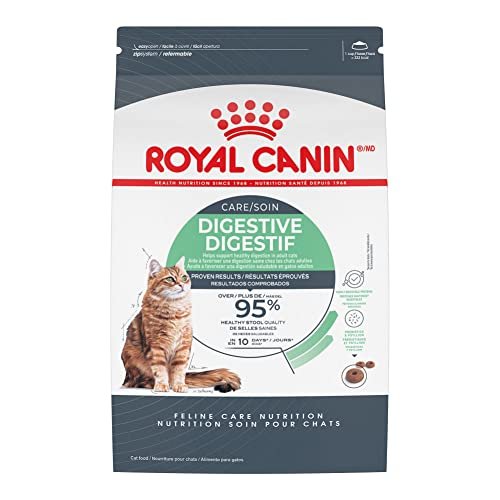
Royal Canin Digestive Care Adult Cat Food
Royal Canin Digestive Care is an adult dry cat food designed for cats with sensitive digestion. Its listing highlights digestive support and optimal stool quality. The formula was developed with veterinary input, according to the product description. These features make it a strong option for owners who want a food with a clear digestive purpose. It is not a laxative, and its role is to support routine digestive health through daily nutrition.
I rank this product highly among the food choices in this guide because stool quality is a central part of its stated purpose. A suitable digestive formula may help some cats maintain more consistent bowel habits. Still, the best cat food for constipation depends on the reason a cat has trouble passing stool. Some cats need more moisture, some need a specific fiber balance, and others need medical treatment. I would discuss this food with a veterinarian before using it for a cat with repeated constipation. A wet food routine or added water may also be worth discussing.
✅ Pros
- ✔ It is designed specifically for adult cats.
- ✔ The formula focuses on digestive health.
- ✔ The product description highlights optimal stool quality.
- ✔ It was developed with veterinary input, according to its listing.
- ✔ The dry kibble format makes daily portioning simple.
- ✔ The 6 lb bag provides a practical supply for regular feeding.
- ✔ It may suit adult cats with sensitive digestive systems.
- ✔ Its specific digestive focus makes it easy to compare with standard maintenance foods.
⚠️ Cons
- ✖ It is a dry formula with limited moisture.
- ✖ It is not designed to clear a serious constipation episode.
- ✖ Some cats may prefer wet food or refuse the kibble.
- ✖ Its fiber balance may not suit every cat with constipation.
- ✖ It is intended for adult cats, so it may not be suitable for growing kittens.
- ✖ Cats with diagnosed medical conditions may need a prescription diet instead.
My Recommendation
Royal Canin Digestive Care is my leading food choice from this product list for an adult cat that needs routine digestive support. Its stated focus on stool quality gives it a clear reason to stand out. I would choose it over a general laxative supplement when the goal is to provide a balanced daily meal and the veterinarian agrees that the formula fits the cat’s needs. It is not a cure for constipation, though. If your cat passes very hard stools, strains often, or goes longer than usual without a bowel movement, arrange a veterinary check. Ask whether wet food, extra dietary moisture, or a different fiber level would be more useful.
| Best For | Why |
|---|---|
| Adult cats with sensitive digestion | The formula is designed to support digestive health and regular stool quality. |
| Cats needing a routine digestive diet | It provides a complete dry food option with a specific digestive care focus. |
| Owners who value veterinary-developed formulas | The product listing highlights veterinary input in its development. |
Final Verdict: Which Should You Buy?
Royal Canin Digestive Care is my top food choice in this group because it focuses on adult digestive health and stool quality. Blue Buffalo True Solutions and Purina Pro Plan AdvantEDGE are also useful options to discuss with your veterinarian. I would not rank the two liquid laxative products as cat foods because they are supplements, not complete meals.
The best cat food for constipation should match your cat’s fiber needs, hydration, age, and health. Choose a balanced diet, provide fresh water, and seek veterinary care for repeated straining or hard stools. The right food can support digestion, but proper diagnosis comes first.
FAQs Of best cat food for constipation
Q What is the best cat food for constipation?
Q Is wet cat food better than dry food for constipation?
Q Does fiber help cats with constipation?
Q How can I tell if my cat is constipated?
Q Can I give my cat a laxative or stool softener?