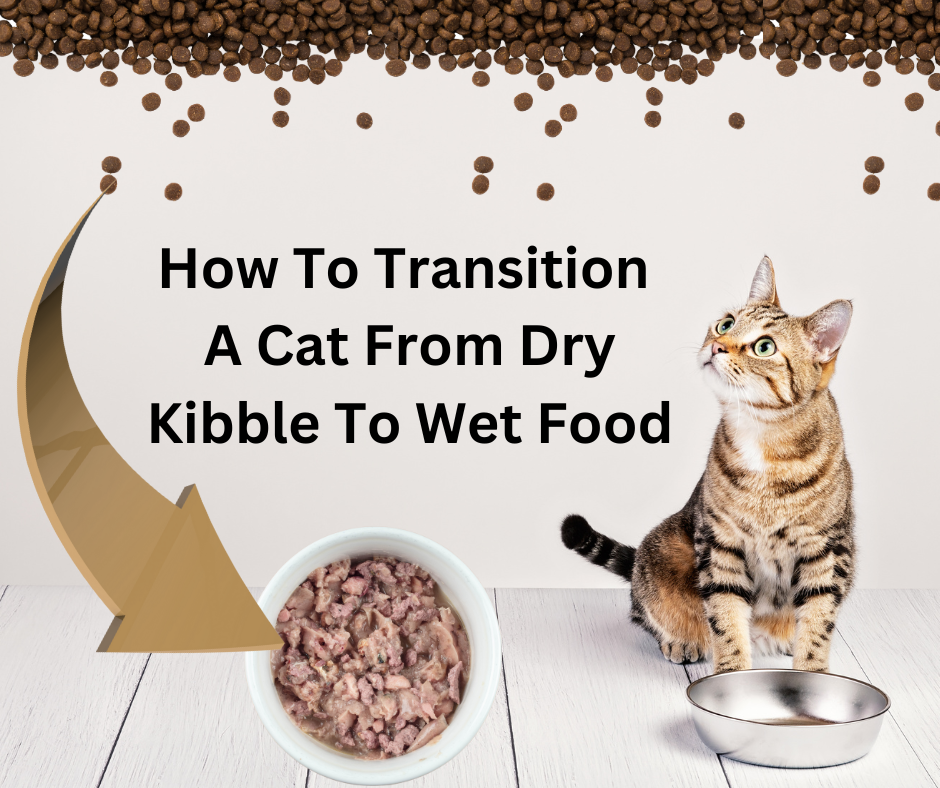
Switch a cat from dry food to wet food over 7 to 10 days by mixing small amounts of wet food into the usual meals, increasing the new food slowly, and watching appetite, stool, and comfort. Some cats need several weeks, and cats that stop eating need prompt veterinary advice.
For cat owners across the United States, changing a pet’s diet can start with a simple goal: add more moisture, follow a veterinarian’s advice, or find a food that better fits the cat’s needs. The challenge is that cats often prefer familiar smells, textures, and tastes. A cat that has eaten crunchy kibble for years may turn away from a bowl of soft food, even when the new meal is complete and balanced.
The safest way to make the change is to keep the process calm and gradual. Start with the food your cat already eats, offer a small amount of the new food, and give your pet time to adjust. Avoid sudden changes, forced feeding, or letting a cat go hungry in the hope that it will eventually accept the new meal. Cats need enough food each day, so a slow transition should never come at the cost of adequate nutrition.
This guide explains how to switch a cat from dry food to wet food, how much to offer, what to do when a cat refuses the new meal, and when to seek veterinary help. The suggested schedule is a starting point rather than a strict rule. Your cat’s age, health, appetite, and reason for changing foods may call for a different plan.
Source: images.ctfassets.net
Why Switch a Cat From Dry Food to Wet Food?
Wet cat food contains much more water than dry kibble. Many canned and pouched foods contain roughly 70% to 80% moisture, while dry food commonly contains around 6% to 10%. This difference can help increase the amount of water your cat takes in through meals.
Cats often have a low thirst drive compared with animals that naturally get more water from their food. A wet diet can support total water intake, although individual results vary and cats should still have access to fresh drinking water. More moisture may be useful for some cats, but it does not replace veterinary care for urinary, kidney, or other health problems.
Wet food can also offer a softer texture for cats that have trouble chewing. Its smell and texture may appeal to some cats that prefer soft meals. Other cats strongly favor crunchy kibble, so a switch may take patience even when the new food meets their nutritional needs.
The best reason to change a diet is a clear nutritional or practical goal, not the assumption that every wet food is automatically healthier than every dry food. Both types can provide complete nutrition when properly formulated. The right choice depends on the cat, the food’s nutrient profile, calorie needs, health status, and feeding routine.
Source: cdn.prod.website-files.com
More moisture in each meal
Wet food adds water to the diet and may help increase overall fluid intake. Keep fresh water available at all times.
A softer texture
Soft food may be easier for some cats to eat, but trouble chewing should prompt a dental check rather than a diet change alone.
Support for an individual care plan
A veterinarian may recommend a particular wet diet for a cat’s condition. Follow the exact dietary advice given for that animal.
Is Wet Food Always Better Than Dry Food?
No single food type is best for every cat. A complete and balanced dry diet can meet a cat’s nutritional needs, just as a complete and balanced wet diet can. Wet food generally provides more water per bite, while dry food is often easier to store, measure, and leave available for short periods.
If your cat is healthy and thriving on dry food, you do not necessarily need to switch. If you want to add wet food, a mixed-feeding routine may be a reasonable option. Ask your veterinarian whether a full switch, a partial switch, or a prescribed diet makes the most sense for your cat.
Consider nutrition first
Check the label for a statement that the food is complete and balanced for the appropriate life stage.
Consider your cat’s needs
Age, body condition, dental health, urinary history, and medical conditions can affect the best feeding plan.
Before You Start the Food Transition
Prepare the new food, a clean bowl, and a simple feeding plan before you change your cat’s meals. A little planning makes it easier to track how much your cat eats and spot a problem early. It also helps you avoid changing several parts of the routine at once.
Choose a wet food that fits your cat’s age and health needs. Kittens need food formulated for growth, while adult cats generally need an adult maintenance diet. Some senior cats do well on adult maintenance food, but health conditions may call for a different formula. Ask your veterinarian if you are unsure which type is appropriate.
Read the label to see whether the food is complete and balanced or intended only for supplemental feeding. Foods labeled for intermittent or supplemental feeding should not make up the whole diet unless a veterinarian has designed a suitable plan. Treats, toppers, and plain meat may add interest, but they do not provide all the nutrients a cat needs when fed alone.
If your cat eats a prescription diet, has diabetes, has a history of urinary obstruction, has kidney disease, or has another condition affected by nutrition, talk to your veterinarian before changing foods. A switch can change calorie intake, nutrient intake, and in some cases medication needs. Cats with diabetes, for example, may need closer monitoring if their diet changes.
Source: myindoorcat.com
Buy a small amount first
Start with a small can or pouch rather than a large case. This reduces waste if your cat dislikes the flavor or texture.
Keep the current food available
Do not discard all the familiar kibble before your cat has accepted the new food and is eating enough.
Prepare clean feeding dishes
Use a clean, shallow bowl that allows easy access to the food. Wash it after meals to remove residue.
Track the starting point
Record your cat’s usual daily food amount, appetite, stool pattern, and body weight if available.
How to Choose the Right Wet Cat Food
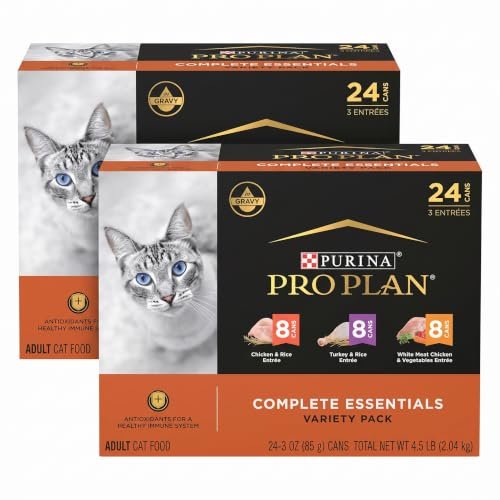
Look for a complete and balanced food made for your cat’s life stage. In the United States, the label may state that the food meets a recognized nutrient profile or has been shown to provide adequate nutrition through feeding tests. Either route can support a nutritional adequacy claim when the product is properly labeled.
Flavor and texture matter too. Cats may prefer pâté, shredded meat, minced food, or chunks in gravy. You can compare a few small packages, but introduce one option at a time so you can tell which food your cat accepts and whether it causes digestive upset.
Do not choose a food only because the front label says natural, grain-free, premium, or high-protein. Those phrases alone do not prove that the food is complete, appropriate for your cat, or better than another formula. Review the nutritional adequacy statement, calorie information, feeding guide, and any advice from your veterinarian.
Match the life stage
Choose kitten, adult, or other appropriate nutrition based on your cat’s age and veterinary guidance.
Compare texture and flavor
A cat that rejects pâté may accept shredded or minced food. Texture preference can be as important as flavor.
Check calorie content
Calories per can, pouch, or ounce help you compare portions with the dry food your cat already eats.
How to Switch a Cat From Dry Food to Wet Food Step by Step
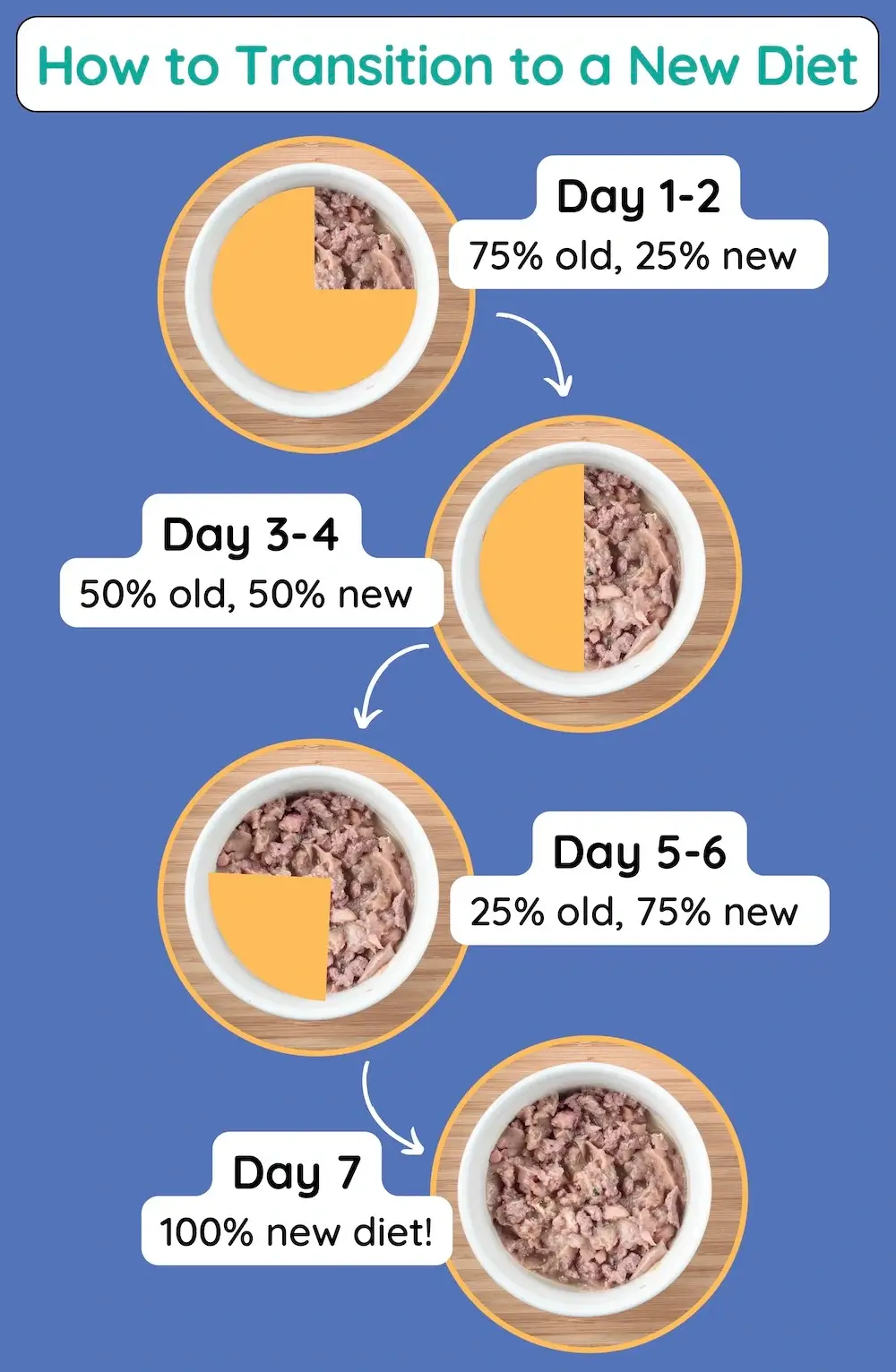
A gradual transition is usually the easiest way to move a cat from dry kibble to wet food. The following 7-to-10-day plan is a general guide for a healthy cat that is eating normally. Some cats need more time, and a veterinarian may recommend a different schedule for medical reasons.
At every stage, the main goal is to keep your cat eating enough. Do not advance just because the calendar says it is time. If your cat eats less, refuses the mixture, or develops digestive symptoms, return to the last amount it accepted and slow the process.
Source: cleverpetowners.com
Step 1: Offer a small taste
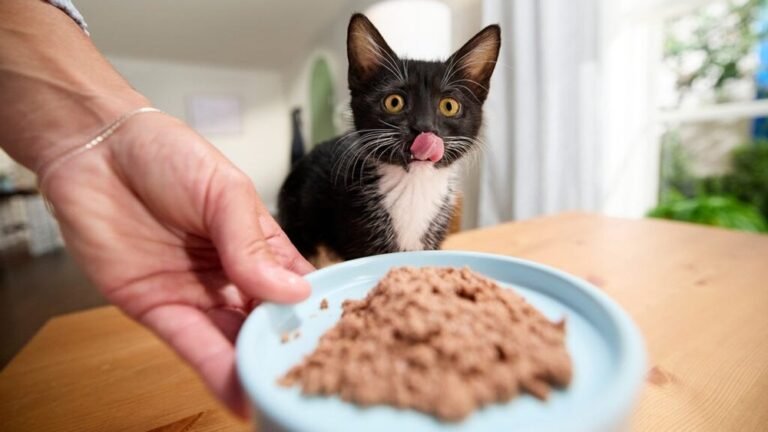
Place a teaspoon of wet food in a separate clean dish near the usual feeding area. Let your cat sniff it without pressure while keeping the normal meal available.
Step 2: Add a small amount to the usual meal
Once your cat shows interest, mix a little wet food into the regular kibble or offer both foods side by side. Some cats accept separate portions more readily than mixed textures.
Step 3: Increase the wet food slowly
If your cat eats the mixture well and has normal stools, increase the wet portion every day or two. Reduce the dry portion only as the cat reliably eats the replacement calories.
Step 4: Watch intake and comfort
Check the bowl after each meal and note any uneaten food. Look for vomiting, diarrhea, constipation, changes in energy, or a drop in appetite.
Step 5: Reach the planned diet
Continue until your cat eats the intended wet-food portion consistently. If you want to keep some kibble, use a measured mixed-feeding plan instead of removing it entirely.
A Sample 10-Day Transition Schedule
This schedule is an example, not a medical prescription. The percentages refer to the approximate share of daily calories from each food, not equal scoops or equal weights. Wet and dry food differ in calorie density, so equal volumes do not usually provide equal energy.
Move to the next stage only if your cat eats the current amount well and appears comfortable. A reluctant cat may need several days at each stage. It is safer to move slowly than to force a rapid change that reduces food intake.
Days 1–2
Offer a small taste of wet food, or aim for about 10% of daily calories from wet food if your cat accepts it. Keep most calories from the familiar dry diet.
Days 3–4
If appetite and stools remain normal, aim for about 25% of daily calories from wet food and 75% from dry food.
Days 5–6
Increase to roughly half the daily calories from wet food and half from dry food if your cat is comfortable with the change.
Days 7–8
If your cat continues to eat well, aim for about 75% of daily calories from wet food and 25% from dry food.
Days 9–10
Offer the full planned wet-food portion if your cat is eating enough and tolerating the change. Continue to monitor intake and weight.
How to Calculate Wet and Dry Food Portions
Use the calorie information on each label to work out the portions. For example, imagine a cat’s veterinarian-approved daily target is 200 calories. If the plan calls for 25% of calories from wet food, that is 50 calories from wet food and 150 calories from dry food. This is a hypothetical calculation, not a recommendation that every cat needs 200 calories a day.
If a can contains 180 calories, 50 calories would be about 0.28 of the can. If the dry food contains 400 calories per cup, 150 calories would be 0.375 cup. Your actual portions will depend on the foods you buy and your cat’s energy needs.
A veterinarian can help estimate an appropriate calorie target based on body condition, age, activity, and health. Feeding guides on packages are useful starting points, but some cats need more or less than the listed amount. Recheck portions as the transition progresses, especially if your cat tends to gain weight.
Use calories rather than scoops
Compare energy per can, pouch, ounce, or cup. A cup of kibble and a cup of wet food can provide very different amounts of energy.
Count treats and toppers
Include extras when reviewing the overall diet. Treats should not displace a large share of complete and balanced food.
Check weight over time
A steady weight and good body condition help show whether the feeding amount is appropriate.
How to Get a Cat to Accept Wet Food
If your cat sniffs wet food and walks away, change one feature at a time instead of making the meal more complicated. A cat may dislike the temperature, texture, smell, bowl shape, or location. Finding the reason can be easier than repeatedly buying new food and hoping for a different result.
Keep feeding times calm and predictable. Offer a small portion in a quiet place where the cat can eat without being crowded by people or other pets. Remove uneaten wet food according to safe handling guidance, then try a fresh portion at the next meal.
Do not starve a cat into accepting a new diet. Cats that eat too little can develop serious health problems, including hepatic lipidosis, a potentially dangerous buildup of fat in the liver. The risk is especially concerning in overweight cats, but any cat that stops eating deserves attention.
Source: cleverpetowners.com
Warm the food slightly
Bring refrigerated food closer to room temperature or warm it gently to increase its aroma. Stir it well and check that no part is hot before serving.
Try a different texture
Offer a small amount of pâté, minced food, or shredded food. Change one feature at a time so you can identify your cat’s preference.
Use a separate dish
Some cats dislike the smell or texture of kibble mixed into wet food. A separate dish lets them explore the new meal without losing access to the familiar food.
Keep the setting familiar
Use the usual feeding area and a clean, shallow dish. Avoid placing the bowl beside a noisy appliance or in a busy walkway.
Reward curiosity without pressure
Praise calm exploration or let your cat approach at its own pace. Do not smear food on the nose or force it into the mouth.
Should You Mix Dry and Wet Cat Food Together?
You can mix dry and wet food during a transition if your cat accepts the combination. Start with a small amount of wet food and enough familiar kibble to keep the texture recognizable. Increase the wet portion only when your cat continues to eat the meal.
Mixing is not required, though. Some cats prefer to keep the textures separate, and others may pick out the kibble and leave the wet food. If that happens, place the two foods in separate sections of a plate or in separate bowls.
Once wet food has been mixed with kibble, treat the meal as perishable because the moist food can spoil. Do not leave the mixture out all day. Remove leftovers and clean the dish after the meal.
Mix only what your cat will eat
Small portions help reduce waste and make it easier to track how much wet food the cat actually consumes.
Avoid adding too much at once
A sudden change in smell, taste, or texture can lead a cautious cat to reject the whole meal.
Can You Add Water to Dry Food During the Transition?
Adding a little warm water to kibble may help introduce moisture and soften its texture, but it does not turn dry food into wet food nutritionally. You can use this as a temporary step if your cat accepts it, provided the food remains safe to eat and the veterinarian has not advised against it.
Moistened kibble should not sit out for long periods. Water changes the food’s texture and can create conditions that allow microbes to grow. Prepare small portions, remove leftovers promptly, and wash the bowl before the next meal.
If your cat needs a therapeutic diet, ask your veterinarian before changing how you prepare it. A specific food may have directions that matter for its intended use.
Start with a small amount of water
Use just enough to soften the kibble without making an unfamiliar soup-like texture.
Serve it fresh
Prepare only a small serving and discard leftovers rather than keeping moistened kibble at room temperature.
How to Keep Wet Cat Food Safe
Wet cat food spoils faster than dry kibble once it is opened and exposed to room temperature. Food safety matters during the transition because a cat may eat only a small amount at a time. Use small servings, refrigerate unused portions promptly, and follow the storage directions on the package.
As a general rule, discard wet food left at room temperature for more than about two hours. In hot conditions, such as a warm room or summer weather, a shorter time may be appropriate. Do not rely on smell or appearance alone to decide whether leftovers are safe.
Refrigerate unused food in a covered container if the package allows it. Follow the manufacturer’s guidance for how long opened food can be stored. Before the next meal, offer a small portion at a comfortable temperature, and avoid repeatedly warming and cooling the entire container.
Wash food bowls after each meal and keep scoops, lids, and storage containers clean. Do not use a can that is damaged, swollen, leaking, or otherwise suspicious. If your cat develops vomiting or diarrhea after eating food that may have spoiled, contact your veterinarian for advice.
Source: assets-global.website-files.com
Serve small portions
A small serving is easier to finish and reduces the amount of food that sits out.
Refrigerate leftovers
Cover unused portions and follow the package’s storage and discard instructions.
Clean the bowl
Remove food residue and wash the dish regularly to keep the feeding area clean.
How Long Can Wet Cat Food Sit Out?
For most wet cat foods, about two hours at room temperature is a useful upper limit for a serving left out in the bowl. If the room is very warm, remove it sooner. Do not leave wet food out all day in the way some owners leave dry kibble available.
If your cat eats slowly, offer smaller portions more often rather than putting out a large serving. A timed feeding routine can help you see how much your cat eats and make it easier to remove leftovers promptly.
For warm weather
Shorten the time food sits out when the room is hot or the bowl is exposed to heat.
For slow eaters
Serve a smaller amount and offer another fresh portion later, within your cat’s normal feeding plan.
Signs the Transition Is Working
A successful transition is not simply a cat that licks the wet food once. Your cat should eat enough each day, maintain normal energy, and tolerate the new food without persistent digestive problems. The amount of time this takes varies from one cat to another.
Watch your cat during and after meals. A cat that approaches the bowl, eats a reasonable portion, and returns to normal activity is showing encouraging signs. Normal stools and a stable body weight over time provide further clues that the change is going well.
Keep a simple record for the first couple of weeks. Write down the food offered, approximate amount eaten, stool changes, and any signs of discomfort. This can help you and your veterinarian work out whether the food, transition speed, portion size, or another factor needs attention.
Source: uploads-ssl.webflow.com
Steady appetite
Your cat eats its planned meals rather than repeatedly skipping them or consuming much less than usual.
Normal digestion
Stools remain reasonably consistent, without ongoing diarrhea, vomiting, or signs of constipation.
Stable energy
Your cat remains alert and behaves much as it did before the transition.
Appropriate weight
Body weight and condition remain on track as portions are adjusted to meet calorie needs.
Reliable acceptance
Your cat willingly eats the wet food over several meals rather than accepting it only once.
What If Your Cat Develops Mild Digestive Upset?
A diet change can affect stool consistency, particularly when it happens too quickly. If your cat has mild changes but continues to eat, drink, and act normally, pause the increase in wet food and consider returning to the last well-tolerated ratio. Do not keep advancing the transition while symptoms continue.
Contact your veterinarian if diarrhea or vomiting persists, returns repeatedly, or occurs with poor appetite, pain, lethargy, or dehydration. Kittens, senior cats, and cats with chronic health conditions may need earlier assessment. Blood in the stool, repeated vomiting, marked weakness, or other severe symptoms warrant prompt veterinary care.
Slow down
Keep the current tolerated diet stable rather than adding more of the new food.
Review recent changes
Consider whether the food, portion size, treats, or feeding schedule changed at the same time.
Seek veterinary advice
Do not assume every digestive symptom comes from the food change. Other illnesses can cause similar signs.
Common Mistakes to Avoid When Changing Cat Food
The most common mistake is moving too quickly. A cat may reject a meal when its familiar kibble disappears overnight, especially if it has eaten the same food for years. A gradual change gives the cat time to adapt and helps you spot problems before they become harder to manage.
Another mistake is treating every can or pouch as an equal replacement for a scoop of kibble. Wet food contains more water, so it is often less calorie-dense by volume. Calculate portions from the label rather than using the same scoop size for both foods.
Avoid changing flavor, texture, feeding location, and schedule all at once. If the cat refuses the meal, you will not know which change caused the problem. Make one adjustment at a time and keep the rest of the routine familiar.
Do not force-feed a reluctant cat or use hunger as a training tool. Food refusal can be a sign of nausea, dental pain, stress, or another illness. The priority is adequate nutrition and health, not completing a transition on a fixed date.
Source: i.ytimg.com
Removing kibble too soon
Keep the familiar food available until your cat reliably eats enough of the replacement diet.
Ignoring calorie differences
Use the package calorie information and your cat’s needs to work out an appropriate serving.
Leaving wet food out all day
Offer smaller meals and remove leftovers promptly to reduce spoilage risk.
Changing too many things at once
Keep the bowl, feeding place, and routine familiar while you test a new food.
Waiting too long when a cat will not eat
Contact a veterinarian if your cat refuses food or eats much less than normal. Do not wait for the transition schedule to finish.
When Should You Stop the Transition and Call a Vet?
Stop increasing the new food and seek veterinary advice if your cat repeatedly refuses meals, eats much less than usual, vomits more than once, develops ongoing diarrhea, or appears unwell. A cat that has eaten little or nothing for about 24 hours needs prompt veterinary attention, and kittens, overweight cats, senior cats, and cats with existing illnesses may need help sooner.
Seek urgent care if your cat is very weak, collapses, has trouble breathing, shows severe pain, or repeatedly strains to urinate. Inability to pass urine is an emergency, especially in male cats. Do not assume that a urinary problem will improve simply because you are offering more wet food.
If your cat has a medical condition that requires a specific diet, ask the veterinary team how to proceed before making further changes. They may recommend a slower transition, a different formula, an appetite assessment, or treatment for an underlying problem.
Food refusal
A cat that stops eating needs prompt attention rather than a longer period of hunger.
Repeated vomiting or severe diarrhea
These signs can lead to dehydration and may indicate an illness unrelated to the food.
Urinary straining
Repeated attempts to urinate with little or no urine require emergency veterinary assessment.
Wet-Only Feeding or a Mix of Wet and Dry Food?
You do not have to eliminate dry food completely to add more moisture to your cat’s diet. Some households choose wet food for every meal, while others use wet food at set meal times and keep measured kibble for another meal. Either approach can work if the foods are nutritionally complete for the cat and the daily calorie intake is appropriate.
Wet-only feeding can suit cats that readily eat the food and have owners who can manage regular meal times, storage, and cost. A mixed diet may be more practical for cats that prefer kibble or for households that need a flexible feeding routine. The right choice should also account for medical needs and any veterinary instructions.
Cost and convenience can matter in the United States, where pet food prices, package sizes, and household schedules vary. Compare the cost per day rather than the price per can, and include the amount your cat actually needs. A more expensive food is not automatically more suitable, and a lower-cost food still needs to meet the cat’s nutritional requirements.
Once your cat consistently accepts the new diet, keep the routine steady. Measure portions, refresh drinking water, store opened cans safely, and watch body condition. If you later change brands or formulas, use a gradual transition again when possible.
Source: static.wixstatic.com
Wet-only diet
Can work when the cat accepts a complete and balanced wet food and the household can manage daily portions and storage.
Mixed feeding
Can provide wet food alongside kibble while allowing flexibility in meal timing and texture.
Veterinary diet
Should follow the veterinarian’s instructions, including any limits on treats, toppers, or other foods.
How to Maintain a Healthy Feeding Routine
After the transition, feed consistent portions at regular times that fit your cat’s needs. Some cats do well with several small meals, while others follow a different schedule. Use the feeding guide as a starting point and adjust with veterinary advice if weight or body condition changes.
Keep fresh water available in clean bowls, and consider placing water away from the food if your cat prefers that arrangement. Monitor appetite and body weight rather than assuming that a clean bowl always means the portion is right. If you have multiple cats, separate feeding areas can help you tell which cat is eating what.
Store food according to the package instructions and check the label when opening a new product. If your cat’s appetite changes after the switch, consider health problems as well as food preference. A stable feeding routine works best when you keep watching the cat, not just the bowl.
Measure daily portions
Use calories and feeding guidance to avoid overfeeding or underfeeding.
Monitor body condition
Look for gradual weight changes and ask your veterinarian how to adjust food if needed.
Keep water fresh
Wet food contributes moisture, but clean drinking water should always be available.
Frequently Asked Questions
Q
How long does it take to switch a cat from dry food to wet food?
Many healthy cats can transition over 7 to 10 days, but the process may take two weeks or longer for a cat that strongly prefers kibble. Begin with a small amount of wet food and increase it only when your cat eats well and has no ongoing digestive problems. A cat with a medical condition may need a veterinarian-approved schedule.
Q
Can I switch my cat from dry food to wet food overnight?
A sudden change is not the best starting point for most cats because it may lead to food refusal or digestive upset. A gradual transition helps you protect your cat’s calorie intake and identify any problems. If a veterinarian has directed an immediate diet change for a medical reason, ask how to make the change safely and what to do if your cat refuses the prescribed food.
Q
What if my cat refuses to eat wet food?
Keep the familiar dry food available and offer a teaspoon of wet food in a separate clean dish. Try a different texture or bring the food to room temperature, changing only one feature at a time. Never withhold food to make your cat hungry enough to accept wet food, and contact a veterinarian if your cat stops eating or eats much less than usual.
Q
Should I mix wet food with dry food when switching?
Mixing is one option, but it is not required. Some cats accept a blend, while others prefer separate bowls because they dislike the combined texture. Whichever method you choose, measure the portions by calories and remove leftovers promptly because wet food spoils faster than dry kibble.
Q
Will switching to wet food help my cat drink more water?
Wet food contains much more moisture than dry food, so it can increase the water your cat gets from meals. Some cats may drink less from the water bowl after switching because more water comes from food, but individual patterns vary. Keep fresh water available and seek veterinary advice for signs of dehydration or urinary problems.
Q
Can a kitten switch from dry food to wet food?
Kittens can eat wet food formulated to provide complete and balanced nutrition for growth. Their energy needs are high, and they can become unwell more quickly than healthy adult cats if they do not eat enough. Use a kitten-appropriate diet and consult a veterinarian if a kitten refuses food, has diarrhea, or shows signs of illness.
Q
What should I do if my cat has diarrhea during the transition?
Pause the increase in wet food and consider returning to the last tolerated ratio if your cat is otherwise acting normally and still eating. Do not keep changing foods in an effort to fix persistent symptoms. Contact your veterinarian if diarrhea continues, is severe, contains blood, or occurs with vomiting, weakness, pain, or poor appetite.
Q
Can I leave wet cat food out while I am at work?
Wet food should not be left at room temperature all day. As a general guide, discard a serving that has been out for about two hours, and remove it sooner in hot conditions. Offer a fresh meal before leaving, refrigerate unused portions, or ask your veterinarian about a safe feeding setup that fits your cat’s routine.
✦ Wrapping Up
Conclusion
Learning how to switch a cat from dry food to wet food starts with patience, the right food, and a plan that protects your cat’s daily nutrition. Offer a small taste first, increase the wet portion slowly, and base each step on how well your cat eats rather than on a strict deadline. For many cats, a gradual 7-to-10-day transition is a useful starting point, but some need more time.
Choose a complete and balanced wet food that fits your cat’s life stage and health needs. Measure portions by calories, keep the feeding routine familiar, and handle opened food safely. If your cat refuses meals, loses its appetite, develops ongoing digestive symptoms, or has a condition that affects nutrition, seek veterinary advice instead of pushing ahead.
The aim is not simply to replace a crunchy meal with a soft one. It is to help your cat eat enough, stay comfortable, and maintain good health. A calm, flexible approach gives you the best chance of finding a feeding routine that works for both of you.
💡 Key Takeaway
Start today by offering one teaspoon of complete and balanced wet cat food in a separate clean dish while keeping your cat’s usual dry food available. Record how much your cat eats, watch for digestive changes, and increase the wet portion only when your cat is ready.