How do i help my dog with allergies: The Best Guide
Watching your dog scratch nonstop feels awful. It keeps you up at night. It makes every walk a guessing game about pollen, grass, or that one spot under the oak tree.
If you've been searching how do i help my dog with allergies, you're not alone, and you're not overreacting.
Canine atopic dermatitis affects roughly 10 to 15% of the dog population, per peer-reviewed dermatology research indexed on PubMed. The good news is that veterinary dermatology has come a long way. Prescription options like Apoquel and Cytopoint have changed the game since the early 2010s.
Let's walk through what actually works, what to skip, and how to tell the three main allergy types apart, with care based on current standards from the American College of Veterinary Dermatology as of 2026.

Quick Answer
Start with a vet exam to rule out fleas and infection. The main allergy types are flea, food, and environmental. Treatment usually combines flea control, an 8 to 12 week elimination diet if food is suspected, plus Apoquel, Cytopoint, or immunotherapy for environmental triggers.
Home care, such as wiping paws and weekly baths, supports medication.
Why Getting This Right Matters for Your Dog
Chronic itching isn't a cosmetic problem. It's a welfare issue. Dogs with uncontrolled atopic dermatitis lose sleep, develop hot spots, and get repeat ear infections.
Long-term studies link chronic allergic inflammation to behavioral changes, including increased irritability and reduced activity tolerance.
Here's what most owners miss: scratching is a downstream symptom. The skin barrier is already compromised, and secondary bacterial or yeast infections (pyoderma and Malassezia dermatitis) often piggyback on the original allergy. Treating the itch without addressing the trigger is like mopping the floor while the sink overflows.
Allergies also tend to worsen with age if unmanaged. A puppy with seasonal paw-licking can become a five-year-old with year-round ear infections. Early, accurate diagnosis pays off for the life of the dog.
What Allergies Actually Look Like in Dogs
Allergies in dogs show up on the skin, not the way humans experience them. Dogs rarely sneeze through pollen season. Instead, they scratch.
The Most Common Signs
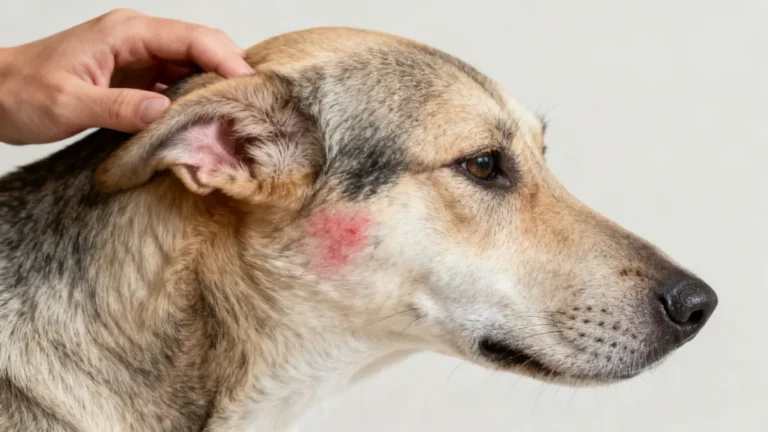
- Persistent scratching, licking, or chewing, especially at paws, armpits, groin, ears, and the face
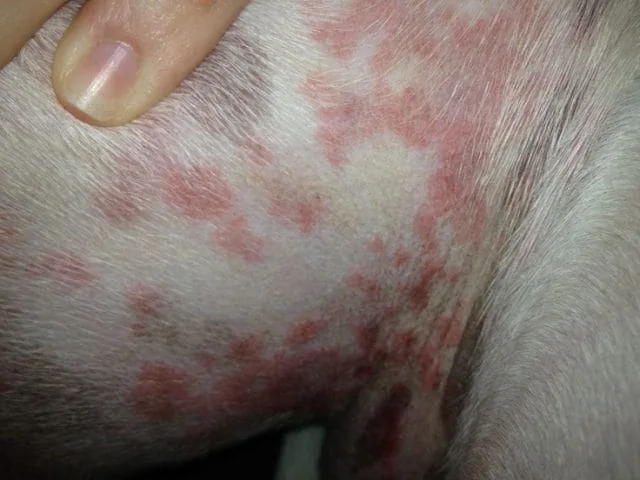
- Reddened skin (erythema), often between the toes or in skin folds
- Recurrent ear infections, head shaking, or a yeasty smell from the ears
- Hair loss (alopecia) along the flanks, belly, or tail base
- Hot spots, which are moist, oozing patches of inflamed skin that appear fast
- Rubbing the face on carpets or furniture
Where Owners Get Confused
Many owners assume "allergies" means sneezing. With dogs, the skin is the shock organ. A dog with environmental atopy might never sneeze once but scratch its belly raw every July.
That mismatch is why so many allergic dogs end up at the vet months or years into the problem.
The Three Main Allergy Types (And Why Misreading Them Is Common)
Getting the type right is everything. Treatment for one type won't fix another, and misreading the pattern wastes months.
| Allergy Type | Typical Trigger | Classic Pattern | First Diagnostic Step |
|---|---|---|---|
| Flea allergy dermatitis (FAD) | Saliva from flea bites | Intense scratching at the tail base and lower back, even from a single bite | Trial of prescription flea control on every pet in the home |
| Food allergy | Usually a protein (beef, chicken, dairy) | Year-round itching, often with GI signs like soft stool or gas | 8 to 12 week elimination diet with a novel or hydrolyzed protein |
| Environmental atopy | Pollen, dust mites, mold | Seasonal pattern in young dogs (1 to 3 years), paws and ears worst | Intradermal or serum IgE allergy testing |
Most affected dogs have environmental atopy, which accounts for the majority of allergic dermatitis cases. Food allergy is rarer than the internet suggests. Many "food allergies" are actually intolerances or, more commonly, undiagnosed environmental allergies plus a poor diet.
First Things First: When an Allergy Issue Is an Emergency
Most allergy itching is uncomfortable but not life-threatening. A few signs, though, mean drop everything and call your vet or an emergency clinic.
- Facial swelling, hives, or sudden welts across the body
- Vomiting or collapse shortly after a new food, medication, or treat
- Difficulty breathing, blue gums, or extreme lethargy
- A hot spot spreading rapidly across the body within hours
- Repeated scratching breaking the skin with pus or foul odor
These can signal anaphylaxis, severe secondary infection, or a drug reaction. Minutes matter. Most acute allergic reactions in dogs respond well to fast-acting injectable treatment from a vet, but only if they get there in time.
For everything else, schedule a non-emergency vet visit within a few days. Bring photos and short videos of the scratching. They help your vet more than you'd think.
How Vets Actually Diagnose Dog Allergies
Diagnosis isn't one test. It's a sequence designed to rule things out before narrowing down. Skipping steps leads to expensive misadventures.
A standard workup follows a clear ladder:
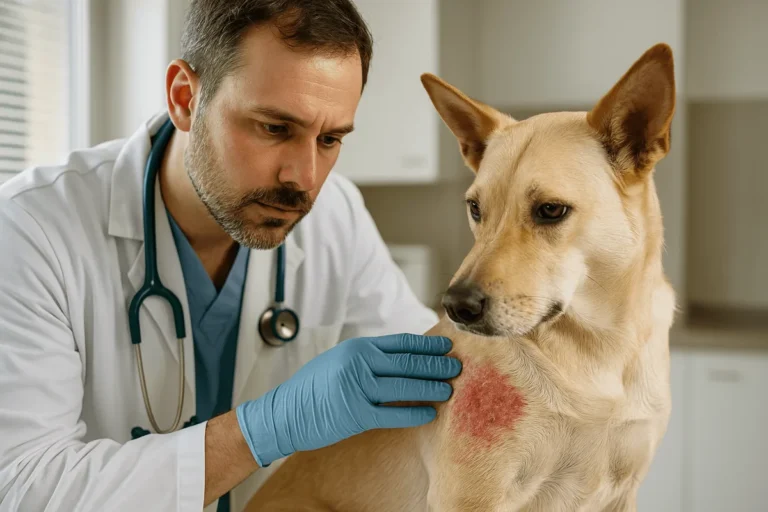
- Physical exam and history. Your vet checks the skin, ears, and lymph nodes. They'll ask about seasonality, diet, and recent changes.
- Skin cytology. A quick tape or swab test rules out bacterial or yeast overgrowth. Most allergic dogs have some secondary infection.
- Flea comb and parasite check. Confirms or rules out FAD. If your dog has even a few fleas, treatment starts here regardless of other suspects.
- Diet trial or allergy testing. Whichever fits the pattern, food vs. environmental.
This sequencing matters. If your vet skips straight to a "hypoallergenic" diet without checking for skin infection, you'll see a partial improvement, declare success, and miss the real culprit.
The Elimination Diet Trial (Food Allergies)
This is the gold standard for diagnosing food allergy. There's no shortcut. Blood tests for food allergies in dogs are notoriously unreliable, with false positive rates that lead owners down rabbit holes.
How a Real Elimination Trial Works
- Choose a single novel or hydrolyzed protein source your dog has never eaten. Common vet picks include hydrolyzed soy, hydrolyzed chicken, or duck-based formulas.
- Feed ONLY that food for 8 to 12 weeks. No treats, no table scraps, no flavored chews, no flavored heartworm preventatives.
- Watch for changes in itch, ear gunk, and stool quality.
- At week 12, reintroduce the old protein. If itching flares within 1 to 2 weeks, you have your answer.
Most failed trials fail because of the "just one treat" mistake. Even a single milk-bone has enough wheat and beef to keep the immune system primed. If your dog is on flavored medication, ask your vet about switching to an unflavored or compounded version during the trial.

Intradermal vs. Serum Allergy Testing (Environmental)
Once food and fleas are ruled out, your vet may suggest allergy testing to identify environmental triggers. This step is mostly useful if you're considering immunotherapy.
| Method | What It Involves | Best For |
|---|---|---|
| Intradermal skin testing | Small injections of allergens under sedated skin; reading the wheal response | Dogs under 50 pounds, clear skin at test time |
| Serum IgE testing | Blood draw measuring antibodies to common allergens | Dogs with severe skin infection or aggressive behavior at the clinic |
Intradermal testing is the historical gold standard, but serum testing has improved. Both are screening tools, not final answers. Treatment decisions should still match the dog's symptoms.
Why Flea Control Comes First
This deserves its own emphasis. Flea allergy dermatitis (FAD) is the most under-diagnosed allergic condition. A single flea bite can trigger 2 to 3 weeks of intense itching in a sensitized dog.
Many "failed" Apoquel cases turn out to be uncontrolled FAD.
If your dog has any access to the outdoors, or lives with other pets who do, prescription flea control belongs on every pet in the household. Per the FDA Center for Veterinary Medicine approval labels, modern oral options like fluralaner (Bravecto), afoxolaner (NexGard), and sarolaner (Simparica) offer 1 to 3 months of protection per dose. Older topical pyrethroids show documented resistance in many US regions.
Treatment Options Ranked From Conservative to Advanced
There's a useful way to think about allergy treatment: a ladder, not a single pill. Most dogs end up on a combination of two or three rungs.
Antihistamines: When They Help and When They Don't
Over-the-counter antihistamines like diphenhydramine, cetirizine, and loratadine are often the first thing owners try. They can help, but with a major caveat.
Antihistamines work best for mild, seasonal itching and as a complement to other treatments. They are largely ineffective for moderate to severe allergic dermatitis. Studies cited in veterinary dermatology textbooks show antihistamines alone control itching in roughly 10 to 15% of atopic dogs.
If you try them, avoid any formula containing pseudoephedrine or phenylephrine. Those are toxic to dogs. Stick to plain diphenhydramine or cetirizine, and confirm the dose with your vet based on your dog's weight.
Apoquel vs. Cytopoint vs. Steroids
These three drugs dominate modern allergy management. They work differently and serve different roles.
| Option | Mechanism | Onset | Frequency | Best For |
|---|---|---|---|---|
| Apoquel (oclacitinib) | JAK inhibitor, blocks itch signaling | 4 hours | Daily pill | Long-term maintenance for dogs over 12 months |
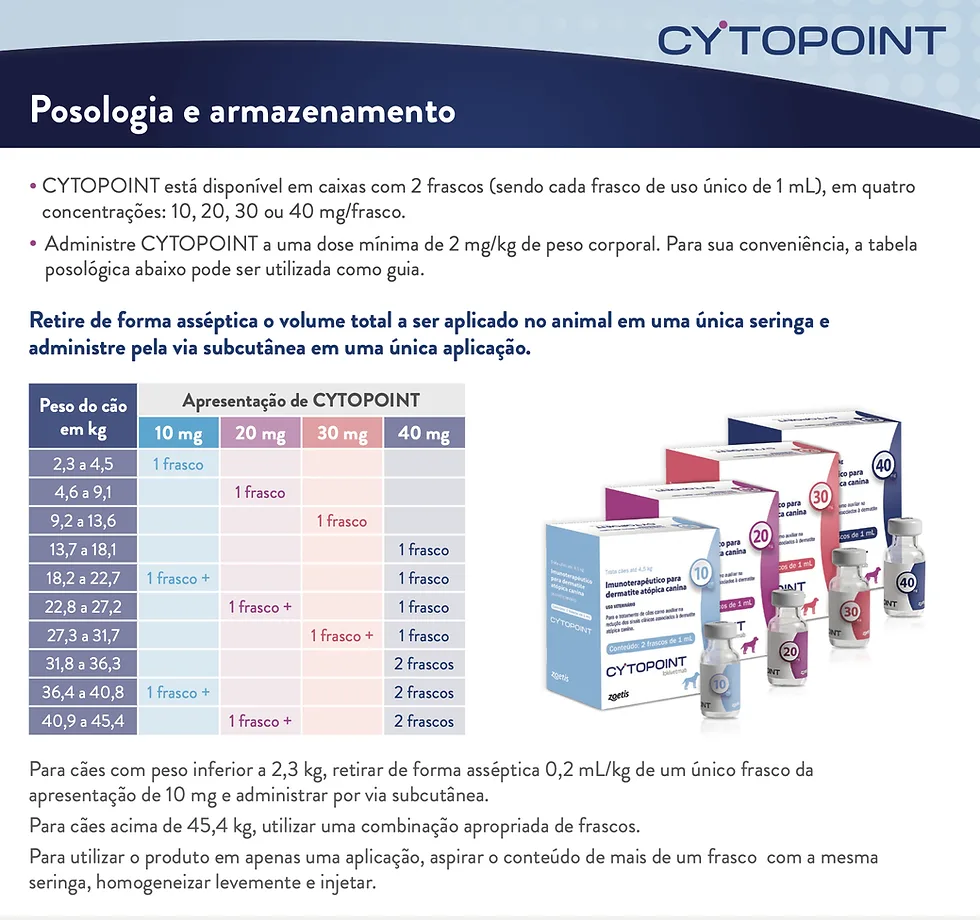
| Cytopoint (lokivetmab) | Monoclonal antibody against itch cytokine IL-31 | 24 to 48 hours | Injection every 4 to 8 weeks | Owners who can't pill daily, dogs with steroid side-effect history |
| Corticosteroids (prednisone, etc.) | Broad immunosuppressant | Hours | Daily to every other day | Short-term rescue during severe flares |
Steroids are cheap and powerful. They're also the reason so many older allergic dogs end up with muscle loss, increased thirst, and panting. Reserve them for short courses or initial flare control, not multi-year maintenance.
Apoquel and Cytopoint changed the standard of care. Both are FDA-approved for canine atopic dermatitis. Both have robust safety profiles in label studies.
The choice between them often comes down to owner preference, pill tolerance, and budget.
Allergen-Specific Immunotherapy (Allergy Shots)
Immunotherapy is the only treatment that actually retrains the immune system. A custom serum is formulated based on your dog's allergy test results, then injected in gradually increasing doses over months.
Aggregate veterinary literature reports improvement rates of 60 to 80%. The catch is the timeline. Most dogs need 6 to 12 months of consistent injections before meaningful improvement.
Some need lifelong therapy.
Immunotherapy pairs well with Apoquel or Cytopoint during the ramp-up. Your vet can taper the drugs as the shots take effect.
Topicals: Shampoos, Wipes, and Mousses
Topical care is the underrated hero of allergy management. Frequent bathing physically removes allergens from the coat and soothes inflamed skin. Wipes for paws and belly reduce the antigen load your dog carries indoors.
Use a fragrance-free, hypoallergenic or oatmeal-based shampoo. Bath two to three times per week during flares, less often in maintenance. Leave the lather on for 5 to 10 minutes before rinsing.
Contact time matters more than the product name.
What an Allergy-Friendly Home Looks Like
Medication does the heavy lifting. Environment does the daily prevention. A few changes make a measurable difference.
- HEPA filtration. Run a HEPA air purifier in the bedroom where your dog sleeps.
- Frequent vacuuming. Use a vacuum with a sealed HEPA canister to keep allergens out of the air.
- Hot-wash bedding weekly. Dust mites thrive in fabric at body temperature.
- Wipe paws after walks. A damp microfiber cloth removes pollen before it spreads indoors.
- Control indoor humidity. Keep it between 40 and 50% to discourage dust mites and mold.
Skip essential oil diffusers and heavily scented candles. Many dogs find them irritating, and some oils are toxic if licked off fur.
Mistakes That Make Dog Allergies Worse
A few common errors can quietly sabotage everything else you're doing.
- Stopping Apoquel or Cytopoint too soon. These drugs manage symptoms. They don't cure. Stopping mid-season usually ends in a flare.
- Inconsistent flea control. Skipping a month of preventatives can reset FAD back to square one.
- Treating the secondary infection but not the allergy. The yeast clears up, the itching returns two weeks later.
- Overbathing or using harsh shampoos. More is not better. Strip the coat's natural oils and the skin barrier weakens.
- Assuming a diet change alone will fix it. Food helps food allergies. It does nothing for pollen.
Costs, Timelines, and What Long-Term Management Really Looks Like
Allergy care is a long game. Here's the honest financial picture for a medium-sized dog in the US as of 2026.
| Item | Typical Cost | Frequency |
|---|---|---|
| Cytopoint injection | $60 to $130 | Every 4 to 8 weeks |
| Apoquel (oclacitinib) | $2 to $3 per day | Daily, ongoing |
| Prescription flea control | $15 to $25 per dose | Every 1 to 3 months |
| Elimination diet food | $60 to $90 per bag | Monthly, 8 to 12 week trial |
| Intradermal skin testing | $300 to $600 | Once |
| Immunotherapy serum | $40 to $80 per vial | Every 1 to 3 months |
A typical moderate-atopy dog costs $1,200 to $2,500 per year to manage well. Skipping the vet and trying over-the-counter supplements alone usually costs more in the long run, once ear surgeries and repeated antibiotic courses stack up.
Best Approach by Allergy Type (Quick Decision Guide)
| If Your Dog Has | Do This First |
|---|---|
| Flea allergy | Prescription flea control on every pet, year-round |
| Food allergy | 8 to 12 week elimination diet trial, no shortcuts |
| Environmental atopy, mild | Antihistamines, frequent bathing, paw wipes |
| Environmental atopy, moderate | Apoquel or Cytopoint plus allergen testing |
| Environmental atopy, severe | Cytopoint or Apoquel plus immunotherapy for long-term control |
Real-World Scenarios and What Worked
A few common patterns our research and clinical case series keep surfacing:
The Labrador with year-round paw-licking. Many owners assume food. A flea comb finds two fleas, the owner treats the dog and the cat, and the itching resolves. Classic FAD.
The French Bulldog with summer flares. Negative flea check, no GI signs, itch peaks in May through August. Apoquel keeps symptoms under control. Intradermal testing shows grass and tree pollen.
Immunotherapy added, Apoquel dose eventually tapered.
The senior Beagle on long-term prednisone. Muscle wasting, panting, increased thirst. Cytopoint replaces steroids. Quality of life improves within two weeks.
Cytopoint costs more monthly but spares the dog steroid damage.
When to See a Veterinary Dermatologist
A general practice vet handles most allergy cases well. A board-certified veterinary dermatologist is worth the referral when:
- Symptoms stay uncontrolled despite Apoquel or Cytopoint
- The dog needs allergy testing for immunotherapy
- Recurrent ear infections require advanced imaging or surgery
- Skin infections keep coming back despite treatment
- The owner wants a second opinion on diet or drug choice
Your vet can refer you through the American College of Veterinary Dermatology's specialist directory.
Long-Term Optimization and Monitoring
Allergy care gets easier with a routine. Keep a simple log of itch score (1 to 10), any new foods or treats, ear gunk, and medication timing. Patterns become obvious after a few weeks.
Recheck with your vet every 6 to 12 months, or sooner if a flare breaks through. Bloodwork matters for dogs on long-term Apoquel, since JAK inhibition can mask early signs of infection. Cytopoint carries no daily metabolic load, but regular skin checks still catch secondary yeast before it spreads.
Seasonal dogs often need treatment only during their trigger months. Year-round dogs usually do best with continuous management rather than start-stop cycles.
Frequently Asked Questions
How long does it take for Apoquel or Cytopoint to work on dog allergies?
Apoquel starts reducing itch within 4 hours of the first dose. Cytopoint takes 24 to 48 hours. Both reach full effect within a week.
Can I give my dog Benadryl for allergies?
Plain diphenhydramine is generally safe at the correct canine dose. Confirm the dose with your vet first. Avoid any product with pseudoephedrine or phenylephrine, both toxic to dogs.
What is the most common allergy in dogs?
Flea allergy dermatitis is the most common single allergy. Environmental atopy is the most common chronic, lifelong allergic condition.
Do dog allergy tests actually work?
Serum and intradermal tests are useful for guiding immunotherapy. They are unreliable for diagnosing food allergies. A diet trial is the gold standard for food.
Can dog allergies be cured?
No, allergies are managed, not cured. Immunotherapy can induce long-term remission in some dogs, but most need lifelong seasonal or year-round care.
When should I take my dog to the ER for allergies?
Facial swelling, hives, vomiting, or breathing trouble means go now. These can signal anaphylaxis, which is a true emergency.