How long after changing dog food will allergies last
If your dog is still scratching three weeks after a food switch, you're probably wondering if you picked the wrong kibble, or if the allergy is just stubborn. Most owners expect a quick fix. The truth is a little messier.
How long after changing dog food will allergies last depends on what kind of reaction your dog actually has, how strict you are with the new diet, and whether something else is driving the itch.
Veterinary dermatology literature puts the realistic answer at 8 to 12 weeks for a true food allergy. A novel or hydrolyzed protein diet needs that long to fully calm an overactive immune response, and visible skin repair can take even longer. The 2026 edition of the WSAVA Global Nutrition Guidelines still recommends a full 8-week minimum elimination trial, with many cases needing the full 12.
Below, we break down what that timeline really looks like, why some dogs keep itching past week six, and how to tell a food allergy apart from everything else that makes dogs scratch.

Quick Answer
Most food allergy symptoms improve within 4 to 6 weeks on a strict elimination diet. Full resolution usually takes 8 to 12 weeks. If your dog still itches past week 12, the trigger is likely not the food, or the trial was contaminated.
Food Allergy vs. Food Intolerance in Dogs: Why the Distinction Changes Everything
A food allergy is an immune response. Your dog's body mistakes a protein (usually beef, dairy, or chicken) for a threat and attacks it. That response shows up as itchy skin, ear infections, hot spots, or chronic digestive upset.
A food intolerance is a digestive problem, not an immune one. It can cause gas, loose stool, or vomiting, but it doesn't trigger the inflammatory skin cycle.
Why does this matter for the timeline? Because the immune system is slower to calm down than the gut. A dog with lactose intolerance may feel better in 48 hours off dairy.
A dog with a true chicken allergy may keep scratching for weeks even after chicken is gone, because inflammatory chemicals are still circulating in the skin.
Common canine food allergens
| Allergen | Reported share of cases |
|---|---|
| Beef | ~34% |
| Dairy | ~17% |
| Chicken | ~15% |
| Wheat | ~13% |
| Lamb, soy, egg | Combined ~21% |
What a True Food Allergy Looks Like in Dogs (and What It Doesn't)
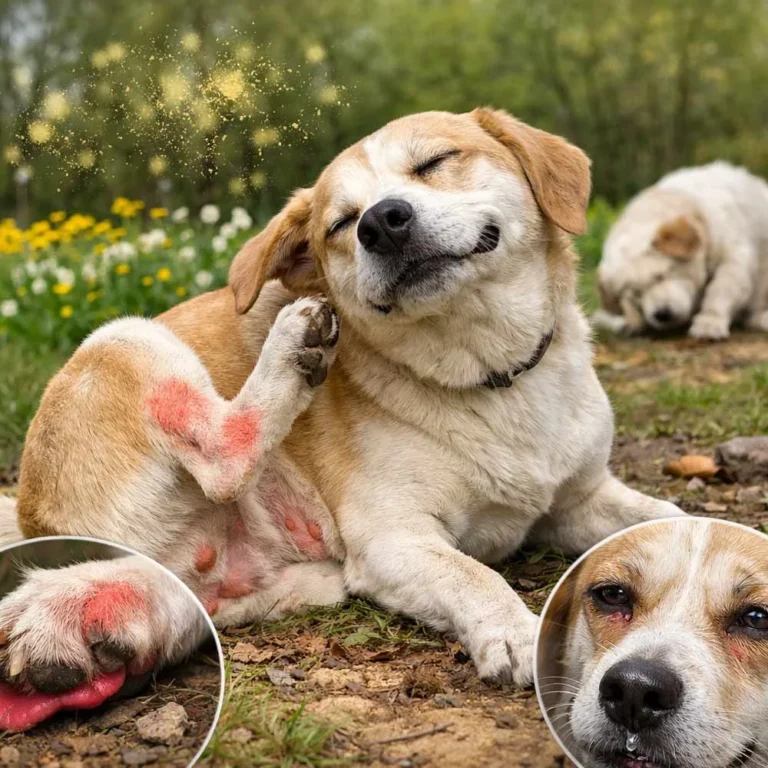
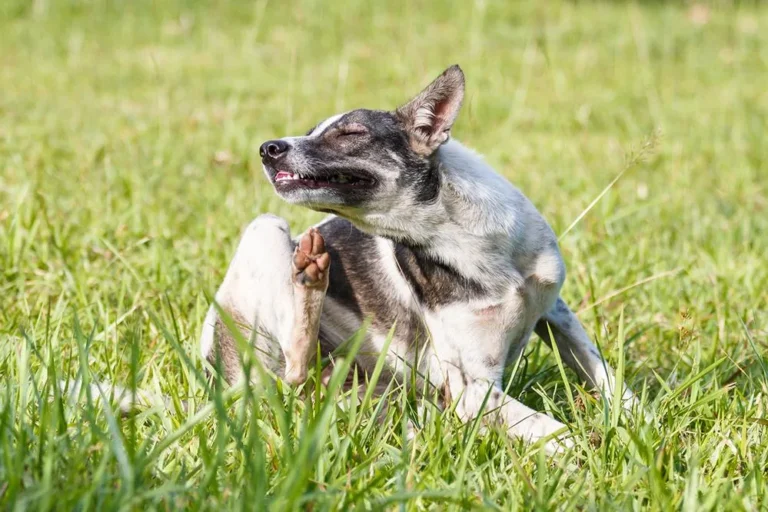
Food allergies in dogs don't look like what most people expect. They rarely cause sudden, dramatic swelling. The classic signs are chronic, year-round, and easy to mistake for something else:
- Non-seasonal itching (scratching that doesn't go away in winter)
- Recurring ear infections, often yeast-based
- Red, inflamed paws or anal region
- Soft stool or diarrhea alongside skin issues
- Hair loss from constant scratching or licking
A study published through the Royal Veterinary College found that dogs with food-related skin issues often show symptoms before their first birthday, or after a sudden diet change in adulthood. If your dog's itching started right after you switched food, that timing is a clue, but it's not proof. Environmental allergies (atopy) and flea allergy dermatitis can flare at the same time.
What it usually isn't
| Look-alike condition | How to tell it apart |
|---|---|
| Flea allergy dermatitis | Check for flea dirt; itch concentrates at the tail base |
| Atopic (environmental) allergy | Often seasonal; responds to steroids short-term |
| Sarcoptic mange | Intense itch, crusty ear edges, contagious to other pets |
| Yeast or bacterial skin infection | Odor, greasy coat; usually secondary to another trigger |
The Standard Elimination Diet Timeline: What to Expect Week by Week
This is the part most owners get wrong. They switch the food, wait two weeks, see no change, and quit. The standard elimination diet timeline is built on research, not hope, and the 8 to 12 week window exists because the skin's inflammatory cycle takes that long to fully reset.

Week-by-week breakdown
| Week | What's happening | What you should see |
|---|---|---|
| 1 | Transition onto new food (7–10 day mix) | Possible loose stool during the swap |
| 2–3 | Inflammatory chemicals still active | Minimal visible change, maybe slight improvement in stool |
| 4–6 | Skin barrier begins to repair | Itch score drops, ear redness fades, coat feels softer |
| 7–8 | Most dogs with true food allergy show clear improvement | 70–80% reduction in scratching for confirmed cases |
| 9–12 | Full skin cycle turnover | Complete resolution in confirmed cases |
| 12+ | Challenge phase begins | If symptoms return, the allergen is confirmed |
Per the WSAVA Global Nutrition Guidelines, the 8-week minimum is non-negotiable for a valid trial. Anything shorter produces unreliable results, and many dogs are pulled off a working diet too soon.
Why the trial must be strict
One piece of leftover chicken. One flavored chew. One heartworm pill with beef protein.
Any of these can reset the immune response and restart the clock. According to the AAHA Nutritional Assessment Guidelines, the most common reason elimination diets "fail" is accidental contamination, not the diet itself.
Novel Protein vs. Hydrolyzed Protein: Which Elimination Diet Works Better
Once you commit to an elimination trial, the next question is what to feed. The two main options are novel protein diets and hydrolyzed protein diets, and they're built on very different ideas.
How each one works
A novel protein diet uses a protein your dog has never eaten, like venison, rabbit, duck, or kangaroo. The idea is simple: if the immune system has never seen it, it can't react to it. The catch is that most commercial dog foods cycle through the same proteins, so finding a truly "novel" option can be harder than it sounds.
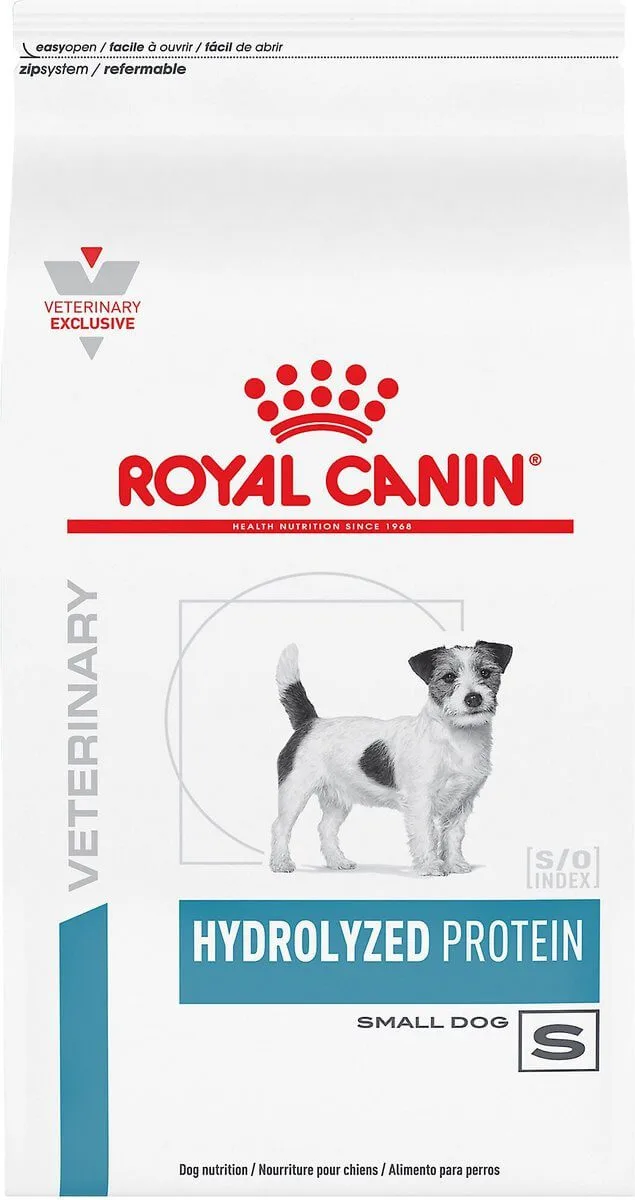
A hydrolyzed protein diet breaks the protein down into molecules too small for the immune system to recognize. Royal Canin, Hill's z/d, and Purina HA are the most commonly prescribed versions. These are veterinary-only diets and require a prescription.
Which works better?
| Factor | Novel protein | Hydrolyzed protein |
|---|---|---|
| Availability | OTC, no prescription | Veterinary prescription only |
| Cost | Moderate | Higher |
| Success rate in studies | ~60–70% | ~75–85% |
| Risk of cross-reaction | Higher (dog may have been exposed) | Very low |
| Best for | Mild cases, budget-conscious owners | Severe or unresponsive allergies |
The peer-reviewed consensus, including work from the Cummings School of Veterinary Medicine at Tufts, is that hydrolyzed diets give more consistent results, especially for dogs that have already failed a novel protein trial. For a first attempt with a strong suspicion of a specific protein (say, chicken), a novel protein approach can work and costs less.
When to skip both and cook
Home-cooked elimination diets are an option, but they need to be formulated by a veterinary nutritionist. An unbalanced home-cooked diet run longer than 8 to 12 weeks can cause mineral deficiencies, especially in puppies. The AAHA guidelines recommend a commercial prescription or OTC balanced formula over home cooking for any elimination trial lasting beyond a few weeks.
Home-Cooked Elimination Diets vs. Prescription Diets: Trade-Offs Owners Need to Know
Home-cooked elimination diets give you total control over what goes into the bowl. For owners who distrust commercial processing or want to avoid additives, that's appealing. The trade-off is precision.
A board-certified veterinary nutritionist uses software to balance calcium, phosphorus, zinc, and essential fatty acids down to the gram. A recipe from a blog or forum usually doesn't.
When home-cooked makes sense
- Short diagnostic trials (4 to 6 weeks) under nutritionist guidance
- Dogs with multiple confirmed intolerances to commercial ingredients
- Puppies or pregnant females needing careful macro balance
When prescription wins
- Long-term maintenance after a confirmed allergen is identified
- Dogs that have already failed one or more OTC trials
- Owners without access to a nutritionist for ongoing formulation
The honest summary: home-cooked is a diagnostic tool, not a permanent diet. Once the allergen is identified, most owners transition to a balanced commercial option for simplicity and consistency.
Common Mistakes That Ruin an Elimination Trial
Most failed elimination diets don't fail because the food is wrong. They fail because the trial wasn't airtight. Here's what we see go wrong repeatedly in veterinary dermatology case data.
The contamination trap
- Flavored heartworm or flea preventatives (some contain pork or beef)
- Dental chews, even "limited ingredient" ones
- Table scraps, even a single bite
- Other pets in the home sharing food
- Children dropping snacks
The timeline trap
Owners expect visible improvement in two weeks. When they don't see it, they assume the diet isn't working. The inflammatory skin cycle takes 6 to 8 weeks minimum to fully quiet down.
Quitting at week three is the most common avoidable error.
The diagnosis trap
Owners treat the food change as the diagnosis. A dog that improves on a new diet might have improved because the original diet was contaminated, because a secondary infection cleared, or because the season changed. The only way to confirm a real food allergy is the challenge phase, reintroducing the suspected protein and watching for a return of symptoms.
What to Track During a Food Trial (and Why a Symptom Diary Matters)
You can't manage what you don't measure. A simple symptom diary turns vague impressions ("he seems better") into data you and your vet can actually use. The most useful format tracks itch intensity, ear health, stool quality, and any new treats or foods.
A simple weekly scorecard
| Day | Itch score (0–10) | Ear condition | Stool quality | Any extras fed |
|---|---|---|---|---|
| Mon | ||||
| Wed | ||||
| Fri | ||||
| Sun |
Anything above a 3 in itch score for two consecutive weeks means the trial needs a vet review, not an automatic restart. Patterns matter more than single bad days.
The Challenge Phase: How to Confirm a Real Food Allergy
The elimination trial only tells you the symptoms improved under a controlled diet. The challenge phase tells you why. This is where you reintroduce one suspected ingredient at a time and watch for a return of itching, ear inflammation, or GI upset.
Standard challenge protocol
- Stay on the elimination diet for the full 8 to 12 weeks.
- Add one suspected allergen (for example, plain cooked chicken) in small amounts for 3 to 5 days.
- If no reaction, wait 7 days, then test the next suspected allergen.
- If a reaction appears, stop that ingredient and wait for symptoms to clear before testing the next.
The reintroduction symptoms usually show up within 1 to 14 days, and they're often milder and faster than the original presentation. A dog that reacted to chicken within 48 hours during the challenge is a much stronger diagnostic signal than one that slowly worsened over months.
When the Food Change Isn't the Problem: Ruling Out Atopy, Flea Allergy, and Infection
Roughly 10 to 15% of canine skin disease is food-related, per peer-reviewed dermatology research. The rest is environmental allergies, flea allergy dermatitis, mange, or secondary skin infections. If your dog has finished a clean 12-week elimination trial with no improvement, the food probably wasn't the trigger.
A quick ruling-out checklist
- Flea control: Is every pet in the home on a vet-prescribed preventative year-round?
- Atopy: Does the itching get worse in spring or fall? Does it respond to antihistamines or Apoquel?
- Skin cytology: Has your vet done a tape test to check for yeast or bacteria?
- Hypothyroidism: A simple blood test can rule this out, especially in middle-aged dogs.
A vet who jumps straight to a food change without ruling these out first is doing you a disservice. The right workup saves months of misdiagnosis.
Breeds Prone to Food Allergies and How That Affects Recovery
Some breeds show a higher statistical likelihood of food allergy, though the exact mechanism is still under research. French Bulldogs, West Highland White Terriers, Labrador Retrievers, Golden Retrievers, Boxers, Cocker Spaniels, and German Shepherds appear most often in case studies.
What breed means for recovery
- Brachycephalic breeds (Frenchies, Boxers) often have overlapping atopy and food allergy, which complicates timelines.
- Retrievers tend to show ear and skin symptoms together.
- Terriers often present with intense itching before skin lesions appear.
If your dog is in a high-risk breed, expect your vet to recommend a longer trial (closer to 12 weeks) and more aggressive flea control. Recovery isn't slower, but the diagnosis takes more patience.
How Long Until Skin and Coat Actually Recover After the Allergen Is Removed
Symptom relief and full skin recovery aren't the same thing. Most dogs stop scratching actively within 4 to 8 weeks of removing the allergen. Full skin barrier repair, including coat regrowth and pigmentation normalization, can take 3 to 6 months.
What recovery looks like in stages
- Weeks 4 to 6: Itching drops, ears dry out, stool normalizes.
- Weeks 8 to 12: Hot spots heal, paw inflammation fades.
- Months 3 to 6: Coat regrows fully, skin pigmentation returns to normal in previously inflamed areas.
Adding omega-3 fatty acids during recovery can speed up skin barrier repair by 20 to 30%, per dermatology research. Most prescription elimination diets already include these at therapeutic levels.
Red Flags That Mean You Should Call Your Vet Sooner
Most elimination trials are uneventful, but some symptoms need same-day attention. Don't wait for the next scheduled appointment if you see any of these:
- Swelling of the face, lips, or eyelids (possible acute allergic reaction).
- Repeated vomiting or bloody diarrhea.
- Severe lethargy or refusal to eat for more than 24 hours.
- Open sores, oozing skin, or strong odor (likely secondary infection).
- Sudden worsening of itch after a period of improvement (could indicate a contaminated batch or new allergen exposure).
These signals don't necessarily mean the food trial is failing. They mean the dog needs a hands-on exam, not a waiting game.
What a Realistic Recovery Plan Looks Like From Day One
Here's a practical starting framework, the kind a vet dermatologist would walk you through in a first consult.
The first 30 days
- Schedule a vet visit to rule out fleas, infection, and parasites.
- Choose a hydrolyzed or novel protein diet your dog has never eaten.
- Run a 7 to 10 day food transition (25/75, 50/50, 75/25 mix).
- Remove every treat, chew, and flavored medication.
- Start a daily symptom log.
Days 31 to 90
- Hold the strict diet through the full 8 to 12 week window.
- Track itch score, ear condition, and stool weekly.
- If no improvement by week 8, review with your vet for hidden contamination.
- At week 12, plan the challenge phase if symptoms resolved.
Beyond day 90
- Confirm allergens through single-protein challenges.
- Build a permanent maintenance diet that avoids confirmed triggers.
- Schedule a 6-month skin check to confirm full barrier recovery.
The mistake we see most often is skipping step 1. Owners switch food first and investigate later. A proper workup at the start saves months of trial and error.
Frequently Asked Questions
How long does it take for a dog food allergy to clear up after switching food?
Most dogs show clear improvement within 4 to 6 weeks on a strict elimination diet. Full resolution of itching and skin lesions typically takes 8 to 12 weeks, the minimum window recommended by the WSAVA Global Nutrition Guidelines as of 2026.
Why is my dog still itchy after 6 weeks on a new food?
Six weeks is too early to declare a food trial unsuccessful. Most elimination diets need 8 to 12 weeks for full effect. Common reasons for ongoing itching at week six include accidental contamination from treats or flavored medications, a secondary skin infection, or an overlapping environmental allergy that the food change didn't address.
Can a dog be allergic to a food it's eaten for years without problems?
Yes. Food allergies can develop at any age, even to ingredients a dog has eaten for years without prior reaction. The immune system can suddenly begin recognizing a familiar protein as a threat, which is why vets don't recommend a "novel protein your dog has eaten before" as a valid elimination diet.
Do blood tests or saliva tests work for diagnosing dog food allergies?
No reliable blood or saliva panel exists for diagnosing food allergies in dogs. Peer-reviewed studies and the American College of Veterinary Dermatology both state that these tests produce inconsistent results. The elimination diet followed by a single-protein challenge remains the gold standard for diagnosis in 2026.
How do I know if my dog's itching is a food allergy or environmental allergy?
Food allergies are usually non-seasonal, year-round, and often involve ear infections or GI symptoms alongside the itching. Environmental allergies (atopy) tend to follow seasonal patterns and respond to antihistamines or Apoquel. The only way to confirm a food allergy is an elimination diet and challenge phase.
What's the best dog food for a dog with allergies?
There's no single best food. The right choice depends on which protein your dog reacts to and whether a novel protein or hydrolyzed formula is appropriate. For severe or unresponsive cases, veterinary prescription diets like Hill's z/d or Royal Canin Hydrolyzed Protein are backed by the strongest research.
For mild cases with a clear suspect, a novel protein formula can work.