How much allergy medicine for dogs: Easy guide
You're scratching your head at 2 AM because your dog's been chewing his paws raw for three days, and now you're staring at a pink Benadryl box wondering if one tablet is too much or not enough. Figuring out how much allergy medicine for dogs is genuinely one of those questions where a wrong guess can mean an emergency vet bill, or worse. The good news is that for the four antihistamines vets most often suggest, dosing follows your dog's body weight in pounds, and you don't need a prescription to get started for mild cases.
The standard rule most vets will quote on the phone is 1 mg of diphenhydramine per pound of body weight, given two to three times a day for adult dogs. That's been the working benchmark in veterinary pharmacology references for years, and as of 2026 it still holds for otherwise healthy dogs. Below we'll walk through the exact weight ranges, the safer non-drowsy alternatives, and the warning signs that mean you should put the pill bottle down and call your vet instead.
Quick Answer
How much allergy medicine for dogs depends on body weight and active ingredient. For diphenhydramine (Benadryl), the standard dose is 1 mg per pound, given two to three times daily. For cetirizine (Zyrtec), give 1 mg per kilogram once daily.
Always confirm the active ingredient on the label. Never use combination cold or flu products.
Why Getting the Dose Right Matters More Than the Medicine Itself
Here's the thing most blog posts skip. The difference between a therapeutic dose and a toxic one is often a single 25 mg tablet in a small dog. The margin is narrow, and antihistamines are one of the most overused human medications handed to pets without a second opinion.
Antihistamines work by blocking histamine, the chemical your dog's body releases during an allergic reaction. That reaction shows up as itching, hives, facial swelling, or red inflamed skin. Blocking histamine calms the immune response and gives your dog relief, but it also crosses into the brain, which is why diphenhydramine makes dogs drowsy.
Newer drugs like cetirizine and loratadine are designed to stay out of the brain, which is why they're called non-sedating in humans and usually gentler in dogs too.
The risk isn't the medicine itself at a correct dose. The risk is what happens when someone grabs a cold and flu product that contains acetaminophen, pseudoephedrine, or phenylephrine alongside diphenhydramine. Those additives are toxic to dogs, and even a single dose can cause liver failure, seizures, or cardiac problems.
The FDA's Center for Veterinary Medicine maintains an ongoing list of human medications that are unsafe in animals, and combination cold medicines are on it.
So the dose matters, yes, but so does what's actually in the tablet. We'll cover both.
The Common Allergy Meds Vets Actually Recommend (and the Ones to Skip)
Not every human antihistamine is safe for dogs, and not every safe one works the same way. Here's the short list of what's commonly used, and what to leave on the shelf.
Generally Safe at Correct Doses
- Diphenhydramine (Benadryl) is the go-to OTC option. It's been used in veterinary medicine for decades, costs pennies per dose, and works fast. The catch is sedation, which can be useful at night but a problem if your dog needs to function during the day.
- Cetirizine (Zyrtec) is a second-generation antihistamine. It causes less drowsiness and only needs once-daily dosing. Per manufacturer guidance and veterinary pharmacology references, the standard canine dose is roughly 1 mg per kilogram of body weight (about 0.45 mg per pound), given once daily.
- Loratadine (Claritin) is another non-drowsy option. Aggregate reviews from veterinary sources suggest a dose around 0.5 mg per kilogram once daily. Some dogs respond better to it than to cetirizine, so if one doesn't help, the other might.
- Hydroxyzine is a prescription antihistamine vets use for more stubborn allergy cases. The dose is similar to diphenhydramine, around 1 mg per pound, two to three times daily.
Skip These
- Any product with "D" in the name. Claritin-D, Zyrtec-D, Allegra-D, and Benadryl-D all contain pseudoephedrine, which is toxic to dogs.
- Combination cold and flu tablets. Tylenol Cold, NyQuil, DayQuil, Theraflu, and similar products mix antihistamines with acetaminophen, dextromethorphan, or phenylephrine. None of those belong in your dog.
- Time-release or 12-hour formulas. The way these dissolve in a dog's gut isn't predictable. Stick to immediate-release tablets.
- Topical Benadryl creams. They can be licked off, and the active ingredients in some formulations aren't safe if ingested.
If you stick to plain diphenhydramine, cetirizine, or loratadine in their standard, non-combination forms, you're starting in the safest place.
Diphenhydramine (Benadryl) Dosage by Dog Weight
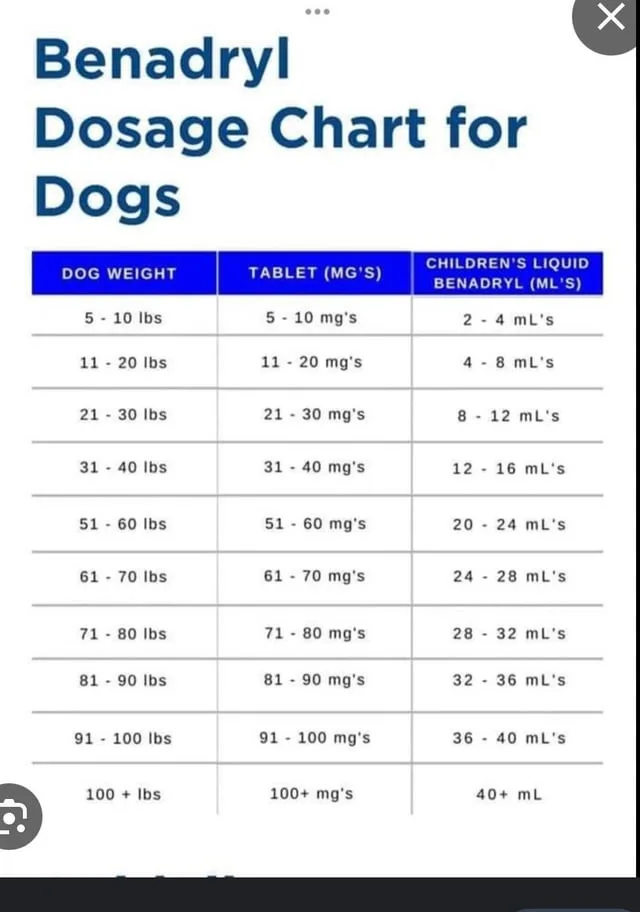
This is the most common question we get, and the answer is straightforward once you know your dog's weight. The veterinary standard is 1 mg per pound, two to three times a day. Standard Benadryl tablets come in 25 mg, which makes the math easy in most cases.
| Dog's Weight | Diphenhydramine Dose | How Many 25 mg Tablets |
|---|---|---|
| 5 lbs | 5 mg | Use a children's liquid or quarter of a tablet |
| 10 lbs | 10 mg | Half of a 25 mg tablet |
| 15 lbs | 15 mg | Roughly three-fifths of a tablet |
| 20 lbs | 20 mg | Just under one full tablet |
| 25 lbs | 25 mg | One full tablet |
| 50 lbs | 50 mg | Two full tablets |
| 75 lbs | 75 mg | Three full tablets |
| 100 lbs | 100 mg | Four full tablets |
For dogs under 15 pounds, splitting a 25 mg tablet evenly is tough. A children's diphenhydramine liquid (12.5 mg per 5 mL) is more accurate and easier to dose. Use a syringe, not a kitchen spoon.
Give the dose every 8 to 12 hours. Most dogs only need it twice a day, but severe flare-ups can justify three doses. Don't exceed three doses in 24 hours without talking to your vet.
Cetirizine (Zyrtec) Dosage by Dog Weight
Cetirizine is the second-most-recommended OTC option, mainly because dogs stay alert on it. The dose is calculated a little differently, around 1 mg per kilogram of body weight, given once daily. One kilogram equals 2.2 pounds, so if you're working in pounds, divide your dog's weight by 2.2 to get kilograms, then multiply by 1.
| Dog's Weight (lbs) | Weight (kg) | Cetirizine Dose | Practical Tablet Plan |
|---|---|---|---|
| 5 lbs | 2.3 kg | ~2.3 mg | Half of a 5 mg chewable |
| 10 lbs | 4.5 kg | ~4.5 mg | One 5 mg tablet |
| 20 lbs | 9.1 kg | ~9 mg | One 10 mg tablet |
| 30 lbs | 13.6 kg | ~13.6 mg | One 10 mg + small piece of another |
| 50 lbs | 22.7 kg | ~22.7 mg | Two 10 mg tablets |
| 75 lbs | 34.1 kg | ~34 mg | Three 10 mg tablets |
| 100 lbs | 45.4 kg | ~45 mg | One 10 mg four times, or 50 mg total |
The standard Zyrtec tablet is 10 mg, which is why the 20 lb dog gets a clean single tablet. Larger dogs often get two to four tablets at once. Don't reach for Zyrtec-D.
It contains pseudoephedrine and is dangerous for dogs.
For small dogs, Zyrtec sells 5 mg chewable tablets, which split the dose cleanly. If you can't find a dose that matches your dog's weight exactly, round down rather than up. A little under is safer than a little over.
Give cetirizine with or without food, once every 24 hours. It usually kicks in within an hour. If you don't see improvement after 5 to 7 days, the medication probably isn't the right fit, and it's time to talk to your vet about prescription options like Apoquel or Cytopoint.
Loratadine (Claritin) Dosage by Dog Weight
Loratadine works much like cetirizine, but it has an even longer track record in dogs and tends to cause the least drowsiness of the three. The standard canine dose is about 0.5 mg per kilogram of body weight, given once every 24 hours. Translated into pounds, that's roughly 0.23 mg per pound.
For most dogs, the math lands on a 10 mg tablet. A 20 lb dog gets a half tablet, a 40 lb dog gets a full tablet, and a 75 lb dog gets one and a half. Loratadine comes in 10 mg tablets, and you can split them as needed.
The non-drowsy profile makes loratadine a solid pick for working dogs, sporting breeds, or any dog who needs to stay alert during the day. It also works well in multi-dog households where one dog is allergic and the other isn't, because you're not sedating the whole pack with a single treatment.
One practical note: loratadine is slow to kick in. It can take 4 to 6 hours to reach full effect, so it's not the right call for sudden allergic reactions. Use diphenhydramine for fast relief, then switch to loratadine for maintenance.
Hydroxyzine Dosage by Dog Weight
Hydroxyzine is a prescription antihistamine, so you can't grab it off the shelf. Vets usually reach for it when diphenhydramine and cetirizine have both fallen short, or when a dog is dealing with both itching and anxiety tied to the allergy flare-up. Hydroxyzine is mildly sedating, similar to diphenhydramine, and it works well at night.
The dose is close to diphenhydramine, around 1 mg per pound, given two to three times a day. Hydroxyzine comes in 10 mg, 25 mg, and 50 mg tablets, which makes it easy to scale up for larger dogs without forcing them to swallow four pills at once.
A 25 lb dog typically gets one 25 mg tablet twice a day. A 50 lb dog gets 50 mg twice daily. A 75 lb dog gets 75 mg per dose, which can mean one 50 mg tablet plus half of a 50 mg.
Because hydroxyzine requires a prescription, dosing is usually confirmed by your vet based on the dog's full health history. Don't substitute it for diphenhydramine on your own, even if the math looks similar.
How to Read the Label So You Don't Accidentally Overdose
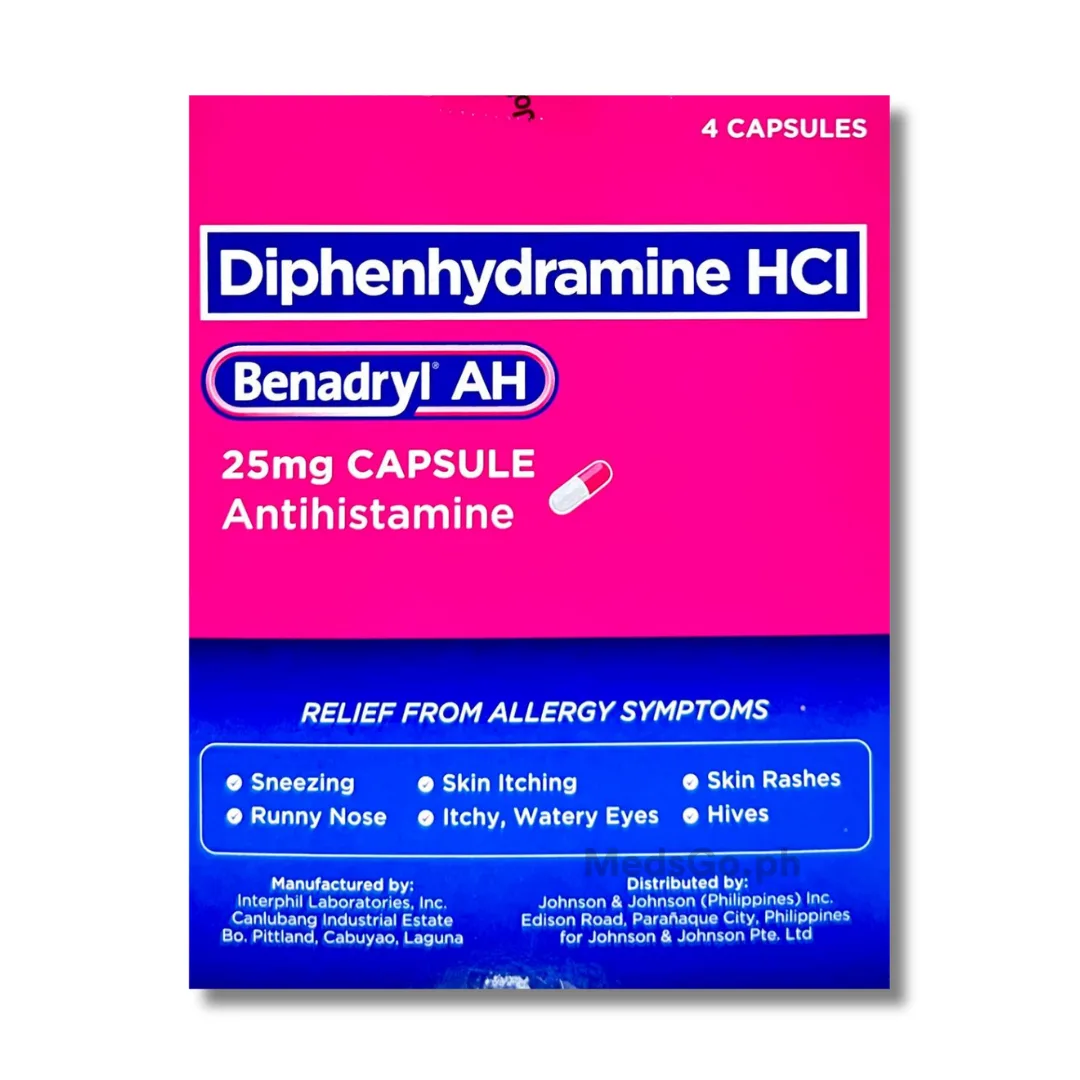
Most accidental overdose cases we hear about come down to one mistake. The owner reached for a product that looked like Benadryl, but the active ingredient was something else entirely, or the Benadryl was paired with a second drug. Knowing how to read a label takes about 20 seconds and prevents the most common ER visits.
Look for the "Active Ingredients" panel on the back of the box. The single word you want to see is diphenhydramine, cetirizine, or loratadine. Anything else, and the product is wrong for your dog.
Watch for these exact red flags on the label:
- Diphenhydramine HCl 25 mg + Acetaminophen 500 mg
- Loratadine 5 mg + Pseudoephedrine 120 mg (the "D" versions)
- Diphenhydramine + Phenylephrine
- Multi-symptom or Cold and Flu anywhere in the product name
- Time-release, 12-hour, or 24-hour claims
Also confirm the strength. Children's Benadryl liquids usually contain 12.5 mg per 5 mL, while adult tablets are 25 mg each. The Extra Strength versions are often 50 mg per tablet, which doubles what you think you're giving.
When Allergy Medicine Isn't the Right Call (Red Flags to Watch For)
Antihistamines are great for mild to moderate environmental allergies. They're not the right tool for every situation, and reaching for one at the wrong time can cost you critical hours. Here are the scenarios where you should skip the pill bottle and head straight to the vet.
Facial Swelling, Especially Around the Eyes or Snout
Sudden swelling of the face, lips, or eyelids is a sign of a true allergic reaction, possibly anaphylactic. Antihistamines work too slowly here. Anaphylaxis in dogs can progress to airway constriction within minutes, and the standard emergency treatment is injectable epinephrine, not Benadryl.
Get to an emergency clinic immediately.
Vomiting or Diarrhea Along With Itching
Digestive symptoms alongside skin reactions can point to a food allergy, a toxin exposure, or something more serious than seasonal allergies. Antihistamines won't address the underlying cause, and the clock matters.
Open Sores, Hot Spots, or Yellow Discharge
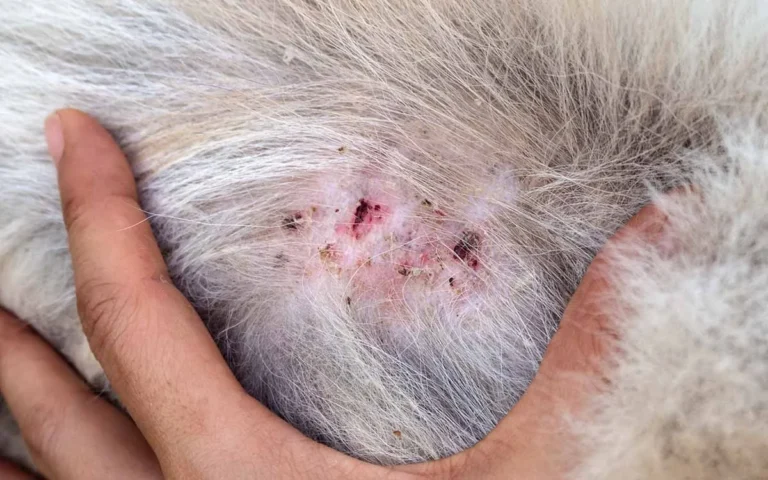
Once the scratching has broken the skin, infection has usually moved in. Antihistamines calm the itch but do nothing for bacterial infection. Your dog will likely need antibiotics or medicated washes on top of any allergy control.
Difficulty Breathing, Collapse, or Pale Gums
These are emergency signs. Don't dose at home. Go.
Puppies Under 8 Weeks Old or Very Small Toy Breeds
Dogs under about 3 pounds and very young puppies haven't developed the liver enzymes needed to metabolize antihistamines predictably. The risk of overdose is real. Call your vet before giving anything.
Conditions and Medications That Make Antihistamines Dangerous
Even at the correct dose, antihistamines can be risky for some dogs. The list of contraindications is shorter than people think, but it matters.
- Glaucoma: Antihistamines can increase intraocular pressure. Dogs with diagnosed or suspected glaucoma should never be given diphenhydramine or hydroxyzine.
- Heart disease or high blood pressure: Some antihistamines affect heart rhythm, especially when combined with cardiac medications. Cetirizine and loratadine are usually safer, but check with your vet first.
- Seizure disorders: Antihistamines can lower the seizure threshold in rare cases. This doesn't mean you can't ever use them, but it does mean your vet should be in the loop.
- Urinary retention or prostate disease: Antihistamines have mild anticholinergic effects that can make it harder for some dogs to urinate. If your dog has a history of urinary blockage, ask your vet about safer alternatives.
- MAO inhibitors and certain antidepressants: Combining diphenhydramine with drugs like selegiline can cause dangerous interactions. If your dog is on any behavioral or neurological medication, confirm before adding an OTC antihistamine.
- Pregnant or nursing dogs: Safety data is limited. Most vets recommend waiting until the puppies are weaned, or using a different treatment plan.
If your dog has any chronic health condition or is on a daily medication, a quick call to your vet is worth the five minutes. The goal isn't to make you paranoid. It's to make sure the medicine that helps the itch doesn't quietly create a different problem.
Risks of Using Human Allergy Medicine on Dogs
The biggest risk isn't the antihistamine itself. It's the other ingredients. Combination products are responsible for most antihistamine-related ER visits in dogs, and acetaminophen toxicity is high on that list.
Human cold and flu tablets are designed for 150 to 200 lb adults. A 15 lb dog that gets a single Tylenol Cold tablet has just received a massive dose of acetaminophen relative to body weight. The result can be irreversible liver damage within 24 hours, even with aggressive treatment.
Pseudoephedrine, found in every "-D" formulation, is a stimulant. Dogs react with elevated heart rate, tremors, agitation, and in severe cases, seizures. There's no safe canine dose, so any exposure warrants an emergency call.
Even all-natural or herbal human supplements can contain xylitol, an artificial sweetener that's safe in humans but causes rapid, life-threatening low blood sugar and liver failure in dogs. Always check the inactive ingredients panel.
Antihistamines vs. Apoquel, Cytopoint, and Steroids: What's Worth It
For chronic or severe allergies, OTC antihistamines often aren't enough. That's where prescription options come in. Each works differently, and the right pick depends on what's actually triggering your dog's reaction.
Apoquel (oclacitinib) is a daily tablet that blocks the itch signal at the cellular level. Most dogs show relief within 4 hours, and it works for environmental allergies, food allergies, and flea allergies. It's prescription-only and significantly more expensive than Benadryl, but it doesn't sedate, and it works when antihistamines have failed.
Cytopoint is an injectable antibody given at the vet clinic every 4 to 8 weeks. It neutralizes the itch-triggering protein in the skin. It requires no daily dosing at home, which is a major plus for owners who struggle to pill their dog.
Cytopoint is a good fit for dogs with year-round environmental allergies.
Prednisone and other corticosteroids are powerful anti-inflammatories. They work fast, but long-term use carries real risks: increased thirst, weight gain, weakened immune function, and potential damage to joints and organs. Steroids are usually reserved for short-term flares or as a bridge while waiting for Apoquel or Cytopoint to reach full effect.
| Option | Best For | Speed | Cost Tier | Sedation |
|---|---|---|---|---|
| Diphenhydramine | Mild seasonal allergies | Fast | Low | High |
| Cetirizine or Loratadine | Mild allergies, daytime use | Moderate | Low | Low |
| Apoquel | Moderate to severe chronic allergies | Fast | High | None |
| Cytopoint | Year-round environmental allergies | 1 to 2 days | High | None |
| Prednisone | Severe short-term flares | Very fast | Low | Low to moderate |
Antihistamines are the right starting point for mild cases and short-term relief. For ongoing, stubborn allergies that affect quality of life, Apoquel or Cytopoint usually beats anything available OTC.
When to Skip the OTC and Go Straight to the Vet
Some situations don't have an OTC answer. The following signs mean a vet visit today, not a Benadryl tablet and a wait-and-see approach.
Any sudden facial swelling, hives spreading across the body, or vomiting paired with skin symptoms needs same-day evaluation. These patterns can escalate quickly. Difficulty breathing, blue gums, or collapse is an emergency room situation, no exceptions.
Dogs that have been scratching for more than a week without improvement are also due for a vet visit. The risk of secondary skin infection climbs each day the itch goes uncontrolled. Antihistamines are cheap and safe, but they're not strong enough for every dog, and waiting too long just makes the eventual treatment longer.
If you suspect a food allergy, antihistamines won't help. A vet-supervised elimination diet is the only reliable way to identify the trigger. That process takes 8 to 12 weeks and can't be shortcut with OTC medications.
Signs of an Overdose and What to Do Immediately
Antihistamine overdoses in dogs usually look like an extreme version of the drug's normal effects, plus a few extras. Severe sedation or, paradoxically, agitation and restlessness are both red flags. Tremors, dilated pupils, rapid heart rate, vomiting, and high body temperature can follow.
Time matters. If you suspect your dog has gotten into a bottle, call the ASPCA Animal Poison Control Center at 888-426-4435 right away. There's usually a consultation fee, but the toxicologists on the line can tell you within minutes whether your dog needs the ER or can be watched at home.
Your regular vet or an emergency clinic is the next call.
Don't try to induce vomiting unless a vet specifically tells you to. Some medications cause more damage coming back up than staying down. Hydrogen peroxide at home is also no longer recommended as a routine emetic in dogs.
Frequently Asked Questions
How much Benadryl can I give my dog per pound?
The standard dose is 1 mg of diphenhydramine per pound of body weight, given every 8 to 12 hours. For a 25 lb dog, that's one 25 mg tablet per dose. Always use plain Benadryl with only diphenhydramine as the active ingredient.
Can I give my dog Zyrtec and Benadryl at the same time?
It's not recommended. Both are antihistamines, and combining them doesn't increase effectiveness meaningfully while raising the risk of side effects like dry mouth, sedation, and urinary retention. Pick one, give it a week to work, then switch if needed.
How long does it take for allergy medicine to work in dogs?
Diphenhydramine usually kicks in within 30 to 60 minutes. Cetirizine takes about an hour. Loratadine is slower, often 4 to 6 hours for full effect.
If you don't see improvement in your dog after a week of consistent dosing, the medication is probably not the right fit.
Is children's Benadryl safe for small dogs?
Yes, and it's often easier to dose than adult tablets. Children's liquid diphenhydramine typically contains 12.5 mg per 5 mL, which scales nicely for dogs under 15 pounds. Use a syringe for accurate measurement.
Can I give my dog allergy medicine every day?
For chronic allergies, yes, under vet guidance. Many dogs stay on daily cetirizine or loratadine long-term with no issues. The key is using the lowest effective dose and confirming the medication is actually helping, not just masking symptoms while an underlying condition worsens.
What's the best allergy medicine for dogs with severe itching?
For severe, persistent itching, prescription options work better than OTC antihistamines. Apoquel and Cytopoint are the most commonly recommended choices by veterinary dermatologists as of 2026. They're pricier, but they target the itch pathway directly and don't cause sedation.