How to get rid of allergies in dogs: Best guide
If your dog won't stop scratching, chewing their paws raw, or shaking their head like they've got somewhere important to be, you're probably searching for how to get rid of allergies in dogs the moment that licking wakes you up at 3 a.m. We've talked to owners who've tried every shampoo on the pet-store shelf and still ended up at the vet. You're not alone, and the good news is that canine allergies are manageable once you understand what you're actually treating.
Canine atopic dermatitis affects roughly 10, 15% of the dog population, according to published veterinary research, and most dogs show their first symptoms between 6 months and 3 years of age. There's no single cure, but there is a clear path: identify the trigger, treat the inflammation, and build a long-term plan. As of 2026, the strongest evidence supports a layered approach combining veterinary diagnosis, prescription immunomodulators, allergen-specific immunotherapy, and targeted skin care.
Let's walk through how to actually do that.

Quick Answer
You can't permanently cure dog allergies, but you can control them. Start with a vet visit to identify the trigger. Use prescription medication like Apoquel or Cytopoint for fast itch relief.
Treat underlying flea, food, or environmental causes. Combine treatment with medicated baths and omega-3 supplements. Long-term management with immunotherapy often reduces flare-ups by 60, 80%.
Why Getting Dog Allergies Right Actually Matters
Untreated allergies don't just make dogs miserable. They spiral. Constant scratching breaks the skin barrier, which lets bacteria and yeast move in, which causes more itching, which causes more scratching.
That's the cycle that lands dogs on multiple courses of antibiotics each year. We've seen owners spend thousands treating "ear infections" that never quite clear up because no one addressed the underlying allergic drive.
There's also a welfare angle. Chronic pruritus (the clinical word for itch) changes dog behavior. Dogs become irritable, restless, and lose interest in play.
Some stop sleeping through the night. The American College of Veterinary Dermatology treats itch as a medical condition that deserves real medicine, not just "a bath and benadryl." When you get the diagnosis right and treat aggressively early, you prevent the secondary infections, the ear drum damage, and the years of low-grade suffering.
Here's the part most articles skip: allergies are a chronic disease. There's an 8-week diet trial. There's the cost of Cytopoint injections.
There's the reality that immunotherapy takes 6, 12 months to show full benefit. Owners who understand that upfront make better decisions and stick with the plan.
What Dog Allergies Really Look Like (And What They Aren't)
Allergies in dogs show up on the skin, not like a human sneeze. The classic signs are:
- Licking or chewing the paws (especially between the toes)
- Scratching the ears or shaking the head
- Rubbing the face on the carpet or furniture
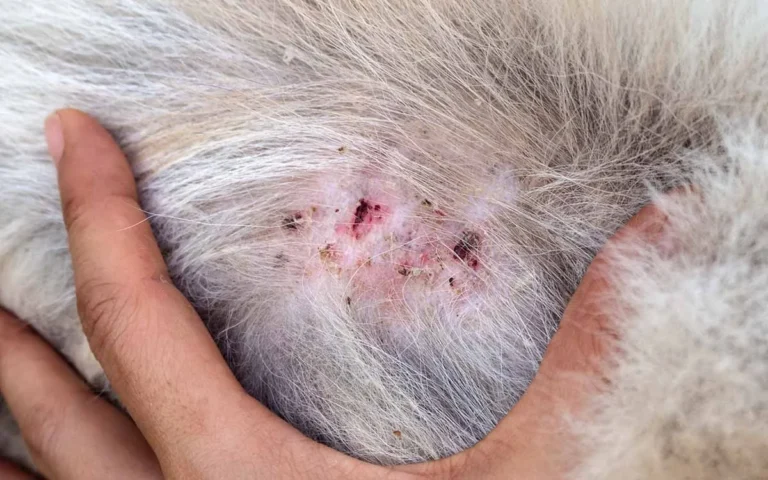
- Red, inflamed belly, groin, or armpits
- Recurrent ear infections (yeast or bacterial)
- Hair loss along the flanks or tail base
- Hot spots (acute moist dermatitis)
- Chronic anal gland issues
What allergies aren't: they're not usually a single bout of vomiting (that's often food intolerance or something else), and they're rarely a one-time event. Vets look for patterns, seasonal vs. year-round, age of onset, and body distribution.
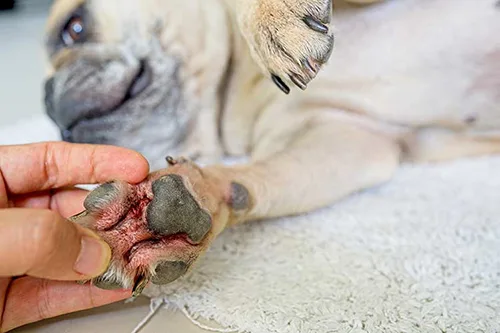
Body Distribution Tells You a Lot
Foot licking points to environmental allergens (pollen tracked indoors) or food. Ear scratching with waxy discharge usually means atopy or food. Anal area chewing can mean flea allergy even when you don't see fleas.
Belly and armpit redness is classic contact or environmental. These patterns guide the next step.
The "Not Allergies" List
Fleas, sarcoptic mange, demodicosis, ringworm, bacterial pyoderma, and hypothyroidism all mimic allergies. That's why skin scrapings, cytology, and sometimes a fungal culture come before allergy treatment. Treating allergies in a dog with demodex makes the problem worse.
The Four Main Allergy Types Vets See in Dogs
1. Flea Allergy Dermatitis (FAD)
A single flea bite can trigger a two-week itch storm in a sensitized dog. FAD is the most common allergy we see, and it's also the most under-diagnosed, because owners often don't spot the fleas. Vets find flea dirt (black specks that turn red on a wet paper towel) on the lower back, tail base, and groin.
Treatment: strict year-round flea prevention on every animal in the household, plus a short course of anti-itch medication to break the cycle. Topical or oral products from your vet work far better than over-the-counter options.
2. Food Allergies
True food allergies involve an immune response to a protein (beef, chicken, dairy, egg, soy, wheat are the most common culprits). Food intolerance is different, that's digestive, not itchy. Vets diagnose food allergy with an 8, 12 week elimination diet using a novel or hydrolyzed protein, then a provocation challenge to confirm.
3. Environmental Allergies (Atopy)
Pollen, dust mites, and mold spores cause classic seasonal or non-seasonal atopic dermatitis. Symptoms typically show up between 6 months and 3 years of age. Skin or blood testing identifies specific triggers, which leads into immunotherapy.
4. Contact Allergies
Less common. Reaction to a material the dog touches (certain bedding, plastic bowls, lawn chemicals). The rash matches the contact area, often the chin, chest, or feet.
Red Flags That Mean You Need a Vet Right Now
Some allergy presentations are emergencies in disguise. Get your dog seen urgently if you notice:
- Swelling of the face, muzzle, or eyes (possible anaphylaxis)
- Hives spreading across the body
- Difficulty breathing
- Sudden severe itching after a new food, medication, or vaccine
- Open wounds with pus, foul odor, or rapidly spreading redness
- Repeated vomiting or diarrhea alongside skin symptoms
These aren't "wait and see" situations. Acute allergic reactions can escalate fast, and infected skin can become systemic.
Less Urgent but Still Time-Sensitive
If your dog has been scratching for more than a week, has recurrent ear infections (more than 2, 3 a year), or has bald patches with broken skin, schedule a vet visit within a few days. The longer the cycle runs, the harder it is to break.
How Vets Actually Diagnose Dog Allergies
There's no single test that gives you "the answer." Diagnosis is a layered process where each step rules out something else before moving on. Vets call this a differential diagnosis, and skipping steps is the most common reason allergy treatment fails.
Step 1: History and Physical Exam
Your vet will ask about age of onset, seasonality, diet history, flea prevention, and where the dog scratches most. Patterns here often point to the trigger before any test runs.
Step 2: Rule Out Parasites and Infection
Skin scrapings check for mites (Sarcoptes, Demodex). Tape preps and cytology look for bacteria and yeast. These have to be ruled out first, because they mimic allergy perfectly and won't respond to anti-itch meds alone.
Step 3: Trial Therapies
If fleas are suspected, a strict 8, 12 week flea-control trial on every pet in the home. If food is suspected, an elimination diet trial (covered next).
Step 4: Allergen Testing
Once parasites, infection, and food are ruled out, vets use intradermal skin testing or serum IgE testing to identify environmental allergens. Intradermal testing (gold standard) involves injecting small amounts of allergens into the skin and reading the wheal response under sedation. Serum tests are easier (single blood draw) but slightly less reliable for some allergens.
Both guide immunotherapy formulation.
What a Proper Elimination Diet Trial Looks Like
This is the one step owners skip or sabotage without realizing it. A proper food trial runs 8 to 12 weeks, with zero other foods, treats, flavored meds, or table scraps crossing the dog's lips.
Choose the Right Diet
You have three options, and each works:
| Diet Type | How It Works | Best For |
|---|---|---|
| Novel protein | A protein the dog has never eaten (rabbit, venison, duck) | Dogs with limited past diet exposure |
| Hydrolyzed protein | Proteins broken into tiny pieces the immune system can't recognize | Dogs who've eaten many proteins already |
| Home-cooked | Vet-supervised recipe with one novel protein + one carb | Dogs with multiple food sensitivities |
What Counts as "Off the Trial"
- No treats, even "all natural" ones
- No flavored heartworm or flea preventives (ask your vet for unflavored versions)
- No table scraps, no licking of kids' plates
- No flavored toothpaste
- No access to other pets' food
Reading the Results
If itch drops by 50% or more during the trial, food allergy is likely. Then you reintroduce one ingredient at a time (the provocation challenge) to confirm the culprit. Many owners see dramatic improvement by week 4 to 6, but the full 8 to 12 weeks matters because some dogs respond slowly.
Flea Allergy Dermatitis: The Most Overlooked Trigger
We cannot stress this enough: flea allergy dermatitis is the single most common allergic skin disease in dogs, and it's also the easiest to fix when you commit to prevention.
Why One Bite Is Enough
Flea saliva contains dozens of proteins. In sensitized dogs, the immune system overreacts to even a single bite. That bite triggers itching that lasts up to two weeks.
Dogs chew the lower back, tail base, thighs, and belly.
The Year-Round Prevention Reality
In most climates, fleas live indoors year-round. Stopping prevention in winter is one of the most common mistakes we see. Effective products include oral options like spinosad (Comfortis), afoxolaner (NexGard), fluralaner (Bravecto), and sarolaner (Simparica), plus topical selamectin (Revolution).
All are prescription-only and work far better than over-the-counter flea collars or shampoos.
Treatment While Prevention Kicks In
Flea bites already in the system will keep itching for weeks. Pair prevention with a short course of Apoquel or Cytopoint (covered below) to break the cycle, plus a medicated bath to soothe inflamed skin.
Don't Forget the Environment
Vacuum daily for several weeks. Wash all bedding in hot water. Treat other pets in the home.
In severe infestations, a professional pest treatment may be needed alongside pet prevention.
Prescription Medications: Apoquel, Cytopoint, and Steroids Compared
This is where most dog owners get stuck: which drug, when, and at what cost. Let's break down the three main options vets prescribe for itch control.
| Medication | Type | Onset | Frequency | Best For |
|---|---|---|---|---|
| Apoquel (oclacitinib) | JAK inhibitor tablet | ~4 hours | Twice daily for 14 days, then once daily | Fast relief, dogs that can take oral meds |
| Cytopoint (lokivetmab) | Monoclonal antibody injection | ~24 hours | Every 4–8 weeks | Dogs hard to pill, long-acting control |
| Prednisone | Corticosteroid | Hours | Daily, taper | Short-term severe flares, low cost |
Apoquel in Practice
FDA-approved for dogs 12 months and older. Works fast and is well-tolerated for long-term use in most dogs. Common side effects in clinical reporting include mild GI upset and increased susceptibility to skin infections.
Not ideal for dogs with serious infections or compromised immune systems.
Cytopoint in Practice
An injection given at the vet that blocks itch at the nerve level. Works for 4 to 8 weeks per dose. Very few side effects because it doesn't suppress the whole immune system.
Great for dogs that fight pilling. Cost is higher than Apoquel per dose but works out similar over time.
When Steroids Still Win
Short courses of prednisone or prednisolone are still useful for severe flares, hot spots, or when cost is a barrier. Long-term steroid use carries real risks: increased thirst, hunger, panting, muscle loss, and over time, liver changes and immune suppression. Vets use them sparingly now, but they remain a tool.
Combining With Other Therapies
Apoquel and Cytopoint can be used alongside immunotherapy, antibiotics for skin infections, and flea prevention. They treat the symptom (itch) while other treatments address the cause.
Antihistamines and Over-the-Counter Options: What Actually Works
Here's the honest answer: antihistamines help only a small subset of allergic dogs, and usually only as a supporting player, not as primary treatment. If your dog is miserably itchy, an antihistamine alone won't cut it.
Which Ones Vets Reach For
- Diphenhydramine (Benadryl): roughly 1 mg per pound, twice daily. Sedating. Limited efficacy in most dogs.
- Cetirizine (Zyrtec): about 1 mg per 10 pounds, once daily. Less sedating. Slightly better response in some dogs.
- Loratadine (Claritin): similar dosing profile. Best for dogs with mild seasonal symptoms.
Always check with your vet before giving any human medication. Some formulations contain xylitol or pseudoephedrine, both toxic to dogs.
Why They Often Disappoint
Histamine is one of many itch mediators in dogs. Cytokines and interleukins drive most of the allergic itch response. Antihistamines block histamine, so they miss the bigger drivers.
That's why prescription immunomodulators outperform them clinically.
Where Antihistamines Fit
Mild seasonal flares, dogs in remission on immunotherapy who need a small boost, or dogs that can't tolerate other drugs. Think of them as a 10% tool, not the main plan.
Allergen-Specific Immunotherapy (Allergy Shots and Drops)
When the goal is long-term control instead of just suppressing itch, allergen-specific immunotherapy (ASIT) is the gold standard. It works by retraining the immune system to tolerate the allergens that trigger symptoms.
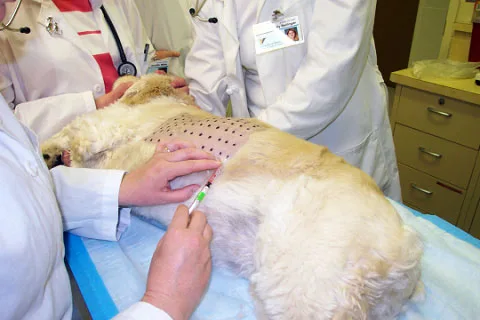
How It Actually Works
After intradermal or serum testing identifies your dog's specific triggers (ragweed, dust mites, certain grasses, mold spores), a custom serum is formulated. You give tiny, gradually increasing doses either as subcutaneous injections or sublingual drops. Over months, the immune system stops overreacting to those allergens.
Realistic Expectations on Results
Published response rates in peer-reviewed veterinary dermatology literature range from 60% to 80% of dogs showing meaningful improvement. Most dogs need 6 to 12 months of consistent treatment before peak benefit. About 25% of responders can eventually taper off other medications entirely.
It is a commitment, but it is the closest thing to a real long-term answer we have.
Practical Considerations
- Shots are given at home after initial vet training, usually starting every other day, then spacing out
- Sublingual drops are easier for needle-shy owners but slightly more expensive per month
- Cost runs $200 to $600+ for the initial serum, then $50 to $100+ monthly depending on size and formulation
- ASIT can be combined safely with Apoquel or Cytopoint during the ramp-up phase
Hypoallergenic, Limited-Ingredient, and Hydrolyzed Diets Explained
Walk down any pet food aisle and you'll see "hypoallergenic," "limited ingredient," "grain-free," and "sensitive stomach" all used loosely. These labels don't mean the same thing.
Hydrolyzed Protein Diets
Proteins are broken into molecules too small for the immune system to recognize. Royal Canin, Hill's z/d, and Purina HA are the main prescription options. They're the gold standard for elimination diet trials because almost no dog reacts to them.
Limited Ingredient Diets
Contain a smaller number of ingredients, often a single novel protein plus a single carbohydrate. Useful for maintenance after a diagnosis, but not rigorous enough for the actual trial phase, because cross-contamination is common in non-prescription facilities.
Grain-Free Is Not Allergy-Free
Most dog food allergies are to animal proteins (beef, chicken, dairy), not grains. The grain-free fad has fed a lot of marketing, but very little allergy science. For dogs with confirmed food allergy, the protein source is what matters, not the grain content.
When Diet Alone Solves the Problem
About 10% to 15% of allergic dogs have food as a primary or significant contributor. For those dogs, the right diet produces dramatic improvement without any medication. For the other 85% to 90%, food matters less and environmental control matters more.
Bathing, Topicals, and Skin Support Routines
Medicated baths are underrated. They physically wash allergens off the coat, restore the skin barrier, and treat secondary infections at the same time. The mistake is treating them as optional.
Shampoo Ingredients That Matter
- Chlorhexidine: antibacterial and antifungal
- Miconazole or ketoconazole: antifungal for yeast overgrowth
- Oatmeal and pramoxine: soothing for inflamed skin
- Salicylic acid: helps with scaling and seborrhea
Bathing Frequency in Practice
Most allergic dogs benefit from a bath every 1 to 2 weeks during flare-ups. Contact time matters: lather, let it sit 10 minutes, then rinse. Many owners rinse too fast and lose the therapeutic benefit.
Leave-In Conditioners and Mousses
For dogs that hate baths, prescription mousses and wipes with similar active ingredients give partial benefit between full baths. They're not a replacement, but they're a real help on tough days.
Supporting the Skin Barrier
Topical ceramides and essential fatty acid sprays help repair the lipid layer of skin that's been compromised by chronic inflammation. Used alongside oral omega-3s, they make a measurable difference in coat quality and itch intensity.
Omega-3s, Supplements, and Natural Add-Ons That Have Evidence
The supplement aisle is a minefield of marketing claims. A few options have real clinical evidence behind them. Most do not.
Omega-3 Fatty Acids
Fish oil at 50 to 75 mg per kg of body weight daily (combined EPA and DHA) has been shown in multiple studies to reduce pruritus and improve coat quality over 8 to 12 weeks. It's not a standalone treatment, but it's a legitimate add-on that lets some dogs use less medication.
Quercetin and Other Natural Options
Quercetin is sometimes called "nature's Benadryl." Honest answer: the evidence in dogs is thin. Some owners report improvement, but published data is limited. Safe at reasonable doses, but don't expect prescription-level results.
Probiotics
Gut health and skin immunity are linked. Specific strains like Lactobacillus rhamnosus have shown modest benefit in reducing atopic symptoms in puppies. Not a cure, but a reasonable addition during the stabilization phase.
Things to Skip
Coconut oil, essential oils, apple cider vinegar, and homemade "allergy sprays" lack meaningful evidence and some can cause skin irritation or toxicity. Stick with what's been studied.
Environmental Control: Cutting Allergen Exposure at Home
You can't keep pollen out, but you can cut the load. HEPA air filters, weekly hot-water bedding washes, dust-mite-proof covers, and wiping paws after walks all chip away at daily allergen exposure. Indoor humidity below 50% slows both dust mites and mold.
Mistakes Owners Make That Make Allergies Worse
Stopping flea prevention in winter. Running elimination diets for 4 weeks instead of 8. Bathing too fast for shampoo contact time.
Skipping the provocation challenge after a successful food trial. Using essential oils or human antihistamines without vet guidance. Each one quietly extends the cycle.
Treatment Costs and What to Budget For
Budget $60, $150+ monthly for Apoquel, $70, $200+ per Cytopoint dose, $200, $600+ for initial immunotherapy serum, and $60, $120 per bag of prescription diet. Add $30, $60 per medicated bath session. Plan for the long haul, not a one-time fix.
Long-Term Management: Keeping Flares Under Control
Allergy control is seasonal maintenance, not a single event. Expect flare-ups at pollen peaks, after stress, or if prevention lapses. Keep Apoquel or Cytopoint on hand for early intervention.
Recheck with your vet every 6 to 12 months to adjust the plan.
When to See a Veterinary Dermatologist
If your dog fails two medication trials, has year-round symptoms, or needs ongoing steroids, ask for a referral to a board-certified veterinary dermatologist through the American College of Veterinary Dermatology. They handle the tough cases and unlock immunotherapy access.
Frequently Asked Questions
Can dog allergies be cured permanently?
No. Atopic dermatitis is a chronic, genetic condition. The goal is long-term control, not cure.
With immunotherapy, about 25% of dogs can taper off all other medications eventually.
What is the fastest way to stop a dog from itching?
Cytopoint injection works within 24 hours. Apoquel works within 4 hours. Both require a vet visit.
Over-the-counter antihistamines are slower and far less reliable.
Are dog allergies seasonal or year-round?
Environmental allergies are often seasonal (spring/fall pollen), but indoor allergens like dust mites cause year-round symptoms. Food allergies are always year-round.
What foods most commonly cause dog allergies?
Beef, chicken, dairy, and eggs are the top triggers in published dermatology research. Wheat and soy are less common than marketing suggests.
How long does it take for Apoquel to work?
Most dogs show significant improvement within 4 hours, with full effect by 24 hours. It's one of the fastest-acting itch medications in veterinary use.
Can I give my dog Benadryl for allergies?
Sometimes, at roughly 1 mg per pound twice daily, but only with vet approval. Many formulations contain xylitol, which is toxic. Antihistamines alone rarely control real allergic itch.