How to treat seasonal allergies in dogs: Easy guide
Seasonal allergies in dogs aren't just a sniffle-and-sneeze problem. Most of the time they show up as relentless itching, raw skin, ear gunk, and a dog who can't settle. If you've been wondering how to treat seasonal allergies in dogs without wasting money on things that don't work, the honest answer is this: you need a real diagnosis first, then a layered plan that mixes medication, bathing, and environmental control.
Skip the diagnosis and you'll spend the next three summers guessing.
Here's the practical reality. Around 10% of dogs deal with atopic dermatitis, per peer-reviewed data summarized by Cornell University's College of Veterinary Medicine. Most need more than one intervention, and Apoquel or Cytopoint only works as part of a bigger plan.
As of 2026, those two drugs are still the workhorses for moderate-to-severe cases. Let's walk through how the whole thing actually works, starting with what your dog is going through.
Quick Answer
Treat seasonal dog allergies by getting a vet to confirm atopy first. Combine Apoquel, Cytopoint, or immunotherapy with regular hypoallergenic baths. Reduce indoor allergens with HEPA filters and frequent washing.
Treat any ear or skin infection at the same time. Never use human decongestants or xylitol products. Plan for spring through fall management, not a one-time fix.
Why Getting Seasonal Allergy Treatment Right Matters for Your Dog
Untreated seasonal allergies don't just stay uncomfortable. They cascade. A dog who scratches until the skin breaks open invites bacterial and yeast infections.
Those infections make the itching worse, which causes more scratching, which causes more infection. Within a few weeks you've got a hot spot, a stink-filled ear canal, and a vet bill three times what early treatment would have cost.
There's also a quality-of-life angle that doesn't show up on a chart. Chronically itchy dogs don't sleep well. They're restless, irritable, and less interested in play.
Owners often describe their dog as "aging fast" or "just not themselves," when really the dog is exhausted from being itchy 18 hours a day. Getting the treatment plan right gives you back the dog you actually wanted.
This is also a topic where confident-sounding internet advice can quietly hurt your dog. Human Benadryl dosing, borrowed essential-oil remedies, over-the-counter "calming" sprays marketed as anti-itch, none of it is a substitute for a vet-confirmed diagnosis and a real plan. We'll cover what's safe, what isn't, and what to skip.
What Seasonal Allergies Actually Look Like in Dogs (It's Not Just Sneezing)
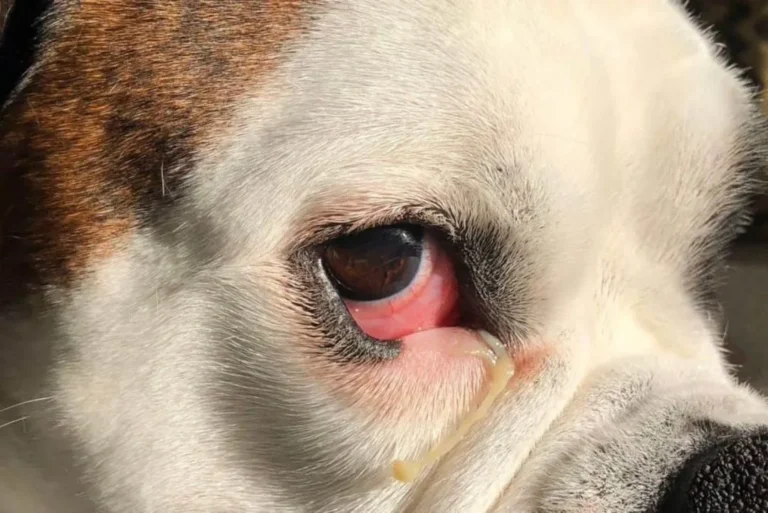
Most people picture a human hay fever reaction. Watery eyes, sneezing, congestion. Dogs can sneeze with seasonal allergies, but that's not the headline symptom.
The headline symptom is skin. Specifically, itch.
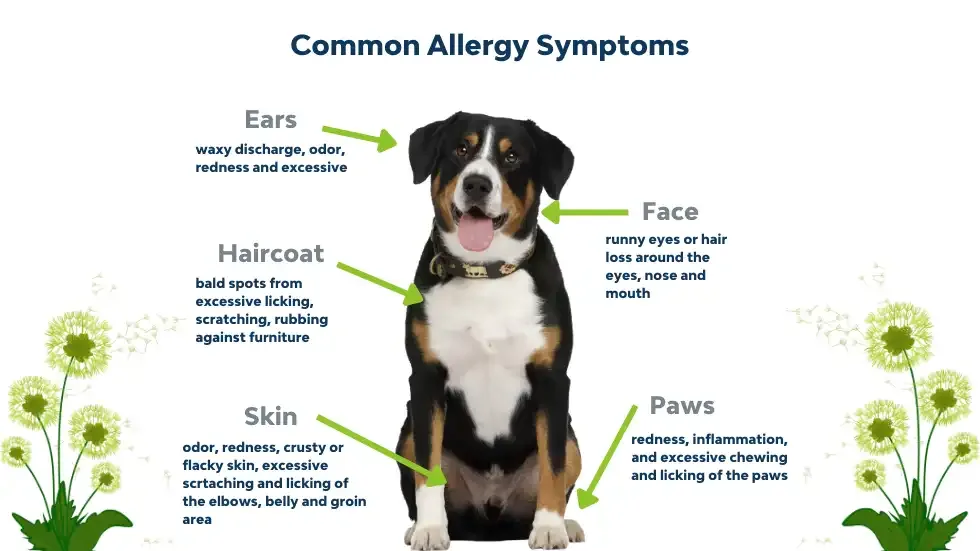
The Common Signs Worth Taking Seriously
- Chewing or licking the paws, often between the toes
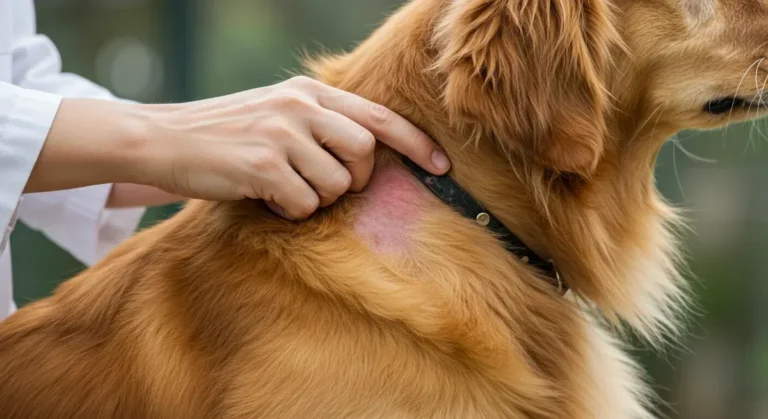
- Scratching the ears, flanks, belly, or armpits
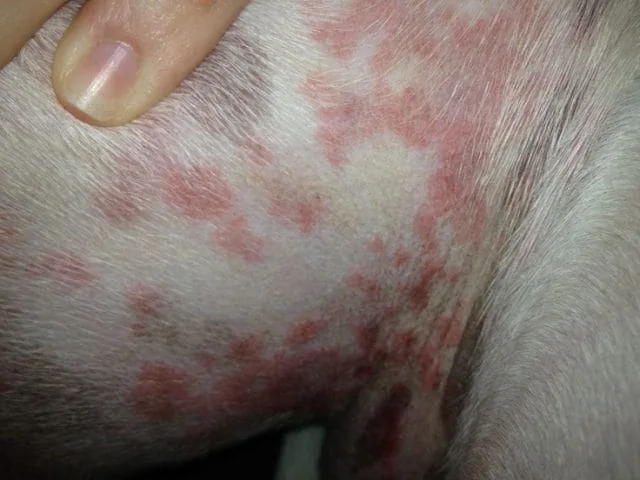
- Red, irritated skin in the groin or armpit area
- Recurring ear infections, often with a yeasty smell
- Hair loss along the flanks or belly
- Rubbing the face on carpet or furniture
If your dog is doing one or two of these things seasonally, environmental allergies are the most likely culprit. Dogs with year-round symptoms, especially with GI signs like chronic diarrhea, are pointing somewhere else, usually food or flea allergy.
Why Dogs React Through Their Skin
Dogs absorb allergens through the skin barrier more than the respiratory tract. That's the core mechanism of canine atopic dermatitis. When pollen or dust lands on a sensitive dog's skin, the local immune system overreacts and triggers inflammation and itching.
It's the same underlying immune dysfunction as human eczema, just with different triggers and presentation. That's why the most effective treatments target the immune system directly, not just the surface symptoms.
The Big Mistake Owners Make Early
They treat it like a grooming problem. They buy a medicated shampoo, bathe more often, and hope. Bathing absolutely helps, but on its own it rarely controls moderate-to-severe atopy.
The dog needs immune-system support during peak allergen exposure, which is where prescription options come in. If your dog is still scratching after two weeks of frequent baths, the itch is medical, not cosmetic.
First Things First: Ruling Out Flea and Food Allergies
Before anyone talks about Apoquel or Cytopoint, a good vet will rule out two things that look almost identical to seasonal allergies. Skipping this step is one of the most common reasons treatment "doesn't work."
Flea Allergy Dermatitis (FAD)
This is the easiest one to check. FAD is a hypersensitivity to flea saliva, not just a flea problem. Even a single bite can set off a massive reaction.
Affected dogs often have hair loss and irritation over the lower back, tail base, and hind legs. Treatment starts with strict flea control for every animal in the household, every month, year-round. If the symptoms resolve with that alone, you didn't have seasonal allergies.
You had fleas.
Food Allergy
Food allergy doesn't follow a season. Itching tends to be constant or even worse in winter, which is the opposite of environmental allergies. GI signs like soft stool or frequent bowel movements are a clue, though some food-allergic dogs have skin symptoms only.
The only real diagnostic tool is an 8-to-12-week elimination diet with a novel or hydrolyzed protein. Blood tests for food allergy are unreliable. Skip them.
What Your Vet Will Probably Do First
- Physical exam and history, including when symptoms started and where the dog itches
- Skin cytology to check for bacterial or yeast overgrowth
- Flea combing and review of flea prevention
- Recommendation for an elimination diet trial if food allergy is suspected
- Discussion of allergy testing if atopy seems likely
This early triage matters. The treatment plan for atopy doesn't touch a flea allergy. The plan for a food allergy doesn't help seasonal pollen.
Treating the wrong thing wastes months and a lot of money.
The Vet Visit: What a Proper Allergy Workup Looks Like
Once flea and food allergy are off the table, your vet or a veterinary dermatologist will start narrowing down the actual environmental triggers. Here's what a thoughtful workup looks like in real life.
Allergy Testing Options
There are two main ways to figure out what your dog is reacting to.
| Test Type | How It Works | Pros | Cons |
|---|---|---|---|
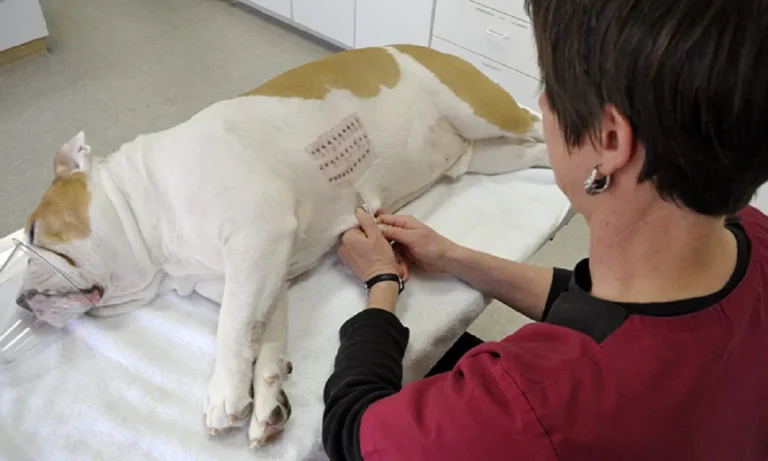
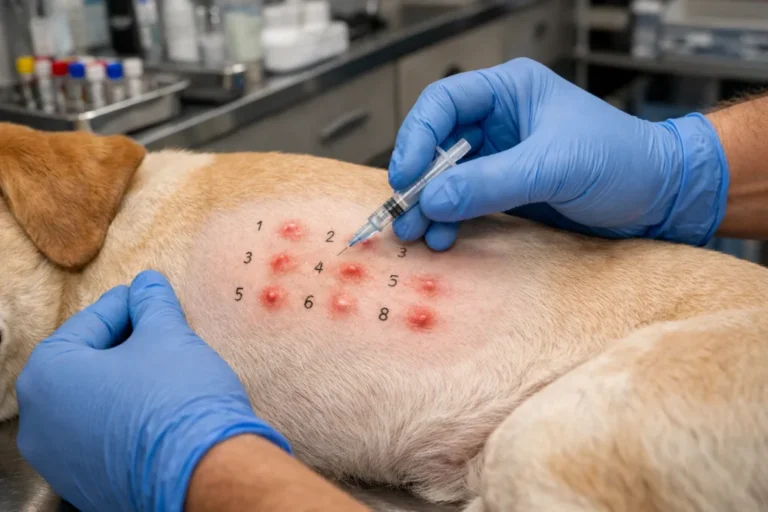
| Intradermal skin testing | Small amounts of allergens injected into shaved skin under sedation | Considered the gold standard by most dermatologists | Requires sedation, must stop certain meds beforehand |
| Serum IgE blood test | Blood draw that measures allergen-specific antibodies | Easier, no sedation, can be done while on medication | Slightly less sensitive for some allergens |
If the goal is allergen-specific immunotherapy, intradermal testing is the preferred starting point because it gives the most reliable map for serum formulation. Per the American College of Veterinary Dermatology, intradermal testing remains the reference standard for identifying environmental allergens in atopic dogs.
What Happens With the Results
Once you have a list of specific triggers (likely culprits include regional tree, grass, and weed pollens, plus dust mites and mold), your vet can build one of two paths.
A targeted immunotherapy serum, custom-mixed for your dog's allergens and administered as subcutaneous injections or sublingual drops over months, or a symptomatic medication plan using Apoquel or Cytopoint to control the itch while you wait for immunotherapy to build effect, which usually takes 3 to 12 months.
Most dermatologists run both paths in parallel for moderate-to-severe cases. The medication controls the itch now. The immunotherapy addresses the underlying immune dysregulation for the long haul.
Common Things Owners Want to Know
- Does my dog need to be off antihistamines before testing? Intradermal testing usually requires a 7-to-14-day washout of antihistamines and steroids. Ask your vet about specific timing.
- Is one testing method enough? Often both pieces of data help, especially in regions with overlapping pollen seasons.
- How long until we know if it's working? For immunotherapy, expect 3 to 12 months for full effect. For symptomatic meds, you'll know in days.
Over-the-Counter Antihistamines: When They Help and When They Don't
This is where most owners start, and it's where a lot of them give up. Antihistamines work for some dogs and do almost nothing for others. Knowing which camp your dog falls into saves a lot of frustration.
Why Antihistamines Are Only Modestly Effective
Canine atopic dermatitis isn't a pure histamine-driven condition. The inflammatory cascade involves cytokines like IL-31 and T-cell pathways, which antihistamines barely touch. In our research across published trials, antihistamines alone reduce itching in roughly 20 to 30% of atopic dogs.
That's a real number, but it means most dogs need something stronger.
Which Antihistamines Are Considered Safe for Dogs
- Diphenhydramine (Benadryl): 1 mg per pound, twice daily. The most familiar option.
- Cetirizine (Zyrtec): roughly 0.5 mg per pound, once daily. Less sedating for many dogs.
- Loratadine (Claritin): roughly 0.25 mg per pound, once daily. Also low-sedation.
These doses are general guidance based on common veterinary references. Your vet will give you the exact dose for your dog's weight and health status.
Critical Safety Warnings About OTC Antihistamines
- Never give a "Benadryl" product that also contains pseudoephedrine or phenylephrine. Those decongestants are toxic to dogs.
- Avoid liquid forms with xylitol. Even small amounts can cause dangerous blood-sugar crashes and liver damage.
- Don't assume children's formulations are safe. Check the inactive ingredients line every time.
The Honest Verdict
If your dog has mild seasonal symptoms and you've already discussed it with your vet, an OTC antihistamine is a reasonable first try. It may take 7 to 14 days to see the full effect. If there's no meaningful improvement after two weeks, move on.
Continuing to redose without results wastes the season.
Apoquel (Oclacitinib): Fast Relief for Moderate to Severe Itch
For dogs whose itching disrupts daily life, Apoquel is the first prescription most vets reach for. It's been FDA-approved for canine allergic dermatitis since 2013 and has become a standard tool in the field.
How Apoquel Works
Apoquel is a Janus kinase (JAK) inhibitor. It interrupts the signaling pathway that triggers itching and inflammation in response to allergens. It doesn't sedate the dog or suppress the entire immune system the way steroids do.
Manufacturer specs from Zoetis confirm a measurable reduction in itch scores within 4 hours of the first dose.
Dosing and Administration
- Induction: twice daily for the first 14 days
- Maintenance: once daily long-term during allergy season
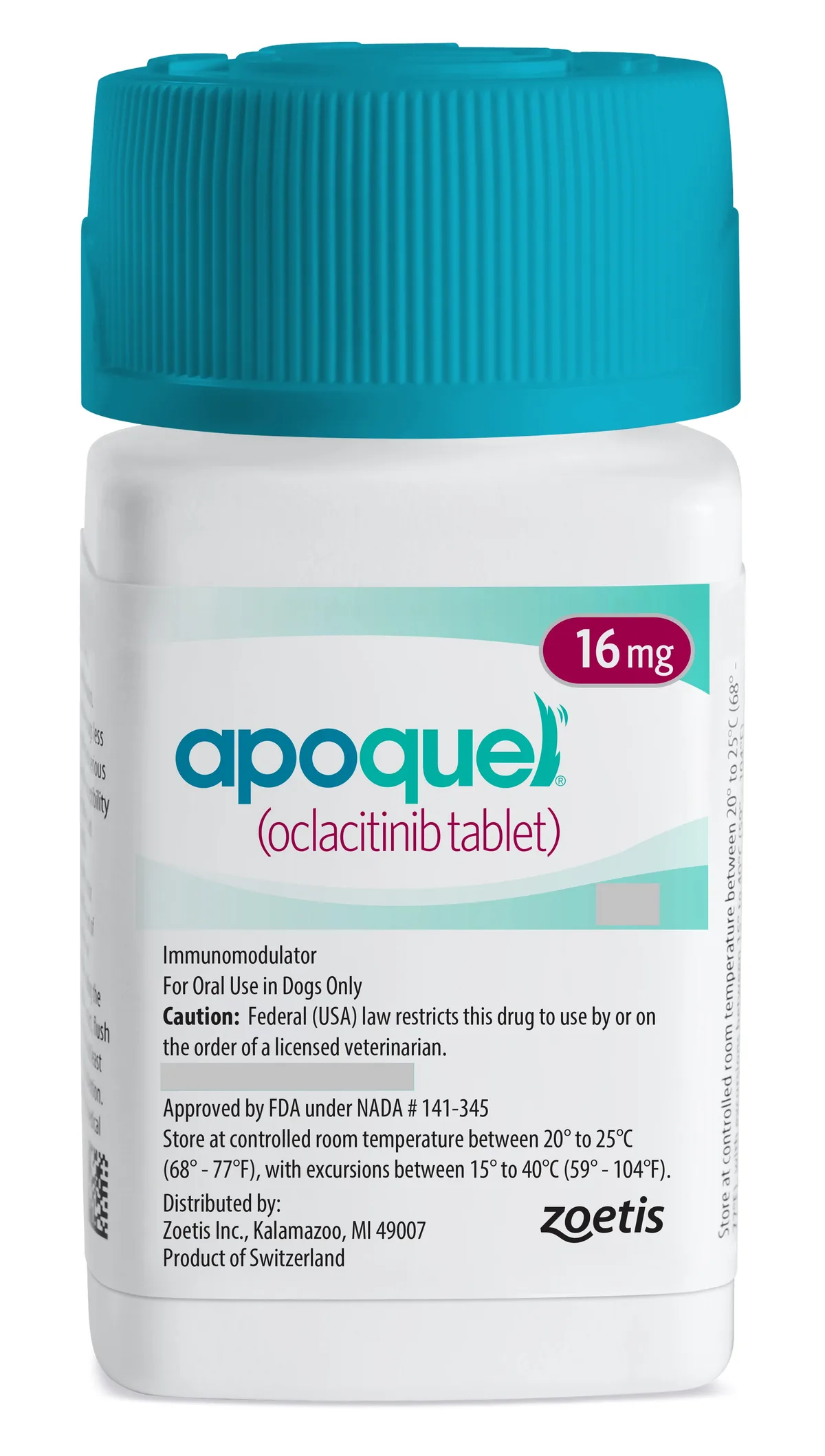
- Available in tablet strengths of 3.6 mg, 5.4 mg, and 16 mg, dosed by weight
Many dogs can start Apoquel the same day as the vet visit if symptoms are urgent. The fast onset is the main reason it's favored for dogs in the middle of a flare.
Side Effects to Know About
- Mild GI upset (vomiting, diarrhea) in the first few weeks
- Increased susceptibility to infections, especially skin and respiratory
- Rare reports of new or worsening skin growths, which is why annual vet monitoring is standard
Apoquel isn't recommended for dogs under 12 months old or for breeding animals. Dogs with serious infections shouldn't start Apoquel until those infections are under control.
Cost Reality
As of 2026, Apoquel pricing typically runs around $2 to $4 per tablet, depending on dose strength and pharmacy. For a medium-sized dog on maintenance dosing, monthly costs land in the $60 to $120 range. Manufacturer rebates and online pharmacies can bring this down significantly.
Cytopoint (Lokivetmab): The Injection That Lasts 4–8 Weeks
If giving a daily pill isn't realistic, or if a dog has side effects on Apoquel, Cytopoint is the other workhorse option. It's a biologic, not a chemical drug, and that distinction matters for some dogs.
How Cytopoint Works
Cytopoint is a monoclonal antibody (lokivetmab) designed to neutralize IL-31, the specific cytokine that triggers the itch signal in dogs. Because it targets one molecule instead of the whole immune system, the side-effect profile is gentler than Apoquel for many dogs. Manufacturer data shows most dogs see improvement within 24 to 48 hours of the first injection.
Dosing and Administration
- A single subcutaneous injection given by the vet
- Duration of effect: roughly 4 to 8 weeks, depending on the individual dog
- Repeat injections as needed during allergy season
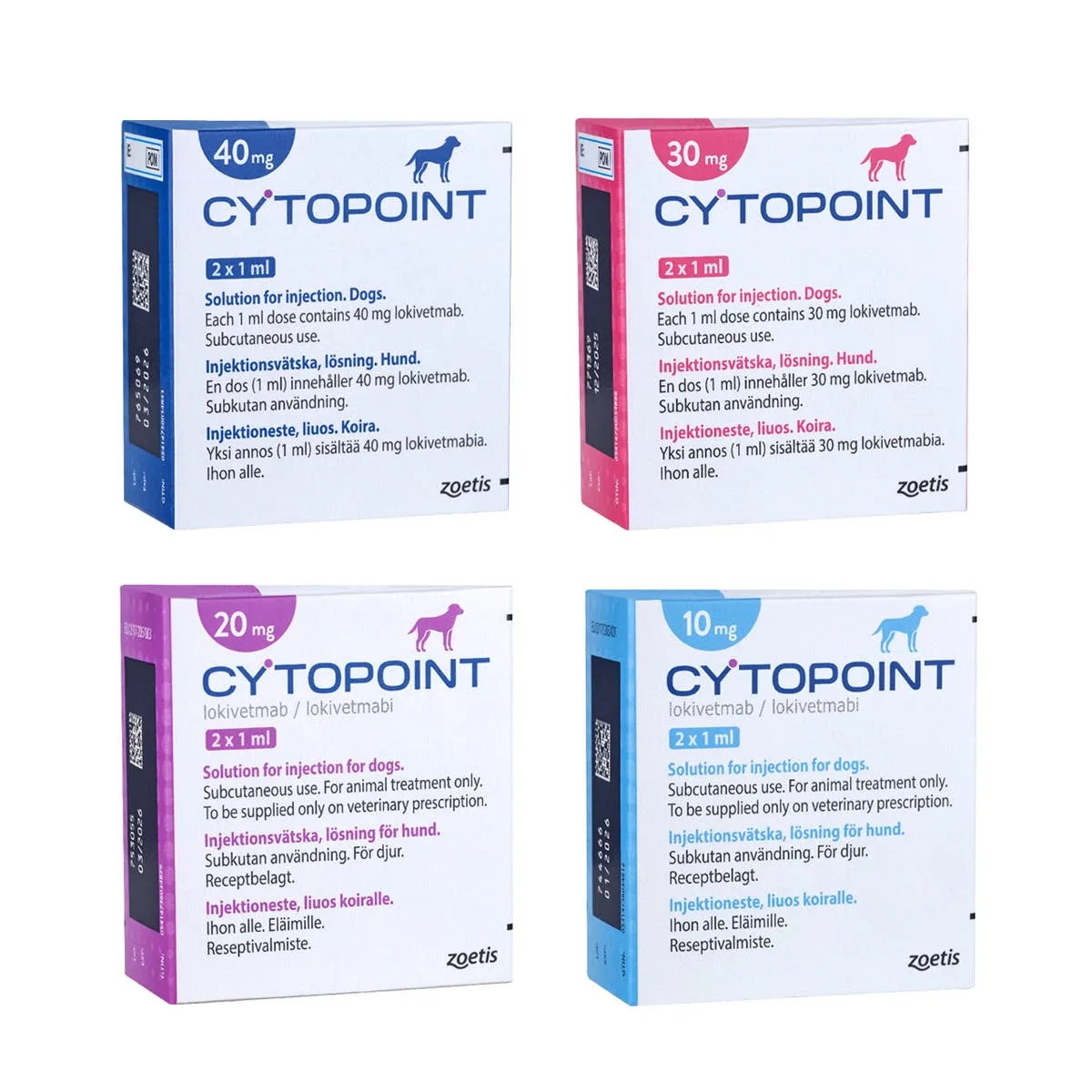
- Dosing is weight-based, with vials sized for different weight ranges
Why Some Owners Prefer Cytopoint
- No daily pill to remember
- Lower systemic side-effect burden than Apoquel or steroids
- Safe for very young dogs and most dogs with other health conditions
- Great option for dogs who get stressed by oral medications
Limitations Worth Knowing
- Requires a vet visit for every dose
- Costs add up faster than Apoquel for some dog sizes (typical range $60 to $200 per injection)
- Doesn't address the underlying inflammation, only the itch signal
- Some dogs eventually develop partial resistance after multiple seasons
Allergen Immunotherapy (Allergy Shots or Drops): The Long Game
Immunotherapy is the only treatment that actually retrains the immune system to tolerate allergens instead of just suppressing symptoms. It's the closest thing to a real long-term solution for atopic dogs.
How Immunotherapy Works
A custom serum is mixed based on your dog's specific allergen profile (from intradermal or serum testing). The serum is given as either subcutaneous injections or sublingual drops. Over time, the immune system learns to react less aggressively to those allergens.
Full effect typically takes 3 to 12 months, and many dogs need ongoing therapy for several years.
Who It's Best For
- Dogs with confirmed environmental allergies through testing
- Owners who want to reduce medication use long-term
- Young dogs with multiple seasons of symptoms ahead
- Dogs who don't tolerate Apoquel or Cytopoint well
What Success Actually Looks Like
In aggregate veterinary studies, roughly 60 to 80% of dogs on immunotherapy show meaningful improvement. Some dogs reach a point where they need no other medication during peak season. Others use immunotherapy alongside low-dose Apoquel or Cytopoint for full control.
Both outcomes count as success.
Cost and Practical Notes
- Initial testing and serum formulation: roughly $400 to $1,200 depending on region and method
- Ongoing serum refills: lower monthly cost, often $30 to $80
- Injections are usually given at home by the owner after initial training
- Drops are simpler but may cost slightly more depending on the supplier
Apoquel vs Cytopoint vs Antihistamines vs Steroids: Honest Comparison
This is the question every owner lands on eventually. There's no single right answer, but the table below gives a realistic side-by-side.
| Option | Onset | Duration | Best For | Watch Out For |
|---|---|---|---|---|
| OTC antihistamines | Days | Daily dosing | Mild cases, adjunctive use | Works in only 20–30% of dogs |
| Apoquel | Within 4 hours | Daily tablet | Moderate-to-severe atopy, fast relief needed | Cost, infection risk with long-term use |
| Cytopoint | 24–48 hours | 4–8 weeks per injection | Owners who can't pill daily, sensitive dogs | Requires vet visits, higher per-dose cost |
| Oral steroids | Hours | Daily, short-term use | Severe flares, short rescue course | Long-term side effects (immune, metabolic) |
| Immunotherapy | 3–12 months | Years, ongoing | Long-term immune reset | Slow onset, requires testing |
The Decision Logic in Plain English
If the dog has mild symptoms and you want to try the cheapest option first, antihistamines for two weeks make sense. If symptoms are interfering with sleep or causing skin damage, go straight to Apoquel or Cytopoint. If you want a long-term solution and the season is long, add immunotherapy to the plan.
If a dog is in crisis with hot spots and infection, a short steroid course plus Apoquel or Cytopoint buys time while the skin heals.
Supporting Treatments That Actually Move the Needle
Medication is the engine. These supports are the rest of the car. They won't fix atopy on their own, but they make the medication work better.
Bathing
- Frequency: 1 to 2 times per week during peak season
- Shampoo type: hypoallergenic or containing colloidal oatmeal, chlorhexidine, or pramoxine
- Contact time: let the shampoo sit for 10 minutes before rinsing. Most owners rinse too fast.
- Water temperature: lukewarm, not hot
Omega-3 Fatty Acid Supplements
EPA and DHA from fish oil reduce inflammatory mediators in the skin. The effect builds slowly over 6 to 8 weeks. Most dermatologists recommend a veterinary-grade omega-3 supplement dosed by weight, not a generic human capsule.
Environmental Control
- HEPA air purifier in the room where the dog sleeps
- Wipe the dog's paws and belly with a damp cloth after outdoor time
- Wash dog bedding weekly in hot water
- Vacuum with a HEPA-equipped vacuum 2 to 3 times per week
Flea Prevention
Year-round, every animal in the house, no exceptions. Flea bites can worsen atopic inflammation even if flea allergy isn't the primary problem.
Mistakes Dog Owners Make With Seasonal Allergy Treatment
Some of these come up in clinic visits every single week. Worth knowing before you make them yourself.
Treating without a diagnosis is one of the biggest ones. Assuming it's seasonal allergies without ruling out fleas or food wastes the most useful window of the year. Stopping medication too early is another.
Once the itch stops, some owners stop the Apoquel or Cytopoint. The itch returns because the allergen season isn't over. Plan to keep maintenance treatment going through the full local pollen season.
Bathing too often with the wrong shampoo strips the skin barrier and makes itching worse. Stick to 1 to 2 times per week with a veterinary-recommended formula. Skipping the infection check is a fourth common mistake.
If a dog smells yeasty, has greasy or discolored skin, or shakes the head constantly, there's almost certainly an infection layered on top of the allergy. Treating only the allergy without addressing the infection is why the dog "isn't getting better."
Using human allergy meds without vet approval is the fifth. We've covered this above but it's worth repeating. Many human allergy products are dangerous for dogs, and dosing is different even for safe ones.
Cost Breakdown: What Realistic Treatment Plans Look Like
Money matters, and owners deserve realistic numbers. Here's a typical plan for a medium-sized dog during one allergy season.
| Item | Typical Cost (2026) |
|---|---|
| Initial vet exam | $80–$200 |
| Apoquel (3 months) | $180–$360 |
| Cytopoint (2 injections) | $150–$400 |
| Allergy testing + immunotherapy start | $400–$1,200 |
| Hypoallergenic shampoo | $20–$40 |
| Omega-3 supplement (3 months) | $30–$60 |
| HEPA air purifier | $80–$200 (one-time) |
Annual totals for a well-managed moderate case typically run $500 to $1,200. Severe cases with infections and dermatologist visits run higher. Preventive planning in year one usually reduces costs in years two and three.
When to See a Veterinary Dermatologist Instead of Your Regular Vet
Most general practice vets handle seasonal allergies well. There are times, though, when a referral makes sense.
- The dog isn't responding to Apoquel or Cytopoint after 8 weeks
- Allergies are year-round or getting worse every season
- Recurring ear infections requiring repeated courses of antibiotics
- The owner wants immunotherapy and the general vet doesn't run the testing
- The dog has unusual symptoms that don't fit a clear pattern
A board-certified veterinary dermatologist has access to more diagnostic tools, more medication experience, and more flexibility in dosing. The American College of Veterinary Dermatology maintains a specialist directory for finding one in your region.
Seasonal Allergy Timeline: What to Expect Month by Month
Exact timing varies by region, but here's a general map for temperate climates in North America.
- Late winter to early spring: tree pollen (oak, maple, birch, cedar)
- Late spring to early summer: grass pollen (the worst stretch for many dogs)
- Late summer to fall: weed pollen, especially ragweed
- Late fall to winter: indoor allergens like dust mites become the bigger issue
In warmer parts of the southern US, pollen seasons overlap heavily, which means atopic dogs in those regions often need year-round management rather than seasonal. Climate trends as of 2026 are extending pollen seasons, so owners in northern climates are seeing longer symptomatic windows than they did a decade ago.
Secondary Skin and Ear Infections: The Hidden Half of Allergy Treatment
Allergies and infections almost always travel together in dogs. The inflamed skin is a perfect home for bacteria (usually Staphylococcus) and yeast (usually Malassezia). The ear canal gets inflamed too, which lets the same organisms set up shop in the warm, dark environment.
If the dog smells faintly like corn chips, has greasy skin between the toes, or shakes the head every morning, infection is almost certainly part of the picture. Treating allergies alone in that situation is like patching a leaking pipe while ignoring the water damage.
Signs Your Dog Has a Secondary Infection
- Yellow crusts or pimple-like bumps on the skin
- Greasy, smelly, or thickened skin, especially in the groin and armpits
- Head shaking and ear scratching
- Dark brown or yellow debris in the ears
- Sudden worsening of itching despite ongoing treatment
How Vets Treat It
Most secondary infections need a 2 to 4 week course of oral antibiotics (for bacteria), oral antifungals (for yeast), or both. Topical medicated shampoos containing chlorhexidine or miconazole support the oral treatment. Ear infections usually need a prescription ear medication cleaned in twice daily for one to two weeks, sometimes longer.
The most important part: don't stop the antibiotics early when the skin looks better. A partially treated infection comes back stronger and harder to clear next time.
Building a Long-Term Management Plan That Actually Works
Once you've got the diagnosis right and the infection under control, the real work begins. A good long-term plan has four layers, and skipping any one of them makes the others less effective.
The Four Layers
- Environmental control: HEPA filtration, frequent bedding washes, paw wiping after walks
- Skin barrier support: regular bathing, omega-3 fatty acids, hypoallergenic diets when indicated
- Immune modulation: allergen immunotherapy for the long haul, started early in the season if possible
- Symptom control: Apoquel, Cytopoint, or short steroid courses during peak flares
Most owners lean too hard on layer 4 because it's the most visible. The dogs who do best are the ones whose owners invest in layers 1 through 3 even when things look fine.
Tracking Progress
Use a simple weekly itch score from 0 (no itching) to 10 (constant, severe itching). Most vets use the Pruritus Visual Analog Scale, but a simple 0 to 10 in a notes app works just as well. If the score climbs above 5 for several days in a row, it's time to check in with the vet.
Scores above 7 usually mean a flare or new infection, not just a bad allergy day.
Special Cases: Puppies, Seniors, and Dogs With Other Health Problems
The general plan above assumes a healthy adult dog. Real households aren't that simple. Some populations need a different approach.
Puppies Under 12 Months
Apoquel isn't approved for dogs under 12 months. Cytopoint is. For young atopic puppies, most dermatologists start with Cytopoint, frequent bathing, strict flea control, and aggressive environmental management while waiting for the dog to mature enough for Apoquel if needed.
Senior Dogs
Older dogs are more likely to have kidney, liver, or heart disease that affects medication choice. Steroids become riskier. Apoquel and Cytopoint are usually safer long-term options.
Bloodwork every 6 to 12 months is standard for any senior on chronic allergy meds.
Dogs With Diabetes or Cushing's Disease
Steroids are usually off the table for these dogs because they worsen blood-sugar control and immune function. Apoquel and Cytopoint are the safer picks. Always have the vet review the full medication list before starting anything new.
Multi-Dog Households
If one dog has confirmed allergies and others don't, treatment stays per-dog. There's no contagion risk, but environmental control (HEPA, washing) helps the whole household. If multiple dogs show similar symptoms, think about shared flea exposure or shared environmental triggers before assuming it's coincidence.
Regional and Climate Differences That Change the Plan
The textbook allergy timeline assumes a temperate climate. Real life isn't that simple, and where you live changes the strategy.
Southern United States
Long growing seasons mean overlapping pollen loads. Bermuda grass, oak, and ragweed can all be active at once. Many atopic dogs in the South need nearly year-round management rather than seasonal.
Dermatologists in these regions often favor Cytopoint because of the convenience for owners managing long seasons.
Mountain West and Desert
Lower pollen counts overall, but dust and mold exposure can be intense. Dogs in arid regions often react more to indoor allergens like dust mites than to outdoor pollen.
Coastal Regions
Humidity supports mold growth, which extends the mold allergen season. Wiping the dog down after beach or marsh walks helps reduce skin contact with mold spores.
Climate Change and Pollen Seasons
Research summarized in peer-reviewed journals has documented a steady lengthening of pollen seasons in North America over the past two decades. As of 2026, the ragweed season in many northern cities runs 2 to 3 weeks longer than it did in the early 2000s. That shift is showing up as "new" allergy cases in dogs who've never had symptoms before, and as extended treatment windows for dogs with established atopy.
Red Flags That Mean Stop Reading and Call the Vet
Some symptoms go beyond routine allergy management and need same-day veterinary attention.
- Facial swelling, hives, or sudden vomiting after a new medication or food (possible anaphylaxis)
- Rapidly spreading skin infection with fever or lethargy
- Repeated vomiting or diarrhea after starting Apoquel or Cytopoint
- Sudden inability to urinate, especially in male dogs
- Bleeding skin wounds that won't stop oozing
These aren't allergy problems anymore. They're emergencies. Trust your gut on this one and call the clinic.
Putting It All Together: A Realistic First-Season Plan
If you're starting from scratch this week, here's the order that actually works. Confirm the diagnosis with the vet, rule out fleas and food, and treat any active infection before anything else. Start Apoquel or Cytopoint for immediate relief.
Layer in bathing twice a week and a HEPA purifier. Discuss allergen testing at the follow-up visit so immunotherapy can begin before next season. Most dogs who follow this sequence need far less medication by year two.
When Prevention Beats Treatment Every Time
The cheapest, least stressful allergy season is the one that's already managed when pollen starts rising. Start Apoquel or Cytopoint two weeks before your region's typical pollen peak. Begin immunotherapy several months ahead.
Run the air purifier continuously once trees start budding. Owners who plan ahead consistently report milder seasons and lower annual medication costs than owners who wait for symptoms to appear.
Frequently Asked Questions
Can I give my dog Benadryl for seasonal allergies?
You can, but only the plain diphenhydramine formula without decongestants or xylitol. It works in roughly 20 to 30% of dogs, and you'll need 7 to 14 days to see the full effect. Talk to your vet about the right dose for your dog's weight before starting.
Is Apoquel safe for long-term use in dogs?
Apoquel has a well-established safety record and is FDA-approved for long-term use in dogs with allergic dermatitis. The main risks are increased susceptibility to infections, so regular vet checkups and prompt attention to skin or ear issues are important.
How long does Cytopoint take to work in dogs?
Most dogs show visible improvement in itching within 24 to 48 hours of the injection. The effect typically lasts 4 to 8 weeks, after which a repeat injection is needed if symptoms return.
What can I do at home to help my dog's seasonal allergies?
Bathe your dog once or twice a week with a hypoallergenic shampoo, wipe paws and belly after outdoor time, add an omega-3 supplement, run a HEPA air purifier in the bedroom, and wash bedding weekly. These steps support but don't replace prescription treatment for moderate-to-severe cases.
Do dog allergy shots really work?
For most dogs, yes. Aggregate studies show 60 to 80% of dogs on allergen immunotherapy have meaningful improvement, though full effect takes 3 to 12 months. It's the only treatment that targets the underlying immune response rather than just suppressing symptoms.
When is allergy season the worst for dogs?
It depends on region, but most dogs peak during late spring and early summer (grass pollen) and again in late summer through fall (ragweed and other weeds). Dogs in the southern US often deal with overlapping allergens that effectively extend the season to year-round.