How to treat a dog with seasonal allergies
If your dog is scratching, chewing their paws, or rubbing their face against the furniture every spring or fall, you're dealing with seasonal allergies. The good news is that you can treat a dog with seasonal allergies effectively with a combination of vet-prescribed medication, environmental control, and skin support, and most dogs see meaningful relief within the first week.
About 10 to 15 percent of dogs develop canine atopic dermatitis (environmental allergies), and certain breeds (Golden Retrievers, French Bulldogs, Westies, Boxers, and German Shepherds) are predisposed. The core treatment plan usually includes a prescription anti-itch drug like Apoquel or Cytopoint, soothing baths with a hypoallergenic shampoo, omega-3 supplementation, and practical steps to cut pollen and mold exposure at home. Below, we'll walk through exactly how to put that plan together so your dog can stop scratching and get back to being themselves.
Quick Answer
To treat a dog with seasonal allergies, start with a vet visit to confirm atopy. Use Apoquel or Cytopoint for fast itch relief. Bathe weekly with hypoallergenic shampoo.
Wipe paws after walks. Add omega-3 fatty acids daily. Consider allergen immunotherapy for long-term control.
Why Getting Seasonal Allergy Treatment Right Matters for Your Dog
Allergies aren't just a comfort issue. Chronic scratching damages the skin barrier, opens the door to secondary bacterial and yeast infections, and triggers a chain reaction of ear infections, hot spots, and hair loss. Dogs with unmanaged atopic dermatitis also sleep poorly, get grumpy, and lose muscle condition because they're too itchy to settle.
Left untreated, mild seasonal itching tends to get worse year over year. Many owners tell us their dog's "spring thing" now stretches from March through November. That's a hallmark of untreated atopy: the immune system's threshold keeps dropping until the allergy season expands to fill most of the calendar.
Veterinary dermatologists treat early, targeted intervention as the standard of care, because breaking the itch-scratch cycle quickly prevents the cascade of complications that turns a manageable seasonal flare into a year-round nightmare. Treating it right also saves money. A single course of antibiotics for a skin infection runs $80 to $200, and recurring ear infections cost roughly $150 to $400 each time they're cultured and treated.
Prevention is cheaper than the cure.
What Seasonal Allergies Actually Look Like in Dogs
Dogs don't sneeze the way we do. Their allergy signs are mostly skin-deep, and they follow a fairly predictable pattern. Recognizing these signs early is what separates a quick seasonal fix from a months-long battle.
The most common symptoms of canine seasonal allergies include:
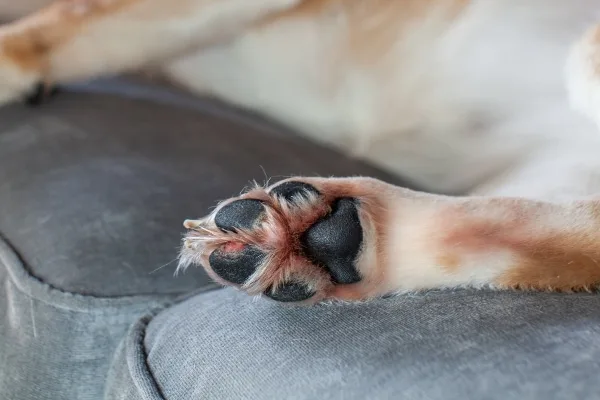
- Chewing or licking the paws (often the front feet, between the toes)
- Rubbing the face against carpets, furniture, or your leg
- Scratching the flanks, belly, or armpits
- Recurring ear infections (head shaking, odor, redness)
- Red or stained saliva marks on the fur (from constant licking)
- Hot spots: raw, moist, rapidly spreading patches of irritated skin
- Hair thinning along the flanks or tail base
Pollen-driven itching tends to start on the paws and face, then spread. Mold and dust allergies often show up first as ear inflammation. If your dog's signs shift year to year, that's another clue.
Tree pollen dominates early spring, grass pollen hits late spring and summer, and ragweed and mold take over in fall.
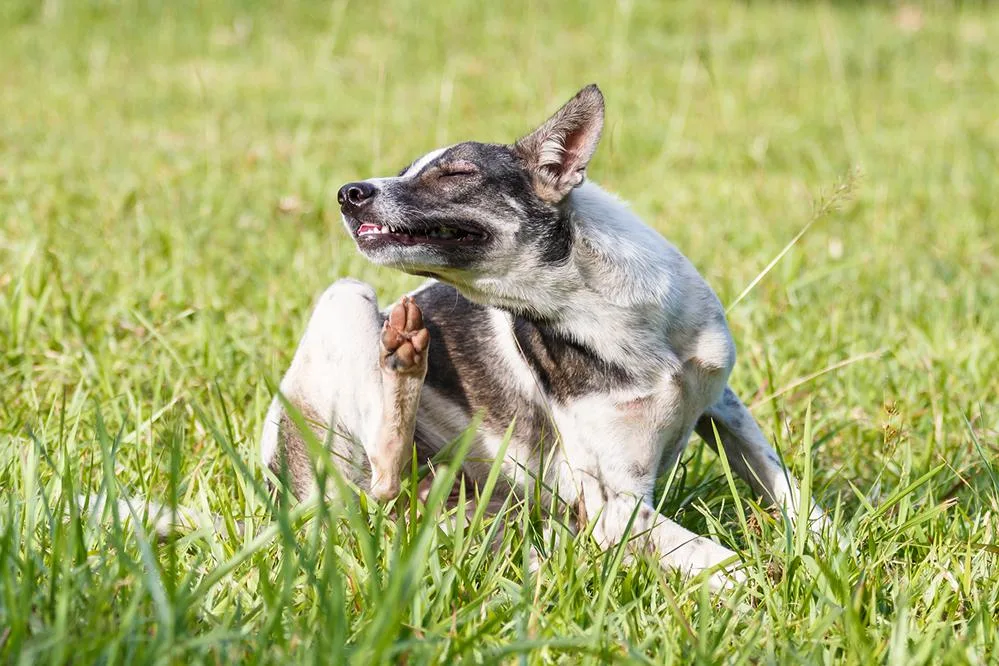
A simple rule from veterinary dermatology: if your dog itches at the same time every year for two years in a row, assume atopy until proven otherwise.
Ruling Out the Wrong Problem First (Fleas, Food, Infections)
Before you treat a dog with seasonal allergies, you need to be sure that's actually what you're dealing with. Three conditions mimic atopy closely enough that they fool even experienced owners, and missing any of them wastes weeks of treatment.
Flea Allergy Dermatitis (FAD)
This is the one to rule out first, because a single flea bite can keep a sensitive dog itching for two weeks. FAD usually targets the back half of the body (tail base, lower back, inner thighs), which is different from atopy's paw-and-face pattern. If your dog isn't on a year-round flea preventive, start one now and see if the itch drops.
Food Allergies
True food allergies account for roughly 10 percent of allergic skin disease in dogs, and they don't follow a seasonal pattern. If your dog itches year-round, or if gastrointestinal signs (soft stool, gas, frequent bowel movements) show up alongside skin issues, a food trial is worth discussing with your vet. Food trials take 8 to 12 weeks of strict single-protein feeding, so vets usually only recommend them after seasonal patterns have been ruled out.
Secondary Skin and Ear Infections
Constant scratching disrupts the skin barrier, and within weeks, yeast and bacteria colonize the damaged area. The infection itself itches, so you're now dealing with two problems stacked on top of each other. Your vet can confirm infection with a quick skin cytology (a same-day test using tape impressions or swabs), and treated infections often calm a dog down dramatically within days.
A practical diagnostic shortcut: if the itching started within a defined season, your dog is on flea prevention, and there are no gastrointestinal signs, the most likely culprit is atopy. From there, your vet can move straight into treatment.
When a Vet Visit Is Non-Negotiable
A lot of allergy content online pushes home remedies first. We get the appeal, but here's the honest answer: if your dog has been scratching for more than a few days, has raw or oozing skin, is shaking their head, or has lost hair, you need a vet. Not eventually.
Soon.
A vet visit matters because:
- Prescription anti-itch drugs (Apoquel, Cytopoint) outperform every home remedy by a wide margin
- Secondary infections need antibiotics or antifungals that you can't buy over the counter
- Allergy testing is the only way to plan immunotherapy or targeted environmental control
- Dogs on human antihistamines can react badly, and dosing is weight-sensitive
- Some "allergy" signs are actually mites, ringworm, or autoimmune disease
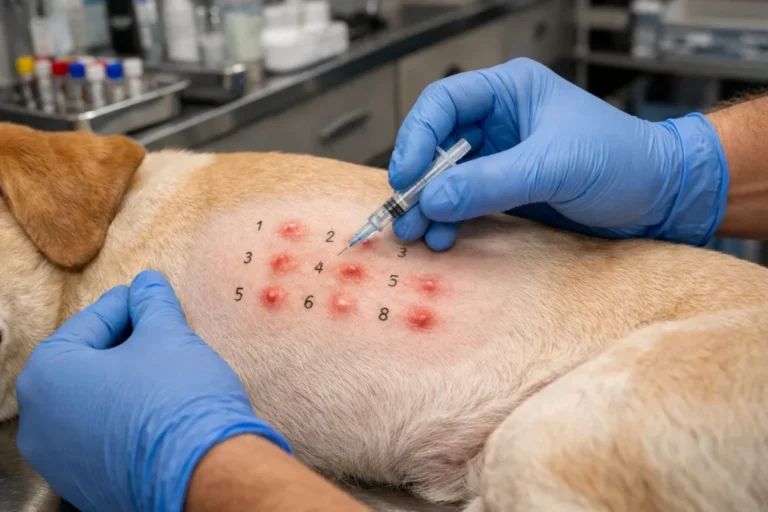
For mild, clearly seasonal itching in an otherwise healthy dog, you can call your vet and ask whether starting Apoquel or Cytopoint right away is appropriate. Most clinics will say yes if they've seen the dog before. For new patients, expect a physical exam, a skin cytology, and a chat about whether to do blood or intradermal allergy testing.
According to the FDA's Center for Veterinary Medicine, both Apoquel and Cytopoint are approved specifically for canine allergic dermatitis and pruritus, which is why they remain the backbone of modern allergy treatment for dogs as of 2026.
The Core Treatment Options for Canine Seasonal Allergies
Modern treatment of canine atopy rests on four pillars. Think of them as layers: the first layer controls the itch right now, the second layer treats anything that complicates the skin, the third layer supports the skin from the outside, and the fourth layer addresses the underlying immune response for the long term.
Layer 1: Prescription Anti-Itch Medication
These are the drugs that actually stop the scratching:
| Medication | Form | Onset | Duration | Best For |
|---|---|---|---|---|
| Apoquel (oclacitinib) | Oral tablet | ~4 hours | Daily dosing | Fast, adjustable control; dogs needing oral meds |
| Cytopoint (lokivetmab) | Injection | ~24 hours | 4 to 8 weeks | Dogs that resist pills; consistent steady control |
| Prednisone (steroid) | Oral or injectable | Hours | Days to weeks | Severe flare-ups; short-term rescue only |
| Antihistamines | Oral | Days to weeks | Daily | Mild cases; adjunct therapy |
Apoquel and Cytopoint work through different mechanisms. Apoquel blocks the JAK1 enzyme, interrupting the itch signal at the cellular level. Cytopoint is a monoclonal antibody that neutralizes interleukin-31, the specific protein that triggers itching.
Both have transformed allergy care because they control itching without the long-term side effects of steroids.
Layer 2: Treat Secondary Infections First
If your dog has a yeast or bacterial infection, treating the itch alone won't resolve the problem. Most vets will prescribe a 2 to 4 week course of oral antibiotics or antifungals alongside medicated shampoo therapy. Skipping this step is one of the most common reasons allergy treatment "doesn't work."
Layer 3: Topical Therapy
Baths with a hypoallergenic or oatmeal-based shampoo, plus frequent paw wipes, physically remove allergens from the coat. Chlorhexidine-based shampoos add antibacterial support. Aim for one to two baths per week during flare-ups.
Layer 4: Long-Term Immune Modulation
Allergen-specific immunotherapy (allergy shots or sublingual drops) is the only treatment that retrains the immune system rather than masking symptoms. It's a bigger commitment, but it can reduce or eliminate the need for medication over time.
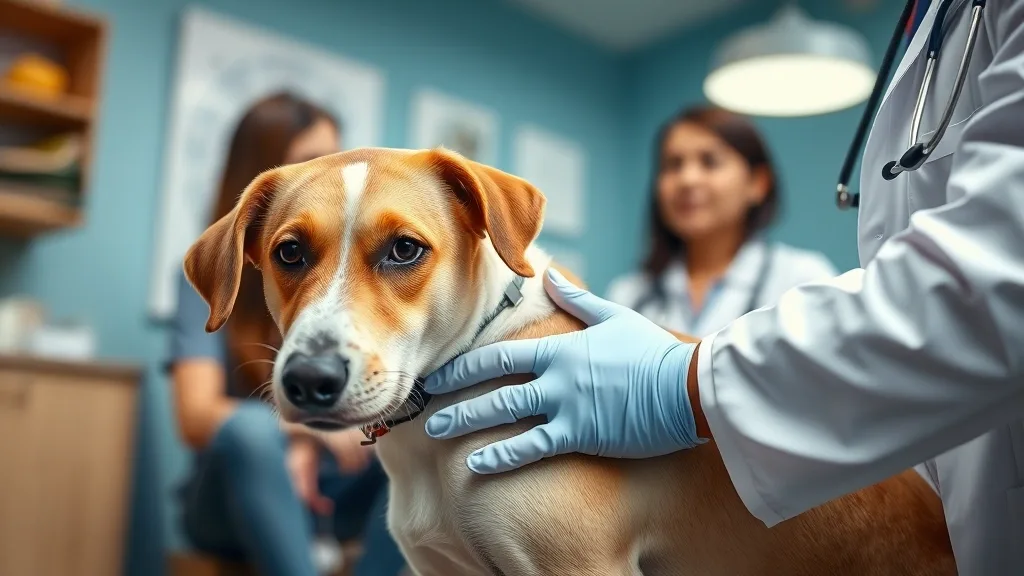
A vet running skin cytology or examining a dog's allergy-affected skin is exactly where your treatment plan starts. That hands-on diagnosis is what tells you which of these four layers to prioritize.
Apoquel vs. Cytopoint: Which Anti-Itch Medication Fits Your Dog
These two drugs do the same job (stop the scratching) in different ways. The choice usually depends on your dog's lifestyle, your budget, and how easy your dog is to pill.
When Apoquel Wins
Apoquel is a daily tablet, so you can adjust the dose or stop it instantly if needed. That's a real advantage during early treatment, when you're still figuring out triggers and tweaking the plan. Manufacturer specs confirm Apoquel begins working within 4 hours and reaches full effect by day 3 or 4.
Apoquel fits well if your dog takes other oral medications easily, if you want fast on/off control, or if your vet wants to test a lower dose during the off-season. The catch is cost, which runs roughly $80 to $200 per month depending on your dog's size.
When Cytopoint Wins
Cytopoint is a single injection given at the clinic that lasts 4 to 8 weeks. There's nothing to remember at home. That makes it a favorite for dogs that fight pills, for owners with hectic schedules, and for cases where steady itch control matters more than flexibility.
Aggregate reviews report Cytopoint is especially useful for dogs that vomit or have sensitive stomachs, since it skips the gut entirely. Per Zoetis product labeling, Cytopoint is approved for dogs of all ages, with no routine bloodwork required. Each injection typically costs $60 to $150.
Which One Should You Choose?
If your dog is young, healthy, and a cooperative pill-taker, Apoquel gives you more control. If your dog hates pills or you want a set-and-forget option, Cytopoint is hard to beat. Many dogs end up on Cytopoint seasonally and Apoquel as backup during peak flare-ups.
Antihistamines for Dogs: What Works, What Doesn't, and What's Safe
Antihistamines are the most searched home treatment for dog allergies. They also have the lowest real-world success rate. Veterinary dermatology data suggests antihistamines help only about 20 to 30 percent of dogs with atopy, and even then the effect is usually modest.
The Safe Choices
The antihistamines most often recommended for dogs are:
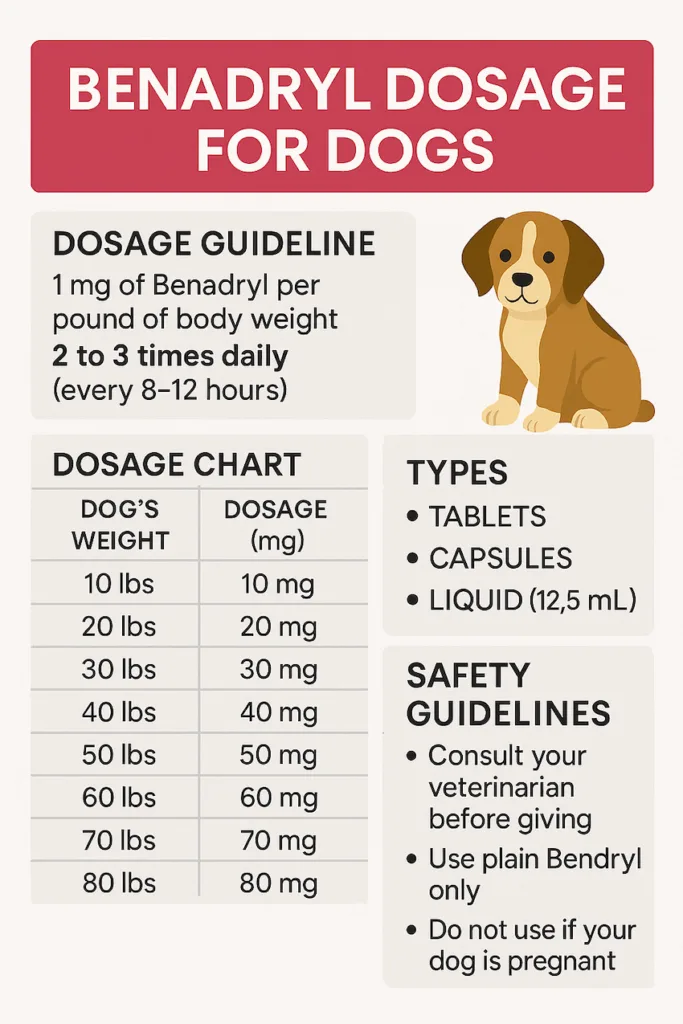
- Diphenhydramine (Benadryl plain): 1 mg per pound, every 8 to 12 hours
- Cetirizine (Zyrtec): roughly 0.5 mg per pound, once daily
- Loratadine (Claritin): roughly 0.25 mg per pound, once daily
The Dangerous Choices
Never give your dog antihistamines that contain pseudoephedrine (like Claritin-D or Allegra-D). Never use anything with xylitol. And don't assume "children's" means safe: many liquid formulas contain alcohol or other additives that aren't dog-safe.
Antihistamines work best as a supporting player, paired with bathing, omega-3s, and environmental control. They're worth trying in mild cases or for young dogs before moving to prescription drugs. They rarely replace Apoquel or Cytopoint when the itching is significant.
Steroids for Dog Allergies: When They're Used and When to Avoid Them
Steroids like prednisone are the original allergy drug, and they're still useful in specific situations. They're also the most overused and the most dangerous when given long-term.
When Steroids Make Sense
Short courses of steroids (5 to 14 days) work well as a rescue during severe flare-ups. Vets often reach for them when Apoquel or Cytopoint isn't available, when cost is a barrier, or when a dog needs fast relief before diagnostic tests are complete.
The Long-Term Problem
Steroids suppress the immune system broadly. Long-term use in dogs causes increased thirst, weight gain, muscle loss, panting, and a higher risk of infections. They can also trigger or worsen diabetes and Cushing's disease over time.
For chronic seasonal allergies, steroids should be a short-term bridge, not the foundation. If your vet is suggesting long-term steroid use, ask whether Apoquel, Cytopoint, or immunotherapy is appropriate instead.
Step-by-Step Plan to Treat a Dog with Seasonal Allergies at Home
Here's a practical, sequenced plan that combines medical treatment with at-home support. Start at step 1 and work down.
- Confirm with your vet. Schedule a visit for skin cytology and to rule out fleas, mites, or infections. Get Apoquel or Cytopoint prescribed.
- Start the prescription drug on day one. Don't wait for baths and supplements to work first. The faster you break the itch cycle, the faster the skin heals.
- Treat any infection your vet found. Complete the full course of antibiotics or antifungals. Stopping early guarantees a rebound.
- Begin weekly baths. Use a hypoallergenic or oatmeal shampoo. Cool water, 10-minute soak, rinse thoroughly. Towel dry, don't blow dry.
- Wipe paws and belly after every walk. Use unscented baby wipes or a damp microfiber cloth. This single habit removes a huge pollen load.
- Start omega-3 supplementation. Look for a fish oil with EPA and DHA listed on the label. Give it with food for better absorption.
- Add environmental controls. HEPA filter in the bedroom, wash dog beds weekly in hot water, vacuum with a HEPA-equipped vacuum.
- Recheck in 2 to 4 weeks. If the itch is controlled, your vet may taper medication. If not, allergy testing and immunotherapy come next.
- Plan for next season. Start Apoquel or Cytopoint 2 to 3 weeks before symptoms typically appear. Prevention is easier than rescue.
Allergen-Specific Immunotherapy: The Long-Term Fix Worth Considering
Immunotherapy is the only treatment that addresses the underlying allergy instead of masking it. It works by exposing the immune system to tiny, increasing amounts of the specific allergens your dog reacts to, gradually retraining the body to tolerate them.
How It Works in Practice
Your vet orders a serum allergy test (a blood draw) or refers you for intradermal skin testing. The results identify which pollens, molds, or dust components your dog reacts to. A custom serum is then mixed, and you give injections at home every few days, tapering to monthly maintenance.
Sublingual immunotherapy (drops under the tongue) is an alternative for owners who can't give injections. Both forms take 6 to 12 months to show full results, so patience matters.
Who It's Best For
Immunotherapy is worth it for dogs with confirmed atopy that need allergy medication every year for more than a few months. It's a bigger upfront commitment (testing plus $400 to $1,000 in the first year), but it can reduce medication use long-term.
Per peer-reviewed veterinary dermatology research, immunotherapy helps roughly 60 to 80 percent of dogs with atopic dermatitis, with the best responses in younger dogs and those whose allergies are well-characterized through testing.
Environmental Control: Cutting Pollen and Mold Exposure at Home
Environmental control is the layer most owners skip, but it's the one that keeps medication doses lower long-term. You can't build a pollen-free house, but you can cut daily exposure by half with a few habits.
Pollen counts peak in early morning and on windy days, so walks after noon and after rain help. Wipe paws and the belly after every outing, and keep windows closed during high-pollen periods. A HEPA filter in the bedroom makes a real difference for dogs that sleep near their owners, since it cuts airborne allergens during the 8 hours your dog is closest to them.
Wash dog beds weekly in hot water, and vacuum with a HEPA-equipped vacuum twice a week during peak season.
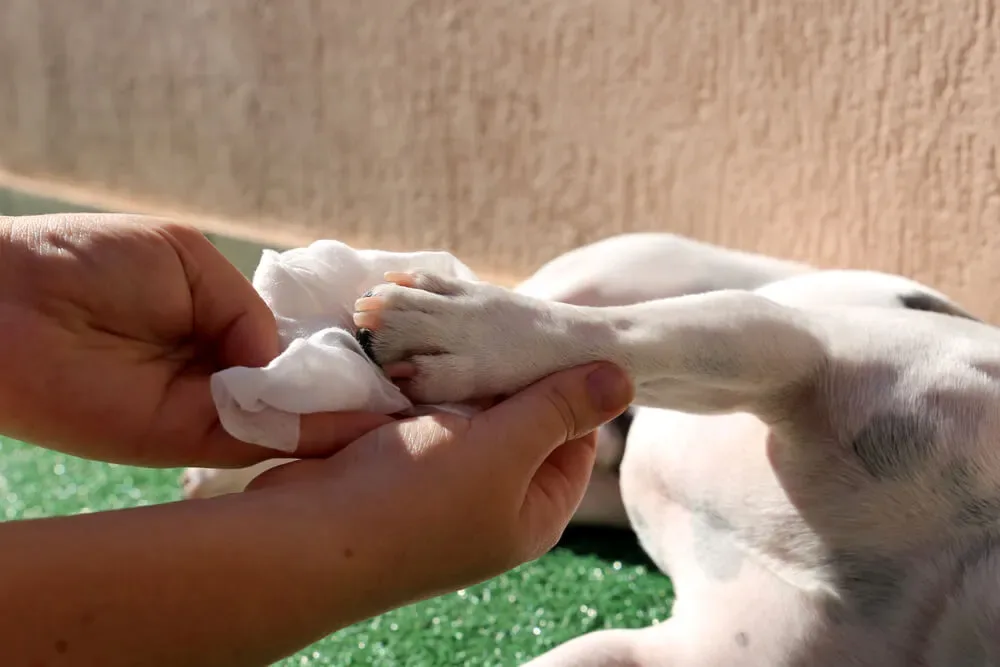
A damp cloth works just as well as a commercial paw wipe for removing pollen. The goal is removing allergens before they get absorbed through the skin or ingested when your dog licks their paws.
Common Mistakes Dog Owners Make When Treating Seasonal Allergies
Most treatment failures trace back to a handful of avoidable mistakes. Watch for these:
- Stopping medication when the itch clears. Apoquel and Cytopoint control symptoms; they don't cure the allergy. Stopping mid-season invites a rebound that's harder to control.
- Skipping the flea preventive. Even one bite can ruin a treatment plan. Year-round prevention is the standard of care.
- Over-bathing. More than two baths per week strips the skin barrier and makes itching worse. Stick to once or twice weekly unless your vet says otherwise.
- Using human hydrocortisone cream. It can help in tiny spots, but dogs lick it off, and overuse thins the skin.
- Ignoring ear infections. Dogs with atopy get recurrent ear infections. If your dog is shaking their head, the ears need attention now, not next month.
- Assuming food is the problem without testing. Diet trials take 8 to 12 weeks and require strict discipline. Jumping to a "hypoallergenic" food without a real trial rarely helps.
Treatment Costs, Timelines, and What to Expect
Costs vary by region, but here's a realistic budget for a typical allergy season.
| Item | Typical Cost | Frequency |
|---|---|---|
| Vet exam | $50 to $150 | Per visit |
| Apoquel | $80 to $200/month | Seasonal to year-round |
| Cytopoint injection | $60 to $150 | Every 4 to 8 weeks |
| Hypoallergenic shampoo | $15 to $30 | Per bottle (1 to 2 months) |
| Omega-3 supplement | $20 to $40/month | Daily |
| Allergy testing | $200 to $600 | One-time |
| Immunotherapy (first year) | $400 to $1,000 | One-time |
Most dogs show meaningful improvement within the first week of Apoquel or Cytopoint. Full environmental control benefits take 2 to 4 weeks. Immunotherapy is a 6 to 12 month investment.
Plan accordingly, especially if your dog's allergy season stretches across multiple calendar months.
When Seasonal Allergies Become an Emergency (and When to Wait It Out)
Most seasonal allergy cases are uncomfortable, not dangerous. A few situations need urgent vet care:
- Facial swelling, hives, or sudden vomiting after a walk (possible anaphylaxis)
- Rapidly spreading hot spots with pus or a foul smell
- Persistent head shaking with a head tilt (middle ear infection)
- Bleeding skin from constant scratching
- Lethargy, fever, or refusal to eat alongside skin signs
If your dog is breathing oddly, has a swollen face, or collapses, that's an emergency visit, not a "wait until Monday" situation. For everything else, schedule a regular appointment within a few days. The goal is to act before a small problem turns into a skin infection or ear infection that needs weeks of antibiotics.
Skin and Coat Support: Shampoos, Wipes, and Omega-3 Supplements
Topical care and skin support don't replace medication, but they reduce the dose your dog needs over time. Three tools do most of the work.
Hypoallergenic or oatmeal-based shampoos physically strip allergens from the coat. Bathing once or twice a week during flare-ups, with a 10-minute soak and cool water, outperforms more frequent quick rinses. Medicated mousses with chlorhexidine or pramoxine add antibacterial and numbing benefits between baths.
Omega-3 fatty acid supplements (fish oil or algae-based alternatives) support the skin barrier from the inside out. Look for products that list EPA and DHA amounts on the label. Manufacturer specs typically recommend around 50 to 75 mg of combined EPA/DHA per kg of body weight daily.
Improvements show up over 6 to 12 weeks, so start supplementation before allergy season if you can.
Quick Reference: Best Treatment Choices by Situation
Different dogs need different starting points. Here's how the options line up against common scenarios.
- Mild seasonal itching, otherwise healthy dog: Start with antihistamines, weekly baths, and omega-3s. Add Apoquel if no improvement in 2 weeks.
- Moderate to severe scratching with red skin: Apoquel or Cytopoint plus medicated baths. Skin cytology first to rule out infection.
- Recurring ear infections alongside itching: Apoquel or Cytopoint, plus ear cytology and targeted ear treatment. Discuss allergy testing.
- Year-round symptoms that worsen in spring: Suspect atopy plus a secondary trigger. Veterinary workup with allergy testing recommended.
- Young dog (under 12 months) with seasonal signs: Apoquel is off-label under 12 months; Cytopoint is approved. Address environmental control early.
- Older dog on other medications: Cytopoint skips the liver and is generally safer for dogs with comorbidities.
Frequently Asked Questions
How long does it take for Apoquel to work on dog allergies?
Apoquel begins reducing itching within 4 hours of the first dose and reaches full effect by day 3 or 4. Most owners see a noticeable difference within the first 48 hours.
Can I give my dog Benadryl for seasonal allergies?
Plain diphenhydramine (Benadryl without pseudoephedrine or xylitol) is generally safe at 1 mg per pound, every 8 to 12 hours. That said, it only helps about 20 to 30 percent of dogs with atopy and works best as an add-on, not a primary treatment.
What time of year are dog seasonal allergies worst?
Spring (tree pollen), late spring through summer (grass pollen), and fall (ragweed and mold) are the main culprits. In humid regions like the Gulf Coast and Pacific Northwest, mold-driven allergies can persist through winter.
Are seasonal allergies in dogs curable?
No, but they are highly manageable. Apoquel, Cytopoint, immunotherapy, and environmental control can reduce symptoms to the point where most dogs live comfortably with minimal medication.
How do I know if my dog has allergies or something else?
Year-round itching suggests food allergies or environmental triggers beyond pollen. Seasonal patterns point to atopy. Skin cytology, allergy testing, and a vet exam are the only reliable ways to tell them apart.
Should I see a veterinary dermatologist for dog allergies?
If your dog needs allergy medication for more than half the year, has failed standard treatment, or has recurring ear infections, a board-certified veterinary dermatologist is worth the referral. The American College of Veterinary Dermatology maintains a directory of specialists by region.
Specialist visits typically cost $200 to $400 for the initial consultation, with testing and treatment plans on top of that. For most dogs, though, a good general practice vet working through the four-layer plan we've covered here gets the job done.
Can seasonal allergies in dogs go away on their own?
No. Canine atopy is a chronic, progressive condition. Without treatment, most dogs get worse each year, and the allergy season expands.
How often should I bathe a dog with seasonal allergies?
Once or twice per week during active flare-ups is the standard. More than that risks drying out the skin barrier. Use cool water and a hypoallergenic or oatmeal-based shampoo.
Are there natural remedies that actually work for dog allergies?
Omega-3 supplementation has solid evidence behind it. Bathing and paw wiping work. Everything else (coconut oil, apple cider vinegar, essential oils) has minimal evidence and carries real risks if misapplied.
What's the difference between Cytopoint and Apoquel for dogs?
Cytopoint is an injection lasting 4 to 8 weeks. Apoquel is a daily pill. Both control itch, but Cytopoint is easier for pill-resistant dogs, while Apoquel offers more dosing flexibility.
Can dogs have allergy shots like humans?
Yes. Allergen-specific immunotherapy uses the same principle as human allergy shots. It's customized based on testing and given by injection or sublingual drops at home.
When should I take my dog to the ER for allergies?
Facial swelling, hives, sudden vomiting, or collapse are emergencies. These signs suggest anaphylaxis and need immediate veterinary care.