How to help my dog with skin allergies: Top guide
If your dog won't stop scratching, licking their paws, or rubbing their face on the carpet, you're not alone, and you're not overreacting. Skin allergies are one of the most common reasons dogs end up at the vet, and they almost always get worse without a plan.
The honest answer to how to help my dog with skin allergies is this: figure out the type first, then treat it. Research from veterinary teaching hospitals shows that up to 10 to 15% of dogs develop atopic dermatitis, and flea allergy dermatitis alone accounts for roughly half of canine allergy cases in warm climates. Get the diagnosis right, and most dogs drop from miserable to comfortable within weeks.
Get it wrong, and you'll burn months on shampoos and supplements that never had a chance to work.

Quick Answer
Start by ruling out fleas, since flea allergy dermatitis is the single most common trigger. Then figure out whether the itching is seasonal or year-round, and whether food is involved. Work with your vet on a plan that combines trigger control, itch relief, and treatment for any secondary skin infection.
Most dogs improve dramatically once the real cause is identified and managed, not just covered up.
Why Your Dog Won't Stop Scratching (And What It Actually Means)
Scratching is a symptom, not a diagnosis. A dog who chews their paws in August and is fine by October has a different problem than one who's itchy every single day of the year. Same with the dog who scratches after every meal versus the one who only flares after rolling in the grass.
Here's what the itch is actually telling you: the immune system is overreacting to something harmless, like a flea bite, a food protein, or pollen. The scratching, licking, and chewing are downstream damage, not the root problem. Treat the symptom alone, and you'll stay stuck.
Treat the trigger, and the itching fades on its own.
A few patterns show up over and over in veterinary dermatology:
- Flea allergy: itch concentrated at the lower back, tail base, hind legs, and belly. Often sudden and severe.
- Food allergy: year-round itching, recurrent ear infections, and sometimes digestive signs. Often starts before age three.
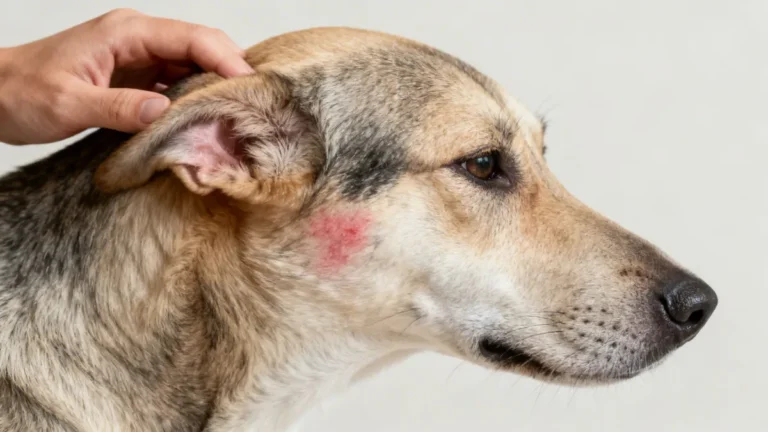
- Environmental (atopic) dermatitis: face, feet, ears, armpits, and groin. Frequently seasonal at first, then becomes year-round as the dog ages.
If your dog fits one of these patterns, you're already ahead of most owners. If they don't, that's useful too, because it points your vet toward something else entirely, like mites, ringworm, or a hormonal issue.
The 3 Real Causes of Dog Skin Allergies Most Owners Miss
Most itchy dogs have one of three things going on. Sometimes two of them at once, which is part of what makes this so frustrating.
Flea allergy dermatitis (FAD). Even a single flea bite can set off a dog who's allergic to flea saliva. You don't need a flea infestation, just one bite. Many owners never see a flea because the dog is grooming them off so fast.
Food allergies. True food allergies are an immune response to a specific protein, most often beef, dairy, chicken, or egg. Food intolerances cause digestive upset but not the skin symptoms we're covering here. The only reliable way to diagnose a food allergy is an elimination diet trial.
Environmental allergies (atopic dermatitis). Pollen, dust mites, mold, and storage mites. Seasonal at first, often year-round later. This is the type that drives the most repeat vet visits, because the triggers are everywhere.
A fourth, less common cause is contact allergy, meaning direct skin contact with something irritating, like a new shampoo, a cleaning product on the floor, or certain plants. It usually shows up on the belly or paws where fur is thin.
Is It Fleas, Food, or the Environment? Start Here
Before you spend money on supplements, shampoos, or prescription meds, answer this one question: what's the pattern?
| Pattern | Most Likely Cause | First Step |
|---|---|---|
| Sudden, severe itch at lower back and tail base | Flea allergy dermatitis | Apply strict flea control for at least 8 weeks |
| Year-round itch, recurrent ear infections, started young | Food allergy | Begin a strict elimination diet trial |
| Seasonal flare-ups, paws and face affected | Environmental allergy | Treat flares early, plan for immunotherapy if recurrent |
| Itch on belly, paws, or thin-furred areas after new product | Contact allergy | Remove the suspected trigger, wash bedding |
If the pattern doesn't fit neatly into one box, that's normal. Many dogs with environmental allergies also react to fleas. Some dogs with food allergies also have seasonal flares.
The job of the first vet visit is to untangle which triggers are actually in play.
Red Flags That Need a Vet Today vs. Things You Can Try at Home
Most skin allergies are uncomfortable but not emergencies. A few signs mean your dog needs to be seen now, not next week.
See a vet today if your dog has:
- Facial swelling, hives, or sudden vomiting (possible anaphylaxis)
- Open, oozing, or bleeding hot spots
- A foul smell from the skin or ears (often a deep infection)
- Constant scratching that prevents sleep or eating
- Rapid hair loss in patches
You can start at home if your dog has:
- Mild, occasional scratching with no skin damage
- Seasonal paw-licking that comes and goes
- Recently been exposed to fleas and is itchier than usual
- Flare after a diet change, new treat, or new shampoo
When in doubt, call your vet. The phone call is free, and triaging early often saves an emergency visit later.
Step 1: Rule Out Flea Allergy Dermatitis First
This step comes first on purpose. Flea allergy is the most common, the cheapest to rule out, and the easiest to fix once identified. Skipping it is the single biggest mistake owners make.
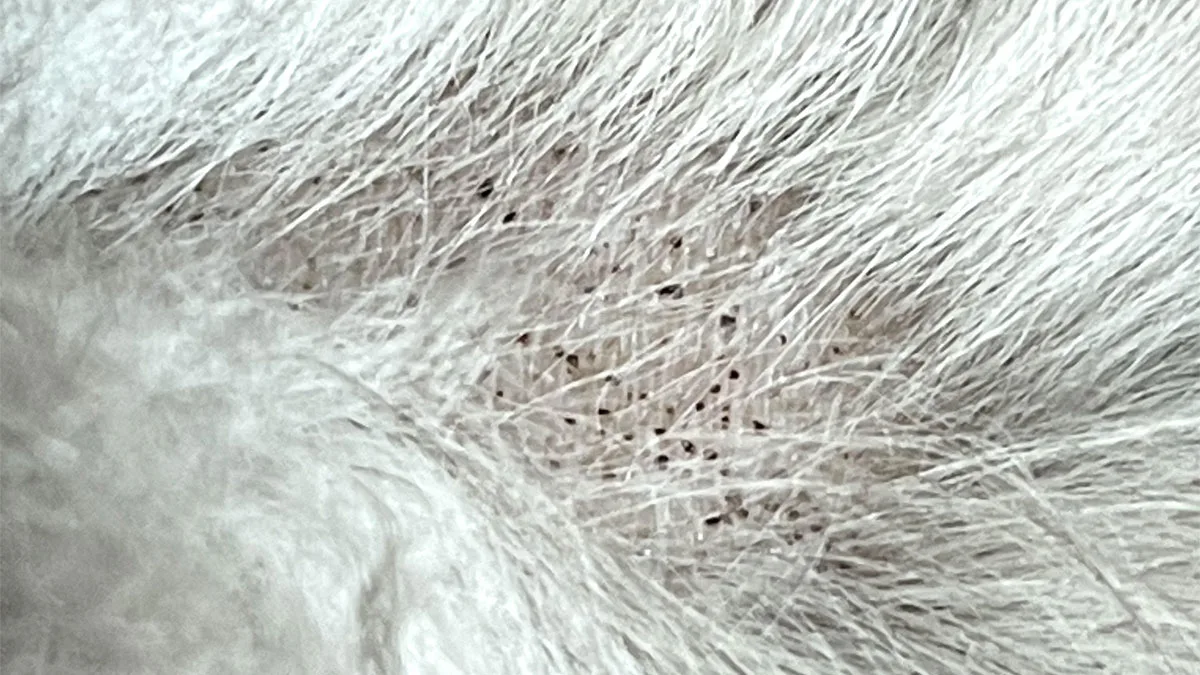
In flea-allergic dogs, the reaction isn't from the bite itself. It's from proteins in flea saliva. Even one flea can trigger days of intense itching.
According to the Merck Veterinary Manual, flea allergy dermatitis remains the leading cause of allergic skin disease in dogs worldwide, especially in warm and humid regions where fleas thrive year-round.
The clinical signs to look for:
- Itching concentrated over the lower back, tail base, and rear thighs
- Hair loss or "hot spots" along the back and tail
- Red, bumpy, or scabby skin in those areas
- Often worse in summer, but can happen any time in flea-endemic areas
How to rule it out:
The American College of Veterinary Dermatology recommends a strict flea control trial for at least 8 to 12 weeks before assuming fleas aren't the cause. That means treating every pet in the home with a vet-recommended product (oral options like fluralaner or afoxolaner, or topicals prescribed by your vet), every single month, with no gaps.
A few rules that make the trial actually work:
- Don't skip doses. A single missed month resets the clock.
- Treat every animal in the household, including indoor cats.
- Wash bedding in hot water weekly during the trial.
- Vacuum regularly, especially areas where pets sleep.
If the itching drops by 70% or more during a strict trial, fleas were either the main trigger or a major contributing one. If there's no improvement, fleas probably aren't the dominant problem, and you can move on to the next step with confidence.
Step 2: Decide If It's Seasonal or Year-Round
The calendar doesn't lie. Tracking when your dog itches is one of the cheapest, most powerful diagnostic tools you have. A simple notebook or phone note for a few months will tell your vet more than any single test.
If the itch is seasonal:
Most likely environmental, meaning pollen, grass, mold, or dust mites. Spring flares often point to tree pollen. Summer flares track grass and weed pollen.
Fall flares tend to mean ragweed or outdoor mold.
Seasonal cases are often easier to manage because you can plan ahead. Start treatment two to four weeks before the usual flare window. Many dogs do well with a short course of itch relief plus allergen immunotherapy for longer-term control.
If the itch is year-round:
Think food allergy, indoor allergens like dust mites or storage mites, or chronic atopic dermatitis that's lost its seasonality. Year-round itching almost always needs a structured diagnostic workup, not just symptom management.
How to track it well:
- Note the date a flare starts and ends.
- Record where the dog itches (paws, ears, belly, back).
- Log anything new: food, treats, shampoo, walks in new areas.
- Photograph flare days. Pictures beat memory every time.
After two or three cycles, you'll see a pattern that even your vet may not pick up in the exam room.
Step 3: Run an Elimination Diet the Right Way
An elimination diet is the gold standard for diagnosing food allergy in dogs. It's also the most commonly botched test in veterinary dermatology. Done wrong, it gives a false answer and leaves the dog itchy for nothing.
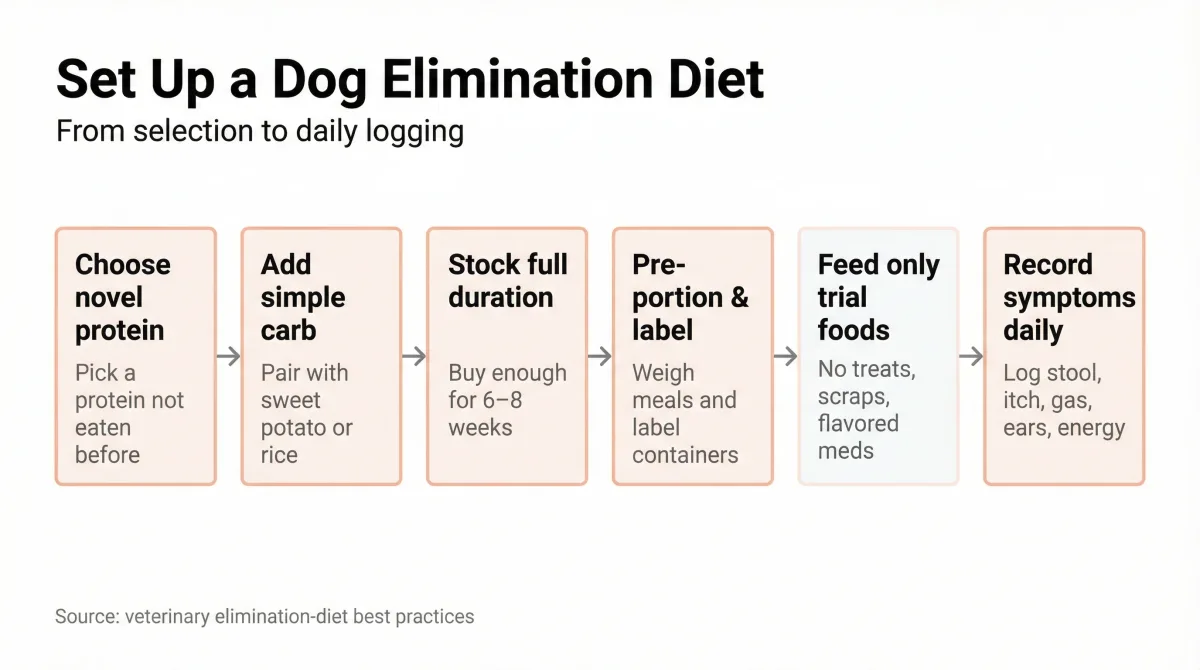
The concept is simple. You feed a diet containing ingredients the dog has never eaten before, or proteins broken down so small the immune system can't react. Then you hold that diet steady for 8 to 12 weeks with zero exceptions.
If the itching drops significantly, you reintroduce the old foods one at a time and watch for a flare.
The execution is where owners fail. Here's how to do it properly.
Choose the right food:
| Option | What It Is | When to Use |
|---|---|---|
| Novel protein diet | One protein and one carbohydrate the dog has never had (e.g. rabbit and sweet potato) | Best when a dog hasn't eaten exotic proteins before |
| Hydrolyzed protein diet | Proteins broken into tiny pieces the immune system doesn't recognize | Best when a dog has eaten many proteins, so "novel" is hard |
Most veterinary dermatologists reach for hydrolyzed diets because they're harder to accidentally break. Royal Canin, Hill's Prescription Diet, and Purina Pro Plan all make well-studied hydrolyzed options.
The rules that make or break the trial:
- No treats. None. Not even "just one."
- No table scraps. No bones. No flavored chews.
- No flavored medications. Ask your vet for unflavored alternatives.
- No other pet's food. Run separate feeding stations.
- Wash bowls and scoops between uses to remove residue.
- Every family member and visitor must know the rules.
If the dog chews a piece of chicken from the counter on day 47, the clock resets. Owners often give up at that point. Don't.
Just restart and commit again.
What improvement looks like:
A real response usually shows up between weeks 6 and 10. The dog scratches less, sleeps better, and often gets clearer ears. If there's no change at 12 weeks, food allergy is unlikely to be the main driver.
Step 4: When and Why to Do Allergy Testing
Allergy testing only matters once you've narrowed the field. It doesn't diagnose the type of allergy. It tells you which specific environmental allergens your dog reacts to, so treatment can target them.
There are two main types:
- Intradermal skin testing. Small amounts of allergens are injected into the skin, and the reaction is read visually. Considered the gold standard, but requires a veterinary dermatologist, sedation, and a shaved patch.
- Serum IgE blood testing. A blood sample is checked for allergen-specific antibodies. Easier to do through your regular vet, but slightly less accurate for some allergens.
Testing makes the most sense when you're considering allergen immunotherapy (allergy shots or sublingual drops). If you're only planning to manage symptoms with medication, testing adds cost without changing the plan.
When testing is worth it:
- Year-round or severe environmental allergies.
- Young dogs likely to need lifelong management.
- Owners who want to reduce long-term medication use.
- Cases that aren't responding to standard treatment.
When you can skip it:
- Mild, predictable seasonal flares that respond to short-term medication.
- Dogs whose itching is fully controlled by flea control or diet change.
A typical veterinary dermatologist consultation runs $200 to $500, with allergy testing adding $200 to $400. It's a real investment, and one that's only worth making once the simpler causes have been ruled out.
Step 5: Choose the Right Itch Relief: Apoquel, Cytopoint, or Atopica
Once the trigger is under control, you still need to stop the itch. Scratching damages skin, opens the door to infection, and wrecks the dog's quality of life. These three prescription options are the workhorses of canine itch control.
Oclacitinib (Apoquel). A daily oral tablet that blocks itch and inflammation at the source. Manufacturer specifications indicate it starts working within 4 hours and is approved for long-term use in dogs over 12 months old. Best for dogs needing fast, flexible relief that can be turned on and off with the seasons.
Lokivetmab (Cytopoint). An injectable antibody given by your vet every 4 to 8 weeks. Starts working within 24 to 48 hours and is a good fit for dogs whose owners struggle with daily pills. Not a cure, but excellent control.
Cyclosporine (Atopica). A daily oral immunosuppressant used for severe or refractory atopic dermatitis. Takes 4 to 8 weeks to reach full effect and requires periodic bloodwork to monitor kidney and liver values. Usually reserved for cases that don't respond to other options.
Here's how they stack up:
| Drug | Form | Onset | Best For | Watchouts |
|---|---|---|---|---|
| Apoquel | Oral tablet, daily | ~4 hours | Quick relief, seasonal use | Not for dogs under 12 months; possible infection risk |
| Cytopoint | Injection, every 4-8 weeks | 24-48 hours | Owners who can't pill daily | Cost per visit; not a cure |
| Atopica | Oral capsule, daily | 4-8 weeks | Severe, refractory cases | Needs bloodwork; GI upset possible |
Antihistamines like diphenhydramine or cetirizine work for some dogs but tend to be far less effective in canines than in humans. They can be a useful add-on, not a primary solution. Always check dosing with your vet, because some human formulations contain xylitol, which is toxic to dogs.
As of 2026, Apoquel and Cytopoint remain the first-line prescription choices for most dogs with environmental allergies, with Atopica reserved for the tougher cases.
Step 6: Shampoos, Omega-3s, and Other Supportive Treatments
Prescription drugs handle the inside. Supportive care handles the outside. Skipping this step is why so many dogs stay itchier than they should, even on the right medication.
Medicated shampoos. Used two to three times a week during flares, less often for maintenance. Look for chlorhexidine (antibacterial), miconazole (antifungal), or oatmeal-based formulas for soothing. Contact time matters: let the lather sit for 10 minutes before rinsing.
A quick dip and rinse won't do much.
Omega-3 fatty acids. Fish oil supplements with EPA and DHA reduce inflammatory response in the skin over time. Plan on 6 to 8 weeks before judging results. Quality matters here, so use a veterinary-grade product rather than a grocery store capsule.
Topical products. Wipes and mousses with chlorhexidine or acetic acid are useful between baths, especially for paws, skin folds, and belly skin. They're not glamorous, but they reduce bacterial and yeast overgrowth between full baths.
Supportive care won't replace prescription itch control in a truly allergic dog. What it does is reduce the load on the immune system and keep the skin barrier healthier, which often lets you use less medication over time.
Step 7: Treat the Secondary Infection That Almost Always Shows Up
An allergic dog that licks and chews for weeks will almost always develop a secondary infection. The skin was never the problem, the immune system was, but once the barrier is broken, bacteria and yeast move in.
Bacterial infection (pyoderma). Signs include pimples, crusts, hair loss, and a sticky or foul smell. Usually treated with a 3 to 4 week course of oral antibiotics, plus medicated shampoo.
Yeast infection (Malassezia). Signs include greasy, thickened skin, a strong musty or "Frito" smell, and dark pigment in the armpits, groin, or between toes. Treated with antifungal medications, often alongside antibiotics.
Two important notes:
- Treating the allergy without treating the infection leaves the dog itchy.
- Treating the infection without controlling the allergy means the infection will keep coming back.
Both problems have to be addressed, usually at the same time, for the dog to actually feel better.
Step 8: Build a Long-Term Management Plan That Actually Works
Allergies aren't cured. They're managed. The goal isn't perfection, it's a dog who sleeps through the night, plays normally, and only needs occasional flare treatment.
A solid long-term plan usually includes:
- Year-round flea prevention, no exceptions.
- A confirmed diet plan, whether that's a maintenance hypoallergenic food or a limited ingredient rotation.
- Seasonal or year-round itch medication at the lowest effective dose.
- Regular bathing or wipe-downs during high-risk seasons.
- Environmental control: HEPA filters for indoor allergens, paw rinses after walks, frequent bedding washes.
- Recheck visits every 6 to 12 months, or sooner if a new pattern shows up.
Allergen immunotherapy, the formal name for allergy shots or sublingual drops, deserves a special mention here. It's the only treatment that actually rewires the immune response rather than just blocking itch. About 60 to 80% of dogs improve with immunotherapy, though it takes 6 to 12 months to see the full effect.
Best started young, best for dogs whose environmental allergies are confirmed and whose owners want to reduce long-term drug use.
Common Mistakes That Keep Dogs Itchy for Months
These are the patterns we see over and over.
- Stopping Apoquel or Cytopoint the moment the dog looks better. The underlying allergy is still active.
- Treating the skin infection without addressing the allergy that caused it.
- Skipping a strict elimination diet trial because "she only gets a little bit of chicken."
- Using essential oils or coconut oil as a primary treatment. Most have no proven effect on canine allergies.
- Bathing too often or not often enough. Both are real problems.
- Assuming OTC antihistamines will solve it. They rarely do for dogs.
- Waiting months to see a vet while the skin gets worse.
What Dog Skin Allergies Really Cost Over Time
Budget matters, and owners deserve an honest number.
- Initial vet visit and diagnostics: $150 to $400.
- Specialty dermatologist consult: $200 to $500.
- Allergy testing: $200 to $400.
- Monthly Apoquel for a medium dog: roughly $80 to $120.
- Cytopoint injection per visit: $60 to $150, every 4 to 8 weeks.
- Elimination diet food: $50 to $100 per month for 3 months.
- Medicated shampoos and supportive care: $20 to $40 per month.
The good news: a correct early diagnosis usually lowers the long-term cost. The bad news: trial-and-error without a plan is where money really disappears.
Quick Decision Guide: What to Do Based on Your Dog's Pattern
- Itchy only at lower back and tail base: Strict flea trial for 8 to 12 weeks first.
- Year-round itch with ear infections: Run a proper elimination diet trial.
- Seasonal paw-licking and face rubbing: Start Apoquel or Cytopoint at the first sign of the season, consider allergy testing for long-term planning.
- Sudden hot spots and foul smell: Vet visit for likely secondary infection.
- Mild, occasional scratching: Try supportive care and tracking first, see a vet if it persists beyond a few weeks.
Tools and Materials You'll Need
A vet-prescribed flea preventative, medicated shampoo, the chosen prescription medication, a strict diet if food allergy is suspected, an itch and symptom log, and a phone camera for skin photos between visits. That's the core toolkit for most dogs.
Final Checklist Before You Call the Vet
Note when the itching started, where it shows up on the body, any new foods or products, flea prevention history, and whether other pets or family members are affected. Bring photos. The more organized your info, the faster your vet can narrow it down.
Frequently Asked Questions
How long does it take for Apoquel to work on dog skin allergies?
Manufacturer specifications indicate Apoquel begins reducing itch within about 4 hours, with significant improvement typically seen in the first 24 hours.
Can dog skin allergies go away on their own?
Environmental allergies don't truly go away, though they may fluctuate with seasons. Food allergies persist unless the trigger is removed. Flea allergy resolves once flea control is consistent.
What is the best food for a dog with skin allergies?
There's no single best food. The right choice is the one your dog hasn't been exposed to, or a hydrolyzed protein diet, fed strictly for 8 to 12 weeks during the trial.
How do I know if my dog has a food allergy or environmental allergy?
Food allergy is usually year-round, often starts young, and frequently involves recurrent ear infections. Environmental allergy is often seasonal at first and concentrates on paws, face, and armpits.
Are dog skin allergies contagious to other pets or humans?
Allergic skin disease itself isn't contagious, but the underlying parasites like Sarcoptic mange can spread. Most true allergies are not transmissible.
When should I see a vet about my dog's itchy skin?
If itching lasts more than a week, disrupts sleep, causes skin damage, or comes with odor or hair loss. Earlier visits usually mean simpler treatment.