How to cure flea allergy dermatitis in dogs: Best guide
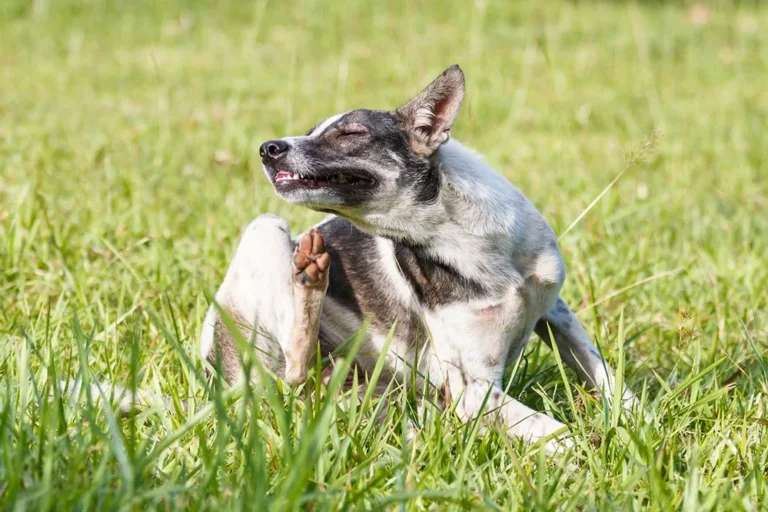
If your dog won't stop scratching, biting, or rubbing against the carpet, the real cause may not be "just fleas." Flea allergy dermatitis (FAD) is the most common skin allergy in dogs, and it only takes a handful of bites to set off a weeks-long itch storm. The good news: with the right combo of flea control, itch relief, and home treatment, you can usually get your dog comfortable again within a few weeks.
About 50% of dogs diagnosed with FAD need year-round, every-pet flea prevention, even in months when you can't see a single flea. That's because the allergy is triggered by proteins in flea saliva, not by the flea itself, so one sneaky bite from a flea you never spotted can keep the itching going. Get the diagnosis right, treat every pet in the home, and follow a structured plan, and you'll be ahead of the problem.
Let's start with the first question most owners ask: what's really going on under all that scratching?
Quick Answer
Flea allergy dermatitis in dogs is cured with a three-part plan: strict monthly flea control on every pet, targeted itch relief (steroids, Apoquel, or Cytopoint), and full home flea eradication. Most dogs show major improvement within 2 to 4 weeks. Year-round prevention is the only way to prevent relapse.
Why Flea Allergy Dermatitis Isn't Just a Flea Problem
Here's the part most people miss: a dog with FAD isn't just itchy because fleas are crawling on them. The itch comes from an overblown immune reaction to a protein in flea saliva. A normal dog might get a small red bump.
A dog with FAD gets a full-body inflammatory response from a single bite.
A few things make FAD different from a regular flea infestation:
- The allergic dog reacts to as few as 1 to 2 flea bites.
- Symptoms can persist for 2 weeks after the last bite.
- Fleas don't have to be visible. You can have a serious allergy flare with zero fleas on the dog that day.
- It mimics other conditions like food allergies, atopic dermatitis, mange, and skin infections.
This is why "I treated for fleas and it didn't work" is the most common phrase vets hear. The owner treated for fleas, but didn't treat the environment, the other pets, or the itch/inflammation. And the dog kept getting bitten in the meantime.
What FAD Actually Looks Like in Dogs (And What It's Not)
FAD has a classic look, but it can be sneaky. Here's what to look for at home, and what to rule out.
The Classic Hot Spots
Most FAD dogs develop a "waist-down" pattern. The back half gets it worst:
- Tail base and rump
- Lower back and hind legs
- Groin and inner thighs
- Belly and armpits
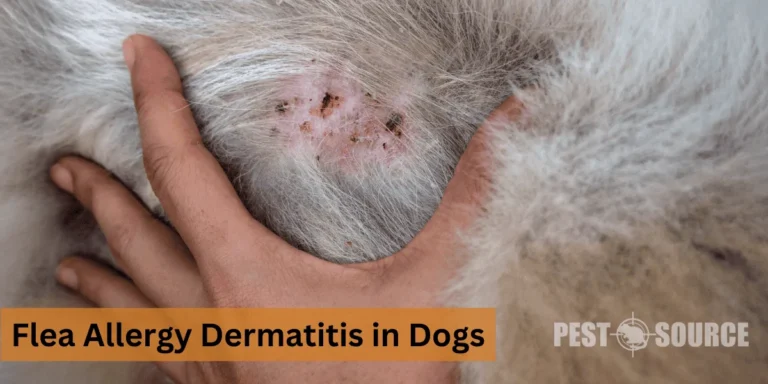
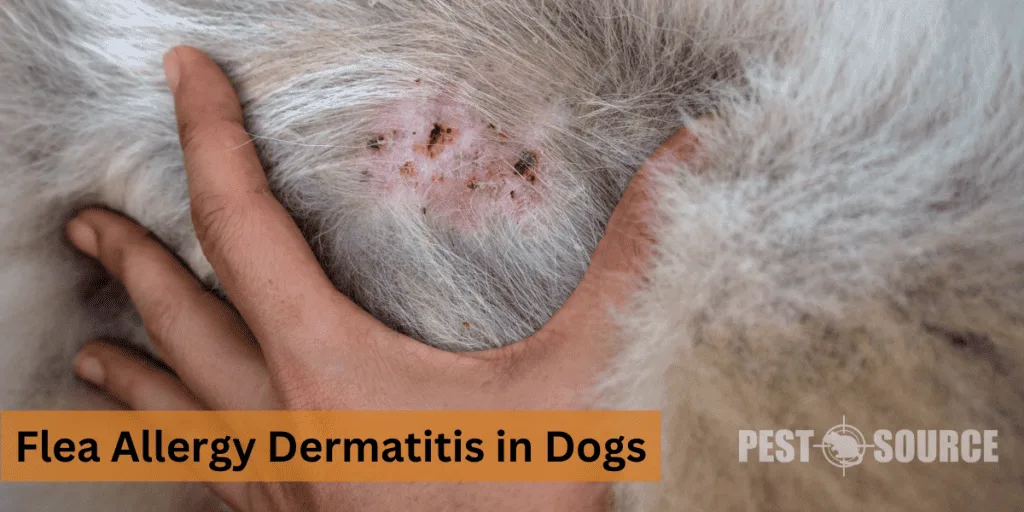
You'll see redness, hair loss, scabs, and sometimes "hot spots" (acute moist dermatitis) where the dog has scratched raw.
The Itchy Face and Ears
About 30% of FAD dogs also show itching around the head:
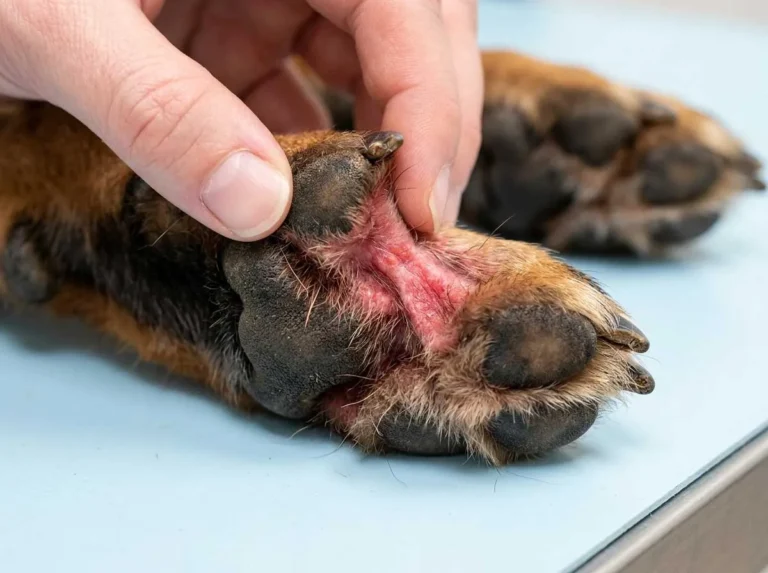
- Scratching ears, head shaking
- Face rubbing on furniture
- Secondary ear infections
What FAD Is NOT
These conditions share symptoms but need different treatment:
| Condition | How to tell it apart |
|---|---|
| Food allergy | Year-round, non-seasonal, often involves GI signs |
| Atopic dermatitis (environmental) | Worse in spring/fall, paws and face first |
| Sarcoptic mange | Sudden severe itch, often with crusty elbows/hocks |
| Bacterial pyoderma | Circular crusts, pustules, often secondary to FAD |
If you're not sure, your vet can run tests to confirm FAD, including a response-to-treatment trial where itching drops sharply after strict flea control.
The Core Causes: How Flea Saliva Triggers an Allergic Reaction
Flea allergy dermatitis is an immune-mediated hypersensitivity, mostly to antigens in flea saliva. The two main allergens are Cte f 1 and Cte f 2, both produced by the cat flea (Ctenocephalides felis), which is the species that infests most dogs.
When a flea bites, it injects saliva to keep blood flowing. In an allergic dog, the immune system treats that saliva like a serious threat. It pumps out IgE antibodies, which trigger mast cells in the skin.
Those mast cells release histamine and other inflammatory compounds, which is the actual cause of the itch.
A few key facts that change how you manage it:
- The reaction is delayed in some dogs (24 to 48 hours), making it hard to connect a bite to symptoms.
- A single female flea can bite hundreds of times in 24 hours.
- Once sensitized, the dog stays allergic for life. There is no "cure" for the allergy itself, only control of the trigger.
- Saliva from a flea you never see (because it jumped off or got groomed off) can still cause a full flare.
This is why management means killing every flea across the dog's environment, not just relying on what's visible.
Confirming the Diagnosis: What Your Vet Will Actually Do
There's no single "FAD test" that gives a yes/no answer. Diagnosis is a combination of history, exam findings, response to treatment, and ruling out look-alikes. Here's what to expect at a vet visit.
Step 1: The History Chat
Your vet will ask:
- Where on the body the itching is worst
- Whether it started suddenly or came on slowly
- Seasonal pattern (year-round is a clue for FAD)
- Flea control history (which products, how often, on which pets)
- Other pets in the home
- Whether you or your family have flea bites too
Step 2: The Physical Exam
The vet looks for the classic FAD pattern: hair loss and irritation at the tail base, lower back, hind legs, and belly. They'll also check ears and paws for signs of other allergies.
Step 3: Diagnostic Tests
Common tests to confirm FAD or rule out mimics:
- Flea combing to look for adult fleas or "flea dirt" (digested blood)
- Skin scrapings to rule out mites (Sarcoptes, Demodex)
- Cytology to check for secondary bacterial or yeast infections
- Response-to-treatment trial: strict flea control for 4 to 8 weeks, and see if itching resolves
- Intradermal allergy testing or serum IgE testing if needed
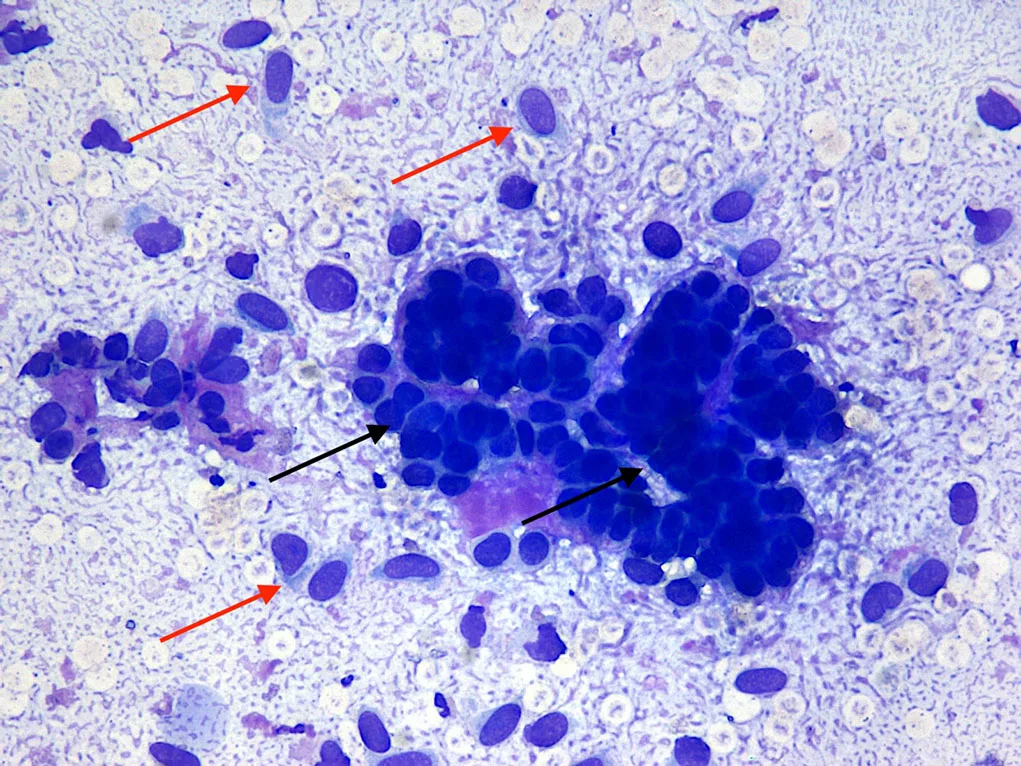
The goal is to confirm FAD and catch any secondary issues (pyoderma, yeast, ear infections) that need separate treatment. As of 2026, the American College of Veterinary Dermatology still considers flea control a diagnostic tool in suspected FAD cases, because a positive response to strict flea prevention is highly confirmatory.
Step-by-Step Treatment Plan for Flea Allergy Dermatitis
Treatment works in four parallel tracks. Skipping any one of them usually leads to relapse.
Step 1: Kill Every Flea on the Dog (The Right Way)
Every pet in the home, including indoor-only cats, must be on a vet-recommended monthly preventive. The isoxazoline class has become the gold standard, including afoxolaner (NexGard), fluralaner (Bravecto), sarolaner (Simparica Trio), and lotilaner (Credelio). These chewables kill fleas within 2 to 8 hours and last 30 to 90 days depending on the product.
Why not just use an older OTC product? Modern peer-reviewed studies (Veterinary Parasitology, 2020 to 2024) show widespread pyrethroid resistance in flea populations across the US and UK. Older topicals often underperform in field conditions.
Topical alternatives still work for some dogs:
- Selamectin (Revolution)
- Imidacloprid + permethrin (Advantix, dog only, toxic to cats)
- Fluralaner topical (Bravecto spot-on)
Collars: Seresto (imidacloprid + flumethrin) is effective for 8 months, useful for dogs that resist oral meds.
Step 2: Control the Itch and Break the Scratch Cycle
Stopping the itch is medical, not cosmetic. Itching causes self-trauma, which causes infection, which causes more itching. This loop is what makes FAD dogs miserable.
Three main options:
| Option | How it works | Speed of relief | Best for |
|---|---|---|---|
| Prednisone (steroid) | Suppresses immune/inflammatory response | Hours to 2 days | Short-term rescues, budget-friendly |
| Oclacitinib (Apoquel) | Janus kinase inhibitor, blocks itch signaling | 4 to 24 hours | Daily long-term maintenance |
| Lokivetmab (Cytopoint) | Monoclonal antibody, neutralizes itch cytokine | 1 to 3 days, lasts 4 to 8 weeks | Dogs that can't take oral meds |
Steroids work fast and cheap but have side effects with long use: increased thirst, panting, hunger, and immune suppression. Apoquel and Cytopoint are safer for chronic management but cost more per month.
Step 3: Treat Secondary Skin Infections
Around 60 to 70% of FAD dogs develop secondary infections from scratching:
- Bacterial pyoderma: needs 3 to 4 weeks of oral antibiotics (cephalexin, amoxicillin-clavulanate)
- Malassezia yeast overgrowth: needs antifungal therapy (ketoconazole, miconazole shampoos)
- Ear infections: topicals and sometimes oral treatment
If your vet diagnoses an infection, treating it is non-negotiable, because infected skin itches worse and won't heal.
Step 4: Eliminate Fleas From the Home and Yard
This is the part most owners skip, then wonder why FAD comes back. Adult fleas on the dog are only about 5% of the total flea population. The other 95% are eggs, larvae, and pupae in the environment.
A real home treatment plan:
- Wash all pet bedding in hot water (60°C / 140°F minimum)
- Vacuum daily for 14 days, especially under furniture and along baseboards
- Discard the vacuum bag or empty the canister outside after each use
- Use an environmental spray with an insect growth regulator (IGR) like methoprene or pyriproxyfen
- For severe infestations, hire a professional exterminator
For the yard:
- Mow regularly and remove debris
- Apply outdoor IGR sprays under decks and in shaded areas
- Use beneficial nematodes for a non-chemical option
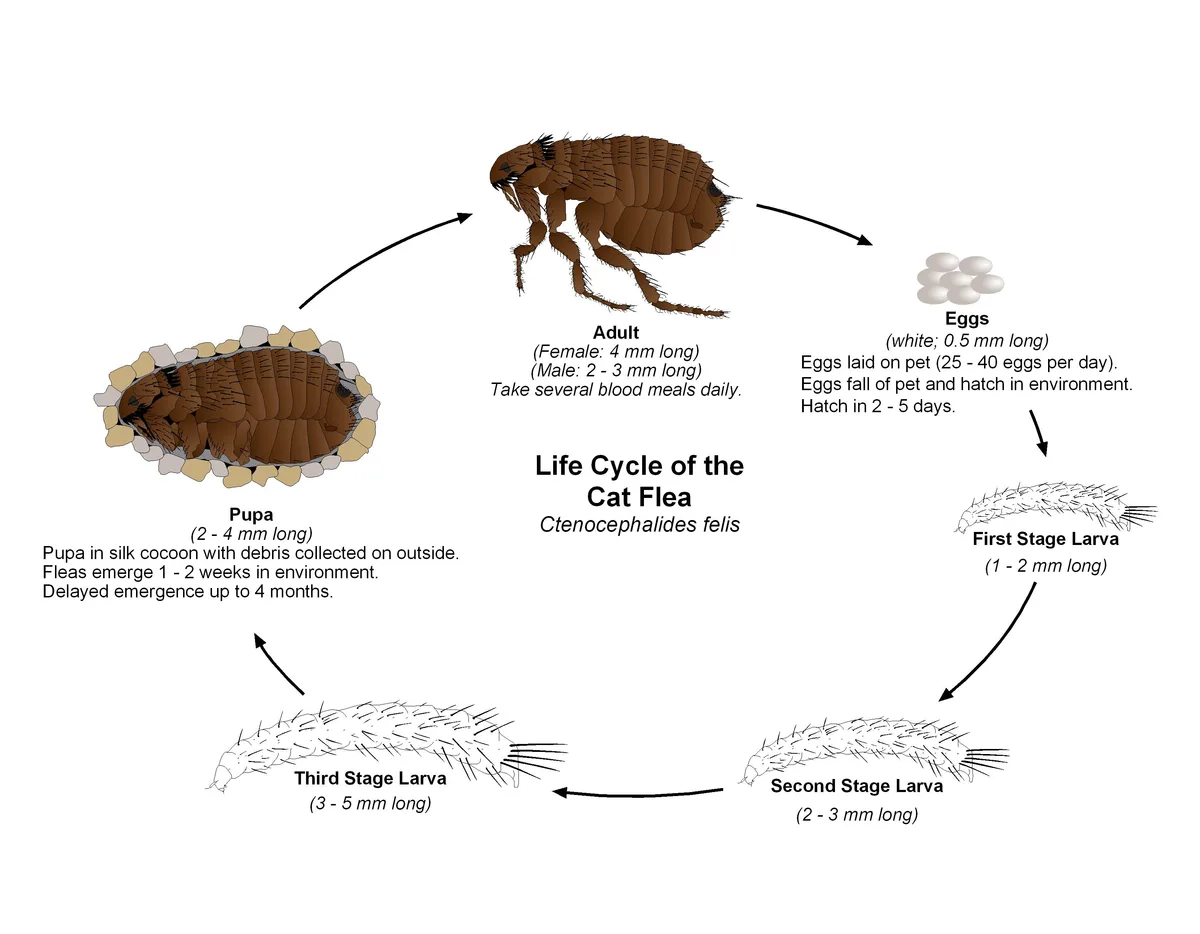
The full flea life cycle (egg to adult) takes 2 to 8 weeks depending on temperature and humidity, which is why environmental treatment needs to be repeated or sustained for at least 2 months.
Flea Prevention Showdown: Oral vs Topical vs Collars
Not all flea preventives are equal, and the wrong one can quietly fail on a high-risk dog. Here's how the three main formats compare.
| Format | Pros | Cons | Best for |
|---|---|---|---|
| Oral chews (isoxazolines) | Fast kill, waterproof, no residue | Must be given by mouth, some dogs vomit | Dogs that swim, multi-cat homes, severe FAD |
| Topical spot-ons | Easy, no oral dosing | Can wash off, residue on fur | Picky eaters, kids who pet the dog |
| Collars (Seresto) | 8 months of protection, low maintenance | Can come off, not great for swimming dogs | Owners who forget monthly dosing |
Most dermatologists now reach for an isoxazoline oral for confirmed FAD cases. Per Merck Animal Health prescribing information, Bravecto Chews kill 100% of fleas within 8 hours and protect for 12 weeks. For owners who forget doses, that long window matters.
Apoquel vs Cytopoint vs Steroids: Choosing the Right Itch Treatment
You've got three real options for breaking the scratch cycle. None is "best" in every situation. It depends on the dog, the budget, and the season.
- Steroids (prednisone): cheapest, works in hours, but long-term use brings panting, weight gain, and immune suppression. Use short term.
- Apoquel (oclacitinib): 16-hour itch relief, once daily after a 14-day induction. Best for dogs that need daily oral control.
- Cytopoint (lokivetmab): one injection lasts 4 to 8 weeks. Great for dogs that won't take pills or have other health issues.
The most common approach in 2026 is to use Cytopoint or Apoquel for maintenance, and keep a low-dose steroid on hand for severe flare days. The FDA-CVM requires a veterinary prescription for all three.
Common Mistakes That Keep FAD Coming Back
The pattern is so common it has a name in vet clinics: "recurrent FAD." It almost always comes down to one of these five mistakes.
- Treating only the dog you see scratching, while the cat carries fleas silently.
- Stopping flea prevention in winter "because it's cold."
- Using a generic OTC flea collar instead of a vet-recommended product.
- Skipping the home treatment, then wondering why the dog relapses.
- Stopping itch meds as soon as the scratching stops, before the skin barrier fully heals.
The last one is sneaky. FAD dogs often look "fixed" in 2 to 3 weeks, but the skin takes 4 to 6 weeks to fully recover. Stopping meds early invites a rebound flare.
Safety Considerations: Side Effects, Drug Warnings, and What to Avoid
FAD drugs are generally safe, but there are real warnings worth knowing.
Isoxazolines (NexGard, Bravecto, Simparica, Credelio) carry an FDA warning about seizures in dogs with a history of neurological problems. In healthy dogs, the seizure rate is very low. In dogs with a known seizure disorder, vets usually pick a different class.
Apoquel increases susceptibility to skin infections and, rarely, to certain tumors. Per Zoetis prescribing information, Apoquel should not be used in dogs under 12 months old or in dogs with serious infections.
Steroids should be tapered, not stopped cold, after more than 2 weeks of use. Abrupt withdrawal can trigger adrenal crisis.
Environmental sprays should be EPA-registered. Permethrin-based products are toxic to cats, even secondhand exposure. Multi-pet households should always check labels.
When in doubt, ask your vet. A 5-minute call can prevent a $500 ER visit.
Special Situations: Multi-Pet Homes, Puppies, and Seizure-Prone Dogs
Most FAD treatment plans assume a single, otherwise healthy adult dog. Real life is messier.
Multi-Pet Homes
If you have cats, they must be on a cat-safe preventive. Indoor cats still get fleas from dogs, visitors, and screens. Treat every pet every month, year-round, or the dog will keep reacting.
Puppies Under 8 Months
Most isoxazolines are labeled for dogs 8 weeks and older. For younger puppies, selamectin (Revolution) is often the safe pick. Steroids and Apoquel are typically off-limits for very young dogs.
Dogs with Seizure History
Skip the isoxazoline class. Use selamectin or a Seresto collar instead, paired with Cytopoint for itch control. Talk to your vet before starting anything.
Pregnant or Lactating Dogs
Most preventives haven't been tested in pregnant dogs. Selamectin is one of the few with broader safety data. Always confirm with your vet before dosing a pregnant bitch.
Realistic Timeline: How Long Until Your Dog Stops Itching
Most dogs show meaningful improvement within 2 weeks of starting strict flea control and itch meds. By week 4, scratching should drop by at least 70%. Full skin healing usually takes 6 to 8 weeks.
Costs, Rechecks, and Long-Term Maintenance
Expect a first-visit workup of $150 to $300, plus $30 to $80 per month for preventives. Itch meds run another $40 to $150 monthly. Rechecks are usually scheduled at 2 to 4 weeks, then every 3 to 6 months.
When It's Time to Call the Vet Back
Call your vet if itching hasn't improved in 4 weeks, if new sores or pus appear, if the dog stops eating, or if steroids cause extreme thirst or panting. Sudden severe itch also warrants a recheck, since it can signal a co-infection or a new allergy.
Flea Allergy Dermatitis FAQs
Can flea allergy dermatitis be cured permanently?
No, the allergy itself can't be cured. The hypersensitivity is lifelong. But full control is realistic with strict year-round flea prevention on all pets and consistent environmental management.
How long does a flea allergy flare-up last?
A flare can last 2 to 3 weeks after the last flea bite, even with treatment. Strict prevention shortens this. Visible skin healing takes 4 to 6 weeks after the itch is controlled.
Can I treat flea allergy dermatitis at home without a vet?
Mild cases sometimes improve with OTC flea control and environmental treatment. But because secondary infections are common, a vet visit is the safer move. Wrong meds can worsen the problem.
Is flea allergy dermatitis contagious to other dogs or people?
FAD itself isn't contagious. But the fleas that cause it are highly contagious between pets. People can get flea bites too, though they don't develop the same allergy.
What's the best flea preventive for dogs with severe FAD?
Vet consensus favors isoxazoline oral preventives (NexGard, Bravecto, Simparica, Credelio) for severe FAD. They kill fleas faster than older topicals and aren't affected by bathing or swimming.
Can a dog still have FAD in winter?
Yes. Indoor fleas survive year-round in heated homes. Year-round prevention is the standard recommendation from the Companion Animal Parasite Council for FAD-prone dogs.