
How much allergy meds for dogs: Easy guide
Figuring out how much allergy meds for dogs is one of those questions every pet parent runs into during spring, summer, or whenever the pollen cranks up. Most cases of itching, scratching, and irritated skin respond to common antihistamines at a predictable dose, but "predictable" only works if you weigh your dog first and double-check the active ingredient.
Per manufacturer specifications, the standard guideline for diphenhydramine (Benadryl) is 1 mg per pound of body weight, given every 8 to 12 hours. That single number decides whether the dose is therapeutic, useless, or dangerous, and it's why weighing your dog on a real scale matters more than guessing from the breed chart. Get that part right and you've already solved half the puzzle before we get into the rest.
Quick Answer
How much allergy meds for dogs depends on the drug and the dog's weight. Benadryl dosage is 1 mg per pound every 8 to 12 hours. Zyrtec dosage is about 0.5 mg per pound once daily.
Always confirm ingredients with your vet before dosing.
Why Getting the Dose Right Actually Matters
Antihistamines for dogs have a wide safety margin at the correct dose, but the gap between "helpful" and "harmful" gets thin fast when you eyeball weight or grab the wrong bottle. Dogs are far smaller than humans, and a single extra tablet can move a medium-sized dog from a therapeutic dose into a sedative overdose. Puppies, senior dogs, and dogs with liver or kidney disease have even less wiggle room.
Then there's the formulation problem. Liquid Benadryl often contains alcohol or xylitol, both of which are dangerous for dogs. Time-release tablets release too much active ingredient at once for a dog's metabolism to handle.
Combination cold and flu products pack in decongestants like pseudoephedrine, which is toxic to dogs even at low doses.
The real risk isn't that an antihistamine won't work. It's that the wrong product, the wrong dose, or the wrong assumption about a dog's size can land your dog in the emergency clinic. Aggregate veterinary reports consistently list antihistamine overdose from owner dosing as a recurring call type to the ASPCA Animal Poison Control Center, especially during peak allergy season.
This is why the rest of this guide walks through each common medication separately. The right dose for one dog isn't the right dose for another, and the wrong antihistamine can do more harm than the allergy itself.
Benadryl (Diphenhydramine) Dosage for Dogs by Weight
Benadryl is the most familiar name on the shelf, and the dosing math is straightforward once you know your dog's weight. The veterinary standard is 1 mg per pound, given every 8 to 12 hours. A 25 mg tablet works for a 25-pound dog.
A 50-pound dog gets two tablets. A 10-pound Chihuahua gets half of a children's chewable or a quarter of a standard tablet.
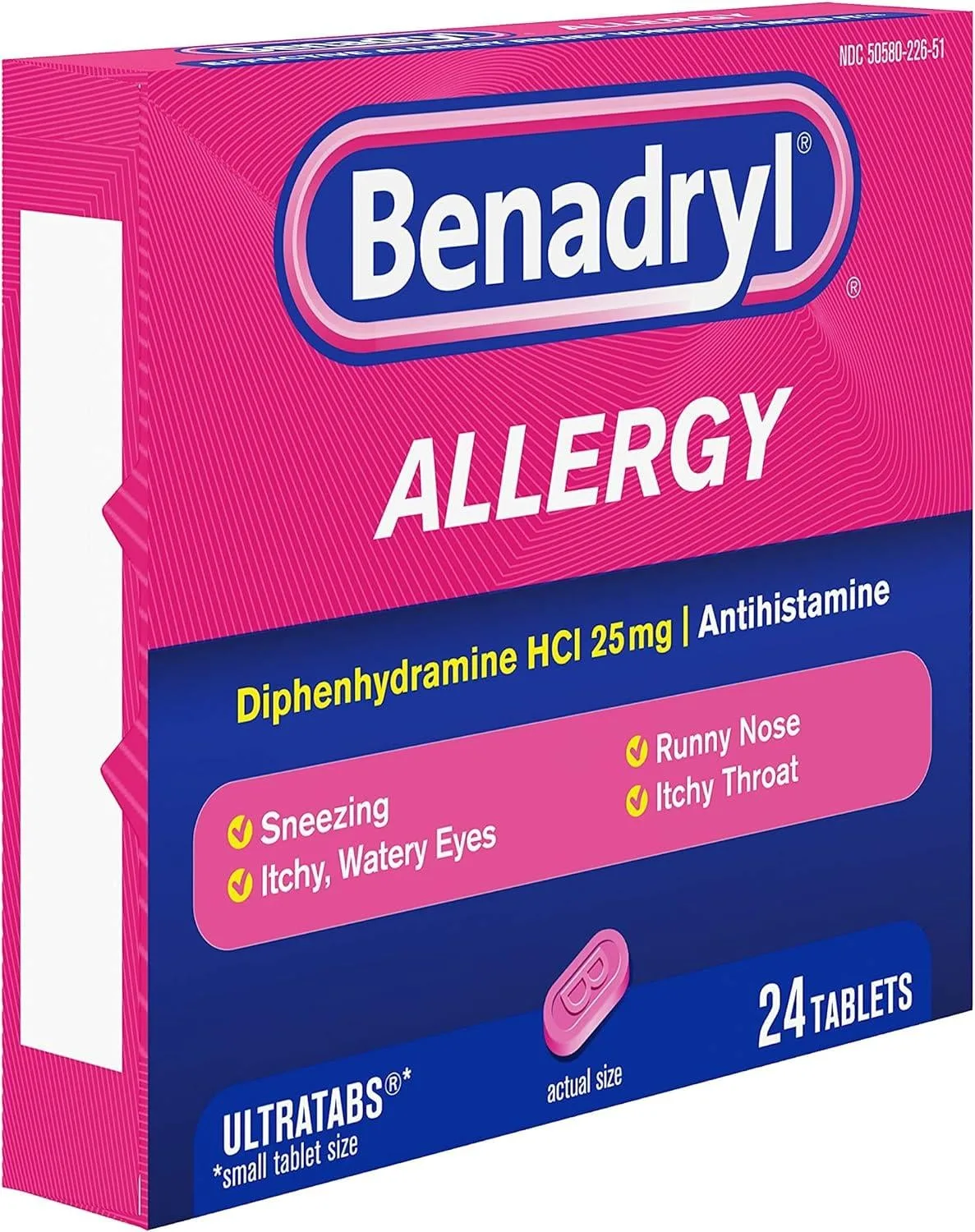
| Dog Weight | Benadryl Dose | Standard 25 mg Tablets | Frequency |
|---|---|---|---|
| 5 lbs | 5 mg | 1/4 tablet | Every 8 to 12 hours |
| 10 lbs | 10 mg | 1/2 tablet (or one 12.5 mg chewable) | Every 8 to 12 hours |
| 25 lbs | 25 mg | 1 tablet | Every 8 to 12 hours |
| 50 lbs | 50 mg | 2 tablets | Every 8 to 12 hours |
| 75 lbs | 75 mg | 3 tablets | Every 8 to 12 hours |
Three rules keep this safe. First, use plain diphenhydramine only. No added decongestants, no pain relievers, no sleep aids.
Second, never use the liquid form unless your vet confirms it's xylitol-free. Third, weigh your dog on a bathroom scale you can subtract yourself from, since most owners underestimate small dogs and overestimate large ones.
Benadryl works best when given at the first signs of an allergic reaction, not after the itching has been going on for weeks. Antihistamines block new histamine from binding, but they don't undo histamine that's already triggered inflammation. Earlier dosing means less scratching and a faster return to normal behavior.
Zyrtec (Cetirizine) Dosage and Safety for Dogs
Zyrtec has become the second-most-common recommendation from veterinarians for dogs who get drowsy on Benadryl or need once-daily dosing. The standard veterinary dose is 0.5 mg per pound, given once every 24 hours. That works out to roughly 1 mg per kilogram, which is the same number listed in the Merck Veterinary Manual's guidance on second-generation antihistamines.
A 10 mg tablet of Zyrtec covers a 20-pound dog. A 20-pound dog gets one full tablet. A 40-pound dog gets two tablets.
For very small dogs, the 5 mg chewable tablets make splitting easier. Cetirizine comes as a standalone product (plain Zyrtec) and in a "D" version with pseudoephedrine. Only the standalone version is safe.
The big advantage of Zyrtec over Benadryl is sedation. Second-generation antihistamines like cetirizine cross the blood-brain barrier much less than diphenhydramine, so most dogs stay alert. That's a real plus for working dogs, energetic breeds, and any dog who can't afford to sleep the day away.
The trade-off is cost. Zyrtec runs about 30 to 50 percent more per dose than generic diphenhydramine, and the savings add up for large dogs who need multiple tablets a day. For dogs with chronic environmental allergies, the convenience of once-daily dosing usually makes up for the higher price.
One more thing to check: Zyrtec dissolvable tablets contain artificial sweeteners. Most are fine, but some formulations include phenylalanine, which matters for dogs with PKU, a rare genetic condition. Standard tablets and the chewable form don't have this issue.
Claritin (Loratadine) and Allegra (Fexofenadine): What Works for Dogs
Claritin and Allegra round out the over-the-counter options that veterinarians actually recommend. Both are second-generation antihistamines, both come in once-daily dosing, and both produce less sedation than Benadryl. The difference between them is mostly about how your individual dog responds.
Claritin (loratadine) is dosed at roughly 0.25 mg per pound, or 0.5 mg per kilogram, once daily. A 10 mg tablet covers a 40-pound dog. Smaller dogs need a half tablet or the 5 mg chewable.
Loratadine takes about an hour to kick in and stays active for up to 24 hours. It's a solid choice for seasonal pollen allergies, especially in dogs who get a dry cough or runny eyes along with itching.
Allegra (fexofenadine) is dosed similarly, at around 1 to 2 mg per kilogram, once daily. Fexofenadine is the least sedating option on this list, which makes it a go-to for dogs who need to stay sharp. The downside is that it has to be given on an empty stomach for best absorption, which complicates things for dogs on timed meals or with sensitive digestion.
Here's how the three main OTC antihistamines stack up:
| Medication | Dose per lb | Frequency | Sedation | Best For |
|---|---|---|---|---|
| Benadryl (diphenhydramine) | 1 mg | Every 8 to 12 hours | Moderate to high | Acute reactions, nighttime relief |
| Zyrtec (cetirizine) | 0.5 mg | Every 24 hours | Low | Chronic itching, daily maintenance |
| Claritin (loratadine) | 0.25 mg | Every 24 hours | Low | Pollen season, dogs sensitive to sedation |
| Allegra (fexofenadine) | 0.5 mg | Every 24 hours | Very low | Working dogs, sensitive stomachs |
Notice the pattern: as you move down the list, sedation drops but cost rises. Generic diphenhydramine is the cheapest option per dose. Brand-name Allegra is the most expensive.
Most pet owners end up keeping two on hand: Benadryl for emergencies and a second-generation antihistamine for daily use.
Hydroxyzine and Other Vet-Prescribed Antihistamines
When over-the-counter options don't cut it, veterinarians often reach for hydroxyzine. It's a first-generation antihistamine, similar to Benadryl, but stronger and available by prescription only. The standard dose is 1 mg per pound, given every 8 to 12 hours, which puts it in the same range as diphenhydramine but with a longer track record for treating severe atopic dermatitis in dogs.
Hydroxyzine shines in two situations. First, dogs who don't respond to Benadryl or Zyrtec sometimes respond to hydroxyzine because the receptor binding profile is slightly different. Second, dogs with intense itching that disrupts sleep benefit from hydroxyzine's sedative effect, which doubles as a side benefit for dogs who scratch through the night.
Chlorpheniramine is another prescription option vets occasionally use, especially for small dogs who need a very precise dose. It comes in a 4 mg tablet that splits cleanly into halves and quarters, which makes dosing a 5-pound toy breed much easier than trying to split a 25 mg Benadryl into fifths.
There are real downsides to consider. Both hydroxyzine and chlorpheniramine can cause dry mouth, urinary retention, and constipation. Dogs with glaucoma, prostate enlargement, or certain heart conditions should not take them.
That's why these drugs sit behind a prescription: the dosing isn't hard, but the contraindications require a vet's eye.
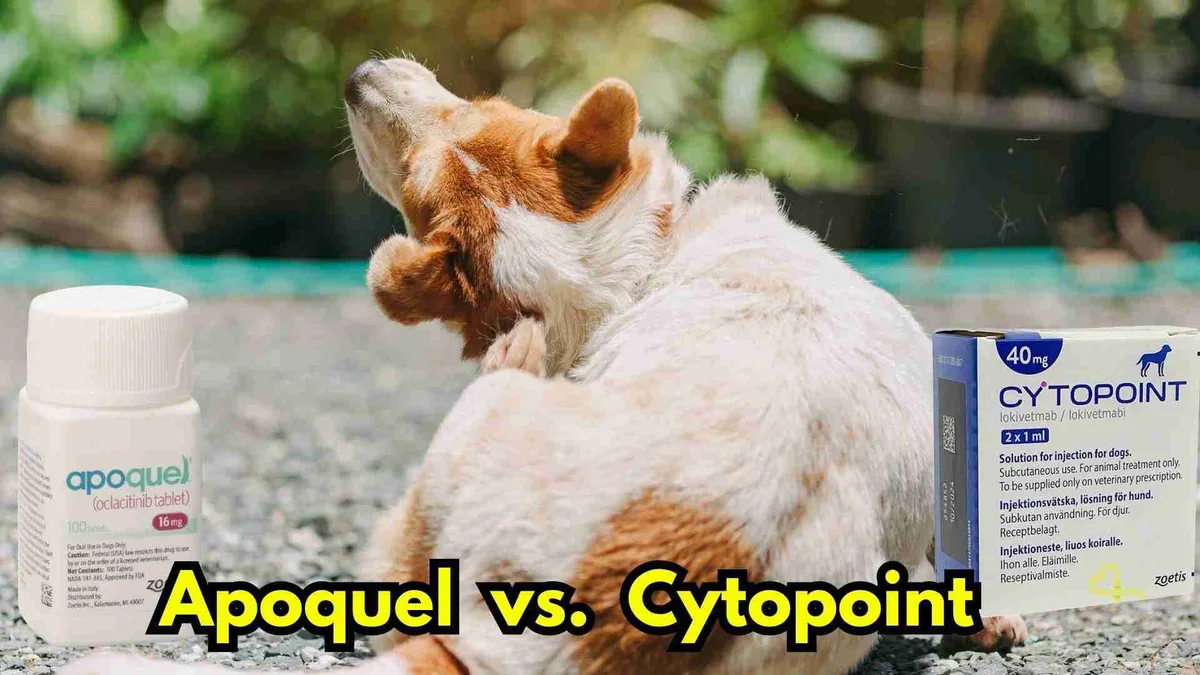
Apoquel (oclacitinib) deserves its own mention here because it's not an antihistamine at all. It's a Janus kinase inhibitor that blocks the itch signal at the cellular level. Apoquel works within 4 hours and is dosed by weight in the 0.4 to 0.6 mg per pound range, twice daily for the first two weeks, then once daily for maintenance.
It's a prescription-only drug and costs more than OTC antihistamines, but for dogs with severe environmental allergies, it's often the difference between constant misery and a normal life.
Cytopoint (lokivetmab) takes a different approach entirely. It's a monoclonal antibody injection given at the vet clinic, and one shot lasts 4 to 8 weeks. It doesn't work for food allergies, but for atopic dermatitis triggered by environmental allergens, Cytopoint has one of the highest success rates reported in veterinary dermatology research.
OTC Allergy Meds vs. Apoquel vs. Cytopoint: How They Compare
Choosing between these options usually comes down to severity, budget, and how often you're willing to give medication. Antihistamines work for roughly 30 percent of dogs with environmental allergies, according to aggregate clinical reviews. That's a useful starting point but not a great result if your dog is in the other 70 percent.
Apoquel works for about 80 percent of dogs with atopic dermatitis and works fast, often within the first day. The cost runs $1.50 to $2.50 per tablet depending on dose, which adds up to $50 to $90 per month for most dogs. Cytopoint costs $50 to $200 per injection depending on dog size, but a single shot covers a month or more, so the monthly cost often works out comparable to Apoquel.
Here's the practical breakdown:
- Mild, seasonal itching: Start with Zyrtec or Claritin. Low cost, low side effects, easy to stop.
- Moderate itching that doesn't respond to OTC: See your vet about Apoquel or hydroxyzine. Expect a prescription exam and bloodwork before starting.
- Severe, year-round atopic dermatitis: Cytopoint injections offer the best quality-of-life result and the lowest ongoing hassle.
- Acute allergic reaction (hives, swelling, sudden facial puffiness): Benadryl at the correct dose, then straight to the vet. Severe reactions need more than an antihistamine.
The FDA's Center for Veterinary Medicine maintains the approved labeling for both Apoquel and Cytopoint, including weight-based dosing tables and known side effect profiles. If your vet recommends one of these drugs, that's the authoritative place to verify the official dosing chart.
What to Check Before Giving Your Dog Any Allergy Pill
Before you open the bottle, walk through this checklist. Every item matters, and skipping one is how dosing accidents happen.
- Weigh your dog on a scale you trust. Don't guess. Ten pounds up or down changes the dose by a full tablet for many medications.
- Read the active ingredient list, not just the brand name. "Allergy relief" products often combine drugs that are dangerous for dogs.
- Check the inactive ingredients. Xylitol, acetaminophen, ibuprofen, and pseudoephedrine are common offenders in human medications.
- Confirm the formulation. Immediate-release tablets are correct. Time-release, extended-release, and "24-hour" capsules are not.
- Call your vet if your dog takes other medications. Antihistamines interact with sedatives, certain antibiotics, and some heart drugs.
If any of those checks fail, don't give the medication. Call your vet, the ASPCA Animal Poison Control Center at 888-426-4435, or your nearest emergency clinic. The cost of a phone call is always less than the cost of treating a reaction.
Common Mistakes Dog Owners Make With Allergy Meds
Most dosing errors fall into a handful of patterns. Knowing them ahead of time makes them easier to avoid.
Using the wrong product is the most common mistake. Owners reach for "Benadryl" and grab Benadryl-D, which contains pseudoephedrine. Or they pick up a children's cold medicine because it's liquid and easier to dose.
Both situations lead to emergency vet visits.
Estimating weight instead of measuring it is the second most common mistake. A dog that "looks like 50 pounds" might be 38 pounds or 62 pounds. That range changes the Benadryl dose from 1.5 tablets to 2.5 tablets.
Use a scale.
Doubling up on antihistamines is the third. If Zyrtec isn't working, adding Benadryl doesn't make it work better. It stacks the side effects, especially sedation and dry mouth.
If one antihistamine fails, switch to a different class or see your vet.
Giving medication to the wrong dog is more common than people admit. In multi-dog households, the small dog gets the large dog's dose because they look similar in low light. Label doses by dog name and keep separate pill containers.
Last, owners often stop the medication too soon. Antihistamines work best when given daily through the allergy season, not just on bad days. Skipping doses resets the blood levels and reduces effectiveness.
When Antihistamines Aren't Enough: Red Flags to Watch For
Antihistamines handle mild to moderate itching. They don't handle emergencies, and they don't handle severe skin infections. Knowing the difference can save your dog's life.
Red flags that need same-day veterinary care:
- Facial swelling, especially around the muzzle or eyes
- Hives that spread quickly across the body
- Vomiting or diarrhea within an hour of exposure to a known allergen
- Difficulty breathing or excessive drooling
- Sudden collapse or extreme lethargy
These signs point to anaphylaxis or a severe allergic reaction. Benadryl might help briefly, but epinephrine, steroids, and IV support are the real treatments. Get to a vet immediately.
Red flags that mean the antihistamine plan isn't working:
- Constant scratching that interrupts sleep
- Open sores, hot spots, or hair loss
- Skin that smells yeasty or infected
- Itching that doesn't improve after two weeks of correct dosing
In these cases, the underlying problem is usually more than histamine-driven. It might be a skin infection, a food allergy, or severe atopic dermatitis that needs Apoquel, Cytopoint, or a medicated shampoo plan. A vet visit moves the treatment forward instead of just continuing to wait.
Puppy, Senior, or Sick Dog? Special Dosing Considerations
Puppies under 6 months metabolize drugs differently than adults. Their liver enzymes are still developing, and the margin for error is smaller. Most vets recommend avoiding OTC antihistamines in puppies unless the dosing is confirmed in person.
For puppies with confirmed environmental allergies, Apoquel has been studied down to 12 months of age and is FDA-approved for that range, making it a more predictable option.
Senior dogs present the opposite challenge. Their liver and kidney function are slower, which means drugs stay in the system longer. Dose adjustments of 25 to 50 percent are common for dogs over 10 years old.
Starting at the low end of the dose range and watching for sedation or confusion is the safer approach.
Dogs with chronic conditions need extra caution:
- Kidney disease: Antihistamines are mostly cleared by the liver, but metabolite buildup can still stress sick kidneys.
- Liver disease: Dose reduction is often necessary. Diphenhydramine and hydroxyzine both rely heavily on liver metabolism.
- Heart disease: Some antihistamines increase heart rate. Veterinary guidance is essential before starting.
- Pregnancy or nursing: Antihistamines cross into milk. Puppies exposed to sedating antihistamines through nursing can become overly drowsy.
If your dog falls into any of these categories, treat any dosing decision as a conversation with your vet, not a home calculation.
Side Effects and What to Do If You Give Too Much
The most common side effect of Benadryl in dogs is drowsiness, which is actually useful for dogs who scratch at night. Zyrtec, Claritin, and Allegra cause less sedation. Other side effects include dry mouth, urinary retention, mild vomiting, and reduced appetite.
These usually pass within 12 hours as the drug clears the system.
If you suspect an overdose, the signs escalate quickly:
- Extreme sedation or agitation
- Tremors or seizures
- Rapid heart rate
- Hyperthermia (high body temperature)
- Dilated pupils
Don't wait for these to pass. Call your vet or the ASPCA Animal Poison Control Center at 888-426-4435. Have the medication bottle, the dose you gave, the time you gave it, and your dog's current weight ready.
Treatment often includes activated charcoal, IV fluids, and monitoring for heart rhythm changes.
A Simple Allergy Med Checklist Before You Dose
Run through this list every single time, even if you've given the medication before. It takes 60 seconds and prevents the most common accidents.
- I weighed my dog today and confirmed the weight in pounds.
- I checked the active ingredient and confirmed it's the right drug.
- I confirmed the formulation is plain and immediate-release.
- I calculated the dose in mg based on weight, not tablet count.
- I verified no xylitol, pseudoephedrine, acetaminophen, or ibuprofen.
- I checked the time since the last dose (at least 8 hours for Benadryl, 24 hours for Zyrtec).
- I have my vet's number saved in my phone in case of reaction.
If you can check all seven, you're dosing as safely as you can at home. If any one fails, pause and verify before giving the pill.
Talk to Your Vet First: Our Final Recommendation
As of 2026, the veterinary consensus on OTC antihistamines for dogs hasn't shifted: they're a useful first step for mild environmental allergies, they work for about a third of dogs, and they're safest when the dose is calculated from a real weight on a real scale. Benadryl at 1 mg per pound every 8 to 12 hours remains the most familiar option. Zyrtec at 0.5 mg per pound once daily is the gentler, lower-sedation alternative.
For anything beyond mild seasonal itching, our recommendation is straightforward: talk to your vet before you start. The phone call costs nothing, takes five minutes, and prevents the most common errors. Bring the bottle of whatever you plan to give, your dog's current weight, and a short list of any other medications your dog takes.
That conversation will either confirm the dose you've already calculated or point you toward something more effective.
Antihistamines, Apoquel, and Cytopoint all have their place. The right choice depends on your dog's specific symptoms, severity, and health history. A short conversation with your vet locks in the safest path forward.
Natural Remedies That Pair With Allergy Meds
Medication handles the histamine response, but the skin barrier needs separate support. Omega-3 fatty acid supplements from fish oil reduce inflammatory cytokines and improve coat quality over 6 to 8 weeks. Oatmeal baths soothe inflamed skin without drugs, and weekly use cuts down on the scratching cycle between medication doses.
Cool water rinses after walks rinse off pollen before it absorbs into the skin. HEPA air filters in the rooms where your dog sleeps reduce airborne allergen load measurably. None of these replace an antihistamine, but together they often let you drop to a lower medication dose.
When to Skip the Meds and Go Straight to the Vet
Skip OTC dosing entirely if your dog has facial swelling, hives spreading across the body, or vomiting right after eating something new. Those are anaphylaxis signs. They don't wait for Benadryl to kick in, and they can become life-threatening within minutes.
Also skip home dosing if your dog is on other prescription medications. Drug interactions with antihistamines are real, and your vet needs to confirm the combination is safe before you add anything new.
How Long Dogs Typically Stay on Allergy Medication
Seasonal allergy dogs usually need daily meds for 6 to 12 weeks during peak pollen months. Year-round environmental allergy dogs often stay on medication indefinitely, with vet check-ins every 6 months to adjust the dose and monitor organ function.
If your dog needs daily allergy medication for longer than 3 months, prescription options like Apoquel or Cytopoint usually become more cost-effective than OTC antihistamines and provide better long-term itch control.
The Wrap-Up on Dosing Confidence
Weigh your dog, pick the right active ingredient, and match the milligram count to your dog's pound weight. That's the entire formula. Everything else in this guide protects those three steps from going wrong.
Save your vet's number, keep a current weight on file, and store each dog's medication in a labeled container so the right pill goes to the right dog at the right time.
Frequently Asked Questions
How much Benadryl can I give my dog?
The standard veterinary dose is 1 mg per pound of body weight, given every 8 to 12 hours. A 25-pound dog gets one 25 mg tablet. Use only plain diphenhydramine without added decongestants or pain relievers, and avoid liquid formulations unless your vet confirms they're xylitol-free.
Can I give my dog Zyrtec every day?
Yes, Zyrtec is commonly prescribed for daily use during allergy season. The standard dose is 0.5 mg per pound once every 24 hours. For dogs with year-round environmental allergies, daily Zyrtec is often safer than intermittent Benadryl because of the lower sedation profile and simpler dosing schedule.
What's the best allergy medicine for dogs?
There's no single best option for every dog. For mild seasonal itching, Zyrtec or Claritin work well with minimal side effects. For moderate to severe atopic dermatitis, Apoquel and Cytopoint deliver better results but require a veterinary prescription.
The right choice depends on severity, budget, and your dog's overall health.
Can I give my dog Claritin and Benadryl together?
No, combining two antihistamines doesn't improve allergy relief and increases the risk of side effects like excessive sedation, dry mouth, and urinary retention. If one antihistamine isn't working, switch to a different class or talk to your vet about prescription options like Apoquel or hydroxyzine.
How long does it take for allergy meds to work in dogs?
Most oral antihistamines begin working within 30 to 60 minutes. Benadryl often shows effects faster, while Zyrtec, Claritin, and Allegra may take up to 2 hours. Full benefit for chronic itching usually appears after 1 to 2 weeks of consistent daily dosing.
If no improvement shows after 14 days, the medication likely isn't the right fit.
What can I give my dog for allergies without a prescription?
Plain diphenhydramine (Benadryl), cetirizine (Zyrtec), loratadine (Claritin), and fexofenadine (Allegra) are all available over the counter. Always use the standalone formula, never the combination cold or sinus versions. For puppies, pregnant dogs, or dogs with other health conditions, a vet visit is the safest path before starting any medication.





One Comment