Best Cat Food For Irritable Bowel Syndrome: Top Picks
The best cat food for irritable bowel syndrome supports easy digestion, steady bowel movements, and your veterinarian’s dietary plan.
Your cat eats breakfast, naps by the window, and then makes another trip to the litter box. Loose stools, gas, vomiting, and a poor appetite can turn an ordinary day into a stressful one. This can be hard to manage in a busy American home, especially when work, family, and vet visits fill the schedule. Food may play a big role in your cat’s comfort. However, not every sensitive stomach food works for every cat. I put together these product reviews to help you compare digestive care options, understand their limits, and choose a sensible next step. I also explain why veterinary advice matters when your cat may have irritable bowel syndrome.
🏆 Top 3 Products

Hill’s Prescription Diet i/d Digestive Care Dry Cat Food
Its veterinary digestive care focus makes it the strongest option to discuss with a veterinarian for a cat that needs a specialized diet.
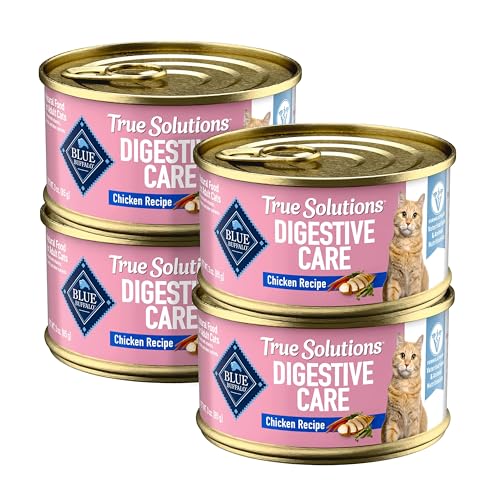
Blue Buffalo True Solutions Digestive Care Wet Cat Food
Its wet texture and prebiotic fiber make it worth considering for adult cats that need extra digestive support.

Purina Cat Chow Gentle Sensitive Stomach and Skin
It offers an everyday sensitive stomach formula for owners seeking an accessible over-the-counter food option.
28-Day Low-FODMAP IBS Recipe Plan

The 28-Day Plan for IBS Relief is a cookbook for people, not cats. It focuses on low-FODMAP meals and offers 100 recipes designed around a human digestive diet plan. The book may look relevant when you search for the best cat food for irritable bowel syndrome because it contains the same IBS term. However, its recipes do not provide the nutrition cats need. I would not use any of its meal ideas as a substitute for commercial cat food.
This book can still have value in a home where a person also deals with digestive problems. Its meal plan may help that person organize food choices and build a routine. But cats have very different nutritional needs from humans. They need animal-based nutrients, including taurine, and a balanced diet made for their species. A low-FODMAP human recipe does not meet those needs. I include this product because it appears in the supplied product list, but it is not a treatment or food choice for a cat with IBS.
✅ Pros
- ✔ Provides 100 human low-FODMAP recipes.
- ✔ Offers a structured 28-day meal plan.
- ✔ May help people organize their own IBS-friendly meals.
- ✔ Gives readers several meal ideas instead of a single diet plan.
- ✔ Can help households plan meals around human digestive needs.
- ✔ May encourage better meal planning and food tracking.
- ✔ Clearly focuses on human digestive health rather than general cooking.
⚠️ Cons
- ✖ It is not cat food and must never replace a cat’s balanced diet.
- ✖ Its recipes do not meet feline nutrient requirements.
- ✖ It does not treat feline IBS, IBD, diarrhea, or vomiting.
- ✖ The low-FODMAP approach is designed for people, not cats.
- ✖ It does not provide veterinary feeding instructions.
- ✖ It cannot replace a veterinary examination or a cat-specific diet plan.
My Recommendation
I would not recommend this cookbook for feeding a cat with irritable bowel syndrome. It is a human cookbook, so it does not belong in a list of actual cat foods. If you have IBS and also care for a cat with digestive trouble, it may be useful for your own meal planning. Keep your cat’s diet separate. Ask your veterinarian about a complete feline diet that fits your cat’s symptoms, age, weight, and medical history. Do not copy a human low-FODMAP recipe for your pet. The best cat food for irritable bowel syndrome must meet feline nutrition standards, and this book cannot do that.
| Best For | Why |
|---|---|
| People with IBS | It provides human low-FODMAP recipes and a planned meal routine. |
| Human meal planning | The recipe collection offers several ideas for organizing meals. |
| Cat owners researching IBS | It may explain the human diet concept, but it is not suitable for feline feeding. |
Purina Cat Chow Gentle Sensitive Stomach Food
Purina Cat Chow Gentle Sensitive Stomach and Skin Dry Cat Food is an everyday food made for cats with sensitive stomachs and skin. Its recipe includes farm-raised turkey and is designed to provide easily digestible nutrition. It also contains omega-6 fatty acids to support healthy skin and a shiny coat. The 13-pound bag makes it a practical option for homes that prefer buying dry food in larger amounts. I like that it focuses on two common concerns: digestion and skin care.
This food may suit an adult cat with mild digestive sensitivity, but it is not a prescription treatment for feline IBS or inflammatory bowel disease. That difference matters. A cat with occasional soft stools may have different needs from a cat with long-term diarrhea, weight loss, or repeated vomiting. A veterinarian should check ongoing symptoms before you change the diet. If your vet approves this formula, introduce it slowly and watch your cat’s stool, appetite, and energy. It may be a useful everyday option, but it should not replace a medical diet when one is needed.
✅ Pros
- ✔ Designed for cats with sensitive stomachs and skin.
- ✔ Uses farm-raised turkey as part of its recipe.
- ✔ Offers a dry food format that is easy to store.
- ✔ The 13-pound bag may suit multi-cat homes.
- ✔ Includes omega-6 fatty acids for skin and coat support.
- ✔ Provides an option for owners who prefer dry cat food.
- ✔ May be easier to manage than frequent small wet food purchases.
- ✔ Can fit into a regular feeding routine when the cat tolerates it.
- ✔ Offers an over-the-counter option for mild food sensitivity.
⚠️ Cons
- ✖ It is not a prescription diet for diagnosed feline IBS or IBD.
- ✖ It is a dry food, so it provides less moisture than wet food.
- ✖ It may not suit cats with a turkey or other ingredient allergy.
- ✖ Its suitability depends on the cat’s individual digestive condition.
- ✖ A large bag may be wasteful if your cat refuses the recipe.
- ✖ It does not replace a veterinary examination for chronic symptoms.
- ✖ It may not meet the needs of cats that require a special elimination diet.
My Recommendation
I would consider Purina Cat Chow Gentle for an adult cat with mild stomach sensitivity when a veterinarian agrees that a standard sensitive stomach food is suitable. Its turkey recipe and digestive care focus make it a reasonable option to discuss. It may also appeal to owners who prefer dry food and want a larger bag for regular feeding. Still, do not assume that a sensitive stomach label means the food can manage every cause of diarrhea or vomiting. If your cat has diagnosed IBS-like symptoms, ask your vet whether this recipe fits the treatment plan. The best cat food for irritable bowel syndrome depends on the cause of the symptoms, not just the product label.
| Best For | Why |
|---|---|
| Cats with mild stomach sensitivity | Its recipe is designed for cats with sensitive stomachs. |
| Dry food households | The dry format is easy to store and serve. |
| Owners buying larger bags | The 13-pound size may suit homes with regular dry food routines. |
Hill’s Prescription Diet i/d Digestive Care
Hill’s Prescription Diet i/d Digestive Care Dry Cat Food is the most medically focused option in this product list. It is a chicken recipe made for digestive care and comes in a 4-pound bag. The formula is designed for cats that need nutritional support for digestive problems. Its prescription diet status makes veterinary guidance an important part of choosing and using it. I would place it ahead of ordinary sensitive stomach foods when a veterinarian has recommended a specialized digestive diet.
Cats with ongoing bowel problems may need more than a food that simply claims to be gentle. They may need a diet selected for their specific symptoms and medical needs. Hill’s i/d may be suitable in some digestive care plans, but it is not a guaranteed cure for IBS or inflammatory bowel disease. The cause of the symptoms still matters. A cat with parasites, food intolerance, pancreatitis, or another illness may need a different plan. I would ask the veterinarian how long to feed this food, whether to use it alone, and when to review the results.
✅ Pros
- ✔ Designed specifically for feline digestive care.
- ✔ Comes from a veterinary diet range.
- ✔ Provides a focused option for cats with digestive problems.
- ✔ The chicken recipe gives owners a clear recipe type to discuss with a vet.
- ✔ The 4-pound bag can be useful when starting a new diet.
- ✔ May fit a veterinarian-led nutrition plan.
- ✔ Offers a more specialized choice than a general sensitive stomach food.
- ✔ Can help owners follow a consistent feeding plan.
- ✔ May be worth discussing for cats with recurring digestive symptoms.
⚠️ Cons
- ✖ It is not suitable for every cat with IBS-like symptoms.
- ✖ Veterinary guidance is important before use.
- ✖ The chicken recipe may not suit cats that need to avoid chicken.
- ✖ The dry format may not suit cats that need more moisture in their diet.
- ✖ It does not guarantee that chronic diarrhea or vomiting will stop.
- ✖ The 4-pound bag may not be the most economical size for every household.
- ✖ Cats with other medical conditions may need a different diet.
My Recommendation
Hill’s Prescription Diet i/d is my leading product choice from this list for a cat whose veterinarian has recommended a specialized digestive care diet. Its main strength is its veterinary diet focus. That makes it more relevant to a cat with ongoing digestive problems than a general-purpose sensitive stomach food. However, I would not start it on my own just because a cat has loose stools. A proper diagnosis helps determine whether this formula is suitable. Ask your vet about the feeding period, daily portion, and whether treats or other foods should stop during the trial. For owners comparing the best cat food for irritable bowel syndrome, this is the first product I would discuss with a veterinary professional.
| Best For | Why |
|---|---|
| Veterinarian-directed digestive care | It is a specialized veterinary diet made for digestive support. |
| Cats needing a focused food trial | A 4-pound bag offers a practical starting size when the vet approves it. |
| Cats with recurring digestive concerns | It may fit a planned nutrition approach for ongoing digestive problems. |
Blue Buffalo True Solutions Digestive Care Wet Food
Blue Buffalo True Solutions Digestive Care Chicken Wet Cat Food offers a wet food option for adult cats. Each can contains 3 ounces, and this listing comes as a four-pack. The recipe features chicken and clinically proven prebiotic fiber, according to the supplied product description. It is also described as veterinarian formulated. These features make it an interesting choice for owners who want to add a digestive support food in a small serving size.
Wet food can help increase a cat’s daily water intake because it contains more moisture than dry food. This can be useful for cats that do not drink much from a bowl. Prebiotic fiber may also support gut bacteria, although the effect depends on the full recipe and the individual cat. This food is not a prescription IBS treatment. Cats with food allergies, chronic bowel inflammation, or serious digestive symptoms may need a different diet. I would treat this product as an option to discuss with a vet, not as a replacement for a proper diagnosis.
✅ Pros
- ✔ Provides a wet food option for adult cats.
- ✔ Contains prebiotic fiber for digestive support.
- ✔ Uses a chicken recipe that is easy for owners to identify.
- ✔ Comes in convenient 3-ounce portions.
- ✔ The four-pack can help owners try a small quantity first.
- ✔ Wet food supplies more moisture than dry food.
- ✔ May suit cats that prefer soft food textures.
- ✔ Is described as veterinarian formulated.
- ✔ Can be considered as part of a vet-approved feeding plan.
⚠️ Cons
- ✖ It is not a prescription diet for diagnosed IBS or IBD.
- ✖ Chicken may not suit cats with a chicken sensitivity or allergy.
- ✖ A four-pack may not be enough for a long-term feeding plan.
- ✖ Some cats may not like the taste or texture.
- ✖ Prebiotic fiber does not treat every cause of digestive disease.
- ✖ Wet food needs proper storage after opening.
- ✖ It may not suit cats that need a specific veterinary elimination diet.
My Recommendation
I would consider Blue Buffalo True Solutions Digestive Care for an adult cat that prefers wet food and needs a food with added prebiotic fiber. Its small cans make it easier to test acceptance before buying a larger quantity. The moisture content is another useful point for cats that eat little dry food and drink less water. Still, this product should not be treated as a cure for irritable bowel syndrome. If your cat has chronic diarrhea, blood in the stool, repeated vomiting, or weight loss, arrange a veterinary visit first. Ask whether a chicken-based wet recipe is suitable for your cat’s needs. Among the best cat food for irritable bowel syndrome options, this one stands out as a wet food choice for general digestive support.
| Best For | Why |
|---|---|
| Cats that prefer wet food | Its soft wet texture may be easier to serve to cats that avoid dry kibble. |
| Cats needing more dietary moisture | Wet food contributes water through each meal. |
| Owners testing a new food | The four-pack offers a smaller purchase than a large case. |
Almo Nature Digestive Support Chicken and Pumpkin
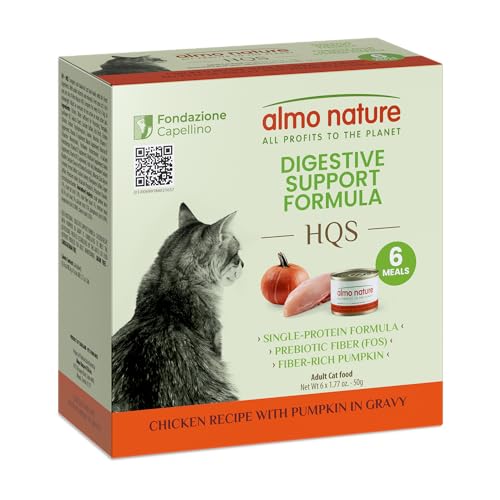
Almo Nature Supportive Formulas Digestive Support is a wet cat food made with shredded chicken and pumpkin in gravy. Each can contains 1.77 ounces, and this listing includes six cans. Its small format may appeal to owners who feed several small meals throughout the day. Chicken provides the main named animal ingredient, while pumpkin is included in the recipe. The gravy texture may also appeal to cats that prefer moist food over dry kibble.
Pumpkin often appears in discussions about cat digestion because it contains fiber. Fiber can affect stool quality, but more fiber is not always better for every cat. The type and amount of fiber matter, as does the reason for the digestive problem. This food may be worth discussing with a veterinarian for a cat that tolerates chicken and needs a wet food option. However, it should not replace a complete veterinary diet when a cat has diagnosed IBS, IBD, or another chronic condition. Check the full nutritional statement to confirm whether it is complete and balanced for your cat’s life stage before using it as a main food.
✅ Pros
- ✔ Offers a wet food format with gravy.
- ✔ Features shredded chicken for a recognizable texture.
- ✔ Includes pumpkin as part of the recipe.
- ✔ Provides six small cans in one case.
- ✔ The 1.77-ounce size may suit cats that eat small meals.
- ✔ May appeal to cats that dislike dry kibble.
- ✔ Adds moisture to the cat’s meal routine.
- ✔ Can provide variety when a veterinarian approves the recipe.
- ✔ Offers a digestive support option for owners comparing wet foods.
⚠️ Cons
- ✖ It is not a prescription treatment for IBS or IBD.
- ✖ Chicken may not suit cats with chicken allergies or sensitivities.
- ✖ Pumpkin and fiber do not solve every digestive problem.
- ✖ Small cans may cost more per ounce than larger packages.
- ✖ Some cats may dislike shredded textures or gravy.
- ✖ Owners should verify its complete and balanced nutritional status.
- ✖ It may not suit cats that need a strict elimination diet.
My Recommendation
Almo Nature Digestive Support may be a useful wet food to consider for cats that enjoy shredded chicken and gravy. The small cans can help with portion control, especially when a cat eats several small meals. Pumpkin also gives this recipe a different ingredient profile from the other foods in this list. However, I would not assume that pumpkin makes it suitable for every cat with IBS. Some cats need a specific fiber level, a hydrolyzed protein diet, or another veterinary nutrition plan. Ask your vet whether this food is complete for daily feeding and whether its ingredients fit your cat’s needs. It is a possible digestive support choice, not a proven cure.
| Best For | Why |
|---|---|
| Cats that like gravy | The shredded chicken comes in a moist gravy format. |
| Small meal routines | The 1.77-ounce cans offer smaller serving portions. |
| Owners considering pumpkin-based food | Pumpkin is part of the recipe and provides dietary fiber. |
Final Verdict: Which Should You Buy?
Hill’s Prescription Diet i/d Digestive Care is my top choice from this list for cats that need a specialized digestive diet approved by a veterinarian. Blue Buffalo True Solutions is a useful wet food option to discuss for cats that prefer moisture-rich meals, while Purina Cat Chow Gentle may suit some cats with mild stomach sensitivity. Almo Nature offers another wet food choice with chicken and pumpkin. The human low-FODMAP cookbook is not suitable for cats and should never be used as pet food.
Choosing the best cat food for irritable bowel syndrome starts with finding the cause of your cat’s symptoms. Work with your veterinarian, introduce approved food changes slowly, and track your cat’s progress. The right diet can support better digestion, but proper diagnosis and regular care matter just as much.
FAQs Of best cat food for irritable bowel syndrome
Q What is the best cat food for irritable bowel syndrome?
Q Can wet cat food help a cat with IBS?
Q Should I feed my cat pumpkin for IBS?
Q How long does it take for a new cat food to improve digestion?
Q When should I take my cat to the vet for IBS symptoms?