Most adult cats need roughly 5 to 9 ounces of wet cat food per day, but the right amount depends on calories, body weight, age, and activity.
If you share your home with a cat in the United States, you may have noticed how many wet food choices fill the shelves at your local pet store. Small three-ounce cans, larger five-and-a-half-ounce cans, and family-size containers can make daily portions hard to judge. The right amount is not simply the number of cans printed on the package. Your cat’s calorie needs and the food’s energy content matter more than the size of the container.
A healthy adult cat may eat around 5 to 9 ounces of wet food each day as a rough starting point when the food provides a typical amount of energy per ounce. Some cats need less, while larger, more active, pregnant, or nursing cats may need more. Kittens have different needs because they are growing, and cats with certain health problems may need a special feeding plan.
The most useful method is to estimate your cat’s daily calorie needs, check the calories listed on the food label, and divide the daily calorie target by the calories per ounce. Then adjust the portion with your veterinarian’s help if your cat gains weight, loses weight, or seems unusually hungry. This guide explains how to make that calculation, compare common can sizes, and build a practical feeding routine.
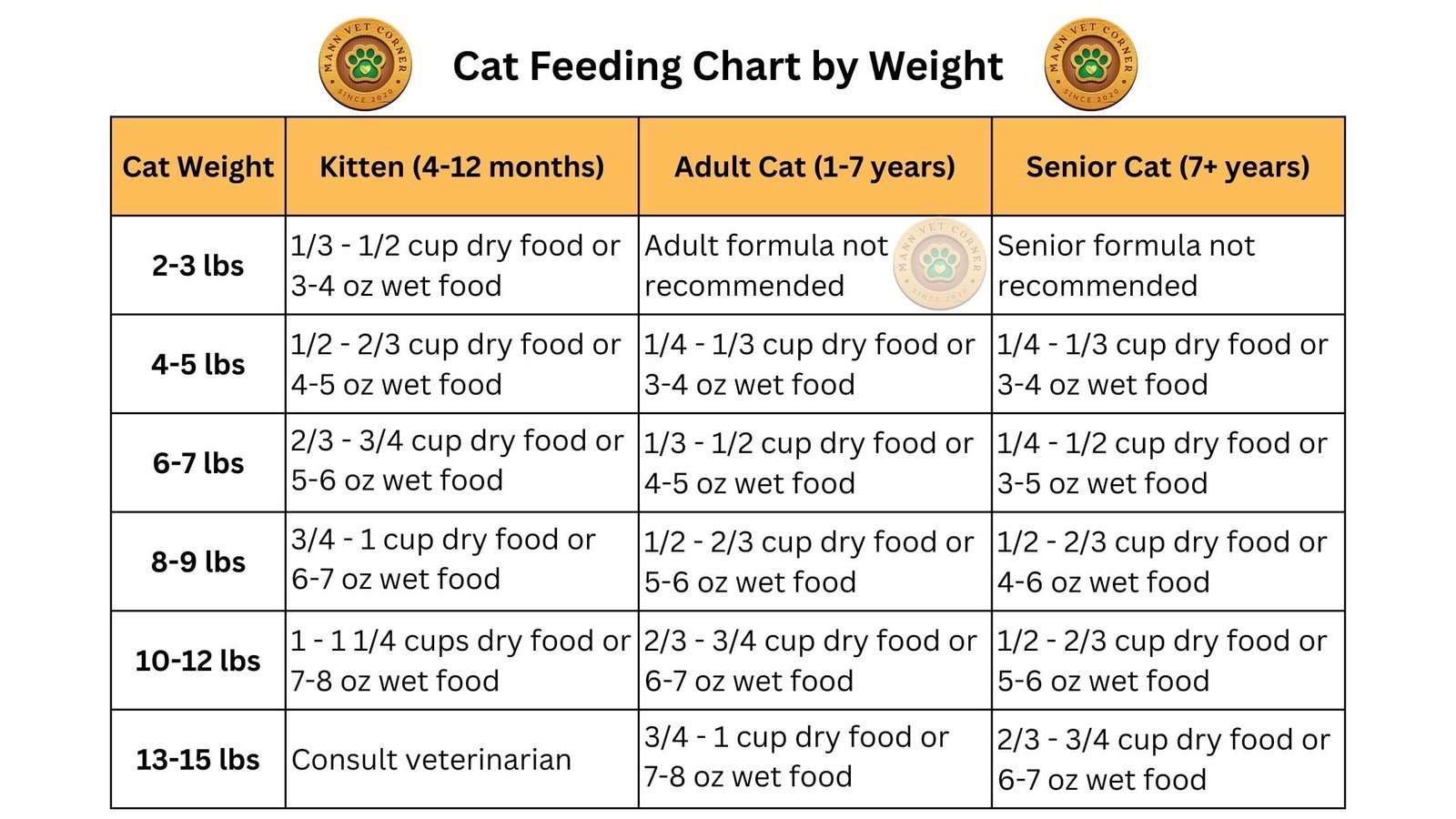
Source: mannvetcorner.com
How Many Ounces of Wet Cat Food Should a Cat Eat Daily?
Many adult cats eat about 5 to 9 ounces of wet food per day, but this range is only a starting point. A small cat that needs few calories may eat less, while a large or highly active cat may need more. The number also changes with the food itself because some wet foods contain more calories per ounce than others.
For example, a three-ounce can with 90 calories provides 30 calories per ounce. Another three-ounce can with 60 calories provides only 20 calories per ounce. A cat eating the second food would need more ounces to get the same amount of energy.
A cat’s weight alone does not give a complete answer. Age, body condition, activity, reproductive status, and health all affect daily needs. A veterinarian can help set a suitable calorie target, especially if your cat is overweight, underweight, or living with a medical condition.
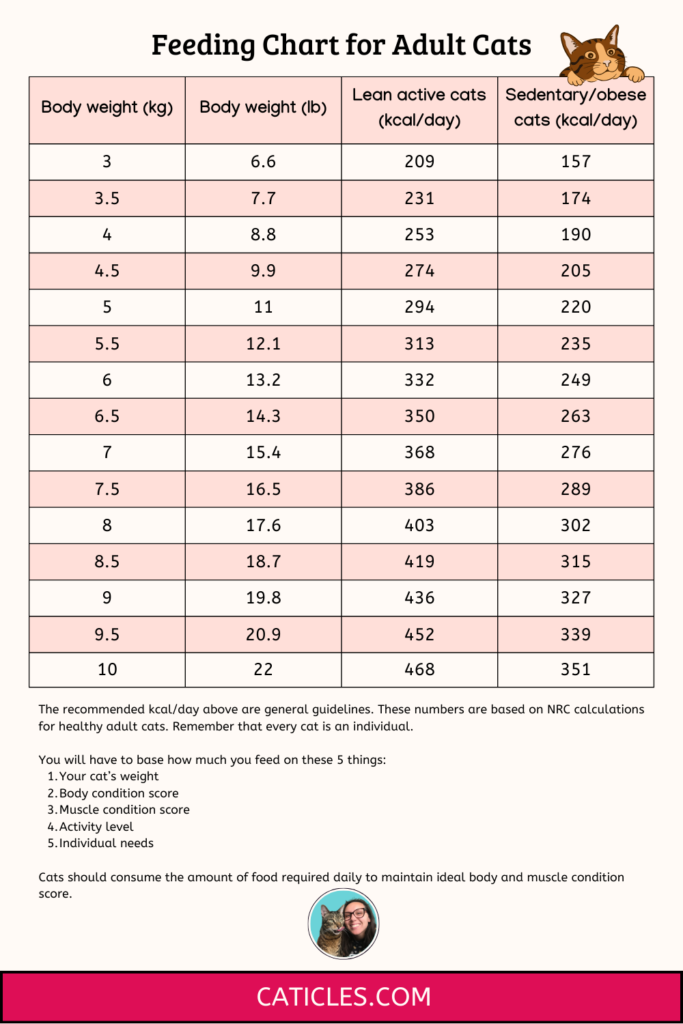
Source: The Spruce Pets
Small adult cats
A smaller cat may need fewer total calories and fewer ounces, depending on its ideal weight and the food’s energy density.
Average adult cats
A healthy adult cat may fall within the rough 5-to-9-ounce range, but the label and calorie calculation should guide the actual serving.
Large or active cats
A larger or more active cat may need a larger portion, although body condition is more useful than size alone.
Cats with special needs
Kittens, pregnant or nursing cats, and cats with health problems may need a different plan based on age, growth, or medical care.
Why There Is No Single Correct Ounce Amount
Wet food varies in moisture, protein, fat, and total calories. Even two foods sold in similar cans can deliver different amounts of energy. That is why a feeding chart based only on weight may be useful for an initial estimate but cannot replace the label and your cat’s individual needs.
Think of calories as the fuel your cat needs each day and ounces as the size of the fuel container. A small container of calorie-rich food can provide as much energy as a larger container of a less calorie-dense food. The goal is to supply enough energy without consistently feeding more than your cat needs.
Check calories per can
Look for the total calories in the entire container, often listed as kcal per can or kcal per pouch.
Check the serving guidance
Use the manufacturer’s feeding instructions as a starting point, then account for your cat’s body condition and other food.
How to Calculate Your Cat’s Daily Wet Food Portion
You can estimate a daily portion with three pieces of information: your cat’s appropriate daily calorie target, the calories in the food, and the food’s weight in ounces. If your veterinarian has already provided a calorie goal, use that figure. Otherwise, ask for help if you are unsure about your cat’s ideal weight or feeding needs.
A common veterinary starting point for estimating resting energy needs is 70 multiplied by body weight in kilograms raised to the power of 0.75. This is an estimate of resting energy requirement, not a final feeding prescription. A cat’s actual daily needs may be higher or lower depending on activity, age, neuter status, body condition, and health.
For everyday feeding, a veterinarian may provide a practical daily calorie target that already accounts for these factors. Once you have that target, converting calories to ounces is simple. Keep the calculation consistent and use the calories listed for the exact food you serve.
Source: petMD
Step 1: Find the daily calorie target
Use a veterinarian’s recommendation when available. If you are estimating, treat the result as a starting point rather than a fixed requirement.
Step 2: Read the food label
Find the number of kilocalories in a can, pouch, or measured amount. In pet food labeling, kcal is the usual unit for food energy.
Step 3: Calculate calories per ounce
Divide the calories in the container by its net food weight in ounces, provided both figures refer to the same container.
Step 4: Convert calories to ounces
Divide the daily calorie target by the calories per ounce to estimate the total ounces needed for the day.
Step 5: Subtract other food
Account for treats, dry kibble, toppers, and any other calorie sources before deciding how much wet food to serve.
A Simple Wet Cat Food Calculation
Suppose your veterinarian recommends 240 calories per day, and the wet food contains 90 calories in a three-ounce can. Divide 90 by 3 to get 30 calories per ounce. Then divide 240 by 30 to get 8 ounces of that food per day.
This is a hypothetical example, not a recommendation for every cat. If your cat also eats 30 calories of treats or dry food, only 210 calories remain for the wet food. At 30 calories per ounce, that would equal 7 ounces of wet food for the day.
If the label lists calories per kilogram or per 100 grams rather than per can, use the food’s stated energy value and an accurate weight measurement. Avoid assuming that every can of the same size contains the same calories.
Daily calorie target
240 kcal in this example.
Food energy
90 kcal per three-ounce can, or 30 kcal per ounce.
Daily food amount
8 ounces with no other calories, or 7 ounces after allowing 30 kcal for other food.
Wet Cat Food Feeding Chart by Weight
A weight-based chart can help you begin planning portions, but it should not be treated as a universal feeding prescription. Cats of the same weight may have different calorie needs, and wet foods vary widely in energy density. The figures below are illustrative estimates based on an assumed daily energy range and food containing 30 calories per ounce.
The calorie ranges are broad planning examples, not verified requirements for every cat in each weight group. Use your cat’s ideal weight when discussing a feeding plan, particularly if your cat is overweight. Your veterinarian may recommend a different target based on body condition, age, and health.
Source: centralcountiesservices.org
A 5-pound adult cat
A hypothetical target of 150 to 200 calories would equal about 5 to 6.7 ounces of food containing 30 calories per ounce.
An 8-pound adult cat
A hypothetical target of 180 to 240 calories would equal about 6 to 8 ounces of the same food.
A 10-pound adult cat
A hypothetical target of 200 to 280 calories would equal about 6.7 to 9.3 ounces of the same food.
A 12-pound adult cat
A hypothetical target of 220 to 320 calories would equal about 7.3 to 10.7 ounces of the same food.
A 15-pound adult cat
A hypothetical target of 250 to 380 calories would equal about 8.3 to 12.7 ounces of the same food, if that weight is appropriate for the individual cat.
How to Use the Chart Without Overfeeding
Start by identifying your cat’s ideal weight rather than assuming its current weight is healthy. A cat that weighs 15 pounds because it carries excess body fat should not automatically receive the same feeding plan as a lean, large-framed cat of the same weight.
Next, compare the chart’s estimate with the manufacturer’s instructions and any calorie target provided by your veterinarian. If the figures differ, ask why before making a large change. The chart is a way to understand portion size, not a reason to ignore a tailored feeding plan.
Weigh portions
Use a kitchen scale or a clearly marked measuring container to keep servings consistent.
Monitor body condition
Check whether the ribs are easy to feel under a light layer of fat and whether the waist is visible from above.
Adjust carefully
Make changes based on trends in weight and body condition, not one meal or one day of appetite.
How Many Cans of Wet Cat Food Per Day?
The number of cans depends on the container size, the calories in the food, and your cat’s daily target. A cat that needs 240 calories and eats food with 90 calories per three-ounce can would need about 2.67 cans if wet food supplies all its calories. That works out to 8 ounces per day.
Larger cans may reduce packaging and make portioning easier, but they do not automatically provide a better serving size. Check the label for the actual calorie count, then divide the daily total into meals. If you mix wet food with kibble, the number of cans will be lower because the dry food supplies some of the calories.
Source: portal.posgradount.edu.pe
Three-ounce cans
At 90 calories per can, three cans provide 270 calories. Two cans provide 180 calories.
Five-and-a-half-ounce cans
If a can contains 165 calories, one can provides 165 calories and two provide 330 calories.
Pouches and trays
Package weight and calorie content vary, so count the calories rather than assuming one pouch equals one can.
How to Divide a Can Between Meals
If your cat needs 8 ounces of wet food per day, you can divide that amount into two four-ounce meals or four two-ounce meals. Both schedules provide the same total amount, but the best schedule depends on your cat’s appetite, household routine, and any veterinary advice.
For a cat that eats only part of a can at a time, measure the remaining food and refrigerate it promptly in a covered container. Follow the manufacturer’s storage instructions and discard food that has been left out too long or shows signs of spoilage.
Two meals
A simple option for households that feed in the morning and evening.
Three or four meals
Smaller meals may suit cats that prefer frequent feeding or struggle with large portions.
How Much Wet Food Should Kittens Eat?
Kittens need food to support rapid growth, tissue development, and play. Their energy needs per pound are often higher than those of adult cats, so an adult feeding chart is not suitable for them. The correct amount depends on age, body weight, growth rate, and the calories in a complete kitten food.
Young kittens often do best with several small meals throughout the day. As they grow, their meal schedule can change, but they still need a diet labeled as complete and balanced for growth or all life stages. Adult maintenance food may not supply the nutrient balance a growing kitten needs.
Very young kittens that are not yet weaned require special care and may need kitten milk replacer rather than ordinary wet cat food. Orphaned kittens and kittens that fail to gain weight should receive prompt guidance from a veterinarian or an experienced animal care professional.
Source: qcatsj.blogspot.com
Before weaning
Use an appropriate kitten milk replacer when needed, and follow veterinary guidance for feeding amounts and frequency.
During weaning
Introduce suitable kitten food gradually as the kitten becomes ready to eat solids.
Growing kittens
Offer several meals and monitor growth, appetite, and stool quality.
Approaching adulthood
Discuss the timing of the transition to adult food with your veterinarian, based on the kitten’s development and diet.
Why Kitten Portions Need Close Monitoring
A kitten that is growing steadily may need its portions increased over time. A sudden loss of appetite, poor weight gain, repeated vomiting, or persistent diarrhea can signal a problem that feeding more food will not solve.
Weighing a young kitten regularly helps reveal whether its feeding plan is meeting its needs. Keep a record of weight and food intake, and seek veterinary advice if growth slows or the kitten seems weak.
Track growth
Use regular weight checks and follow a veterinarian’s advice about expected progress.
Choose complete kitten food
Check the label for a nutritional adequacy statement that supports growth.
How Much Wet Food Should Senior Cats Eat?
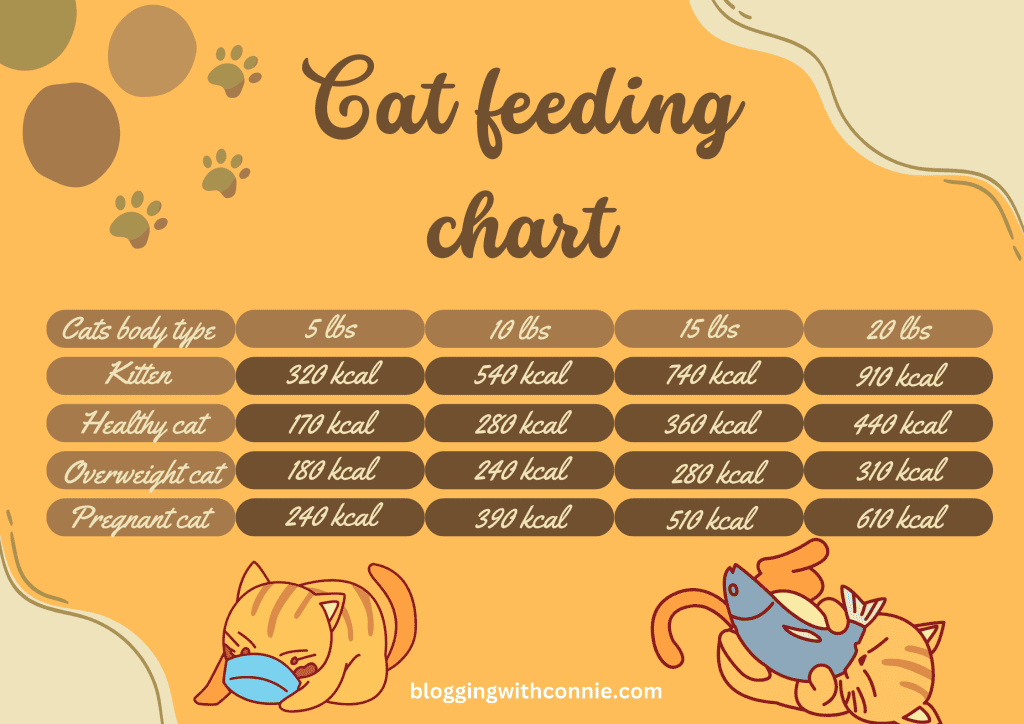
Senior cats do not all need less food. Some become less active and need fewer calories, while others lose muscle or have health issues that affect appetite and nutrient needs. Age alone is not enough to set a daily ounce amount.
A senior cat’s feeding plan should support a healthy body condition and preserve muscle. A cat that is losing weight despite eating normally may need a medical check rather than a larger serving alone. Dental pain, kidney disease, thyroid disease, digestive problems, and other conditions can change eating habits or body weight.
Wet food can be useful for cats that prefer its texture or need help taking in moisture, but the best diet depends on the cat’s health. If a veterinarian recommends a therapeutic diet, ask how much to feed and whether treats or other foods could interfere with the plan.
Source: bloggingwithconnie.com
Watch for muscle loss
A cat may lose muscle even when its weight appears stable, so regular body condition checks matter.
Track appetite changes
A sudden change in food intake deserves attention, especially in a cat with a chronic condition.
Schedule health checks
Discuss unexplained weight loss, weight gain, thirst changes, or eating problems with a veterinarian.
When a Senior Cat Needs a Different Feeding Plan
A senior cat may need a more calorie-dense food if it struggles to maintain weight, or a carefully measured calorie plan if it is overweight. Neither approach should be chosen from age alone.
If your cat has a condition that affects the kidneys, blood sugar, digestion, or other body systems, follow the treatment team’s dietary advice. A general feeding chart cannot account for all of these needs.
Avoid abrupt diet changes
Unless a veterinarian directs otherwise, introduce a new food gradually to reduce digestive upset and improve acceptance.
Ask about food texture
A softer texture may help some cats with dental discomfort, but mouth pain still needs a veterinary assessment.
How Much Wet Food Should an Indoor Cat Eat?
Indoor cats may need fewer calories than cats that spend substantial time outdoors, but this is not true for every cat. An indoor cat’s needs depend on its size, age, muscle mass, play habits, and individual metabolism. The safest plan is to measure portions and track body condition instead of using indoor status as the only guide.
Indoor life can reduce opportunities for natural movement, especially in a small apartment or a home where food is always available. Interactive play, climbing areas, puzzle feeders, and short activity sessions can help support a healthy routine. Exercise does not replace portion control, but both can contribute to weight management.
If your indoor cat gains weight over several weeks, review all sources of calories. Free-fed kibble, table scraps, treats, and food offered by other family members can add up quickly. Make changes in measured steps rather than sharply cutting the cat’s food.
Source: spice.alibaba.com
Measure each meal
Use a consistent amount instead of filling the bowl by eye.
Include treats
Count treat calories as part of the daily total and keep extras modest.
Encourage activity
Offer safe play and movement opportunities suited to the cat’s age and ability.
What If Your Cat Still Seems Hungry?
Begging does not always mean a cat needs more food. Some cats learn that vocalizing brings extra meals, while others may be hungry because their portions are too small or the food does not fit their needs.
Check the daily calorie calculation, meal timing, and body condition before adding food. If your cat has a sudden increase in appetite along with weight loss, unusual thirst, or changes in urination, contact a veterinarian because these signs can point to a medical issue.
Use a steady schedule
Offer meals at predictable times and avoid giving extra food every time your cat begs.
Review recent changes
Consider a new food, increased activity, medication, or a health change if appetite has shifted.
Can You Feed a Cat Only Wet Food?
Yes, many cats can eat wet food as their sole diet if it is complete and balanced for their life stage and meets their individual needs. Check the nutritional adequacy statement on the package rather than judging the food by its flavor, texture, or ingredient list alone.
Some canned foods are intended for supplemental feeding only. They may work as a small part of a balanced diet but should not be the only food unless a veterinarian confirms that the overall plan is suitable. This distinction is especially important for kittens, pregnant cats, and cats with special dietary needs.
Wet food contains a high proportion of water, which contributes to total fluid intake. However, cats still need access to fresh, clean drinking water. Wet food does not replace veterinary care for dehydration, urinary problems, or other health concerns.
Source: centralcountiesservices.org
Read the adequacy statement
Look for wording that says the food is complete and balanced for the intended life stage.
Check special-purpose products
Treats, toppers, and supplemental foods may not provide all nutrients when fed alone.
Keep fresh water available
Provide clean water even when most of the diet comes from wet food.
Can You Mix Wet Food and Dry Food?
Yes. Mixed feeding can work well when you count the calories from both foods. For example, if a cat’s daily target is 240 calories and dry food supplies 60 calories, the remaining 180 calories can come from wet food.
If the wet food contains 30 calories per ounce, those 180 calories equal 6 ounces of wet food. This calculation keeps the total energy intake in view rather than treating the wet food and dry food as separate allowances.
Count every source
Include kibble, treats, toppers, supplements with calories, and table food.
Keep portions consistent
Measure both foods so you can tell whether the plan is meeting your cat’s needs.
How Often Should You Feed Wet Cat Food?
Many adult cats do well with two or more meals per day. Two meals, one in the morning and one in the evening, may fit a busy household, while three or four smaller meals can suit cats that prefer frequent portions. The most important point is to divide the planned daily amount rather than adding food each time you serve a meal.
Kittens often need more frequent meals because they are growing and have smaller stomachs. Cats with medical conditions may also need a specific schedule, especially if food timing relates to medication or blood sugar management. Follow the veterinarian’s instructions when timing matters for treatment.
Use meal times to check appetite and behavior. If your cat repeatedly leaves food, eats much more than usual, or refuses meals, record the change and look for other symptoms. A sudden or persistent change may need veterinary attention.
Source: The Spruce Pets
Morning and evening
Divide the daily portion into two measured meals.
Several smaller meals
Split the daily portion into three or four servings if this suits your cat and household.
Automatic feeders
Use a suitable feeder only if it safely handles the food and keeps portions and storage conditions under control.
How Long Can Wet Cat Food Stay Out?
Wet food should not sit at room temperature for long periods. As a practical safety rule, remove uneaten food after about two hours at normal room temperature, and sooner in a hot room. Follow the product’s instructions because room conditions and formulation can affect handling.
Refrigerate unused portions promptly in a covered container and follow the manufacturer’s guidance for storage and use after opening. Discard food that has been left out too long or smells or looks spoiled. When in doubt, do not serve it.
Serve measured portions
Offer an amount your cat can reasonably finish rather than leaving a full day’s wet food in the bowl.
Store leftovers safely
Cover and refrigerate opened food according to package directions.
Signs You Are Feeding the Right Amount
A suitable feeding plan helps your cat maintain a healthy body condition, steady energy, and normal eating habits. No single sign proves that the amount is correct, so look at trends over time. Weight, body shape, appetite, activity, and stool quality all help tell the story.
For many cats, you should be able to feel the ribs under a thin layer of fat without pressing hard. From above, the body should usually show a waist behind the ribs, although ideal shape varies by individual. Your veterinarian can assess body condition and muscle condition more accurately than a scale alone.
If your cat steadily gains weight, the total calorie intake may be too high for its needs. If it loses weight without a planned change, the food amount may be too low, the food may not be meeting its needs, or an illness may be involved. Do not assume that every weight change is caused by portion size.
Source: portal.posgradount.edu.pe
Stable weight
A healthy adult cat generally maintains an appropriate weight when its food intake matches its needs.
Healthy body shape
Ribs should be easy to feel without being sharply visible, and a waist is often visible from above.
Normal energy
Your cat should maintain its usual activity level and show no unexplained decline.
Consistent appetite and digestion
Normal eating habits and stool patterns support the assessment, although changes can have causes beyond food quantity.
How to Adjust Portions Safely
If your cat needs a portion change, avoid making a large cut without professional advice. Cats that eat too little or lose weight too quickly can develop serious health problems, including hepatic lipidosis, a dangerous liver condition associated with inadequate food intake in cats.
For a cat that needs to lose weight, ask your veterinarian to set a calorie target and pace. Keep a written record of portions, treats, and weight, and review progress at regular intervals. A slow, planned adjustment is safer than a sudden restriction.
Weigh regularly
Use the same scale and similar conditions so you can compare measurements over time.
Avoid crash diets
Do not sharply restrict food or allow a cat to go without eating to force weight loss.
Seek help for appetite loss
Contact a veterinarian promptly if your cat stops eating or eats much less than usual, particularly if other symptoms appear.
Common Wet Cat Food Feeding Mistakes
The most common feeding mistakes come from estimating portions by sight, overlooking calories in other foods, or using a chart without checking the actual product. A serving that looks small may contain plenty of calories, while a large serving of a low-calorie food may provide less energy than expected.
Another mistake is changing portions too often. A cat’s weight can shift slightly from day to day because of water, food in the digestive tract, or normal variation. Look for a consistent trend over several checks rather than reacting to a single number.
Finally, avoid treating a clean bowl as proof that your cat needs more food. Some cats eat quickly or finish every meal even when the portion is sufficient. Use calorie calculations, body condition, and veterinary advice to guide the decision.
Source: centralcountiesservices.org
Using the can size alone
A three-ounce can is a container measurement, not a universal serving size.
Ignoring treats and kibble
All calories count toward the daily total, even when they come from small snacks.
Following another cat’s plan
A feeding amount that suits one cat may be too much or too little for another.
Changing food suddenly
Abrupt changes can cause digestive upset or food refusal, so gradual transitions are usually preferable unless a veterinarian directs otherwise.
Overlooking medical signs
Sudden hunger, weight loss, vomiting, diarrhea, or a marked drop in appetite can require veterinary assessment.
When to Contact a Veterinarian
Seek veterinary advice if your cat has unexplained weight loss or gain, repeated vomiting, ongoing diarrhea, unusual thirst, changes in urination, or a sudden increase in appetite. These signs may point to a health problem rather than a simple feeding error.
If an adult cat stops eating or eats much less than usual, contact your veterinarian promptly rather than waiting several days. Kittens, senior cats, and cats with existing medical problems may become unwell more quickly. Urgent signs such as severe weakness, breathing trouble, collapse, or repeated vomiting need immediate veterinary care.
Bring useful records
Write down the food name, calorie information, daily portions, treats, weight changes, and when symptoms began.
Ask for a specific calorie goal
A tailored target can help you avoid guesswork and make later portion changes more precise.
How to Build a Simple Daily Feeding Plan
A feeding plan is easier to follow when you use the same food measurements and meal times each day. Start with the calorie target and convert it into ounces or cans. Then divide the amount into meals that suit your cat and your household schedule.
For example, a hypothetical adult cat with a 240-calorie daily target could eat 8 ounces of food that supplies 30 calories per ounce. If the cat receives 30 calories from treats, the wet food portion falls to 7 ounces. You could serve 3.5 ounces in the morning and 3.5 ounces in the evening, provided that schedule suits the cat.
Record what you serve instead of relying on memory. This can reveal whether another family member is adding food, whether the cat leaves leftovers, or whether a new product has changed the calorie intake. Review the plan when the food changes, activity changes, or body weight moves away from the desired range.
Source: petMD
Choose the food
Confirm that it is complete and balanced for your cat’s life stage and appropriate for any known health needs.
Set the calorie target
Use veterinary guidance when possible, particularly for weight control or medical diets.
Measure daily portions
Calculate the ounces and cans, then divide the total into planned meals.
Track progress
Record food intake and weight, and reassess if your cat’s body condition or appetite changes.
A Practical Feeding Record
A short daily record does not need to be complicated. Write down the food brand and recipe, ounces served, dry food and treats, leftovers, and any unusual behavior. Add weight measurements at a consistent interval recommended by your veterinarian.
This record is especially useful when more than one person feeds the cat. It reduces accidental double portions and gives your veterinarian a clearer view of the cat’s routine if a health or weight concern develops.
Food and amount
Record the exact product and measured portion.
Other calories
Include snacks, toppers, and food used to give medication.
Changes
Note appetite, stool, activity, and weight changes that may affect the feeding plan.
Frequently Asked Questions
Q
Is 5 ounces of wet food enough for a cat per day?
It can be enough for some cats, but it may be too little for others. The answer depends on your cat’s calorie needs and the food’s calories per ounce. Check the label and compare the portion with a suitable daily calorie target before deciding.
Q
Is 9 ounces of wet food too much for one cat?
Not necessarily. Nine ounces may suit a cat that needs more calories or eats a food with fewer calories per ounce. It could be excessive for a small or less active cat eating a calorie-dense recipe. Use calorie content, body condition, and veterinary guidance to judge the portion.
Q
Can I feed my cat one 3-ounce can twice a day?
Two three-ounce cans provide 6 ounces of wet food daily. Whether that amount is enough depends on the calories in each can, your cat’s needs, and any other food it eats. If the two cans do not supply enough energy, the total portion may need to be larger.
Q
Should I feed wet food in the morning or at night?
Either time can work. Many households feed wet food in the morning and evening, while others divide the daily portion into more meals. Consistency and the total daily amount matter more than choosing one specific time, unless a medical condition requires a particular schedule.
Q
How do I know if my cat is eating enough wet food?
Look for a stable, appropriate weight, a healthy body shape, normal energy, and consistent eating habits. These signs work best together, because some medical conditions can change weight or appetite even when food portions seem reasonable. Ask a veterinarian to assess your cat if you are unsure.
Q
Can I leave wet cat food out all day?
Leaving wet food out all day is not a good idea because it can spoil at room temperature. A practical rule is to remove uneaten food after about two hours at normal room temperature, sooner in hot conditions, and follow the package instructions. Refrigerate unused portions promptly.
Q
Does wet food help cats stay hydrated?
Yes. Wet food contains water and contributes to a cat’s total fluid intake. Still, keep fresh drinking water available at all times. If your cat shows signs of dehydration, unusual thirst, or changes in urination, contact a veterinarian.
Q
Should I change the amount of wet food if my cat gains weight?
Review the total calories from wet food, dry food, treats, and extras. If your cat is gaining weight, ask your veterinarian to set a safe calorie target and weight-loss plan rather than sharply reducing food on your own. Sudden weight changes can also signal a health problem.
✦ Wrapping Up
Conclusion
Most adult cats may eat around 5 to 9 ounces of wet food per day as a starting estimate, but the right portion depends on calories, ideal body weight, age, activity, and health. The size of a can alone cannot tell you how much your cat needs. Two foods with the same package weight can supply different amounts of energy.
For a more reliable answer, check the food label, establish a suitable daily calorie target, and divide that target by the food’s calories per ounce. Count treats and dry food, measure each serving, and monitor your cat’s body condition over time. If your cat is growing, losing weight, has a medical condition, or changes its eating habits, seek advice from a veterinarian.
💡 Key Takeaway
Check the calories on your cat’s wet food label today, calculate the daily ounces from an appropriate calorie target, and record the portions you serve. If you cannot identify a suitable calorie target or notice unexplained changes in weight or appetite, ask your veterinarian for a personalized feeding plan.