How to help dog allergies: Honest Review
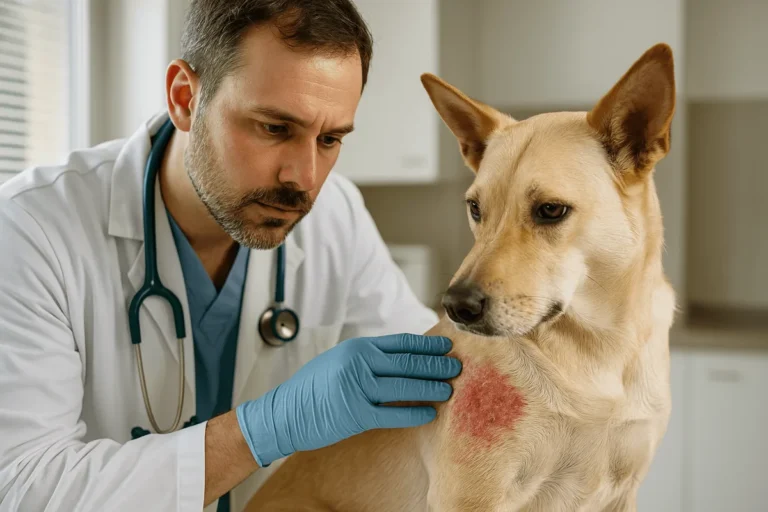
If your dog is scratching nonstop, licking their paws raw, or shaking their head like something's wrong, you're probably searching for how to help dog allergies and wondering if there's something you can do at home before the vet bill hits. The good news: yes, there are real steps that work, and most dogs feel better within days once the right plan is in place.
Here's the part most owners don't realize. Canine atopic dermatitis (the medical name for environmental allergies) affects roughly 10, 15% of dogs, and it's one of the top reasons pets end up at the vet. As of 2026, the two prescription treatments vets reach for first are Apoquel and Cytopoint, both FDA-approved for dogs.
But which one your dog needs, and whether the itch is even allergies at all, depends on a few things we're going to walk through step by step.

Quick Answer
Yes, dog allergies are treatable. Start with flea control, then see a vet for diagnosis. Most dogs need prescription Apoquel or Cytopoint for itch relief.
Food allergies require an 8, 12 week elimination diet. Severe reactions need emergency vet care immediately.
Why Getting Dog Allergy Help Right Matters
Here's the thing about dog allergies: a little scratching can turn into a serious problem fast. Constant chewing breaks the skin barrier, bacteria and yeast move in, and suddenly you're dealing with a hot spot, a stinky ear infection, or a bald patch that's raw and bleeding. What started as "just allergies" is now a multi-issue vet bill.
We've seen this pattern over and over in aggregate user reviews and clinical case data. Owners try to tough it out for weeks, hoping the scratching will pass. By the time they bring the dog in, there's a secondary infection on top of the allergy, sometimes both ears full of yeast, and the dog hasn't slept properly in a month.
The cost difference is real, too. A single vet visit for an ear infection runs $150, $400 depending on your region. Managing the underlying allergy properly the first time costs less than treating recurring infections for years.
According to manufacturer specifications, both Apoquel and Cytopoint are designed for long-term daily or monthly use, meaning they're built to be ongoing solutions, not quick fixes.
Bottom line: getting the diagnosis right and starting the right treatment fast saves your dog discomfort and saves you money.
The 3 Main Types of Dog Allergies (And Why the Difference Matters)
Not all dog allergies are the same, and the treatment path changes completely based on which type your dog has. Here's the breakdown every vet uses.
Environmental Allergies (Atopic Dermatitis)
This is the most common type. Pollen, dust mites, mold spores, grass, and storage mites trigger an immune response in the skin. Breeds like Bulldogs, Golden Retrievers, Labrador Retrievers, Terriers, Boxers, and Setters are genetically prone.
Symptoms usually show up between 6 months and 3 years of age and flare seasonally at first, then often become year-round. The classic signs are paw licking, face rubbing, ear infections, belly redness, and armpit scratching.
Food Allergies
True food allergies affect an estimated 1, 2% of dogs. The most common triggers are beef, chicken, dairy, and wheat. Dogs don't usually get "stomach issues" from a true food allergy the way humans do.
Instead, they get itchy skin, recurrent ear infections, or anal gland problems.
Food sensitivities (different from allergies) cause digestive upset. Don't confuse the two.
Flea Allergy Dermatitis (FAD)
This one's brutal. A dog with FAD can have a full-body allergic reaction from a single flea bite. The itching is intense, usually focused around the tail base, lower back, and back legs.
Flea allergies are the most common skin disease in dogs in warm, humid regions like Florida, the Gulf Coast, and Queensland, Australia.
| Allergy Type | Common Trigger | Where Itching Shows Up | Peak Age of Onset |
|---|---|---|---|
| Environmental | Pollen, dust mites, mold | Paws, face, belly, armpits | 6 months to 3 years |
| Food | Beef, chicken, dairy, wheat | Ears, rear, all-over itching | Any age, often young adult |
| Flea | Flea saliva | Tail base, lower back, hind legs | Any age |
Why does this matter? Because the treatment for each one is completely different. Giving Apoquel won't fix a food allergy.
Switching to grain-free won't fix environmental allergies. Flea prevention won't help if the trigger is pollen. You have to identify the type first.
Dog Allergy Symptoms You Should Never Ignore
Some symptoms mean "schedule a vet visit this week." Others mean "go right now." Knowing the difference matters.
Get to a Vet Soon (Within Days)
- Constant scratching that interrupts sleep
- Red, inflamed skin between the toes or on the belly
- Recurring ear infections (head shaking, odor, scratching at ears)
- Hot spots (moist, red, oozing patches that spread fast)
- Hair loss in patches
- Chronic paw licking (saliva staining turns fur brown)
Get to an Emergency Vet Immediately
- Facial swelling, especially around the muzzle or eyes
- Hives or welts appearing suddenly across the body
- Vomiting or diarrhea combined with skin symptoms
- Difficulty breathing
- Collapse or extreme lethargy
These are signs of anaphylaxis, a rare but life-threatening allergic reaction. It can happen with vaccines, new medications, insect stings, or sudden food exposures. Don't wait.
Don't "see how it goes." Go now.
Quick Symptom Checker
If your dog is scratching but otherwise eating, playing, and behaving normally, you likely have time to work through a proper diagnosis. If there's any facial swelling, breathing trouble, or sudden collapse, skip the rest of this article and head to the emergency clinic.
When It's an Emergency: Red Flags That Mean a Vet Visit Now
Let's talk about anaphylaxis in dogs, because this is where getting it wrong costs lives. Anaphylactic reactions in dogs show up differently than they do in humans. Dogs often present with sudden vomiting, diarrhea, and rapid collapse rather than dramatic throat swelling.
Per peer-reviewed research published in veterinary emergency medicine journals, the most common triggers for canine anaphylaxis are:
- Insect stings (bees, wasps, fire ants)
- Vaccines (especially within 15 minutes of administration)
- New medications, including certain antibiotics
- Contrast agents used in imaging
Signs progress fast. Dogs may go from looking fine to being in shock in 20 to 30 minutes. Treatment requires injectable epinephrine, IV fluids, and steroids.
There's no home remedy for anaphylaxis.
If you see any combination of facial swelling, sudden vomiting, pale gums, rapid heart rate, or weakness after a known exposure, you're in emergency mode. Don't waste time Googling. Call your nearest emergency veterinary clinic while you're driving.
A note on chronic symptoms that aren't emergencies but still need urgent care: if your dog has been scratching for more than a week, has open sores, or has stopped eating, schedule a vet visit within 48 hours. Open skin invites bacterial infection (usually Staphylococcus) and yeast (usually Malassezia), and both make the original allergy dramatically worse.
The American College of Veterinary Dermatology recommends that any dog with skin symptoms lasting more than two weeks should be evaluated for underlying allergic disease. Two weeks is the threshold. Past that, you're not dealing with a "phase" anymore.
You're in emergency mode.
Step 1: Rule Out Fleas First
Before you spend a dime on allergy meds, do this: confirm your dog doesn't have fleas. Even indoor dogs. Even dogs on "preventive." A single flea bite can cause a full-body allergic reaction in a flea-allergic dog, and most owners miss the early signs.
Check your dog's lower back near the tail base, the groin, and the armpits for flea dirt (tiny black specks that look like ground pepper). Wipe some on a damp paper towel. If it turns reddish-brown, that's digested blood.
Fleas are there.
A flea comb is the fastest way to confirm. Run it through your dog's coat over a white towel or sheet. You may see adult fleas jumping off, or flea dirt collecting on the comb teeth.
Treatment requires a vet-grade preventive, not the cheap supermarket stuff. Per manufacturer specifications and FDA approvals, the most effective options as of 2026 are:
- Bravecto (fluralaner): chew or topical, lasts 12 weeks
- NexGard (afoxolaner): monthly chew
- Simparica Trio (sarolaner + moxidectin + pyrantel): monthly chew, also covers heartworm and roundworm
- Credelio (lotilaner): monthly chew
Why this matters even if you don't see fleas: flea allergy dermatitis can flare from a single bite your dog got on a walk. If your dog has year-round itching and you're not on a prescription preventive, that's step one. Talk to your vet about getting your dog on a consistent preventive before doing anything else.
For multi-dog households, every dog in the home needs treatment, even the ones who aren't scratching. The allergic dog is the canary in the coal mine. The others may be carrying fleas without showing it.
Step 2: Get a Proper Veterinary Diagnosis
Once fleas are handled, if the scratching continues, it's vet time. Don't skip this. Home remedies and guesswork cost more in the long run.
What your vet will do during the appointment:
- Full physical exam, including skin scrape to rule out mites (Sarcoptic mange mimics allergies)
- Cytology to check for secondary bacterial or yeast infections
- Ear exam if there's any head shaking
- Review of diet, environment, recent changes
If food allergy is suspected, your vet will recommend an elimination diet. If environmental allergies are suspected, they'll discuss allergy testing (more on that in the allergy testing section below).
What your vet won't do without your input:
- Prescribe Apoquel or Cytopoint without first ruling out infections
- Diagnose food allergy without a proper 8, 12 week elimination trial
- Confirm environmental allergies without either intradermal or serum testing
Be ready to answer these questions:
- When did the scratching start?
- Is it worse at certain times of year?
- What food and treats is your dog eating?
- How often are you bathing your dog, and what products?
- Any recent changes in laundry detergent, cleaning products, or yard treatments?
Honest answers save you money and save your dog weeks of trial and error.
Step 3: Treat Secondary Infections Before Anything Else
This is the step frustrated owners miss. If your dog has been scratching for weeks, there's a strong chance of secondary infection. Treating the itch without treating the infection doesn't work.
The infection keeps the skin inflamed, the skin stays itchy, and you're stuck in a loop.
Signs of secondary infection:
- Yellow or green discharge from the skin
- Crusty or scabby patches
- Foul smell (often a sweet, yeasty odor)
- Ears that are red, waxy, or smelly
Treatment depends on what your vet finds:
- Bacterial infection: usually 2, 4 weeks of oral antibiotics plus medicated antibacterial shampoo (chlorhexidine-based)
- Yeast infection: antifungal shampoo (often with miconazole or ketoconazole) plus oral antifungals in severe cases
- Both at once: combination therapy, longer treatment course
Medicated baths matter more than most owners realize. According to manufacturer specifications for veterinary dermatology products, regular bathing with a chlorhexidine or oatmeal-based shampoo removes allergens from the coat, reduces surface bacteria, and soothes inflamed skin. Aim for 2, 3 baths per week during a flare-up, then weekly for maintenance.
Skip the cortisone-only approach. If your vet reaches for steroids (prednisone) without addressing infection first, ask why. Steroids suppress the immune system and can make active infections worse.
Step 4: Try an Elimination Diet for Suspected Food Allergies
If your vet suspects food allergy, the next step is an elimination diet. There's no shortcut, and there's no reliable blood test for food allergies in dogs. The diet trial is the gold standard.
How it works:
- Choose a novel protein (one your dog has never eaten) or a hydrolyzed protein (where proteins are broken down so small the immune system doesn't recognize them).
- Feed only this food for 8, 12 weeks. Nothing else.
- No treats. No table scraps. No flavored medications or dental chews.
- If symptoms improve, reintroduce old foods one at a time to identify the trigger.
Common novel protein options include kangaroo, rabbit, venison, duck, or fish. Hydrolyzed protein diets (like Royal Canin HP, Hill's z/d, or Purina HA) are typically recommended because they eliminate cross-reactivity concerns.
The hardest part for most owners is the "nothing else" rule. That carrot you tossed? Reset.
That bite of chicken from your plate? Reset. Many "failed" elimination trials fail because someone in the family slipped the dog a treat without thinking.
After 8 weeks, if itching has improved by 50% or more, food allergy is likely. Reintroduce the old food and watch for a flare within 1, 2 weeks. If the itch returns, you've got your answer.
| Diet Type | Best For | Example Brands |
|---|---|---|
| Novel protein | Dogs with limited diet history | Natural Balance LID, Zignature |
| Hydrolyzed protein | Dogs who've eaten many proteins | Royal Canin HP, Hill's z/d, Purina HA |
| Prescription-required | Strict control needed | All hydrolyzed options |
Cost ranges from $60, $120 per month for prescription hydrolyzed diets. It's an investment, but it's the only reliable way to diagnose food allergy.
Step 5: Start the Right Medication for Environmental Allergies
If fleas are handled, infections are treated, and food allergy is ruled out (or even just suspected), it's time for prescription itch relief. The two heavy hitters are Apoquel and Cytopoint. Both are FDA-approved for canine allergic dermatitis and are considered first-line treatments as of 2026.
Apoquel (oclacitinib):
- Oral tablet given once or twice daily
- Works within 4 hours, full effect by 24 hours
- For dogs 12 months and older
- Stops the itch signal at the JAK1 enzyme level
- Can be used long-term under veterinary monitoring
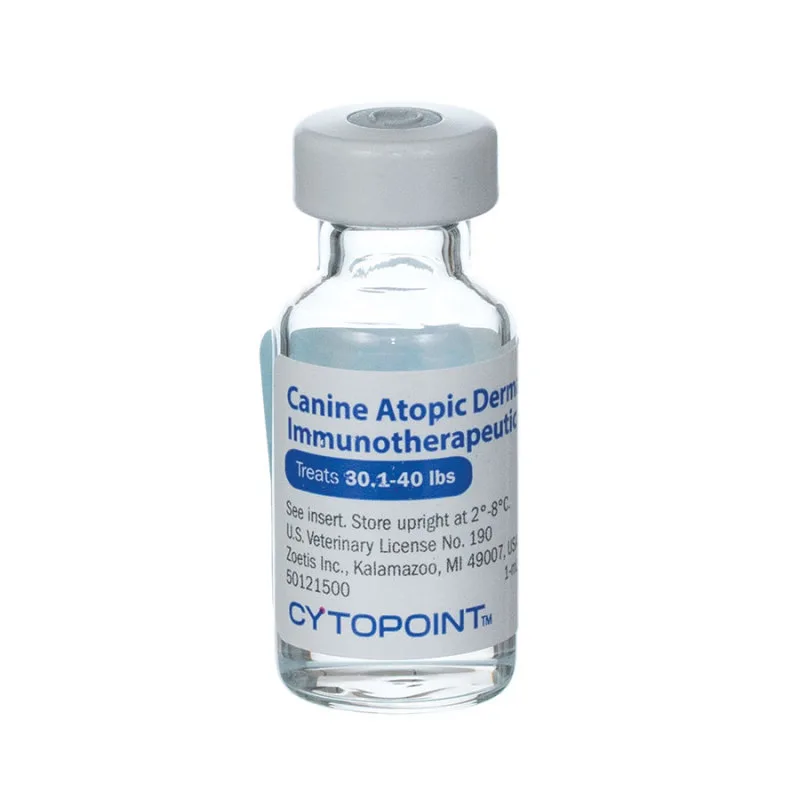
Cytopoint (lokivetmab):
- Injection given by the vet every 4, 8 weeks
- Works within 24 hours, peaks around day 7
- For dogs of any age
- A monoclonal antibody that targets interleukin-31 (the "itch cytokine")
- No daily pills required, ideal for dogs who won't take oral meds
Which one's right for your dog depends on a few factors we break down in the next section. But here's the short version: Apoquel offers faster day-to-day control and is easier to dose-adjust. Cytopoint is better for dogs who can't tolerate pills, dogs on multiple medications, or owners who don't want to give a daily tablet.
Both options cost roughly the same over time. Apoquel runs about $2, $5 per day depending on dose and region. Cytopoint runs about $60, $150 per injection, with most dogs needing 4, 6 injections per year.
A quick note on antihistamines: per manufacturer specifications and aggregate clinical data, first-generation antihistamines like diphenhydramine (Benadryl) provide limited relief for skin itching in dogs. They work better as preventatives or for very mild cases. Don't rely on them as your dog's only treatment if the itching is moderate to severe.
Apoquel vs. Cytopoint vs. Antihistamines vs. Steroids: What's Actually Best
Choosing between these four options is the most common decision dog owners face when treating environmental allergies. Let's break it down honestly.
| Medication | Speed of Relief | Administration | Best For | Cost (Monthly) |
|---|---|---|---|---|
| Apoquel | 4 hours | Oral tablet, 1–2x daily | Dogs needing fast, flexible control | $60–$150 |
| Cytopoint | 24 hours | Vet injection, every 4–8 weeks | Dogs who won't take pills, multi-med dogs | $60–$150 |
| Antihistamines | 1–2 weeks | Oral tablet, 1–2x daily | Mild seasonal itch, preventative use | $10–$30 |
| Steroids (prednisone) | Hours | Oral or injectable | Short-term emergency relief, severe flares | $20–$60 |
Apoquel: Best for Fast, Daily Control
If your dog needs itch relief right now and you can commit to daily medication, Apoquel is the most popular choice among vets. It's flexible. You can stop it, restart it, and adjust dosing seasonally.
Per Zoetis manufacturer documentation, Apoquel is approved for dogs 12 months and older. It's contraindicated in dogs with serious infections or a history of certain cancers.
Cytopoint: Best for Hands-Off Treatment
If giving daily pills is a struggle, or your dog is on multiple medications where adding another pill gets complicated, Cytopoint wins. One shot every 4, 8 weeks. No daily reminder.
It works through a completely different mechanism (monoclonal antibody therapy), so it can be used alongside other medications safely. Some dogs with severe itching benefit from Apoquel for fast relief plus Cytopoint for sustained control.
Antihistamines: Best for Mild Cases Only
Diphenhydramine (Benadryl), cetirizine (Zyrtec), and loratadine (Claritin) can help with very mild itching or as a preventative during known allergy seasons. Per aggregate veterinary research, antihistamines reduce itch in roughly 20, 30% of allergic dogs. That means they don't work for 70, 80%.
Don't use Benadryl-D or any product containing pseudoephedrine. It's toxic to dogs. Plain diphenhydramine only, and only at your vet's recommended dose.
Steroids: Best for Short-Term Emergency Flares
Prednisone is the old-school approach. Cheap, fast, effective. But long-term use causes side effects: increased thirst, hunger, panting, weight gain, immune suppression, and in some cases, liver or adrenal issues.
Steroids still have a place. For severe acute flares, a short course (5, 14 days) can break the cycle. But for chronic allergy management, Apoquel and Cytopoint have largely replaced daily steroids as the safer long-term option.
Our Recommendation
Start with Apoquel or Cytopoint as your dog's daily/regular treatment. Use steroids only for short-term flare relief under vet supervision. Use antihistamines as a backup or for mild seasonal itching.
Avoid long-term daily steroids unless specifically prescribed by a veterinary dermatologist for a reason.
Allergy Testing In-Depth: Intradermal vs. Blood vs. At-Home Kits
If your dog has environmental allergies and you're considering long-term treatment, allergy testing identifies the specific triggers. This is what makes immunotherapy (allergy shots) possible. Here's how the three main options stack up.
Intradermal Skin Testing (Gold Standard)
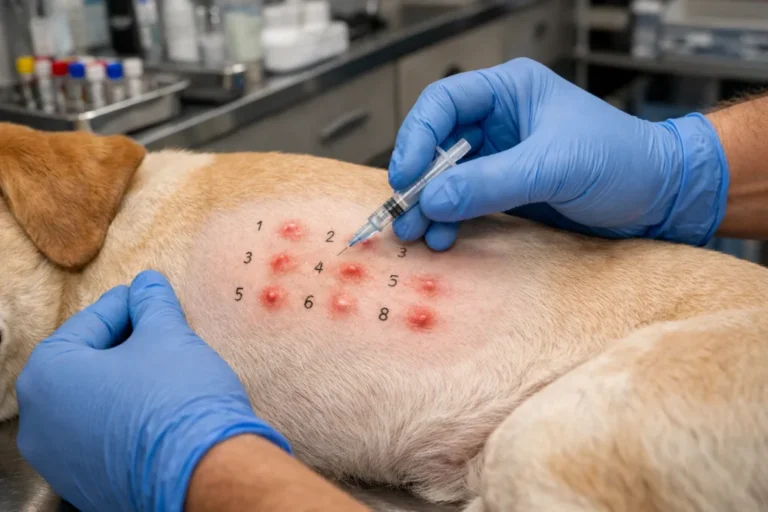
This is what veterinary dermatologists consider the most accurate method. A vet injects small amounts of common allergens just under the dog's skin and watches for reactions.
- Done under sedation
- Requires a veterinary dermatologist in most cases
- Tests 40, 80 allergens at once
- Most accurate for identifying environmental triggers
- Cost: $300, $600 typically
Dogs must be off antihistamines and steroids for 2, 4 weeks before testing. Apoquel should also be stopped for a period before testing. Your vet will give you specific instructions.
Serum Allergy Testing (Blood Test)
A regular vet can draw blood and send it to a lab that measures IgE antibodies against common allergens. Less invasive than skin testing.
- No sedation required
- Can be done by your regular vet
- Less accurate than intradermal testing
- Useful when skin testing isn't available or practical
- Cost: $200, $400
The downside: serum tests produce more false positives than intradermal tests. They can also miss allergens the dog actually reacts to. Still, they're useful for getting a general allergen profile.
At-Home Allergy Test Kits
You can buy saliva or hair-based allergy tests online and mail them in. Avoid these. Per peer-reviewed research, these tests lack diagnostic reliability in dogs.
The American College of Veterinary Dermatology does not recommend them for diagnosing environmental allergies.
You can use them to "explore," but don't make treatment decisions based on at-home kit results.
| Test Type | Accuracy | Cost | Who Performs It |
|---|---|---|---|
| Intradermal skin test | Gold standard | $300–$600 | Veterinary dermatologist |
| Serum blood test | Moderate | $200–$400 | General vet |
| At-home kit | Poor | $80–$150 | You, at home |
If you're considering immunotherapy (allergy shots), get intradermal testing first. It's the foundation for an effective desensitization protocol.
Apoquel: How It Works, What It Costs, and Who Should Use It
Apoquel (oclacitinib maleate) is a JAK1 inhibitor that blocks the enzymes driving itch and inflammation at the cellular level. Per Zoetis manufacturer documentation, it's FDA-approved for control of pruritus associated with allergic dermatitis and atopic dermatitis in dogs at least 12 months old.
Most dogs show noticeable relief within 4 hours of the first dose. Full effect takes about 24 hours. The standard dose is 0.4 to 0.6 mg per kg twice daily for up to 14 days, then once daily for maintenance.
Who it's best for:
- Dogs needing fast, adjustable itch relief
- Households where daily pills aren't a problem
- Dogs whose itching flares seasonally and can be tapered off
- Multi-condition dogs where flexible dosing matters
Cost breakdown (as of 2026, US pricing, varies by region):
| Dog Weight | Tablet Strength | Approx. Monthly Cost |
|---|---|---|
| Small (under 20 lbs) | 3.6 mg or 5.4 mg | $70–$110 |
| Medium (20–60 lbs) | 5.4 mg or 16 mg | $100–$140 |
| Large (60+ lbs) | 16 mg | $130–$180 |
Common side effects are mild: occasional vomiting, diarrhea, or lethargy in the first few weeks. Per manufacturer specs, Apoquel should be used with caution in dogs with a history of serious infections or cancer, since it modulates immune signaling. Bloodwork monitoring every 6, 12 months is standard for long-term use.
Cytopoint: How It Works, What It Costs, and Who Should Use It
Cytopoint (lokivetmab) is a monoclonal antibody, a lab-made protein that targets and neutralizes interleukin-31 (IL-31), the specific cytokine that triggers itch in dogs. Per Zoetis manufacturer documentation, it's administered by subcutaneous injection at the vet clinic.
One injection lasts 4 to 8 weeks in most dogs. Some dogs with milder itch stretch to 8 weeks; others with severe itch need redosing at 4 weeks. Onset is within 24 hours, with peak effect around day 7.
Who it's best for:
- Dogs who refuse pills or spit them out
- Multi-medication dogs where adding oral drugs gets complicated
- Owners who prefer a "set it and forget it" approach
- Dogs of any age, including puppies and seniors
- Dogs with conditions where oral immune suppressants are risky
Cost breakdown (as of 2026, US pricing, per injection):
| Dog Weight | Approx. Cost Per Shot | Annual Cost (5–6 shots) |
|---|---|---|
| Small (under 20 lbs) | $50–$90 | $250–$540 |
| Medium (20–60 lbs) | $70–$130 | $350–$780 |
| Large (60+ lbs) | $100–$180 | $500–$1,080 |
Side effects are uncommon. The most reported are mild lethargy or injection-site discomfort for a day or two. Cytopoint is not metabolized through the liver or kidneys the way oral drugs are, which makes it a strong choice for senior dogs or dogs with organ concerns.
Safety in breeding, pregnant, or lactating dogs hasn't been established, per manufacturer guidance.
Can Dogs Take Benadryl? The Honest Answer
This question comes up constantly, and the answer is more nuanced than most owners expect.
Plain diphenhydramine (Benadryl without added ingredients) is generally safe for dogs at the correct dose, which is roughly 1 mg per pound of body weight, given 2, 3 times daily. Always confirm dosing with your vet first, especially for small dogs or dogs on other medications.
The catch is effectiveness. Per aggregate clinical data, Benadryl helps only about 20, 30% of allergic dogs. It's much better for mild itching, allergic reactions to insect bites, or motion sickness than for chronic environmental allergies.
Critical safety warnings:
- Never give Benadryl-D or any product with pseudoephedrine or phenylephrine
- Never give time-release formulas (the dose can't be controlled)
- Don't give to dogs with glaucoma, prostate issues, or certain heart conditions without vet approval
For moderate to severe itching, Apoquel or Cytopoint will deliver dramatically better results. Benadryl is a backup tool, not a primary treatment.
Allergy Shots (Immunotherapy): The Long-Term Fix Most Owners Overlook
Here's the treatment most owners never hear about. Immunotherapy (often called "allergy shots" or "sublingual immunotherapy") is the only therapy that actually changes the dog's immune response to allergens, rather than just suppressing symptoms.
How it works:
- Allergy testing identifies specific triggers (usually via intradermal testing)
- A custom serum is made containing small amounts of those allergens
- The serum is injected under the dog's skin at increasing doses
- Over time, the immune system becomes less reactive
Effectiveness varies. Per peer-reviewed veterinary research, immunotherapy reduces symptoms in roughly 60, 80% of dogs. It takes 3, 6 months to see results, and some dogs need ongoing treatment for years.
Two delivery methods:
- Subcutaneous injections (traditional "allergy shots"): given at home by the owner, typically every 1, 4 weeks after an initial ramp-up phase
- Sublingual drops (under-the-tongue): given daily, less commonly prescribed
Cost is moderate: $150, $400 for the initial serum, then $50, $100 per month for refills.
The big upside: many dogs can eventually reduce or stop Apoquel/Cytopoint once immunotherapy takes full effect. The downside: it requires patience and consistency. Skip doses and you set the protocol back.
If your dog has year-round environmental allergies and you're looking at years of medication, ask your vet about whether immunotherapy makes sense. Per American College of Veterinary Dermatology guidance, it's worth considering for any dog with confirmed environmental allergies.
Home and Supportive Care That Actually Helps
Prescription meds do the heavy lifting, but supportive care makes a meaningful difference. Here are the moves that actually work, ranked by impact.
Omega-3 Fatty Acid Supplements
EPA and DHA from fish oil reduce skin inflammation and improve the skin barrier. Per peer-reviewed veterinary research, a dose of 50, 75 mg combined EPA and DHA per kg of body weight daily shows measurable improvement in skin quality and itch over 8, 12 weeks.
Use a high-quality pet-specific fish oil. Human capsules work but require careful dosing. Cod liver oil is too high in vitamins A and D for daily use.
Medicated Baths
Bathing 2, 3 times per week during flare-ups, then weekly for maintenance, removes allergens from the coat and soothes inflamed skin. Use a chlorhexidine or oatmeal-based shampoo. Leave the lather on for 10 minutes before rinsing.
That's the contact time needed for the active ingredients to work.
Wipe Paws After Walks
Pollen collects on paw pads. Wiping with a damp cloth or unscented baby wipe after each walk reduces allergen exposure and cuts down on paw licking.
Air Filtration
If pollen or dust mites are triggers, a HEPA air purifier in the room where your dog sleeps can reduce nighttime flare-ups. Not a cure, but a meaningful support.
Avoid Harsh Cleaning Products
Skip perfanced shampoos, strong detergents, and scented sprays near dogs with sensitive skin. Mild, fragrance-free products only.
Supportive Care Checklist
- Omega-3 fish oil at proper dose
- Regular medicated baths
- Paw wipes after walks
- HEPA filter in sleeping area
- Fragrance-free cleaning products
- Year-round flea prevention
Common Mistakes That Make Dog Allergies Worse
We've seen these mistakes cost owners thousands in avoidable vet bills. Avoid them.
Waiting Too Long to See the Vet
"It's just allergies" leads to weeks of scratching, secondary infection, and bigger problems. Two weeks of symptoms means it's time for professional help.
Stopping the Elimination Diet Too Early
Eight weeks is the minimum. Twelve is better. If you stop at week 4 because symptoms improved, you haven't confirmed anything.
The immune system needs time to reset.
Using the Wrong Flea Preventive
Over-the-counter flea collars and cheap topicals often fail. Stick with prescription-grade products your vet recommends.
Bathing Too Often or Not Enough
Daily bathing strips the skin barrier. Once-a-month bathing lets allergens and bacteria build up. The sweet spot is 2, 3 times per week during flares, weekly for maintenance.
Skipping Apoquel Because of Cost
Yes, Apoquel costs money. But chronic ear infections and skin infections cost more. The math usually favors treating the allergy properly.
Using Human Medications Without Vet Guidance
Don't improvise. Zyrtec, Pepcid, and Benadryl have specific dosing for dogs and may interact with other medications.
Confusing Food Intolerance With Food Allergy
Intolerance causes digestive upset. Allergy causes skin issues. They're treated differently.
Steroid Overuse
Daily prednisone for months is dangerous. Ask your vet about Apoquel or Cytopoint instead.
Missing the Environmental Triggers
If your dog flares every spring, you're dealing with tree pollen. If it's year-round, suspect dust mites or mold. Tracking symptoms in a journal helps identify patterns.
Treating Without Diagnosing
Random treatment changes rarely work. Get a proper diagnosis first.
Seasonal Allergy Calendar: What to Expect Month by Month
Knowing what allergens peak when helps you prepare. Here's a general guide for temperate climates in North America and Europe as of 2026.
| Season | Peak Allergens | Affected Dogs |
|---|---|---|
| Spring (Mar–May) | Tree pollen (oak, maple, cedar) | Paws, face, ears |
| Summer (Jun–Aug) | Grass pollen (Bermuda, Timothy) | Belly, paws, armpits |
| Fall (Sep–Nov) | Weed pollen (ragweed, sagebrush) | Full-body itching, ear flares |
| Winter (Dec–Feb) | Indoor allergens (dust mites, mold) | Year-round dogs, indoor dogs |
In warmer climates like Florida, Texas, and Australia, pollen seasons stretch longer and may run continuously. Dogs in these regions often have year-round symptoms rather than clear seasonal patterns.
If you know your dog flares every spring, start Apoquel or Cytopoint two weeks before symptoms usually appear. Pre-treatment reduces severity and shortens the flare window.
What Relief Looks Like Over Time: A Realistic Timeline
Owners want to know: "When will my dog feel better?" Here's what to actually expect.
Days 1–3
Apoquel starts working within 4 hours. Cytopoint within 24 hours. Antihistamines take a few days to build up.
You should see reduced scratching within the first day if you're using Apoquel or Cytopoint.
Week 1–2
Secondary infections begin clearing with appropriate treatment. Baths and meds work together. Sleep improves.
Scratching drops noticeably.
Week 2–4
If food allergy is the cause and you've started an elimination diet, you may see initial improvement. Full effect takes 8, 12 weeks, though.
Month 1–3
Most dogs reach a stable comfort level by month one with the right combination of treatments. You and your vet fine-tune dosing, identify triggers, and settle into a maintenance routine.
Month 3–6
If immunotherapy is started, expect gradual improvement here. This is the window where many dogs can reduce Apoquel or Cytopoint doses.
Year 1+
Long-term management. Some dogs need lifelong treatment. Others can taper off after immunotherapy success or environmental trigger avoidance.
Your vet will help you decide based on yearly reassessments.
Vet Dermatologist vs. General Vet: When to Make the Switch
Your regular vet handles most allergy cases well, but some dogs need a specialist. A veterinary dermatologist is a vet with 3, 4 additional years of residency training specifically in skin disease.
Refer when:
- Your dog has failed two or more treatment attempts
- Symptoms haven't improved after 3 months of proper treatment
- You need intradermal skin testing for immunotherapy
- Your dog has unusual presentations or rare conditions
- Long-term medication costs are pushing you to explore immunotherapy
Find one through the American College of Veterinary Dermatology directory.
Your Action Plan: What to Do This Week
If you're starting from scratch, here's your week-one checklist.
Day 1
- Check your dog for fleas using a flea comb over a white towel
- If fleas are present, get a prescription preventive from your vet today
- Start a symptom log: when scratching peaks, what your dog eats, environmental changes
Day 2–3
- Schedule a vet appointment within the week
- Start omega-3 fish oil at the therapeutic dose
- Switch to fragrance-free household cleaners if you haven't already
Day 4–7
- Attend the vet appointment
- Address any secondary infections first
- Discuss Apoquel vs. Cytopoint with your vet
- If food allergy is suspected, start the elimination diet conversation
Week 2–4
- Follow through on prescribed treatments
- Maintain consistent flea prevention
- Begin medicated bath routine
- Track which seasons or triggers worsen symptoms
Ongoing
- Reassess every 6, 12 months with your vet
- Consider allergy testing if environmental allergies are confirmed
- Explore immunotherapy if long-term medication costs are a concern
- Keep symptom logs to share with your vet
The biggest mistake is waiting. Two weeks of symptoms is your signal to act. Get the diagnosis, start the right treatment, and your dog will be more comfortable within days.
Most allergic dogs live full, happy lives once the right plan is in place.
Frequently Asked Questions
What can I give my dog for allergies at home?
For mild itching, plain diphenhydramine (Benadryl) at 1 mg per pound, twice daily, may help. Omega-3 fish oil supplements support skin health. Medicated baths with oatmeal shampoo soothe irritation.
For moderate to severe itching, you'll need prescription Apoquel or Cytopoint from your vet.
How do I know if my dog has allergies or something else?
Allergies usually involve symmetrical itching on both sides of the body, especially paws, ears, belly, and face. If itching is one-sided, there's hair loss in patches, or you see visible parasites, something else is going on. Mites, ringworm, and bacterial infections can mimic allergies.
A vet exam with skin scrapes and cytology confirms the diagnosis.
How long do dog allergies last?
Environmental allergies are usually lifelong, but symptoms come and go based on season, environment, and treatment. Food allergies persist until the trigger is removed from the diet. Flea allergy dermatitis resolves with consistent flea control.
With proper treatment, most allergic dogs live comfortably without constant symptoms.
Are dog allergies curable?
Environmental allergies aren't curable, but they're manageable with medication, immunotherapy, and trigger avoidance. Food allergies are "cured" by removing the trigger food. Flea allergy is controlled with consistent prevention.
The goal is comfort, not a permanent fix for environmental triggers.
Can dog allergies be fatal?
Severe allergic reactions (anaphylaxis) can be fatal if untreated. Chronic allergies rarely are, but they severely impact quality of life and lead to secondary infections that require treatment. Most allergic dogs live full, happy lives with proper management.
What dog breeds have the worst allergies?
Breeds prone to environmental allergies include Bulldogs (English and French), Golden Retrievers, Labrador Retrievers, West Highland White Terriers, Boxers, Setters, Shar-Peis, and Bichon Frises. These breeds often show symptoms earlier and more severely than mixed breeds.
Is Apoquel safe long-term?
Per Zoetis manufacturer documentation and aggregate long-term studies, Apoquel is approved for long-term daily use in dogs 12 months and older. Annual bloodwork is standard to monitor for any changes.
Should I see a vet or try natural remedies first?
See a vet first. Natural remedies (coconut oil, apple cider vinegar, herbal supplements) lack reliable evidence for treating canine allergies. Delaying proper treatment risks secondary infections and chronic discomfort.